

Alaska mining claims · Yes or no guide
Can You Still Stake a Claim in Alaska? Yes, in 7 Steps
Yes, you can still stake a mining claim in Alaska on state or federal ground that is open to mineral entry. You cannot claim land to live on, because homesteading ended in 1986. First-year official charges run from US$40 to US$274 per claim.
Key takeaways
- You can still stake a mining claim on open state or federal land, but homesteading ended on 21 October 1986 (BLM Alaska).
- About 92 percent of the 91 million acres the state had received is open to mineral entry, but easy ground with a mining history is mostly claimed (Alaska DNR).
- National parks, Native corporation land and Mental Health Trust land are not open to new claims (BLM placer guidebook, 2026; Trust Land Office).
- A federal claim costs US$274 at filing; a state claim costs US$40 or US$165 in first-year rent. Record state claims in 45 days and file federal claims with BLM in 90 days.
- BLM opened about 2.1 million acres along the Dalton corridor on 27 March 2026, subject to existing rights and selections (Public Land Order 7966).
In this article
- Can you still claim land in Alaska to own or live on?
- Which Alaska ground can you still stake?
- Is there open ground left? What changed recently
- State claim or federal claim: what changes
- 7 steps to stake a claim in Alaska, in order
- What it costs to hold an Alaska claim over time
- Yearly deadlines at a glance
- Mistakes that cost people their claims
- A claim is not a permit
- Screening ground from space before you go
- Frequently asked questions
Can you still stake a claim in Alaska? Yes, but only a mining claim, and only on ground that is open to mineral entry. You can no longer claim land to live on, because homesteading ended in 1986, and a mining claim gives you the right to look for and mine minerals such as gold, not title to the land (BLM Alaska homesteading FAQs; Alaska DNR, Mineral Property Management). Alaska DNR says about 92 percent of the 91 million acres the state had received so far is open to staking, but it also warns that easy-to-reach ground with a mining history is mostly claimed already. This page shows which land is still open, the seven steps in order, the official fees and deadlines, and a calculator for your own acreage.
Can you still claim land in Alaska to own or live on?
No. Federal homesteading on Alaska’s federal land stopped on 21 October 1986, after 88 years of being legal there (BLM Alaska). By the time the last homestead patents were issued, 3,277 homesteads had been conveyed in the state. They covered over 360,000 acres, or less than 1 percent of Alaska (National Park Service, Alaska Public Lands). The same BLM FAQ notes that the state sold some land by sealed-bid auction in 2012 and offered remote recreation cabin sites, so ask DNR’s land sales office what is on offer now.
A mining claim is a different thing. It is a right to explore for and take out locatable minerals, which are metals such as gold, copper and silver and most industrial minerals. It is not a deed. A federal claim is a possessory right on public land, much like an easement, and the United States keeps paramount title. No new federal mineral patents (the paperwork that would turn a claim into owned land) have been issued since a moratorium began in 1994 (BLM Alaska claim guide, 2026). On state land, DNR says a claim holder cannot use the claim as a home site, block public access, sell the sand and gravel without a permit or build a cabin without written approval (Alaska DNR, rights acquired with a location).
So the honest answer depends on what you mean by a land claim. If you want a place to build a cabin, a mining claim will not give you one. If you want the right to prospect and mine a piece of open ground, it still will.
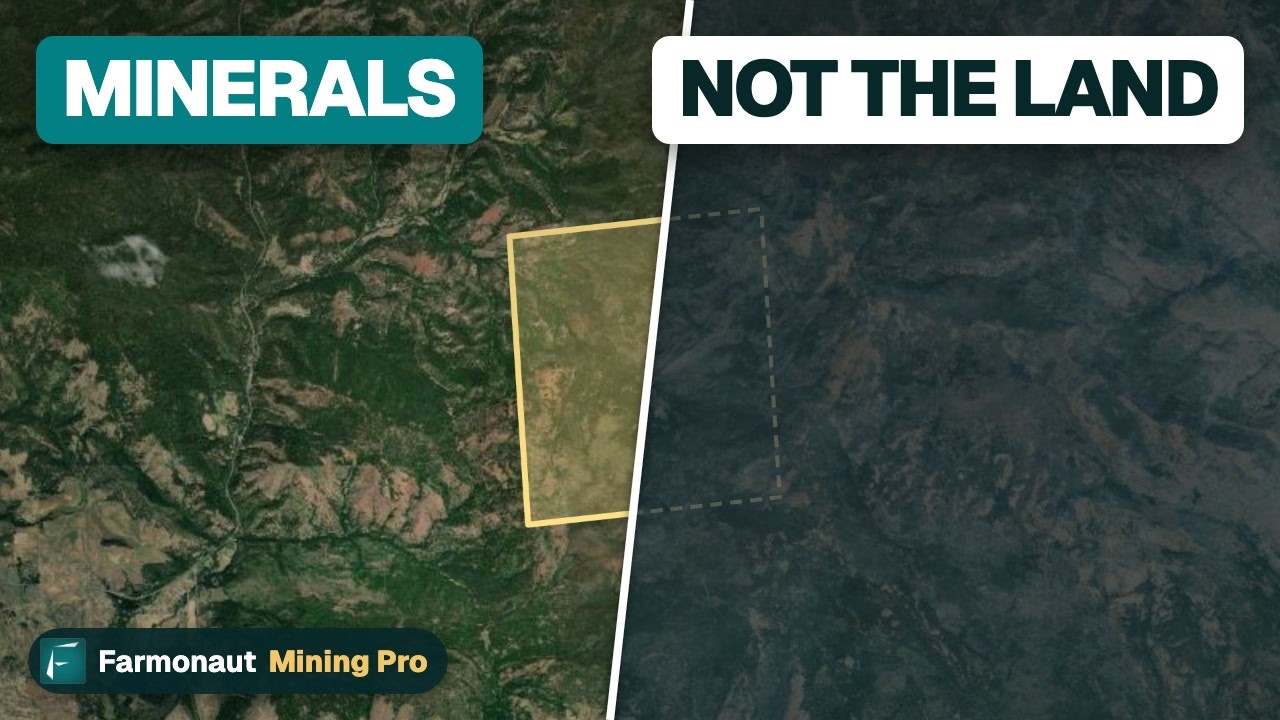
▶ Why owning a gold claim is not the same as owning the land · 3:19
Which Alaska ground can you still stake?
Land status decides everything in Alaska. The federal government owns about 60.8 percent of the state, which is 222.4 million of 365.5 million acres, as of September 2024 (Congressional Research Service). The state, Native corporations, the Mental Health Trust and private owners hold most of the rest. Each manager has its own rule, and DNR’s own advice to would-be miners is to check land status first, because mineral closings can exist (Alaska DNR, tips for gold seekers).
Chart
Who manages Alaska’s land, and how much
Million acres; sources and years differ, so the bars do not add up to the state total
| Land type | Can you stake a mining claim? | What to know |
|---|---|---|
| State land (DNR) | Yes, where open to mineral entry | About 92 percent of 91 million acres is open. Mineral closing orders shut some parts. Borough and city land is leasehold-location only, which means mining cannot start until the location is converted to an upland mining lease. |
| Federal public land (BLM) | Yes, where not withdrawn or segregated | BLM managed 71.1 million acres in Alaska in 2024. Public land orders can close land. State- and Native-selected land stays segregated until conveyed or released. |
| National forest (USFS) | Yes, where open to mineral entry | Hand-tool prospecting is generally allowed. Larger work needs a Notice of Intent or Plan of Operations. |
| National parks (NPS) | No new claims | The Mining in the Parks Act of 1976 closed park land to new claims. Only valid pre-existing claims continue. |
| Native corporation land | No | About 45.5 million acres. The regional or village corporation sets permission and conditions. |
| Mental Health Trust land | No | About 1 million acres, closed to mineral entry. Mineral tracts are leased by the Trust Land Office. |
| Private land | Only with the owner’s permission | DNR says never enter private land to post a location without permission. |
The sources for the table are the DNR Mineral Property Management page, the DNR fact sheet on MTRS claim locations, the BLM Alaska placer mining guidebook (national parks, forests, Native and Trust land) and the Mental Health Trust Land Office handout. National wildlife refuges are not in the table because their status depends on the law or order that created each one, so look up any refuge parcel in BLM’s records before you plan a trip.
BLM’s rule is simple to state. Claims may not be staked in areas closed to mineral entry by an act of Congress, a regulation or a public land order (BLM Alaska, 2026). It is hard to apply on the ground, because closed and open parcels sit side by side and the boundaries follow legal descriptions, not creeks.
Is there open ground left? What changed recently
DNR states it plainly: a small number of areas are still unexplored, and easily accessible areas with a history of mining are, for the most part, already claimed (Alaska DNR, October 2021). The numbers back that up. DNR maintains an average of about 50,000 mining claims and leasehold locations and 6,000 prospecting sites, and BLM Alaska manages almost 7,000 federal mining claims (BLM Alaska mining page). Alaska’s geological survey counted about 150 active placer gold mines, seven lode mines of all metals and about 60 exploration projects in its January 2026 overview (Alaska DGGS).
Open ground does appear, though. On 27 March 2026, at 8 a.m. Alaska time, BLM opened about 2,127,845 acres along the Dalton Utility Corridor, north of the Yukon River, to location and entry under the mining laws. The order is subject to valid existing rights, remaining withdrawals and other segregations of record (Federal Register, Public Land Order 7966). That is a reminder of two rules. First, an order opens only land that is not already tied up: BLM has said State- and Native-selected land stays segregated from mineral entry until it is conveyed or the selection is dropped (BLM release on Northwest Alaska withdrawals). Second, staking before the opening time gives you no rights. The order says any attempted appropriation before the revocation took effect is unauthorized.
Remote corridor land has its own cost problem. A fly-in trip, a camp and an access plan can cost far more than any government fee, and a claim you cannot reach is hard to hold or sell. If your goal is a place to work this season, a lesser-known creek on state land that you can drive or boat to is a more realistic target than a map polygon in a remote region.
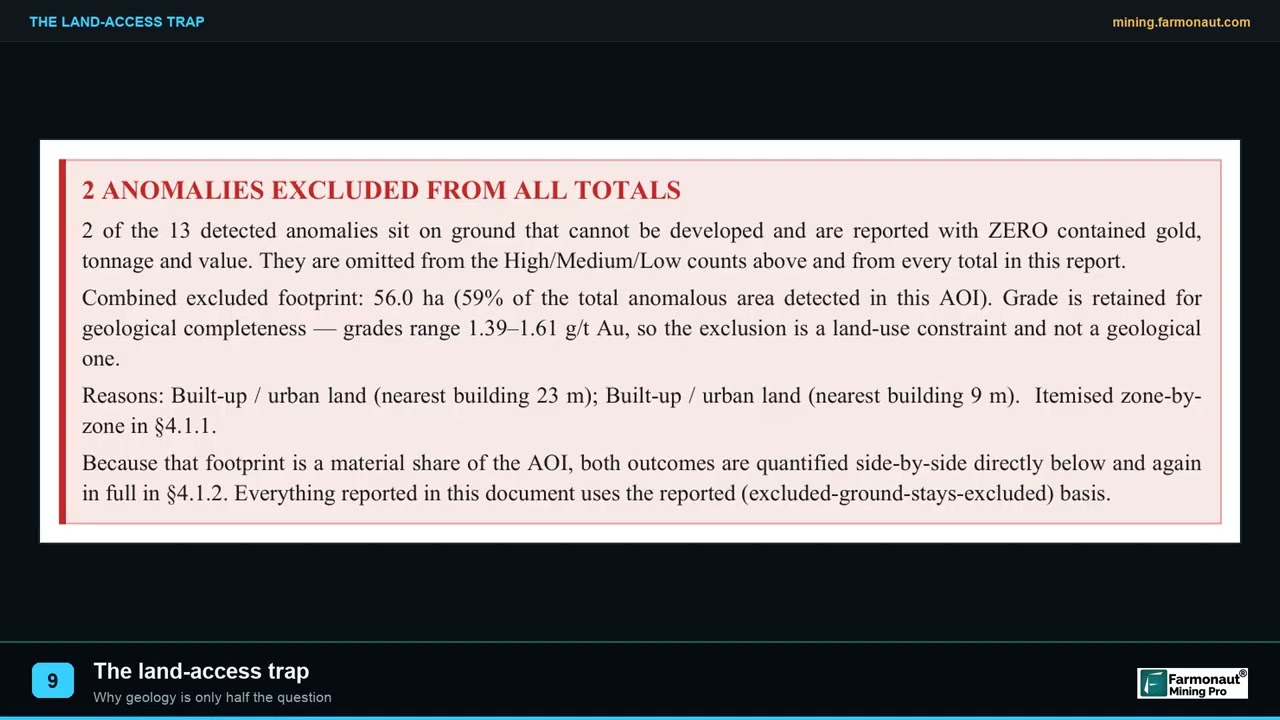
▶ How land access can block good ground, and why to check it first · 2:05
State claim or federal claim: what changes
Alaska runs two sets of mining rules. State rules apply on state land, and federal rules apply on federal land, so you follow whichever set matches the land under your discovery. The table shows the differences that matter before you buy a GPS unit.
Chart
How big each claim type can be
Acres; a federal lode claim of 1,500 ft by 600 ft is about 20.7 acres
| Item | State claim (Alaska DNR) | Federal claim (BLM) |
|---|---|---|
| Who can hold | U.S. citizens 18 or older, people 18 or older who have declared intent to become citizens, and qualified U.S. corporations and associations (AS 38.05.190) | Any U.S. citizen, or a corporation organized under state law |
| Size | Traditional claim up to 1,320 ft by 1,320 ft (40 acres), or a quarter-section (about 160 acres) or quarter-quarter-section (about 40 acres) claim located by legal description | Lode up to 1,500 ft by 600 ft; placer 20 acres per locator, up to 160 acres for eight or more locators |
| Discovery needed | Yes for a claim. A prospecting site needs none. | Rights hold up against challenge only after a discovery |
| Corner posts | Four posts, each at least 3 ft high and 2.5 in across | Alaska law: monuments at least 3 ft high and 3 in across, plus a notice at the north-east corner |
| Record within | 45 days of posting, with first rent paid in the same window | Record locally and file with BLM within 90 days |
| First-year charge | US$40 (40 acres) or US$165 (160 acres) rent, plus recording | US$274 per claim (placer maintenance US$200 per 20 acres) |
| Each year after | Rent plus US$100 or US$400 of labor, or cash instead of labor for up to five years | US$200 maintenance fee per claim, or a small-miner waiver and a US$15 affidavit |
Sources: DNR staking requirements, DNR key dates for miners, DNR statute and regulation book (an older copy of AS 38.05.190; confirm the current wording with DNR) and the BLM Alaska guide linked above. Our guide to how to get a gold claim in Alaska goes deeper on the cost of each route.
7 steps to stake a claim in Alaska, in order
Step 1: Check who manages the ground
Before you walk anywhere, look up the land status. DNR’s Alaska Mapper has a mineral estate view that shows state land as open or closed to mineral entry, and a mining claim research map and claim sketch tool added in August 2024 (DNR). For federal land, BLM’s Mineral and Land Records System (MLRS) is the official electronic record of claims. If the ground is municipal land or lies inside a leasehold location order, a standard claim is not an option. If it is state-selected land that the state has not yet received, rent is not due until the federal government conveys it to the state (DNR, MTRS fact sheet). Our guide to mining cadastre portals explains how claim registers work in other countries, for comparison.
Step 2: Check for existing claims and conflicts
Many creeks are already claimed. Search Alaska Mapper for state claims, where each claim has an ADL number, and MLRS for federal claims. DNR notes that claim conflicts do occur and often end up in court when the parties cannot resolve them (DNR, October 2021). Even a recreational panner should respect a claim: DNR says miners can be touchy about vandalism, liability and interruption of their work.
Step 3: Confirm you qualify and pick state or federal
Match your plan to the rules in the comparison table. A state claim needs a holder who meets AS 38.05.190. An LLC or trust has extra rules, so read DNR’s qualification fact sheet before you stake through one. Federal claims accept any U.S. citizen or a state-organized corporation. Neither set of rules asks you to live in Alaska. Both ask about citizenship and, for the state, age.
Step 4: Make a discovery, or hold a prospecting site first
A state claim needs a discovery of a locatable mineral before you stake. DNR says the seller of a claim should be able to prove what kind of discovery took place, for example geochemical sampling, panning or drilling, so keep dated notes, photos and sample records. If you have not found anything yet, a state prospecting site gives you exclusive prospecting rights on about 160 acres for a fixed two-year term and the first right to stake claims inside it. It costs US$305, cannot be extended, and cannot be renewed until a year after it expires (Alaska DNR, prospecting sites).
Step 5: Stake the corners and post the notice
On state land, a traditional claim is a four-post box with lines running north-south and east-west and no two adjacent posts more than 1,320 feet apart. Each post is at least 3 feet high and 2.5 inches across and may be a 4×4, a rebar with a post on top, a blazed tree or a rock cairn. Corner 1 is the north-east corner, then 2 south-east, 3 south-west and 4 north-west. The north-east corner carries a notice with the name, posting date, size or legal description, a sketch and each locator’s mailing address. On federal land in Alaska, the statute asks for a sign at the north-east corner and monuments at each corner at least 3 feet high and 3 inches across (DNR, September 2022; BLM Alaska, 2026). If a post might fall on private land, get the owner’s permission or set a witness post on nearby state land.
Step 6: Record the certificate and pay the first charge
State claims go to the recording district office within 45 days of posting, on the DNR form or a similar one, with a map at 1:63,360 or a larger scale. The first rent is due in the same 45 days. Federal claims are recorded locally and filed with BLM within 90 calendar days, with the US$25 processing fee, US$49 location fee and first US$200 maintenance fee paid at filing. You can file federal documents online through MLRS. The recorder charges US$20 for the first page, US$5 for each extra page and US$2 for each name or claim name beyond six (Alaska Recorder’s Office). Record late and a state claim is treated as abandoned by operation of law, and you cannot relocate it for one year.
Step 7: Diary every yearly date and do the work
The assessment year turns over on 1 September. On state land, rent is billed in September and must be paid by 30 November, and a notarized statement of annual labor must be recorded by 30 November. Labor must be worth at least US$100 for a 40-acre claim or US$400 for a 160-acre claim, and a cash payment in place of labor is allowed for up to five consecutive years (Alaska DNR, annual labor). Staking and recording costs do not count as labor. On federal land, the maintenance fee is due on or before 1 September. A holder of ten or fewer claims or sites nationwide can file a small-miner waiver instead, then file an affidavit of labor with US$15 per claim by 30 December. BLM treats missed federal dates as forfeiture, and appeals rarely succeed unless you can prove a timely filing.
What it costs to hold an Alaska claim over time
The government charges are small compared with the field costs. A new federal claim costs US$274 at filing, and a 160-acre federal association placer costs US$74 plus US$200 for each of its eight 20-acre blocks, or US$1,674 (BLM fee sheet). State rent stays flat for five years and then climbs: a 40-acre claim pays US$40 in years one to five, US$85 in years six to ten and US$205 from year eleven, and a 160-acre claim pays US$165, US$330 and US$825 (Alaska DNR, annual rent). Over a long hold, the state route starts far cheaper but the gap narrows as rent steps up.
Chart
Cumulative rent or maintenance to hold one claim
US$ since location; excludes labor, recording, waiver use and field costs
The calculator below turns your own acreage and holding period into government charges for both routes. For scale, gold traded near US$4,046 per troy ounce on 28 October 2026 (Kitco), so a single US$274 federal first-year charge equals about 0.07 ounce. That tells you nothing about whether a claim holds gold. Most of your budget belongs in checking the ground before you stake it.
Calculator
What will your acreage cost to hold?
Enter the ground you want and how long you will hold it to compare state and federal charges.
- State 40-acre claims needed (about): 16.0
- State rent over the period (US$): $3,200
- State labor and recording (US$): $6,880
- State total (US$): $10,080
- Gold needed to cover the cheaper route (oz): 2.52
Examples only, not a forecast. Federal: US$74 at filing plus US$200 maintenance per year for each 20-acre claim (BLM Alaska, 2026), no small-miner waiver. State: 40-acre claims at US$40 rent in years 1 to 5, US$85 in years 6 to 10 and US$205 from year 11, plus US$100 of labor a year after the first (Alaska DNR). Claims are shown as fractions, so round up in real life. Recording is an example. The gold price is an example, use today’s price.
Yearly deadlines at a glance
| When | State claim | Federal claim |
|---|---|---|
| 45 days after posting | Record the certificate and pay first rent | Not applicable |
| 90 days after location | Not applicable | File the location notice with BLM |
| 1 September | Rental year and labor year turn over | Maintenance fee or small-miner waiver due |
| 30 November | Rent paid and labor statement recorded | Not applicable |
| 30 December | Not applicable | Affidavit of labor or notice of intent to hold (waiver users) |
If you produce minerals from a state claim, the Mining License Tax is due on 30 April and a production royalty applies, so a claim that works moves from rent and labor into tax filings (DNR, key dates).
Mistakes that cost people their claims
- Staking closed or private ground. A claim on land closed to mineral entry gives you nothing. Check land status first and keep the evidence.
- Mixing up the 45-day and 90-day clocks. State claims are recorded in 45 days with rent. Federal claims go to BLM within 90 days. Late state filings mean abandonment.
- Counting staking costs as labor. DNR does not accept them. Only work done after the discovery, posting and recording counts.
- Missing the 1 September turn-over. A claim located before 1 September but filed with BLM after it owes maintenance for two assessment years.
- Relocating too soon. You cannot relocate your own abandoned claim for one year (DNR).
- Buying a paper claim. Ask for the ADL number, the recorded certificate and proof that annual labor was recorded before you pay. Be careful with claims offered after 1 September, when the labor year ends.
A claim is not a permit
Staking and recording do not allow you to dig. The BLM guidebook says exploration that uses more than hand tools and a pan needs permits on state and federal land, so check what applies before you dig. Larger work needs the state’s one-stop Application for Permits to Mine in Alaska, and work in streams can need fish habitat and Army Corps authorization (BLM Alaska placer guidebook, 2026). Reclamation and bonding follow disturbance, so plan for them before you buy equipment. Our guide on Alaska mining companies and mines shows what permitted operations look like at scale.
Screening ground from space before you go
Staking trips in Alaska cost time and money, so some claim owners screen the ground from imagery first. Satellite data can map iron-oxide staining, clay alteration and faults that point to hard-rock targets, and it shows terrain and drainage for placer planning. Farmonaut’s satellite-based mineral detection takes a KML, KMZ or polygon outline and returns ranked target zones, and you can request a quote for your own outline. Treat the results as exploration targets. They are not a discovery under mining law, they do not show land status, and they do not replace sampling.

▶ How satellites help find gold: what they can and cannot see · 4:25
Frequently asked questions
Is it still possible to stake a claim in Alaska?
Yes, on state or federal land that is open to mineral entry, if you qualify. You stake a mining claim for minerals, not a homestead, and you need a discovery for a state claim.
Can you still get land from the government in Alaska?
Not by homesteading, which ended on federal land in 1986. DNR and BLM have run land sales and offered remote cabin sites in the past, so ask DNR’s land sales office what is offered now.
How much does it cost to stake a claim in Alaska?
The official first-year charge is US$274 for a federal lode or 20-acre placer claim, and US$40 or US$165 in rent for a state claim, plus recording fees of US$20 for the first page and US$5 for each extra page. Travel, sampling, posts and permits usually cost more than the fees.
Do I have to live in Alaska to stake a claim?
The federal rule asks for a U.S. citizen or a state-organized corporation. The state rule asks for age and citizenship status or declared intent to become a citizen. Neither the BLM guide nor the DNR fact sheets mention a residency rule, but confirm with the agency before you stake.
Can I stake a claim in a national park in Alaska?
No. The Mining in the Parks Act of 1976 closed park land to new claims. Only valid pre-existing claims continue, and mainly in Denali, Wrangell-St. Elias and Yukon-Charley Rivers.
How do I find out whether ground is already claimed?
Search Alaska Mapper for state claims and BLM’s MLRS for federal claims, and ask the DNR or BLM Public Information Center to confirm. Do not rely on rumor or an old map.
Can I stake on Native corporation land?
No. Native corporation land is private for mining purposes. Permission and conditions come from the regional or village corporation that owns it.
What happens if I miss a payment or filing?
State claims are treated as abandoned by operation of law, and you cannot relocate them for a year. Federal claims are declared forfeited by BLM. Check DNR’s abandonment fact sheet for the few cases where a late payment can be cured.
How long does an Alaska claim last?
As long as you meet every yearly requirement. There is no fixed term, but state rent steps up after years five and ten, and federal claims never become owned land unless the patent moratorium ends.
Can I sell or transfer a claim?
Yes. Claims are real property and can be sold, leased, willed or inherited. A federal transfer must be recorded locally first and then filed with BLM, which charges US$15 per grantee for each claim on the document.
This page is for information only. It is not legal advice. Confirm the rules with Alaska DNR and the BLM. Before you prospect, get permission from the claim holder or land manager, check which permits apply, and never use mercury.
Farmonaut mining
Screen your claim ground before you stake
Send us your claim outline and get a quote for a satellite screen of the ground, so your staking trips go to the best targets.

Mining Pro sample view, synthetic data
Keep reading
Sources
- BLM Alaska, Federal Mining Claim Information 2026 Guide: blm.gov
- BLM Alaska, Homesteading FAQs: blm.gov
- National Park Service, Can I Buy Land in Alaska?: nps.gov
- Alaska DNR, Mineral Property Management: dnr.alaska.gov
- Alaska DNR, Mineral Locations and the Rights Acquired: dnr.alaska.gov
- Congressional Research Service, Federal Land Ownership: Overview and Data: everycrsreport.com
- Alaska DNR, Time-Saving Tips for Prospective Gold Seekers (August 2021): dnr.alaska.gov
- Alaska DNR, MTRS Mining Claim Locations (September 2022): dnr.alaska.gov
- BLM Alaska, Placer Mining 101 Guidebook (2026): blm.gov
- Alaska Mental Health Trust Land Office, Mining Claims and Trust Land (July 2021): alaskamentalhealthtrust.org
- Alaska DNR, Investigating Claims Before You Buy (October 2021): dnr.alaska.gov
- BLM Alaska, Mining and Minerals: blm.gov
- Alaska DGGS, 2025 Alaska Mining Industry Overview (January 2026): dggs.alaska.gov
- Federal Register, Public Land Order 7966 (25 February 2026): federalregister.gov
- BLM, Revocation of public land withdrawals in Northwest Alaska (archived release): blm.gov
- Alaska DNR, Staking Requirements for Mineral Locations (September 2022): dnr.alaska.gov
- Alaska DNR, Key Dates for Miners on State Land (July 2021): dnr.alaska.gov
- Alaska DNR, Mining Statute and Regulation Book: dnr.alaska.gov
- Alaska DNR, MTRS Prospecting Site Locations (September 2022): dnr.alaska.gov
- Alaska DNR Recorder’s Office, recording fees: dnr.alaska.gov
- Alaska DNR, Annual Labor fact sheet (July 2021): dnr.alaska.gov
- Alaska DNR, Annual Rent fact sheet (July 2021): dnr.alaska.gov
- BLM, mining claim fee sheet updated February 2026: blm.gov
- Kitco, gold spot price (4 November 2026): kitco.com
Discussion
Questions, corrections or field experience? Share them below. First-time comments are reviewed before they appear, and your email is never published.
No comments yet. Be the first to add a question or your experience.

 Vulcan International Limited
 Kidepo Associates
 GKY Mining
 Alkimy SARL
 Double A Trading
 GemSprout Metals Limited
 Qader Group
 Ileys General Trading
 SG Gold Mining LLC
 VRV Global Pte Ltd
 Omsri International FZE
 G.I.T.T.
 Jaunita Erss Ltd
 Almosi SARL
 SRK Consulting
 Berks Gold Limited
 Mwerezi Minerals Company Limited
 Mining SARL
 SenGold Invest SAS
 Sean Mining Limited

 Exploration consultancy · South Africa · Gold










