

Copper processing · Cost guide
Copper Flotation Cost per Tonne: Chart and Drivers
The six process-cost inputs we reviewed from 2025 filings run from US$5.58 to US$11.26 per tonne milled. The cost per pound of copper depends on head grade and recovery, so this guide shows both with sourced data and a calculator.
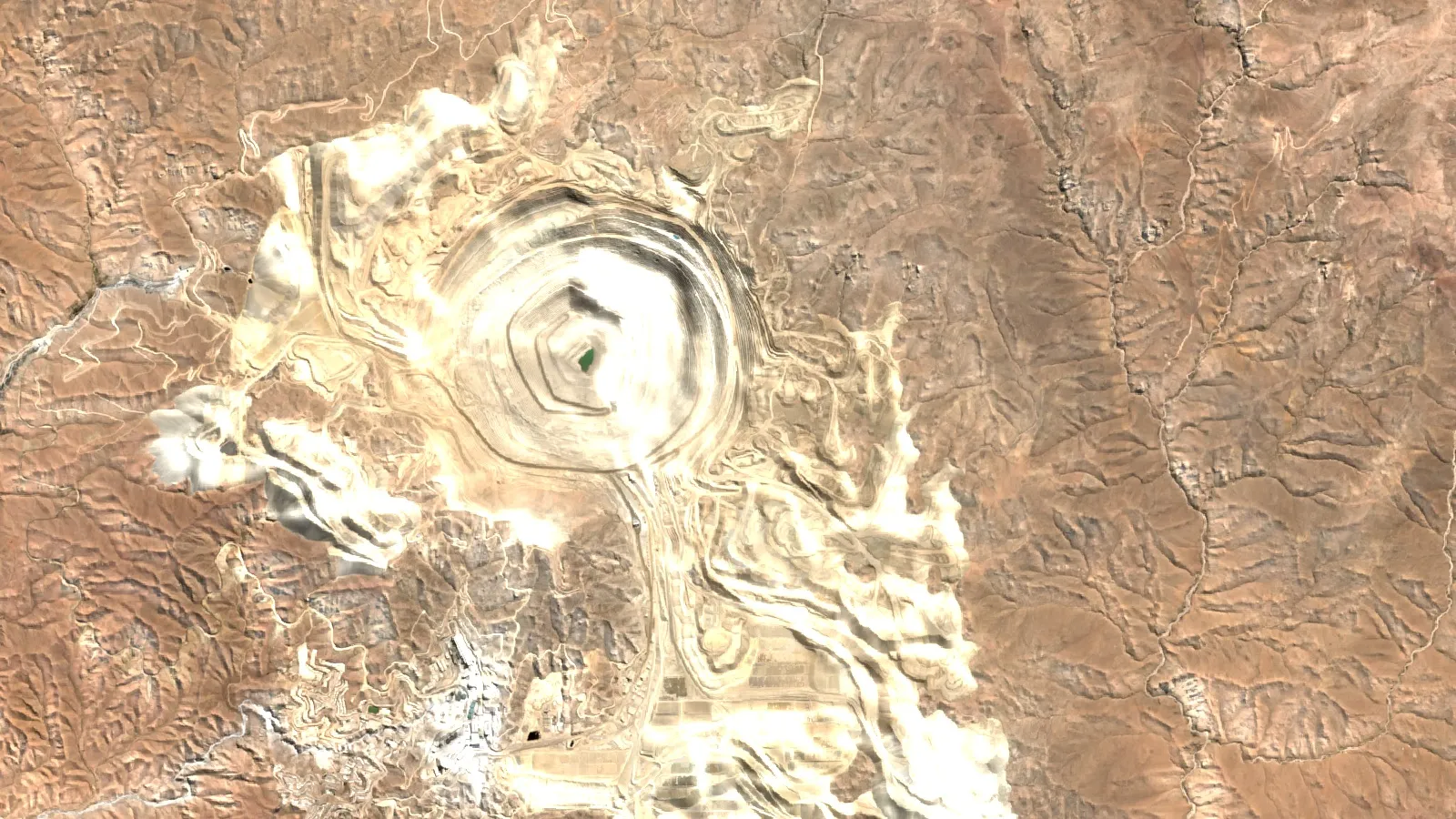
Key takeaways
- Disclosed process-cost inputs run from US$5.58 per tonne milled (Warintza pre-feasibility study, Solaris, 2025) to US$11.26 per tonne (Toquepala reserves, Southern Copper, 2025).
- At Warintza the same US$5.58 per tonne works out to about US$0.65 per pound of copper in the first five years and US$0.97 over the mine life, because grade falls from 0.44% to 0.31% (our arithmetic from Solaris, 2025).
- Reported mill recoveries run from 77.3% (Hudbay’s Copper Mountain, second quarter 2026, after a grinding limit) to 91.43% (Toquepala, 2025) in the table below (company filings, 2025 to 2026).
- A 2026 projection puts concentrate production at about 75% of Chilean copper-industry electricity in 2025, with the concentrator at about 3,477 kWh per tonne of fine copper at large mines (Cochilco, 2026).
- Operators report gains from reagent and control changes: about $1.00 per tonne at Copperwood (Highland Copper, 2025; currency not stated) and 0.75 recovery points at Centinela (Antofagasta, 2025).
In this article
- Copper flotation cost per tonne: the short answer
- How copper flotation works, step by step
- Concentrators and leach pads in copper beneficiation
- Process cost per tonne of ore, from public filings
- Cost per pound of copper: why grade and recovery decide the bill
- Copper recovery at working mills
- What drives the bill: power, grinding, reagents and water
- Ways plants have cut processing cost
- How to check a cost figure before you use it
- Tailings, water and the land around a concentrator
- Frequently asked questions
Copper flotation cost per tonne: the short answer
The six process-cost inputs reviewed for this guide, from one 2025 pre-feasibility study and three Southern Copper projects, run from US$5.58 to US$11.26 per tonne of ore milled. Other plants can fall outside this range. The low end is a 2025 pre-feasibility study for the Warintza project in Ecuador (US$5.58 per tonne milled, Solaris Resources, 6 November 2025). The high end is the reserve cost used for the Toquepala mine in Peru (US$11.26 per tonne, Southern Copper Form 10-K for 2025). Flotation is the main step inside that figure, but it also covers crushing, grinding, thickening and tailings pumping.
A cost per tonne of ore is only half the story. A tonne of ore that holds 0.31% copper yields far less metal than one that holds 0.44%, so the same US$5.58 buys a very different cost per pound of copper. In the Warintza study, our arithmetic gives about US$0.65 per pound of copper in the first five years and about US$0.97 over the whole mine life. The calculator below lets you run the same sum with your own numbers.
Terms used on this page: head grade is the copper content of the ore fed to the plant, shown as a percentage. Recovery is the share of that copper that ends up in the concentrate. Concentrate is the copper-rich product of flotation, often 25% to 30% copper, which goes to a smelter. Tailings are the ground waste rock and water left behind. Milled means fed to the grinding circuit.
How copper flotation works, step by step
Flotation separates copper sulfide minerals, such as chalcopyrite and bornite, from waste rock by making the copper minerals cling to air bubbles. The US Environmental Protection Agency describes it as the standard concentration method for copper and notes that about 75 percent of copper was produced this way when it wrote this 1994 technical document (US EPA, Technical Resource Document, Volume 4: Copper, August 1994). The steps below follow that document and standard plant practice.
Infographic
Copper flotation in 6 steps
- 1GrindCrush the ore, then grind it with water until copper minerals are freed.
- 2ConditionAdd collector, frother and lime so copper minerals repel water.
- 3FloatBlow air through rougher cells; copper minerals rise in the froth.
- 4Regrind and cleanRegrind the froth and float it again to lift concentrate grade.
- 5ScavengeRe-float the rougher tailings to catch leftover copper.
- 6Thicken and disposeFilter the concentrate; send tailings to storage and reuse the water.
- Crush and grind. Ore is crushed, then ground in mills with water until the copper minerals are freed from the rock. Porphyry ores are often ground to roughly 65 mesh (about 0.2 mm), then the first concentrate is reground finer (911Metallurgist).
- Condition with reagents. Collectors make copper minerals water-repellent, frothers make a stable foam, and lime sets the pH. The EPA lists xanthates, dithiophosphates and thionocarbamates as collectors, and aliphatic alcohols, pine oil and polyols as frothers.
- Rougher flotation. Air is blown through the slurry in a row of cells. Copper minerals rise in the froth; most waste sinks. This stage aims for high recovery, not high grade.
- Regrind and clean. The rougher froth is reground and floated again in cleaner cells to remove pyrite and other waste. Lime depresses pyrite so it stays in the tailings.
- Scavenge. Rougher tailings get a last, more aggressive pass to catch leftover copper. That froth is usually sent back to the regrind or rougher stage.
- Thicken, filter and dispose. The concentrate is thickened and filtered for shipping. Tailings go to a storage facility, and water is reclaimed for reuse.
Grade is set mainly by regrinding and cleaning, and recovery mainly by roughing and scavenging. That is why a plant that asks for a cleaner concentrate usually gives up some recovery, and why every ore needs its own test work before a circuit is designed.
Concentrators and leach pads in copper beneficiation
Beneficiation means upgrading ore before smelting or leaching. Copper plants use two main routes. Sulfide ore goes through grinding and flotation to make a concentrate, which is then smelted and refined. Oxide ore and some low-grade sulfide rock go to heap or dump leaching, then solvent extraction and electrowinning (SX-EW) to make cathode copper directly.
The split is clear in Chile. The Chilean Copper Commission (Cochilco) projects that making copper concentrates takes 20.5 TWh of electricity in 2025, about 75% of the copper industry’s power use, against 4.9 TWh (18%) for electrowon cathode (Cochilco, electricity projection 2025 to 2034, 2026). Southern Copper’s own mines use both routes: its Peruvian and Mexican sites run concentrators for sulfide ore and SX-EW plants for leach material, and the cut-off grade for each route differs (Southern Copper Form 10-K for 2025). At La Caridad in Mexico, the filing gives about 0.08% copper for the concentrator and about 0.01% for the leach pad.
The choice between routes is made block by block in the mine model, using recovery, selling cost and payable metal. For background on the deposit types that feed these plants, see our guide to copper deposits, top countries and where to explore.
▶ A short explainer on why electric vehicles use more copper than petrol cars and where much of it is mined. · 6:03
Process cost per tonne of ore, from public filings
The table lists processing-cost inputs that companies disclosed for open-pit copper sulfide projects. They are design or reporting assumptions, not audited plant costs, and they use different dates and metal prices, so compare them with care.
Chart
Process cost used in copper project filings
US$ per tonne milled; design or reporting inputs, not audited plant costs
| Project | Process cost (US$ per tonne milled) | Basis |
|---|---|---|
| Warintza, Ecuador | 5.58 | Pre-feasibility study, Solaris, November 2025 |
| Los Chancas, Peru | 5.82 | Mill process operating cost in resource pit parameters, Southern Copper, year-end 2025 filing |
| Cuajone, Peru | 8.21 (resource) and 9.72 (reserve) | Resource and reserve pit parameters, Southern Copper, 10-K for 2025 |
| Toquepala, Peru | 9.80 (resource) and 11.26 (reserve) | Resource and reserve pit parameters, Southern Copper, 10-K for 2025 |
Southern Copper states that the Cuajone and Toquepala parameters are unchanged from its 2024 year-end figures, and that resources use a copper price of US$3.80 per pound while reserves use US$3.30 (Southern Copper Form 10-K for 2025). Reserve costs are higher than resource costs at both mines.
Other disclosures use a wider basis. Hudbay reported combined mine, mill and general and administrative (G&A) unit costs of C$25.52 per tonne milled at Copper Mountain in British Columbia in the second quarter of 2026, which is not a flotation-only figure (Hudbay Minerals, second quarter 2026 results, 29 July 2026). Use that kind of number only as an all-in site cost.
For scale against price, USGS reports a 2025 estimated average COMEX copper price of 480 US cents per pound and a London Metal Exchange cash price of 440 cents (USGS Mineral Commodity Summaries, Copper, 2026). Check today’s price before you apply any of these costs.
Cost per pound of copper: why grade and recovery decide the bill
A concentrator spends the same on a tonne of ore whether it holds 0.3% or 0.6% copper. So the useful measure is cost per unit of metal. The formula is simple: process cost per tonne divided by pounds of copper recovered per tonne. Pounds recovered per tonne equals head grade (%) times recovery (%) times 0.2205.
Chart
Head grade against copper recovery
Copper grade % (x) and recovery % (y); Southern Copper grades are ore mined, others are ore milled or design
The Warintza study shows how much this matters. Its processing cost is flat at US$5.58 per tonne milled, but the head grade falls from 0.44% copper in the first five years to 0.31% over the life of the mine, and recovery falls from 89% to 84% (Solaris Resources, 6 November 2025). Our arithmetic from those figures gives the results below.
| Warintza period | Copper head grade | Recovery | Copper recovered per tonne milled | Process cost per pound of copper recovered |
|---|---|---|---|---|
| First 5 years | 0.44% | 89% | 8.6 lb | US$0.65 |
| First 15 years | 0.36% | 86% | 6.8 lb | US$0.82 |
| Life of mine | 0.31% | 84% | 5.7 lb | US$0.97 |
Unit costs per pound can rise by half without any change in plant efficiency, just because the ore gets poorer. This is why a mine plan that mines the richest ore first looks cheap early on. It is also why one extra point of recovery is worth more at a high head grade: it is a bigger share of a bigger number.
The scatter chart above compares head grade and recovery at several operations. Grade alone does not set recovery; mineralogy, grind size and plant design matter as much.
Calculator
What is your flotation cost per pound of copper?
Enter your own plant numbers. Results update as you type.
- Copper recovered per tonne milled (lb): 8.5
- Concentrate made per tonne milled (kg): 15.5
- Copper in concentrate per year (tonnes): 70,628
- Process cost per year (US$): $146,000,000
- Extra copper per year from +1 recovery point (tonnes): 821
- Value of that extra copper at your price (US$): $8,147,449
Example values only, not benchmarks. Pounds recovered per tonne = grade % x recovery % x 0.2205. Process cost covers the plant only: no mining, G&A, freight or smelting charges. Annual figures assume 365 days at full throughput. The copper value is before smelter charges and payable terms. Prices are inputs: use today’s price.
Copper recovery at working mills
Recovery is where flotation plants differ most. The table gives 2025 reported figures unless marked. Southern Copper’s grades are for ore mined, and Freeport’s and Hudbay’s are for ore milled.
Chart
Southern Copper: grade of ore mined, 2023 and 2025
Copper grade of ore mined, %
Chart
Freeport US copper mills: recovery 2021 to 2025
Copper recovery rate, % of copper in ore milled
Freeport’s Indonesia figures are for 2025, a year in which the company reported significantly lower volumes after the September 2025 mud rush at Grasberg, so treat that row as one year, not a steady state.
| Operation | Copper grade | Copper recovery | Source |
|---|---|---|---|
| Toquepala, Peru | 0.577% | 91.43% | Southern Copper 10-K, 2025 |
| Freeport, Indonesia mill | 1.10% | 87.9% | Freeport-McMoRan 10-K, 2025 |
| Buenavista, Mexico | 0.511% | 86.24% | Southern Copper 10-K, 2025 |
| Cuajone, Peru | 0.619% | 85.40% | Southern Copper 10-K, 2025 |
| La Caridad, Mexico | 0.322% | 85.2% | Southern Copper 10-K, 2025 |
| Freeport, US copper mills | 0.31% | 83.6% | Freeport-McMoRan 10-K, 2025 |
| Constancia, Peru (second quarter 2026) | 0.30% | 82.0% | Hudbay, 29 July 2026 |
| Copper Mountain, Canada (second quarter 2026) | 0.23% | 77.3% | Hudbay, 29 July 2026 |
Sources: Southern Copper Form 10-K for 2025, Freeport-McMoRan Form 10-K for 2025 and Hudbay Minerals, second quarter 2026 results.
The Copper Mountain figure shows how fast recovery can slip. Hudbay said copper recovery fell to 77.3% (from 81.0% a year earlier) in the second quarter of 2026 because ramping up mill throughput exposed a grinding limit in the ball mills, which made the grind coarser. The company listed grinding projects and advanced flotation process control as the response (Hudbay Minerals, 29 July 2026). Grinding and flotation are linked: a coarse grind leaves copper locked in rock that bubbles cannot lift.
At Freeport’s US mines the average head grade fell from 0.38% in 2021 to 0.31% in 2025, while mill recovery rose from 81.2% to 83.6% (Freeport-McMoRan Form 10-K for 2025). Lower grade did not stop better recovery, but it does raise the cost per pound. Southern Copper’s mined ore grade also shifted at each mine between 2023 and 2025, as the dumbbell chart shows.
What drives the bill: power, grinding, reagents and water
Four items account for most of a concentrator’s running cost.
- Grinding power. Cochilco’s 2026 projection puts the whole concentrator step (not grinding alone) at about 3,477 kWh per tonne of fine copper for large Chilean mines in 2025 (Cochilco, 2026). The Coalition for Eco-Efficient Comminution says on its website that comminution (crushing and grinding) uses about 1.8% of all electric power generated in the world (CEEC). Harder ore and finer grinds raise the bill.
- Grinding media and liners. Steel balls and mill liners wear out in proportion to tonnes ground, so they scale with throughput, not with copper grade.
- Reagents. Collectors, frothers, lime and flocculants are bought per tonne of ore. Dosage rises when ore is clay-rich, oxidised or carries a lot of pyrite.
- Water and tailings. Plants recover water from thickeners and pump it back. Where water is scarce, desalination adds to the cost. Cochilco expects seawater pumping and desalination to reach 5.4 TWh of electricity use by 2034.
Labour and maintenance sit behind these. Ask for the split in any technical report you read, because a plant at 60,000 tonnes a day and one at 5,000 tonnes a day have very different shares.
Ways plants have cut processing cost
Recent company reports give some concrete examples. They are claims from the operators and design studies, so treat them as case data and not as guarantees.
- Reagent scheme. Highland Copper said in October 2025 that an optimised reagent scheme at its Copperwood project in Michigan cuts processing cost by about $1.00 per tonne milled (the release does not state the currency). The redesigned circuit targets 87.6% recovery at a 25% copper concentrate (Highland Copper, 15 October 2025).
- Coarser grind and finer regrind. The same design uses a coarser primary grind, a de-sliming step and an ISAMill for regrinding to cut power. It also adds Jameson cells for ultrafine flotation, which shrink the plant footprint.
- Data-driven control. Antofagasta reported that its SIRO MINCO system at Centinela, which advises operators on grinding and flotation settings, lifted throughput by 1% and recovery by 0.75 percentage points in 2025 (Antofagasta plc Annual Report 2025).
- Fixing the grinding bottleneck. Hudbay’s Constancia is adding pebble crushers to raise mill throughput, and Copper Mountain has a second SAG mill running (Hudbay Minerals, 29 July 2026).
The calculator turns a gain like the Centinela 0.75 points into tonnes of extra copper per year for your own throughput and grade.
How to check a cost figure before you use it
A single number in a slide deck can hide a lot. Before you rely on a cost per tonne, check these points in the source report.
- What the tonne is. Tonnes milled, tonnes moved and tonnes of concentrate give very different numbers.
- What is inside. Does “processing” include tailings, plant maintenance, G&A, concentrate haulage and sustaining capital?
- Which currency and year. Costs in 2012 US dollars are not comparable with 2025 costs.
- Which copper price and cut-off. A higher price lowers the cut-off grade and brings poorer ore into the plan, which changes cost per pound.
- Grade and recovery. Ask for the head grade and recovery in each period, not just the life-of-mine average.
- Test work. Recovery should rest on locked-cycle flotation tests on samples that represent the whole deposit.
Cost is only one input to a mine decision. Net smelter return (NSR) royalties, which are charged on revenue after smelting and refining costs, are covered in our guide to NSR in mining. Before any plant can be designed, a project needs a drill-tested orebody. Farmonaut’s satellite-based mineral detection screens a licence area for copper-related alteration targets ahead of field work; the output is an exploration target, not a resource estimate. If you own a licence and want a quote, use the mining quote form, or contact us.
▶ Explains what an AI mining app does and the three jobs it can take on. · 3:52
Tailings, water and the land around a concentrator
Flotation leaves behind almost all of the ore as tailings. At a mine milling ore at 0.3% copper and making a 25% copper concentrate, roughly 99% of the milled rock ends up as tailings (our arithmetic). The Warintza study sizes its tailings management facility at 1.3 billion tonnes, which caps the mine life at about 22 years, and plans a gravity-fed layout to cut pumping energy (Solaris Resources, 6 November 2025).
Porphyry plants in dry regions usually send mill tailings to a large thickener first, so water can be reclaimed before the solids go to the dam (911Metallurgist, porphyry copper flotation). Neighbours will care about three things: where the tailings dam sits, where the water comes from and how the site is closed. A good report states all three with numbers.
For a closer look at a related question, see our guide: Antimony Price per Tonne: Chart and Drivers.
If this topic matters to you, read Oregon Sunstone Price Per Carat: Chart and Dig Costs next.
Frequently asked questions
What is copper flotation?
It is a process that uses air bubbles and chemicals to lift copper sulfide minerals out of finely ground ore as a froth. The froth is the concentrate; the rest is tailings. The US EPA calls it the standard method for concentrating copper (US EPA, 1994).
How much does copper flotation cost per tonne?
Disclosed processing-cost inputs for copper sulfide projects run from about US$5.58 per tonne milled (Warintza pre-feasibility study, November 2025) to US$11.26 per tonne (Toquepala reserve parameter, Southern Copper, 2025). The figure depends on scale, ore hardness, power price and what the company includes.
What is the cost per pound of copper in flotation?
Divide the process cost per tonne by the pounds of copper recovered per tonne. At US$5.58 per tonne, 0.44% grade and 89% recovery, the result is about US$0.65 per pound. At 0.31% and 84% it is about US$0.97 per pound.
What recovery can a copper flotation plant reach?
Reported recoveries in this guide run from 77.3% (Copper Mountain, second quarter 2026) to 91.43% (Toquepala, 2025). Most 2025 annual figures sit between 83.6% and 91.43% (Southern Copper, Freeport-McMoRan and Hudbay filings). Recovery depends on mineralogy, grind and plant design.
What reagents are used in copper flotation?
Collectors such as xanthates, dithiophosphates and thionocarbamates; frothers such as aliphatic alcohols, pine oil and polyols; lime to set pH and depress pyrite; and flocculants in the thickeners (US EPA, 1994).
What is the difference between roughers, cleaners and scavengers?
Roughers make a first, medium-grade concentrate. Cleaners upgrade it by removing pyrite and waste. Scavengers re-treat the rougher tailings to catch leftover copper.
Why is regrinding needed?
Ore may be ground coarsely enough to release most copper, but the rougher concentrate still holds locked grains. Regrinding it finer frees them so the cleaner cells can make a higher-grade product.
Is flotation used for copper oxide ore?
Flotation works best on sulfide minerals. Oxide copper is usually leached and processed by SX-EW, and mixed ores may use both routes. Southern Copper, for example, runs concentrators and SX-EW plants side by side.
How much energy does a copper concentrator use?
Cochilco’s 2026 projection gives about 3,477 kWh per tonne of fine copper for the concentrator step at large Chilean mines in 2025, and expects concentrate production to take about 75% of the industry’s electricity that year.
Can data and automation improve recovery?
Company reports say so. Antofagasta reported a 0.75 percentage point gain in recovery at Centinela from its control platform in 2025. Results depend on ore, instruments and operator practice, so test any such claim on your own plant data.
Where do I find a real flotation cost for a specific project?
Open the operating cost section of the project’s technical report on SEDAR+ or SEC EDGAR, or the annual report of a producer. Look for the cost per tonne milled, the year and currency, and the grade and recovery used.
This page is for information only. It is not investment advice. Cost inputs are company design or reporting assumptions; confirm current figures in the source reports.
Farmonaut mining
Get a quote to map your licence area from space
Send a KML, KMZ or polygon and Farmonaut screens the area from satellite images before ground crews go in.
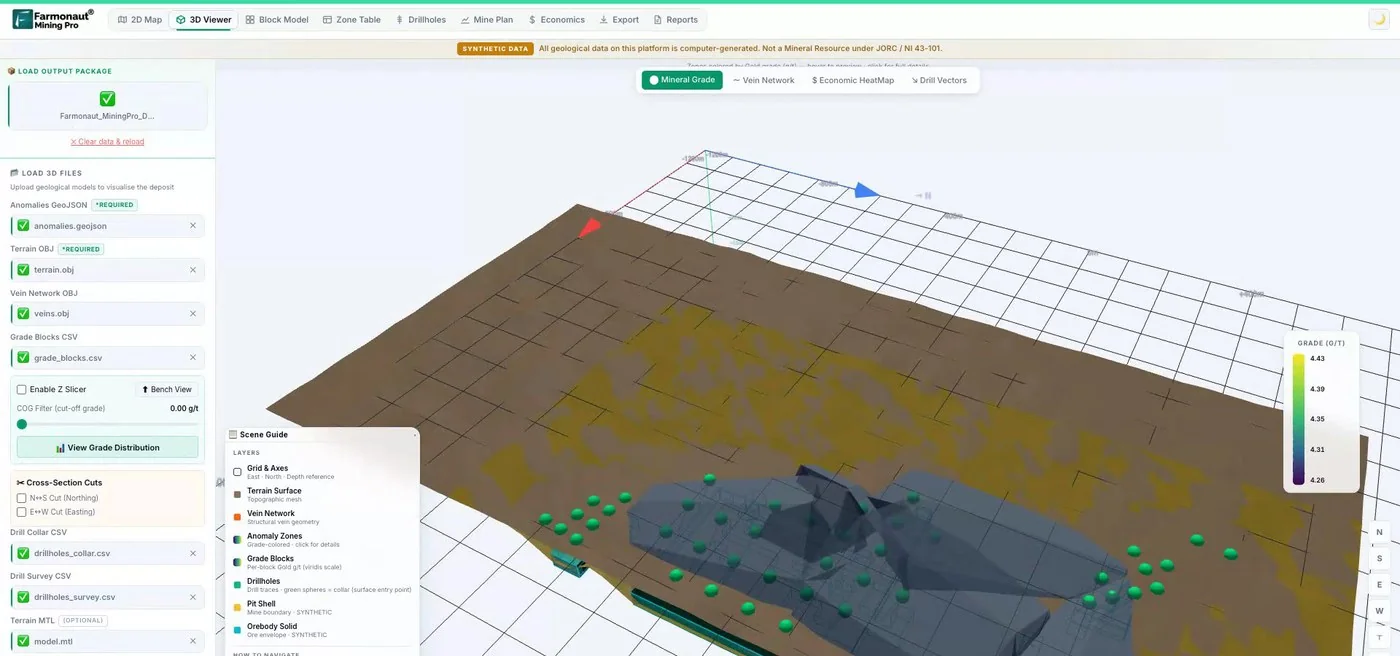
Mining Pro sample view, synthetic data
Keep reading
Sources
- Solaris Resources, Warintza Pre-Feasibility Study release (6 November 2025): solarisresources.com
- Southern Copper, Form 10-K for 2025: southerncoppercorp.com
- Freeport-McMoRan, Form 10-K for 2025: s22.q4cdn.com
- Hudbay Minerals, second quarter 2026 results (29 July 2026): s23.q4cdn.com
- Highland Copper, Copperwood Phase 1 engineering results (15 October 2025): highlandcopper.com
- Antofagasta plc, Annual Report 2025: antofagasta.co.uk
- Cochilco, Electricity consumption projection of Chilean copper mining 2025 to 2034 (2026): cochilco.cl
- US EPA, Technical Resource Document, Volume 4: Copper (August 1994): archive.epa.gov
- USGS, Mineral Commodity Summaries 2026: Copper: pubs.usgs.gov
- Coalition for Eco-Efficient Comminution (CEEC): ceecthefuture.org
- 911Metallurgist, Porphyry copper flotation: 911metallurgist.com
Discussion
Questions, corrections or field experience? Share them below. First-time comments are reviewed before they appear, and your email is never published.
No comments yet. Be the first to add a question or your experience.

 Rains of Favour
 Tintina Mining Group
 Dalgety Minerals Pty Ltd
 Vortex Minerals Pty Ltd
 Faith At Work (Pty) Ltd
 Geotech Mining Solutions plc
 Vulcan International Limited
 Kidepo Associates
 GKY Mining
 Alkimy SARL
 Double A Trading
 GemSprout Metals Limited
 Qader Group
 Ileys General Trading
 SG Gold Mining LLC
 VRV Global Pte Ltd
 Omsri International FZE
 G.I.T.T.
 Jaunita Erss Ltd
 Almosi SARL
 SRK Consulting
 Berks Gold Limited
 Mwerezi Minerals Company Limited
 Exploration consultancy · South Africa · Gold










