

- Introduction: Deepest Gold Mine Locations
- Trivia
- What Does “Deepest Gold Mine” Mean?
- World’s Top 7 Deepest Gold Mines (Comparative Table)
- Extreme Depth: Engineering Challenges & Innovations
- Ventilation Systems & Worker Safety
- Ore Handling, Processing & Environmental Management
- Geology of Deep Gold Mine Locations
- Deep Mining Meets Agriculture & Infrastructure
- Farmonaut Innovation in Deep Mining Exploration
- Video Insights
- Frequently Asked Questions
- Conclusion
Deepest Gold Mine Locations: World’s Top 7 Deep Mines
“South Africa’s Mponeng gold mine plunges over 4,000 meters deep, requiring advanced cooling and ventilation systems for safe operations.”
In the mining world, the quest to extract gold has ventured deeply beneath the Earth’s crust—redefining what’s possible in engineering, infrastructure, and sustainable management. The deepest gold mine locations push the boundaries of excavation, technological innovation, and environmental stewardship. This article delves into the deepest gold mine operations globally, revealing the systems needed to master extreme depths, robust ventilation strategies, and how the learned lessons from mining can inform immense agricultural and forestry projects.
The deepest mine in the world location is not just an engineering marvel, but also a showcase for risk mitigation, energy optimization, and environmental responsibility. The way these mines adapt to subsurface temperatures, rock pressures, and complex conditions resonates with challenges faced in soil management, drainage, and land-use practices in other sectors.
“The world’s top 7 deepest gold mines collectively reach depths exceeding 25,000 meters, showcasing extreme engineering and sustainability innovations.”
What Does “Deepest Gold Mine” Really Mean?
The concept of the deepest gold mine is best understood as a technical milestone: a testament to humanity’s ability to pursue valuable resource extraction in extreme underground conditions. It’s far more than just digging a deeper shaft or tunnel—it involves a sophisticated combination of vertical shafts, horizontal drifts, interlocking networks of elevators, hoisting systems, and conveyor belts. All these components move ore and personnel efficiently to and from the deepest points.
But as the mine goes deeper—often surpassing 4,000 meters—the plan must account for the greater heat load from surrounding rock, escalating pressures, and more complex logistics. Worker safety, comfort, and equipment reliability are constantly challenged by these factors, echoing the way agriculture must adapt to microclimate variations in enclosed facilities or terraced hillsides.
The deepest gold mine locations require precision monitoring, extensive ground control, and advanced ventilation systems–mirroring the technological and risk mitigation best practices in forestry, agriculture infrastructure, and energy management.
How Mining Depth Changes Everything
- ✔ Higher rock temperatures — can reach 60°C or higher at depth.
- ✔ Greater pressures — requiring robust support & frequent risk assessments.
- 📊 Increased operational complexity — deeper mines need more automation and advanced logistics.
- ⚠ Worker safety and ventilation needs rise sharply with depth.
- ✔ Sophisticated energy & water management systems are critical at depth.
Investing in deep mining operations isn’t just about gold output; it’s about supporting projects that can maintain strong safety, energy efficiency, and environmental controls—key to long-term value and social license to operate.
World’s Top 7 Deepest Gold Mines (Comparative Feature Table)
The table below compares the top 7 deepest gold mine locations in the world, evaluating each by depth, country, mining technology, ventilation type, and sustainable practices. This structured comparison directly supports smarter resource management and technological understanding.
| Mine Name | Location (Country/Region) | Estimated Depth (meters) | Annual Gold Output (tons, est.) | Mining System | Ventilation Technology | Sustainable Practices |
|---|---|---|---|---|---|---|
| Mponeng | Carletonville, South Africa | 4,000+ | ~10–12 | Conventional/Some Automation | Ice Cooling, Mechanical Ventilation | Water Recycling, Post-mining land planning |
| TauTona | Carletonville, South Africa | 3,900+ | ~5–7 | Conventional | Ice Cooling, Forced Air | Land rehabilitation, Dust Control |
| Goldfields South Deep | Gauteng, South Africa | ~3,000 | ~7–8 | Hybrid (Conventional, Automated Drilling) | Refrigeration, Mechanical | Water Use Reduction, Agricultural Integration |
| Driefontein | West Rand, South Africa | ~3,400 | ~10 | Conventional | Ice Cooling, Mechanical | Tailings Management, Land Restoration |
| Kusasalethu | Carletonville, South Africa | ~3,276 | ~7 | Conventional | Ice & Water Cooling, Mechanical | Water Recovery, Biodiversity Corridors |
| Moab Khotsong | Klerksdorp, South Africa | ~3,100 | ~6 | Conventional/Insert Automation | Forced Mechanical, Chilled Air | Water Recycling, Integrated Land Use |
| Great Noligwa | Klerksdorp, South Africa | ~2,600 | ~5 | Conventional | Mechanical Ventilation | Post-mining Soil Stabilization |
For explorers, South Africa is home to the majority of the world’s deepest gold mines; localized infrastructure and expertise there increase access to advanced ventilation and risk management technologies.

Extreme Depth: Engineering Challenges & Innovations in Deepest Gold Mine Locations
Mining at such depths brings a cascade of changes. Higher rock temperatures, greater rock pressures, and the need for robust operational systems are just the start. Each deeper step increases the requirement for reinforced networks, sophisticated ventilation, and redundancy measures to ensure worker safety and optimal ore control.
Underestimating the impact of heat loads and ventilation complexities at a newly established depth can jeopardize equipment reliability and worker comfort. Detailed pre-mining simulations and robust contingency planning are essential.
Key Engineering Strategies for Deep Mining
- ✔ Ground Support & Stabilization Practices: Including rock bolting, shotcrete, and ringed support systems—for collapse prevention and burst management.
- ✔ Drainage & Soil Management: Mitigating water ingress, subsurface erosion, and soil destabilization—very similar to large forest or agricultural engineering projects.
- ✔ Redundancy & Real-time Monitoring: Integrated safety systems and rapid response capabilities to adapt to dynamic underground conditions.
- 📊 Automated systems are increasingly used for environmental & safety monitoring and energy use optimization.
- ⚠ Careful Design: Merging vertical shafts and horizontal tunnels/drifts for efficient ore transport and personnel movement.
The deepest mine in the world location (Mponeng) uses multi-stage cooling and massive mechanical ventilation—technologies relevant for other closed-environment facilities in agriculture and timber processing.

Ventilation Systems & Worker Safety: The Critical Pillars of Deepest Gold Mine Operations
Ventilation in deep mining is a defining operational constraint. As we travel deeper, air temperatures rise, oxygen levels can dip, and hazardous gases such as methane become more concentrated. This creates a requirement for sophisticated ventilation systems that ensure safety and maximize comfort for every worker in extreme conditions.
- ✔ Ice Cooling: Deployed in shafts, lowering air temperature by more than 20°C.
- ✔ High-power fans, duct systems, and air curtains: Ensure efficient air flow and hazardous gas removal.
- 📊 Real-time gas monitoring for immediate safety interventions.
Why Robust Ventilation Systems Are Non-Negotiable
- ✔ Heat load control—managing combined rock and machinery heat, preventing health incidents among personnel.
- ✔ Energy efficiency—balancing the huge electricity draw required for cooling and air circulation, paralleling energy planning in large-scale agricultural greenhouses.
- ✔ Contingency protocols— ventilatory redundancy ensures safety during equipment failure or fire scenarios, echoing protocols crucial in timber and agricultural processing facilities.

Many deep mines are pioneers in water recycling and sustainable energy use. Some even seek to integrate land for post-mining agricultural projects—combining extraction with environmental stewardship.
Ore Handling, Processing & Environmental Management at Depth
At the core of deepest gold mine operations is not just the extraction—it’s the reliable and efficient movement of ore to surface facilities for processing. These operations must account for:
- ✔ Logistics: High-output hoisting systems and conveyor belts moving thousands of tons daily.
- ✔ Maintenance Regimes: Designed for reliability under extreme temperatures and at depth.
- ⚠ Dust & Water Management: Critical for both worker safety and environmental control.
- ✔ Tailings Containment: Preventing cross-contamination of soil and water—an agricultural and forestry best practice too.
Robust Environmental & Resource Management Parallels
- ✔ Precision water use—using less water and recycling all possible volumes.
- ✔ Soil conservation & restoration post-extraction—for both mining areas and surrounding rural land.
- ✔ Secure waste management systems—preventing environmental degradation and supporting regional development post-mining.

Ready to evaluate your own mining site from space? Map your area instantly & securely with Farmonaut’s satellite-based mineral detection tools. Click here to get started →
mining.farmonaut.com
Geology of Deepest Gold Mine Locations: Why Here?
The global distribution of the world’s most extensive deep mines is shaped by geological megastructures, tectonic histories, and mineralization events. Regions with deep crustal faults (like the Witwatersrand Basin in South Africa) house several of today’s top seven mines.
- ✔ Hydrothermal mineralization—ancient hot fluids deposited concentrated gold ore in deep fractures.
- ✔ Plate tectonics—created extensive hosting rocks, prime for both mining and geospatial satellite surveying.
- ✔ Infrastructure advantage—mineral industries in these locations benefit from deep engineering knowledge, specialized equipment, and mature support industries.
For land use planners in agricultural or forestry sectors, these mines offer an important lesson: site selection and geological understanding are equally critical to sustainable project outcomes.
Deep Mining Meets Agriculture & Infrastructure: Shared Technology & Practices
By pushing the frontiers of engineering, energy use, ventilation, water management, and safety, deep mines have developed solutions now echoed in timber processing, contaminant control in forestry, and especially in enclosed agricultural facilities (think of massive high-tech greenhouses).
- ✔ Energy optimization: Smart energy use and recovery from cooling/ventilation—helpful in controlled-environment agri/forestry projects.
- ✔ Microclimate and air quality management: Practices essential both underground (mines) and in greenhouses or timber drying sheds.
- ✔ Precision water use and drainage management: Lessons from mine water balancing are adopted in commercial agriculture and hillside terracing.
- 🌍 Sustainable site planning—integrating post-mine landscapes for future timber, recreation, or agriculture use.
- 🛠️ Ground stabilization—earthworks in mines mirror terracing in agricultural activities or forest excavation.
- 📈 Operational monitoring—real-time data use in mining is now a baseline for agriculture crop monitoring!

Farmonaut Innovation in Deep Mining Exploration
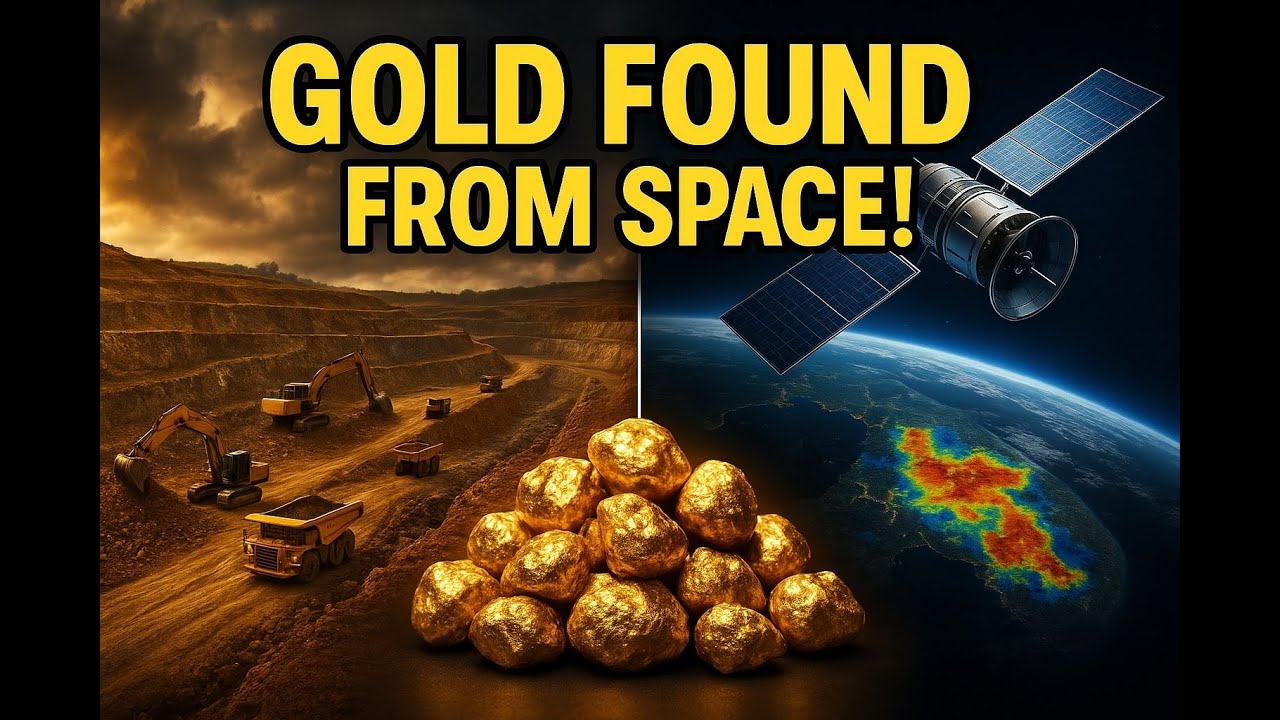
Today, the front lines of deepest gold mine discovery are dramatically shifting—thanks to satellite-driven mineral detection technologies. At Farmonaut, we transform how modern exploration is conducted by leveraging Earth observation, advanced remote sensing, and AI. Our approach means reduced operational costs, no ground disturbance in early exploration, and rapid area assessment—the new paradigm of responsible mining.
- ✔ Fast, non-intrusive site screening: Satellite-based prospectivity means less environmental risk and much faster results, supporting both mining and land stewardship.
- ✔ Multi-mineral analysis: We can map gold, battery minerals, base metals, and rare earths—even in areas adjacent to traditional agricultural and forestry land holdings.
- ✔ Sustainable exploration: No initial ground impact means lower carbon footprint and more responsible resource planning.
Our platform—delivering structured mineral intelligence reports, heatmaps, and interactive 3D drilling targets—bridges the gap between raw satellite data and actionable on-site mining operations.
To discuss mineral detection needs, rapid exploration, or technical inquiries, Get an instant quote from Farmonaut here.
For satellite-driven mineral detection that covers gold, lithium, base metals and more, see: Satellite-Based Mineral Detection by Farmonaut.
Looking for visual, 3D mineral prospectivity mapping for better drilling outcomes? Review Farmonaut’s advanced solution: Satellite Driven 3D Mineral Prospectivity Mapping.
Want to connect directly with us? Contact Us.

Visual Checklist: Key Attributes of Deep Mining Success
- 🛡️ Engineering Resilience: Robust ground-support, redundancy, strong safety focus
- 🌀 Energy Use Optimization: Smart cooling, efficient ventilation, and power management
- 📑 Environmental Stewardship: Water recycling, soil conservation, post-mining rehabilitation
- 🌐 Integration with Broader Sectors: Parallels in agriculture, forestry, and infrastructure design
- 🗺️ Modern Exploration Tools: Satellite analytics and 3D mapping for smarter decision-making
Deepest Gold Mine Locations: Additional Video Insights
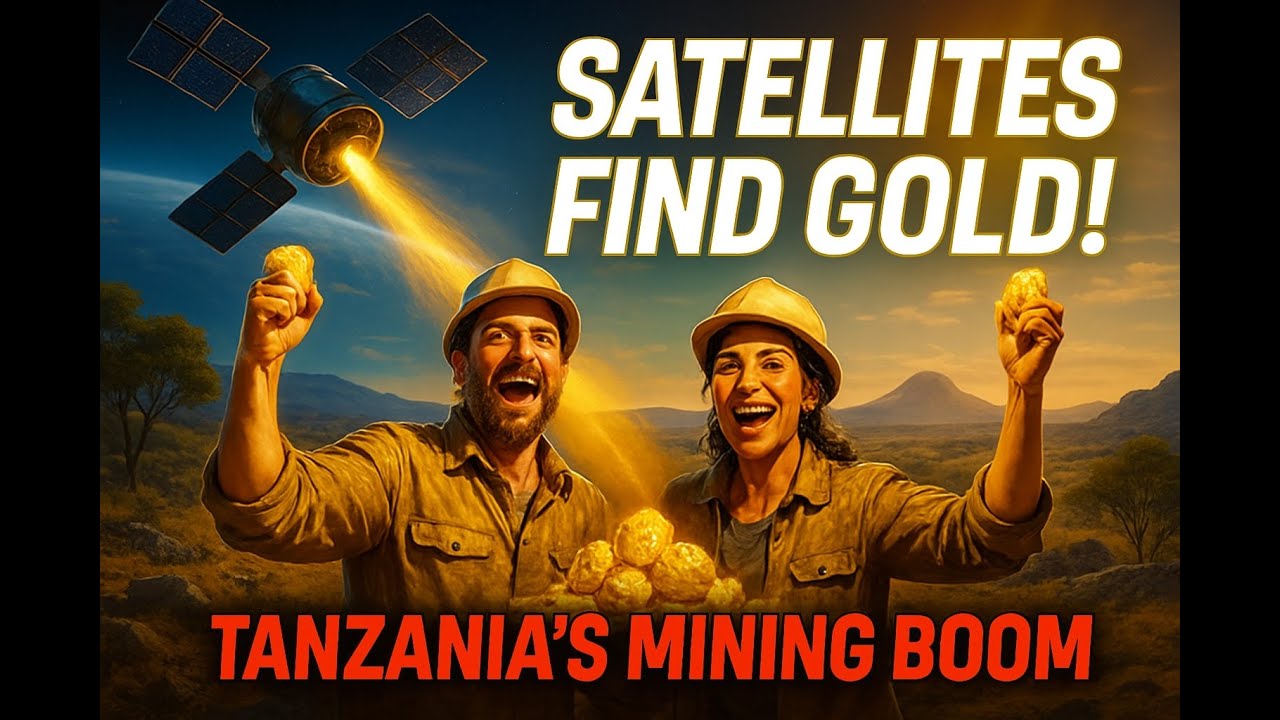
Explore how satellites are accelerating new gold discoveries, transforming deep mining, and reshaping traditional prospecting—all through these video resources. Watch, learn, and see the parallels to modern agriculture, resource management, and sustainable design.
- Gold Rush Arizona 2025: History & Modern Gold Mining Revival | Ultimate Guide
- Modern Gold Rush: Inside the Global Race for Gold | Documentary
- How Gold is Extracted from Mines | Full Guide
- Australia’s Gold Mining Revolution: Tech & Sustainability 2025
- Satellites Spark a New Alaska Gold Rush
- Satellites Find Gold! Farmonaut Transforms Tanzania Mining | News Report
- Satellites Revolutionize Gold Exploration in Kenya’s Heartland
- Mauritania’s Gold Rush: Uncovering Hidden Deposits with Satellite Data
Ready to compare global gold and battery mineral prospectivity?
See Farmonaut’s Satellite-Based Mineral Detection for gold, copper, lithium, rare earths, and more—spanning Africa, South America, and Asia.
Frequently Asked Questions
- What is the deepest gold mine in the world?
The Mponeng gold mine in Carletonville, South Africa, holds the current record—reaching depths of over 4,000 meters. It requires advanced cooling systems, reinforced ventilation, and robust ground control. - Why are most deep gold mines located in South Africa?
South Africa’s Witwatersrand Basin features unique geological structures rich in gold, enabling deep, large-scale mining. Also, the region has mature infrastructure for deep underground projects. - How do deep mining practices influence other industries?
Technologies from deep mines—like advanced ventilation, water management, and ground stabilization—are now adopted in agricultural and forestry operations, especially within enclosed facilities and challenging terrains. - What role does Farmonaut play in deep mining?
We leverage satellite-based mineral detection to accelerate, de-risk, and make mining exploration more sustainable and cost-efficient—no initial ground disturbance, rapid prospectivity mapping, and 3D visualization. - How does deep mining address environmental concerns?
Leading mines implement water recycling, controlled tailings disposal, soil conservation, and land restoration—with post-mining landscapes often planned for agriculture or forestry use.
Conclusion: Lessons from the Deepest Gold Mine Locations
The deepest gold mine locations demonstrate what’s possible when engineering innovation meets environmental stewardship. As we’ve explored, the “deepest gold mine” concept isn’t just about technical records: it’s a convergence point of safety, energy management, ventilation, soil and water control, robust monitoring, and multi-industry solutions.
At Farmonaut, we see the future of mineral exploration not just underground, but from above—using satellite analytics and AI to accelerate discovery, improve resource targeting, and integrate mineral intelligence with broader land, agriculture, and infrastructure planning.
- ✔ Modern deep mines redefine energy use, worker safety, and sustainable design.
- ✔ Technologies pioneered here now inform agriculture and forest engineering worldwide.
- ✔ Satellite-based mineral detection is revolutionizing project timelines, risk management, and region-wide resource stewardship.
- ✔ All stakeholders—miners, farmers, planners—benefit from lessons learned at the deepest frontiers of extraction.
To map your mineral project or discuss custom solutions: Use the Get Quote form or contact us directly. For instant project visualization, map your mining site here.
Key Takeaway: The pursuit of the world’s deepest gold mines links extractive ambition, engineering mastery, and sustainable resource management—with powerful lessons for agriculture, forestry, mining, and future infrastructure worldwide.
Discussion
Questions, corrections or field experience? Share them below. First-time comments are reviewed before they appear, and your email is never published.
No comments yet. Be the first to add a question or your experience.

 VRV Global Pte Ltd
 Omsri International FZE
 G.I.T.T.
 Jaunita Erss Ltd
 Almosi SARL
 SRK Consulting
 Berks Gold Limited
 Mwerezi Minerals Company Limited
 Mining SARL
 SenGold Invest SAS
 Sean Mining Limited
 NTS Group (Pty) Ltd
 Mine4Africa
 Lithspo Minerals Limited
 Tintina Mining Group
 Licence holder · Nigeria · Gold + lithium










