

Table of Contents
- Introduction: Dust Suppression Mining in 2025
- Trivia: Did You Know?
- Understanding Dust Generation in Mining Operations
- Impact of Dust: Health, Communities, and the Environment
- The Critical Role of Dust Suppression System in Mines
- Water-Based Dust Suppression Mining Technologies
- Foam & Chemical Agents in Advanced Dust Suppression
- Smart Dust Suppression Systems & IoT Integration
- Comparison: Traditional vs. 2025 Dust Suppression Systems
- Farmonaut: Satellite-enabled Mining Solutions for Sustainable Dust Control
- Environmental Compliance and Sustainability in Modern Mines
- Trivia: Green Innovations in Mining!
- Future Trends and Challenges in Dust Suppression Mining
- Frequently Asked Questions (FAQ) about Dust Suppression in Mines
- Conclusion: The Future of Dust Suppression in Mining
Dust Suppression Mining: Advanced System in Mines 2025
Mining continues to be a cornerstone of global economic development, supplying critical minerals, coal, and ores for industry. But as we move into 2025, the challenges associated with dust suppression mining have never been more pressing. The focus on dust suppression system in mines has gained prominence, with advanced technologies transforming how the industry controls particulate matter, ensuring safety, health, and environmental compliance.
In this in-depth blog, we unravel the intricacies of dust suppression in mines, examine advanced systems, highlight sustainability trends, and explore future directions, especially as regulatory standards tighten and sustainability becomes central.
Trivia: Did You Know?
“By 2025, advanced dust suppression systems can reduce airborne particulate matter in mines by up to 85%.”
Understanding Dust Generation in Mining Operations
Dust generation is an inevitable consequence of mining, arising from blasting, drilling, loading, transportation, and crushing. Particles produced by these activities are often classified as “respirable dust,” capable of penetrating deep into the lungs. Notably, silica dust—a frequent byproduct when mining for minerals and ores—poses serious health risks like silicosis, chronic obstructive pulmonary disease (COPD), and lung cancer.
The fine particulate matter produced not only threatens workers but also affects nearby communities and the local environment, contributing to overall degradation. Fine dust particles can remain airborne for long periods, traveling tens of kilometers from their source—making control a non-negotiable priority for modern mines.
Operationally, clouds of dust reduce visibility and increase the risk of accidents and costly interruptions. Regulatory bodies worldwide are steadily tightening limits on permissible emissions, compelling companies to adopt innovative dust suppression measures.

Impact of Dust: Health, Communities, and the Environment
Dust particles generated within mines don’t just vanish. They pose risks across multiple fronts:
- Worker Health: Respirable particulates (especially from silica) can lead to severe illnesses like silicosis, COPD, lung cancer, and other chronic pulmonary diseases. Ongoing exposure increases disease risks exponentially over time.
- Community Safety: Airborne dust travels beyond mine boundaries, impacting air quality in surrounding communities and contributing to respiratory problems for residents.
- Environmental Degradation: Dust settles on vegetation, soil, and surface water, impairing local ecosystems, reducing biodiversity, and contaminating rangeland and water resources.
- Operational Disruptions: Blinding dust clouds decrease visibility, increase accident risk, and require operational interruptions for safety.
- Regulatory Non-compliance: Failing to control dust emissions can result in fines, litigation, and, ultimately, mine closures.
Modern mining practices thus recognize dust suppression as a core requirement for environmental stewardship, worker protection, and community relations.

The Critical Role of Dust Suppression System in Mines
So, how do mining companies minimize airborne dust and stay compliant in 2025? Dust suppression system in mines—powered by a suite of innovative and efficient technologies—serve as the backbone of modern dust control strategies.
These systems use water, foam, or chemical dust suppressants to dampen dust at its source or across vast operational areas. Strategic integration of automation, IoT, and AI technologies enable mining operations to match dust suppression with real-time needs—reducing resource consumption and enhancing safety.
- **Water-based suppression: Utilizing advanced high-pressure and misting sprays, these systems are cost-effective, sustainable, and easy to deploy at multiple dust generation points.
- **Chemical and foam suppressants: Creating longer-lasting dust barriers, these reduce the frequency of application and water consumption, while also being tailored for eco-safety.
- **Smart, automated controls: Leveraging IoT sensors and AI, system activity is optimized to minimize both dust and resource waste, ensuring consistent compliance with environmental limits.
- **Customized configurations: Systems are often tailored—using fixed nozzles, cannons, conveyor-mounted units, and mobile fog vehicles—according to the unique conditions of each mine, whether surface or underground.
Let’s examine each system—and its technological advancements—in greater detail below.

Water-Based Dust Suppression Mining Technologies
Water remains the global medium of choice for dust suppression in mines—prized for its environmental safety and widespread availability. In 2025, advanced suppression systems have revolutionized water application via targeted, resource-efficient technologies:
Key Components of Water-based Dust Suppression
- High-Pressure Sprays: Fixed spray nozzles—mounted along conveyor belts, crushers, haul roads, and drilling rigs—emit a fine optimized droplet mist that captures dust before it becomes airborne. Droplet size is now controlled with smart tech, maximizing dust particle capture while using less water.
- Mobile Water Cannons: High-capacity cannons project mist across expansive loading zones, dump sites, and open surfaces. These are increasingly automated, adjusting angle, pressure, and direction based on real-time dust readings.
- Intelligent Misting Systems: Precision misting using sensor feedback ensures water is applied only when dust levels spike, dramatically improving water efficiency.
- Water Recycling Loops: Water-scarce mining regions now deploy closed-loop recycling in dust suppression, reducing fresh water withdrawals by up to 50%.

In all, water-based suppression systems in 2025 deliver measurable reductions in dust, use far less water, and are finely tuned for diverse mining conditions.
Foam & Chemical Agents in Advanced Dust Suppression
Foam and chemical suppressants are gaining popularity—especially in mines where water resources are limited or dust is especially fine and “floaty.” These agents form a physical barrier on dust-generating surfaces, trapping particles and minimizing re-entrainment by wind or vehicle movement.
In 2025, innovation in this space includes:
- Eco-friendly Foams: Modern foams use biodegradable polymers, are non-toxic, and can last days or weeks after a single application—cutting surface dust drastically without contaminating soil or water.
- Chemical Binders: Polymers and surfactants are used for haul roads, vehicle paths, and large stockpiles, binding dust securely to the surface.
- Reduced Water Use: Compared to traditional sprays, foam systems can cut water usage by over 60%, directly supporting mine sustainability targets.
- Targeted Application: Modern foam and chemical agents can be applied with drones or automated vehicles, reaching even the most inaccessible surfaces.
The deployment of chemical dust suppression in mines must always meet stringent environmental regulations, focusing on agents that do not leave toxic residues or damage local habitats.
Smart Dust Suppression Systems & IoT Integration
The future of dust suppression mining is decidedly smart. In 2025, leading systems use a network of sensors, AI, and automation to optimize dust control measures in real-time:
- IoT-Enabled Monitoring: Sensors continuously measure particulate concentrations, wind, humidity, and temperature at crucial dust-producing spots (e.g., crushers, haul road intersections).
- Automated Spraying: Systems automatically activate nozzles, cannons, or foam spreaders the moment dust indices exceed preset thresholds—ensuring compliance without waste.
- AI & Predictive Analytics: Machine-learning models forecast dust build-up under changing operational conditions, helping teams preemptively mitigate risks.
- Remote Management: Operators can remotely adjust system parameters, integrate with site-wide safety controls, and monitor compliance via mobile dashboards.
- Data Integration: System performance is logged, analyzed, and correlated with incident reports, supporting continuous improvement and simplified regulatory reporting.
Modern smart suppression systems enhance safety, improve transparency, reduce operational costs, and contribute to high environmental compliance rates in mining in 2025 and beyond.

Comparison of Traditional vs. Advanced Dust Suppression Systems in Mining (2025)
| Parameter | Traditional Systems (Estimated Values) | Advanced 2025 Systems (Estimated Values) | Environmental Impact |
|---|---|---|---|
| Dust Reduction Efficiency (%) | ~50-60% | Up to 85% | Significantly higher protection for health and biodiversity |
| Energy Consumption (kWh/ton) | 1.2–1.5 | 0.7–1.0 | Reduced CO2 emissions; lower operational cost |
| Water Usage (liters/ton) | 10–15 | 6–9 | ~40% water savings, supporting sustainability |
| Compliance Rate (%) | 70–75% | 95%+ | Reduces risk of regulatory penalties |
| Estimated Environmental Benefit (Ecosystem Score) | Low–Moderate | High–Very High | Improved air, water, and soil quality; enhanced community welfare |
(*Values are illustrative, reflecting industry benchmarks and projections for advanced dust suppression mining technologies.)
Farmonaut: Satellite-enabled Mining Solutions for Sustainable Dust Control
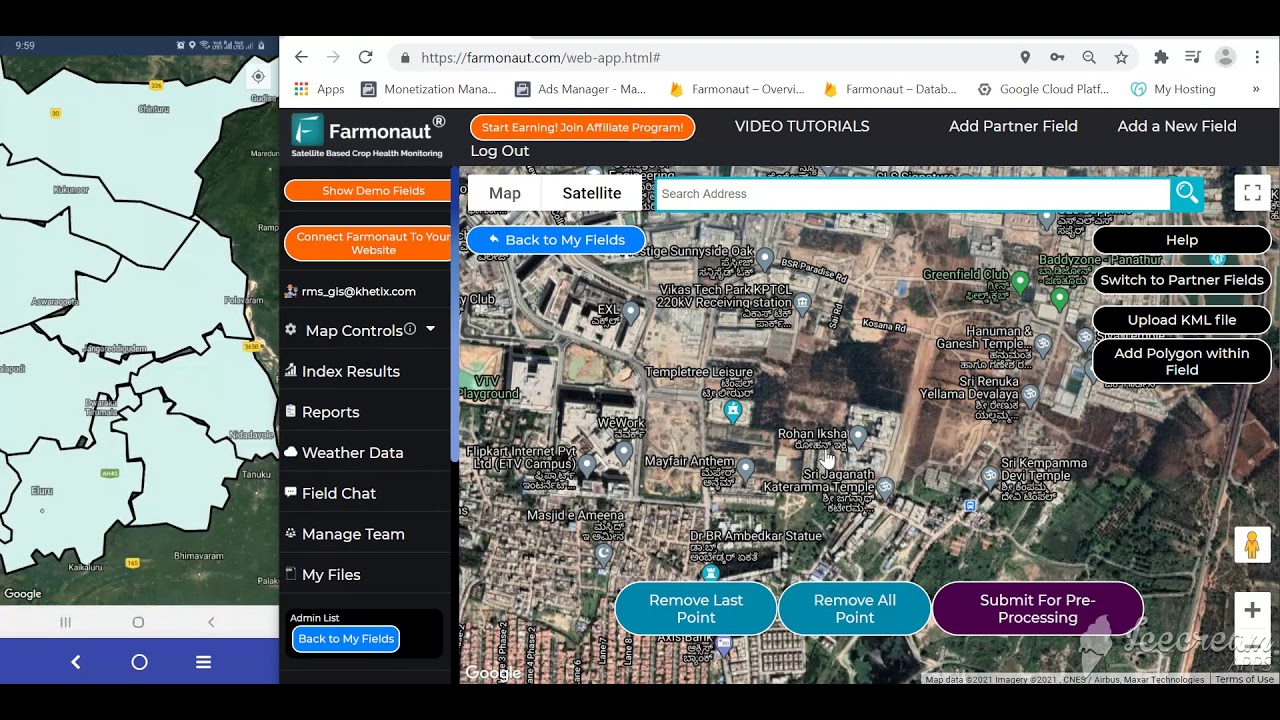
In today’s data-driven mining landscape, leveraging remote sensing and real-time insights elevates both safety and environmental performance. At Farmonaut, we are dedicated to transforming mining operations by integrating advanced satellite monitoring, AI advisory, and blockchain-based traceability into the sector.
-
Satellite-Based Environmental Monitoring:
Our multispectral imagery provides detailed analytics on dust dispersion, surface cover, and environmental changes across vast mining areas. This allows mining companies to track the effectiveness of dust suppression systems, detect emerging risks, and document compliance for regulatory reporting. -
AI Advisory for Dust Suppression:
With Jeevn AI, we offer predictive analytics on dust patterns, optimal timing for suppression activities, and actionable strategies to reduce risks and resource usage. -
Blockchain Traceability:
Our supply chain traceability solutions enable mining companies to verify and document every stage of dust suppression, from application tracking to compliance verification, enhancing trust and transparency. -
Fleet and Resource Management:
Mining operators can use our fleet management tools to optimize vehicle and machinery movement, further minimizing dust generation and maximizing safety on haul roads. -
Real-Time Environmental Impact Tracking:
From carbon footprint monitoring to biosphere health, our dashboard helps users align operational decisions with sustainability goals.
Farmonaut’s cloud platform is easily accessible via 

 . Developers can also explore our robust APIs for custom dust/ESG integration. See our developer documentation for more.

Environmental Compliance and Sustainability in Modern Mines
Ensuring sustainability is no longer optional for mining operations. Environmental regulations worldwide mandate strict control over dust, water use, and emissions. Compliance means more than just avoiding fines; it demonstrates a commitment to community welfare and global environmental protection.
- Air Quality: Advanced dust suppression system in mines reduce airborne particulates, preserving air quality for both workers and neighboring communities.
- Soil and Water Protection: By preventing dust fallout on nearby landscapes, mining companies safeguard local crops, surface water, and biodiversity.
- Water Conservation: Modern suppression technologies reduce the demand for fresh water, aligning with global priorities for sustainability in industries operating in arid regions.
- Climate Impact: Lowered energy and water usage, made possible via smart control, directly supports decarbonization targets for mining businesses.
Importantly, companies prioritizing environmental compliance gain a competitive edge in global markets, appealing to conscious investors and fulfilling social responsibility goals.
Trivia: Green Innovations in Mining!
“Sustainable dust control technologies in mining are projected to cut water usage by 40% compared to traditional methods by 2025.”
Future Trends and Challenges in Dust Suppression Mining
As mining continues to expand and climate unpredictability increases, new challenges and opportunities for dust suppression in mines arise.
Key Emerging Trends:
- Eco-Friendly Chemicals: R&D is focused on developing biodegradable, non-toxic dust suppressants that are effective yet environmentally benign, even at large scales.
- Energy-Efficient Operations: Integration of renewable energy, solar-powered pumps, and off-grid automation is improving the efficiency and sustainability profile of suppression systems.
- Drones & Autonomous Vehicles: Automated aerial and ground vehicles are poised to extend dust suppression coverage, especially to hazardous or hard-to-reach zones.
- AI-Powered Reporting: The use of advanced analytics for realtime reporting and regulatory submission will enable easier demonstration of compliance.
- Dry Dust Suppression: Methods involving binders, surface sealants, or electrostatic collectors minimize water consumption entirely, especially critical in arid mining geographies.
Principal Challenges Facing Mining Companies:
- Water Scarcity: Continuing need to conserve water in regions where mining and local communities rely on the same resource base.
- Cost Sensitivity: Advanced dust suppression mining technologies may have higher upfront costs, emphasizing the need for life-cycle savings backed by data (e.g., via Farmonaut reporting and monitoring).
- Stringent Compliance: Ever-tightening global regulations demand adaptive, near-instantaneous compliance mechanisms—which smart tech helps to enable.
- Changing Climate Conditions: Increased storms, droughts, and wind events may render historical dust management plans outdated, necessitating predictive and flexible systems.
- Community Expectations: Societal and investor pressure for sustainability commitments and transparent records is higher than ever.
Addressing these challenges requires a fusion of innovative technology, smart data strategies, and a commitment to sustainable mining practices.
Frequently Asked Questions (FAQ) about Dust Suppression in Mines
What is dust suppression mining, and why is it important in 2025?
Dust suppression mining refers to the suite of technologies and strategies used to minimize airborne dust in mining operations. By 2025, its importance has grown due to stricter environmental regulations, the need for worker safety, and increasing community and stakeholder demands for sustainable practices. Effective suppression not only reduces health risks but also helps mines maintain operational compliance and community goodwill.
How do modern dust suppression systems in mines work?
Advanced dust suppression systems use a combination of water sprays, mists, foam, and chemical suppressants applied at strategic points (such as crushers, haul roads, and drilling rigs). Integration with IoT sensors and AI allows these systems to operate automatically, responding to real-time dust detection for optimal efficiency and reduced resource usage.
Are chemical dust suppressants environmentally safe?
In 2025, eco-friendly dust suppressants have become standard, using biodegradable and non-toxic agents that bind dust to surfaces without leaving harmful residue. Responsible application and selection ensure environmentally safe dust control, meeting both operational and regulatory needs.
What role does satellite technology play in dust suppression mining?
Satellite technology, like Farmonaut’s, enables large-scale environmental monitoring, tracks dust plumes across vast areas, and provides real-time analytics to inform dust suppression planning and compliance documentation. This technology is invaluable for both operational optimization and transparent regulatory reporting.
How can mining companies ensure ongoing regulatory compliance?
Mining companies can maintain compliance by using advanced suppression systems equipped with smart sensors and by leveraging data management platforms (such as those provided by Farmonaut) for real-time reporting, documentation, and continuous system optimization.
Where can I access further integration tools for dust suppression monitoring?
Developers can access robust APIs and developer documentation at Farmonaut’s API page and developer docs to integrate environmental and dust monitoring into third-party systems.
Conclusion: The Future of Dust Suppression in Mining
Advanced dust suppression system in mines has become a pillar of responsible mining in 2025, demonstrating that safety, operational efficiency, and environmental sustainability can be realized together. From optimized water-based sprays to eco-friendly foams and smart sensor networks, modern dust suppression mining solutions are setting new standards for the global industry.
As regulatory frameworks continue to tighten and societal demands for environmental responsibility grow, mining companies must adopt these innovative dust suppression mining technologies. By doing so, they not only protect their workforce and communities but also ensure long-term operational resilience and planetary health.
At Farmonaut, we are proud to empower this evolution by offering cost-effective, satellite-driven, and AI-enhanced solutions for real-time monitoring, impact analysis, and strategic advisory—helping businesses worldwide remain efficient, sustainable, and compliant in the decades ahead.


