

Graphite · Market guide
US Graphite Mining Market: Projects and Import Data
The US graphite mining market has no mine output: the USGS reports 79,000 tons imported in 2025 (estimate) and five developers. See four projects compared by stage, with import data and a calculator.
Key takeaways
- No natural graphite was mined in the US in 2025; consumption was about 71,000 tons worth $128 million (USGS, February 2026).
- China produced an estimated 1.4 million of 1.8 million tons of world graphite in 2025, a share the USGS puts at 82%.
- Graphite Creek in Alaska reports 71.2 Mt of reserve at 5.22% graphite; Kilbourne in New York has a 1,200 t per year pilot plant (company filings, 2025 and 2026).
- Average US flake import value fell from $1,330 per ton in 2021 to $1,000 in 2025 (estimate, USGS).
- Commerce set duties on Chinese anode material in February 2026, but the trade commission voted against them on 12 March 2026.
In this article
- US graphite mining market at a glance
- Flake graphite basics: grade, flake size and price
- US flake graphite projects compared
- Imports, prices and trade rules
- Processing is the bottleneck: spherical graphite and anode material
- Estimate concentrate output and revenue
- How to check a US graphite project
- Where satellite data fits
- Frequently asked questions
The US graphite mining market is, for now, a market of imports and projects. The USGS reports that no natural graphite was mined in the United States in 2025. US companies used an estimated 71,000 tons, worth about $128 million, and imported an estimated 79,000 tons, of which 73.4% was flake and high-purity graphite (USGS, Mineral Commodity Summaries 2026). This page shows who is trying to change that, how far each project has got, what the trade rules say, and how to judge a graphite project from its filings.
US graphite mining market at a glance
Graphite is crystalline carbon. It is used in battery anodes, brake linings, lubricants, powdered metals, refractories and steelmaking. The USGS says the last US flake output came from Texas in 1979 and the last amorphous output from Montana in 1989. Net import reliance has been 100% in every year from 2021 to 2025 (USGS, 2026).
Chart
World graphite mine production, 2025 (estimate)
Tons; all other producers combined, including the US (none)
| Measure | Figure | Source and vintage |
|---|---|---|
| US mine production | None | USGS, 2025 estimate |
| Apparent consumption | 71,000 tons, valued at $128 million | USGS, 2025 estimate |
| Imports | 79,000 tons (73.4% flake and high-purity, 26.2% amorphous, 0.4% lump and chip) | USGS, 2025 estimate |
| Import sources | China 46%, Canada 13%, Mozambique 13%, Mexico 12%, other 16% | USGS, average of 2021 to 2024 |
| US graphite mining projects counted by USGS | Five companies: two in Alabama, one each in Alaska, Montana and New York | USGS, February 2026 |
| Share of world mine output from China | About 82% | USGS, 2025 estimate |
Worldwide, the USGS estimates mine output at 1.8 million tons in 2025, with China at 1.4 million tons. Madagascar, Tanzania, Brazil and Mozambique follow, each far smaller. Tanzania more than doubled its output to 75,000 tons in 2025, and Mozambique restarted the Balama mine in June 2025 after a pause that began in late 2024 (USGS, 2026).
Flake graphite basics: grade, flake size and price
Natural graphite comes in three commercial forms. Flake graphite occurs as plates in metamorphic rock. Amorphous graphite is fine-grained and lower in value. Lump or vein graphite is rare and comes mostly from Sri Lanka. The USGS shows the price gap clearly: the average unit value of US flake imports was $1,000 per ton in 2025 (estimate), against $470 for amorphous and $2,600 for Sri Lankan lump and chip.
Chart
Average value of US graphite imports by type
US$ per metric ton at foreign ports
Four terms matter when you read a graphite release:
- Graphitic carbon (Cg): the share of the rock that is graphite, as a percentage. It is the graphite equivalent of gold grade.
- Concentrate: the product after crushing, grinding and flotation. It is sold on carbon purity (often 94% to 97% carbon) and on flake size.
- Flake size: measured by sieve mesh or microns. One Australian developer, for example, reports its test product as super-jumbo above 500 microns, jumbo above 300 microns, large above 180 microns and medium above 150 microns (Resources Roadhouse, company release). The size bands are not set by one standard, so compare projects on the sieve data they publish, not on the label.
- Spherical purified graphite (SPG): flake that has been rounded and purified for battery anodes. Making it is a separate industrial step.
Grade also matters. A USGS data release notes that most flake deposits now mined worldwide contain at least 8 to 12 percent graphitic carbon in bodies larger than 0.5 million metric tons (USGS, Graphite deposits in the United States). The same release lists 10 US sites with more than 1,000 metric tons of graphite in resource or past production, in Alaska, Alabama, Colorado, Montana, New York, Pennsylvania and Texas. Large flake in a lower-grade rock can still compete if it is easy to float and sells at a premium, which is why test work on flake size is as important as the headline grade.
US flake graphite projects compared
How we chose: the table covers the three US graphite mining projects with a recent public filing and a resource or reserve estimate, plus one US plant that makes battery anode material. Figures are the company statements shown, with their dates. They are plans and estimates, not production.
| Project | Where | Stage | Key figures | Source and date |
|---|---|---|---|---|
| Graphite Creek (Graphite One, TSXV: GPH) | Seward Peninsula, Alaska | Feasibility study done; permitting | 71.2 Mt reserve at 5.22% graphite; 3.7 Mt contained; plan of 175,000 t concentrate per year | Company release, 27 March 2025; USGS, 2026 |
| Coosa and Kellyton (Westwater Resources, NYSE American: WWR) | Alabama | Permitting at the mine; plant partly built | Phase I plant cost about $245 million; about $130 million spent | Company releases, 13 May and 15 June 2026 |
| Kilbourne (Titan Mining, NYSE American: TII, TSX: TI) | St. Lawrence County, New York | Pilot plant running; feasibility study under way | 1,200 t per year pilot plant; 40,000 t per year plan; inferred resource 22 Mt at 2.91% Cg | Titan filing, 11 August 2026 |
| Vidalia (Syrah Resources, ASX-listed) | Concordia Parish, Louisiana | Operating plant, anode material | 11.25 ktpa capacity; expansion to 45 ktpa under evaluation | Company site |
Graphite Creek, Alaska
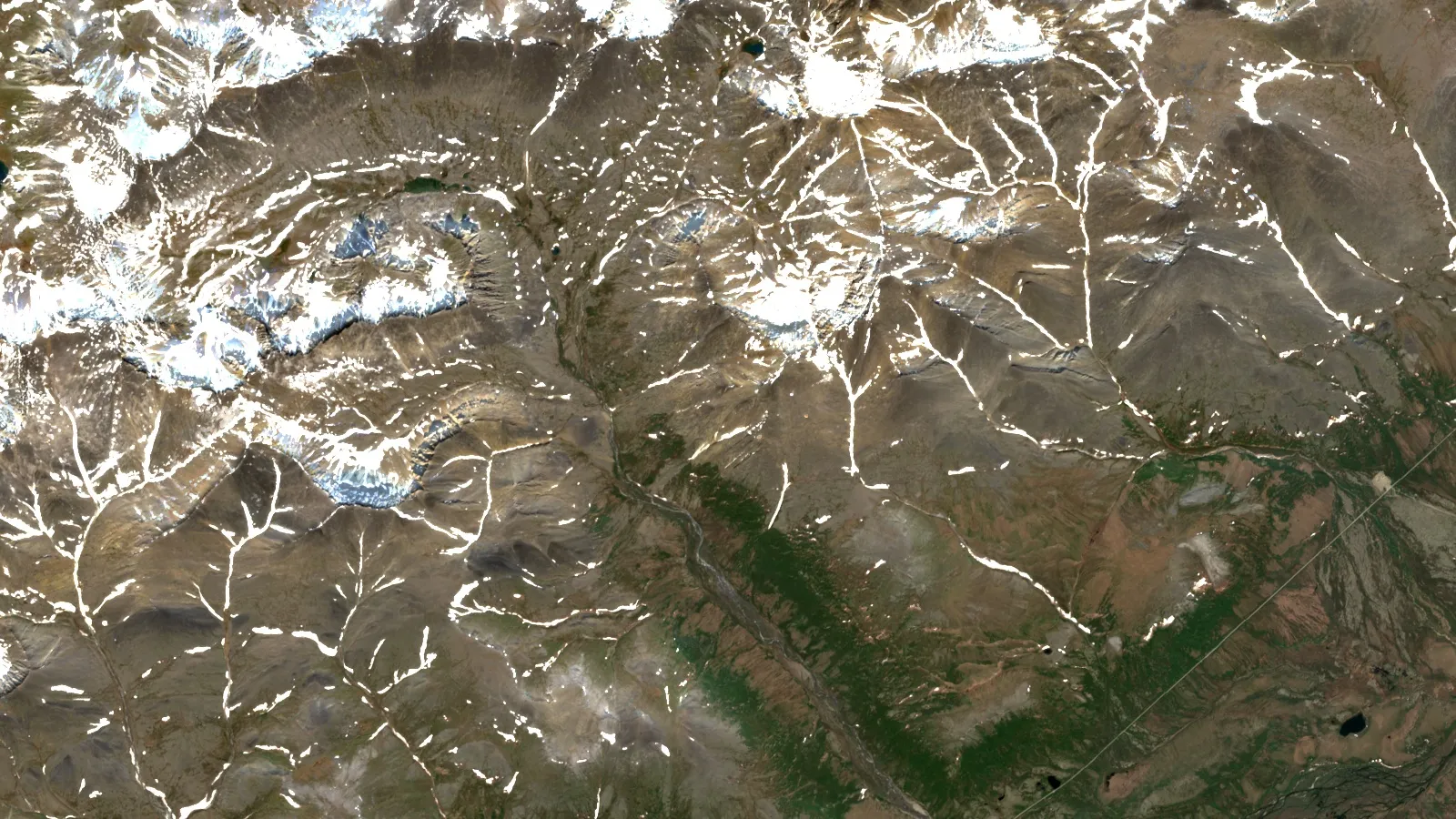
Graphite Creek lies about 60 km north of Nome on the Seward Peninsula, on State of Alaska claims. The company’s 2025 estimate is 71.219 million tonnes of proven and probable reserve at an average diluted grade of 5.22% graphite, holding about 3.7 million tonnes of graphite. Its resource uses a 2% cut-off grade, meaning rock below 2% graphite is left out of the count. The pit shown in the study covers only 1.9 km of a 15.3 km electromagnetic anomaly, so the company says the deposit is open along strike (Graphite One, 27 March 2025). The USGS quotes the plan as an average of 175,000 tons of concentrate a year over 20 years, and notes the project was added to the federal FAST-41 permitting dashboard.
A USGS study of the deposit calls it the largest known flake graphite resource in the USA and among the largest in the world (quoted in a Graphite One release, 9 March 2023). What to watch: permitting, remote logistics in northwest Alaska, and where the concentrate would be processed into anode material. For the related exploration methods, see our guide to graphite exploration and nickel, cobalt and vanadium targets, and our note on a another graphite mining project.
Coosa and Kellyton, Alabama
Westwater describes Coosa as the largest natural flake graphite deposit in the contiguous United States, which is a company statement (Westwater, 13 May 2026). In the first quarter of 2026 the project received FAST-41 covered-project status, and the company filed a state water-discharge permit application with the Alabama Department of Environmental Management. On 15 June 2026 it submitted its Section 404 Clean Water Act application to the US Army Corps of Engineers; air permitting is still in progress, and no permit has been issued. At Kellyton, a plant designed to make coated spherical purified graphite, the company reports about $130 million invested in Phase I, an unchanged cost estimate of about $245 million, and cash of about $41.5 million on 31 March 2026. It says first production is expected about 12 months after the remaining financing is secured. SK On ended a 2024 products procurement agreement, so the plant has no named anchor buyer in that release. The USGS notes that a qualification line was commissioned at Kellyton.
Kilbourne, New York
Titan Mining is a zinc producer, and Kilbourne sits next to its Empire State Mine. Its 2024 inferred resource, constrained to an open pit, is 22 million tons at 2.91% Cg, holding 653,000 tons of graphite. The 1,200 tonne a year demonstration plant began making concentrate in January 2026, shipments for customer qualification started in March 2026, and a feasibility study for a 40,000 tonne a year project was launched in March 2026. The company targets a construction decision by early 2027, subject to the study, permits and financing (Titan Mining, management discussion for the June 2026 quarter). Using an existing mill and site is the project’s main advantage. An inferred resource is the least certain class, so the grade and tonnes can still change.
Vidalia, Louisiana
Vidalia is not a mine. It is a plant in Concordia Parish that turns graphite into battery anode material. Syrah says it started production in the first quarter of 2024 at 11.25 ktpa (thousand tonnes per year) and is evaluating a 45 ktpa expansion (Syrah Resources). The USGS says spherical purified graphite was made in the United States by two companies, in Illinois and Louisiana, and does not name them; Vidalia is the Louisiana plant making battery anode material. Processing is being built before most US mines.
Imports, prices and trade rules
US imports of natural graphite rose from 53,000 tons in 2021 to 89,200 in 2022, then ran at 73,500 to 79,000 tons a year through 2025 (USGS estimate). Exports are small, between 7,780 and 9,500 tons. The average unit value of imported flake fell from $1,330 per ton in 2021 to $1,000 in 2025 (estimate). That is a value at foreign ports, not a delivered or spot price, so check a current price assessment before you build a model.
Chart
US imports of natural graphite
Tons per year
Trade rules changed quickly around the anode material that is made from graphite:
- Tariff on flake: the USGS tariff table lists crystalline flake (HTS 2504.10.1000) at a normal trade relations duty rate of zero as of 31 December 2025.
- Anti-dumping case: the US Department of Commerce announced final affirmative anti-dumping and countervailing duty findings on Chinese active anode material on 11 February 2026, with anti-dumping margins of 93.50% for the named exporters and 102.72% for the China-wide entity (US International Trade Administration).
- Trade commission vote: the US International Trade Commission voted negative on 12 March 2026, so those duties did not take effect (USITC news release; Solar Power World, 12 March 2026). The USGS summary, dated February 2026, still describes only the preliminary rates.
- Chinese export controls: China suspended licence rules for artificial graphite anode materials from 7 November 2025 until 10 November 2026 (Herbert Smith Freehills Kramer, 21 November 2025).
Imports of anode material, natural and synthetic, were 43,400 tons in the first eight months of 2025 against 28,100 tons a year earlier, and China supplied 55% of them (USGS). Policy changes therefore hit the processed product more than the raw flake.
Processing is the bottleneck: spherical graphite and anode material
A mine alone does not supply a battery plant. The flake must be milled, rounded into SPG, purified, coated and tested by the customer, a step that often takes months. The USGS reports that SPG was made in the United States by two companies, in Illinois and Louisiana, and that at least eight other companies were considering US SPG plants. China exported 37,400 tons of SPG in the first nine months of 2025, 29% more than a year earlier, and Chinese companies were building or considering SPG plants in Indonesia, Finland, Malaysia, Morocco, Oman and Sweden (USGS, 2026).
For a US mine, this means the concentrate price is only part of the story. Buyers also ask about purity, flake shape after rounding, emissions and the origin of the ore. The USGS lists synthetic graphite powder as a competing material in battery uses, so a US mine competes with man-made graphite as well as with Chinese flake.
Estimate concentrate output and revenue
The calculator below turns a mine plan into concentrate tonnes and revenue. It uses the same logic as a feasibility study: ore mined, times grade, times recovery, divided by the purity of the product you sell.
Calculator
How much concentrate and revenue could a graphite mine make?
Enter your own mine plan to see concentrate tonnes, revenue and ore per tonne sold.
- Revenue per year (US$): $134,210,526
- Ore mined per tonne of concentrate: 22.4
Example values only, not a benchmark or a forecast. Ore grade, recovery and product purity come from a study; the concentrate price is an input (example, use today’s price).
How to check a US graphite project
- Separate resource from reserve. A resource is mineralisation with reasonable prospects of extraction. A reserve is the part shown to be economic. Graphite Creek reports reserves, Kilbourne an inferred resource.
- Look for flake size test work. A grade without a sieve table does not tell you the price.
- Read the permit status. FAST-41 coordinates federal agencies but does not guarantee a permit. List each permit still open.
- Find the buyer. Is there a signed offtake, or only samples in qualification? One anchor agreement at Kellyton ended in 2026.
- Match the funding to the capital cost. Compare cash on hand with the stated build cost, and note whether the company expects to raise more.
- Check the processing route. Know where the concentrate becomes SPG, and who pays for it.
- Check each claim against a filing. Treat headline words such as largest, only or first as marketing until you find the document.
This page is not investment advice.

▶ How AI is used in mineral exploration, where it fails, and how to check any claim. · 4:37
Where satellite data fits
Satellites do not detect graphite at depth. Flake graphite deposits are often explored with electromagnetic geophysics, because graphite conducts electricity; Graphite Creek is outlined by a 15.3 km electromagnetic anomaly. Satellite imagery helps before and around that work. It maps terrain, snow and vegetation cover, structures, road access, wetlands and neighbouring claims, so a team can plan a survey and see land constraints early. Our guide to electromagnetic survey methods explains the geophysics. Farmonaut works from your boundary file (KML, KMZ or polygon) and returns a report in 5 to 20 business days; see satellite-based mineral detection, or send your area or contact us for a quote. Satellite results are exploration targets, not a resource estimate.
▶ A short explanation of what remote sensing does for mining projects. · 2:01
Frequently asked questions
Does the United States mine any graphite?
No. The USGS reports no domestic natural graphite production in 2025, with flake last produced in Texas in 1979 and amorphous in Montana in 1989. Five companies were developing projects in 2025 (USGS, 2026).
How much graphite does the United States use?
The USGS estimates apparent consumption at 71,000 tons in 2025, valued at $128 million, with imports of 79,000 tons.
Where are the US graphite deposits?
A USGS data release lists 10 sites in Alaska, Alabama, Colorado, Montana, New York, Pennsylvania and Texas that have more than 1,000 metric tons of graphite in resource or past production.
What is the largest flake graphite deposit in the US?
A USGS report calls Graphite Creek in Alaska the largest known flake graphite resource in the USA. Westwater calls Coosa in Alabama the largest in the contiguous states, a company statement.
Which countries supply graphite to the US?
For 2021 to 2024 the USGS lists China at 46% of imports, Canada 13%, Mozambique 13% and Mexico 12%.
How much does flake graphite cost per tonne?
The USGS puts the average unit value of US flake imports at $1,000 per ton in 2025 (estimate), measured at foreign ports. Current quotes depend on flake size and purity, so use a dated price assessment.
Why does flake size matter?
Larger flakes usually sell at higher prices and survive purification and rounding better. Producers report size as a share of product above set mesh or micron sizes, and the bands differ between companies.
What is spherical graphite?
It is flake graphite that has been milled into rounded particles and purified for battery anodes. The USGS says two US companies made it in 2025, in Illinois and Louisiana.
Can synthetic graphite replace natural graphite?
In some uses it can. The USGS lists synthetic graphite powder, scrap and calcined petroleum coke as substitutes in iron and steel, and synthetic graphite as a competitor in batteries.
Is graphite a critical mineral?
The USGS describes graphite as a critical and strategic mineral because of its use in the aerospace and energy sectors (USGS data release on US graphite deposits).
Are there tariffs on Chinese graphite?
Natural flake graphite carried a zero duty rate at normal trade relations at the end of 2025. Duties on Chinese anode material were set by Commerce in February 2026 but did not take effect after the March 2026 trade commission vote.
This page is for information only. It is not investment advice. It names no security to buy or sell. Check company filings and speak to a licensed adviser.
Farmonaut mining
Map your project area from space
Send your boundary file and get a satellite screen of terrain, structure and access before you plan field work.

Mining Pro sample view, synthetic data
Keep reading
Sources
- USGS, Mineral Commodity Summaries 2026: Graphite (Natural) (February 2026): pubs.usgs.gov
- USGS, Graphite deposits in the United States (data release, 2022): data.usgs.gov
- Graphite One, updated resource and reserve estimates (27 March 2025): graphiteoneinc.com
- Graphite One, release quoting USGS report on Graphite Creek (9 March 2023): graphiteoneinc.com
- Westwater Resources, first quarter 2026 results (13 May 2026): s21.q4cdn.com
- Titan Mining, Form 6-K management discussion, June 2026 quarter (SEC): sec.gov
- Syrah Resources, Vidalia spherical graphite project: syrahresources.com.au
- US International Trade Administration, final AD and CVD determinations on active anode material (February 2026): trade.gov
- Solar Power World, ITC votes negative on anode material duties (12 March 2026): solarpowerworldonline.com
- Herbert Smith Freehills Kramer, China suspends export controls on anode materials (21 November 2025): mondaq.com
- Resources Roadhouse, Valence flake size distribution release: resourcesroadhouse.com.au
- USITC, news release on negative final votes, active anode material from China (12 March 2026): usitc.gov
- Westwater Resources, Section 404 permit application for Coosa (15 June 2026): s21.q4cdn.com
Discussion
Questions, corrections or field experience? Share them below. First-time comments are reviewed before they appear, and your email is never published.
No comments yet. Be the first to add a question or your experience.

 Berks Gold Limited
 Mwerezi Minerals Company Limited
 Congo Mining Solutions
 Mining SARL
 SenGold Invest SAS
 Sania Corporation
 Sean Mining Limited
 NTS Group (Pty) Ltd
 Mine4Africa
 Lithspo Minerals Limited
 Tintina Mining Group
 Dalgety Minerals Pty Ltd
 Vortex Minerals Pty Ltd
 Faith At Work (Pty) Ltd
 Geotech Mining Solutions plc
 Vulcan International Limited
 Kidepo Associates

 Licence holder · Nigeria · Gold + lithium










