

Gold exploration · Buyer guide
9 Gold Exploration Survey Tools and Software, With Costs
Ground magnetics are capped at C$250 per km, IP at C$2,200 per km and lab analysis at C$70 per sample in one Canadian rebate scheme (2024); Leapfrog Geo is US$164.25 per day. Nine tools in order of use, with a budget calculator.
Key takeaways
- Newfoundland and Labrador rebate ceilings (2024): ground magnetics C$250/km, airborne geophysics C$500/km, IP C$2,200/km, laboratory analysis C$70/sample.
- A Yukon gold project budgets C$400 to C$700 per metre for all-in diamond drilling in its 2026 plan (Sitka Gold technical report, July 2026).
- Seequent lists Leapfrog Geo at US$164.25 per day, capped at US$2,463.75 a month, plus a US$420 activation fee (October 2026); QGIS has no licence fee.
- Arsenic, antimony, copper, lead and silver were the best soil pathfinders for gold in a USGS Alaska study (Bulletin 1312-K, 1971).
- Satellite alteration mapping narrowed an Egyptian gold area to about 1.6% high-potential ground (Remote Sensing, 2021).
In this article
A first-pass gold survey on a licence usually costs far less than the drilling it is meant to direct. A Canadian provincial rebate programme caps ground magnetics at C$250 per kilometre, induced polarization (IP) at C$2,200 per kilometre and a geochemical analysis at C$70 per sample (Newfoundland and Labrador Junior Exploration Assistance guide, 2024). A Yukon gold project budgets C$400 to C$700 for every metre of diamond drilling, all costs included (Sitka Gold technical report, July 2026). This page lists nine survey tools and software packages for gold exploration, in the order a programme normally uses them, with the cost figures each publisher gives and a calculator for your own line-kilometres and sample counts.
It is written for consultants and licence holders who need to price a survey sequence, not for readers looking for a definition. Every price below is dated and comes from a rate sheet, a price page or a filed technical report. Prices of software and contractors change often, so use them to size a budget, then ask for quotes.
How the nine tools were chosen
The list covers the work that a gold target normally passes through before a drill rig arrives: desk data and GIS, satellite screening, soil geochemistry, ground and airborne geophysics, and 3D modelling. We included a tool when we could find a published price, rate or filed example of its cost, or when the vendor states clearly how it is bought. Where a vendor sells only on quote, the entry says so. The tools are not ranked against each other, because a magnetometer and a modelling package do different jobs; the order follows the work.
Three limits apply. First, the per-kilometre rates are maximum claimable amounts in a government rebate scheme, which means they are ceilings and not market quotes. Second, they come from one Canadian province, so costs in Nevada, Ghana or Western Australia will differ with access, labour and fuel. Third, gold behaves differently in different rocks: it can sit in quartz veins, in sulphide-rich intrusions or in fine disseminated form, and the best survey follows the deposit style.
Nine gold exploration survey tools and software, with costs
1. Public geoscience data and open-source GIS
Best for: the first week of any project, before money goes into the field.
Cost: QGIS is open-source software with no licence fee (QGIS project), and it runs on Windows, Mac and Linux. Government geological surveys publish maps, drillhole records and geophysics grids that you can load into it. The Ontario and British Columbia public databases are walked through in our guide to public geoscience data before staking.
Pros: no licence cost, large plugin library, easy to share with a client. Cons: no built-in 3D drillhole tools, and support comes from the user community unless you hire a consultant.
2. Commercial GIS with exploration add-ons
Best for: teams that already use Esri systems or need formal vendor support.
Cost: Esri sells ArcGIS Online through annual user-type licences (Esri, ArcGIS Online purchase page) and does not list a price on that page; a quote comes from its sales team. Add-ons are separate: Seequent sells Target for ArcGIS Pro, which works inside ArcGIS Pro (Seequent), and Datamine offers exploration plugins for ArcGIS Pro and MapInfo that link to its field mapping tool (Datamine).
Pros: mature tools, vendor training, wide data support. Cons: price on request, and add-ons raise the total.
3. Satellite alteration screening
Best for: large or remote licences where ground access is slow and you want a ranked list of areas to visit first.
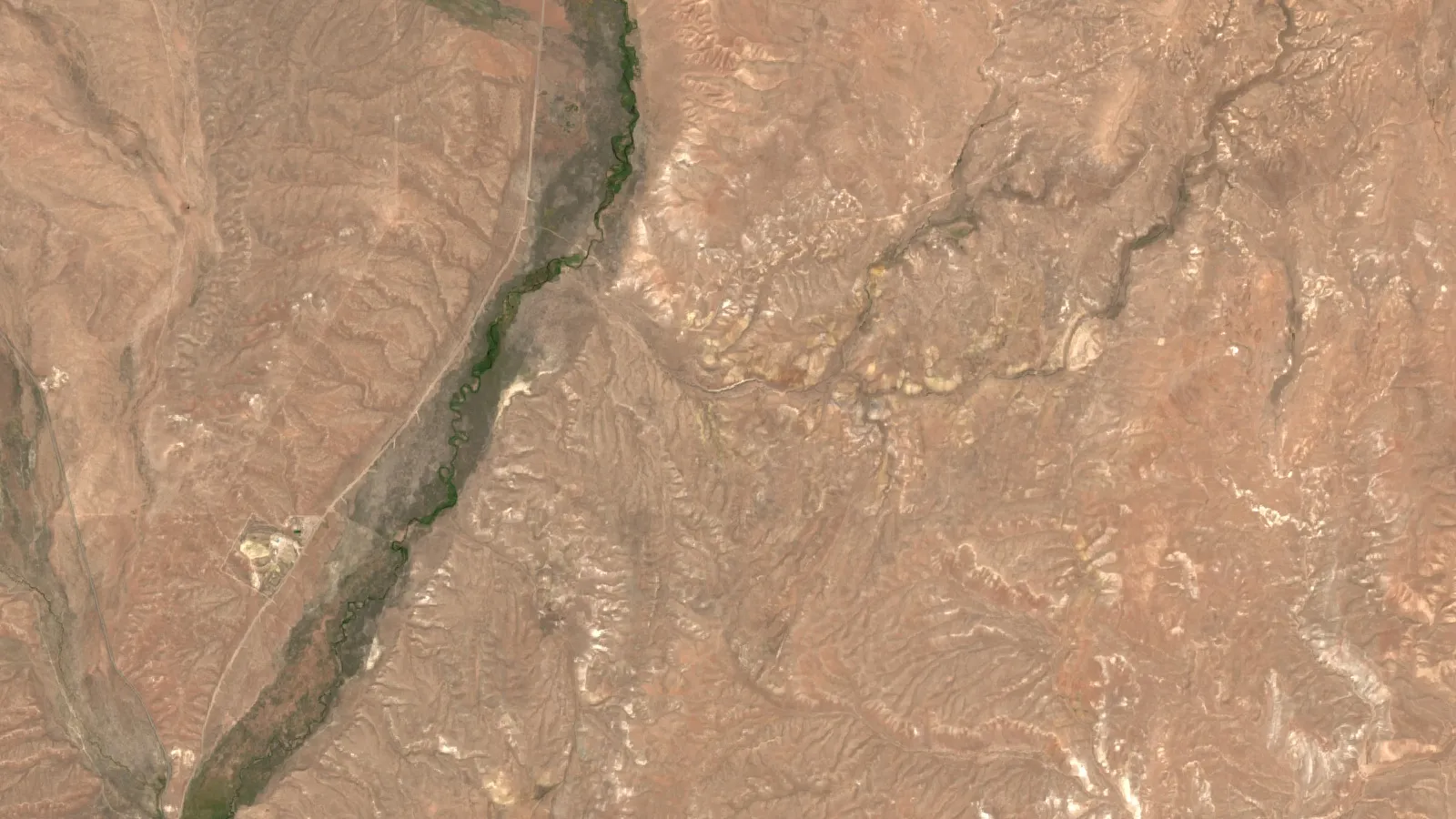
Cost: the imagery itself is public. The European Space Agency describes Sentinel-2 as a pair of satellites with 13 spectral bands, 10 m resolution, a 290 km swath and a 5-day revisit (ESA). The cost lies in processing it and checking the result on the ground. Satellites do not see gold. They map the rust-coloured iron minerals, clays and fault lines that hot fluids leave around gold. A peer-reviewed study that combined ASTER, Landsat-8 and Sentinel-2 data with field work in Egypt’s Arabian-Nubian Shield found that the two highest-potential classes covered only about 1.6% of the area, and that the high-potential zones coincided with known gold mineralization (Abdelkareem and Al-Arifi, Remote Sensing, 2021). That narrowing is the point of the method: it shrinks the area to walk, and soil samples and geophysics then test it.
Farmonaut produces satellite-based exploration targets for a licence boundary you supply as a KML, KMZ or polygon file. The results are exploration targets that sit ahead of any resource estimate.
Pros: fast, covers large areas, no site access needed. Cons: sees the surface only; cloud, vegetation and soil cover reduce what it can map.
4. Soil geochemistry
Best for: turning a satellite or map target into a drillable anomaly.
Cost: the Newfoundland rebate scheme caps geochemical analyses at C$70 per sample (2024). Gold in soil is patchy, so geologists also test for pathfinder elements that travel further than gold. A U.S. Geological Survey orientation study in the Nixon Fork area of Alaska found arsenic, antimony, copper, lead and silver to be the best pathfinder elements for gold in soil (USGS Bulletin 1312-K, 1971). In the Yukon RC Gold project, soil anomalies tied to intrusions correlate with bismuth and arsenic (Sitka Gold technical report, July 2026). Package prices vary by laboratory, so confirm the price of a multi-element package before budgeting.
Pros: low cost per sample, direct chemical evidence. Cons: glacial cover, transported soil and old workings can mislead; results take weeks.
5. Ground magnetic survey
Best for: mapping intrusions, faults and magnetite-bearing or magnetite-destroyed alteration over a few square kilometres.
Cost: the Newfoundland ceiling is C$250 per kilometre for the survey, plus C$800 per kilometre if lines must be cut first (2024). Line-cutting often costs more than the instrument work, so ask whether existing trails or GPS lines can replace it.
Pros: cheap per kilometre, quick. Cons: magnetic response does not mean gold; the map needs geological context.
6. Airborne magnetic and radiometric survey
Best for: larger licences and rough terrain, where walking every line takes longer than flying it.
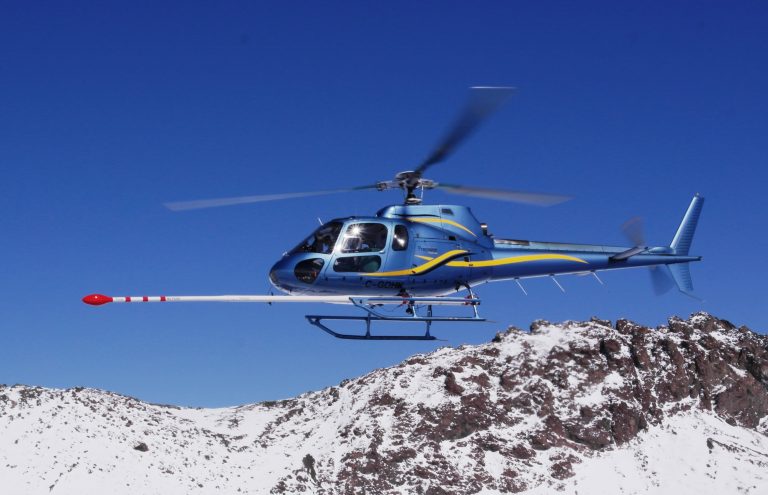
Cost: the Newfoundland ceiling for airborne geophysics is C$500 per kilometre, plus mobilization and demobilization (2024). For scale, a helicopter magnetic survey flown on the RC Gold property covered more than 227 line-kilometres over 20.7 km² (Sitka Gold technical report, July 2026). At the Newfoundland ceiling, 227 line-kilometres would cost up to C$113,500 before mobilization. This is our calculation from the two sources.
Pros: uniform coverage of rough terrain, public survey data may already exist. Cons: mobilization can dominate small jobs; detail is coarser than ground work.
7. Induced polarization and electromagnetic surveys
Best for: sulphide-bearing gold systems, where disseminated pyrite gives a chargeability signal that points toward alteration.
Cost: the Newfoundland ceiling for IP is C$2,200 per kilometre or C$2,200 per day, and the same figure applies to ground time-domain EM; ground max-min EM is C$350 per kilometre (2024). IP and time-domain EM are the most expensive surveys in the list per kilometre, so use it on targets that already show a soil or magnetic anomaly. Our article on induced polarization survey sequencing for a first season covers the order of work in more detail. Processing software for IP data includes the Aarhus GeoSoftware range (Res2DInv, Res3DInv) and Oasis montaj, which lists DC-IP and radiometric extensions (Seequent).
Pros: sees below the surface, good for sulphide-rich gold. Cons: costly, and not every gold system carries enough sulphide to show.
8. Seismic reflection
Best for: deep structural targets, for example a fault or contact that may feed a deposit at 1,000 m or more.
Cost: seismic work is priced by project and no rate card is published, so budget from a contractor quote. A supplier article states that seismic imaging keeps its resolution at depths beyond 2,000 m, where other methods struggle (Global Mining Review, 2024). That article is written from a seismic provider’s viewpoint, so treat its claims as the supplier’s view. For interpretation, Leapfrog Geo has a geophysics extension for seismic and ground-penetrating radar data inside a 3D geological model (Seequent).
Pros: reaches depths where magnetics and IP lose detail. Cons: high cost for hard-rock gold, and best suited to later stages.
9. 3D modelling software
Best for: combining drill, geochemical and geophysical data once a target has holes in it.
Cost: Seequent lists Leapfrog Geo for verified consultants at US$164.25 per day, capped at US$2,463.75 in a calendar month (15 days), with a one-time US$420 activation fee (Seequent consultants daily page, October 2026). Twelve-month named licences can be bought online, while shared and enterprise licences are on request (Seequent Leapfrog Geo page). Datamine sells an exploration suite for field data collection and drillhole logging, priced on request (Datamine).
Pros: clear 3D view of the data, fast to update with new holes. Cons: a model is only as good as the data behind it; day rates add up on long projects.
▶ Explains what satellites can and cannot show about gold: iron stains, clay minerals and faults. · 4:25
Survey costs per kilometre and per sample
The chart below plots the Newfoundland and Labrador ceilings. Line-cutting looks cheap beside IP, but a grid that needs 80 km of cut lines costs C$64,000 before any instrument is switched on.
Chart
Maximum claimable rate by survey type
C$ per kilometre, Newfoundland and Labrador rebate ceilings, 2024, excluding taxes
| Tool | Unit | Rate (C$, 2024 ceiling) | Note |
|---|---|---|---|
| Line-cutting | per km | 800 | Needed for ground grids |
| Ground magnetometer | per km | 250 | Cheapest ground geophysics |
| Ground EM (max-min) | per km | 350 | Shallow conductors |
| Ground EM (time domain) | per km | 2,200 | Deeper conductors |
| Induced polarization | per km or per day | 2,200 | Sulphide-bearing systems |
| Airborne geophysics | per km | 500 | Plus mobilization and demobilization |
| Laboratory analysis | per sample | 70 | Taxes excluded |
The scheme pays rebates on the lesser of actual verified cost and the ceiling, so a real invoice can be lower or, in remote areas, higher. All amounts exclude taxes (Newfoundland and Labrador, 2024).
A worked example from a filed programme
The RC Gold technical report records a past programme by Noranda on the same ground: 1,661 soil samples, a 138 line-kilometre magnetometer survey and an 8 line-kilometre IP survey, plus 442 rock samples and 560 m of trenching (Sitka Gold technical report, July 2026). Priced at the 2024 Newfoundland ceilings, the soil analyses would be C$116,270, the magnetometer lines C$34,500 and the IP C$17,600, about C$168,000 in all, before line-cutting, sampling labour, rock analyses and trenching. This is our arithmetic, applied to a different region and year.
What surveys cost next to drilling
Surveys earn their cost by cutting the number of metres drilled on weak targets. The RC Gold budget for 2026 plans 60,000 m of diamond drilling for C$25.8 million, using C$700 per metre for a winter programme of 6,000 m and C$400 per metre for the 54,000 m summer programme. The report says those all-in figures include helicopter support, fuel, analytical work, camp costs, mobilization and equipment rentals (Sitka Gold technical report, July 2026).
Chart
Diamond drilling cost per metre
C$ per metre; all-in budget versus a government rebate ceiling
The Newfoundland rebate ceiling for diamond drilling is C$200 per metre, all-inclusive (2024). The gap shows how a rebate ceiling and a remote-site budget differ, so do not use ceilings to price drilling in the Arctic or at altitude. For scale, 100 line-kilometres of IP at the C$2,200 ceiling is C$220,000, which equals the cost of about 550 m of summer drilling at C$400 per metre. A survey pays for itself if it removes more drill metres than that from a program.
Gold output explains why the spending continues. The U.S. Geological Survey estimates 2025 U.S. mine production at 160 tons, with Nevada supplying about 64% of it (USGS Mineral Commodity Summaries, 2026). For the cost side of what comes after discovery, see our note on gold extraction costs.
Software costs: what vendors publish
Few mining software vendors publish prices, so the table separates what is listed from what is on request.
Chart
Leapfrog Geo cost by days used in a month
US$ at the listed consultant day rate of US$164.25, capped at 15 days
| Software | Job | Published price |
|---|---|---|
| QGIS | GIS, maps, grids | No licence fee (open source) |
| ArcGIS Pro (Esri) | GIS with add-ons | Annual user-type licence; price from Esri sales |
| Leapfrog Geo (Seequent) | 3D implicit modelling | US$164.25 per day, US$2,463.75 monthly cap, US$420 activation |
| Oasis montaj (Seequent) | Geophysical processing | Shared, named or prepaid pay-as-you-go; on request |
| Target (Seequent) | Drillhole visualisation and analysis | On request |
| Datamine exploration suite | Field data, logging, GIS plugins | On request |
The chart shows what a consultant would pay for Leapfrog Geo at the daily rate. Because the monthly bill stops rising at 15 days, a full-time month costs no more than a half month of work.
Seequent lists Oasis montaj as available on shared, named or prepaid pay-as-you-go subscriptions, and its Aarhus processing products as shared or named (Seequent pricing page). A consultant who needs a package for a single project can ask for a daily or prepaid plan rather than an annual licence.
▶ Shows how a mineral management system keeps maps, samples and targets in one place. · 3:21
Budget a first-season survey sequence
A sequence that keeps spending in step with evidence is the usual approach. Spend the least on early steps and add costly ones only where earlier results justify them.
- Gather public maps, drillholes and geophysics, and load them into a GIS.
- Screen the licence with satellite imagery to rank areas for a site visit.
- Take soil samples on the ranked areas and add pathfinder elements to the analysis.
- Run ground or airborne magnetics over the soil anomalies, cutting lines only where they are needed.
- Run IP or EM over the areas where soil and magnetic results overlap.
- Build a 3D model with all layers, and choose the first drill holes.
Use the calculator below to price steps 3 to 5. It uses the Newfoundland ceilings as example rates, so replace them with your contractor’s quote.
Calculator
What will my survey sequence cost?
Enter your line-kilometres, sample count and your contractor’s rates.
- Line-cutting (C$): $64,000
- Ground magnetics (C$): $15,000
- Induced polarization (C$): $44,000
- Soil analyses (C$): $28,000
- Metres of drilling the same money buys at C$400/m: 378
Default rates are the Newfoundland and Labrador rebate ceilings (2024); replace them with quotes. The drilling comparison uses C$400 per metre, the summer all-in budget in the Sitka Gold technical report (July 2026).
Frequently asked questions
What are the main geological survey tools used in gold exploration?
The common tools are public geoscience data in a GIS, satellite alteration mapping, soil geochemistry, magnetic surveys, induced polarization or electromagnetic surveys, seismic reflection for deep targets and 3D modelling software. A programme normally uses them in that order, moving from cheap and wide to costly and narrow.
How much does a gold exploration survey cost?
A Canadian provincial rebate scheme caps ground magnetics at C$250 per kilometre, airborne geophysics at C$500 per kilometre, IP at C$2,200 per kilometre and laboratory analysis at C$70 per sample (2024). Those are ceilings, and real quotes vary with terrain, access and distance from the contractor.
Which geophysical method is best for gold?
No method finds gold itself. Magnetics map rock types and faults, IP picks out sulphide-bearing zones, and EM finds conductors. The best choice depends on whether the deposit is vein-hosted, intrusion-related or disseminated, so match the method to the deposit style.
Which pathfinder elements help when sampling soil for gold?
A USGS study in Alaska found arsenic, antimony, copper, lead and silver to be the best pathfinder elements for gold in soil (USGS Bulletin 1312-K, 1971). Results from other districts can differ, so run an orientation survey over a known deposit first.
Can satellites find gold?
Satellites cannot see gold. They map surface clues such as iron staining, clay minerals and faults, and a study in Egypt’s Arabian-Nubian Shield found high-potential alteration zones in only about 1.6% of the area (Remote Sensing, 2021). Ground checks are still required.
What does Leapfrog Geo cost?
Seequent lists US$164.25 per day for consultants, capped at US$2,463.75 per calendar month, with a one-time US$420 activation fee (October 2026). Annual named licences can be bought online, and shared or enterprise licences are quoted.
Is there an open-source option for geological mapping?
Yes. QGIS is open-source software with no licence fee that runs on Windows, Mac and Linux. It handles maps, geochemical grids and many geophysical grids, but it has no built-in 3D drillhole modelling.
Which seismic interpretation platforms do mining geologists use?
Seequent states that Leapfrog Geo can display and guide interpretation of seismic and ground-penetrating radar data inside a 3D geological model, through a geophysics extension. Other platforms exist, and seismic work for hard-rock gold is usually priced per project by the contractor.
Do I need line-cutting for every geophysical survey?
Ground magnetics and IP normally need a surveyed grid, and the Newfoundland ceiling of C$800 per kilometre for line-cutting can exceed the survey cost itself. Airborne surveys avoid it, and GPS-guided lines can replace cut lines on open ground.
How many drill metres does a survey need to save to pay for itself?
Divide the survey cost by the all-in cost per metre. At C$400 per metre, a C$220,000 IP survey pays back if it removes 550 m of drilling, and at C$700 per metre the figure is about 314 m.
Are these costs for the United States or Canada?
The survey rates are Canadian (Newfoundland and Labrador) and the software prices are in US dollars. Costs in other countries will differ, so convert only after you have a local quote. This page is for information only.
This page is for information only. It is not investment advice. Survey rates are rebate ceilings from one Canadian province and software prices are vendor list prices; confirm both with written quotes. Prospecting on any ground needs the owner’s permission and the right licence, and mercury must not be used.
Farmonaut mining
Map your mining site from space
Consultants can start with satellite-based targets for a client's licence area, then plan ground surveys where the imagery points.

Mining Pro sample view, synthetic data
Keep reading
Sources
- Government of Newfoundland and Labrador, Junior Exploration Assistance 2024 Letter of Intent Guide: gov.nl.ca
- Sitka Gold Corp., RC Gold Project NI 43-101 Technical Report (July 2026): wp-sitkagold-2024.s3.ca-central-1.amazonaws.com
- Seequent, Leapfrog Geo consultants daily pricing (October 2026): seequent.com
- Seequent, Leapfrog Geo product and licensing page: seequent.com
- Seequent, Oasis montaj product page: seequent.com
- Seequent, subscription and pricing options: seequent.com
- Seequent, Target for ArcGIS Pro: seequent.com
- Datamine, exploration software suite: dataminesoftware.com
- QGIS project, home page: qgis.org
- Esri, ArcGIS Online purchase options: esri.com
- USGS, Bulletin 1312-K, orientation geochemical soil survey at the Nixon Fork Mines, Alaska (1971): pubs.usgs.gov
- ESA, Sentinel-2 mission: esa.int
- Abdelkareem and Al-Arifi, Remote Sensing 13(22):4492 (2021): doi.org
- Global Mining Review, The benefits of reflection seismic in mineral exploration (2024): globalminingreview.com
- USGS, Mineral Commodity Summaries 2026: Gold: pubs.usgs.gov
Discussion
Questions, corrections or field experience? Share them below. First-time comments are reviewed before they appear, and your email is never published.
No comments yet. Be the first to add a question or your experience.

 Mining SARL
 SenGold Invest SAS
 Sania Corporation
 Sean Mining Limited
 NTS Group (Pty) Ltd
 Mine4Africa
 Lithspo Minerals Limited
 Tintina Mining Group
 Dalgety Minerals Pty Ltd
 Vortex Minerals Pty Ltd
 Faith At Work (Pty) Ltd
 Geotech Mining Solutions plc
 Vulcan International Limited
 Kidepo Associates
 GKY Mining
 Alkimy SARL
 Double A Trading
 GemSprout Metals Limited
 Qader Group
 Ileys General Trading
 SG Gold Mining LLC
 VRV Global Pte Ltd
 Omsri International FZE
 G.I.T.T.











