

Uranium investors · Kazakhstan facts
George Soros Uranium Holdings: What His 13F Shows
Soros Fund Management reported 7,071 Cameco shares worth US$720,252 at 30 June 2026, under 0.01% of its filing. Kazakhstan mined about 40% of world uranium in 2025.
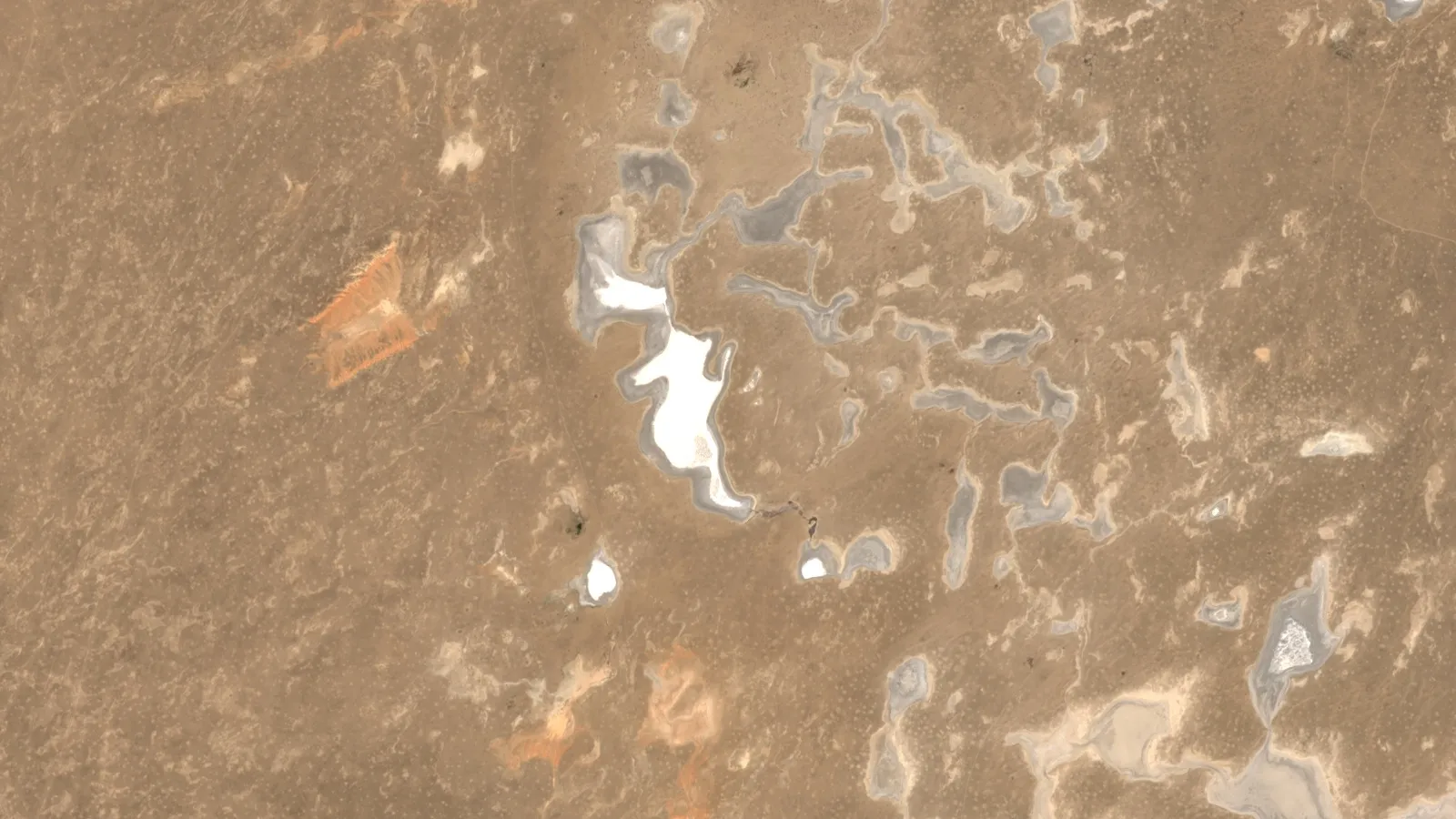
Key takeaways
- Soros Fund Management’s 13F for 30 June 2026 lists 7,071 Cameco shares (US$720,252) in a US$8.14 billion portfolio (SEC, filed August 2026).
- The three earlier filings, from September 2025 to March 2026, show no Cameco position and no uranium miner or trust.
- A 13F omits short positions and shares traded only outside the US, so it cannot show a Kazatomprom holding (SEC).
- Kazakhstan mined about 25,839 tU in 2025, roughly 40% of world output; Kazatomprom guides to 27,500-29,000 tU for 2026 (WNA; Kazatomprom).
- Spot uranium was US$90 per pound on 14 October 2026 (Trading Economics); Kazatomprom’s C1 cash cost rose 37% in the first half of 2026.
In this article
- Does George Soros own uranium stocks?
- What Soros Fund Management's 13F filings show
- Why a 13F cannot show a Kazakhstan stake
- How much uranium Kazakhstan produces
- Kazatomprom's first-half results: production, costs and rules
- Kazakh mines and their foreign partners
- Uranium price: spot, contract and Kazatomprom's realized price
- How Kazakhstan mines uranium: in-situ leaching
- Which other countries mine uranium
- Calculator: what a stake in a uranium mine is worth
- How satellites are used around uranium mining
- What to check before reading a uranium headline
- Frequently asked questions
Does George Soros own uranium stocks?
Only a very small amount, according to the latest filing. Soros Fund Management LLC reported 7,071 Cameco shares worth US$720,252 at 30 June 2026, out of a total reported portfolio of about US$8.14 billion (SEC Form 13F, filed 14 August 2026). That is under 0.01% of the reported value. Cameco is a Canadian uranium miner, and it owns 40% of the Inkai mine in Kazakhstan, so it is the only line in the filing with a direct link to Kazakh uranium (World Nuclear Association, Kazakhstan profile).
Three earlier filings, for the quarters ending 30 September 2025, 31 December 2025 and 31 March 2026, show no Cameco position at all. In short, Soros Fund Management is not a notable uranium investor in the public record, and nothing in the filings shows it holding Kazatomprom, the Kazakh state uranium producer. The rest of this page shows what the filings list, what a 13F can and cannot show, and the Kazakhstan numbers that readers searching this topic usually want: output, costs, price and rules.
A short note on terms. A 13F is a quarterly report that large US-based investment managers file with the US Securities and Exchange Commission (SEC). tU means tonnes of uranium metal. U3O8 is the concentrate (“yellowcake”) that mines sell, usually priced per pound. Spot price is the price for delivery within weeks, as opposed to a long-term contract price.
What Soros Fund Management’s 13F filings show
The table lists the four most recent quarterly filings. We checked every position against uranium miners, uranium trusts and ETFs, and listed nuclear-power names. Values are the US dollar figures in each filing’s holdings table (September 2025, December 2025, March 2026, June 2026).
| Quarter end | Positions reported | Total reported value | Cameco | Other nuclear-linked names found |
|---|---|---|---|---|
| 30 Sep 2025 | 184 | US$7.02 billion | None | None |
| 31 Dec 2025 | 244 | US$8.63 billion | None | Oklo US$2.31 million; NuScale US$2.13 million |
| 31 Mar 2026 | 263 | US$9.12 billion | None | Vistra US$36.7 million; NuScale US$0.76 million |
| 30 Jun 2026 | 266 | US$8.14 billion | 7,071 shares, US$0.72 million | Constellation US$0.81 million; Talen US$0.70 million; Vistra US$0.67 million |
Oklo and NuScale develop small nuclear reactors. Vistra, Constellation and Talen are power companies that run nuclear plants. None of them mines uranium. The biggest nuclear-linked line in the four filings, Vistra at US$36.7 million in March 2026, was cut to US$0.67 million by June 2026. The filings are quarterly snapshots of a fund that trades actively.
Why a 13F cannot show a Kazakhstan stake
A 13F has limits that matter for this topic. According to the SEC, it covers “Section 13(f) securities”, which mainly means US exchange-traded stocks, ETF shares and certain options and warrants. Short positions are not reported, and shares that trade only on non-US exchanges are not reported (SEC, Frequently asked questions about Form 13F). The filing is also made by the manager, Soros Fund Management LLC, and does not say which person decided a trade.
So a 13F can show Cameco shares or a US-listed uranium ETF. It cannot show a short position, a private deal, or a holding in a stock that trades only abroad. Anyone who needs certainty about a particular fund should read the filing itself on SEC EDGAR and check each new quarter, because positions change.
How much uranium Kazakhstan produces
Kazakhstan has been the world’s largest uranium producer since 2009. In 2025 it mined about 25,839 tU, roughly 40% of world output, and it holds about 16% of world uranium resources recoverable at up to US$130 per kg U, as assessed in 2025 (World Nuclear Association, 6 October 2026 update; resource share from the production page). Output fell to 19,477 tU in 2020 during the pandemic, recovered to 23,270 tU in 2024 and rose again in 2025.
Chart
Kazakhstan uranium production, 2015 to 2025
Tonnes of uranium (tU) mined per year, 100% basis
The state company Kazatomprom operates 27 deposits grouped into 14 mining assets through subsidiaries, joint ventures and associates. Its attributable share of 2025 production, meaning its ownership share of each venture, was 13,519 tU, about half of the national total. The rest belongs to foreign partners in joint ventures, such as Cameco in Inkai.
Kazatomprom’s first-half results: production, costs and rules
The older version of this page quoted forecast growth rates that no source supported. These are the figures Kazatomprom actually reported for the six months to 30 June 2026 (Kazatomprom, 21 August 2026).
- Production: 13,291 tU on a 100% basis, up 9% from 12,242 tU a year earlier. On an attributable basis it was 7,054 tU, up 10%.
- Guidance for the full year: 27,500 to 29,000 tU (100% basis), unchanged from the earlier guidance. That is about 6% to 12% above the 2025 output of 25,839 tU.
- Sales and stock: group sales were 7,586 tU, down 1%, while finished-goods inventory rose 23% to 8,245 tU (21.4 million pounds of U3O8).
- Costs: the attributable C1 cash cost, the direct cost of producing a pound, rose 37% in US dollar terms. The company points to a higher mineral extraction tax rate (9% to 12.4%), dearer sulphuric acid and a stronger tenge.
- Projects: the Zhalpak processing plant at Ortalyk started on 29 July 2026 with a capacity of up to 500 tonnes a year, with expansion to 900 tonnes planned for 2027. Construction at the TQZ site was suspended after possible fossils were found, and commissioning has moved from the first quarter of 2027 to between the third quarter of 2027 and the first quarter of 2028.
- Law changes: amendments to the Subsoil Use Code take effect on 7 September 2026. For ISR (in-situ recovery) deposits the national operator must keep more than 75% of a licence holder. For open-pit or underground deposits the threshold is more than 50%. Uranium exploration moves from licences to subsoil use contracts, with a maximum total duration of 11 years.
Two of these points answer questions that investors often ask. Kazakh output is rising, but costs are rising faster than a year ago, and foreign ownership of Kazakh uranium licences is limited by law.
Kazakh mines and their foreign partners
Five Kazakh operations are among the ten largest uranium mines in the world for 2024, and every one is a joint venture or partnership with Kazatomprom. The table uses the World Nuclear Association’s list of the largest-producing mines (World Nuclear Association, World Uranium Mining Production).
| Operation | Main owners listed | 2024 output (tU) | Share of world output |
|---|---|---|---|
| Karatau (Budenovskoye 2) | Uranium One / Kazatomprom | 3,299 | 6% |
| Inkai, sites 1 to 3 | Kazatomprom / Cameco | 2,992 | 5% |
| Akdala and South Inkai | Uranium One / Kazatomprom | 2,803 | 5% |
| Moinkum and Tortkuduk | Orano / Kazatomprom | 2,388 | 4% |
| Khorassan 1 | Kazatomprom / Uranium One | 2,030 | 3% |
The foreign names are Canadian (Cameco), French (Orano) and Uranium One, a Canadian-based company that Russia’s ARMZ took over in 2009-10 and later wholly owned (World Nuclear Association, Kazakhstan profile). This ownership pattern is the reason a headline about Kazakh uranium can affect a Canadian or French listed company: the exposure sits in partnerships, not in one national stock.
Kazatomprom also reported that a change in sulphuric acid supply is not expected to have a material effect on its mining operations at this stage, and that it will weigh the issue in its 2027 production guidance.
Uranium price: spot, contract and Kazatomprom’s realized price
Trading Economics showed uranium at US$90 per pound on 14 October 2026, up 12.64% over twelve months, against an all-time high of US$148 in May 2007 (Trading Economics; it tracks a contract for difference, so treat it as a reference, not a trading price). In its half-year report Kazatomprom said long-term contract indicators reached their highest level in 18 years, in the mid-to-high US$90s per pound.
Chart
Spot price rose faster than Kazatomprom’s realized price
US$ per pound U3O8, six months to 30 June
The chart compares the average prices in the first half of 2025 and 2026 from the same report. The group’s average realized price rose 16%, less than the 24% rise in the weekly spot average, because some long-term contracts carry fixed price components, including ceilings.
How Kazakhstan mines uranium: in-situ leaching
Most Kazakh uranium comes from in-situ leaching (ISL), also called in-situ recovery. Instead of digging a pit, operators pump a solution through the sandy ore layer underground and bring the dissolved uranium to the surface through extraction wells. The World Nuclear Association reports that ISL produced 56% of world uranium in 2022, up from 16% in 2000, with most of it from Kazakhstan (World Nuclear Association, ISL mining).
The method avoids digging a pit, but it needs a permeable orebody that can be kept isolated from groundwater outside the ore. Kazakh mines generally use much stronger acid solutions than Australian ones, which is why sulphuric acid supply appears in Kazatomprom’s cost report.
▶ The seven environmental impacts of mining, explained in clay · 2:31
Which other countries mine uranium
Kazakhstan’s lead is large but not absolute. In 2024 Canada produced 14,309 tU and Namibia 7,333 tU. Canada’s output was 3,885 tU in 2020 and rose each year after that (World Nuclear Association, World Uranium Mining Production). About three-quarters of world mine output comes from Kazakhstan, Canada and Namibia.
Chart
Uranium mined by country, 2024
Tonnes of uranium (tU), selected countries; Uzbekistan and China are estimates
Kazakhstan is also a major supplier to US utilities. In 2025 Canada supplied 32% of uranium delivered to US reactor owners, Kazakhstan 28% and Australia 15%, with Uzbekistan at 7% and Namibia at 4% (US Energy Information Administration, Uranium Marketing Annual Report).
The World Nuclear Association’s production page also ranks countries by resources recoverable at up to US$130 per kg U: Australia holds 27%, Kazakhstan 16%, Russia 10%, Canada 8% and Namibia 6%. Resources and production do not match, which is why price and policy matter as much as geology.

▶ Does Zimbabwe have uranium? Uranium in Africa, explained · 4:27
Calculator: what a stake in a uranium mine is worth
Use the calculator below to see how mine output, an ownership share and the price combine. The defaults are the Inkai mine’s 2024 output and Cameco’s 40% share, used only as round examples.
Calculator
What is a share of a uranium mine’s output worth?
Enter a mine’s yearly output, your ownership share and a price.
- Whole mine output (million lb U3O8): 7.78
- Gross value of the stake at your price (US$ million): 280.1
- Gross value of the whole output (US$ million): 700.1
Example values only: 2,992 tU is the Inkai output for 2024 and 40% is Cameco’s stake (World Nuclear Association). The price is an example, use today’s price. The formula fixes 2,600 pounds of U3O8 per tU (Kazatomprom converts 27,500 tU to 71.49 million pounds). An ownership share is not the same as a sales entitlement or profit.
How satellites are used around uranium mining
Satellite images do not measure uranium grade. What they can do is map the ground around a licence: land cover, water, roads, disturbance and change over time. For a leaching operation that helps with baseline records, with checking that a wellfield stays inside its boundary and with planning access. For exploration, multispectral images and terrain data help rank targets before field work, which a geologist must then test by drilling.
Farmonaut provides satellite-based mineral exploration and site mapping from a boundary file such as KML, KMZ or a polygon. It is a screening tool and does not replace a resource estimate or an environmental assessment.
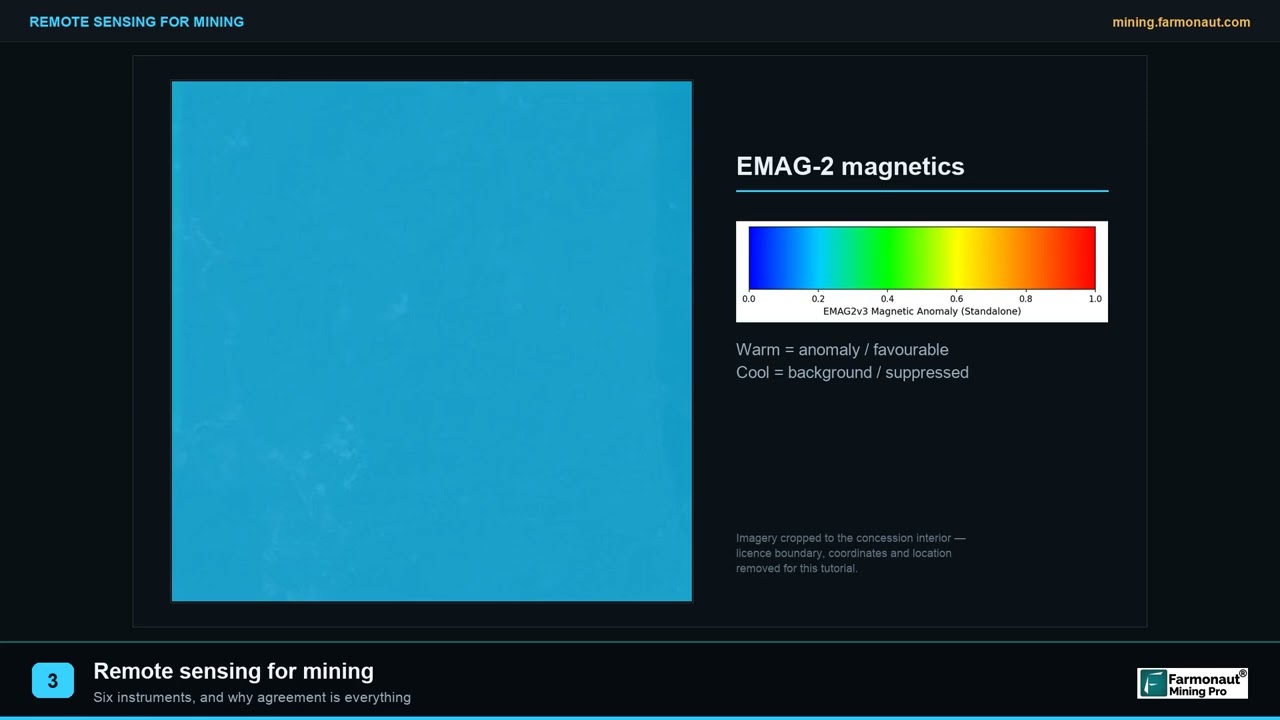
▶ Remote sensing for mining explained in three minutes · 2:01
What to check before reading a uranium headline
- Basis: is the number 100% of a mine or the company’s attributable share? Kazatomprom reports both, and they differ by nearly a factor of two.
- Unit: tU, tonnes of U3O8 and pounds of U3O8 are different. One tU is about 2,600 pounds of U3O8 (Kazatomprom’s guidance converts 27,500 tU to 71.49 million pounds).
- Price type: spot, long-term indicator and realized price are three different numbers.
- Source of a “big investor” claim: look for the filing. A 13F shows only US-listed long positions.
- Date: mine status, tax rates and licence rules change. Check the company’s latest report.
Frequently asked questions
Does George Soros invest in uranium?
Soros Fund Management reported 7,071 Cameco shares worth US$720,252 at 30 June 2026, and no Cameco shares in the three quarters before that. No uranium ETF or uranium trust appeared in the four filings reviewed here.
Does George Soros own Kazatomprom shares?
The 13F filings do not list Kazatomprom. A 13F would not show shares that trade only outside the United States, so the filings cannot rule out such a holding either.
Which uranium companies has Soros Fund Management held?
In the four most recent filings, the only uranium miner is Cameco, in June 2026. It also reported nuclear-linked names such as Oklo, NuScale, Vistra, Constellation and Talen at different dates.
How much of the world’s uranium comes from Kazakhstan?
About 40% in 2025, or roughly 25,839 tU, according to the World Nuclear Association.
How much uranium will Kazakhstan produce?
Kazatomprom’s guidance is 27,500 to 29,000 tU on a 100% basis and 14,500 to 15,500 tU on an attributable basis. It produced 13,291 tU in the first half.
What is the uranium price today?
Trading Economics showed US$90 per pound on 14 October 2026. Check a current source such as UxC or TradeTech before using a price.
Why are Kazakh uranium costs rising?
Kazatomprom lists a higher mineral extraction tax (9% to 12.4%), dearer sulphuric acid and a stronger tenge as the main reasons its C1 cash cost rose 37% in US dollar terms in the first half of 2026.
Can foreign companies own uranium mines in Kazakhstan?
Yes, through joint ventures, but the national operator must keep more than 75% of a licence holder for ISR deposits and more than 50% for open-pit or underground deposits under the amended law effective 7 September 2026.
What is a Form 13F?
A quarterly SEC report by institutional managers with at least US$100 million in qualifying securities, covering mainly US-listed long positions and filed within 45 days of quarter end.
Where does Cameco connect to Kazakhstan?
Cameco holds 40% of the Inkai joint venture with Kazatomprom, after a 2016 restructuring that took effect on 1 January 2018.
This page is for information only. It is not investment advice and names no security to buy or sell. Holdings change every quarter; read the current filing on SEC EDGAR.
Farmonaut mining
Map your own project area from space
Send a boundary file and get a satellite screening of your licence area for exploration targets.
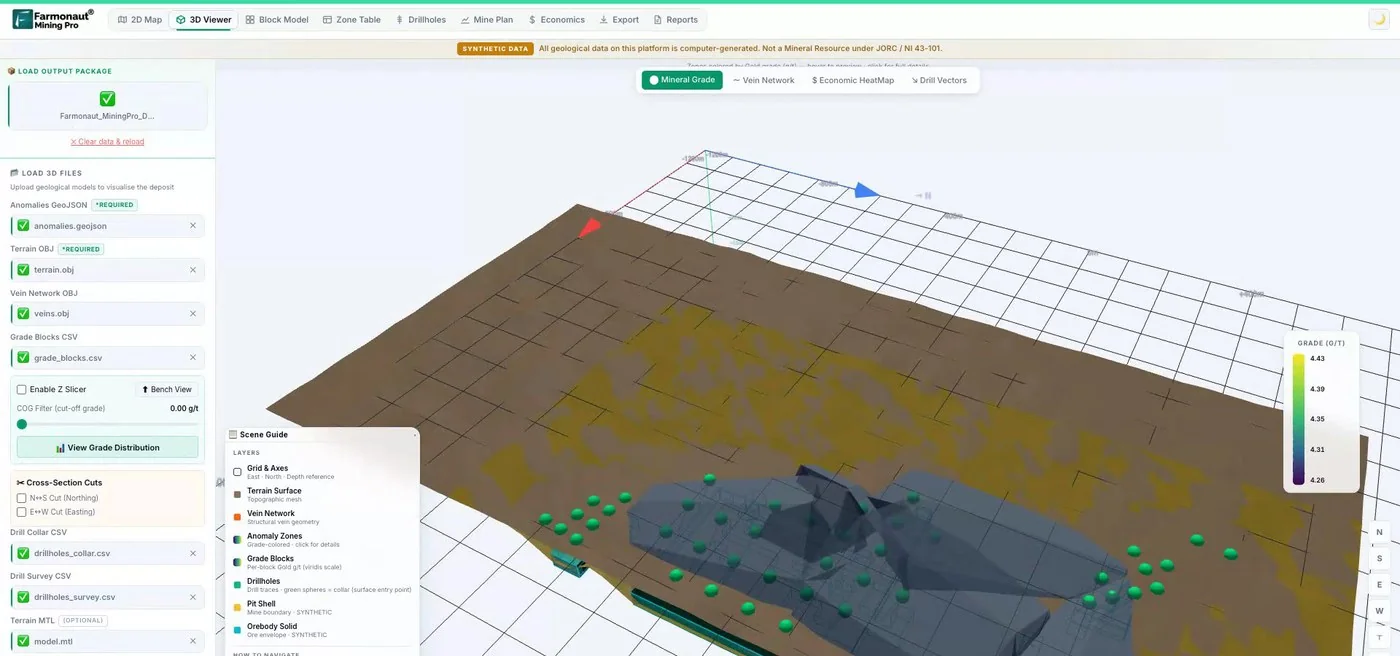
Mining Pro sample view, synthetic data
Keep reading
Sources
- SEC, Soros Fund Management Form 13F holdings, 30 June 2026: sec.gov
- SEC, Soros Fund Management Form 13F cover page, 30 June 2026: sec.gov
- SEC, Soros Fund Management Form 13F holdings, 31 March 2026: sec.gov
- SEC, Soros Fund Management Form 13F holdings, 31 December 2025: sec.gov
- SEC, Soros Fund Management Form 13F holdings, 30 September 2025: sec.gov
- SEC, Frequently asked questions about Form 13F: sec.gov
- World Nuclear Association, Uranium and Nuclear Power in Kazakhstan (updated 6 October 2026): world-nuclear.org
- World Nuclear Association, World Uranium Mining Production: world-nuclear.org
- World Nuclear Association, In-Situ Leach Mining of Uranium: world-nuclear.org
- Kazatomprom, 1H2026 financial results (21 August 2026): kazatomprom.kz
- Trading Economics, Uranium price (14 October 2026): tradingeconomics.com
- US EIA, Uranium Marketing Annual Report (2025 deliveries): eia.gov
Discussion
Questions, corrections or field experience? Share them below. First-time comments are reviewed before they appear, and your email is never published.
No comments yet. Be the first to add a question or your experience.

 Tintina Mining Group
 Dalgety Minerals Pty Ltd
 Vortex Minerals Pty Ltd
 Faith At Work (Pty) Ltd
 Geotech Mining Solutions plc
 Vulcan International Limited
 Kidepo Associates
 GKY Mining
 Alkimy SARL
 Double A Trading
 GemSprout Metals Limited
 Qader Group
 Ileys General Trading
 SG Gold Mining LLC
 VRV Global Pte Ltd
 Omsri International FZE
 G.I.T.T.
 Jaunita Erss Ltd
 Almosi SARL
 SRK Consulting
 Berks Gold Limited
 Mwerezi Minerals Company Limited
 Exploration consultancy · South Africa · Gold










