

Mining careers · Pay data
How Much Do Gold Miners Make? US and Alaska Pay
The average US metal-mine worker earned $77,290 a year in May 2023 (BLS); Alaska mining employees averaged $122,500 in 2024 (Alaska Miners Association), against a state all-job average of $71,224.
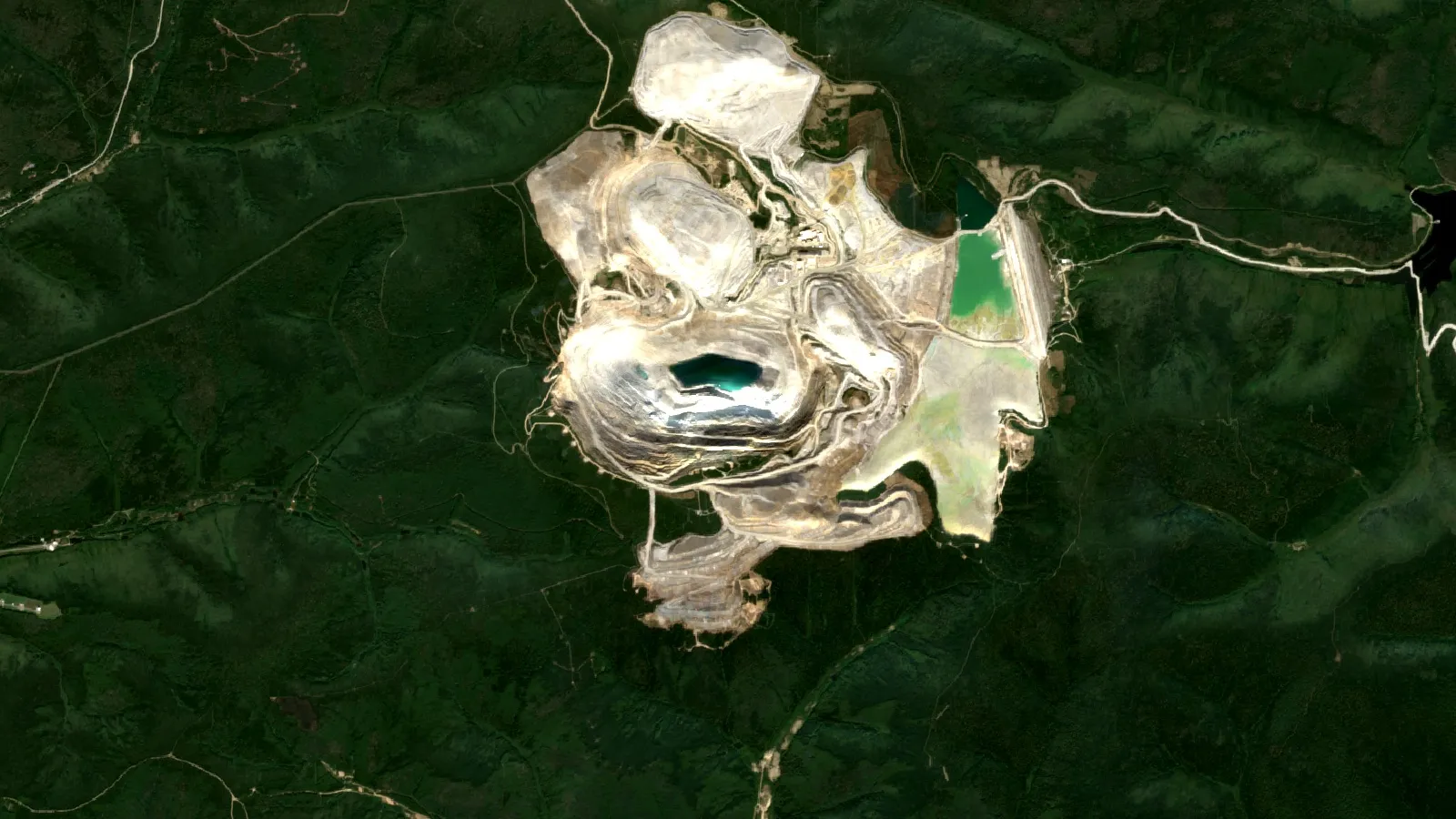
Key takeaways
- US metal ore mining, which includes gold mines, paid a median of $36.23 an hour and an average of $77,290 a year in May 2023 (BLS OEWS).
- Operators, drivers and mechanics averaged about $60,000-$76,000; geologists, engineers and supervisors more than $100,000.
- Alaska mining employees averaged $122,500 in 2024, about 1.7 times the state all-job average of $71,224 (Alaska Miners Association; Alaska Department of Labor).
- Alaska overtime is 1.5 times pay after 8 hours a day or 40 a week, with exemptions for employers under 4 staff and mineral search work.
- About 13,000 people worked at US gold mines and mills in 2025 (USGS estimate).
In this article
- How much do gold miners make? The short answer
- Gold miner pay by job in the US
- How much do gold miners make in Alaska
- Alaska pay vs the US by role
- Seasonal placer jobs: what a summer pays
- What pushes pay up or down
- How many people work in US gold mining
- How to get hired at an Alaska gold mine
- What about Gold Rush crews, panners and claim owners
- Frequently asked questions
How much do gold miners make? The short answer
In the United States, the average worker in metal ore mining, the industry that includes gold mines, earned $77,290 a year ($37.16 an hour) in May 2023, according to the Bureau of Labor Statistics occupational wage survey. In Alaska, mining pays far more: the Alaska Miners Association, using McKinley Research Group data, reports an average annual wage of $122,500 for mining employees in 2024, against an Alaska all-industry average of $71,224 that year.
Those are averages across every job at a mine, from helpers to managers. A haul-truck driver, a blaster and a mining engineer are paid very differently, and a seasonal placer hand in Alaska may work only four or five months. This guide breaks the numbers down by job, compares Alaska with the rest of the country, shows what a summer placer season can pay, and lists the training you need before your first shift. A calculator lets you test your own hourly rate and shift pattern.
All figures below are dated and sourced. Wage surveys lag by one to two years, so treat them as a floor for today’s offers rather than a quote.
Gold miner pay by job in the US
The BLS does not publish a single “gold miner” job title. It reports wages for each occupation inside the metal ore mining industry (NAICS 212200), which covers gold, silver, copper and other metal mines. In May 2023 that industry employed about 42,530 people in the occupations it surveyed, with a median wage of $36.23 an hour (BLS OEWS, May 2023). The median is the middle value: half of workers earn more and half earn less.
Chart
Average annual wage by job at US metal mines
US$ thousand per year, NAICS 212200 Metal Ore Mining, May 2023
Here is what the main mine jobs paid on average across the year. “Annual mean” is the BLS average annual wage, calculated from hourly pay for a full working year; it does not include overtime premiums for everyone, bonuses beyond regular pay, or the value of camp food and housing.
| Job at a US metal mine | Median hourly wage | Average annual wage | What the job is |
|---|---|---|---|
| Helpers, extraction workers | $31.45 | $60,580 | Entry-level labour that supports drillers, blasters and plant crews |
| Operating engineers (equipment operators) | $28.80 | $63,010 | Run dozers, graders, loaders and other heavy equipment |
| Excavating and loading machine operators, surface mining | $31.65 | $63,590 | Run excavators and shovels that dig ore and waste rock in open pits |
| Heavy and tractor-trailer truck drivers | $31.53 | $64,400 | Drive ore and waste haul trucks |
| Geological technicians | $35.28 | $68,940 | Log drill core, collect samples and support geologists |
| Mobile heavy equipment mechanics | $34.94 | $71,730 | Repair haul trucks, loaders and drills |
| Loading and moving machine operators, underground | $34.91 | $72,060 | Run loaders that move broken ore underground |
| Explosives workers and blasters | $39.21 | $75,970 | Load and fire blast holes |
| First-line supervisors of extraction workers | $49.47 | $102,610 | Shift bosses and crew leaders |
| Mining and geological engineers | $49.38 | $104,420 | Plan pits, stopes, ventilation and schedules |
| Geoscientists (geologists) | $49.27 | $107,330 | Map ore, plan drilling and estimate grade |
| General and operations managers | $76.92 | $189,340 | Run a mine site or a department |
Source for every row: BLS Occupational Employment and Wage Statistics, NAICS 212200 Metal Ore Mining, May 2023.
Two patterns stand out. Most hands-on production jobs (operators, drivers, mechanics and blasters) sit between about $60,000 and $76,000 a year before overtime. Jobs that need a degree or several years of supervision jump to more than $100,000. Blasting is the best-paid hourly production job in the table because it needs a certificate and carries more risk.

▶ How gold is mined and refined, step by step: the jobs behind each stage · 5:27
How much do gold miners make in Alaska
Alaska is the second-largest gold producing state. The USGS estimates Nevada mined about 64% of US gold and Alaska about 22% (USGS Mineral Commodity Summaries 2026). The state’s industry mixes a handful of large hard-rock mines with many small placer operations. A placer is a deposit of loose gold in stream or bench gravels, mined by digging the gravel and washing it over sluices; a lode (hard-rock) deposit is gold locked in solid rock that has to be blasted, crushed and processed. The Alaska Division of Geological & Geophysical Surveys counts about 7 lode mines and roughly 150 placer gold mines in the state.
Pay at the large mines is high. The Alaska Miners Association summary for 2024 lists:
- An average annual wage of $122,500 for mining employees.
- 12,400 direct, indirect and induced jobs supported and $1.2 billion in wages statewide.
- Mining employees living in 85 communities across the state.
- About 75% Alaska resident hire at the large producing mines.
Source: Alaska Miners Association, Alaska’s Mining Industry (September 2025). For context, the average wage across all Alaska jobs was $71,224 in 2024, up 5% from $67,952 in 2023 (Alaska Department of Labor, Alaska Economic Trends, August 2025). A typical mining job in Alaska therefore pays about 1.7 times the state average.
The $122,500 figure covers all mining (gold, zinc-lead, silver and coal) and includes professional and management staff. It describes year-round employees at established mines much better than seasonal placer crews. Small placer operators are often family businesses with a few employees, and many pay hourly for a summer season only.
For a list of the companies behind those large mines, see our guide to Alaska mining companies.
Alaska pay vs the US by role
The BLS also publishes state wages by job. Alaska figures cover each occupation in every industry in the state (for example, an excavator operator could work in mining or road building), so they are not a pure mining number. They still show the size of the Alaska premium.
Chart
Alaska vs US metal-mining pay for the same jobs
Average annual wage, US$ thousand, May 2023
| Job | US metal ore mining, average annual wage | Alaska, all industries, average annual wage |
|---|---|---|
| Excavating and loading machine operators, surface mining | $63,590 | $83,140 |
| Operating engineers | $63,010 | $76,420 |
| Heavy truck drivers | $64,400 | $65,870 |
| Mobile heavy equipment mechanics | $71,730 | $80,330 |
| Underground mining machine operators, all other | $72,970 | $83,570 |
| First-line supervisors | $102,610 | $94,190 |
| Mining and geological engineers | $104,420 | $128,760 |
| Helpers, extraction workers | $60,580 | $48,310 |
Sources: BLS OEWS Metal Ore Mining and BLS OEWS Alaska state estimates, both May 2023.
Surface-mine equipment operators in Alaska averaged about $20,000 a year more than the national metal-mining average, and mining engineers about $24,000 more. Entry-level helpers in Alaska earned less on average, because the Alaska helper category is spread across many small and seasonal employers. The all-industry average for Alaska was $69,880 in May 2023 (BLS).
Seasonal placer jobs: what a summer pays
Placer gold mining in Alaska runs mainly in the thawed months, when water flows for sluicing and the ground can be stripped. The Alaska Division of Mining, Land and Water describes placer mining as surface mining of stream and bench gravels using excavation and water-based gravity separation; it also notes underground “drift” placer mining of frozen gravels. A season on a placer crew typically means long days, many days in a row and a camp bunk, then little or no mine income in winter.
That makes the annual averages above a poor guide for placer hands. What matters is the hourly rate, the length of the shift, the number of days worked and the overtime rule.
Alaska’s wage law sets two points worth knowing. The state minimum wage is $13.00 an hour from 1 July 2025, and overtime at 1.5 times the regular rate is owed after 8 hours in a day or 40 hours in a week (Alaska Department of Labor, Wage and Hour Act). The same page lists exemptions: overtime does not apply to an employer with fewer than 4 employees, and both minimum wage and overtime do not apply to anyone employed in the search for placer or hard-rock minerals (exploration work). Ask any small operator, in writing, which rules apply to your job before you fly out.
Use the calculator below with the rate you are offered. It applies the Alaska daily and weekly overtime rule and counts whichever gives more overtime hours each week.
Calculator
What will a placer season pay you?
Enter the hourly rate and shift pattern you are offered.
- Straight-time pay, US$: $46,080
- Overtime premium, US$: $12,069
- Gross pay per week, US$: $3,392
- Season pay spread over 12 months, US$ per month: $4,846
Example values only, not a benchmark. Overtime follows the Alaska Wage and Hour Act (1.5x after 8 hours a day or 40 a week, whichever gives more overtime hours); it does not apply to employers with fewer than 4 employees or to mineral search work. Gross pay before tax; excludes bonuses and camp benefits.
What pushes pay up or down
Job and certificate
The BLS table shows the spread: a blaster or a supervisor earns far more than a helper. Certificates such as blasting licences, commercial driver’s licences and equipment-specific sign-offs move you up the pay scale faster than years alone.
Underground vs surface
Underground loader operators in US metal mining averaged $72,060 against $63,590 for surface excavator operators (BLS, May 2023). Underground work needs more training (see below) and carries different risks.
Rotation and camp
Remote Alaska mines often run fly-in, fly-out rotations with camp food and housing. Those benefits do not show up in wage surveys but cut your living costs during the rotation. Ask whether travel from your home community is paid and whether travel days are paid time.
Overtime
Twelve-hour shifts are common. Under Alaska’s daily rule, four of every twelve hours can be overtime, which adds a lot to gross pay, unless your employer is exempt.
Large mine vs small operator
Large producing mines publish structured pay scales and benefits. Small placer operators vary widely; some pay a flat daily rate, some an hourly rate, and some offer a share of gold recovered. A share of gold is a gamble on the ground and the gold price, not a wage.
How many people work in US gold mining
The USGS counts people employed at US gold mines and mills each year. The number rose from 11,500 in 2022 to 13,200 in 2024, with about 13,000 estimated for 2025 (USGS Mineral Commodity Summaries 2026). US mine production was about 160 tonnes in 2025, worth an estimated $17 billion, and the top 25 operations produced about 94% of the gold mined.
Chart
People employed at US gold mines and mills
Number of employees, 2025 estimated
That concentration matters for job seekers. Most steady, well-paid gold mining jobs are at a few dozen large operations in Nevada and Alaska. Small placer and prospecting operations employ many more people per ounce, but usually seasonally. To see where the active operations are, read our overview of active gold mines in the USA.
How to get hired at an Alaska gold mine
Federal rules from the Mine Safety and Health Administration (MSHA) apply before you start work. A new miner at a surface mine must receive at least 24 hours of new-miner training, with at least 4 hours before starting work duties (30 CFR Part 46). A new underground miner must receive at least 40 hours before being assigned to work, and every miner needs at least 8 hours of refresher training each year (30 CFR Part 48).
Infographic
From application to first shift in 5 steps
- 1Pick a jobOperator, driver and mechanic roles are the main entry points.
- 2MSHA training24 hours for surface, 40 hours for underground new miners.
- 3Add a certificateA CDL or logged equipment hours raises the starting rate.
- 4Apply earlyPlacer crews hire before spring break-up.
- 5Offer in writingRate, shifts, overtime, travel, food and housing.
- Pick a target job. Equipment operator, haul-truck driver and mechanic roles are the main entry points; geology and engineering roles need a degree.
- Get your MSHA training. Some employers provide it; having it already makes you easier to hire for a short season.
- Add a certificate. A commercial driver’s licence or documented heavy-equipment hours raise your starting rate.
- Apply early. Placer operators hire before break-up in spring; large mines hire year-round.
- Get the offer in writing. Hourly rate, shift length, rotation, overtime, travel, food and housing.
The University of Alaska tracks graduates of about 40 programs important to the mining industry, from mining and geology to welding and diesel technology (University of Alaska, Mining Workforce Report 2025). Its report notes that Alaska jobs requiring only a high school diploma paid an average of $49,525 a year, so certificates that move you into skilled roles pay off.
Safety matters as much as pay; our guide to mine safety solutions covers the main tools and practices at modern sites.
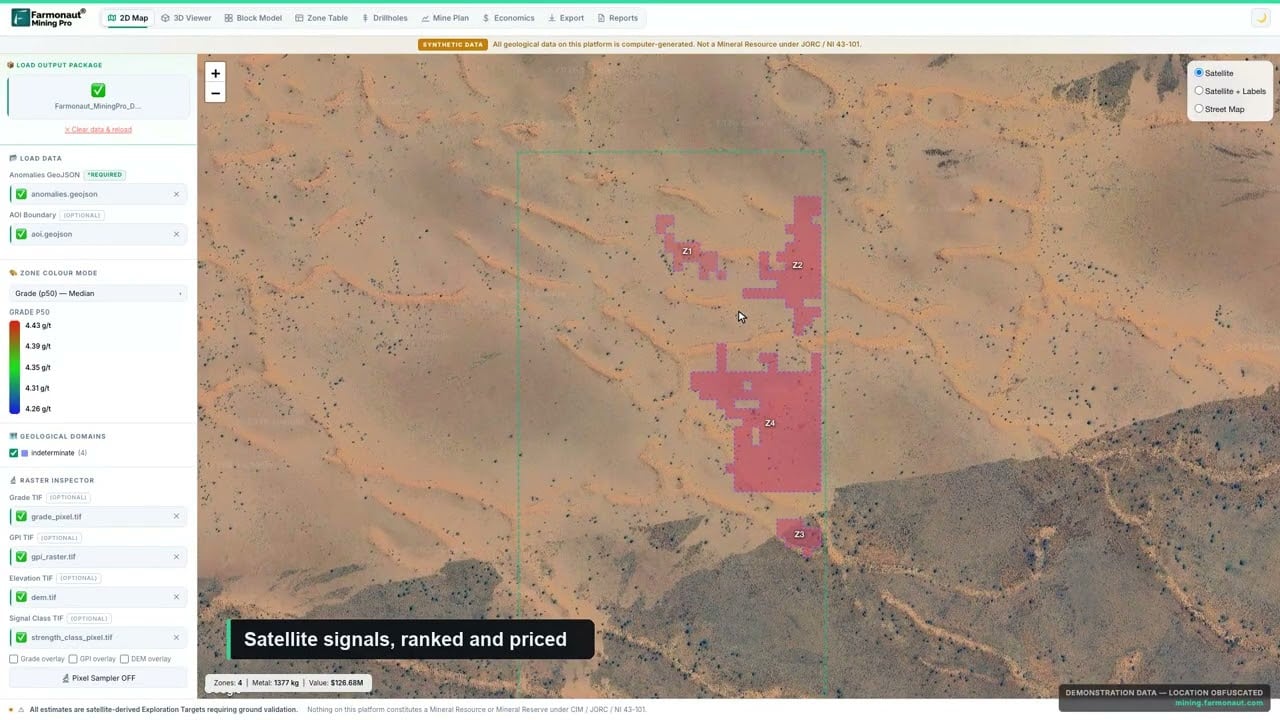
▶ What Farmonaut Mining Pro does with a licence boundary · 4:56
What about Gold Rush crews, panners and claim owners
Many searches about gold miner pay come from TV shows set in Alaska and the Yukon. Television crews are paid by production companies under contracts that are not public, so no reliable wage figure exists for them. Real placer crews are paid as described above.
Recreational gold panners and small claim owners are not paid a wage at all. Their income is the gold they recover, minus fuel, equipment, claim fees and travel. Most hobby panners recover small amounts. If you are thinking of buying or staking ground, read our guide to Alaska gold claims first, and always prospect with the landowner’s permission and the right licence, and never with mercury.
Owners and consultants who want to screen a claim or licence area before field work can use satellite data to map surface alteration and access; Farmonaut offers satellite-based mineral detection for that purpose. You can request a quote through our mining query form or contact us.
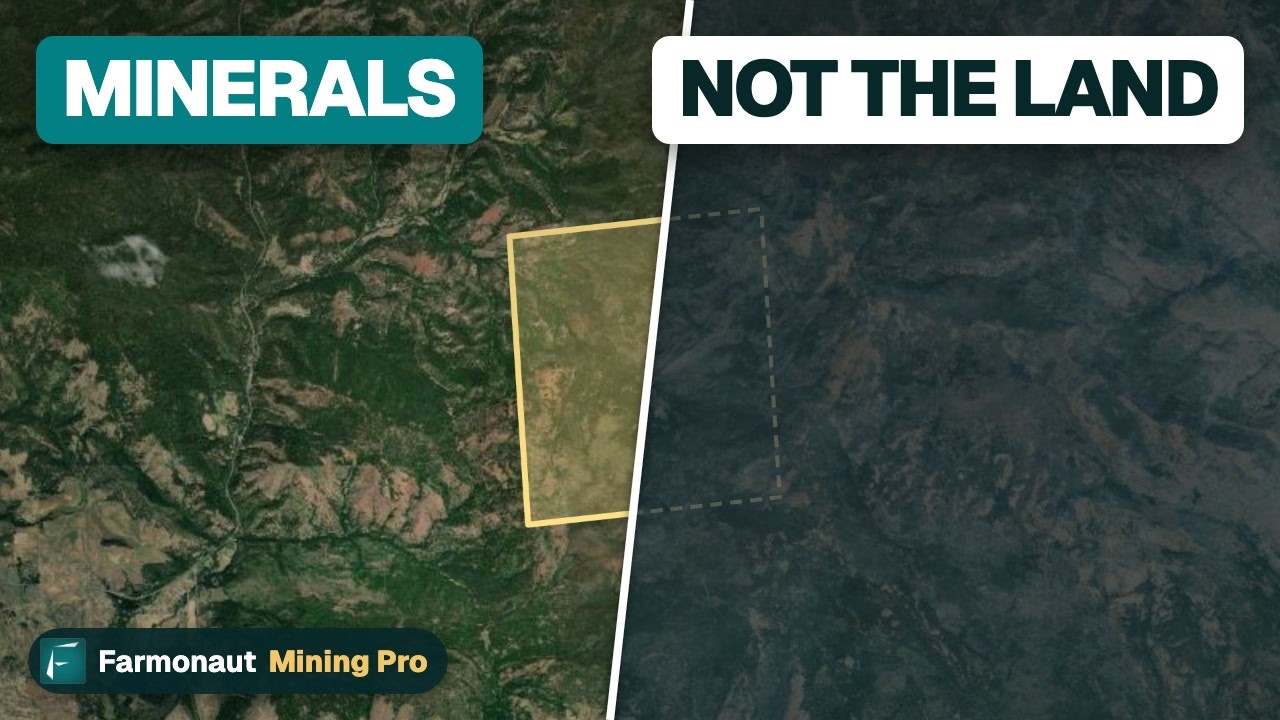
▶ Owning a gold claim is not owning the land: what to check before buying · 3:19
Frequently asked questions
How much do gold miners make a year?
The average worker in US metal ore mining, which includes gold mines, earned $77,290 a year in May 2023 (BLS). Production jobs such as operators and drivers averaged about $60,000 to $76,000; engineers, geologists and supervisors averaged more than $100,000.
How much do gold miners make in Alaska?
Alaska mining employees averaged $122,500 a year in 2024 (Alaska Miners Association, McKinley Research Group data). That covers all mining jobs at mostly large, year-round mines; seasonal placer crews earn less over a full year.
How much does a gold miner make an hour?
The median hourly wage in US metal ore mining was $36.23 in May 2023 (BLS). Alaska surface-mining excavator operators had a median of $41.26 an hour across all industries.
How much do gold miners get paid per month?
Dividing the US metal-mining average of $77,290 by 12 gives about $6,440 a month before tax. A seasonal placer worker can earn more per month during the season but nothing in the off-season.
What is the highest-paid job at a gold mine?
Site and operations managers, with an average of $189,340 in US metal ore mining in May 2023 (BLS). Among technical staff, geologists and mining engineers averaged over $100,000.
What does an entry-level gold miner earn?
Extraction helpers averaged $60,580 in US metal ore mining and $48,310 across all Alaska industries in May 2023 (BLS). Many start as helpers or labourers and move to equipment once trained.
Do placer miners get overtime in Alaska?
Usually yes, at 1.5 times the regular rate after 8 hours a day or 40 a week, but Alaska law exempts employers with fewer than 4 employees and people employed in the search for placer or hard-rock minerals (Alaska Department of Labor).
Do I need training before working at a mine?
Yes. MSHA requires at least 24 hours of new-miner training for surface mines and at least 40 hours for underground mines, plus 8 hours of refresher training every year (30 CFR Parts 46 and 48).
Do gold panners make money?
Hobby panners earn only the value of the gold they find, minus costs, and most recover small amounts. It is not a reliable income.
How many people work in gold mining in the US?
About 13,000 people worked at US gold mines and mills in 2025, according to a USGS estimate, up from 11,500 in 2022.
This page is general information about pay, not legal or employment advice. Wage surveys lag by one to two years; confirm current rates, overtime status and benefits with the employer and the Alaska Department of Labor. Prospect only with the landowner’s permission and the right licence, and never use mercury.
Farmonaut mining
Map your mining site from space
Mine staff and claim owners use satellite maps to see the ground, access and surface change around a site before field work.
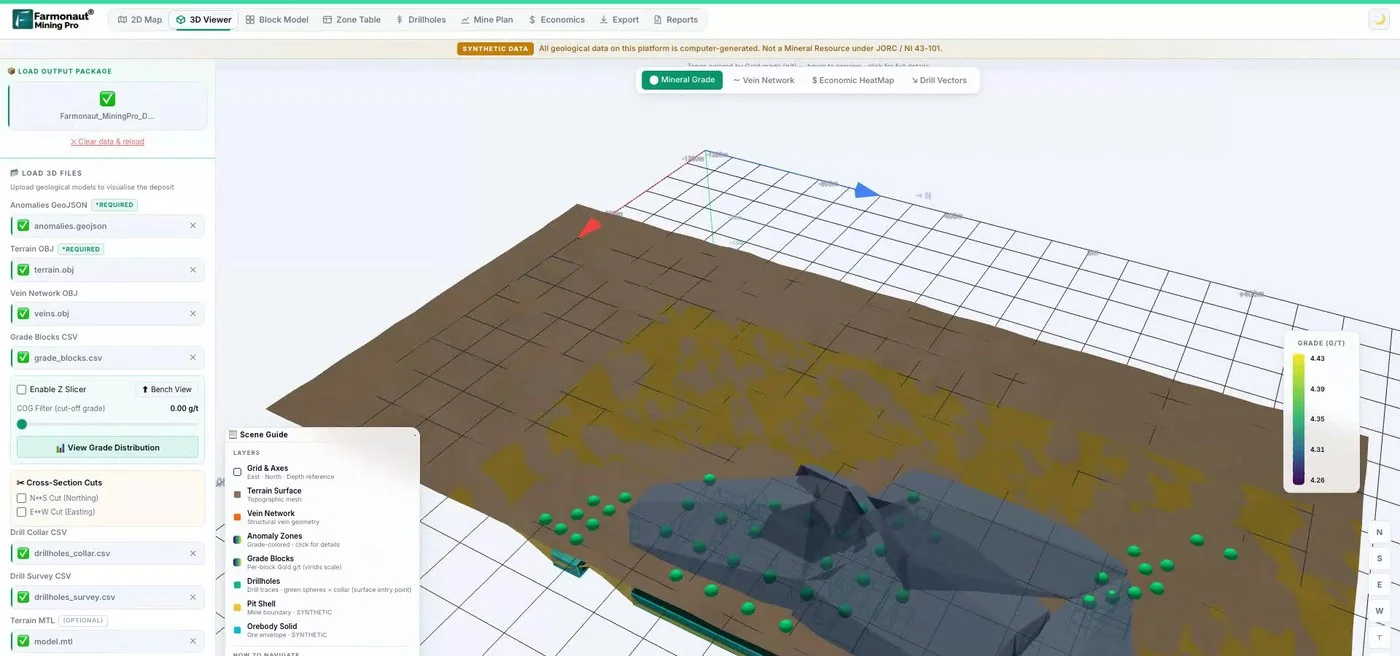
Mining Pro sample view, synthetic data
Keep reading
Sources
- US Bureau of Labor Statistics, OEWS NAICS 212200 Metal Ore Mining (May 2023): bls.gov
- US Bureau of Labor Statistics, OEWS Alaska state estimates (May 2023): bls.gov
- Alaska Miners Association, Alaska’s Mining Industry (September 2025): alaskaminers.org
- Alaska Department of Labor, Alaska Economic Trends, August 2025: live.laborstats.alaska.gov
- Alaska Department of Labor, Wage and Hour Act: minimum wage and overtime: labor.alaska.gov
- Alaska DGGS, Alaska mining industry presentation (2026): dggs.alaska.gov
- Alaska Division of Mining, Land and Water, Placer Mining: dnr.alaska.gov
- USGS Mineral Commodity Summaries 2026, Gold: pubs.usgs.gov
- eCFR, 30 CFR Part 46, Training of surface miners: ecfr.gov
- eCFR, 30 CFR Part 48, Training of underground miners: ecfr.gov
- University of Alaska, Mining Workforce Report (2025): alaska.edu
Discussion
Questions, corrections or field experience? Share them below. First-time comments are reviewed before they appear, and your email is never published.
No comments yet. Be the first to add a question or your experience.

 Faith At Work (Pty) Ltd
 Geotech Mining Solutions plc
 Vulcan International Limited
 Kidepo Associates
 GKY Mining
 Alkimy SARL
 Double A Trading
 GemSprout Metals Limited
 Qader Group
 Ileys General Trading
 SG Gold Mining LLC
 VRV Global Pte Ltd
 Omsri International FZE
 G.I.T.T.
 Jaunita Erss Ltd
 Almosi SARL
 SRK Consulting
 Berks Gold Limited
 Mwerezi Minerals Company Limited
 Mining SARL
 SenGold Invest SAS

 Exploration consultancy · South Africa · Gold
 Client · Oregon, USA · Gold










