

Idaho gold · Buyer guide
Gold Mines for Sale in Idaho: Buyer Guide and Costs
Gold mines for sale in Idaho are mostly small claims and a few patented parcels. A new lode claim costs US$274 to file and US$200 a year to hold (BLM). Here is what to check before you pay.
Key takeaways
- A new lode claim filed after 1 September 2024 costs US$274 in the first year, then US$200 a year; placers pay US$200 per 20 acres (BLM).
- No new mineral patents have been accepted since 1 October 1994, so patented Idaho parcels for sale are old titles (BLM).
- The surface of an unpatented claim stays federal land; you hold the mineral right only (BLM).
- Idaho Department of Lands oversees 1,567 active mines and 28 active dredge and placer operations (department website).
- Gold was US$4,157.70 per troy ounce (bid) on 15 October 2026 (Kitco); US mine output was an estimated 160 tonnes in 2025 (USGS).
In this article
- What kind of gold mine can you buy in Idaho
- How much it costs to hold a claim in Idaho
- Idaho gold projects that are not for sale but set the bar
- Gold price and what a mine is worth
- Idaho rules to check before you buy
- How to check a gold mine listing in Idaho: 8 steps
- Where gold mine listings come from
- Check the ground from space before you visit
- Frequently asked questions
Gold mines for sale in Idaho are almost always one of three things: a small private placer or lode claim, a patented parcel with old workings, or a share in a company that owns a larger project. The big producing and development mines in the state are held by listed companies and are not sold through classified ads. This guide explains what a buyer can actually purchase, what it costs to hold, which rules apply in Idaho, and how to check a listing before paying. Gold was quoted at US$4,157.70 per troy ounce (bid) on 15 October 2026 (Kitco), so a listing that quotes an older price is out of date. This page is for information only and is not investment or legal advice.
What kind of gold mine can you buy in Idaho
Most of Idaho’s gold ground sits on public land managed by the federal government, so what you buy is usually a mining claim, not the land itself. Under the General Mining Law of 1872 a claim has five elements: discovery, location, recordation, annual maintenance and, in the past, a patent. Since 1 October 1994 Congress has barred the Bureau of Land Management (BLM) from accepting new mineral patent applications, so every patented claim for sale today was patented decades ago. A patented claim is private land with title to the minerals. The surface of an unpatented claim is not private property; ownership stays with the United States, and you hold only the right to the minerals while you keep the claim in good standing.
Two more terms. A lode claim covers gold in rock in place, such as a quartz vein. A placer claim covers gold in loose gravel, usually along a stream or in an old river channel; a placer claim is limited to 20 acres per locator, or 160 acres for an association of eight or more. A mill site is up to five acres of non-mineral land for processing equipment.
| What is for sale | What you get | Yearly BLM cost | Main risk |
|---|---|---|---|
| Patented lode or placer parcel | Private title to the land and minerals | None from BLM; county property tax applies | Title defects, old workings, reclamation liability |
| Unpatented lode claim | Right to the minerals; surface stays federal | US$200 per claim maintenance fee | Lapsed fee, no valid discovery, access limits |
| Unpatented placer claim | Right to the gravel minerals | US$200 per 20 acres or portion | Water, dredge rules, overlapping claims |
| Mill site | Up to five acres for plant and tailings | US$200 per claim maintenance fee | Must be non-mineral land used for processing |
| Company shares or an option on a project | An interest in a company that holds the ground | Set by the contract | Disclosure quality; not covered by this page’s claim checks |
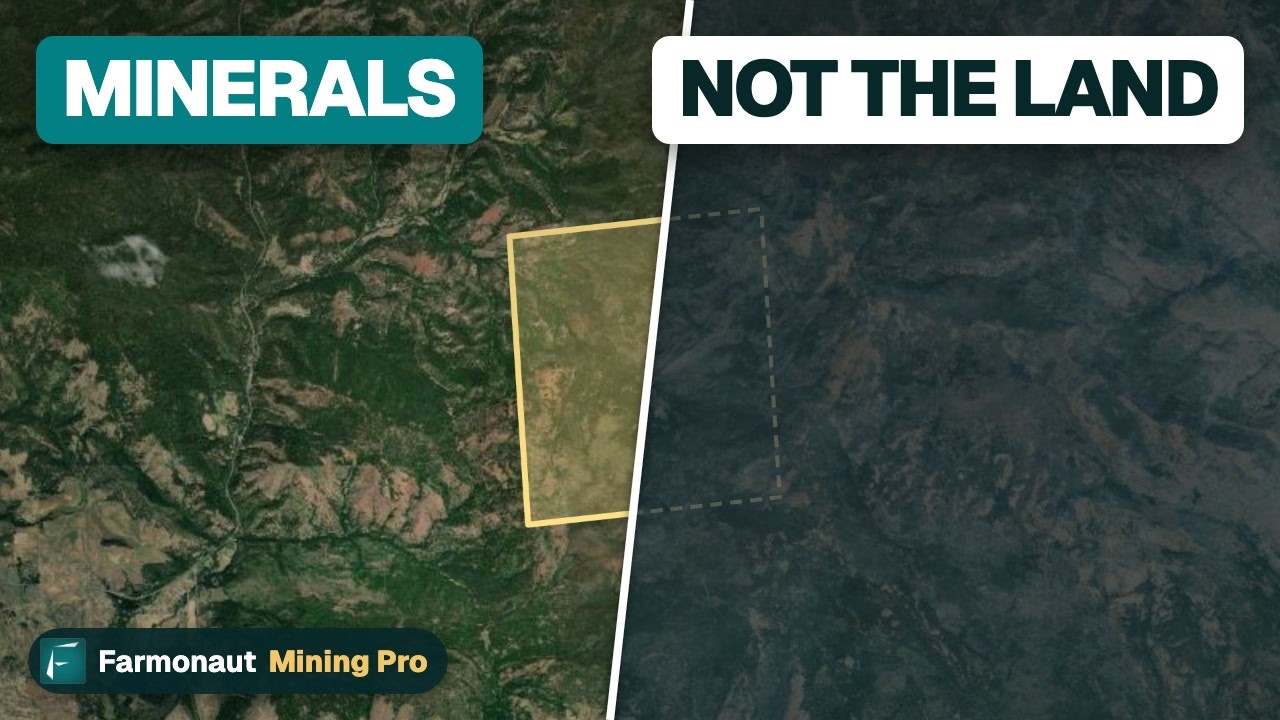
▶ Explains that a gold claim gives a right to the minerals, not title to the land, and how to check the ground first. · 3:19
How much it costs to hold a claim in Idaho
The asking price of a mine is whatever the seller wants, and no public database lists sale prices for Idaho gold properties. The holding cost, by contrast, is fixed by the BLM. A new lode claim filed on or after 1 September 2024 costs US$25 to process, US$49 to locate and US$200 maintenance, US$274 in the first year. A placer claim pays the same US$25 and US$49 plus US$200 for each 20 acres or portion. After that the maintenance fee is US$200 per claim, due on or before 1 September. Claimants with 10 or fewer claims nationwide can apply for a small-miner waiver (Form 3830-2) and then file an affidavit of assessment work by 30 December at US$15 per claim. The BLM’s 2027 mining-season notice says the maintenance fee or waiver was due before 1 September 2026 with no extensions, and that the affidavit is due 30 December 2026.
Chart
First-year BLM cost of one new lode claim
US$ per claim, claims filed on or after 1 September 2024
A buyer of claims also pays to record the transfer. The BLM charges US$15 per claim per transferee, and a quitclaim deed must first be recorded with the state or county recorder before it is filed with the BLM. Filing is done in the BLM’s online Mineral and Land Records System (MLRS); the BLM has announced an MLRS outage from the evening of 15 October to Monday 19 October 2026, so allow for that if a filing deadline is close.
The chart below shows how the first-year bill for one new claim is made up. The price of the ground is a separate negotiation.
Idaho gold projects that are not for sale but set the bar
When a listing claims a large resource, compare it with what the state’s advanced projects have published. These projects are owned by listed companies, so treat them as benchmarks, not purchase options.
Chart
DeLamar after-tax value at two gold prices
US$ million; NPV at a 5% discount rate; capital cost is the same in both cases
| Project | Owner and place | What the company reports | Status in the source |
|---|---|---|---|
| DeLamar | Integra Resources, Owyhee County | Open-pit heap-leach gold-silver mine; 1.1 million ounces of gold equivalent over a 10-year mine life, initial capital of US$389 million | Feasibility study effective 8 December 2025; federal, state and county permitting continues through 2026 and 2027 |
| Stibnite Gold Project | Perpetua Resources (Nasdaq and TSX: PPTA), central Idaho | Gold and antimony project; federal approvals secured in 2025, early works and critical-path construction under way, autoclaves being fabricated | District court largely upheld the federal approvals on 18 August 2026, with one narrow remand to US Fish and Wildlife Service; plaintiffs have appealed |
| South Mountain | Thunder Mountain Gold (OTCQB: THMG, TSX-V: THM), Owyhee County | High-grade underground polymetallic deposit rich in zinc, silver, gold and copper, with developed underground access | Company describes it as its flagship asset |
The DeLamar numbers show how much the gold price drives value. The study’s after-tax net present value (NPV) at a 5% discount rate is US$774 million using US$3,000 gold and US$35 silver, and US$1.7 billion at US$4,250 gold and US$60 silver. NPV is today’s value of the future cash flows of a mine after costs. Average all-in sustaining cost (AISC, the cost of one ounce including the capital needed to keep the mine running) is US$1,480 per ounce of gold equivalent on the study’s co-product basis. These are company study figures, not a promise of results. For scale, in the USGS Mineral Commodity Summaries, Nevada produced about 64% of US mined gold in 2025 and Alaska about 22%, and about 7% of US gold came as a byproduct of base-metal ores, chiefly copper.
▶ Follows a gold nugget from rock to ring: find, drill, crush, dissolve, catch on carbon, melt and refine. · 5:27
Gold price and what a mine is worth
A buyer should value a property by contained ounces, recovery and cost, not by the price on the listing. Grade is grams of gold per tonne of rock (g/t); one troy ounce is 31.1035 grams. Recovery is the share of that gold the plant actually captures. The USGS reports that US mine production fell from 187 tonnes in 2021 to an estimated 160 tonnes in 2025, while the price listed in the same table rose from US$1,801 to US$3,300 per troy ounce. A higher price makes more ground worth mining, but it also raises the seller’s expectations, so check that an asking price is built on a current, documented resource.
Chart
US gold mine production fell while the price rose
Tonnes of gold; 2025 is an estimate
Chart
Gold price in the USGS table, 2021 to 2025
US$ per troy ounce; 2025 is an estimate
The same price table shows why old listings mislead. A claim quoted at the US$1,800 level of 2021 would need re-pricing in a market near US$4,000. Always ask for the date of the assay data, the number of samples, who took them and the lab that analysed them.
Disclosure rules help here. A US-listed company must follow SEC rule S-K 1300, under which an initial assessment can disclose mineral resources but cannot be the basis for mineral reserves. A private seller of a small claim has no such duty, so a “resource” in a classified ad has no independent check unless a qualified person has signed a report.
Calculator
What is the gold in a claimed resource worth against the asking price?
Enter the seller’s claimed tonnes and grade, then your own recovery, price and the asking price.
- Recoverable gold: 2,733 oz
- Gross value of recoverable gold: $11,363,030
- Asking price per contained ounce: $311
- Asking price as share of gross value: 8.8 %
Example values only, not a benchmark and not a resource estimate. Gold price is an input: example, use today’s price. One troy ounce is 31.1035 grams. The result is gross metal value before mining, processing, royalties, permits and tax, so a real asking price should sit far below it.
Idaho rules to check before you buy
Four agencies matter for an Idaho gold property, and none of them is the seller.
- BLM (claim status). A properly recorded claim has a BLM serial number. The seller should be able to provide the serial numbers; look each one up on the MLRS research map and confirm the maintenance fee or waiver for the current assessment year.
- Idaho Department of Lands (reclamation). The department oversees 1,567 active mines and 28 active dredge and placer operations under 1,595 permits. It regulates surface mining and the surface effects of underground mining under the Mined Land Reclamation Act, with hardrock mines handled under its Section 070 application. Reclamation plans and financial assurance are required under the Mined Land Reclamation Act, Idaho Code Title 47, Chapter 15.
- Dredge and placer rules. The department regulates dredge mining with a nozzle of eight inches or more, while small-scale mining such as power sluices, suction dredges with nozzles of five inches or less and equipment of 15 horsepower or less falls under the Stream Channel Protection Act run by the Idaho Department of Water Resources. A permit held by the seller may be transferable only through a formal assignment.
- Idaho Department of Water Resources (water). A water right is authorization to use water, not ownership of it, and it requires diversion and beneficial use. Search the department’s water-right records for the property and confirm that the right named in a listing exists, is current and can be transferred.
Recording rules also apply at county level. Record the notice of location with the county recorder as well, because the BLM separately requires a notice of location within 90 days of locating a new claim. Counties also record patented-land deeds and mortgages, so ask for a title search on any patented parcel.
How to check a gold mine listing in Idaho: 8 steps
- Get the claim names and BLM serial numbers. No serial number means no recorded claim.
- Look each one up in MLRS and check that the status is active and the fee was paid or waived for the current year.
- Order a title search at the county recorder for patented land, and read any liens, easements and old deeds.
- Ask for the assay data and the sampling map, with lab certificates. Treat tonnage and grade claims with no data as unproven.
- Ask for permits and reclamation records from the Idaho Department of Lands, including whether financial assurance has been posted.
- Confirm the water right and the access road (public road, easement or federal route).
- Walk the ground with a geologist and compare what you see with the claim map, the old workings and the drill collars.
- Price it with your own numbers. Use the calculator in the price section above, with today’s gold price and your own recovery and cost estimates.
The BLM’s own checklist for buyers is similar: confirm the serial numbers, check status in MLRS, confirm the county recorder filing and confirm the fee payment. Unpatented claims also need a permit path if you plan to disturb the ground; the BLM publishes a guide to surface-management, reclamation bond and permit steps for hardrock mining.
Where gold mine listings come from
Listings turn up in a few places. Claim marketplaces such as miningclaimsales.com, which showed 27 listings on 15 October 2026 (many sourced from eBay, per the site’s affiliate note), let you filter by patented or unpatented, lode or placer and price. Individual sellers and brokers also post pages for single properties. Mining magazines, county recorder offices, tax-sale lists and local news are other leads. These are examples of how the market works.
Whatever the source, a listing is an advertisement. It is not a title report or a resource estimate. For companies that hold ground, the filing is the better source: the Idaho Geological Survey is the lead state agency for geologic information and mineral data, and it posts an annual review of mining and exploration in the state. Its interactive map covers geology, mines and geochemistry.
Check the ground from space before you visit
A site visit costs days and money, so screen first. Sentinel-2 satellite images show iron-stained and clay-altered rock, structures and vegetation cover, which helps you judge whether a claim block sits on mapped alteration and where access might be difficult. Satellites do not see gold itself; they map the rock around it, and the result is an exploration target, not a resource. See our overview of satellite-based mineral detection, our guide to gold claims for sale in Idaho, and the state-by-state rules in our Oregon gold mining guide. For map-based screening of a licence or claim block, send the boundary to Farmonaut Mining Pro.
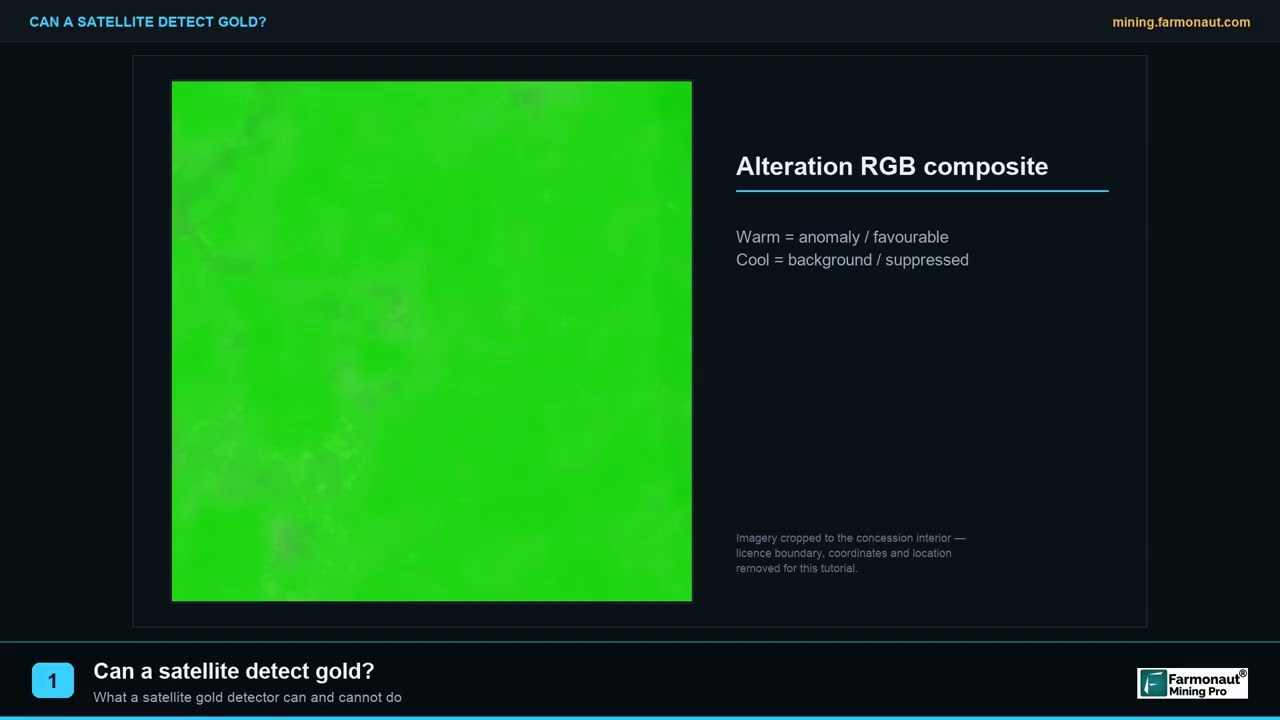
▶ Explains that no satellite sees gold itself, but satellites can map the altered rock a gold system leaves behind. · 2:00
Frequently asked questions
Are there gold mines for sale in Idaho?
Yes, but mostly small ones: unpatented claims, a few patented parcels and exploration projects. Large operating mines belong to listed companies.
What does a gold claim in Idaho cost to hold?
For a new lode claim filed after 1 September 2024 the BLM charges US$274 in the first year (US$25 processing, US$49 location, US$200 maintenance), then US$200 a year. Placers pay US$200 per 20 acres or portion.
Can you still get a patent on a claim?
No. Congress has barred the BLM from accepting new mineral patent applications since 1 October 1994, so only existing patents can be sold.
Does buying a claim mean I own the land?
Not for an unpatented claim. You own a right to the minerals and the surface stays federal land. A patented claim is private property.
How do I check that a claim is valid?
Ask for the BLM serial number, search it in MLRS, confirm the county recording and check that the maintenance fee or waiver is on file for the current assessment year.
Do I need a permit to mine a placer claim in Idaho?
It depends on size. Dredge mining with a nozzle of eight inches or more is regulated by the Idaho Department of Lands; small-scale methods are covered by a Stream Channel Protection Act permit from the Idaho Department of Water Resources. Confirm with both agencies.
Who regulates reclamation on an Idaho gold mine?
The Idaho Department of Lands regulates surface mining and the surface effects of underground mining, and hardrock mines apply under Section 070 of the department’s rules (IDAPA 20.03.02). The Mined Land Reclamation Act is in Idaho Code Title 47, Chapter 15, and requires an approved plan and financial assurance.
What is the biggest gold project in Idaho?
Perpetua Resources’ Stibnite Gold Project and Integra’s DeLamar are the two advanced gold projects described above. This page does not rank them, because each company reports on a different basis.
How do I estimate the value of a gold property?
Multiply tonnes by grade in grams per tonne, divide by 31.1035 for ounces, apply the recovery rate, then multiply by a current price. That gives gross value before mining, processing, royalties and tax.
Can I use satellite data to screen a claim before buying?
Yes, as a first screen. Satellite images show alteration and structure, but they do not prove gold; samples and drilling do that.
Is panning or sluicing on a purchased claim allowed without extra rules?
Not automatically. You need permission from the claim owner or the land manager, water rules apply and mercury should never be used. Check the Idaho Department of Water Resources recreational mining rules first.
This page is for information only. It is not investment advice and not legal advice. Confirm claim, permit and title rules with the BLM, the Idaho agencies and a qualified lawyer. Prospect only with permission, follow safety rules and never use mercury.
Farmonaut mining
Map your mining site before you buy
Send a claim or licence boundary as KML, KMZ or a polygon to get a quote for satellite-derived exploration targets, ahead of any resource estimate.

Mining Pro sample view, synthetic data
Keep reading
Sources
- Kitco, gold price chart (15 October 2026): kitco.com
- BLM, mining claim fees: blm.gov
- BLM, locatable minerals: mining claims: blm.gov
- BLM, Mining Law and claims (patent moratorium): blm.gov
- BLM, mining claims packet (serial numbers, surface ownership): blm.gov
- BLM, 2027 mining season notice: blm.gov
- BLM, hardrock mine permit guide: blm.gov
- USGS, Mineral Commodity Summaries 2026: Gold: pubs.usgs.gov
- Integra Resources, DeLamar Project Feasibility Study technical report (effective 8 December 2025): minedocs.com
- Perpetua Resources, construction update (31 August 2026): perpetuaresources.com
- Thunder Mountain Gold, company website: thundermountaingold.com
- Idaho Department of Lands, mining: idl.idaho.gov
- Idaho Department of Lands, dredge and placer mining: idl.idaho.gov
- Idaho Department of Water Resources, about water rights: idwr.idaho.gov
- Idaho Geological Survey: idahogeology.org
- Cornell LII, 17 CFR 229.1300 (S-K 1300): law.cornell.edu
- miningclaimsales.com, claim listings (example marketplace): miningclaimsales.com
Discussion
Questions, corrections or field experience? Share them below. First-time comments are reviewed before they appear, and your email is never published.
No comments yet. Be the first to add a question or your experience.

 Process Metrology LLC
 Dalgety Minerals Pty Ltd
 Vortex Minerals Pty Ltd
 Faith At Work (Pty) Ltd
 Geotech Mining Solutions plc
 Vulcan International Limited
 Kidepo Associates
 GKY Mining
 Alkimy SARL
 Double A Trading
 GemSprout Metals Limited
 Qader Group
 Ileys General Trading
 SG Gold Mining LLC
 VRV Global Pte Ltd
 Omsri International FZE
 G.I.T.T.
 Jaunita Erss Ltd
 Almosi SARL
 SRK Consulting
 Berks Gold Limited
 Mwerezi Minerals Company Limited

 Exploration consultancy · South Africa · Gold










