

Gold property buying · Buyer guide
Gold Mines for Sale in Africa: Buyer Guide and Rules
Most gold mines for sale in Africa are company stakes, projects or citizen-only small-scale licences. Kibali, the largest mine, made 674,000 oz in 2025 (Ecofin). Transfer rules for five countries, nine pre-payment checks and a value calculator.
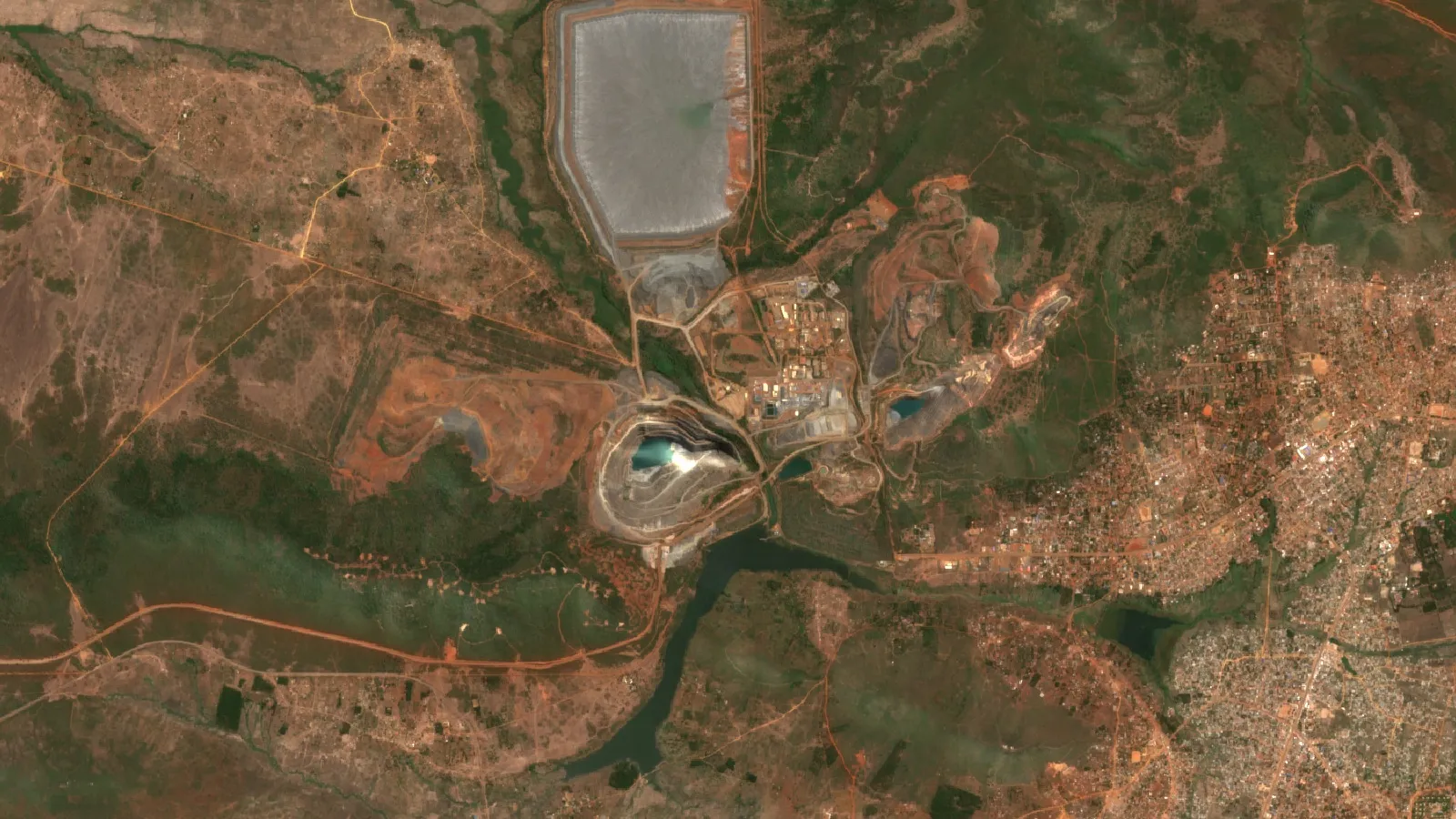
Key takeaways
- Africa’s five largest gold mines produced 2.87 million oz in 2025, down from 3.45 million in 2024; Kibali in Congo (Kinshasa) led with 674,000 oz (Ecofin Agency, company data).
- Ghana produced a provisional record of 6 million oz in 2025, with small-scale mining (about 3.1 million oz) passing large mines (2.9 million oz); the Ghana Gold Board is the sole buyer of licensed small-scale gold (Reuters; Graphic Online).
- Sales of mineral rights generally need state consent in Ghana, Zimbabwe and South Africa, and sales of Tanzanian mining licences do too, and Tanzania expects at least a 16% state carried interest; Mali’s code allows up to 30% plus 5% for local investors.
- The Zijin Gold takeover of Allied Gold (C$5.5 billion, January 2026) was terminated on 29 July 2026 and replaced by a US$295 million share purchase for about 9.2%.
- Spot gold was US$4,157.70 per oz (bid) on 15 October 2026 (Kitco); the USGS average price was US$1,801 in 2021 and an estimated US$3,300 in 2025.
In this article
- What a gold mine for sale means in Africa
- Where Africa's gold is mined
- Ghana: where small-scale gold overtook large mines
- Who is allowed to buy: transfer rules by country
- What recent deals show about buying a mine
- Routes open to a foreign investor
- Nine checks before you pay for a gold property
- What a gold deposit is worth, and the price behind it
- What a satellite screen adds before a site visit
- Frequently asked questions
Gold mines in Africa are rarely sold like houses. Most “for sale” offers are one of three things: shares or assets in a company that owns a producing mine, a development or exploration project owned by a junior company, or a small-scale licence that only citizens may hold in many countries. The scale differs sharply. Africa’s largest gold mine, Kibali in Congo (Kinshasa), produced 674,000 ounces in 2025, while a small-scale licence may cover a few hectares. This guide explains what is actually sold, who may buy, what approvals apply in Ghana, Tanzania, Zimbabwe, South Africa and Mali, and which checks to run before any money moves.
Terms used below. Grade is the amount of gold in the rock, in grams per tonne (g/t). A mineral resource is an estimate of gold that could be mined; a reserve is the part that has passed economic tests. A carried interest is a state share that the miner does not pay for. A royalty is a payment to the state on sales. This page gives facts from the sources named. It is not legal advice or investment advice.
What a gold mine for sale means in Africa
A listing can describe very different assets. The table sorts them by what you would really be buying, and by who can usually take part.
| Type of asset | What changes hands | Who usually buys | Main risk |
|---|---|---|---|
| Producing mine owned by a company | Company shares or the mining subsidiary | Listed miners, funds, state-linked buyers | Government consent and state stake rules |
| Development project | The licence holder or the project company | Mid-tier miners | Funding, permits and construction cost |
| Exploration licence | Licence transfer or earn-in joint venture | Juniors, explorers, private investors | Resource may be small or unproven |
| Small-scale or artisanal licence | A short licence for a small area | Often citizens only | Foreign buyers may be barred; informal workings and disputes |
Online brokers and listing sites exist, but a listing is only a lead. Until the title checks later on this page are done, treat price, tonnage and grade in an advertisement as the seller’s claim.
Where Africa’s gold is mined
Price and risk follow the size of the asset, so start with the producers. Ecofin Agency ranked Africa’s five largest gold mines for 2025 from company-reported data. Together they produced 2.87 million ounces, down from 3.45 million a year earlier. Kibali led, ahead of Newmont’s Ahafo South in Ghana, B2Gold’s Fekola in Mali, Kinross’s Tasiast in Mauritania and Sukari in Egypt, now owned by AngloGold Ashanti.
Chart
Africa’s five largest gold mines by 2025 output
Thousand ounces of gold, company-reported
At country level, the USGS estimates that Ghana mined 150 tonnes in 2025 and South Africa 90 tonnes, out of a world total of 3,300 tonnes (USGS Mineral Commodity Summaries 2026). The USGS table shows only these two African countries by name. Other producers, including Mali, Burkina Faso, Sudan, Tanzania and Congo (Kinshasa), sit inside its “other countries” line of 1,000 tonnes.
Ghana: where small-scale gold overtook large mines
Ghana is the clearest case of how fast the market can change. The Ghana Chamber of Mines reported provisional 2025 output of 6 million ounces, about 187 tonnes at 31.1035 grams per ounce. Large-scale mines contributed 2.9 million ounces, unchanged from the year before, and artisanal and small-scale mining about 3.1 million. Treat 6 million as a rounded provisional number.
Chart
Ghana gold output in 2025 by sector
Million ounces, provisional data
The rules changed in the same period. Under the Ghana Gold Board Act (Act 1140), passed in March 2025, the Ghana Gold Board is the sole buyer, seller, assayer and exporter of gold from licensed small-scale operators. From 1 May 2025 foreigners were barred from the local gold trade and could apply to buy directly from the Board. A small-scale mine in Ghana is therefore not something a foreign buyer can simply purchase and sell from.
Royalties are also moving. Reuters reported in February 2026 that Ghana planned to replace its fixed royalty with a sliding scale of 5% to 12% tied to the gold price, and that mining companies said the scale was too steep. The Minerals and Mining Royalty Regulations, 2025 became law in 2026, so the sliding scale now applies to most mining companies, although some large producers with older development agreements are excluded. Check the rate in force on the day you value a project. Our guide to gold exploration in Ghana covers licences and geology in more detail.
Who is allowed to buy: transfer rules by country
In most African jurisdictions the state must approve a sale of a mineral right, and often a sale of the company that holds it. Skipping this step can void the deal. The rules below come from statutes and law-firm summaries; confirm the current text with a local lawyer.
| Country | Transfers and change of control | Small-scale or primary licences | State share |
|---|---|---|---|
| Ghana | Dealings in mineral rights need the Minister’s approval (s.14); a change of controller of a mining-lease company needs approval (s.52), where a controller holds more than 20% of the votes | Small-scale licences go only to Ghanaian citizens aged 18 or over (s.83) | Sliding royalty of 5% to 12%, tied to the gold price, in force from 9 March 2026; see above |
| Tanzania | A mining licence or special mining licence cannot be assigned without written consent of the licensing authority, except to a guaranteed affiliate (Mining Act s.9) | A Primary Mining Licence runs seven years and is open to Tanzanian citizens or wholly Tanzanian companies | Government carried interest of at least 16% in mining and special mining licence holders |
| Zimbabwe | Prospecting licences cannot be transferred; an exclusive prospecting concession needs the Minister’s consent; a mining lease goes only to a person the Mining Affairs Board approves | Mining locations are registered with a mining commissioner; ordinary prospecting licences go to permanent residents | A replacement Mines and Minerals Bill was gazetted on 25 June 2025 (Muvingi and Mugadza, August 2025) |
| South Africa | A prospecting or mining right, an interest in it or a controlling interest in a company needs the Minister’s written consent, except for listed-company control changes (MPRDA s.11) | Not applicable in the same way | Set by the right and by broad-based ownership rules |
| Mali | Renewals are renegotiated under the current mining code | Not applicable in the same way | State may hold up to 30% of a mine, plus 5% reserved for local investors |
Sources for the table: the Minerals Commission’s overview of Act 703 and FAQ for Ghana; the Tanzania Mining Act and Mayer Brown’s Tanzania summary; Mayer Brown’s Zimbabwe summary and Muvingi and Mugadza’s note on the 2025 Bill; Werksmans on MPRDA section 11; and Ecofin Agency on Mali’s code.
The pattern for a foreign buyer is consistent. Large, formal assets can be bought with state consent. Small-scale licences are mostly reserved for citizens. The next section shows how that looks in real transactions. For the same question in Zimbabwe, South Africa and Tanzania, see our country guides to gold exploration in Zimbabwe, South Africa and Tanzania.

▶ Explains whether a foreigner can get a small-scale mining licence in Africa and which routes stay open. · 5:16
What recent deals show about buying a mine
Three recent cases show what a sale involves in practice. They are shown for the structure of the deals, not as offers.
- A large takeover that did not close. In January 2026 Zijin Gold agreed to buy Allied Gold, owner of Sadiola in Mali, the Côte d’Ivoire complex and Kurmuk in Ethiopia, for C$5.5 billion. On 29 July 2026 Allied Gold announced the agreement had been terminated because both sides saw no reasonable likelihood that the closing conditions would be met, and replaced it with a US$295 million share purchase giving Zijin about 9.2%. The price of a company is only the start; conditions and approvals decide whether it closes.
- A development project changing hands. In May 2025 Resolute Mining announced its acquisition of the Doropo and ABC projects in Côte d’Ivoire. Doropo had a feasibility study and a mineral reserve of 1.88 million ounces at 1.53 g/t gold. ABC was an exploration project with an inferred resource of 2.16 million ounces at 0.9 g/t. The two assets carry very different risk, though both can be described as “gold projects for sale”.
- A dispute that ended in a payment. Mali and Barrick settled their dispute over the Loulo-Gounkoto complex in November 2025 with a payment reported at 244 billion CFA francs, about US$430 million, and the Loulo licence was renewed for ten years in February 2026. A buyer of any Malian asset inherits the same mining code.
Routes open to a foreign investor
When a small-scale licence cannot be bought outright, investors usually use a structure the law does allow. None of these removes the need for consent, and each should be drafted by a lawyer in the country concerned.
- Earn-in joint venture. The buyer pays for exploration in return for a growing share of the licence. Zimbabwe, Ghana and South Africa all require consent to a transfer, so the agreement must name that step.
- Buying into a company with several licences. A stake in an exploration company avoids a licence-by-licence transfer, but a change of controller still needs approval in Ghana above 20% of the votes, and in South Africa for a controlling interest outside listed companies.
- Offtake or purchase from the state buyer. In Ghana a foreigner may apply to buy gold directly from the Ghana Gold Board instead of dealing locally.
- Local partnership. Tanzanian rules reserve at least 5% of a mining company for an indigenous Tanzanian company, and Mali reserves 5% for local investors, so local partners are part of the structure rather than an extra.
Nine checks before you pay for a gold property
Use this order. Each step is cheaper than the one after it, so a failed early step saves the later spend.
- Confirm the licence in the official register. Ask for the licence number, then look it up in the national cadastre. Our guide to mining cadastre portals lists where to search, country by country.
- Confirm who may sell and who may buy. Use the table above. If the licence is for small-scale mining, check whether a foreign company can hold it at all.
- Ask for the consent route in writing. A sale of a right, or of a company that holds it, needs ministerial or commission consent in Ghana, Tanzania, Zimbabwe and South Africa. Make consent a condition of payment.
- Check the state share. Tanzania expects the state to hold at least a 16% carried interest. Mali’s code allows up to 30% plus 5% for local investors. These shares reduce what you own.
- Read the technical report and the resource class. Under the US rule for mining disclosure, 17 CFR 229.1300, an inferred resource may not be used to judge whether a project is economic. Canada uses National Instrument 43-101 for the same purpose. A seller that cannot name a qualified person behind the numbers has a claim, not a resource.
- Sample independently. Take your own samples, chain of custody included, and have them assayed at an accredited laboratory. Grade from a panned concentrate is not a head grade.
- Model the royalty and taxes. Use the rate in force. Ghana’s 5% to 12% sliding scale, in force since March 2026, shows how fast terms can move.
- Check land, water and community rights. Surface rights, farms, rivers and graves often sit on top of the minerals. Ask for the environmental permit and the closure bond, and talk to the local community early.
- Structure the payment. Use staged payments tied to consent, a clean title search and assay results, and pay through a lawyer’s escrow account, not to a person.
What a gold deposit is worth, and the price behind it
Gold is priced in US dollars per troy ounce, which is 31.1035 grams. Kitco showed spot gold at US$4,157.70 per ounce (bid) at 2:50 pm Eastern on 15 October 2026. The USGS reports annual average prices that show how far the market has moved: US$1,801 per ounce in 2021 and an estimated US$3,300 in 2025. A higher price raises the value of every ounce in the ground, but it also raises seller expectations, so asking prices for projects often run ahead of what a buyer can finance.
▶ Follows gold from rock to refined metal: drilling, crushing, leaching, recovery and refining. · 5:27
Chart
Annual average gold price, 2021 to 2025
US dollars per troy ounce; 2025 is a USGS estimate
The calculator below turns tonnes, grade, recovery and price into gold produced and revenue. It stops at revenue on purpose: operating cost, capital, tax and the time value of money decide whether a project is worth buying, and a technical study has to supply those.
A worked example shows the arithmetic with round numbers. A small open pit has 500,000 tonnes of ore at 2 g/t. Contained gold is 500,000 x 2 / 31.1035, or about 32,150 ounces. At 90% recovery (an assumed example), the plant produces about 28,935 ounces. At an example price of US$4,150 per ounce that is roughly US$120 million of revenue. A 10% royalty (an example within Ghana’s 5% to 12% band) takes about US$12 million before any other cost. If the state holds a 16% carried interest in the project company, a buyer of the whole company owns the other 84%. Change any input and the result moves, which is why a buyer should ask for the grade, the cut-off grade and the recovery test behind each number. Cut-off grade is the lowest grade that still pays for mining and processing.
Calculator
What revenue could a gold deposit give you?
Enter your own tonnes, grade, recovery, price, royalty and equity share.
- Contained gold: 32,151 oz
- Revenue at your price: $120,082,949
- Royalty: $12,008,295
- Revenue after royalty, your share: $90,782,709
Example values only, not a benchmark or a forecast. Recovery, royalty and equity share are assumed examples; check the rate in force in your country (Tanzania, for instance, expects a state carried interest of at least 16%, Mayer Brown). The price is an input: example, use today’s price. One troy ounce is 31.1035 grams. The result is revenue before mining, processing, capital, tax and financing costs, and the equity share is applied simply to revenue after royalty, which real carried-interest terms may not do.
What a satellite screen adds before a site visit
Satellites cannot see gold. They can map the iron-stained, clay-altered and faulted rock that often surrounds a gold system, and that is useful when a seller offers a licence you have not seen. A screen takes days rather than a field season and shows whether the offered ground has the same signs as known deposits nearby. It does not replace drilling or a resource estimate. Farmonaut’s satellite-based mineral detection can screen a licence boundary supplied as KML, KMZ or a polygon, and a quote can be requested through the mining query form.

▶ Explains what satellites map when they look for gold: iron stains, clay minerals and faults. · 4:25
Frequently asked questions
Can a foreigner buy a gold mine in Africa?
Yes for large formal assets, usually with government consent, and often no for small-scale licences. Ghana limits small-scale licences to citizens, and Tanzania’s Primary Mining Licence goes to citizens or wholly Tanzanian companies.
Who buys and sells gold mines in Africa?
The biggest deals are between listed miners, such as the Resolute and Allied Gold cases above. Smaller sales involve junior explorers and private owners of licences and shares.
How much does a gold mine cost in Africa?
There is no standard price. A takeover of an operating group was agreed at C$5.5 billion in the Allied Gold case, and an exploration licence may sell for far less. Price depends on the resource class, grade, state share, royalty and the gold price on the day.
Is it safe to buy a small gold mine from an online listing?
Only after the title, consent and sampling checks above. A listing does not prove that a licence exists, is in good standing or may be sold to you.
What documents should a seller provide?
The licence and its renewal history, a cadastre extract, ministerial or commission consents, environmental permits, the technical report with its qualified person, assay certificates, and proof that fees and taxes are paid.
Do African governments take a share of a mine?
Often. Tanzania expects the state to hold at least a 16% carried interest, and Mali’s mining code allows the state up to 30% plus 5% reserved for local investors, as applied at Sadiola.
Which country is easiest for a foreign buyer?
No source ranks that fairly. The rules differ by licence type, so compare the specific licence in the table above and ask a local mining lawyer for the current position.
What is the difference between a resource and a reserve?
A resource is an estimate of gold with reasonable prospects of being mined. A reserve is the part shown by a study to be economic. The Doropo project is described with a reserve of 1.88 million ounces, while ABC has an inferred resource of 2.16 million ounces.
Can satellites tell me if a licence has gold?
No. They map the rock and alteration around gold systems, which helps decide where to sample first.
What is the gold price today?
Spot gold was US$4,157.70 per ounce (bid) on 15 October 2026, according to Kitco. Check a live source before you value anything.
This page is for information only. It is not legal advice or investment advice. Mining law changes often, so confirm the rules and any required consent with the regulator and a local mining lawyer before you sign or pay.
Farmonaut mining
Map your mining site from space
Consultants can send a licence boundary as KML, KMZ or a polygon and receive satellite-derived exploration targets, ahead of any resource estimate.
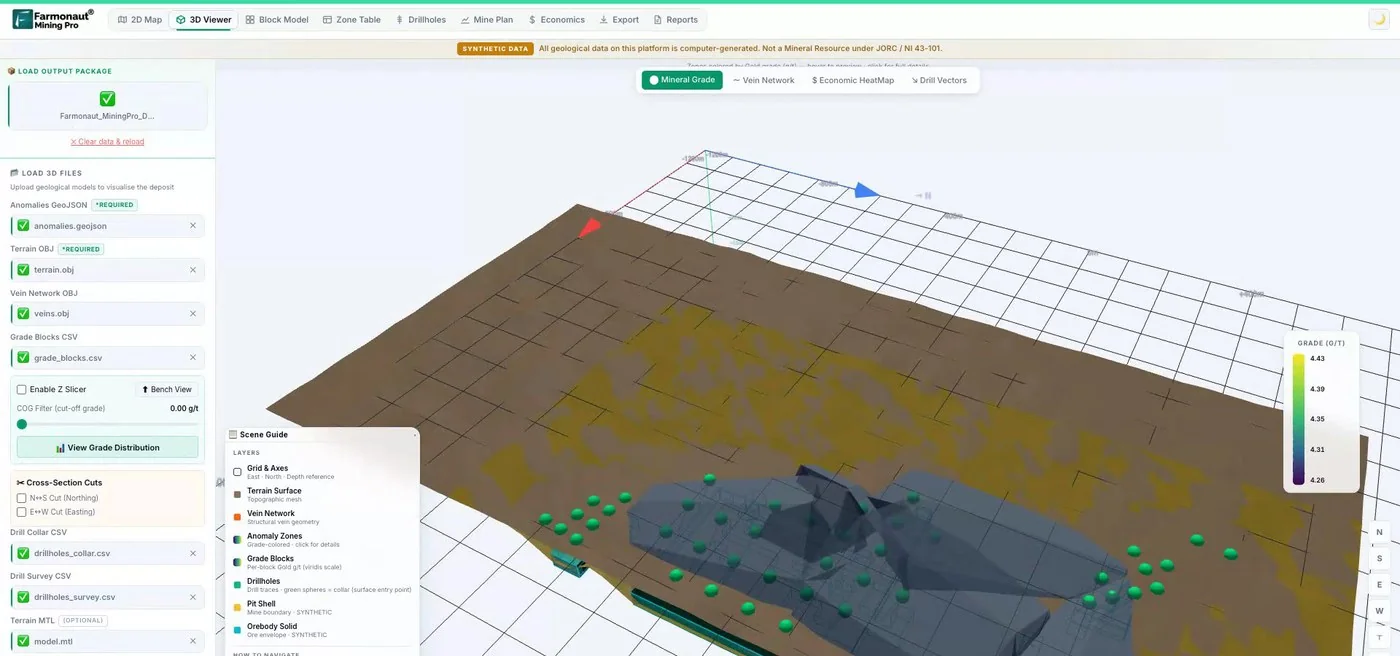
Mining Pro sample view, synthetic data
Keep reading
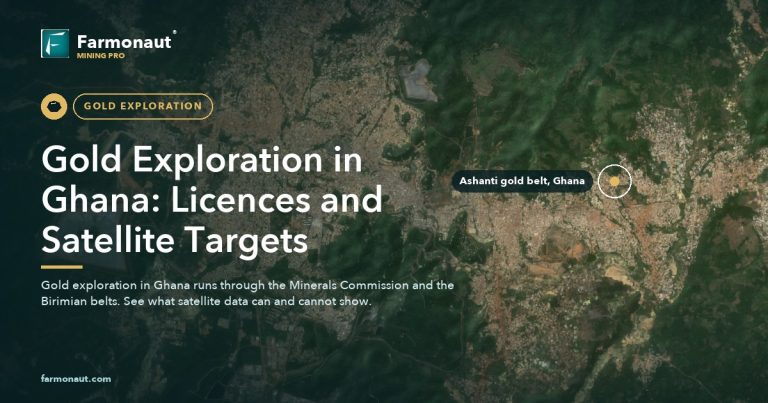
Sources
- Ecofin Agency, DR Congo overtakes Ghana as Africa’s top gold mine (24 Feb 2026): ecofinagency.com
- USGS, Mineral Commodity Summaries 2026: Gold: pubs.usgs.gov
- Reuters via Kitco, Ghana’s gold output hits record 6 million oz (12 Feb 2026): kitco.com
- Graphic Online, GoldBod sole buyer of small-scale gold, foreigners barred from 1 May 2025: graphic.com.gh
- Ghana Minerals Commission, Overview of the Minerals and Mining Act 2006 (Act 703): mincom.gov.gh
- Ghana Minerals Commission, FAQs: mincom.gov.gh
- Laws of Tanzania, Mining Act: tanzanialaws.com
- Mayer Brown, Tanzania mining summary: mayerbrown.com
- Mayer Brown, Zimbabwe mining summary: mayerbrown.com
- Muvingi and Mugadza, Overview of the Mines and Minerals Bill 2025: mmmlawfirm.co.zw
- Werksmans, Section 11 of the MPRDA (June 2023): werksmans.com
- Ecofin Agency, Mali renews Loulo licence for Barrick (Feb 2026): ecofinagency.com
- Ecofin Agency, Barrick reaches deal with Mali on Loulo-Gounkoto (Nov 2025): ecofinagency.com
- Allied Gold, termination of arrangement agreement with Zijin Gold (29 Jul 2026): s203.q4cdn.com
- Mining Technology, Allied Gold and Zijin Gold end arrangement agreement: mining-technology.com
- Global Mining Review, Acquisition of the Doropo and ABC gold projects (2 May 2025): globalminingreview.com
- US eCFR, 17 CFR 229.1300 (S-K 1300 definitions): law.cornell.edu
- Ontario Securities Commission, National Instrument 43-101: osc.ca
- Kitco, gold spot price chart (15 Oct 2026): kitco.com
Discussion
Questions, corrections or field experience? Share them below. First-time comments are reviewed before they appear, and your email is never published.
No comments yet. Be the first to add a question or your experience.

 G.I.T.T.
 Jaunita Erss Ltd
 Almosi SARL
 SRK Consulting
 Berks Gold Limited
 Mwerezi Minerals Company Limited
 Mining SARL
 SenGold Invest SAS
 Sean Mining Limited
 NTS Group (Pty) Ltd
 Mine4Africa
 Lithspo Minerals Limited
 Tintina Mining Group
 Dalgety Minerals Pty Ltd
 Vortex Minerals Pty Ltd
 Licence holder · Nigeria · Gold + lithium










