

Gold Mining Ontario 2026: Powerful Trends & Future Outlook
- Introduction & Executive Summary
- Historical Context & Significance
- Ontario Gold Mining Trivia
- Key Gold Mining Regions in Ontario
- Economic & Social Impact of Gold Mining in Ontario
- Environmental Stewardship & Technological Advances
- Gold Mining Trends Comparison Table (2024-2026)
- Technology, Innovation, and Farmonaut’s Role in Modern Exploration
- Challenges Facing the Gold Mining Sector
- Future Outlook: Gold Mining in Ontario 2026 and Beyond
- FAQs: Gold Mining Ontario
- Conclusion: Building a Sustainable Future
“In 2025, Ontario’s gold output is projected to surpass 80 metric tons, marking a record regional growth.”
Introduction & Executive Summary
Gold mining in Ontario stands as a cornerstone of the Canadian mining industry, with a rich legacy stretching back to the late 19th century. As of 2025, Ontario’s gold sector remains vibrant, technologically advanced, and increasingly sustainable. Supported by prolific deposits, leading mining companies, regional exploration growth, and eco-conscious practices, Ontario’s gold mining continues to fuel economic progress and global competitiveness.
This comprehensive overview covers industry trends, regional highlights, economic and social impacts, technological innovation, challenges, and future outlook. For investors, industry professionals, governments, and communities in Timmins, Kirkland Lake, Rainy River, Hemlo, and beyond, this article offers essential insights as we step into 2026 and beyond.

Summary: Gold Mining in Ontario—A Thriving Industry in 2025
- Ontario is Canada’s premier gold mining province, home to prolific regions like Timmins, Kirkland Lake, and Red Lake.
- Gold mining output, technological innovation, and sustainable practices fuel provincial and national growth.
- Thousands of jobs and significant revenue contributions reinforce the social and economic importance of gold mining Ontario.
- Regulatory compliance, environmental stewardship, and Indigenous partnerships are increasingly key priorities for the sector’s sustainability.
- Ontario’s gold mining industry is bolstered by rich mineral endowments and continued investments in exploration and innovation.
Historical Context & Significance of Gold Mining Ontario
The story of gold mining in Ontario begins in the late 19th century. Early discoveries near Porcupine, Timmins, and Kirkland Lake unveiled vast mineral riches within the Canadian Shield region. What started as scattered finds quickly grew into major mining districts, supported by immigrant labor, town development, and expanding infrastructure. Mining communities around the gold mines became engines of economic, social, and cultural growth in northern Ontario.
By the twentieth century, Ontario stood out among Canada’s top provinces for gold production, with a reputation for steady output, technological progress, and sustained exploration. Today, the province remains at the forefront of gold mining, contributing significantly to national economies and demonstrating resilience amid commodity price volatility and evolving industry priorities.
One Timmins operation is profiled in more depth in a look at the Hoyle Pond mine.
Ontario’s gold mining history is closely tied to major regional milestones—each boom brought infrastructure, jobs, and economic development that still shape the province today.
Ontario Gold Mining Trivia
“Over 60% of new Ontario gold mines in 2026 will adopt advanced sustainable mining practices.”
Key Gold Mining Regions in Ontario: Timmins, Kirkland Lake, Red Lake & More
Gold mining Ontario is dominated by some of the most prolific geology belts and mining districts in the world:
- Abitibi Greenstone Belt: Spanning from Timmins to Kirkland Lake, this is one of the world’s most productive gold-bearing belts, recognized globally for its geology, output, and longevity.
- Timmins Region: Hosts giants like Goldcorp’s Porcupine mines and numerous juniors active in exploration and development.
- Kirkland Lake District: Famous for high-grade, long-life mines operated by leading companies such as Newmont (owns the legendary Red Lake mine) and other key players.
- Hemlo Area: Renowned for large, persistent deposits, now attracting renewed investment as companies seek to replace depleting reserves.
- Rainy River District: Site of major new mines and one of the region’s best prospects for future gold mining Ontario.
New exploration projects continue to be launched across traditional and emerging areas, including ongoing investments in Greenstone, Marathon, Wawa, and elsewhere.
Visual List: Major Gold Mining Regions in Ontario (2026 Focus)
- 🟡 Timmins – Longstanding operational hub with multiple producing mines
- 🔴 Kirkland Lake – Specialist in high-grade gold, robust geology, and rich historical legacy
- 🟢 Red Lake – Home to the iconic Red Lake Mine, benefiting from advancing technology and renewed exploration
- 🔵 Hemlo – Persistent gold producer with continued new investments in exploration and operational efficiency
- 🟠 Rainy River – Emerging as a key frontier for gold mining Ontario growth in the 2026 era and beyond
Gold mining companies that diversify their regional presence across Timmins, Kirkland Lake and emerging districts are best placed to de-risk their portfolios and maximize growth prospects in a competitive market.

Economic & Social Impact of Gold Mining in Ontario
As we move into 2026, gold mining in Ontario continues to deliver significant economic benefits for the province, nation, and local communities.
- ✔ Gold mining Ontario provides thousands of direct jobs, from technical experts to support staff—vital in regions where other economic drivers are limited.
- ✔ Mining companies contribute substantial royalties and taxes to Ontario’s provincial government, funding infrastructure, healthcare, and education initiatives across the province.
- ✔ Mining activity spurs employment in related sectors such as equipment manufacturing, logistics, and advanced technology, reinforcing gold mining’s economic engine status.
- ✔ Community development agreements and Indigenous partnerships are increasingly standard, ensuring shared prosperity, training, and local business opportunities.
The Ontario gold mining sector exemplifies how modern resource extraction can foster thriving communities, infrastructure upgrades, and broad-based regional growth—especially when guided by responsible, inclusive practices.
For mining professionals and investors, understanding the intersection of employment, regional economic growth, and community engagement in gold mining Ontario is crucial to assessing project risk, opportunity, and value.
Environmental Stewardship & Technological Advances in Gold Mining Ontario
In 2026, environmental stewardship is not only a regulatory requirement but a core value in Ontario’s gold mining sector. The government enforces robust oversight, demanding responsible waste management, water resource protection, and post-mine rehabilitation across all producing mines and exploration projects.
The best-in-class companies are also leveraging technological advances to reduce environmental impact and enhance operational efficiency:
- 📈 IoT-enabled monitoring for water flows, tailings containment, and air quality.
- 🌱 Electric vehicles and renewables integrated into mining fleets and processing facilities.
- 💻 Automation and remote-controlled equipment improve on-site safety while lowering energy use.
- 🚫 Advanced ore sorting—using AI and machine learning—to reduce waste during the extraction and milling process.
- ♻️ Closed-loop systems and best-practice reclamation deliver measurable sustainability outcomes across operational life cycles.
Environmental sustainability is now central to attracting investor capital, gaining regulatory approvals, and maintaining strong social license.
Ontario’s leadership in sustainable gold mining practices will only grow stronger in 2026 as new mines open and advanced technologies become standard.
- 🌎 Zero-discharge water management systems
- 🔋 Onsite renewable power generation (solar, hydro, wind)
- ⚙️ AI-driven resource modeling and extraction optimization
- 🪨 Selective mining to reduce unnecessary land disturbance
- 🌟 Progressive site reclamation for ecosystem restoration
Underestimating the role of environmental and social performance can lead to lost permits, delayed projects, and significant reputational risks for gold mining companies in Ontario.
Gold Mining Trends Comparison Table: 2024–2026
To visualize Ontario’s gold industry evolution, below is a year-on-year comparison covering key metrics: Production, active mines, operators, sustainability measures, and regional investments.
| Year | Gold Production (tons) | Active Mines | Major Operators | Sustainable Initiatives Launched | Regional Investments (M CAD) |
|---|---|---|---|---|---|
| 2024 | ~74 | 34 | Newmont, Goldcorp, Agnico Eagle, Kirkland Lake Gold | 12+ (Water recycling systems, land reclamation pilots) | 2,000 |
| 2025 | 80* | 36 | Newmont, Evolution Mining, Goldcorp, Pan American Silver | 19 (Full electric vehicle fleets, AI-driven monitoring) | 2,350 |
| 2026 (Est.) | 85+ | 39+ | Newmont, Agnico Eagle, Junior Explorers | 25+ (Renewable energy integration, satellite-driven prospectivity mapping, direct community benefit agreements) | 2,700+ |
*Record regional gold output. Projected growth based on current mine development and operational trends.
Table reflects data estimates and industry insights for 2024–2026.
Ontario’s regional investments, focus on sustainable initiatives, and adoption of digital and satellite technologies grow year-over-year, setting the benchmark for responsible, high-output gold mining in Canada.

Technology, Innovation & Farmonaut’s Role in Modern Gold Exploration
Technological innovation is the engine behind the future growth, safety, and sustainability of gold mining Ontario. In 2026 and beyond, digitalization, automation, and new exploration techniques are reshaping the landscape:
-
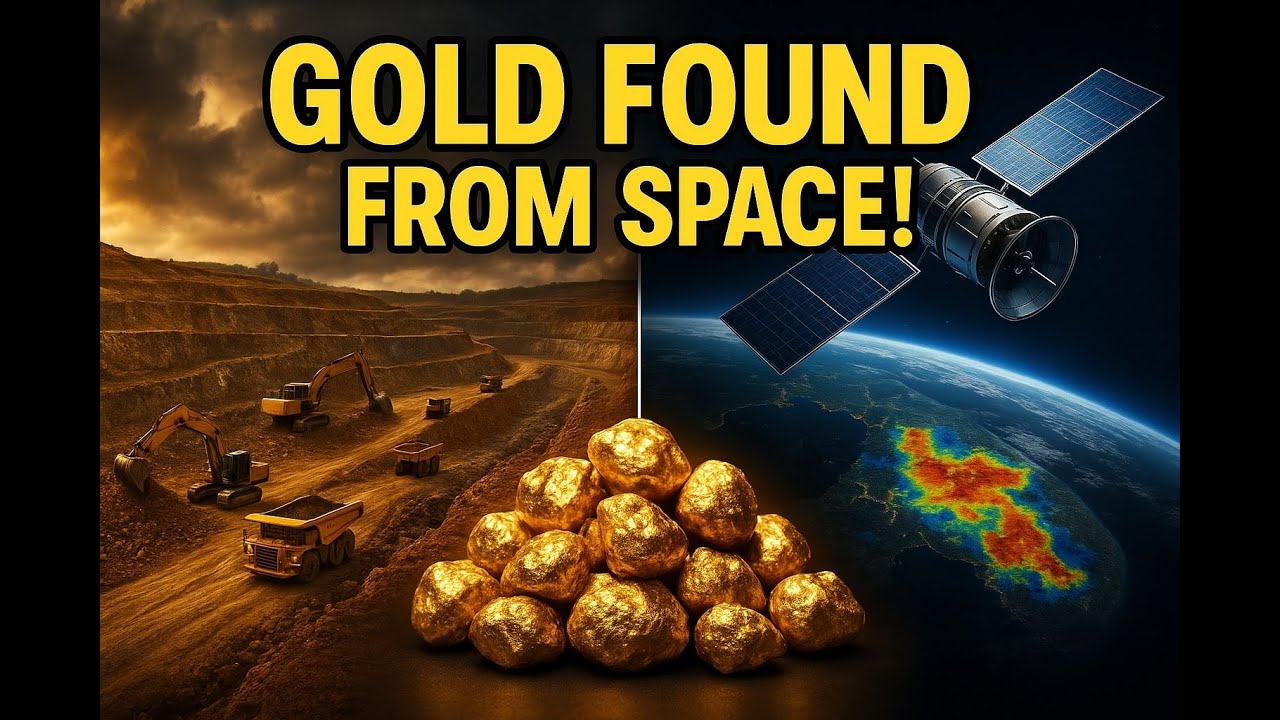
Satellite-Guided Exploration: Gold mining companies increasingly rely on high-resolution satellite imagery, remote sensing, and AI-driven mineral detection to discover, map, and validate deposits efficiently.
For advanced exploration, Farmonaut’s satellite-based mineral detection solution helps rapidly identify mineralized zones, structural features, alteration halos, and geologically promising targets.
Benefit: Faster, more cost-effective, and environmentally responsible prospecting for gold and other minerals—reducing exploration risk and unnecessary ground disturbance. - AI-Powered Data Modeling: Machine learning models integrate satellite data, geochemical sampling, and historical exploration records for real-time resource estimation, drilling optimization, and feasibility analysis.
-
3D Prospectivity Mapping: State-of-the-art mapping visualizes subsurface vein structures, mineral distributions, and orebody geometry in high detail. For miners investing in early-stage projects, our satellite-driven 3D mineral prospectivity mapping delivers objective insights and optimal drilling angle recommendations.
Use case: De-risk large exploration campaigns and optimize drilling targets long before ground operations commence. - Automation, Robotics, and IoT: New underground mines feature remotely-operated vehicles, automated loading and haulage, and sensor-driven environmental controls—improving safety and efficiency.
- Green Processing Technology: The shift toward lower-energy, cyanide-free, and carbon-neutral extraction methods continues, with wider adoption forecast for new gold projects from Timmins to Rainy River.
- 🌍 Global coverage: 80,000+ hectares, 18+ countries, 13+ minerals
- ⚡ Exploration time & cost savings: 80-85% vs. traditional methods
- 🛰️ No ground disturbance in early phases—aligns directly with ESG goals
- 📊 Structured, high-confidence reporting for investment & project planning
- ⏱️ Average report turnaround: 5–20 business days (area & complexity dependent)
With these advanced technologies, gold mining Ontario is set to remain a global leader in responsible, high-output mineral production, driving both provincial and national economies far into the future.
Companies that use Farmonaut’s satellite intelligence can screen large regions for economic mineralization, allocate capital with greater certainty, and minimize environmental risk—a major competitive advantage in today’s exploration-driven market.

Challenges Facing the Gold Mining Sector in Ontario
Even as gold mining Ontario continues to thrive, the industry faces several important challenges that require proactive attention:
- ⚠️ Commodity Price Volatility: Gold prices remain subject to global economic forces; rapid swings can impact project feasibility, capital flow, and employment.
- ⚠️ Resource Depletion & Reserve Replacement: Easily accessible, near-surface gold deposits are increasingly rare. Companies must invest more in deep exploration and technology to replace depleting reserves.
- ⚠️ Regulatory Complexities: Environmental permitting, Indigenous engagement, and land access processes can delay project timelines and increase costs.
- ⚠️ Social License to Operate: Public and Indigenous community expectations for meaningful consultation, employment, and benefits-sharing grow every year.
- ⚠️ Operational Efficiency: Rising energy costs, aging infrastructure, and workforce transitions challenge margins—pushing continuous innovation and upskilling.
Underinvesting in exploration, community engagement, or sustainability frameworks can stall promising projects—addressing these proactively is essential for enduring success in Ontario’s competitive mining sector.

Future Outlook: Gold Mining Ontario in 2026 & Beyond
The future of gold mining in Ontario is bright. With strong foundations, persistent demand, and a culture of responsible innovation, the sector is ready for growth into the next decade.
- 📈 Production is forecast to rise as new mines come online across Timmins, Kirkland Lake, Rainy River & emerging belts.
- 🛠️ Next-gen mining technologies—satellite mapping, big data, AI, zero-carbon operations—will become standard practice, making sustainable gold mining the Ontario norm.
- 💼 Province-wide investments in infrastructure (road, power, digital connectivity) will unlock further prospecting and job creation in remote communities.
- 🤝 Deepening partnership with Indigenous groups will underpin social license, drive inclusive growth, and ensure fair benefits from new discoveries.
- 🌎 Broader adoption of Farmonaut’s satellite-driven intelligence will allow explorers to increase the pace of discovery, reduce environmental footprint, and maximize return on investment.
Global demand for gold—as a stable store of value, input to electronics, and green technologies—will keep Ontario’s gold sector strategically important for investors, policymakers, and communities.
Ontario’s gold mining industry offers an unmatched combination of geological potential, skilled workforce, and market access—making it an attractive destination for both traditional and impact-focused capital.

If your exploration, investment, or development focus is set on gold mining Ontario in 2026 or beyond, get a custom quote from Farmonaut for satellite-based mineral intelligence—streamline your discoveries, minimize risk, and achieve sustainability goals faster.
With gold mining in Ontario poised for further evolution, the integration of advanced satellite analytics, AI, and environmental stewardship will define which producers lead the sector into the next generation.
Frequently Asked Questions (FAQs) – Gold Mining Ontario 2026
What are the top gold mining regions in Ontario?
Timmins, Kirkland Lake, Red Lake, Hemlo, and Rainy River rank as the most historically productive and future-promising regions, supported by major operators, robust infrastructure, and ongoing exploration projects.
What trends will shape gold mining Ontario in 2026?
Technological investment (including satellite-based mineral detection), environmental sustainability, and deeper Indigenous partnerships are driving the next era of growth and social acceptance in the sector.
How does Ontario support sustainable mining?
The provincial government enforces comprehensive regulatory frameworks for environmental protection, while companies adopt zero-discharge systems, electric fleets, progressive reclamation, and ESG strategies to reduce their footprint and support community goals.
Why is Farmonaut’s satellite-based mineral detection valuable for Ontario mining?
Our platform enables rapid, objective, and eco-friendly screening of vast territories, supporting early-stage exploration and ensuring smart capital allocation. Visit our satellite mineral detection page for use cases and benefits.
Where can I get a tailored project quote or support?
Use our online inquiry form or contact us directly for expert guidance on gold exploration projects in Ontario and globally.
Conclusion: Building a Resilient & Sustainable Future for Gold Mining Ontario
Gold mining Ontario remains a pillar of provincial and national economies, excelling in resource development, operational innovation, and environmental stewardship. Looking to 2026 and beyond, the sector’s future will be shaped by cutting-edge technology, new deposit discoveries, and relentless pursuit of sustainability.
Strategic investments, global demand for gold, and adoption of solutions such as Farmonaut’s satellite-based mineral intelligence will power the next wave of exploration and value creation. Ontario is uniquely positioned to lead—with its rich mineral endowment, skilled workforce, advanced infrastructure, and commitment to inclusive, sustainable development.
For explorers, producers, and investors considering their next steps in gold mining Ontario, now is the time to get a quote or start a conversation with us. Gold’s future in Ontario is more than secure—it’s shining.
Discussion
Questions, corrections or field experience? Share them below. First-time comments are reviewed before they appear, and your email is never published.
No comments yet. Be the first to add a question or your experience.

 Mine4Africa
 Lithspo Minerals Limited
 Tintina Mining Group
 Dalgety Minerals Pty Ltd
 Vortex Minerals Pty Ltd
 Faith At Work (Pty) Ltd
 Geotech Mining Solutions plc
 Vulcan International Limited
 Kidepo Associates
 GKY Mining
 Alkimy SARL
 Double A Trading
 GemSprout Metals Limited
 Qader Group
 Ileys General Trading
 SG Gold Mining LLC
 VRV Global Pte Ltd
 Omsri International FZE
 G.I.T.T.
 Jaunita Erss Ltd
 Almosi SARL
 SRK Consulting
 Berks Gold Limited
 Mwerezi Minerals Company Limited
 Exploration consultancy · South Africa · Gold










