

Timmins gold camp · Mine fact sheet
Hoyle Pond Mine, Timmins: Owner, Grade and Output Data
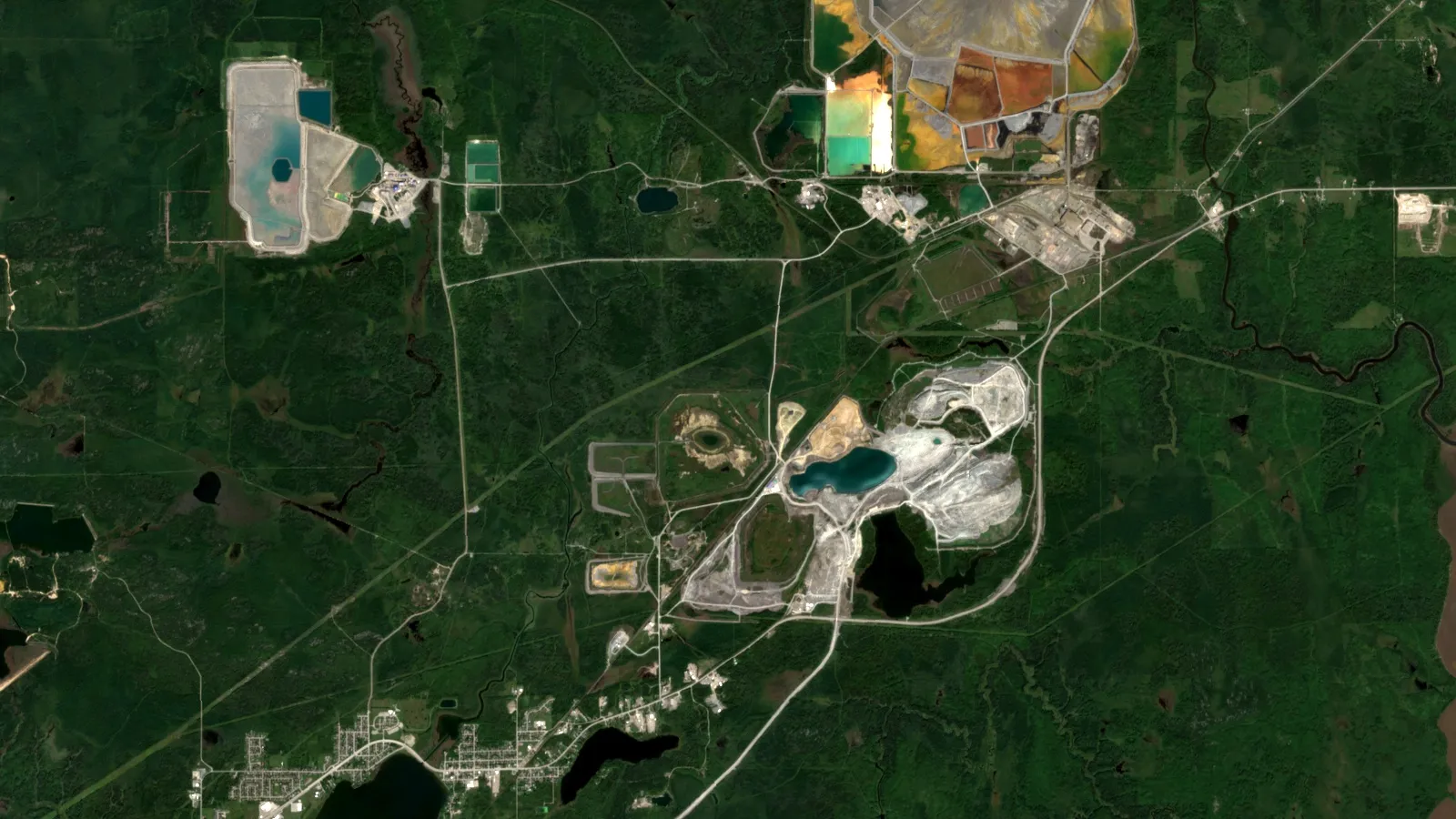
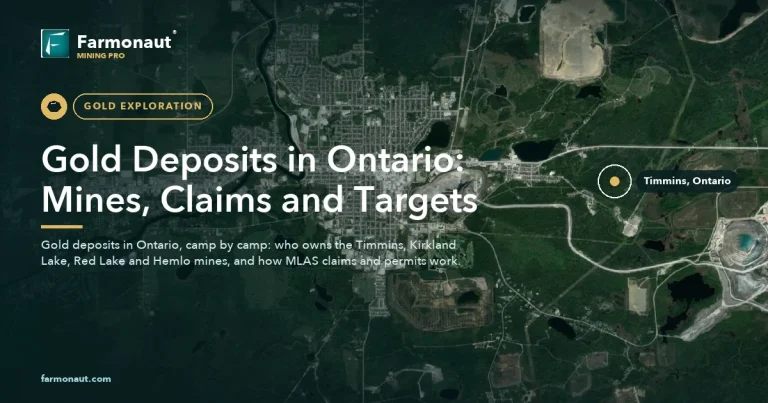
The Hoyle Pond mine is an underground gold mine at Timmins, Ontario, owned by Discovery Mining (formerly Discovery Silver) since it bought the Porcupine Complex from Newmont in April 2025. It has produced over four million ounces since 1987.
Key takeaways
- Owner: Discovery Mining Ltd., formerly Discovery Silver. The sale from Newmont closed on 15 April 2025 (Newmont 10-K).
- Output: over 4 million oz at Hoyle Pond since 1987, within a complex that has produced about 70 million oz since 1910 (Discovery, 2025).
- Newmont’s Porcupine Underground reserves were 4.4 million tonnes at 6.46 g/t at the end of 2024. That is a group line, not a Hoyle Pond grade.
- Discovery’s 2026 guidance for the whole complex was 260,000 to 300,000 oz (Franco-Nevada, March 2026).
- An exploration ramp between Hoyle Pond and Owl Creek is under development (Franco-Nevada, August 2026).
In this article
- Hoyle Pond mine at a glance
- Who owns the Hoyle Pond mine now
- Where is Hoyle Pond in the Timmins gold camp
- Hoyle Pond grade and what high grade means
- Porcupine production and costs behind Hoyle Pond
- Hoyle Pond exploration and the Owl Creek ramp
- The Kidd purchase and what it changes
- Other gold mines and owners in Timmins
- How to check any Hoyle Pond figure before you use it
- What Hoyle Pond teaches about ground nearby
- Frequently asked questions
The Hoyle Pond mine is an underground gold mine in the Timmins camp of Ontario, Canada. It is owned by Discovery Mining Ltd., the renamed Discovery Silver, which bought it from Newmont with the rest of the Porcupine Complex on 15 April 2025. Discovery’s closing release credits Hoyle Pond with over four million ounces of gold since 1987.
This page is a working fact sheet for consultants, investors and licence holders who need the ownership, the numbers and their reporting basis in one place. Each figure carries its date and says whether it covers Hoyle Pond alone or the whole complex. That difference matters, because most published data is reported at complex level.
Hoyle Pond mine at a glance
| Item | What the sources show | Basis and date |
|---|---|---|
| Location | Timmins gold camp, northeastern Ontario, Canada | Discovery release, April 2025 |
| Commodity | Gold | Newmont 10-K, year to December 2025 |
| Mining method | Underground | Part of the Porcupine underground operations |
| Owner | Discovery Mining Ltd. (formerly Discovery Silver Corp.) | Holdings data, November 2026 |
| Previous owner | Newmont, through to 15 April 2025 | Newmont 10-K |
| Output to date | Over 4 million oz since 1987 | Hoyle Pond only, Discovery release, April 2025 |
| Royalty on the complex | 4.25% held by Franco-Nevada | Franco-Nevada report, August 2026 |
| Newest project | Exploration ramp between Hoyle Pond and Owl Creek | Franco-Nevada report, August 2026 |
Who owns the Hoyle Pond mine now
Newmont inherited the Porcupine operations when it bought Goldcorp, and listed them among the non-core assets it planned to sell after its Newcrest purchase. Newmont’s 10-K for 2025 records that the sale of the Porcupine segment to Discovery closed on 15 April 2025. So an older page that says “Newmont Hoyle Pond” describes the mine before that date.
The price had three parts, according to Discovery’s closing release: US$200 million in cash, about 119.7 million Discovery shares, and US$150 million in deferred cash, payable in four instalments of US$37.5 million starting on 31 December 2027. The shares gave Newmont about 15% of Discovery at closing. Newmont’s 10-K says it had sold all of those shares by the third quarter of 2025, so Newmont no longer holds that stake, although it is still owed the deferred cash.
The buyer has since changed its name. Fund holdings now list the company as Discovery Mining Ltd, while many 2025 and 2026 documents still say Discovery Silver. They are the same company, and a search of filings needs both names. The Toronto ticker was DSV at closing and is still DSV on the November 2026 holdings list.
What else came with the mine
Hoyle Pond was one of five named assets in the deal. The other four and the land position shape how it is run:
- Borden: a newer underground mine at the centre of a land position of about 1,000 square kilometres.
- Pamour: an open-pit project that was starting production at closing.
- Dome mine: the historic mine, with a large remaining mineral resource. Mining there stopped at the end of 2017 after 107 years.
- Dome mill: the central processing plant, described in the release as running below capacity at the time.
- Land: Discovery describes a dominant position in the camp.
Gold Royalty, which holds a small royalty on part of Borden, reports that the Dome mill is a 12,000-tonne-per-day plant, and that Discovery aims to return it to full capacity by 2027 or sooner. That target is the company’s own, as relayed by a royalty holder, and it is not a completed result.
Where is Hoyle Pond in the Timmins gold camp
Hoyle Pond sits in the Timmins camp, also called the Porcupine camp, in the Ontario part of the Abitibi greenstone belt. A greenstone belt is a band of very old volcanic and sedimentary rock that has been folded and altered, and many of the world’s lode gold deposits occur in such belts. A lode deposit is gold held in solid rock, usually in veins, rather than in loose gravel.
Chart
Canadian gold mine output by region, 2024
Tonnes of gold, preliminary
The Abitibi gold belt runs from Wawa in Ontario to Val-d’Or in Quebec. The same reference credits it with over 100 mines and about 170 million ounces of gold since 1901. It lists Timmins as the largest camp by past output, at about 64 million ounces. Discovery’s own figure for the Porcupine Complex is about 70 million ounces since 1910. The two numbers come from different sources and cover different ground, so treat them as a rough scale rather than a reconciled total. For the structures and camps across the whole belt, see our guide to Abitibi greenstone belt faults and gold camps.
The camp dates from the Porcupine gold rush that began in 1909, when prospectors found quartz veins carrying visible gold. That led to the Dome, Hollinger and McIntyre mines. Hoyle Pond came far later, and Discovery dates its production record from 1987.
The ground near the mine is still being explored by others. Onyx Gold describes its Golden Mile property as 140 square kilometres, about 9 kilometres from Hoyle Pond. Being close to a mine does not mean a property holds the same mineralisation, and a reader should check any such claim against that property’s own drill results.
Why Ontario matters for this mine
Ontario leads Canadian gold output. Natural Resources Canada puts the province at 79.9 tonnes in 2024, or 40% of the national total of about 200 tonnes. The USGS Mineral Commodity Summaries 2026 also estimates Canada at 200 tonnes in 2025, out of a world total of about 3,300 tonnes.
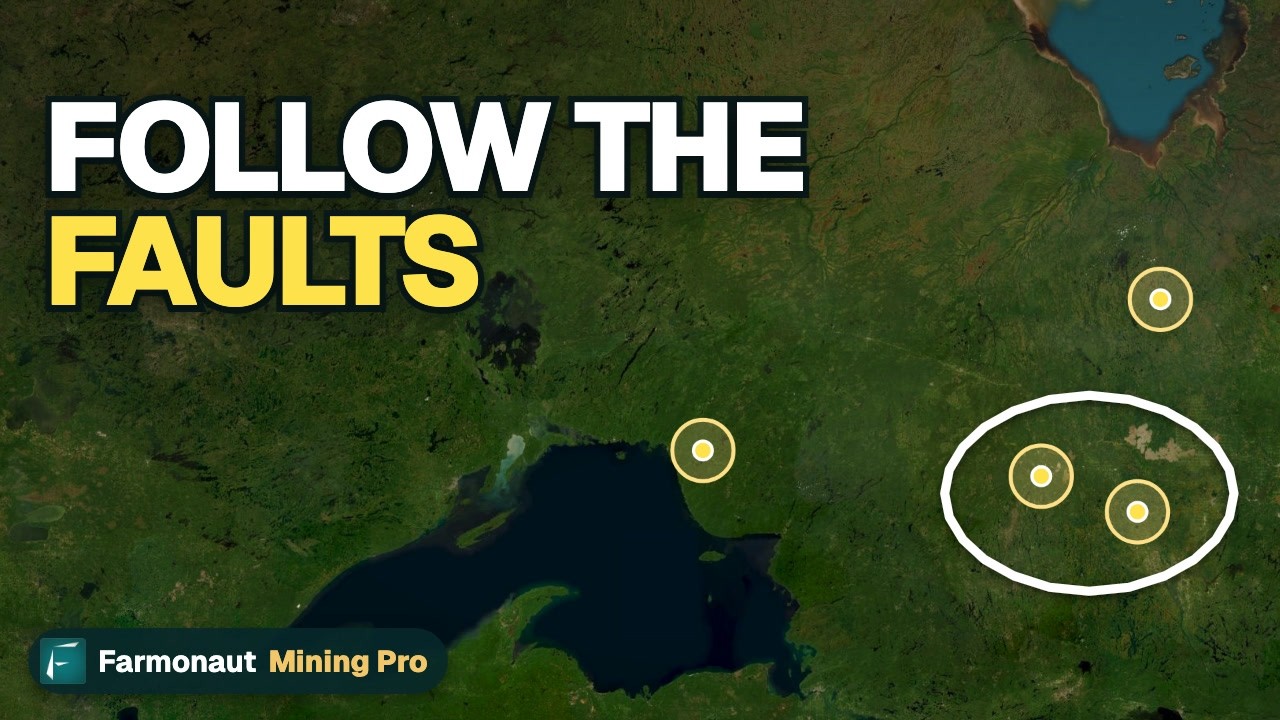
▶ Ontario’s gold belts and camps, including Timmins (2:53) · 2:53
Hoyle Pond grade and what high grade means
Grade is the amount of gold in each tonne of rock, given in grams per tonne (g/t). Discovery calls Hoyle Pond one of North America’s highest-grade gold mines. That statement comes from the owner, in a release announcing its purchase, so read it as a company description. The documents cited on this page do not give a separate published grade for the mine.
The nearest public numbers come from Newmont’s last reserve tables. At 31 December 2024 Newmont reported this for its “Porcupine Underground” line:
| Category | Tonnes | Grade | Contained gold |
|---|---|---|---|
| Proven reserves | 1.6 million | 5.09 g/t | 300,000 oz |
| Probable reserves | 2.7 million | 7.27 g/t | 600,000 oz |
| Total proven and probable | 4.4 million | 6.46 g/t | 900,000 oz |
| Measured and indicated resources | 1.1 million | 7.59 g/t | 300,000 oz |
| Inferred resources | 1.9 million | 7.8 g/t | 500,000 oz |
Three cautions apply when using this table:
- It is a group line. “Porcupine Underground” is not split by mine in the table, so 6.46 g/t should not be quoted as the Hoyle Pond grade.
- It is Newmont’s estimate. It predates the sale, and it used Newmont’s own price and cost assumptions. Discovery’s later technical work may differ, and its filings on SEDAR+ take priority for current figures.
- Reserves and resources are different things. A reserve is the part shown to be economic to mine under a stated plan. A resource is mineralisation with reasonable prospects of extraction but without that proof. Inferred resources have the lowest confidence. Do not add the categories together without saying so.
The same Newmont line also lists 89% as the expected metallurgical recovery for reserves: the share of the gold the plant is expected to recover from the ore. It matters as much as grade when you value a stope, the block of ore mined in one unit, as the calculator below shows.
Calculator
What is a block of underground ore worth?
Enter your own tonnes, grade, recovery, price and royalty.
- Contained gold before recovery (oz): 1,929
- Gross recovered value (US$): $7,118,170
- Royalty at your rate (US$): $302,522
Example values only, not Hoyle Pond data or a forecast. The formula is tonnes x g/t / 31.1035 x recovery. It shows gross recovered value and royalty only, before mining and processing costs. Price is an example, use today’s price. The 4.25% default is the Porcupine royalty listed by Franco-Nevada (2026); check its terms.
Porcupine production and costs behind Hoyle Pond
Newmont’s operating table gives the last full years under its ownership. It shows underground tonnes mined across the Porcupine segment, the mill grade, the recovery and the gold produced. Porcupine produced 260,000 oz in 2023 and 284,000 oz in 2024, then 55,000 oz in 2025 before the sale closed on 15 April. That last figure is a part-year number and not a collapse in output.
Chart
Costs per ounce sold at Porcupine
US$ per ounce, costs applicable to sales against all-in sustaining cost
Chart
Average mill grade at Porcupine
Grams of gold per tonne, whole Porcupine segment; 2025 is a part-year
Chart
Porcupine gold production under Newmont
Thousand ounces, whole Porcupine segment
The mill grade rose over the same period, from 3.015 g/t in 2023 to 3.224 g/t in 2024 and 3.516 g/t in the 2025 part-year. These grades are lower than the underground reserve grade above. The segment also mined open-pit rock, which reserve tables show at about 1.46 g/t, so the mill average blends both. Mill recovery was 91.4%, 92.9% and 92.5% across those three periods.
Costs were reported per ounce sold for the segment. Costs applicable to sales were US$1,167 in 2023, US$1,097 in 2024 and US$1,300 in the 2025 part-year. All-in sustaining cost (AISC), which also counts sustaining capital and overheads, was US$1,577, US$1,437 and US$1,810. A short period can distort these figures, so the 2025 numbers should be read with care.
What the owner expects
The technical report cited in Discovery’s April 2025 closing release estimated average production of over 285,000 oz a year for ten years across the complex, with production running to 2046. The release labels it a preliminary economic assessment (PEA), which includes inferred resources, and says there is no certainty the estimates will be realised.
For 2026, Franco-Nevada reports that Discovery expected 260,000 to 300,000 oz from the complex, with higher output at Hoyle Pond and Borden and more from the Pamour and Hollinger open pits. That is guidance for the whole complex and not a result for the mine. Check the company’s latest quarterly report for actual output.
Hoyle Pond exploration and the Owl Creek ramp
The most useful recent detail for anyone watching the mine concerns its surroundings. Franco-Nevada’s report of 11 August 2026 says Discovery has started developing an exploration ramp between Hoyle Pond and Owl Creek so it can drill along that trend. A ramp is a sloping tunnel that lets crews and drills reach rock from underground, which is often cheaper and more accurate than drilling long holes from the surface.
Franco-Nevada’s earlier report also mentioned high-grade intersections from resource conversion and extension drilling at Hoyle Pond and Borden. Resource conversion means drilling to move inferred material into a higher-confidence category. Extension means drilling beyond the known limits. Results of this type are promising but do not by themselves add to reserves. The numbers to look for are in the next technical update.
The same August report says Discovery expects updated resource estimates for Dome and TVZ by the end of 2026. Readers should look in those documents to see how the Hoyle Pond area is treated.
The Kidd purchase and what it changes
In June 2026 Discovery bought Glencore’s Kidd operations, also at Timmins. CTV News reported the deal in March 2026 and said the mine and metallurgical site had been slated to close at the end of the year. Franco-Nevada says the purchase gives Discovery the potential to double production from the Timmins complex to 500,000 gold ounces a year.
That is a statement of potential, and it does not concern Hoyle Pond directly. For a reader, the practical effect is on the owner: a larger group, more ground and competing calls on capital.
▶ How gold is mined and refined, step by step (5:27) · 5:27
Other gold mines and owners in Timmins
People searching for a mine at Timmins often need to separate the owners, because several groups work the same camp:
| Operation | Owner | Type | Latest note |
|---|---|---|---|
| Hoyle Pond, Borden, Pamour, Dome | Discovery Mining | Underground and open pit | Exploration ramp to Owl Creek, 2026 |
| Timmins West, Bell Creek | Pan American Silver | Underground | US$146 million first phase approved, May 2026 |
| Fox Complex | McEwen Inc. | Gold complex | Covered in our Ontario guide |
Pan American’s report for June 2026 gives that first phase as a shaft extension at Bell Creek and two exploration drifts to reach the Vogel and Samson deposits. For the wider provincial picture see our guide to gold deposits in Ontario, and for the national view, our Canada mineral deposits map.
How to check any Hoyle Pond figure before you use it
Much of what is online about this mine is old or carries no source, including percentage claims about automation savings, solar power and water recycling. Use these checks on any number you meet:
Infographic
Five checks for a mine figure
- 1DateBefore or after the 15 April 2025 sale?
- 2ScopeOne mine, a group line or the whole complex?
- 3CategoryReserve, resource or PEA estimate?
- 4SpeakerCompany description or measured data?
- 5FilingConfirm it in the SEDAR+ technical report.
- Check the date against 15 April 2025. Anything earlier is Newmont’s or Goldcorp’s data, on their assumptions.
- Check the scope. Is it Hoyle Pond, “Porcupine Underground” or the whole complex? Most published figures are the last two.
- Check the category. Reserve, measured, indicated and inferred are different levels of confidence. A PEA includes inferred material.
- Check the person who said it. A company description such as “highest grade” is not a measured ranking.
- Go to the filing. Canadian technical reports under NI 43-101, the national standard for public mineral disclosure, are on SEDAR+. Royalty holders’ reports are a useful second view.
What Hoyle Pond teaches about ground nearby
For a licence holder or consultant working elsewhere in the camp, the main lesson is about scale and cost of proof. A narrow, high-grade underground target needs drilling to define it, and even a mine with four million ounces behind it still reports new work as drill intersections and later resource updates.
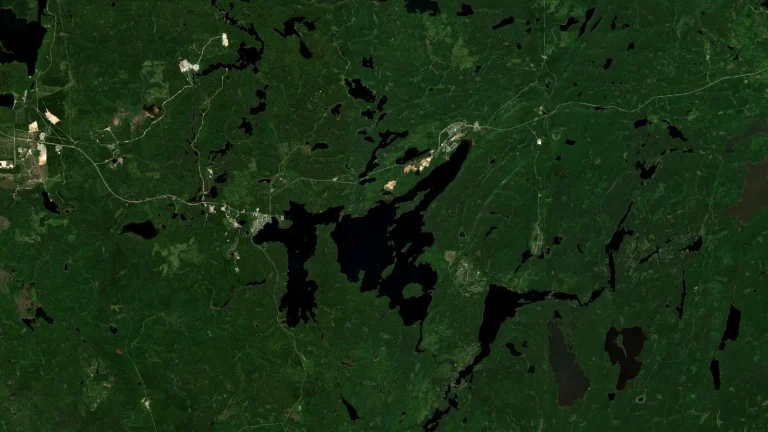
Satellite imagery cannot see gold veins hundreds of metres underground, and it does not replace drilling. It can help at the screening stage by mapping surface alteration, structure and access over a large block of land. Farmonaut’s satellite-based mineral detection reports produce exploration targets that sit ahead of any resource estimate. Claim holders in the province should also read our guide to Ontario claims, assessment work and exploration permits before planning field work. Questions can go through the mining query form or the contact page.

▶ What satellites can and cannot show in gold exploration (4:25) · 4:25
Frequently asked questions
Who owns the Hoyle Pond mine?
Discovery Mining Ltd., formerly Discovery Silver Corp. It acquired the mine with the Porcupine Complex from Newmont, and the sale closed on 15 April 2025.
Where is the Hoyle Pond mine?
It is in the Timmins gold camp in northeastern Ontario, Canada, within the Abitibi greenstone belt.
Does Newmont still own Hoyle Pond?
No. Newmont sold the Porcupine segment in April 2025 and sold the Discovery shares it received by the third quarter of 2025. It is still due US$150 million of deferred cash, in four instalments from the end of 2027.
How much gold has Hoyle Pond produced?
Discovery says over four million ounces since 1987. The wider Porcupine Complex has produced about 70 million ounces since 1910, by the same release.
What is the gold grade at Hoyle Pond?
The documents cited here give no separate grade for the mine. Newmont’s “Porcupine Underground” reserves averaged 6.46 g/t at the end of 2024, and that line is a group figure.
Is the Hoyle Pond mine still operating?
Franco-Nevada’s reports for 2026 describe higher expected output and continuing drilling there, along with a new exploration ramp toward Owl Creek. For current status, check Discovery’s latest quarterly report.
What royalty applies to the Porcupine Complex?
Franco-Nevada lists a 4.25% royalty on Porcupine. Check the terms and the ground it covers in Franco-Nevada’s and Discovery’s filings before applying it to one mine.
What is the Owl Creek ramp?
It is an exploration ramp that Discovery has started between Hoyle Pond and Owl Creek, to allow drilling along the trend, according to Franco-Nevada’s August 2026 report.
How much did Discovery pay for the Hoyle Pond mine?
No separate price was given. The whole complex cost US$200 million in cash, about 119.7 million shares and US$150 million in deferred cash.
What is the gold price used to value ore like this?
Use the day’s price. Kitco showed a bid of US$4,113.40 per ounce on 5 November 2026. Prices move daily, so enter your own in the calculator on this page.
This page is for information only. It is not investment advice. Company estimates are not guarantees; confirm figures in the latest filings on SEDAR+. It is not legal advice; check current Ontario rules before staking or field work, and never enter mine sites or old workings without permission.
Farmonaut mining
Map your mining site from space
Consultants can screen a licence area with satellite data as an exploration target, ahead of drilling and any resource estimate.

Mining Pro sample view, synthetic data
Keep reading
Sources
- Discovery Silver, Completes Acquisition of Porcupine Complex, news release (16 April 2025): minedocs.com
- Newmont, Form 10-K for 2025: s24.q4cdn.com
- Franco-Nevada, Q2 2026 report (11 August 2026): s201.q4cdn.com
- Franco-Nevada, Reports Record 2025 Results (March 2026): newswire.ca
- Gold Royalty, 2025 annual results (2026): finviz.com
- Natural Resources Canada, Gold facts (2024 data): natural-resources.canada.ca
- USGS, Mineral Commodity Summaries 2026: Gold: pubs.usgs.gov
- CTV News, Discovery acquires Glencore’s Kidd operations (2026): ctvnews.ca
- Pan American Silver, report for June 2026: panamericansilver.com
- Onyx Gold, Munro-Croesus drill program release: onyxgold.com
- StockAnalysis, GDXJ holdings (November 2026): stockanalysis.com
- Wikipedia, Abitibi gold belt: en.wikipedia.org
- Wikipedia, Porcupine Gold Rush: en.wikipedia.org
- Wikipedia, Dome Mine: en.wikipedia.org
- Kitco, live gold price (5 November 2026): kitco.com
Discussion
Questions, corrections or field experience? Share them below. First-time comments are reviewed before they appear, and your email is never published.
No comments yet. Be the first to add a question or your experience.

 Klusetic Mining Investments
 Mine4Africa
 Lithspo Minerals Limited
 Tintina Mining Group
 Dalgety Minerals Pty Ltd
 Vortex Minerals Pty Ltd
 Faith At Work (Pty) Ltd
 Geotech Mining Solutions plc
 Vulcan International Limited
 Kidepo Associates
 GKY Mining
 Alkimy SARL
 Double A Trading
 GemSprout Metals Limited
 Qader Group
 Ileys General Trading
 SG Gold Mining LLC
 VRV Global Pte Ltd
 Omsri International FZE
 G.I.T.T.
 Jaunita Erss Ltd
 Almosi SARL
 SRK Consulting
 Berks Gold Limited
 Mwerezi Minerals Company Limited











