

Gold Production Process & Iron Ore Production Guide 2026
Advancements and Insights into Gold Production and Iron Ore Extraction Processes in 2025
“By 2025, advanced bioleaching boosts gold extraction efficiency by up to 30% compared to conventional methods.”
“Global iron ore production is projected to exceed 2.7 billion tonnes in 2025 with sustainable mining technologies leading the way.”
Introduction: The Vital Role of Gold & Iron Ore in 2025
The gold production process and iron ore production stand as foundational pillars supporting numerous industries, including manufacturing, technology, infrastructure, and defense. As the global demand for these metals continues to rise in 2025 and beyond, mining and extraction technologies are evolving rapidly to meet contemporary industrial and environmental challenges. This article delves into the advanced processes shaping modern mining, offering actionable insights on sustainability, efficiency, and innovation.
- ✔ Key Focus: Sustainable extraction & technological progress
- 📊 Data Insight: Iron ore production surpassing 2.7 billion tonnes in 2025
- ⚠ Challenge: Managing environmental risks of traditional processes
- 🔄 Trend: Shift to AI-powered & satellite-supported mineral intelligence
- 🌱 Goal: Eco-friendly mining & reduced carbon footprint
Gold Production Process in 2025: Methods, Stages & Innovations
Gold production processes in 2025 have advanced significantly, with increased emphasis on sustainability, efficiency, and smart recovery. The classic journey from ore extraction to gold refining remains multifaceted—involving several stages and cutting-edge technologies designed to minimize the ecological footprint while maximizing yield.
Primary Gold Mining Methods
- Placer Mining: Extracting gold from alluvial gravels – efficient but region-limited.
- Hard Rock Mining: Main source globally, requiring advanced earthmoving and geological scanning.
- Byproduct Mining: Gold recovered as a minor component during other ore processing (e.g., copper).
- Recycling: Urban mining for gold from e-waste and jewelry, contributing to circular economy.
Stage 1: Ore Extraction & Concentration
The ore extraction process begins with identifying high-potential regions using advanced geological modeling, AI algorithms, and hyperspectral scanning. These approaches minimize waste and operational delays while improving grade prediction. Earthmoving equipment, guided by real-time data, reduces unnecessary excavation, lessening environmental damage.

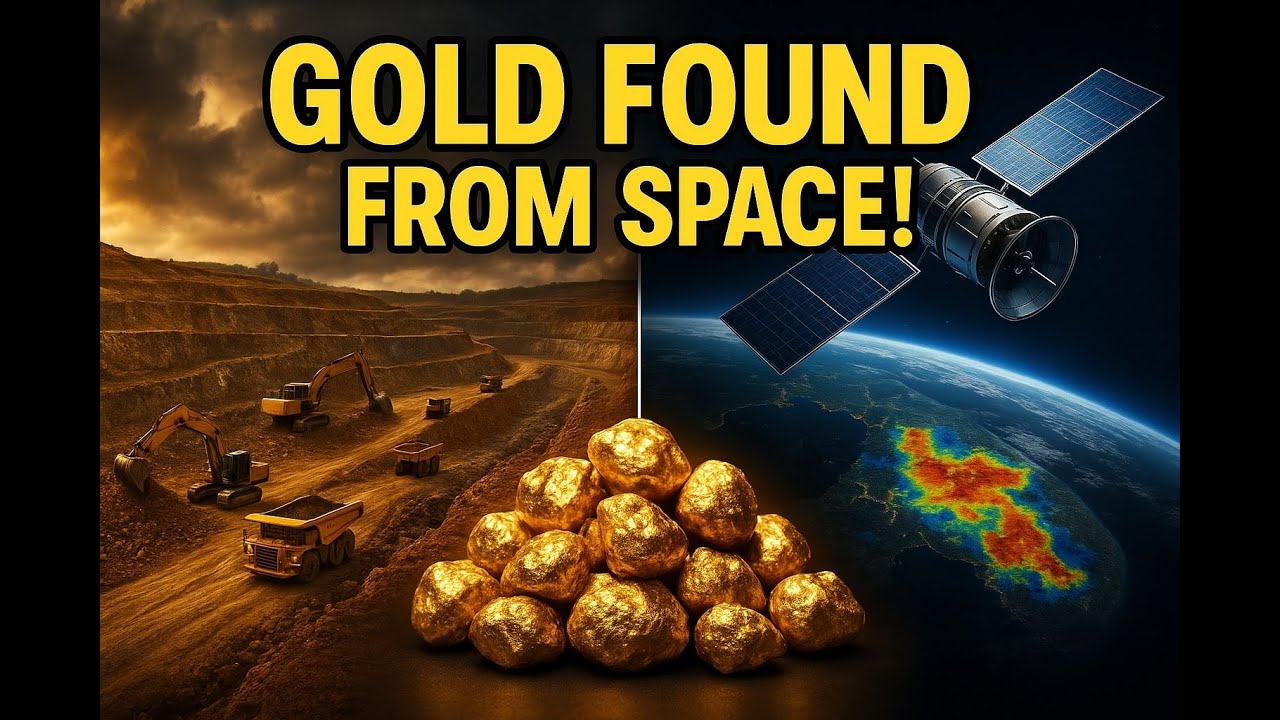
Satellite and AI technologies are revolutionizing gold ore body detection, streamlining the gold production process from exploration to extraction.
Stage 2: Ore Processing — Comminution & Cyanidation
- Comminution: Crushing and grinding the hard rock ore to liberate gold particles.
- Cyanidation: Crushed ore is exposed to cyanide solutions to dissolve gold. Alternative, eco-friendly leaching agents like thiosulfate, glycine, and bromide are gaining commercial traction due to environmental concerns linked to cyanide toxicity.
- 🧪 Thiosulfate: Reduced environmental harm, competitive recovery rates
- 🌱 Glycine: Biodegradable, efficient for complex gold ores
- 🔬 Bromide: Quick kinetics, under pilot and initial commercial trials
Neglecting proper tailings management during cyanidation can lead to lasting environmental issues, especially in water-scarce regions.
Stage 3: Gold Recovery & Refining
- Adsorption: Gold-laden solutions are mixed with activated carbon or resin for recovery.
- Elution & Electrowinning: Gold is washed from the loaded adsorbent and plated onto cathodes via electrochemical reaction.
- Final Refining: Smelting removes impurities to produce high-purity gold bars.
- Zero Waste Initiatives: Recycling tailings and by-products reduces risks and recoups value.
- 🏆 Gold extraction process incorporates AI and data analytics for optimal resource allocation
- 🕒 Processing times reduced via automation and real-time monitoring
- 🌸 Bioleaching using tailored microbes gains ground for complex ores
- 📉 Reducing reagents and water consumption boosts process sustainability
- 🔁 Lifecycle recovery via urban mining and e-waste recycling is on the rise
Iron Ore Production & Extraction in 2025: Trends & Technologies
Iron ore production is the backbone of steel manufacturing—vital for infrastructure and defense. In 2025, mining techniques and ore processing methods have evolved dramatically for efficiency, environmental stewardship, and value maximization.
Step 1: Extraction & Mining Techniques
-
Surface (Open-Pit) Mining: Dominates due to accessibility of many deposits.
- Automation: Autonomous haul trucks, drills boost productivity and safety.
- Remote monitoring: Real-time operational oversight reduces downtime and hazardous exposure.
-
Underground Mining: Adopted in regions with deep iron ore bodies.
- Enhanced via automated loaders, improved ventilation, and safety measures.

Step 2: Ore Beneficiation—Purifying Iron for Steel
- Crushing & Grinding: Free iron from ore matrix.
- Magnetic Separation: Powerful magnets separate iron minerals from non-ferrous waste.
- Flotation & Gravity Separation: Used to remove silica, alumina, phosphorus, and other impurities.
- Sensor-based Sorting: AI-enhanced sorting for real-time grade prediction and minimizing waste.
Integrating dry beneficiation methods, especially dry magnetic separation, is key to reducing water use and operational expenses for iron ore mines in arid regions.
Step 3: Dry Processing & Water Conservation
- Dry Magnetic Separation & Spiral Concentrators: Process iron ores with minimal water dependency.
- Reduced Tailings: Lower environmental impact, easier land rehabilitation.

Green steel initiatives, leveraging hydrogen-based direct reduction, are becoming major investment targets within the iron ore production sector as industries seek low-carbon steel solutions for global infrastructure.
Step 4: Green Steel & Industrial Decarbonization
- Hydrogen Reduction: Replaces coking coal, cutting CO2 emissions by up to 90% in steel manufacturing.
- Electric Arc Furnaces: Enable recycling and efficiency.
- AI Scheduling: Matches renewable grid inputs to high-energy process demands, further reducing carbon footprint.
AI-powered ore quality assessment is now standard in the leading iron ore operations, and is expected to raise sector-wide resource efficiency benchmarks by over 15% in 2026 and beyond.
“By 2025, advanced bioleaching boosts gold extraction efficiency by up to 30% compared to conventional methods.”
“Global iron ore production is projected to exceed 2.7 billion tonnes in 2025 with sustainable mining technologies leading the way.”
Gold vs Iron Ore Production: 2025 Comparative Process Overview
| Mining Process Step | Gold Production (Est. Output, 2025) | Iron Ore Production (Est. Output, 2025) | Emerging Technologies Used | Sustainability Initiatives |
|---|---|---|---|---|
| Exploration & Targeting | 3,500 tonnes gold (global) | 2.7+ billion tonnes iron ore | Satellite remote sensing, AI mineral modeling | No-ground disturbance, reduced travel carbon footprint |
| Extraction & Mining | >75% via hard rock mining | >85% via open-pit mining | Autonomous vehicles, drone-assisted ops | Site rehabilitation, noise/dust controls |
| Ore Processing / Beneficiation | Bioleaching, glycine/thiosulfate leaching | Dry magnetic separation, AI-based sorting | Real-time grade analytics, reduced chemicals | Water & reagent recycling, reduced tailings |
| Recovery / Refinement | Electrowinning, smelting | Direct reduction, pelletizing | Smart furnace controls, hydrogen-based reduction | Low-carbon energy integration |
| Waste Management | Zero-waste, tailings recycling | Dewatering, dry-stack tailings | AI waste tracking, drying technologies | Land reclamation, biodiversity protection |
Farmonaut in Mining: Satellite-Based Mineral Intelligence for 2026
At Farmonaut, we are transforming mineral exploration with satellite-based remote sensing and artificial intelligence. Traditional exploration is slow, capital-intensive, and environmentally disruptive. Our unique solution moves discovery from the ground to space—reducing exploration timelines by up to 85%, minimizing early environmental impact, and providing accurate, actionable intelligence to guide commercial investments.
- 🌍 Global Reach — Over 18 countries, 80,000+ hectares mapped, multiple mineral types.
- 🛰 Technology Spectrum — Multispectral for broad mineral groups; hyperspectral for high value or rare minerals.
- 🧩 Structured Deliverables — Reports with detailed heatmaps, geological interpretation, and actionable next steps.
- ⏳ Fast Turnaround — Results in days, not months, with simple project submission workflows.
- 🌱 ESG-Aligned — Non-invasive, reduces carbon output, and enables more sustainable exploration.
Learn more about our satellite based mineral detection—a gamechanger for clients who need early-stage, high-confidence resource targeting without ground disruption.
For 3D geological understanding and drilling risk reduction, we offer satellite driven 3D mineral prospectivity mapping, expanding planning confidence and minimizing exploratory costs.
Sustainability & Innovation in Mining: Global Impacts
The mining sector is rapidly integrating new technologies and sustainable practices to meet the dual challenges of increasing demand and environmental stewardship. Advances in AI, remote sensing, resource recycling, and green processing are helping to minimize ecological impact while enabling faster, more efficient mineral recovery.
5 Sustainability Highlights for 2025–2026
- 🌱 Green Leaching: Widespread adoption of non-toxic gold leaching agents
- 💧 Water Stewardship: Utilization of dry processing and water recycling in iron ore production
- 🚜 Automated Operations: Reducing environmental risk and operational accidents
- 🛰 Satellite Monitoring: Enables non-invasive exploration and ongoing ESG monitoring
- 🔁 Waste Reduction: Circular economy initiatives for tailings reprocessing and e-waste gold extraction
Top Video Resources: Modern Mining in Action




Bonus Highlights: Smart Mining in 2026
Gold production is projected to increase in yield with advanced bioleaching and AI-driven resource modeling, outpacing conventional efficiency rates as technology matures into 2026.
Ignoring the environmental impact of traditional tailings disposal can threaten future site permits and community relations. Always prioritize sustainable waste management.
Early adoption of AI-augmented sorting and grade prediction can optimize extraction schedules, prevent resource dilution, and ensure investment efficiency for your mining projects.
Satellite-based mineral detection, such as that provided by Farmonaut, reduces pre-feasibility costs and offers a more ESG-aligned approach to asset discovery—appealing to both major mining houses and forward-thinking investors.
Iron ore flows in 2026 are expected to be increasingly managed using real-time sensor feedback and digital twins for predictive site operation, further minimizing production downtime and losses.
Frequently Asked Questions (FAQ)
What are the key trends shaping gold production in 2025 and 2026?
The driving trends are bioleaching adoption, AI-driven ore modeling, eco-friendly leaching agents (e.g., thiosulfate, glycine), and automation in both mining and refining. Sustainability and reduced water usage are central goals.
How is iron ore production becoming more sustainable?
The sector is investing in dry processing techniques, hydrogen-based reduction for green steel, and AI-powered quality assurance to reduce waste and energy requirements.
What role does satellite technology play in mining today?
Satellite tech, especially when combined with AI (as used by Farmonaut), rapidly identifies mineral-rich zones, streamlines resource targeting, and eliminates ground disturbance during early exploration.
Why is water management critical in gold and iron ore processing?
Water scarcity in many mining regions necessitates dry beneficiation, recycling, and efficient leaching technologies to ensure long-term sustainability and cost efficiency.
Where can I find more about Farmonaut’s mining solutions and request a quote?
You can Get a Quote here or Contact Us for tailored satellite mineral intelligence services.
Conclusion & Key Takeaways
As we look ahead to 2026, both gold production process and iron ore production showcase how traditional extraction methods are converging with cutting-edge, sustainable technology. The integration of AI, satellite-based exploration, green chemical processes, and responsible resource management are reshaping the industry. These advancements not only ensure reliable supplies for critical sectors, including infrastructure and defense, but also set new standards in environmental stewardship and industrial innovation.
- Gold extraction process efficiency is expected to further increase, with bioleaching and reagent innovation
- Iron ore production to sharply rise, led by sustainable mining and steelmaking advances
- Satellite & AI-enabled workflows redefine early-stage exploration and cut environmental impacts
- Emerging markets leverage tech to bridge regulatory, ESG, and profitability requirements
- Mining sector remains a vital, innovation-driven contributor to global industrial progress
Request More Information or a Custom Mining Quote
Looking to modernize your mineral exploration and asset development plans?
Get a Quote for your mining projects here
or Contact Us for more details.
Learn more about our satellite-based mineral detection platform for rapid, responsible, and data-driven exploration execution.
Discussion
Questions, corrections or field experience? Share them below. First-time comments are reviewed before they appear, and your email is never published.
No comments yet. Be the first to add a question or your experience.

 Nanita Company Limited
 Mwerezi Minerals Company Limited
 Congo Mining Solutions
 Mining SARL
 SenGold Invest SAS
 Sania Corporation
 Sean Mining Limited
 NTS Group (Pty) Ltd
 Mine4Africa
 Lithspo Minerals Limited
 Tintina Mining Group
 Dalgety Minerals Pty Ltd
 Vortex Minerals Pty Ltd
 Faith At Work (Pty) Ltd
 Geotech Mining Solutions plc
 Vulcan International Limited
 Kidepo Associates
 GKY Mining
 Licence holder · Nigeria · Gold + lithium










