

Idaho gold-antimony project · Status guide
Stibnite Gold Project Idaho: Permits, Reserves, Status
Perpetua Resources reports 4.8 million oz of gold and 149 million lb of antimony in reserves at Stibnite, holds its federal permits and is in early construction while court appeals continue (company documents, Sept 2026).
Key takeaways
- Reserves: 4.8 million oz gold and 149 million lb antimony, 15-year model, 4.223 million oz gold recovered (Perpetua, Sept 2026).
- Permits: Forest Service Record of Decision in January 2025 and Army Corps Section 404 permit in May 2025; early works began in October 2025.
- Cost: US$2,576 million initial capital; EXIM board approved a US$2.9 billion loan in May 2026, subject to final documents.
- Courts: on 18 August 2026 a federal judge upheld the approvals except part of the wildlife analysis; plaintiffs appealed on 25 August 2026.
- Antimony: Stibnite would supply about 7% of 2025 US apparent consumption (45,000 t, USGS) at the modelled rate; USGS reports 91% import reliance.
In this article
- Stibnite gold-antimony mine at a glance
- Stibnite permit timeline: from 2016 to construction
- Gold and antimony reserves and resources
- Cost to build and run the mine
- Stibnite antimony and US supply
- Environmental impacts and the restoration plan
- Lawsuits and appeals still open
- Stibnite district history in brief
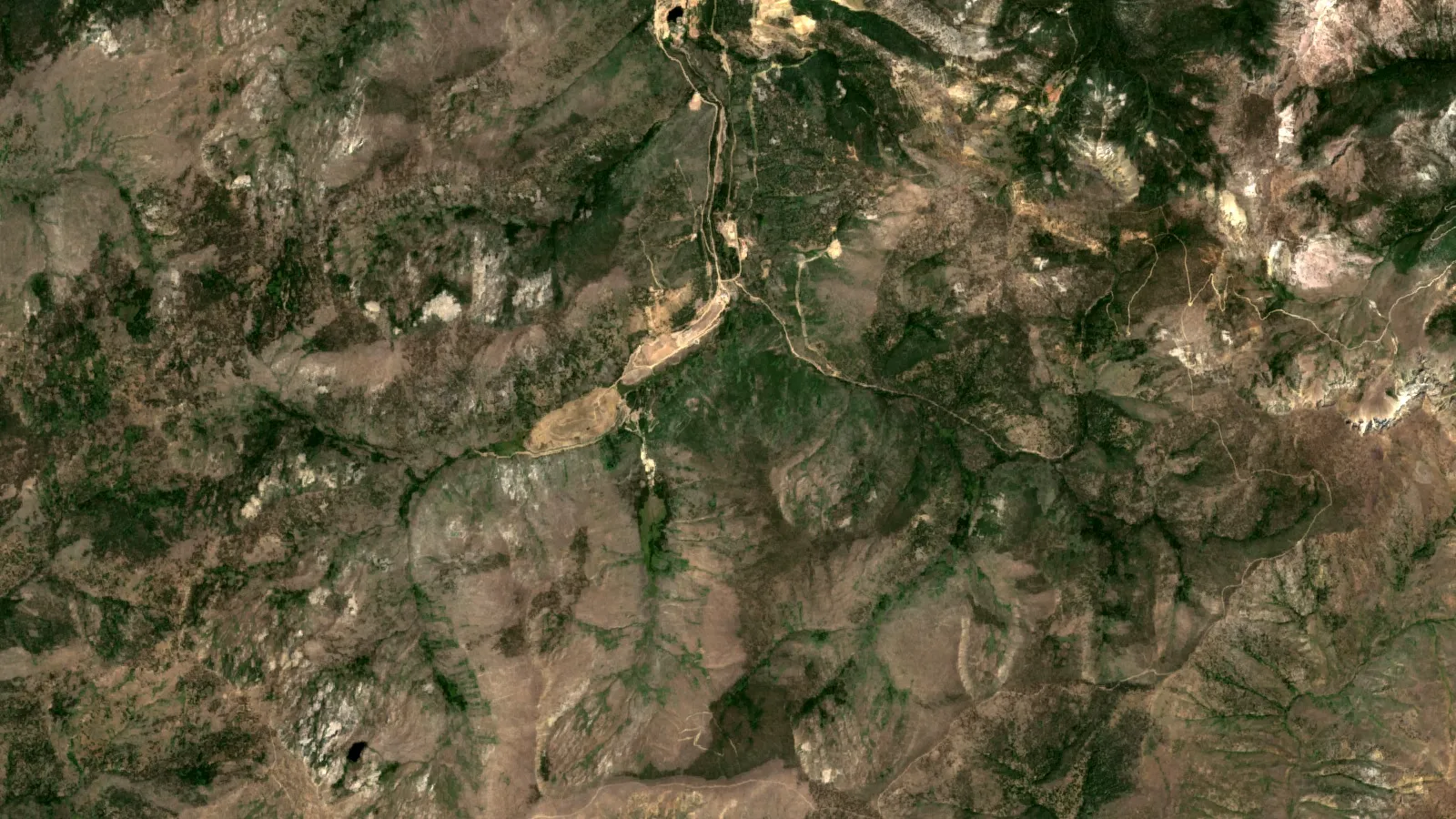
- What satellites can and cannot add to a historic district
- What to watch next at Stibnite
- Frequently asked questions
Stibnite is a gold and antimony mine in central Idaho that Perpetua Resources is rebuilding on the site of a historic district. The company reports 4.8 million ounces of gold and 149 million pounds of antimony in reserves. It holds the Forest Service Record of Decision (January 2025) and the Army Corps Clean Water Act permit (May 2025), and by its August 2026 update it was in early works and critical-path construction while court appeals continue (Perpetua investor presentation, September 2026).
This page is a status check for consultants, licence holders and investors who want the facts in one place: what is permitted, how big the reserves are, what the plan costs, what the lawsuits ask for and what the environmental record says on both sides. Company figures are labelled as company figures. Nothing here is investment advice.
Stibnite gold-antimony mine at a glance
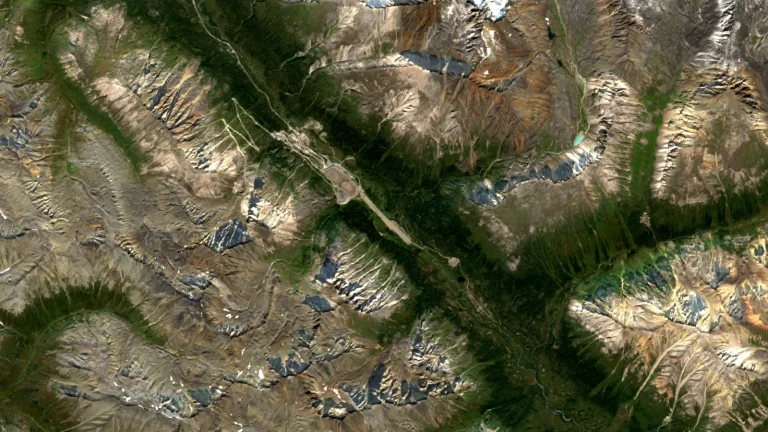
The project sits in Valley County, about 40 air miles east of McCall and three miles from the Frank Church-River of No Return Wilderness. Three open pits totalling about 473 acres are planned inside a 1,740-acre project zone (Valley Lookout, 2 September 2026). The pits are Yellow Pine, Hangar Flats and West End, with reprocessing of historic tailings alongside.
| Item | Figure | Source and date |
|---|---|---|
| Owner and listing | Perpetua Resources Corp. (Nasdaq: PPTA; TSX: PPTA), 100% of the project | Company presentation, Sept 2026 |
| Gold reserves | 4.8 million oz (reserve price US$1,600/oz, cut-off 0.48 g/t gold) | Company presentation, Sept 2026 |
| Gold resources | 1.5 million oz measured and indicated; 1.6 million oz inferred | Company presentation, Sept 2026 |
| Antimony reserves | 149 million lb | Company presentation, Sept 2026 |
| Planned mine life | 15 years in the economic model | Company presentation, Sept 2026 |
| Recovered gold | 4.223 million oz over 15 years; 1.852 million oz in years 1-4 | Company presentation, Sept 2026 |
| Recovered antimony | 106 million lb over 15 years; 69 million lb in years 1-4 | Company presentation, Sept 2026 |
| Initial capital | US$2,576 million including contingency | Company presentation, Sept 2026 |
Grade is the amount of metal in each tonne of rock, here grams of gold per tonne (g/t). The cut-off grade is the lowest grade that still pays to mine. A reserve is the part of a resource that a study shows can be mined at a profit; M&I means measured and indicated resources, which are better known than inferred ones. The reserve figures follow the company’s Technical Report Summary under the US Securities and Exchange Commission rules, not the Canadian NI 43-101 standard, and the company says so in its own cautionary note.
Stibnite permit timeline: from 2016 to construction
Permitting took about nine years. The Forest Service started the National Environmental Policy Act (NEPA) review in 2016, issued a draft environmental impact statement in 2020, a supplemental draft in 2022 and a final statement with a draft decision in September 2024 (Perpetua, 19 May 2025 release). The Final Record of Decision followed in January 2025 (Perpetua, 6 January 2025 release).
| Date | Step |
|---|---|
| 2016 | Formal NEPA review begins |
| 2020 and 2022 | Draft and supplemental draft environmental impact statements |
| September 2024 | Final environmental impact statement and draft Record of Decision |
| January 2025 | Forest Service issues the Final Record of Decision |
| March-April 2025 | Executive order on mineral production; project listed as a FAST-41 Transparency Project |
| May 2025 | Army Corps issues the Section 404 Clean Water Act permit, the last federal permit needed to progress to construction |
| October 2025 | Early works construction begins after construction-phase financial assurance is posted |
| 21 May 2026 | EXIM Bank board approves a US$2.9 billion loan, subject to final loan documents |
| 18 August 2026 | Federal district court upholds the approvals but remands part of the wildlife analysis |
FAST-41 is a federal programme that publishes a schedule for major project reviews. Perpetua notes that being listed does not mean the government endorses a project or promises approval. State permits, such as the air quality permit from the Idaho Department of Environmental Quality, are separate and also under challenge (see the legal section below).
Gold and antimony reserves and resources
Gold is the main revenue driver. The company’s economic model recovers 4.223 million ounces over 15 years, averaging 296,000 oz a year, with the richest years first: 463,000 oz a year in years 1-4. Recovered antimony is 106 million pounds over the same 15 years, or about 7.1 million pounds a year, and 69 million pounds in the first four years (company presentation, September 2026).
The antimony is a by-product credit, not the main product. The company reports a credit of US$222 per ounce of gold over the life of the mine at US$10 per pound of antimony, rising to US$547 per ounce at US$25 per pound. Those are modelled sensitivities, not forecasts.
Tungsten is not in the mine plan. Company-reported drilling results from August 2026 include 21.3 m of 3.2 g/t gold and 0.9% tungsten in the Clark Tunnel Fault Zone, and Hangar Flats intervals such as 9.8 m at 8.3% antimony and 4.6% tungsten. The company states that any tungsten development would need a separate environmental review and permits outside the current project (Perpetua construction update, 31 August 2026). A 10,000 m drill programme with four rigs was about 5,800 m complete at that date. Isolated drill intercepts do not prove a deposit.
For other Idaho gold districts, see our guide to gold deposits in Idaho.
Cost to build and run the mine
The company’s model uses long-term consensus prices of US$3,250/oz gold, US$40/oz silver and US$10/lb antimony, set at 31 December 2025, and assumes 100% equity funding with an effective tax rate near 25.5%. At those prices it shows an after-tax net present value (NPV) at a 5% discount rate of US$3,457 million, an internal rate of return (IRR) of 23.5% and an after-tax payback of 2.4 years. At US$4,500/oz gold the same model gives US$6,045 million, 32.3% and 1.9 years. NPV is today’s value of future cash flows; IRR is the discount rate at which that value is zero. These are company model outputs and move with metal prices.
Chart
Cost per ounce of gold: first 4 years vs 15 years
US$ per oz, net of by-product credits, at US$3,250/oz gold and US$10/lb antimony
Chart
Initial capital by area
US$ million, including contingency; total US$2,576 million
Initial capital is US$2,576 million including US$191.9 million contingency, or US$2,524 million after pre-production revenue. Sustaining capital adds US$767 million and closure US$118 million over the life of the mine. Processing is the largest single item, driven by the pressure-oxidation autoclaves that treat the refractory (hard-to-leach) gold ore.
Operating costs are lowest early. All-in sustaining cost (AISC, the cash cost to produce an ounce including sustaining capital) is US$498/oz net of by-product credits in years 1-4 and US$833/oz over 15 years. Both figures depend on the antimony credit.
The funding picture, from the company’s September 2026 presentation: the EXIM board approved a 13-year senior secured loan of US$2.9 billion, of which US$2.4 billion is for construction, and the company held US$574 million in unrestricted cash at 30 June 2026. The loan is available only after definitive documents are signed and conditions are met, which the company expected in the second half of 2026 (Perpetua release, 21 May 2026). A final investment decision is listed as a 2026 milestone and first production as a 2029 target.
Calculator
What could a year of gold and antimony sales leave?
Enter your own output, prices and cost per ounce.
- Gold sales: $975,000,000
- Antimony sales: $70,000,000
- Costs: $316,500,000
Example values only, not a forecast. Defaults echo the company model (about 296,000 oz of gold and 7 million lb of antimony a year; cost before antimony credit is AISC of US$833/oz plus the US$222/oz credit, Perpetua Sept 2026). The cost input already includes royalties and treatment charges; income tax and debt service are not included. Prices are inputs: use today’s price.
▶ Follows gold from rock through crushing, dissolving and refining. · 5:27
Stibnite antimony and US supply
Antimony hardens lead alloys and ammunition and is used in flame retardants, glass and batteries. In the United States, metal products, including flame retardants, took 49% of antimony use in 2025 and antimonial lead and ammunition 40% (USGS Mineral Commodity Summaries 2026). USGS puts net import reliance at 91% of apparent consumption in 2025 and the average metal price at US$25 per pound, more than double 2024.
Chart
Average antimony metal price
US$ per pound, annual average
Chart
Mine production of antimony by country
Tonnes of contained antimony, 2025 estimate; selected countries (world total about 110,000 t)
China produced about 40,000 tonnes of the world’s 110,000 tonnes of mine antimony in 2025 (USGS estimate), with Russia and Tajikistan next. USGS lists US reserves of 60,000 tonnes and footnotes them as the company-reported probable reserves for the Idaho project. Perpetua states that the project holds the only identified antimony reserve in the country; its September 2026 presentation gives 149 million pounds (about 67,600 tonnes), a later and company-dated figure than the USGS February 2026 table.
Scale matters. At the modelled 7.1 million pounds a year (about 3,200 tonnes), Stibnite would cover roughly 7% of the 45,000 tonnes of US apparent consumption USGS estimated for 2025, or about 17% in years 1-4 at 69 million pounds over four years (Farmonaut calculation from the company and USGS figures). That is a meaningful share, though well short of total US demand.
Two other names cause confusion. The Stibnite Hill mine in Montana is a different project; USGS reports mining started there in November 2025. The Galena Complex in Idaho’s Silver Valley, owned by Americas Gold and Silver (TSX: USA; NYSE American: USAS), is a silver mine that also recovers antimony in concentrate; the company reported about 425,000 oz of silver from Galena in the first quarter of 2026 (Americas Gold and Silver, 14 May 2026). The Army-backed pilot plant at Idaho National Laboratory, opened on 29 July 2026, will turn Stibnite antimony samples into antimony trisulfide for military use. Perpetua reports more than US$87 million in awards from the Department of War and the Army since 2022. For a Canadian comparison, see our note on tungsten and antimony in Canada.
Environmental impacts and the restoration plan
The district was mined for about a century and left disturbed ground, two large pits and contaminated waste. Mining ended in 1997, and since 1990 more than US$7 million has gone into restoration by the EPA, Idaho’s environmental agency and the Forest Service, according to the conservation group Idaho Rivers United. Water quality in the East Fork South Fork Salmon River and nearby streams does not meet federal drinking water standards because of arsenic and antimony left by earlier operations (Valley Lookout, September 2026).
Perpetua’s plan, which it calls restoring the site, includes reprocessing 10.5 million tons of historic tailings, lining the new tailings facility with geosynthetic liner, backfilling the Yellow Pine pit so the river can return and fish can pass, a net gain in wetland acres, a closure period of more than ten years and an estimated 25 years of water treatment (company presentation, September 2026). The company expects an average of about 550 jobs during operations.
Opponents see it differently. Idaho Rivers United argues the project will undo earlier restoration work, that water below the mine could be too warm for spawning Chinook salmon, and that the pit now holds part of the river. The plaintiffs, who include the Idaho Conservation League, Save the South Fork Salmon, Earthworks and the Center for Biological Diversity, say construction poses unacceptable risk to the South Fork Salmon watershed. The Nez Perce Tribe has filed its own suit. These are positions of the parties, not findings.
The seven classic mining impacts (land, water, air, waste, habitat, energy and community) all apply here, and the video below explains each in plain words.
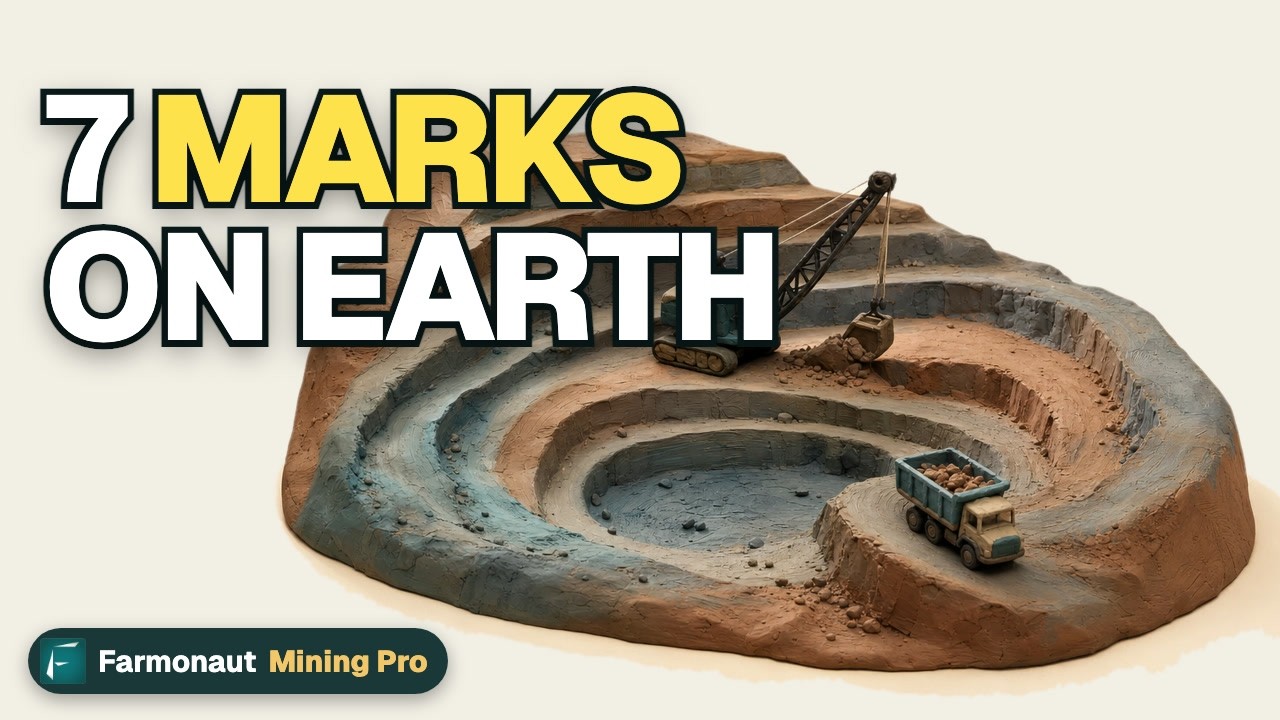
▶ Explains seven environmental impacts of mining in plain words, as a short claymation. · 2:31
Lawsuits and appeals still open
On 18 August 2026 Judge Amanda Brailsford of the US District Court in Idaho ruled for the federal agencies on nearly all of eight claims. The exception: the Fish and Wildlife Service’s incidental take statements for bull trout and wolverine did not set out monitoring and protective measures clearly enough. The court ordered amended statements but did not vacate any approval. In May it had denied a request to halt construction. The plaintiffs appealed on 25 August 2026, adding to an earlier appeal of the May denial of an injunction (Valley Lookout, 2 September 2026).
- Nez Perce Tribe suit against the federal approvals: pending before the same judge.
- Challenge to the Idaho air quality permit: a state judge sided with the agency in July 2026; a related state-court appeal was filed on 18 August 2026 and temporarily suspended on 31 August for unpaid transcript costs; the case could reach the Idaho Supreme Court.
- Appeal of the federal ruling: filed 25 August 2026; no ruling had been issued by 16 October 2026.
Stibnite district history in brief
Gold-antimony mineralisation near Stibnite was known from the Thunder Mountain gold rush of 1900. The Bradley Mining Company optioned the ground in 1927, and tungsten was found in drill cores in 1940. From 1941 to 1945 the Yellow Pine mine produced 40% of US tungsten and 90% of US antimony, including 10,828 tons of antimony, and the company town grew to 1,500 people (National Register nomination, Stibnite Historic District, listed 19 July 1987). The nomination says the tungsten ore was exhausted by the end of 1945. Mining ceased in the district in 1997. Midas Gold, now Perpetua, later acquired the property.
What satellites can and cannot add to a historic district
Farmonaut is a US-based satellite mineral-detection company. It does not work on Stibnite. For an explorer with a licence in a similar old district, satellite data can map alteration minerals, structure and disturbed ground across a boundary you supply (KML, KMZ or polygon), and deliver exploration targets in 5 to 20 business days. Those targets sit ahead of a resource estimate and are not environmental clearance. Read more on satellite-based mineral detection, send a boundary through the mining query form or contact us. For the wider US picture of gold, copper and uranium, see our US mining overview, and for how to read a prospect, gold deposit types and signs.

▶ Shows how satellites map the rock around gold rather than the gold itself. · 4:25
What to watch next at Stibnite
- Loan closing: whether the EXIM documents are signed and funds become available.
- Final investment decision: listed by the company as a 2026 milestone.
- Ninth Circuit and Idaho Supreme Court: any order that limits construction.
- Amended Fish and Wildlife Service statements for bull trout and wolverine.
- Drilling at the Clark Tunnel and Huckleberry fault zones, which could extend mine life.
- Autoclave delivery, Burntlog Route completion and the antimony offtake agreement.
Frequently asked questions
Where is the Stibnite Gold Project?
In Valley County, central Idaho, near the village of Yellow Pine, about 40 air miles east of McCall (Valley Lookout, September 2026).
Who owns the Stibnite mine?
Perpetua Resources Corp., based in Boise, owns 100% of the project through subsidiaries. It trades on Nasdaq and the Toronto Stock Exchange as PPTA. The company was formerly Midas Gold.
Is the Stibnite mine producing yet?
No. The company reported early works and critical-path construction in August 2026, and lists first production as a 2029 target. Construction is subject to financing and court outcomes.
How much gold and antimony are in the reserves?
Perpetua reports 4.8 million ounces of gold and 149 million pounds of antimony in reserves, plus 1.5 million oz of measured and indicated and 1.6 million oz of inferred gold resources (September 2026).
Does the project have all its permits?
It holds the federal Record of Decision (January 2025) and the Army Corps Section 404 permit (May 2025), which the company calls the last federal permit needed to progress to construction. Both approvals are being challenged in court, and a state air permit is under appeal.
Will Stibnite produce tungsten?
Not under the current plan. Tungsten was a major wartime product and recent drilling found more, but the company says development would need separate environmental review and permits.
How much will it cost to build?
The company’s initial capital estimate is US$2,576 million including contingency, with a US$2.9 billion EXIM loan approved by the bank’s board in May 2026 and not closed as of the company’s September 2026 documents.
Why does the United States want domestic antimony?
USGS reports 91% net import reliance in 2025, with China the largest producer and export limits sending prices to an average US$25 per pound in 2025.
What are the main environmental concerns?
Opponents cite risk to the South Fork Salmon watershed, fish habitat and water temperature, and loss of earlier restoration. The company cites legacy tailings removal, river and fish passage restoration, and wetlands gain.
Is a lawsuit stopping construction?
As of 16 October 2026 no court order had halted construction. The court denied a halt in May 2026, upheld the approvals on 18 August 2026 except for one wildlife issue, and the plaintiffs have appealed.
Is the Stibnite mine the same as Stibnite Hill in Montana?
No. Stibnite Hill is a separate antimony mine in Montana, where USGS says mining began in November 2025. The Idaho project is the gold-antimony deposit in the old Stibnite district.
This page is for information only. It is not investment advice. It gives no share price or target. Reserve, cost and schedule figures are the company’s own and may change with prices, financing and court decisions.
Farmonaut mining
Map your mining site from space
Consultants can send a boundary and receive satellite exploration targets that sit ahead of a resource estimate.

Mining Pro sample view, synthetic data
Keep reading
Sources
- Perpetua Resources, Investor Presentation (September 2026): perpetuaresources.com
- Perpetua Resources, Construction Update (31 August 2026): perpetuaresources.com
- Perpetua Resources, Receives Final Federal Permit (May 2025): perpetuaresources.com
- Perpetua Resources, Forest Service Record of Decision release (6 January 2025): investors.perpetuaresources.com
- Perpetua Resources, EXIM approves US$2.9 billion loan (21 May 2026): prnewswire.com
- USGS, Mineral Commodity Summaries 2026: Antimony: pubs.usgs.gov
- National Park Service, National Register nomination: Stibnite Historic District (Idaho State Historical Society copy): history.idaho.gov
- Idaho Rivers United, Stibnite: the history: idahorivers.org
- Valley Lookout, Court upholds Stibnite mine approval (2 September 2026): valleylookout.com
- Americas Gold and Silver, Q1 2026 results (14 May 2026): americas-gold.com
- Americas Gold and Silver, Galena Complex: americas-gold.com
Discussion
Questions, corrections or field experience? Share them below. First-time comments are reviewed before they appear, and your email is never published.
No comments yet. Be the first to add a question or your experience.

 Tintina Mining Group
 Dalgety Minerals Pty Ltd
 Vortex Minerals Pty Ltd
 Faith At Work (Pty) Ltd
 Geotech Mining Solutions plc
 Vulcan International Limited
 Kidepo Associates
 GKY Mining
 Alkimy SARL
 Double A Trading
 GemSprout Metals Limited
 Qader Group
 Ileys General Trading
 SG Gold Mining LLC
 VRV Global Pte Ltd
 Omsri International FZE
 G.I.T.T.
 Jaunita Erss Ltd
 Almosi SARL
 SRK Consulting
 Berks Gold Limited
 Mwerezi Minerals Company Limited

 Exploration consultancy · South Africa · Gold










