

Gravity Separation Method: 5 Ore Gravity Separation Methods for Sustainable Mineral Recovery
“Over 80% of global gold is recovered using gravity separation methods in mineral processing plants.”
“There are 5 main gravity separation techniques, including jigging and shaking tables, widely used in ore processing industries.”
Introduction
Gravity separation methods represent one of the oldest, yet still among the most robust and sustainable, approaches to mineral and ore processing in mining, gemstones, and material recovery industries worldwide. Relying purely on the fundamental laws of physics—mainly the differential density of minerals—these techniques enable the effective separation of valuable mineral constituents from their less useful host materials (or gangue) without adding chemical reagents or generating hazardous waste. Whether processing precious gold-bearing gravels or recovering dense particles from forest-derived residues, gravity-centric methods play a critical role across industries focused on sustainable, field-adapted material recovery.
This article delves into the fundamental principles of gravity separation, outlines the 5 common gravity separation methods, and provides comprehensive guidance for industry practitioners—from mining engineers to infrastructure material processors—on applications, implications, and best practices.
Gravity separation methods often achieve high ore recovery and concentrate grades with low environmental impact and operational simplicity, supporting sustainable mineral valorization.
Principles of Gravity Separation Methods
Gravity separation relies on one simple principle: differences in density and particle size enable the separation of ore constituents within a medium (usually water), under the influence of gravity, centrifugal forces, or fluid dynamics. In its essence:
- ✔ Heavier particles settle more quickly or are more readily directed into distinct streams than lighter gangue or matrix material.
- ✔ No chemical reagents are required, making it environmentally attractive and straightforward to operate and manage.
- ✔ The method is robust, scalable, and energy-efficient, aligning with modern sustainable mining and material processing practices.
- ✔ Particularly effective where valuable minerals show high specific gravity contrasts compared to their surrounding matrix.
As a result, gravity methods have broad industry application—from large-scale mining and ore beneficiation to the processing of forestry byproducts and infrastructure material refining. Understanding feed characteristics (size, liberation, shape) and process parameters (flow rate, media density, etc.) is critical for optimal recovery and concentrate quality.
- ⚙️ Physical Principle: Relies solely on gravity, fluid flow, and density/size differences.
- 🌱 Sustainability: No chemical input or hazardous reagents required.
- 🔬 Selectivity: Best for ores with high specific gravity contrasts.
- 💧 Water/Medium: Uses water (or dense media) to facilitate stratification and separation.
- 🔥 Versatility: Effective for a wide range of ores, minerals, and even waste residues.
Ignoring feed particle size distribution can severely reduce gravity separation efficiency—ensure proper sizing and classification for maximum recovery!
Overview of 5 Gravity Separation Methods
Over centuries, specialists have refined a range of gravity separation methods to suit diverse ore types, particle sizes, and operational requirements. The following are the five primary techniques widely recognized and applied in mining and mineral processing industries across the world.
1. Jigging (Jigs)
Jigging remains one of the most widely deployed gravity separation methods. The process uses specially designed boxes—jigs—that oscillate vertically, creating a pulsating stream of water. This flow stratifies particles by density, causing heavier minerals to sink to the bottom and lighter gangue to be washed away. Jigs are highly effective for coarse particles and lumpy ore, commonly used in coal beneficiation, mineral sands, and lode ore upgrades.
- ✔ Pulsating water flow separates minerals by density and size.
- ✔ Continuous operation possible for large processing plants.
- ✔ Well-suited for mining operations dealing with coarse ores and sands.
2. Heavy Media Separation (Dense Media Separation)
Heavy media separation (or dense media separation, DMS) uses a liquid with a density between those of the valuable minerals and waste (gangue) for separation. Typical dense media include a suspension of finely milled magnetite or ferrosilicon, creating a “heavy liquid” through which particles are passed. Heavier ore constituents settle to the bottom, while lighter waste floats. Widely used for coal, base metal ores, and gemstone concentrates, DMS is particularly valuable for medium- to coarse-sized particles.
- ✔ Utilizes a dense medium for precise separation by specific gravity.
- ✔ Effective for various ore types, including base metals and precious stones.
- ✔ Media can be recycled, minimizing operational costs.

3. Concentration Drums and Sluices
Rotary drums and sluice boxes are classic gravity separation methods that exploit the difference in settling velocities when water is passed over or through a bed of particles. Drums typically rotate, causing friction and separation, while sluices use a sloped channel to direct water and particles, with heavier minerals lodging in riffles and lighter fractions washing away. These tools shine in alluvial (placer) mining, mineral sands recovery, and processing coarse gravels.
- ✔ Simple, low-cost, field-friendly design.
- ✔ Excellent for alluvial gold, platinum, and heavy minerals in sands.
- ✔ Minimal mechanical complexity, suitable for remote operations.
4. Spiral Concentrators
Spiral concentrators feature helically-twisted, inclined channels through which a slurry of ore and water is introduced. As particles move down the spiral, centrifugal and fluid dynamic forces cause denser materials to travel closer to the inside of the spiral, while lighter particles remain on the outside and are carried off. Spirals are prized for their high throughput and effective recovery of fine to medium-sized fractions—especially in mineral sands, platinum-group metals, and gold gravels.
- ✔ Highly efficient for fine-to-medium particles with high specific gravity contrast.
- ✔ Continuous, low-maintenance operation with no moving parts.
- ✔ Recoveries of 80–95% possible in well-designed circuits.

- ⛏️ Jigs: Coarse ores, mineral sands, high-volume production.
- 💎 Heavy Media: Medium-coarse particles, high-value concentrate purity.
- 🌊 Sluices/Drums: Placer mining, gold/rare metals, field mobility.
- ⚙️ Spirals: Finer fractions, continuous large-scale mineral processing.
- 🧲 Tables: Ultra-fine, premium-grade concentrates, specialty minerals.
5. Shaking Tables
Shaking tables deliver unrivaled precision in mineral sorting for fine and ultra-fine particles. The equipment consists of a flat surface with riffles that vibrates horizontally, allowing a thin film of slurry to spread over its surface. Under this gentle vibration, minerals stratify into layers by density, with heavier particles trapped behind the riffles and lighter gangue washed downhill. Shaking tables are central to gemstone recovery, high-grade gold concentrates, and separation of heavy minerals from sands.
- ✔ Delivers premium-grade mineral concentrates for fine particle sizes.
- ✔ Adjustable vibration and slope for tailored separation performance.
- ✔ Widely used for gold, rare metals, and gem ore processing.

Magnetic and Electrostatic Assist
While not purely based on gravity, magnetic and electrostatic separation techniques are frequently integrated alongside gravity separation of ore, helping to remove magnetic gangue or to sort particles by surface charge for optimal downstream quality.
Gravity separation methods yield excellent returns by lowering chemical input and reducing environmental costs, especially for emerging markets focused on responsible mining and resource valorization.
Comparative Methods Table: Gravity Separation Methods
| Method Name | Principle of Operation | Typical Applications (Ore Types) | Estimated Recovery Rate (%) | Environmental Impact (Low/Medium/High) | Recommended Industry Use |
|---|---|---|---|---|---|
| Jigging | Pulsating water flow stratifies particles by density and size | Coarse ores, mineral sands, coal, lumpy and lode ores | 65–90% | Low | Mining, coal beneficiation, mineral sand processing |
| Heavy Media Separation | Dense liquid (magnetite/ferrosilicon suspension) separates by specific gravity | Base metals, coal, diamonds, gemstones | 75–95% | Medium | Base metal mining, gemstone recovery, coal |
| Concentration Drums & Sluices | Water flow/rotating drum allows heavier particles to settle/ lodge in riffles | Alluvial/placer gold, platinum, mineral sands, gravels | 60–85% | Low | Placer mining, small/ remote operations, mineral sands |
| Spiral Concentrators | Inclined spiral channels utilize centrifugal and fluid dynamic forces | Mineral sands, gold gravels, platinum-group minerals | 80–95% | Low | Bulk mineral sands, precious metals, continuous processing |
| Shaking Tables | Vibrating table stratifies fine particles by density under water flow | Gold, gemstones, rare metals, fine fractions | 85–98% | Low | Gemstone processing, fine gold/rare earth recovery |
For the highest overall recovery and concentrate quality, combine coarse pre-concentration (jigs or drums) with fine fraction methods (spirals or shaking tables) in a staged circuit.
Feed Characteristics & Preparation for Optimal Gravity Separation
The performance of gravity separation methods is fundamentally governed by the properties of the feed material. Attention to size distribution, particle shape, mineral associations, and moisture content is essential.
- ✔ Coarse, well-liberated particles yield the cleanest separations.
- ✔ Very fine (slimes) or very coarse feeds may require prior milling or classification.
- ✔ Heterogeneous mineral associations may need staged gravity plus magnetic/electrostatic assist.
- ✔ Feed preparation impacts not only recovery but the final concentrate’s purity.
- ✔ Water quality and flow rate control are critical for consistent results.

For mineral-rich residues (such as forestry byproduct ashes containing valuable oxides) as well as conventional ores, proper feed sizing and, if necessary, milling or deagglomeration, are essential to maximize the effect of gravity processes.
- 🔎 Feed must be free-flowing & non-agglomerated for optimal stratification.
- 🪨 Oversized rocks and trash must be screened prior to entry.
- 🌊 Water flow must be steady and matched to feed rate for consistent separation.
- ♻️ Consider closed-loop water systems to support environmental goals.
- 🛠 For ultra-fine recovery, integrate additional stages such as flotation after gravity.
Control of feed characteristics is directly correlated with both the yield and grade of gravity concentrates—proper sizing and water management are top priorities for practitioners.
Operational Considerations for Gravity Separation of Ore
Implementing gravity separation in modern extractive operations requires careful balancing of capital and operating costs, design simplicity, environmental footprint, and integration with downstream processing. Here are some critical parameters:
- ✔ Costs & Simplicity: Gravity devices have generally lower chemical costs and simpler maintenance but may require robust water handling and careful wear management.
- ✔ Environmental Footprint: Manage water use and tailings properly; opt for closed-circuit systems and sediment control where possible.
- ✔ Throughput and Grade Targets: Match equipment to ore texture and concentrate specifications. Staged gravity separation (e.g., jigging + spirals + tables) maximizes both recovery and product quality.
- ✔ Integration with Downstream Steps: Gravity concentrates may need further milling, flotation, or magnetic/electrostatic separation for final upgrade to market.
- ✔ Value Across Sub-Sectors: Gravity methods are not limited to classic mining; they’re essential in minerals valorization from forestry/agricultural residues and infrastructure byproducts as well.

Applications and Outcomes Across Industries
Gravity separation methods shine in a spectrum of industry verticals:
- ✔ Mining and Gemstones: Initial upgrading and high-recovery of precious metals, rare minerals, and gems; especially valuable in Africa, South America, Asia, and Australia.
- ✔ Forestry and Biomass Valorization: Dense mineral extraction from wood/ash residues prior to further beneficiation or repurposing.
- ✔ Infrastructure and Aggregates: Recovery of heavy or valuable particles from demolition byproducts and industrial materials.
- ✔ Placer/Alluvial Operations: Cost-effective, field-adapted recovery for both artisanal and industrial scale mining.
- ✔ Downstream Processing: Gravity upgrades improve flotation, leaching, or electromagnetic separation results.

Gravity separation processes can recover up to 98% of valuable ore components in optimized circuits—making them a backbone of resource-efficient mining operations.

Map Your Mining Site Here
— Leverage satellite-driven intelligence for your next exploration project!
Farmonaut: Satellite-Based Mineral Intelligence for Next-Gen Gravity Separation
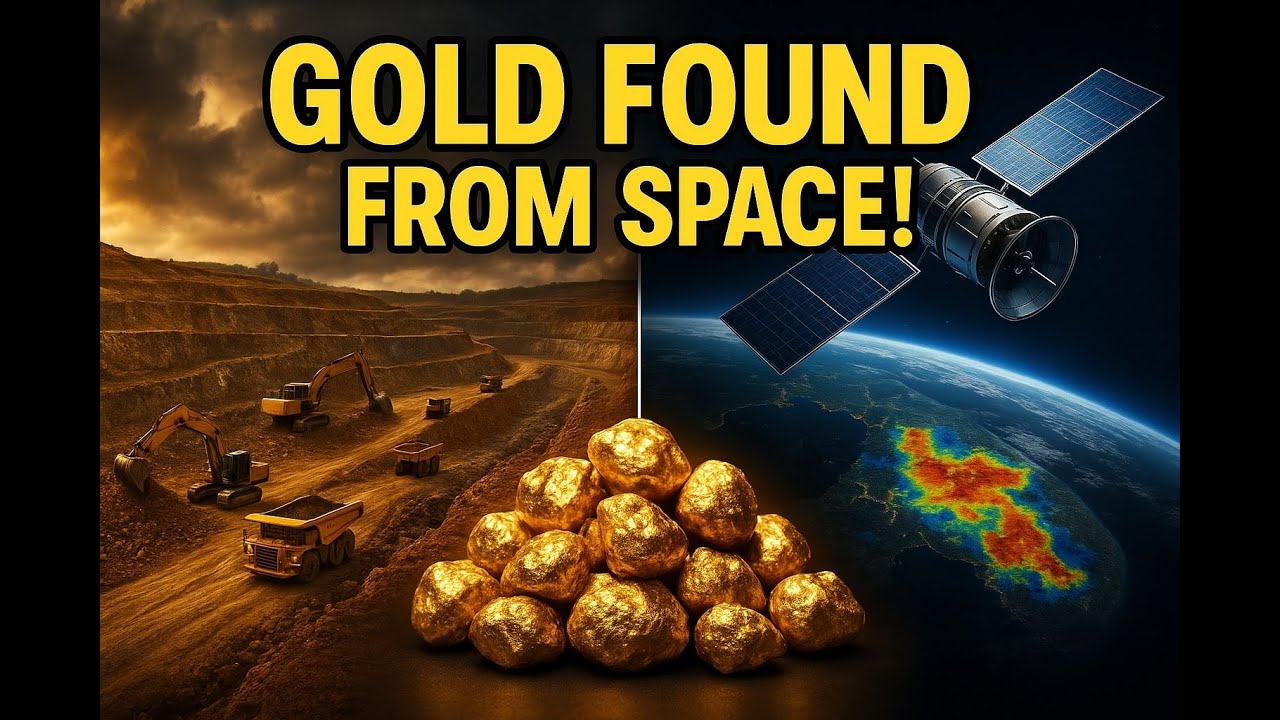
While gravity separation methods excel at on-site, field-level ore beneficiation, identifying high-potential deposits and optimal target zones is a pre-processing step with massive economic and environmental impact. This is where we at Farmonaut deliver breakthrough value for mining, gemstone, and material processing professionals.
Our satellite-based mineral detection platform accelerates exploration and prospect validation using Earth observation, AI, and advanced remote sensing. Compared to laborious ground surveys and drilling, we enable clients to:
- 🛰 Cut exploration costs by up to 85% and reduce survey timelines from years to days.
- 🗺 Locate high-prospect mineralized zones, faults, and alteration halos before ground deployment.
- 🌱 Support environmentally non-invasive discovery with zero ground disturbance at the initial phase.
- 💡 Screen thousands of hectares across Africa, South America, Asia, and Australia—even rare earth, gold, lithium, gemstones, and battery minerals.
- ⚡ Obtain GIS-compatible, professional reports with interactive maps—ready for technical and investment decisions.
For geospatial mining professionals interested in optimizing their gravity separation of ore workflow, our technology represents the future: discover what lies beneath—before committing to resource-intensive site activity. Discover our Satellite-Driven 3D Mineral Prospectivity Mapping for a sample deliverable.
Ready to streamline your next exploration? Get a custom quote here or for immediate assistance, Contact Us.
By integrating next-gen prospectivity mapping with the best-practice gravity separation method, industry professionals can unlock greater resource, economic, and environmental returns.
Farmonaut’s satellite-based approach produces no ground disturbance during exploration, minimizing environmental impact before field operations—enabling more responsible mining and material recovery decisions.
Frequently Asked Questions (FAQs) on Gravity Separation Methods
What is gravity separation, and why is it important in mineral processing?
Gravity separation is a group of industrial methods that exploits differences in mineral and ore density—as well as particle size and shape—to separate valuable components from gangue. It is a critical technique for sustainable, field-adapted ore beneficiation, relying on either water or dense media—without the need for chemical reagents.
Which gravity separation method is best for gold recovery?
For coarse alluvial or placer gold, concentration drums and sluices are preferred. For fine gold, spiral concentrators and shaking tables provide premium concentrate grades. Many industrial plants combine two or more methods for optimal recovery.
What are the main factors that affect gravity separation efficiency?
- Particle size distribution and liberation;
- Differences in specific gravity of ore and gangue;
- Control of water/medium flow and density;
- Equipment calibration and operational settings;
- Feed preparation and absence of over/undersized materials.
How environmentally friendly are gravity separation methods?
Gravity separation is one of the lowest-impact mineral processing options, using little to no chemicals and, with efficient water reuse and closed-loop designs, enabling responsible tailings and sediment management.
How does Farmonaut support gravity separation projects?
Farmonaut provides satellite intelligence for mineral exploration, pinpointing the most promising locations for gravity separation and downstream beneficiation. By using spectral and geospatial analysis, clients minimize unnecessary ground disturbance and focus resources on high-value sites.
“Over 80% of global gold is recovered using gravity separation methods in mineral processing plants.”
Conclusion: Future-Ready Gravity Separation for Modern Mining
As global demand soars for critical minerals, sustainable metal recovery, and field-adapted resource valorization, gravity separation methods will remain foundational across mining, gemstones, secondary processing, and infrastructure sectors. These techniques combine efficiency, scalability, and minimal environmental impact—key for the next generation of extractive industries. When paired with advanced geospatial intelligence, such as Farmonaut’s satellite-based mineral detection, practitioners can optimize each stage from exploration through processing to maximize economic value and environmental stewardship.
Whether you’re launching a regional gold scan in Ghana, targeting battery minerals in Australia, or refining byproducts in North America, the blend of time-tested gravity processes and modern satellite intelligence offers a proven path to success in ore beneficiation.
Quick Access Links & Resources
- 📍 Map Your Mining Site Here – Receive a satellite-backed mineralization analysis for better gravity separation targeting.
- 📈 Learn About Farmonaut’s Satellite-Based Mineral Detection Service – See how AI and satellite imagery accelerate prospecting for gravity-separable ores and gemstones.
- 📝 Get a Mining Quote – Custom gravity separation and remote sensing project proposals.
- 📞 Contact Us – Talk to the Farmonaut mining intelligence team for more information.
- 🌐 Sample 3D Prospectivity Mapping Deliverable – Deep-dive on satellite-driven exploration workflows for mining professionals.
Discussion
Questions, corrections or field experience? Share them below. First-time comments are reviewed before they appear, and your email is never published.
No comments yet. Be the first to add a question or your experience.

 Energy and Resources Ltd
 Mwerezi Minerals Company Limited
 Congo Mining Solutions
 Mining SARL
 SenGold Invest SAS
 Sania Corporation
 Sean Mining Limited
 NTS Group (Pty) Ltd
 Mine4Africa
 Lithspo Minerals Limited
 Tintina Mining Group
 Dalgety Minerals Pty Ltd
 Vortex Minerals Pty Ltd
 Faith At Work (Pty) Ltd
 Geotech Mining Solutions plc
 Vulcan International Limited
 Kidepo Associates
 GKY Mining
 Alkimy SARL
