

Zambia mining careers · Salary guide
Mining Engineering Salary in Zambia: Official Pay Data
Paid employees in Zambia’s mining and quarrying sector averaged K9,086 a month in the 2022 Labour Force Survey, against a national average of K5,342. In 2023, 48.7% of paid mining employees earned more than K7,500 a month. Below: pay by industry, package structure and a calculator for your own offer.
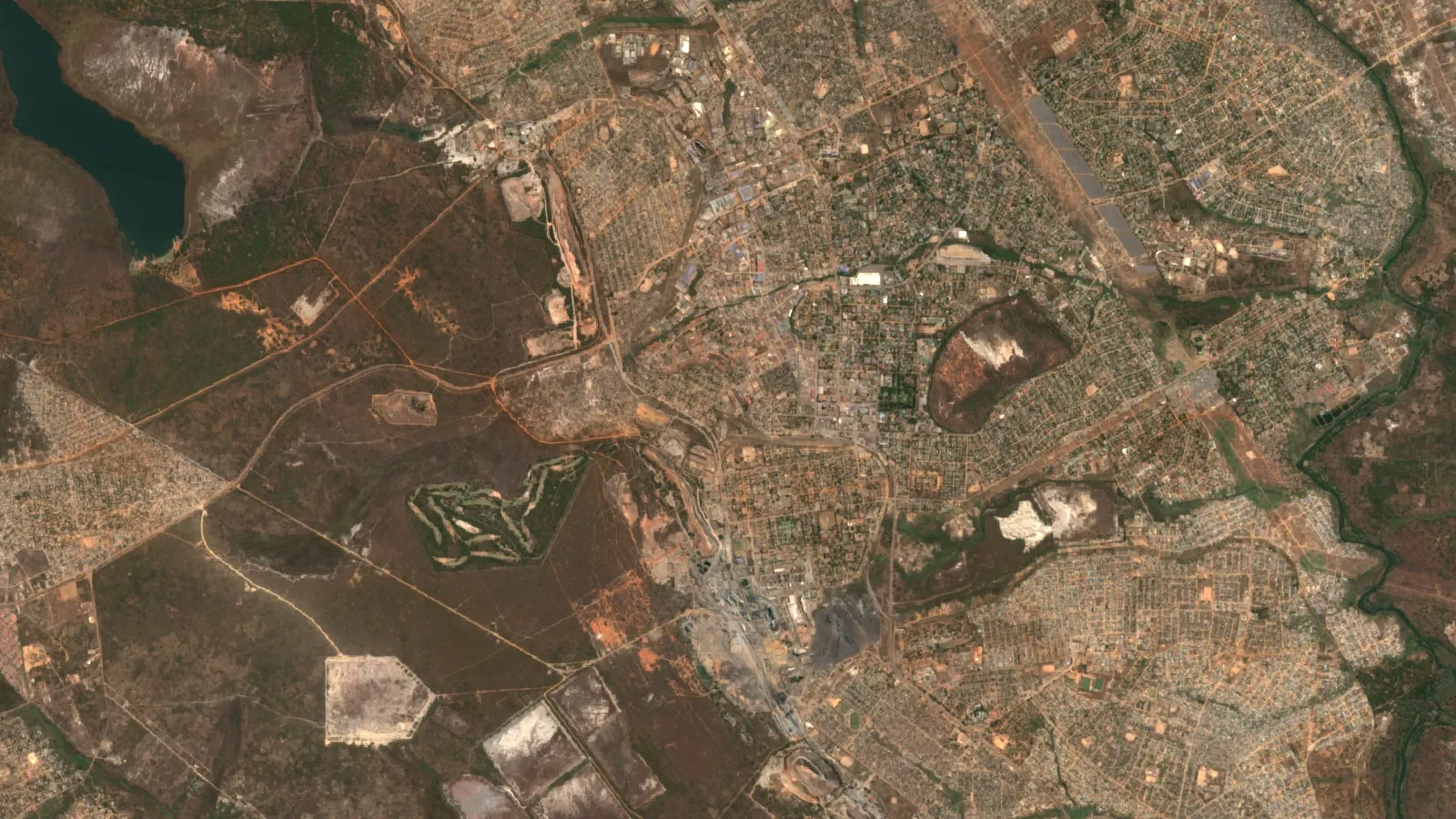
Key takeaways
- Mining and quarrying paid employees averaged K9,086 a month in 2022, about 1.7 times the national average of K5,342 (Labour Force Survey 2022).
- Professionals, the group that includes graduate engineers, averaged K9,790 a month across all industries in 2022 (Labour Force Survey 2022).
- In 2023, 48.7% of paid mining employees earned over K7,500 a month, against 21.6% across all industries (Labour Force Survey 2023).
- Copperbelt Province held 58.9% of mining and quarrying jobs in 2023 and North-Western Province 13.6% (Labour Force Survey 2023).
- US mining and geological engineers had a median wage of US$106,220 a year in May 2025 (BLS).
In this article
- Mining engineering salary in Zambia per month: what the official data shows
- How mining pay is spread across income brackets
- Salary structure and benefits in a mining engineer package
- Which engineering has the highest salary in Zambia
- What drives pay for mine planning engineers
- Mine planning engineer roles and daily work
- Career path and earning potential
- How Zambia compares with mining engineer pay abroad
- Industry context: copper output and the big employers
- How to qualify and register as a mining engineer in Zambia
- Frequently asked questions
In Zambia, paid employees in mining and quarrying earned an average of K9,086 a month in the 2022 Labour Force Survey, against a national average of K5,342. Qualified mining engineers sit in the upper part of that range: in the 2023 survey, close to half of all paid mining employees (48.7%) earned more than K7,500 a month. Below we set out what the official numbers show, how a mining engineer’s package is built, which engineering fields pay most, and a calculator that turns your own offer into a monthly and yearly total in kwacha and US dollars.
The survey reports pay by industry and by occupation group, not by single job title. So the figures below describe the sector a mining engineer works in, and the “Professionals” group an engineer belongs to. Your own offer depends on the employer, the mine, your grade and your years of experience.
Mining engineering salary in Zambia per month: what the official data shows
The Ministry of Labour and Social Security and the Zambia Statistics Agency run the Labour Force Survey. Its 2022 edition gives average monthly earnings for paid employees in every industry. Mining and quarrying averaged K9,086, with a 95% confidence range of K9,021 to K9,151. That is about 1.7 times the national average of K5,342 and well above manufacturing (K4,452) or construction (K4,594).
Chart
Average monthly earnings by industry, Zambia
Kwacha (ZMW) per month, paid employees, selected industries, 2022
Mining is not the top-paying industry overall. In the same 2022 table, professional, scientific and technical activities averaged K14,586, financial and insurance activities K14,323, and electricity supply K11,596. Public administration (K9,633) and education (K9,131) were close to mining. The chart below shows where mining sits.
The occupation table in the same report is a second guide. Workers classed as “Professionals”, the group that includes graduate engineers, averaged K9,790 a month in 2022, and technicians and associate professionals averaged K8,987. A newly qualified mining engineer usually starts near or below the professional average and moves above it with experience and promotion.
Two words matter when you compare offers. Basic pay is the fixed monthly salary. Gross pay adds allowances such as housing, transport and site hardship, and sometimes a bonus. Survey averages are earnings as reported by workers, so they mix both. Always ask an employer which figure an offer refers to.
How mining pay is spread across income brackets
An average hides a wide spread. The 2023 Labour Force Survey splits paid employees by monthly income bracket. Of 73,353 paid employees in mining and quarrying, 48.7% earned more than K7,500 a month and 34.1% earned K2,700 or less. Few sat in between.
Chart
Mining employees by monthly income bracket
Percent of 73,353 paid employees in mining and quarrying, Zambia, 2023
That split reflects two kinds of mining work. Large copper mines employ many skilled, formal staff on contracts with allowances. Small-scale and informal mining pays much less. Across all industries, only 21.6% of paid employees earned more than K7,500, so mining has more than twice the national share of workers in the top bracket.
For an engineer, the useful reading is this: the top bracket is where graduate engineers at large operations normally sit, and the survey’s open-ended “K7,501 and above” bracket includes senior staff on much higher packages. The survey does not publish where inside that bracket each job falls.
Salary structure and benefits in a mining engineer package
A mining engineer’s offer in Zambia is rarely a single number. Most packages at larger operations are built from the same parts:
- Basic salary: set by the job grade, your experience and the employer’s pay scale.
- Housing allowance: a monthly sum or company housing, common at Copperbelt and North-Western mines.
- Transport or vehicle allowance: a fixed amount, a pool vehicle or a company car at senior grades.
- Site or hardship allowance: extra pay for remote sites and shift work; amounts vary by company.
- Bonus: usually tied to production, cost, safety or personal targets and paid yearly.
- Pension and medical cover: employer contributions and medical schemes, which add value without showing in the monthly figure.
- Long-term incentives: at some listed companies, shares or deferred cash for senior staff.
Because the parts differ, compare offers on total yearly value, not basic pay. The calculator below adds the parts for you. Enter the numbers from your own offer letter; the defaults are round examples, not market rates.
Calculator
What is your mining engineer package worth per year?
Enter the figures from your own offer letter. Defaults are example values only; all results are pre-tax.
- Gross package per year, pre-tax (K): 270,000
- Gross package per year, pre-tax (US$, at your exchange rate): $13,500
- Monthly package vs mining average of K9,086 (times): 2.48
Example values only, not market rates or a benchmark. The exchange rate is an input: example, use today’s rate. Results are before income tax (PAYE) and pension deductions; check current ZRA bands. The comparison uses the 2022 Labour Force Survey mining average of K9,086 a month (Ministry of Labour and Social Security / ZamStats).
Which engineering has the highest salary in Zambia
The Labour Force Survey does not split engineering by discipline. It does show which industries pay best, and that is where each kind of engineer mostly works. In 2022, electricity supply (where electrical and power engineers work) averaged K11,596 a month, mining and quarrying (mining, metallurgical and mechanical engineers at mines) K9,086, and information and communication (software and telecoms engineers) K6,648. Professional, scientific and technical activities, which include engineering consultancies, averaged K14,586.
In practice, the best-paid engineering jobs combine three things: a large employer with foreign-currency revenue, a scarce skill, and responsibility for production or safety. Mining meets all three at the big copper operations, which is why mining, metallurgical and electrical engineers at large mines are among the better-paid engineers in the country. Consulting engineers with mine-planning or geotechnical skills can earn more again, but their income depends on how much work they win.
What drives pay for mine planning engineers
A mine planning engineer turns the geological model into a schedule: which blocks of rock to mine, in what order, with which equipment, and at what cost. The factors below move pay most for this role and for mining engineers in general.
- Size of the operation: large open pits and underground mines need bigger planning teams with senior grades.
- Experience and grade: pay steps up from graduate to engineer, senior engineer, superintendent and manager.
- Software skills: planners who can build pit shells, schedules and block models in mine planning packages are in demand.
- Underground and geotechnical work: rock mechanics and ventilation specialists are scarce.
- Location: remote sites in North-Western Province often carry site allowances and rotation rosters.
- Registration: registration with the Engineering Institution of Zambia is often listed in job adverts for engineer grades.
Two terms come up in every planning job. Ore grade is the share of metal in the rock, for copper given as a percentage (% Cu). Cut-off grade is the lowest grade worth processing at a given price and cost; rock below it is waste. Planners who manage grade and dilution well save money, and that is the skill bonuses often reward.
Mine planning engineer roles and daily work
Mine planning engineers work between geology, operations and finance. The main tasks are:
- Resource to reserve: take the geologist’s block model and decide which part can be mined at a profit.
- Pit or stope design: design pit walls, ramps, benches or underground stopes that are safe and practical.
- Scheduling: plan production week by week and year by year, balancing ore, waste and equipment.
- Cost and budget: estimate the cost of each plan and track actual output against it.
- Safety and environment: build safety rules, water management and rehabilitation into the plan.
Short-range planners work closely with the pit or shaft and change plans daily. Long-range planners build life-of-mine plans that feed reserve statements and investment decisions. Both paths lead to senior planning and mine manager posts. Readers new to safety systems can see our guide to mine safety solutions.
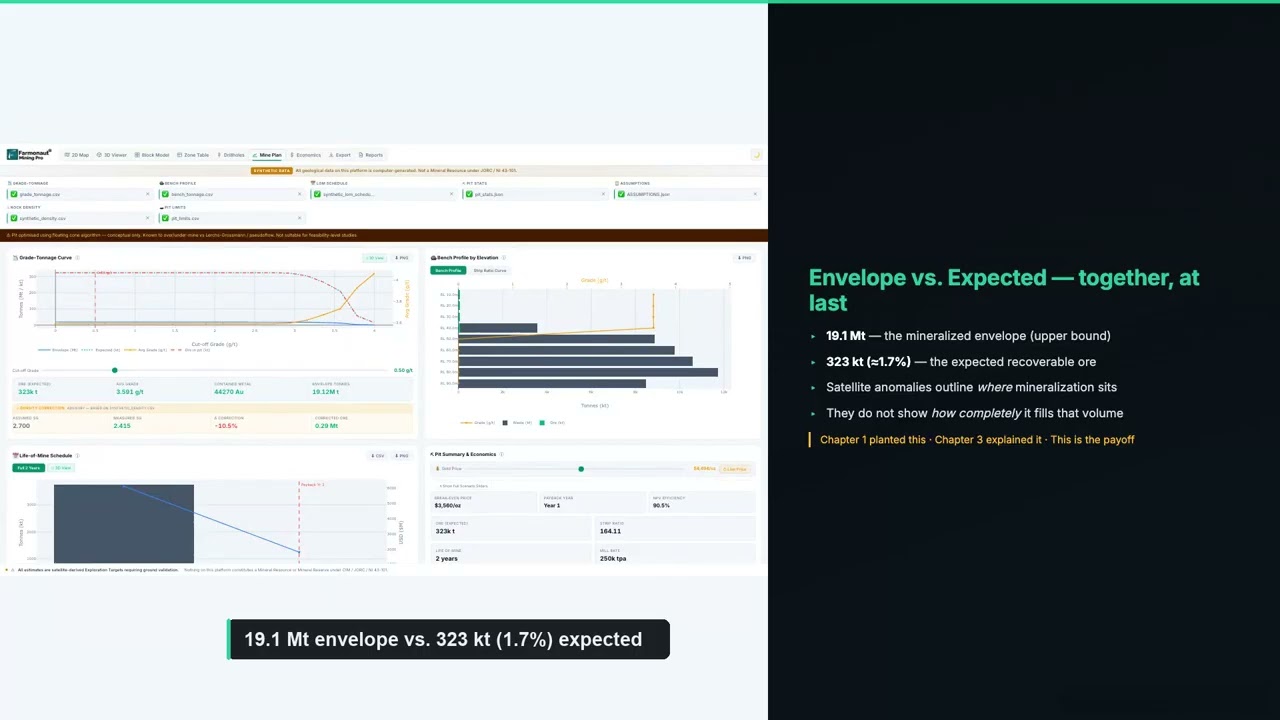
▶ How a mine planner builds a pit shell and reads a grade-tonnage curve. · 18:56
Career path and earning potential
Progress in a Zambian mining career usually follows grades. The names differ by company, but the steps are similar:
- Graduate or trainee engineer (0 to 2 years): rotations through drilling and blasting, planning, survey and production; pay starts near the professional average.
- Mining engineer (2 to 5 years): owns a pit area, a schedule or a design task; works toward professional registration.
- Senior engineer (5 to 10 years): leads a planning team or a production section; packages usually include a larger bonus.
- Superintendent or chief engineer (10+ years): responsible for a whole function at a mine; packages may include long-term incentives.
- Mine manager or technical director: legally responsible for safe operation; the top of the pay scale.
Some engineers move into consulting, mine-planning software, or technical roles at banks and investment firms. Others work abroad for a few years and return. The skills that travel best are planning software, geotechnical work and underground mining.
How Zambia compares with mining engineer pay abroad
Many searches ask what a mining engineer earns in general. In the United States, the Bureau of Labor Statistics gives a median annual wage of US$106,220 for mining and geological engineers (May 2025), about US$8,850 a month. The usual entry route there is a bachelor’s degree.
Direct comparison with kwacha pay is hard. Exchange rates move, living costs differ and allowances such as housing are valued differently. Use the calculator with today’s exchange rate to see your own package in US dollars, and compare it with what the same money buys where you live.
Industry context: copper output and the big employers
Pay follows production. According to the USGS Mineral Commodity Summaries 2026, Zambia’s copper mine production rose from an estimated 823,000 tonnes in 2024 to 940,000 tonnes in 2025, and its reserves were put at 21 million tonnes. The Ministry of Mines and Minerals Development reported a record 890,346 tonnes for 2025, as covered by The Zambian Economist; the two figures use different methods. The government’s stated aim is 3 million tonnes a year by 2031.
Chart
Copper mine production, selected countries
Thousand tonnes of copper, 2024 and 2025 (estimate)
Mining employment is concentrated in two provinces. The 2023 Labour Force Survey counted 90,075 people working in mining and quarrying, of whom 58.9% were in Copperbelt Province and 13.6% in North-Western Province. Large operations there include Nchanga (see our Nchanga mine guide), Kansanshi and Lumwana. Barrick says 98% of the Lumwana workforce are Zambian nationals and that the Lumwana expansion would take the mine to more than 3,500 direct employees (Barrick site visit, September 2025). Expansions like this create demand for planning, geotechnical and production engineers.
New exploration adds jobs too. Exploration teams screen large licence areas before drilling, increasingly with satellite data. Farmonaut’s satellite based mineral detection maps alteration and target zones over a licence area as a first step ahead of field work. For licence rules, see our Zambia mining cadastre and licence guide; for gold, see gold deposits in Zambia.
How to qualify and register as a mining engineer in Zambia
Most Zambian mining engineers train at the Copperbelt University School of Mines and Mineral Sciences or the University of Zambia School of Mines. Copperbelt University offers a Diploma in Mining Engineering, a Diploma in Mine Ventilation and a Bachelor of Engineering in Mining Engineering (introduced in 2001), plus MSc programmes in Mine Planning and Design, Rock Mechanics and Mining.
Diploma holders usually work as technologists or technicians; the occupation table puts technicians and associate professionals at K8,987 a month on average (2022). A degree opens the engineer grades and later management posts.
Engineers and engineering firms register with the Engineering Institution of Zambia (EIZ), which runs registration and yearly renewal. Mining is governed by the Mines and Minerals Development Act No. 11 of 2015, which covers licences, health and safety, taxes and royalties (Mayer Brown summary). The Ministry of Mines and Minerals Development oversees the sector.
Companies or licence holders who want to discuss a project area can use our mining query form or contact us.
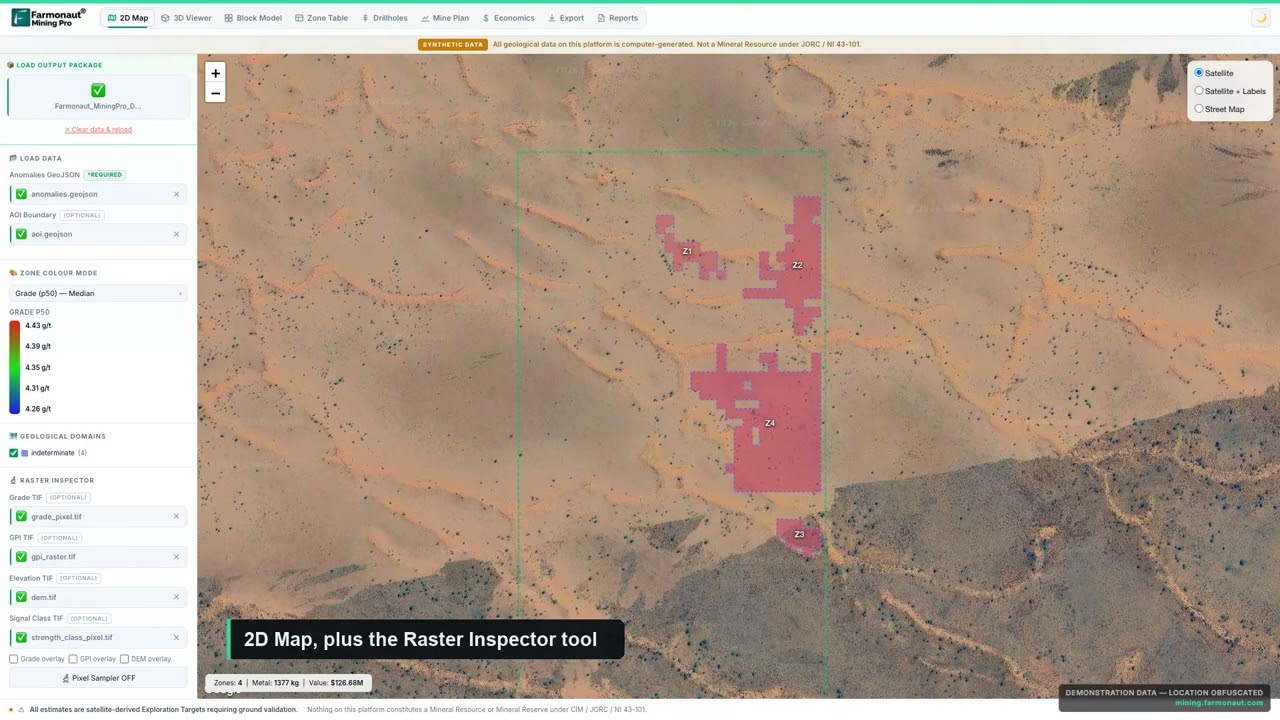
▶ A full course from satellite exploration targets to a first mine plan. · 249:39
Frequently asked questions
How much do mining engineers get paid in Zambia per month?
The survey does not give a figure for mining engineers alone. Paid employees in mining and quarrying averaged K9,086 a month and professionals K9,790 (Labour Force Survey 2022). Engineers at large mines often earn more with experience, plus housing, transport and site allowances.
Is mining the highest-paying industry in Zambia?
No. In the 2022 survey, professional, scientific and technical activities (K14,586), financial and insurance activities (K14,323), electricity supply (K11,596) and public administration (K9,633) all averaged more than mining (K9,086).
What share of mining workers earn over K7,500 a month?
In 2023, 48.7% of paid employees in mining and quarrying earned more than K7,500 a month, against 21.6% across all industries (Labour Force Survey 2023).
Which engineering has the highest salary in Zambia?
By industry, engineers in consultancies (professional and technical activities), electricity supply and large mines work in the best-paid sectors. Pay depends more on employer, grade and skill than on the discipline name.
What is a diploma in mining engineering salary in Zambia?
Diploma holders usually start as technologists or technicians. Technicians and associate professionals averaged K8,987 a month across industries in 2022; starting pay is lower and rises with experience.
What does a senior mining engineer earn?
Senior engineers and superintendents at large copper mines are in the survey’s top bracket (above K7,500 a month), often well above it, and usually receive bigger bonuses and allowances. Ask for the total yearly package when comparing offers.
What is the mining engineering salary per month in the United States?
The US median for mining and geological engineers was US$106,220 a year in May 2025 (BLS), about US$8,850 a month.
Where do most mining jobs in Zambia sit?
Copperbelt Province held 58.9% of people working in mining and quarrying in 2023, and North-Western Province 13.6% (Labour Force Survey 2023).
Where can I study mining engineering in Zambia?
Copperbelt University and the University of Zambia both have schools of mines. Copperbelt University offers diplomas, a Bachelor of Engineering in Mining Engineering and MSc programmes in mine planning, rock mechanics and mining.
Do mining engineers in Zambia need to register?
Engineers and engineering firms in Zambia register with the Engineering Institution of Zambia, which runs registration and yearly renewal. Check the current requirements for your grade with EIZ.
This page is for information only. It is not career, tax or legal advice. Pay figures are survey averages; confirm offers, tax and registration rules with the employer, ZRA and EIZ.
Farmonaut mining
Map your mining site from space
Planning or exploration teams can screen a licence area with satellite data before field work.

Mining Pro sample view, synthetic data
Keep reading
Sources
- Ministry of Labour and Social Security / ZamStats, 2022 Labour Force Survey Report: ilo.org
- Ministry of Labour and Social Security, 2023 Labour Force Survey Report: mlss.gov.zm
- USGS, Mineral Commodity Summaries 2026: Copper: pubs.usgs.gov
- US Bureau of Labor Statistics, Occupational Outlook Handbook: Mining and Geological Engineers: bls.gov
- Copperbelt University, School of Mines and Mineral Sciences: Mining Engineering: cbu.ac.zm
- Engineering Institution of Zambia: eiz.org.zm
- Ministry of Mines and Minerals Development, Zambia: mmmd.gov.zm
- Mayer Brown, Africa Mining Know-How: Zambia: mayerbrown.com
- Barrick, Lumwana site visit presentation (September 2025): s25.q4cdn.com
- The Zambian Economist, Zambia copper output 2025 and the 2031 target (August 2026): zambianeconomist.com
Discussion
Questions, corrections or field experience? Share them below. First-time comments are reviewed before they appear, and your email is never published.
No comments yet. Be the first to add a question or your experience.

 Double A Trading
 GemSprout Metals Limited
 Qader Group
 Ileys General Trading
 SG Gold Mining LLC
 VRV Global Pte Ltd
 Omsri International FZE
 G.I.T.T.
 Jaunita Erss Ltd
 Almosi SARL
 SRK Consulting
 Berks Gold Limited
 Mwerezi Minerals Company Limited
 Mining SARL
 SenGold Invest SAS
 Sean Mining Limited
 NTS Group (Pty) Ltd
 Mine4Africa











