

Company guide · Copper, zinc and platinum-group metals
Ivanhoe Mines: What It Produces, Mine by Mine
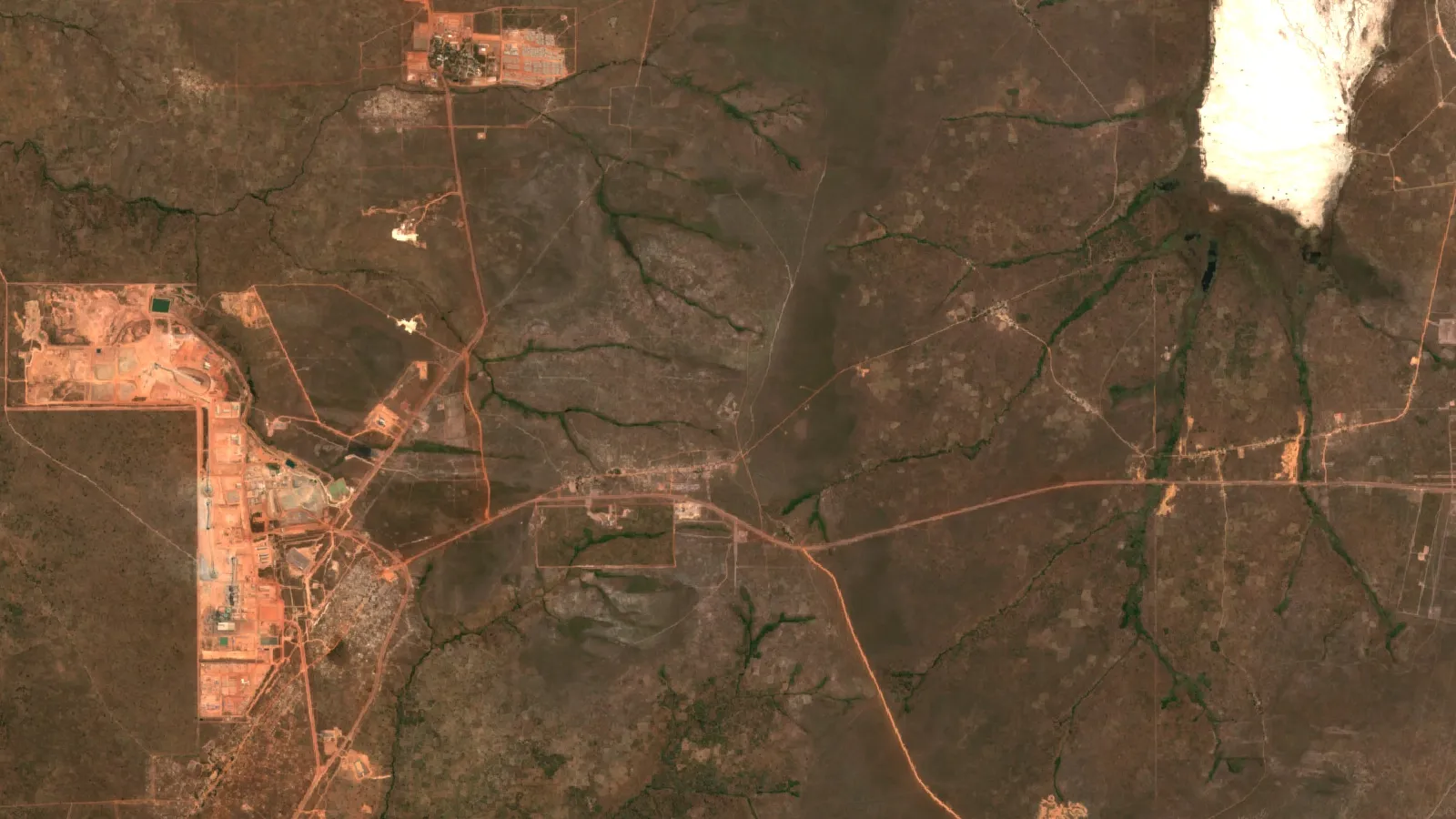
Ivanhoe Mines runs Kamoa-Kakula copper and Kipushi zinc in the DRC and the Platreef platinum-group-metals mine in South Africa. Kamoa-Kakula made 388,838 t of copper in 2025 and guides to 290,000-310,000 t of copper in anode or blister for 2026.
Key takeaways
- Kamoa-Kakula made 388,838 t of copper in concentrate in 2025; 2026 guidance is 290,000-310,000 t of copper in anode or blister, a different basis (Ivanhoe, July 2026).
- Ivanhoe and Zijin Mining each own an indirect 39.6% of Kamoa-Kakula; the DRC government holds 20% (Ivanhoe, July 2026).
- Kipushi made a record 70,177 t of zinc in Q2 2026 and guides to 240,000-290,000 t for the year (Ivanhoe, July 2026).
- Platreef is in ramp-up: 1,538 oz in Q2 2026, with commercial production expected in Q4 2026 (Ivanhoe, July 2026).
- The Western Forelands copper resource, mostly the Makoko District, is about 12 Mt contained, almost all Inferred (Ivanhoe, September 2026).
In this article
- What does Ivanhoe Mines produce?
- Ivanhoe Mines at a glance: who owns what
- Kamoa-Kakula copper mine: output, grade and guidance
- Why Kamoa-Kakula output fell after the Kakula seismic event
- Kamoa-Kakula costs, smelter and power
- Kipushi: Ivanhoe's ultra-high-grade zinc mine
- Platreef: Ivanhoe Mines in South Africa
- Western Forelands and Makoko: the next copper district
- Why Congo copper matters: demand and supply
- What the filings say about people and environment
- How to read Ivanhoe's production reports
- Using satellite data to study mining districts like these
- Frequently asked questions
What does Ivanhoe Mines produce?
Ivanhoe Mines is a Canadian company (TSX: IVN, OTCQX: IVPAF) that runs three mines in southern Africa: Kamoa-Kakula copper and Kipushi zinc, both in the Democratic Republic of the Congo (DRC), and the Platreef platinum-group-metals mine in South Africa. Copper is the main product by volume: Kamoa-Kakula made 388,838 tonnes of copper in concentrate in 2025, Kipushi made a record 203,168 tonnes of zinc, and Platreef started producing concentrate in November 2025 (Ivanhoe Mines, January 2026).
The table below answers the most common search, “what does Ivanhoe Mines produce”, mine by mine. Figures are Ivanhoe’s own reported numbers on a 100% project basis unless stated, and each is dated.
| Mine | Where | Main metals | Ivanhoe’s share | Latest reported output and 2026 guidance |
|---|---|---|---|---|
| Kamoa-Kakula | DRC, 25 km southwest of Kolwezi | Copper (anode and blister), sulphuric acid | 39.6% (Zijin Mining also 39.6%, Crystal River 0.8%, DRC government 20%) | 64,328 t of copper in Q2 2026; guidance 290,000-310,000 t for 2026 |
| Kipushi | DRC, 30 km southwest of Lubumbashi | Zinc, with copper, lead, germanium and silver | 62% (68% acquired in 2011; Gécamines’ stake rose from 32% to 38% in Q1 2025) | 70,177 t of zinc in concentrate in Q2 2026; guidance 240,000-290,000 t |
| Platreef | South Africa, near Mokopane, Limpopo | Platinum, palladium, rhodium and gold, with nickel and copper | 64% of Ivanplats | 1,538 oz of platinum, palladium, rhodium and gold in Q2 2026; ramp-up, not yet commercial production |
Sources for the table: Ivanhoe Mines second-quarter 2026 results (29 July 2026). Kamoa-Kakula’s guidance was narrowed from 290,000-330,000 t to 290,000-310,000 t in those results. In a Q3 update on 8 October 2026, Mining Weekly reported copper output of 76,401 t, up 19% on Q2.
Ivanhoe Mines at a glance: who owns what
Ivanhoe describes itself as a company with three tier-one operations and an exploration portfolio in the DRC, Angola, Zambia and Kazakhstan. Executive Co-Chair Robert Friedland and President and CEO Marna Cloete sign its production releases. Its official site is ivanhoemines.com.
Ownership matters when you read the numbers. Kamoa-Kakula is run through the Kamoa Holding joint venture between Ivanhoe and Zijin Mining. Kamoa Holding owns 80% of the mine and the DRC government owns 20%, so Ivanhoe and Zijin each hold an indirect 39.6%. The mine’s licence area is 400 square kilometres, and more than 90% of its 7,481 full-time employees are Congolese (Ivanhoe Mines, July 2026).
Platreef is held by Ivanplats, which is 64% owned by Ivanhoe. Another 26% belongs to broad-based black ownership partners that include 20 host communities, employees and local entrepreneurs, and 10% belongs to a Japanese group of ITOCHU, JOGMEC and Japan Gas Corporation. The company reported a profit of US$46 million and adjusted EBITDA of US$179 million for Q2 2026, with US$635 million of cash at 30 June 2026. These are reported facts, not a view on the shares.
Kamoa-Kakula copper mine: output, grade and guidance
Kamoa-Kakula is the reason most people search for Ivanhoe. It sits in the Central African Copperbelt in the DRC, which the US Geological Survey (USGS) ranks second in the world for mined copper, at an estimated 3.2 million tonnes in 2025 against 5.3 million tonnes for Chile and a world total of 23 million tonnes.
Chart
Feed grade at the concentrators
Per cent copper in ore processed
Ivanhoe reported 2025 output of 388,838 tonnes of copper in concentrate, well short of the “over 800,000 tonnes a year” once projected for the mine. The 2025 result was 388,838 tonnes of copper in concentrate (385,808 t from the three concentrators and 3,030 t from the slag concentrator; Ivanhoe, January 2026). Ivanhoe’s 2026 guidance is 290,000-310,000 tonnes of copper in anode or blister, its 2027 guidance is 380,000-420,000 tonnes, and its target is about 500,000 tonnes a year from 2028 (Ivanhoe Mines, July 2026).
Production is reported on a new basis from 2026. Until 2025 Ivanhoe reported copper contained in concentrate. From 2026 it reports copper in anode, blister or slag concentrate held for sale, because the on-site smelter now turns concentrate into 99.7%-pure copper anode. Do not compare a 2025 concentrate number with a 2026 anode number without noting this.
The ore the mine is feeding to its plants is lower grade than in 2025. Feed grade at the Phase 1 and 2 concentrators fell from 4.12% copper in Q2 2025 to 2.59% in Q2 2026. Ivanhoe explains that development is currently focused on peripheral access drives in lower-grade areas around the edges of the Kakula orebody, before stoping (production mining) starts in the newly opened high-grade areas, expected in the second half of 2027.
Why Kamoa-Kakula output fell after the Kakula seismic event
In May 2025, seismic activity at the Kakula mine caused flooding and closed part of the underground workings. According to Reuters reporting carried by Miningmx, Ivanhoe withdrew its 2025 guidance of 520,000-580,000 tonnes, replaced it with 370,000-420,000 tonnes, and dropped a 2026 target of about 600,000 tonnes. Work resumed on the western side of Kakula on 7 June 2025 while the eastern side stayed flooded.
Chart
Kamoa-Kakula copper in concentrate by quarter
Tonnes, Phase 1, 2 and 3 concentrators combined, 100% basis
Ivanhoe then rebuilt the mine plan. The 2026 mineral reserve estimate, published on 31 March 2026, sets out a ramp-up to about 500,000 tonnes of copper a year from 2028, running the three concentrators at 17 million tonnes of ore a year for roughly 25 years. The Q2 2026 results still list the integrity of underground infrastructure and new dewatering infrastructure as risk factors for the plan.
The recovery is visible in the quarterly data. Q2 2026 copper was 64,328 tonnes; in the Q3 update reported on 8 October 2026, saleable copper (anode, blister and slag concentrate) rose to 76,401 tonnes as mining rates at the Kamoa and Kansoko mines rose about 30%. Mining Weekly reports that Ivanhoe kept full-year guidance but said output was trending toward the low end of the range.
Kamoa-Kakula costs, smelter and power
Cost is reported as C1 cash cost, which counts direct mining, processing, stockpile handling and general costs per payable pound of copper. At Kamoa-Kakula it was US$2.84 per pound in Q2 2026, up from US$1.89 in Q2 2025, and US$2.70 for the first half of 2026. Full-year 2026 guidance is US$2.60-3.00 per pound, and 2027 guidance is US$2.10-2.50. The long-term target is below US$2.00 per pound from 2028.
Chart
Kamoa-Kakula C1 cash cost
US$ per payable pound of copper
The on-site smelter, which Ivanhoe describes as Africa’s largest copper smelter, has a design capacity of 500,000 tonnes of copper a year. It is running at about 60% of design capacity because concentrate feed limits it, and Ivanhoe expects full capacity in 2028. In Q2 2026 its operating cost of US$0.41 per pound was almost fully offset by US$0.39 per pound of credits from selling high-strength sulphuric acid, which sold at about US$840 per tonne in July 2026.
Power is a growing share of cost: 20.1% of C1 in Q2 2026 against 10.6% a year earlier. Ivanhoe is commissioning a 60-megawatt solar facility with battery backup, with plans to double on-site solar to 120 MW by the end of 2027. The company reports these as cost measures and does not give a measured emissions saving in its filings.
Kipushi: Ivanhoe’s ultra-high-grade zinc mine
Kipushi is an underground zinc-copper-lead-germanium-silver mine next to the town of Kipushi on the Zambian border, about 250 kilometres southeast of Kamoa-Kakula. Ivanhoe and its partner restarted it in mid-2024, and the DRC president officially reopened it on 17 November 2024.
Zinc in concentrate reached a record 203,168 tonnes in 2025. In Q2 2026 the mill processed a record 200,774 tonnes of ore at 38.7% zinc, recovered 92% and made 70,177 tonnes of zinc in concentrate, the seventh straight quarterly rise. Cash cost (C1) was US$0.90 per pound of payable zinc, within a 2026 guidance range of US$0.85-0.95. Press coverage of the Q3 update puts Kipushi output at 77,147 tonnes, up 10% on Q2. For scale, USGS estimates world zinc mine production at 13 million tonnes for 2025, so Kipushi’s 240,000-290,000 tonne guidance is roughly 2% of the world total.
Platreef: Ivanhoe Mines in South Africa
Platreef is on the Northern Limb of the Bushveld Igneous Complex in Limpopo Province, about 280 kilometres northeast of Johannesburg. It sits next to Valterra Platinum’s Mogalakwena operation. The deposit being mined is called the Flatreef, a thick, flat-lying orebody that can be mined with mechanised bulk methods. Ivanhoe reports 56 million ounces of platinum-equivalent Indicated resources and 74 million ounces Inferred at a 2.0 g/t cut-off. A cut-off grade is the lowest grade included in a resource figure, and Inferred means the lowest geological confidence.
The Phase 1 concentrator produced its first concentrate on 18 November 2025 and made a first sale to Northam Platinum. Output is still small: 1,538 ounces of platinum, palladium, rhodium and gold (“3PE+Au”) in Q2 2026, about 3,931 ounces since start-up. Ivanhoe says these rates are not representative because the plant is batch-operated on lower-grade development ore, and it now expects commercial production in Q4 2026, later than the target it gave in January of reaching 80% of nameplate capacity by mid-year.
The step-up is Phase 2: a 3.3-million-tonne-a-year concentrator targeted for completion in Q4 2027, designed for more than 450,000 ounces a year plus about 9,000 tonnes of nickel and 6,000 tonnes of copper. Platreef’s 2026 capital guidance is US$350-380 million, and a US$700 million senior project finance facility for Phase 2 reached financial close in April 2026. Ivanhoe’s February 2025 studies estimated a Phase 2 life-of-mine total cash cost of US$599 per ounce, net of nickel and copper credits; that is a company study figure, not an achieved result.
Western Forelands and Makoko: the next copper district
Ivanhoe’s exploration spending is concentrated on the Western Forelands, a 2,427 square kilometre licence package next to Kamoa-Kakula that is about six times larger than the Kamoa-Kakula licence area. On 8 September 2026 the company published an updated resource for the Western Forelands, which combines the Makoko District (34 million tonnes at 2.66% copper Indicated plus 612 million tonnes at 1.80% Inferred) and the Kiala deposit (8 million tonnes at 2.67%). Together that is 42 million tonnes at 2.66% copper Indicated plus 612 million tonnes at 1.80% copper Inferred (100% basis), about 12 million tonnes of contained copper, 30% more than in May 2025.
Read that number carefully. Nearly all of it is Inferred, so it is an exploration estimate that needs more drilling before it supports a mine plan. The new estimate also uses mineable shape optimisation, a method that limits the reported tonnes to material that could plausibly be mined, so it is not like-for-like with earlier Makoko figures. Ivanhoe plans a scoping study in the first quarter of 2027 and says development is expected to include several shallow open pits.
The group’s 2026 exploration budget was raised from US$90 million to US$126 million, of which US$86 million is for the Western Forelands. Mineralisation is now within eight kilometres of Kamoa-Kakula’s Kakula West deposit. Anyone studying mining rights in this part of the world should first learn how the cadastre works; see our guide to mining cadastre portals by country, and our overview of copper deposit types and top countries and our guide to porphyry copper deposits for how those systems differ from the sediment-hosted copper of the Copperbelt.

▶ How AI is used in mineral exploration, and where it falls short. · 4:37
Why Congo copper matters: demand and supply
Copper is used in power grids, motors and wiring. The International Energy Agency’s Global Critical Minerals Outlook 2026 says base-metal prices rose by a third between January 2025 and April 2026, with copper at record highs, and that the projected copper supply deficit for 2035 has narrowed from about 30% to 25% as new projects advance, particularly in the DRC and Zambia.
Chart
Largest copper mining countries
Estimated mine production, thousand tonnes of contained copper, 2025, six largest producers
The DRC also depends heavily on mining. The Extractive Industries Transparency Initiative reports that extractives made up 46% of government revenues in 2021. For a company like Ivanhoe, that means licences, royalties, power supply and export logistics are as important as geology. Ivanhoe itself cites power supply and logistics bottlenecks for Kipushi in its Q2 2026 results.
▶ Why EVs and grids need copper, explained. · 6:03
What the filings say about people and environment
Ivanhoe’s filings support these narrower statements on people and environment:
- Kamoa-Kakula employs over 7,481 full-time staff, over 90% Congolese (Ivanhoe, July 2026).
- Platreef’s ownership includes 20 host communities with about 150,000 people (Ivanhoe, July 2026).
- A community resettlement and livelihood restoration programme is part of early development work at Makoko (Ivanhoe, July 2026).
- Kamoa-Kakula is commissioning a 60 MW solar facility with battery backup, and Kipushi plans a 10 MW hybrid solar plant, expected in Q2 2028, to supply about half its energy.
Anything beyond that, such as water-use or emissions comparisons with other mines, should come from Ivanhoe’s sustainability reports and independent audits. This page does not rank Ivanhoe on sustainability.
How to read Ivanhoe’s production reports
- 100% basis. Mine output is shown for the whole project. Ivanhoe’s economic share of Kamoa-Kakula is 39.6%.
- Contained copper. Metal in concentrate is before smelter losses; anode and blister are closer to saleable product.
- C1 cash cost. A non-IFRS measure of operating cost per payable pound. Smelter charges and freight are added to get an approximate delivered cost, and capital spending is separate.
- 3PE+Au. Platinum, palladium, rhodium and gold added together in ounces.
- Guidance. A company forecast, not a result. Kamoa-Kakula’s guidance has been revised several times since 2025.
The calculator below turns a production figure and a price into Ivanhoe’s attributable copper and a rough operating margin, so you can test any set of numbers yourself.
Calculator
How much copper and margin is attributable to Ivanhoe?
Enter a copper output, an ownership share, a price and a cash cost.
- Margin on 100% output (US$ million): $1,455
- Margin on attributable share (US$ million): $576
Example values only, not a forecast or any specific results. Ownership share default 39.6% is the Ivanhoe indirect stake in Kamoa-Kakula (Ivanhoe Mines, July 2026). Copper price is an input: example, use today’s price (US$ per lb). Cash cost is C1 as reported; smelter charges, freight, capital spending, royalties and tax are not included, so the margin is a rough operating figure.
Using satellite data to study mining districts like these
Satellite images show a mine’s footprint, stockpiles, water and tailings, and they help screen licences for exploration targets. Farmonaut offers satellite mineral-target reports for licence boundaries that are exploration targets only, not resource estimates. If you are weighing a licence or property, you can read about satellite mineral detection or send a request through the mining query form.
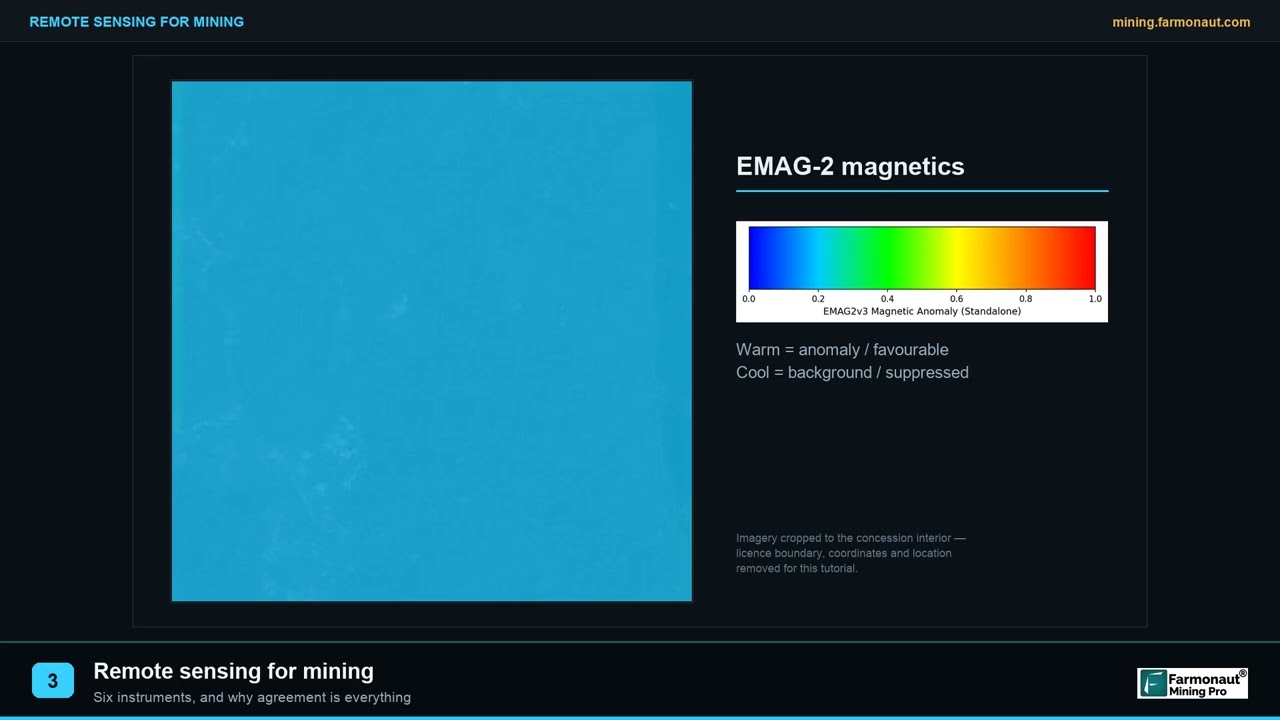
▶ Remote sensing for mining explained in three minutes. · 2:01
Frequently asked questions
What does Ivanhoe Mines produce?
Copper from Kamoa-Kakula, zinc from Kipushi and platinum, palladium, rhodium and gold with nickel and copper from Platreef. It is also exploring for more copper in the Western Forelands.
Where does Ivanhoe Mines operate?
Its three mines are in the DRC (Kamoa-Kakula and Kipushi) and South Africa (Platreef). It holds exploration licences in the DRC, Angola, Zambia and Kazakhstan.
Who owns Kamoa-Kakula?
Ivanhoe Mines and Zijin Mining each hold an indirect 39.6%, Crystal River holds 0.8% and the DRC government holds 20%.
How much copper does Kamoa-Kakula produce?
It produced 388,838 tonnes of copper in concentrate in 2025 and 64,328 tonnes of copper in Q2 2026. Guidance for 2026 is 290,000-310,000 tonnes.
Why did Kamoa-Kakula production fall?
Seismic activity and flooding at the Kakula mine in May 2025 closed part of the workings, and Ivanhoe is now mining lower-grade peripheral areas while it develops new high-grade stopes.
Is Ivanhoe Mines the same company as Ivanhoe Electric?
No. This page covers Ivanhoe Mines Ltd. (TSX: IVN). Check the ticker and the company site before using any figure from a different Ivanhoe-named company.
How big is the Makoko copper discovery?
The September 2026 Western Forelands estimate is 42 million tonnes at 2.66% copper Indicated plus 612 million tonnes at 1.80% Inferred, about 12 million tonnes of contained copper on a 100% basis. Makoko District makes up 34 million tonnes of the Indicated part and nearly all of the Inferred part; the Kiala deposit adds 8 million tonnes Indicated.
Is Platreef producing?
Yes, in ramp-up. First concentrate came on 18 November 2025, but Ivanhoe does not expect commercial production until Q4 2026.
What is Kipushi?
An underground zinc mine in the DRC that restarted in 2024. It made a record 70,177 tonnes of zinc in concentrate in Q2 2026.
Where does the DRC rank in world copper production?
Second, with an estimated 3.2 million tonnes in 2025, behind Chile at 5.3 million tonnes (USGS, 2026).
Not investment advice. Production numbers can be revised, so check Ivanhoe’s latest release before relying on any figure.
This page is for information only. It is not investment advice. Company figures are as reported by Ivanhoe Mines on the dates given and may be revised.
Farmonaut mining
Map your mining site from space
Get a satellite mineral-target report on your own licence boundary; results are exploration targets, not resource estimates.

Mining Pro sample view, synthetic data
Keep reading
Sources
- Ivanhoe Mines, Q2 2026 financial results (29 July 2026): tradingview.com
- Ivanhoe Mines, Q2 2026 production results (8 July 2026): newsfilecorp.com
- Ivanhoe Mines, 2025 production results and 2026 guidance (15 January 2026): newsfilecorp.com
- Ivanhoe Mines, Platreef update (12 January 2026): newsfilecorp.com
- Ivanhoe Mines, Western Forelands resource update (8 September 2026): newsfilecorp.com
- Miningmx, Ivanhoe cuts copper output guidance after seismic disruption (12 June 2025): miningmx.com
- The Northern Miner, Ivanhoe copper output jumps 19% (October 2026): northernminer.com
- Mining Weekly, Ivanhoe’s Congo copper production jumps 19% in third quarter (8 October 2026): miningweekly.com
- USGS, Mineral Commodity Summaries 2026: Copper: pubs.usgs.gov
- USGS, Mineral Commodity Summaries 2026: Zinc: pubs.usgs.gov
- IEA, Global Critical Minerals Outlook 2026, executive summary: iea.org
- EITI, Democratic Republic of the Congo country page: eiti.org
Discussion
Questions, corrections or field experience? Share them below. First-time comments are reviewed before they appear, and your email is never published.
No comments yet. Be the first to add a question or your experience.

 NTS Group (Pty) Ltd
 Mine4Africa
 Lithspo Minerals Limited
 Tintina Mining Group
 Dalgety Minerals Pty Ltd
 Vortex Minerals Pty Ltd
 Faith At Work (Pty) Ltd
 Geotech Mining Solutions plc
 Vulcan International Limited
 Kidepo Associates
 GKY Mining
 Alkimy SARL
 Double A Trading
 GemSprout Metals Limited
 Qader Group
 Ileys General Trading
 SG Gold Mining LLC
 VRV Global Pte Ltd
 Omsri International FZE
 G.I.T.T.
 Jaunita Erss Ltd
 Almosi SARL
 SRK Consulting
 Berks Gold Limited
 Mwerezi Minerals Company Limited











