

Largest Gold & Copper Producers in the World 2026: Industry Trends, Strategic Insights, and the Future of Global Mining
“China is projected to lead gold production in 2026, contributing over 400 metric tons annually to the global supply.”
“Chile remains the top copper producer, expected to yield more than 5.7 million metric tons by 2026.”
Introduction: Global Demand for Precious and Base Metals, 2025-2026
The largest gold producers in the world and the largest copper producers in the world play a defining role in our modern economies and infrastructure. As of 2025 and looking ahead to 2026, demand for gold and copper remains robust, driven by advancing technologies, expanding industrial applications, urbanization, and the imperative to transition toward green energy solutions. These strategic metals underpin everything from financial reserves to electronics, construction infrastructures, and next-gen energy systems.
In this in-depth guide, we analyze the largest gold producers in the world and largest copper producers in the world for 2025–2026, providing critical insights into their annual production, key mines, strategic position, and the economic and technological trends shaping the global mining sector.

The Largest Gold Producers in the World (2025–2026)
The largest producer of gold in the world remains a coveted title among mineral-rich countries, underpinning economic stability and industrial leadership. The international landscape of gold production is shaped by geological endowments, mature mining infrastructures, and ongoing investment.
Top 5: Largest Gold Producers Globally
- China: Maintains the top position with over 370–400 metric tonnes annually as of 2025.
Key Gold-Producing Provinces: Shandong, Henan, Jiangxi.
The sector is fueled by both large-scale industrial mines and artisanal activities. - Australia: Ranks second, with annual output exceeding 320 metric tonnes.
Notable Mines: Super Pit (Kalgoorlie), Newmont Boddington. - Russia: Holds the third position worldwide, producing approximately 310 metric tonnes per year.
Major Regions: Siberian and Far Eastern, Companies: Polyus Gold, Polymetal International. - United States: Primarily driven by Nevada’s Carlin Trend and Alaska, output broadly approaches 200 metric tonnes annually.
- Canada & Peru: Increasing output and technological investment position these as notable gold contributors.

Why Does Gold Production Remain Strategic?
- ✔ Reserve Asset: Gold acts as a hedge for economies facing currency volatility.
- ✔ Industrial Demand: Electronics, medical devices, and precision engineering rely on gold’s conductive properties.
- ✔ Catalysis in Green Technologies: Crucial in fuel cells and advanced materials.
- ✔ Significance in Jewelry: Cultural and luxury demand continues to support production.
- ✔ Strategic Reserve: Backing for national central banks and long-term financial stability.
Key Insight
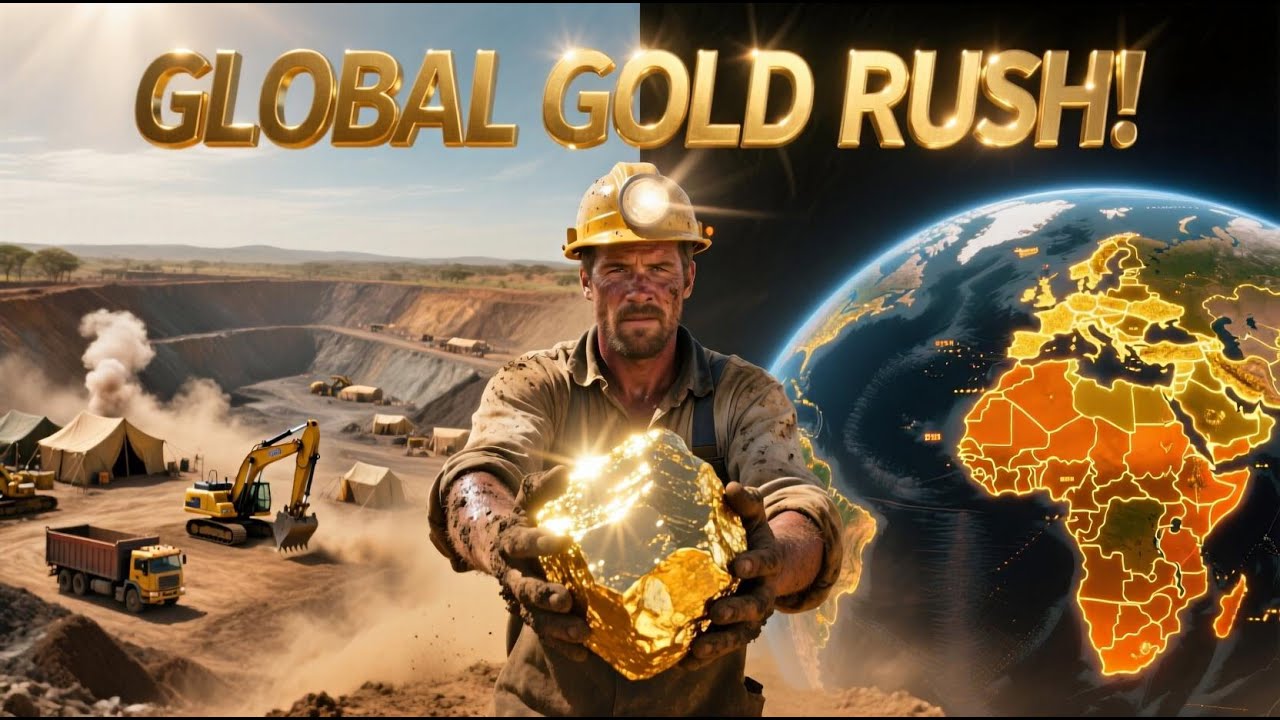
China, Australia, and Russia are projected to remain the largest gold producers in the world through 2026, with the US and Canada steadily increasing output via technological upgrades and resource expansion.

The Largest Copper Producers in the World (2025–2026)
Copper stands at the heart of infrastructure development, energy transition, and expanding consumer electronics. The largest copper producers in the world are poised to impact every major market segment—especially as renewable energy and electric vehicles accelerate metal demand.
Top 5: Largest Copper Producers Worldwide
- Chile: Responsible for ~6 million metric tonnes annually as of 2025–2026.
Key Mining Regions: Atacama Desert, Escondida Mine (the world’s largest copper mine). - Peru: Output near 2.5 million metric tonnes per year.
Major Mines: Cerro Verde, Antamina, Las Bambas. - United States: Primarily from Arizona (Morenci Mine), Utah (Bingham Canyon), annual output approx. 1.2 million metric tonnes.
- Democratic Republic of Congo (DRC): Output exceeding 1.7 million metric tonnes as of 2025, driven by Kolwezi, Kamoa Kakula and Tenke Fungurume operations.
- China & Zambia: Both with major ongoing operations and steady annual contributions.

Data Insight
Chile’s output remains unrivaled in the global copper supply chain, with Escondida setting the pace for technologically advanced and sustainable mining in the Americas.

Comparative Data Table: Largest Gold & Copper Producers in the World (2025–2026)
| Rank | Country/Company | Estimated Gold Production (tons, 2025) | Estimated Copper Production (tons, 2025) | Market Share (%) | Notable Mining Regions/Operations |
|---|---|---|---|---|---|
| 1 | China | 400 | 2,000,000 | Gold: 11% Copper: 8% |
Shandong, Henan, Jiangxi (Gold); Jiangxi, Tibet, Inner Mongolia (Copper) |
| 2 | Australia | 325 | 950,000 | Gold: 9% Copper: 4% |
Kalgoorlie Super Pit, Boddington, Cadia Valley (Gold); Olympic Dam, Mount Isa (Copper) |
| 3 | Russia | 310 | 1,050,000 | Gold: 8.5% Copper: 4.5% |
Siberia & Far East (Gold); Norilsk, Ural, Siberia (Copper) |
| 4 | United States | 200 | 1,200,000 | Gold: 6.5% Copper: 5% |
Nevada (Carlin Trend), Alaska (Gold); Arizona (Morenci), Utah (Bingham Canyon) (Copper) |
| 5 | Peru | 155 | 2,500,000 | Gold: 5% Copper: 11% |
Yanacocha, La Arena (Gold); Cerro Verde, Antamina, Las Bambas (Copper) |
| 6 | Chile | 35 | 5,700,000 | Gold: 1% Copper: 24% |
Atacama, Escondida, Chuquicamata, Collahuasi (Copper) |
| 7 | Canada | 180 | 600,000 | Gold: 5.5% Copper: 2.5% |
Ontario (Red Lake), Quebec, British Columbia (Copper & Gold) |
| 8 | Democratic Republic of Congo | 8 | 1,700,000 | Gold: 0.5% Copper: 7% |
Kolwezi, Kamoa Kakula, Tenke Fungurume (Copper & Gold) |
| 9 | South Africa | 90 | 65,000 | Gold: 3% Copper: 0.2% |
Witwatersrand, Barberton (Gold); Palabora (Copper) |
| 10 | Zambia | 4 | 800,000 | Gold: 0.1% Copper: 3.5% |
Copperbelt (Copper), Northwestern Province (Gold) |
All data reflect best estimates as of 2025 and are included for comparative, educational, and industry trend analysis.
When comparing gold vs. copper investments in 2026, track both regional production surges and technological trends—as green energy, electronics, and central banks heavily influence demand.
Overlooking artisanal and small-scale mining outputs can lead to underestimated national production figures—especially in gold-rich countries.
Regulatory reforms are increasing transparency, but sustainability metrics now more directly impact investment flows and mine valuation in 2025–2026.
Major copper and gold mines are leveraging satellite and AI-driven prospectivity mapping for next-generation mineral targeting. See how Farmonaut’s mineral detection is accelerating discovery.
Producers in the top five largest gold producers in the world and largest copper producers in the world are expanding downstream integration to insulate against price volatility and supply disruptions.
- ✔ Key benefit: Global gold and copper production underpins financial security, infrastructure, and digital innovation.
- 📊 Data insight: China leads gold, Chile leads copper—each shaping international commodity markets.
- ⚠ Risk or limitation: Heightened environmental and social regulations may constrain output growth if not addressed proactively.
- ⚡ Modernization: Adoption of remote sensing, automation, and ESG reporting is accelerating across top producers.
- 🌍 Regional impact: Developing economies in Africa and South America see rapid gains due to foreign investment and new mining technologies.
📌 Visual List: Most Influential Mining Regions (2026)
- 🔶 Shandong (China)
- 🔷 Atacama (Chile)
- 🟣 Kalgoorlie (Australia)
- 🟩 Nevada (USA)
- 🟠 Kolwezi (DRC)
🛠 Visual List: Top Drivers of Mineral Demand
- 🔋 Battery & Green Energy Transition
- 💻 Expansion of Consumer Electronics
- 🚗 EV Manufacturing Growth
- 🏗️ Infrastructure Investment
- 👩💼 Global Urbanization Trends
Key Mining Trends and Market Drivers: 2025–2026
What’s driving the future for the largest gold and copper producers?
Strategic demand from renewable energy infrastructure, digitalization, and resilient supply chain planning shapes the outlook. Here’s what all stakeholders should track:
- ESG-Driven Transformation: Compliance with environmental and social governance regulations is non-negotiable across producers.
- Green Technology Adoption: Industrial catalysis (e.g., fuel cells using gold), electrification, and renewable buildout feature copper in every component.
- Resource Nationalism: Countries with the largest mineral reserves enact protectionist policies to maximize value from extraction and exports.
- Technological Disruption: Widespread use of satellite-based mineral detection and satellite-driven 3D mineral prospectivity mapping, AI, and automation is reducing discovery times and operational risks.
- Supply-Demand Balances: As production rises, global market pricing hinges on synchronized growth in industrial sectors—especially Asia-Pacific and Latin America.

Farmonaut: Satellite-Based Mineral Intelligence for the Modern Exploration Era
As geospatial technology and artificial intelligence revolutionize the mining industry, solutions like Farmonaut’s satellite-based mineral detection are empowering stakeholders to move beyond traditional, expensive, and slow exploration approaches.
Farmonaut leverages satellite remote sensing, multispectral and hyperspectral data, and advanced AI to rapidly scan vast terrain and identify zones prospective for gold, copper, and other strategic minerals—all without any initial ground disturbance.
- 🌐 Global Reach: Deployed across 80,000+ hectares in 18+ countries for gold, copper, lithium, cobalt, uranium, silver, and more.
- ⏩ Time Savings: Reduces exploration from years to days, cutting costs by up to 85%, and accelerating project viability decisions.
- 📑 Rich Deliverables: Detailed mapping, prospect heatmaps, quantity estimation, 3D subsurface models, and TargetMax™ drilling guidance for actionable results.
- ♻️ ESG Alignment: Early-phase satellite analysis is non-invasive—eliminating ground disturbance, reducing emissions, and enhancing investment confidence.
- 💡 Wide Mineral Spectrum: Detects both precious and base metals, energy minerals, industrial and specialty materials—including rare earths.
For a full overview of how we at Farmonaut rapidly identify and validate mineral targets for resource companies, investors, and exploration teams worldwide, visit our satellite-based mineral detection page.
For in-depth project-scale mineral prospectivity mapping—including interactive 3D subsurface models and optimized drilling recommendations—you can explore our satellite-driven 3D mineral prospectivity mapping solution.
Get a quote for your exploration project or contact us for more information on satellite-powered mineral intelligence.

Technologies Modernizing Gold & Copper Mining: 2025 & Beyond
- Remote Sensing & Satellite Data: Platforms like Farmonaut enable efficient targeting of new deposits with non-invasive exploration.
- Automation and AI: AI-driven ore sorting, predictive maintenance, and process optimization now reduce cost per tonne and increase safety.
- Digital Twin & 3D Mapping: 3D subsurface mineral prospectivity mapping helps in optimal drill planning and risk reduction.
- Water & Emission Controls: Water recycling, dry stacking tailings, and on-site renewables address strict environmental regulations.
- Blockchain & Traceability: Ensuring metal origin compliance for responsible procurement in international supply chains.
Industry Impact: Strategic Significance of Gold & Copper Production
The largest gold and copper producers in the world do more than supply metals—they underpin global economic resilience, technological innovation, and the advance toward a sustainable future.
Here’s why these nations and companies stand apart:
- 🔑 Strategic Asset: Gold supports financial reserves and economic insulation during market volatility and geopolitical instability.
- 🔌 Infrastructure Enabler: Copper is the backbone of electrification, energy storage, telecommunications, and electric vehicles.
- 🌍 Regional Development: Resource extraction stimulates infrastructure, job creation, and cross-sector growth, especially in Africa, Asia, South America.
- 💹 Market Shaping: The top producers control global supply, influence commodity pricing, and serve as key players in strategic trade agreements.
- 🛡️ Security & Autonomy: Securing critical minerals is increasingly viewed as a matter of national economic and technological security.
The world’s leadership in gold and copper production remains dynamic. Economic, technological, and environmental shifts will define which countries and firms thrive through 2026 and beyond.
FAQ: Gold & Copper Production and Global Mining in 2026
Who are the largest gold producers in the world in 2026?
China, Australia, and Russia are projected to remain the largest gold producers in the world, responsible for the majority of new global gold output, followed by the US, Canada, and Peru.
Which country is the largest copper producer in the world in 2026?
Chile leads by a wide margin, with output expected to exceed 5.7 million metric tonnes in 2026, followed by Peru, the United States, the DRC, and China.
Why is China’s gold production so significant?
China’s production is driven by diverse mining operations across multiple provinces (Shandong, Henan, Jiangxi), ongoing investments, and the integration of both industrial and artisanal activities.
What new technologies are transforming mineral exploration?
Satellite remote sensing, AI-driven analysis, 3D mineral mapping, and data-driven prospectivity assessments are rapidly modernizing how companies discover and validate new deposits.
How can companies access advanced mineral exploration intelligence?
Solutions like Farmonaut’s satellite-based mineral detection and satellite-driven 3D mineral prospectivity mapping provide rapid, objective targeting and de-risking of exploration at regional to deposit scales.
Conclusion & Future Outlook: Navigating Global Mining’s New Era
The race among the largest gold producers in the world and largest copper producers in the world remains both strategic and dynamic. For stakeholders—from mining operators, policymakers, and investors to researchers and supply chain managers—staying ahead demands deep understanding of the production landscape, technological advancements, and regulatory frameworks.
China and Australia stand at the forefront of gold production, while Chile, Peru, and the United States dominate copper output. This leadership is continually reshaped by innovation, sustainability pressures, and evolving global demand.
As we transition to 2026 and beyond, data-driven approaches—especially those employing satellite intelligence—provide a decisive edge for early discovery, cost containment, and responsible mineral development.
- ✔ For modern mineral intelligence, review our satellite mineral detection solution.
- ✔ If you need deep, actionable prospectivity analysis with 3D models, explore our 3D prospectivity mapping.
- ✔ Ready to accelerate exploration? Get a quote here.
- ✔ Need a discussion on tech capabilities or project fit? Contact us for a free consultation.
Discussion
Questions, corrections or field experience? Share them below. First-time comments are reviewed before they appear, and your email is never published.
No comments yet. Be the first to add a question or your experience.

 G.I.T.T.
 Jaunita Erss Ltd
 Almosi SARL
 SRK Consulting
 Berks Gold Limited
 Mwerezi Minerals Company Limited
 Mining SARL
 SenGold Invest SAS
 Sean Mining Limited
 NTS Group (Pty) Ltd
 Mine4Africa
 Lithspo Minerals Limited
 Tintina Mining Group
 Dalgety Minerals Pty Ltd
 Vortex Minerals Pty Ltd
 Licence holder · Nigeria · Gold + lithium










