

- Introduction: The Need for Agriculture Succession Planning in 2026
- The Importance and Benefits of Succession Planning in Modern Agriculture
- Critical Challenges and Strategic Solutions in Farm Succession
- Role of the Agriculture Planner in Future Farm Succession
- Top Agriculture Succession Planning Strategies for 2026
- Comparative Table: Succession Planning Strategies
- Digital Tools & Integration: Making Succession Strategies Sustainable
- Training the Next Generation for Future-Ready Farms
- Future Trends Impacting Agriculture Succession Planning
- Farmonaut: Satellite Technology for Sustainable Succession Planning
- FAQs: Agriculture Succession Planning 2026
- Conclusion
“Agriculture succession plans can boost farm survival rates by up to 80% across generations facing climate challenges.”
Agriculture Succession Planning: Top Planner Strategies 2026
Agriculture succession planning stands as the backbone of sustainable farm management in our rapidly changing world. With worldwide climate challenges and environmental pressures, the future viability of farming enterprises now depends on strategic planning that ensures generational transitions are smooth, sustainable, and profitable. As the population continues to grow, agriculture becomes even more critical—not just as an economic driver but as a means of food security, environmental stewardship, and rural community resilience.
The Importance of Succession Planning in Modern Agriculture (2026 and Beyond)
Succession in agriculture refers to the process by which leadership, ownership, and management of farms are transferred from one generation to the next. This process is essential for continuity and growth in agricultural enterprises, protecting both tradition and innovation. The importance of a robust, well-thought-out succession plan in modern farming cannot be overstated for many reasons:
- ✔️ Ensuring farm longevity across generations—avoiding the risk of fragmentation and loss of land.
- 🌍 Sustainable management—integrating adaptation to climate change and evolving market demands.
- 📊 Optimizing productivity—bringing in the latest technological innovations for efficient resource use and higher yields.
- 🛡️ Reducing conflicts—minimizing disputes over asset distribution, ownership, and operational control.
- 💡 Legal and financial efficiency—ensuring tax-savvy asset transfers and responsible debt management.
A proactive succession plan prevents the risk of mismanagement and ensures sustainability, helping farms remain viable despite global and environmental challenges.

Summary: Agricultural Succession Planning in 2025 and 2026
As farms face an uncertain future, particularly concerning climate volatility and market unpredictability, succession planning is the decisive factor between continued success and fragmentation. The strategic, legal, and financial needs of agricultural enterprises in 2026 highlight that a robust, sustainable plan should be at the heart of every family farm.
“Over 65% of sustainable farms use formal succession strategies to ensure resilience against environmental impacts.”
Critical Challenges in Succession: Why Sustainable Planning Is Vital
Climatic extremes, evolving market trends, and increasing operational complexities place significant challenges on agriculture succession planning today. Let’s examine the primary obstacles farm families face as they embark on this crucial journey:
- 🌤️ Climate change risks: More frequent droughts, floods, and shifting weather patterns demand adaptation strategies in all succession plans.
- 🔄 Generational gaps in technology: Younger successors must be equipped with skills in digital farming tools, IoT, and AI-driven analysis.
- 💰 Financial constraints: Rising costs for land, equipment, and innovation require efficient resource allocation throughout the transition.
- 🎓 Lack of training: Future leaders need continual training programs in both management and sustainability practices.
- ⚖️ Legal complexities: Changing ownership involves legal frameworks, regulatory requirements, and tax planning.
Ignoring the legal and environmental aspects of succession planning often leads to disputes, losses, or non-compliance with new global standards.

Critical Role of the Agriculture Planner: Bridging Gaps for Future-Proof Succession
Today’s agriculture planner is a vital facilitator in succession planning. Working between traditional practices and modern agribusiness approaches, the planner ensures each plan is tailored to each farm’s unique challenges and requirements.
What Does an Agriculture Planner Do?
- 🔍 Assessment & Strategic Planning: Evaluating assets, land, equipment, livestock, and aligning operational objectives with the family’s aspirations.
- 🧩 Training & Knowledge Transfer: Developing programs to upskill the next generation in business, management, and sustainable practices.
- 📜 Legal & Financial Planning: Coordinating with experts to create robust agreements, manage tax implications, and clarify ownership rights.
- 🌱 Integrating Climate-Smart Strategies: Advising on best environmental practices and technological innovations for sustainability.
- 🛰️ Implementing Digital Tools: Bringing in AI, IoT sensors, and satellite technologies for precise resource management and effective decision-making.
Work with an experienced agriculture planner—their multi-disciplinary expertise in agronomy, economics, law, and digital integration can bridge generational and technological gaps.

Top Succession Planning Strategies for Sustainable Agriculture in 2026
Selecting the right succession strategy forms the foundation of sustainable management, food security, and rural prosperity. Here’s a concise guide to the leading approaches, with a detailed comparative table below.
1. Family Transfer
The family transfer model remains prevalent among deeply rooted rural communities, ensuring both tradition continuity and personalized leadership transition. This succession planning approach is most successful when integrated with advances in training and technological adaptation.
2. Partnership Model
Here, responsibility is gradually transferred through structured partnerships—sometimes including non-family professionals. Partnership succession plans can reduce management gaps and introduce new expertise into the business.
3. Outsourcing Management
With increasing market complexity, some farms use external managers or agricultural consultancy services. These professionals bring specialized industry knowledge, helping to optimize productivity, drive sustainability, and ensure regulatory compliance.
4. Community Ownership
A growing trend in 2026 is community-driven models—pooling land and resources under local or cooperative control. This succession planning method emphasizes environmental stewardship, resilience against climate shocks, and shared growth.

As land consolidation accelerates and agricultural markets become more volatile, diversified succession strategies can help safeguard both income streams and resource sustainability for investors and rural families alike.
Comparative Table: Succession Planning Strategies for Sustainable Agriculture
Models emphasizing community ownership and diversified partnerships provide the highest overall climate resilience and sustainability impact among farms facing 2026’s growing environmental challenges.

📋 Sustainability Checklist for Succession Planning
- 🌱 Soil Health Preservation: Ensure all transitions preserve and improve soil quality.
- 💧 Water Resource Management: Integrate advanced irrigation and harvesting technology.
- 📈 Digital Monitoring: Use platforms to monitor carbon footprint and guide regenerative practices.
- 🛰️ Precision Ag Practice: Adopt large-scale, satellite-based monitoring for optimal resource usage.
- 🔗 Blockchain Traceability: Enhance supply chain security via traceability tools.
Digital Tools & Integration: Making Succession Strategies Sustainable
In 2026, succession planning is inseparable from the adoption of digital and satellite-driven tools. These solutions provide operational visibility, transparency, and efficiency that legacy methods can’t match. Examples include:
- 🌐 Satellite Monitoring: Enables remote oversight, real-time crop health analysis, and actionable environmental insights.
- 📱 App-based Farm Management: Document, track, and optimize all assets, livestock, and equipment with intuitive platforms.
- 🧑💻 API Integration: Seamlessly integrate farm data with accounting, loan management, and regulatory systems.
- 🤖 AI-Based Advisory: Predict yield, anticipate risks, and receive scenario-specific recommendations for every season.



When using Farmonaut’s satellite monitoring and AI advisories, even large-scale farms can proactively manage transition and resource shifts, keeping sustainability at the forefront.

Training, Education & Empowering the Next Generation
For succession planning to succeed, future leaders in agriculture require robust training in environmental stewardship, financial literacy, digital competency, and modern management techniques.
- 👩🌾 Peer-to-Peer Learning: Encourage younger farmers to participate in local panels, hackathons, and satellite-based advisory programs to foster cross-generational knowledge exchange.
- 📚 Formal Education: Agricultural institutes and training programs should integrate climate science, finance, and digital tools into their curricula.
- 🛠️ On-Farm Skill Upgradation: Use real-time AI dashboards, blockchain traceability platforms, and equipment optimization tools like those available through the Fleet Management system.
- 🛰️ Mentorship via Apps: Platforms like Farmonaut offer satellite-powered learning modules and decision-support for operational improvements.
- 💡 Digital Certification: Formalize skill development through blockchain-verified completion certificates, boosting credibility for farm successors in the global market.
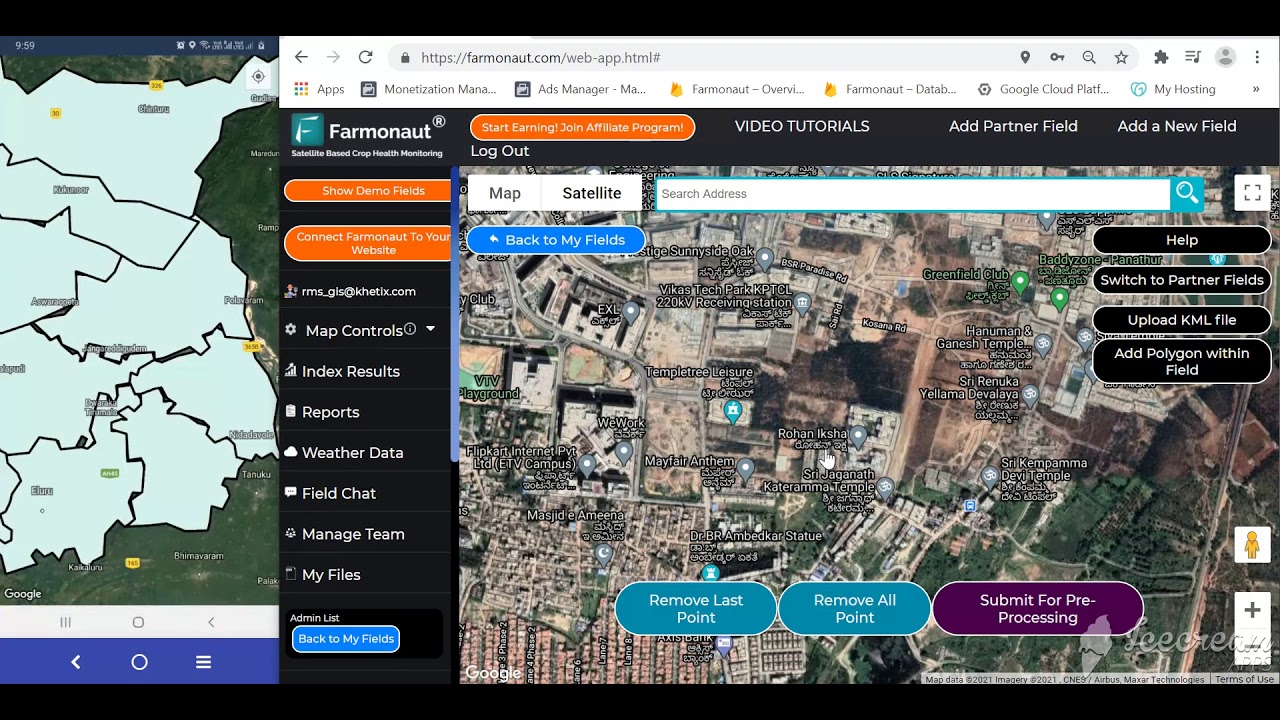
🔧 Top Technology Tools Shaping Agriculture Succession Planning
- 🛰️ Satellite Imagery: Real-time insights for soil, crop, and equipment monitoring.
- 🤖 AI & Automated Analytics: Predict disease outbreaks and optimize harvest schedules.
- 🔗 Blockchain Platforms: Secure, track, and verify agricultural supply chains.
- 🚜 IoT Sensors: Monitor livestock, optimize water/fertilizer usage, and detect environmental changes.
- 📲 Mobile Farm Management Apps: Manage assets and strategic tasks from anywhere.
Blending traditional training with digital upskilling creates a resilient workforce, ready to face future climate and market shocks in agriculture.

Future Trends in Agriculture Succession Planning (Up to 2030)
From 2026 onwards, succession planning will be impacted by rapidly-evolving trends in technology, demographics, environment, and policy landscapes:
- 🔬 Precision Agriculture: Adoption of AI, drones, and big data analytics will become the norm, making planning more data-driven.
- 👥 Demographic Shifts: With aging rural populations, there will be a critical need for youth engagement and leadership training.
- 🌳 Regenerative Practices: Focus on carbon footprinting, biodiversity, and soil-health-oriented transition plans.
- 🖥️ API and SaaS Platforms: Web & app-based tools will centralize resource management and succession documentation.
- 💼 Financial Innovation: Satellite-verified loan and insurance solutions will strengthen farm economics and ease ownership transition.
- 🌐 Global Certification: Farms will increasingly seek sustainability certifications for international market access, giving a competitive edge to those with documented, climate-resilient plans.
By 2027, farms adopting blockchain traceability and real-time monitoring are projected to see up to 20% higher succession success rates and improved climate resilience scores.
Farmonaut: Satellite Technology for Sustainable Farm Succession and Resource Management
At Farmonaut, we believe that affordable, scalable technology is the key to future-ready agriculture succession planning. Our satellite-powered platform provides reliable data for resource management, climate adaptation, operational continuity, and digital transformation—empowering farmers, businesses, and governments worldwide.
- 🛰️ Satellite-Based Farm Monitoring: Get continuous NDVI crop health, soil state, and yield insights, crucial for generational continuity. See our Large-Scale Farm Management App.
- 🤖 AI & Blockchain Integrated Advisory: Receive customized training, resource allocation guidance, and traceability via Farmonaut Traceability.
- 🌱 Environmental, Carbon & Regulatory Tools: Track, reduce, and audit carbon emissions with Farmonaut Carbon Footprinting solutions.
- 🚚 Fleet and Resource Management Tools: Optimize farm logistics and machinery use to save cost, enhance safety, and improve succession efficiency: Fleet management benefits.
- 💸 Crop Loans & Insurance Verification: Secure financing or insurance faster and more accurately, supporting generational transitions using satellite-verified claims.
With Farmonaut’s API and modular platform, both smallholders and large enterprises can tailor sustainable succession plans with a future-proof technology stack (API Developer Docs).
Integrate Farmonaut’s environmental impact tracking to strengthen sustainability documentation—a crucial element for efficient succession planning in 2026 and beyond.
- ✔️ Asset Mapping: Digitally record, monitor, and manage all farm assets for ease of succession transfer.
- ✔️ Dispute Mitigation: Clearly define ownership and managerial responsibilities to prevent family discord during transitions.
- ✔️ Operational Continuity: Use real-time data to guide seasonal decisions and ensure continuity during uncertain climate events.
- ✔️ Compliance & Certification: Maintain regulatory compliance and earn sustainability credentials for global market access.
- ✔️ Remote Management: Oversee multi-region farms and resources through app-based and satellite-linked platforms.
Neglecting succession documentation or relying solely on oral agreements can expose farms to risk, fragmentation, or legal complications.
Frequently Asked Questions: Agriculture Succession Planning 2026
- What is agriculture succession planning, and why is it critical in 2026?
- Succession planning in agriculture refers to the structured process of transferring farm ownership, management, and operation from one generation to the next. In 2026, it’s vital due to increasing climate risks, market volatility, and the need for sustainable adaptation in agricultural enterprises.
- Who should be involved in succession planning?
- Typical stakeholders include family members, successors, agricultural planners, legal and financial advisors, and sometimes, external consultants or community representatives. Early, inclusive discussions help ensure a successful plan.
- What digital tools enhance succession planning effectiveness?
- Satellite monitoring, AI-powered advisory systems, blockchain traceability, and mobile app management tools (like those offered by Farmonaut) make plans precise, transparent, and easy to implement and track.
- How does succession planning support climate resilience?
- By embedding climate-smart practices, environmental monitoring, and regenerative farming into each plan, transitions are prepared for future weather extremes and resource scarcities.
- What’s the estimated timeline for implementing successful succession plans?
- Depending on the strategy, it ranges from 1 to 8 years. Gradual, well-documented approaches—especially those combining training, legal clarity, and digital oversight—are most effective.
- How can I start using Farmonaut for succession planning?
- Download the app for your preferred platform, or access via web portal. Use Farmonaut API for custom integration and explore the carbon footprinting and traceability solutions for advanced monitoring.
Conclusion: Future-Proofing Farms Through Strategic Succession
In the face of mounting climate challenges, ownership shifts, and market disruptions, agriculture succession planning in 2026 is not just a family tradition—it is a strategic necessity for sustainable farm management. The best plans blend traditional values, digital innovation, and environmental stewardship, ensuring that farms remain operational, profitable, and resilient across generations.
By leveraging the expertise of agriculture planners and incorporating the latest digital tools, rural communities and enterprises can guarantee the continuity and growth of their deeply rooted agricultural heritage—while preparing for a sustainable global future.

 Cazlv
Cazlv HIPSAC
 ZOL Zimbabwe
 Juligerm
 AdBio
AdBio MISE Maroc
 Drift-Sense
 NWNS
NWNS Red August Group
 Farm Inc
 WeMe Global
 Agrotoken
 Blue BearX
 Insignito
 Croptimum
 DnCubed
 Field Capacity
 Indosistim Teknologi
