

Best Rare Earth Mineral Companies & Largest in 2026: Leading the Future of Advanced Technologies & Global Supply
Meta Description: Discover the best rare earth companies & the largest rare earth mineral companies in 2026, shaping global supply, technology, and sustainable solutions for agriculture, defence, and infrastructure.
In 2026, the best rare earth companies and the largest rare earth mineral companies are dramatically transforming the landscape of technology, agriculture, defence, and infrastructure. These companies are at the forefront of supplying indispensable materials—rare earth elements (REEs)—which power everything from renewable energy solutions and precision farming to smart electronics and national security systems. The global demand for these elements continues to surge, fueled by rapid growth in advanced technologies and an intensified push towards sustainability. Understanding who the key players are, and how their strategies are shaping the future, has never been more strategically crucial.
The Strategic Importance of Rare Earth Minerals
Rare earth elements—comprising 17 unique minerals like neodymium, dysprosium, praseodymium, and cerium—have become indispensable to our modern, technological world. These elements, though relatively abundant in the earth’s crust, are seldom found in concentrated deposits, making their extraction and processing complex. This very challenge is what underpins their strategic importance for global supply chains across vital industries.
- Agriculture: Rare earths are pivotal in advanced farming machinery and precision sensor technologies. Neodymium and praseodymium are key components of high-strength magnets that power electric motors in smart tractors and drones—revolutionizing how we manage crop yields and soil health.
- Defence: REEs are vital for defense technology, used in communication systems, missile guidance devices, and energy-efficient lighting, making their supply of critical strategic importance.
- Infrastructure: Modern infrastructure depends on rare earths for electronic devices, lighting systems, and renewable energy applications, particularly for components in wind turbines and advanced electronics.
Despite their “rare” name, REEs are widely distributed but rarely found in dense concentrations. As a result, extraction methods must be both efficient and environmentally sustainable to meet rising global demand and align with future policy goals.

Industry Trends Shaping Rare Earth Mineral Companies in 2025-2026
Several critical trends define the best rare earth companies and largest rare earth mineral companies through 2025 and beyond:
- Geopolitical Diversification: China has traditionally dominated the rare earth industry, mining about 68% of the world’s rare earths in 2023 (255,000 of 376,000 tonnes, per the USGS). By 2026, however, a shift towards diversification is evident, with major producers in Australia, the United States, and Africa expanding mining and processing capabilities.
- Technological Advancement: The push for precision agriculture, advanced electronics, and defence systems is spurring investment in extraction, refining, and recycling technologies, with a strong emphasis on sustainable practices.
- Supply Chain Resilience: Supply chain disruption risks are driving government and corporate efforts to develop domestic sources, strategic reserves, and new global partnerships across continents.
- Environmental and Regulatory Compliance: Stricter regulations, especially in the European Union, the US, and Australia, push companies to innovate in green mining and circular economy efforts.
- Smart Infrastructure & Renewable Energy Expansion: Booming markets for EVs, wind turbines, and solar power require vast new supplies of rare earth elements like neodymium, praseodymium, and dysprosium.

Best Rare Earth Companies & Largest Rare Earth Mineral Companies in 2026
Let’s explore the most influential rare earth mineral companies—those with the largest output, most advanced technology, and strongest sustainability commitments as of 2025-2026. Their strategies are driving the transformation of global industry and supply chains.
-
Lynas Corporation (Australia): Leading Non-Chinese Supplier
- Lynas remains one of the largest rare earth companies outside China. Its Mt Weld mine (Western Australia) ranks among the richest deposits globally.
- Focuses on sustainable mining and processing practices, producing high-purity oxides essential for agricultural tech and defence applications.
- Processes concentrate in Kalgoorlie and separates oxides in Malaysia; its planned Texas plant faced significant uncertainty in 2025 (CNBC).
-
China Northern Rare Earth Group (China): Dominating Market Share
- China’s largest rare earth group by production quota, based on the Bayan Obo deposit in Inner Mongolia.
- Advanced environmentally-friendly mining and refining methods, driving progress in mass production.
-
MP Materials Corp (USA): Revitalizing America’s Rare Earth Industry
- Operates the renowned Mountain Pass mine in California.
- Mines bastnaesite, a light rare earth ore rich in neodymium and praseodymium (USGS), and separates NdPr oxide on site.
- Key role in strengthening US domestic supply chain security, collaborating with government agencies.
-
Rainbow Rare Earths (Africa): Rising African Influencer
- Owns the Gakara project in Burundi, on care and maintenance since 2021, and is developing the Phalaborwa gypsum re-treatment project in South Africa (Rainbow Rare Earths).
- Supports regional development in agriculture and infrastructure, while contributing to global supply diversification.
- Increasingly important as new discoveries expand Africa’s role in the rare earth industry.
-
Arafura Rare Earths Ltd (Australia): Focused on Value-Added Processing
- Develops the Nolans Project, aiming to supply advanced materials for magnets and electronics.
- Invests in integrated mining and refining—from extraction to value-added products in Australia.
- Pushes for environmentally responsible practices using renewable energy and circular economy models.
-
Iluka Resources (Australia): Investing in Next-Gen Extraction
- Expanding into rare earths with a focus on sustainable mining and processing at the Eneabba refinery.
- Harnesses by-products from mineral sands for a more circular production cycle.
- Developing alternative methods for rare earth extraction with lower environmental impact.
-
Shenghe Resources (China): Technological Innovation Leader
- Specializes in advanced refining methods and working with REE resources both inside China and abroad
-
Energy Fuels Inc. (USA): Rare Earths from Uranium Byproducts
- Processes REEs alongside uranium and vanadium, driving diversification in North America’s supply chain.
- Developing innovative ways to recycle and recover rare earths from mining waste.
-
Australian Strategic Materials (Australia): The Dubbo Project
- Owns the Dubbo Project in New South Wales, demerged from Alkane Resources in 2020 (Australian Mining); the deposit holds zirconium, niobium, hafnium and rare earths.
- The project has not yet been financed.
-
Rare Element Resources Ltd (USA): Wyoming’s Bear Lodge Project
- Focuses on heavy rare earths—important for advanced electronics and renewable energy.


Which rare earth companies are largest by output
Company rankings follow the country figures. The US Geological Survey puts world rare earth mine output at 390,000 tonnes of rare earth oxide (REO) in 2024, of which China mined 270,000 tonnes, about 69% (USGS Mineral Commodity Summaries 2025). China’s quota is held by a few state-backed groups, led by China Northern Rare Earth.
Outside China, the two largest listed producers report their own volumes:
- MP Materials (USA) produced a record 45,455 tonnes of REO in concentrate at Mountain Pass, California, in 2024, plus 1,294 tonnes of separated NdPr oxide (MP Materials 2024 results).
- Lynas Rare Earths (Australia) sold 10,970 tonnes of REO, including 6,555 tonnes of NdPr, in the year to June 2025 (Lynas FY25 Appendix 4E). Lynas sells separated oxides, so its tonnes are not directly comparable with MP’s concentrate tonnes.
The next wave of non-Chinese supply is still being built:
- Arafura Rare Earths took a final investment decision on its Nolans project in the Northern Territory in May 2026, designed for 4,440 tonnes a year of NdPr oxide (ABC News).
- Iluka Resources is building the Eneabba refinery in Western Australia (Iluka), with commissioning targeted for 2027.
Myanmar, Australia, Nigeria and Thailand were the other large mining countries in 2024, according to the same USGS table.
Top Rare Earth Companies Comparison Table (2025-2026 Estimates)
Table alt: Top rare earth companies comparison table 2025 2026 best rare earth mineral companies manufacturers suppliers output sustainability market.
Technology, Sustainability, and Innovation in Rare Earth Extraction
As the need for energy-efficient and sustainable solutions grows, these leading companies are investing in:
- Green Mining Technology: Zero-discharge facilities, water closed-loop systems, and renewable-powered extraction are being adopted by some producers.
- Circular Economy Efforts: Recycling rare earth elements from electronic waste and byproducts is increasingly practiced, reducing dependency on complex, environmentally challenging mining.
- Blockchain Traceability and AI Advisory: Advanced digital systems ensure traceability of minerals through the supply chain, preventing fraud and enhancing supply security.
Learn more about rare earth traceability benefits with blockchain in resource industries: Blockchain-based Traceability Solutions - Satellite-Driven Insights: Remote monitoring, automated resource assessment, and AI-driven advisory systems accelerate efficiency and safety.




API Developer Docs for complete integration guides.
The Role of Satellite and Data Tech in Rare Earth Industry: Farmonaut’s Perspective
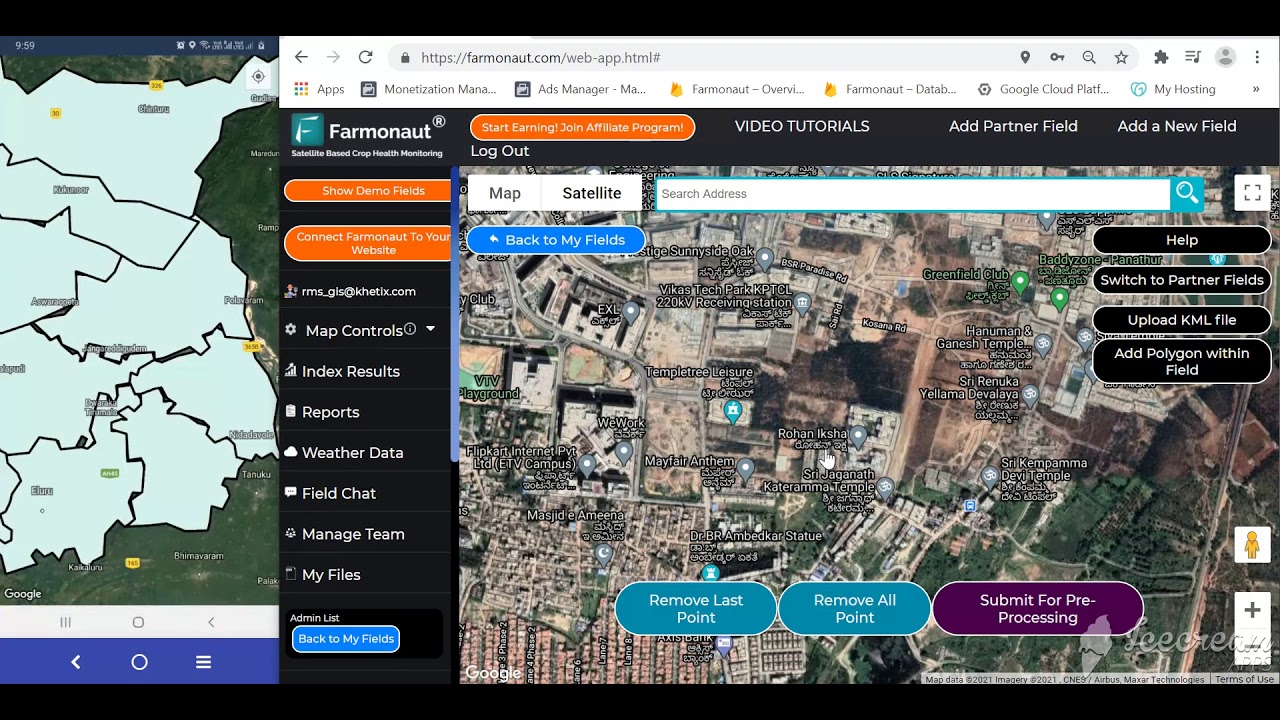
As satellite technology becomes a strategic necessity for resource-driven industries, at Farmonaut we offer satellite-based monitoring, AI-powered resource management, and blockchain traceability for agriculture, mining, infrastructure development, and defence applications. Our integrated apps and APIs make it easier than ever for companies and governments to access real-time data on mining activities, environmental impact, and operational efficiency.
- Satellite-Based Asset Insights: Multispectral imagery for mineralogy mapping, vegetation monitoring near rare earth mines, and tracking of land use change.
- Jeevn AI Advisory System: Delivers real-time mining and environmental intelligence using AI-powered analytics—optimizing extraction while minimizing environmental footprint.
- Blockchain Traceability: Ensures transparent supply chains from rare earth extraction to end users—critical for ethical sourcing and compliance.
- Environmental Impact Monitoring: Carbon footprint and resource consumption tracking for agriculture, mining, and infrastructure.
See how carbon footprinting helps the rare earth sector meet new sustainability standards:
Farmonaut Carbon Footprinting Product Page - Fleet and Resource Management: Enables businesses to track machinery and equipment efficiency, crucial for both mining and large-scale agricultural operations.
Explore advanced fleet management for mining and agriculture: Farmonaut Fleet Management Page
We are committed to making satellite insights affordable and accessible, driving industry transformation across all scales—from individual users to government monitoring.
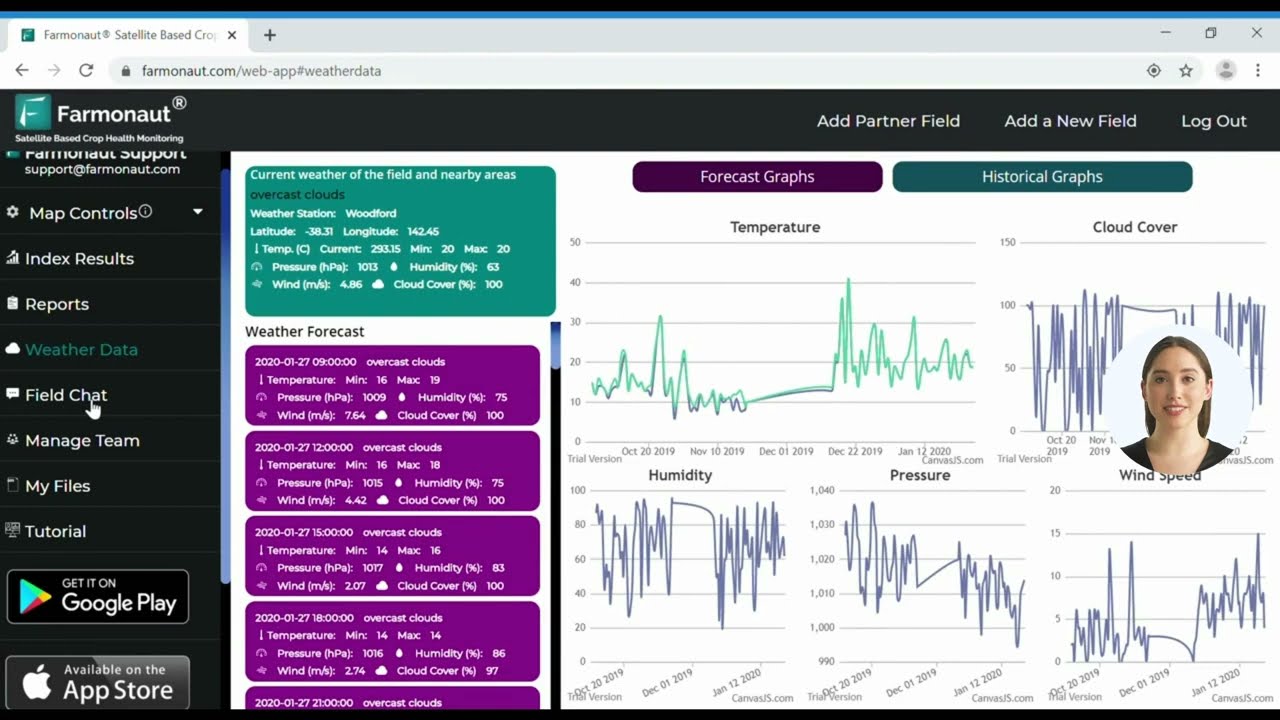

For large-scale agricultural organizations and mining enterprises, Farmonaut’s dedicated Large Scale Farm Management solution (see product page) provides high-efficiency field and resource allocation across regions.
Innovation and Future Outlook for Rare Earth Mineral Companies
Looking toward 2026 and beyond, key innovations include:
- Recycling & Urban Mining: Companies are developing scalable technologies for reclaiming neodymium, praseodymium, dysprosium, and others from e-waste and industrial byproducts—reducing reliance on virgin extraction.
- Low-impact Extraction Methods: Advancements such as bioleaching and precision chemical separation are lowering environmental impact and enabling deeper mining of previously inaccessible deposits.
- Decentralized Supply Chains: More countries and companies are investing in their own mineral processing to lower dependence on multi-national bottlenecks—expanding global rare earth supply chains.
- Blockchain and AI: Digital ledger and AI technologies enable complete lifecycle traceability, ensuring authenticity, security, and trust in rare earth supply chains worldwide.
- ESG Investment Surge: Investors increasingly prioritize environmentally and socially responsible rare earth companies with measurable progress toward sustainability and community engagement.
As electric vehicles, smart grids, renewable energy, and digital infrastructure expand, these advancements position the largest rare earth mineral companies to be the foundation of a modern, resilient, and sustainable global economy.
For financial institutions, Farmonaut’s Crop Loan & Insurance Verification platform leverages satellite data to streamline loan approvals and reduce fraud in agricultural and mining sectors.
FAQs about Rare Earth Companies
What are the best rare earth companies shaping 2025 and 2026?
The largest producers are China Northern Rare Earth Group (China), MP Materials (USA) and Lynas Rare Earths (Australia). Others include Arafura Rare Earths, Iluka Resources, Shenghe Resources, and more. These companies are recognized for their large-scale production, advanced technology, sustainability practices, and supply chain influence.
Why are rare earth elements critical for global industries?
Rare earth elements are vital components in electronics, renewable energy, defence systems, precision agriculture machinery, and infrastructure. Their magnetic, optical, and catalytic properties make them essential in modern technologies and supply chain resilience.
How are companies improving sustainability in rare earth mining?
Through green mining, zero-discharge water recycling, renewable energy integration, e-waste recycling, and blockchain traceability. These efforts help reduce environmental impact and support the circular economy.
How does satellite technology (like Farmonaut) support rare earth mining?
Satellite platforms, such as those offered by us at Farmonaut, provide real-time multispectral monitoring of mining sites, AI-based advisory for resource management, fleet tracking, and blockchain-enabled supply chain traceability. These tools enable greater operational efficiency, environmental compliance, and strategic planning.
Which rare earth element is most important for electric vehicles and wind turbines?
Neodymium and praseodymium are most critical as primary ingredients in high-strength permanent magnets, which are used in electric motors and generators for EVs and wind turbines.
What regions will play a bigger role in the rare earth industry by 2026?
While China will remain dominant, Australia, the United States and Nigeria are among countries adding output and investing in advanced processing technologies to diversify global supply chains.
How does the rare earth industry impact agriculture?
Rare earths are essential in precision farming equipment, autonomous tractors, sensor systems, and machinery—enabling smarter input usage, improved yields, and sustainable farming practices worldwide.
Conclusion: The Future of Global Supply Chains in Rare Earth Elements
The rare earth mineral industry stands as a foundation for modern technology, agriculture, defence systems, and infrastructure development in 2026 and beyond. The strategic efforts of companies such as Lynas Corporation, China Northern Rare Earth Group, MP Materials, and Rainbow Rare Earths underscored by the powerful integration of AI, satellite-based insights, and blockchain traceability will ensure a stable, sustainable, and diverse supply for global industries.
By embracing innovation and sustainability, the best rare earth companies are driving progress and making a resilient future possible for agriculture, electronics, renewable energy, and national security. The continued expansion of intelligent supply chains, environmental responsibility, and digital transformation will shape the next era of global rare earth supply leadership.
To learn more about emerging trends and access satellite-powered solutions for your organization, try Farmonaut’s suite of monitoring and advisory tools. Empower your mining, agriculture, or infrastructure projects with affordable, data-driven technology today.

 Lithspo Minerals Limited
 Tintina Mining Group
 Dalgety Minerals Pty Ltd
 Vortex Minerals Pty Ltd
 Faith At Work (Pty) Ltd
 Geotech Mining Solutions plc
 Vulcan International Limited
 Kidepo Associates
 GKY Mining
 Alkimy SARL
 Double A Trading
 GemSprout Metals Limited
 Qader Group
 Ileys General Trading
 SG Gold Mining LLC
 VRV Global Pte Ltd
 Omsri International FZE
 G.I.T.T.
 Jaunita Erss Ltd
 Almosi SARL
 SRK Consulting
 Berks Gold Limited
 Mwerezi Minerals Company Limited
