

Lithium · Nevada projects compared
Nevada Lithium Mines: 5 Projects Compared by Reserve
Only Silver Peak produces lithium in Nevada today. Thacker Pass near Winnemucca holds the largest reserve, 14.3 million tonnes of lithium carbonate equivalent. Compare five projects by reserve, output and status.
Key takeaways
- Silver Peak in Clayton Valley is the only producing lithium mine in the United States; in February 2026 the BLM approved an expansion and authorized the mine to operate on 8,058 acres in total (BLM, 2026).
- Thacker Pass, about 60 miles north-northwest of Winnemucca, has a proven and probable reserve of 14.3 million t LCE at 2,540 ppm lithium; mechanical completion is targeted for late 2027 (Lithium Americas, 2025 and 2026).
- The other three projects hold about 2.4 million t LCE (Tonopah Flats), 2.0 million (Rhyolite Ridge) and 1.76 million (Angel Island), from company reports of 2025-2026.
- Trillion-dollar headlines multiply 20 to 40 million tonnes of lithium at McDermitt by a price; at $18,160 per tonne of LCE (Benchmark, 10 August 2026) that is $1.9 to $3.9 trillion, before any cost or recovery.
- The annual average US lithium carbonate price fell from $63,700 per tonne in 2022 to an estimated $9,000 in 2025 (USGS, 2026), so every feasibility study rests on a price assumption.
In this article
- Nevada lithium mines at a glance: one producer, four projects
- How we chose and ranked these projects
- Brine and clay: the two kinds of lithium ground in Nevada
- Silver Peak in Clayton Valley: the only producing mine
- Thacker Pass: the largest reserve, near Winnemucca
- Tonopah Flats: a large claystone project
- Rhyolite Ridge: lithium and boron together
- Angel Island: the next Clayton Valley project
- Grade against reserve: where the lithium sits
- Is there a trillion dollar lithium deposit in Nevada?
- Other Nevada lithium deposits and exploration projects
- Lithium companies in Nevada: exchanges and tickers
- Lithium price and what it means for Nevada projects
- How to stake lithium claims in Nevada
Nevada lithium mines at a glance: one producer, four projects
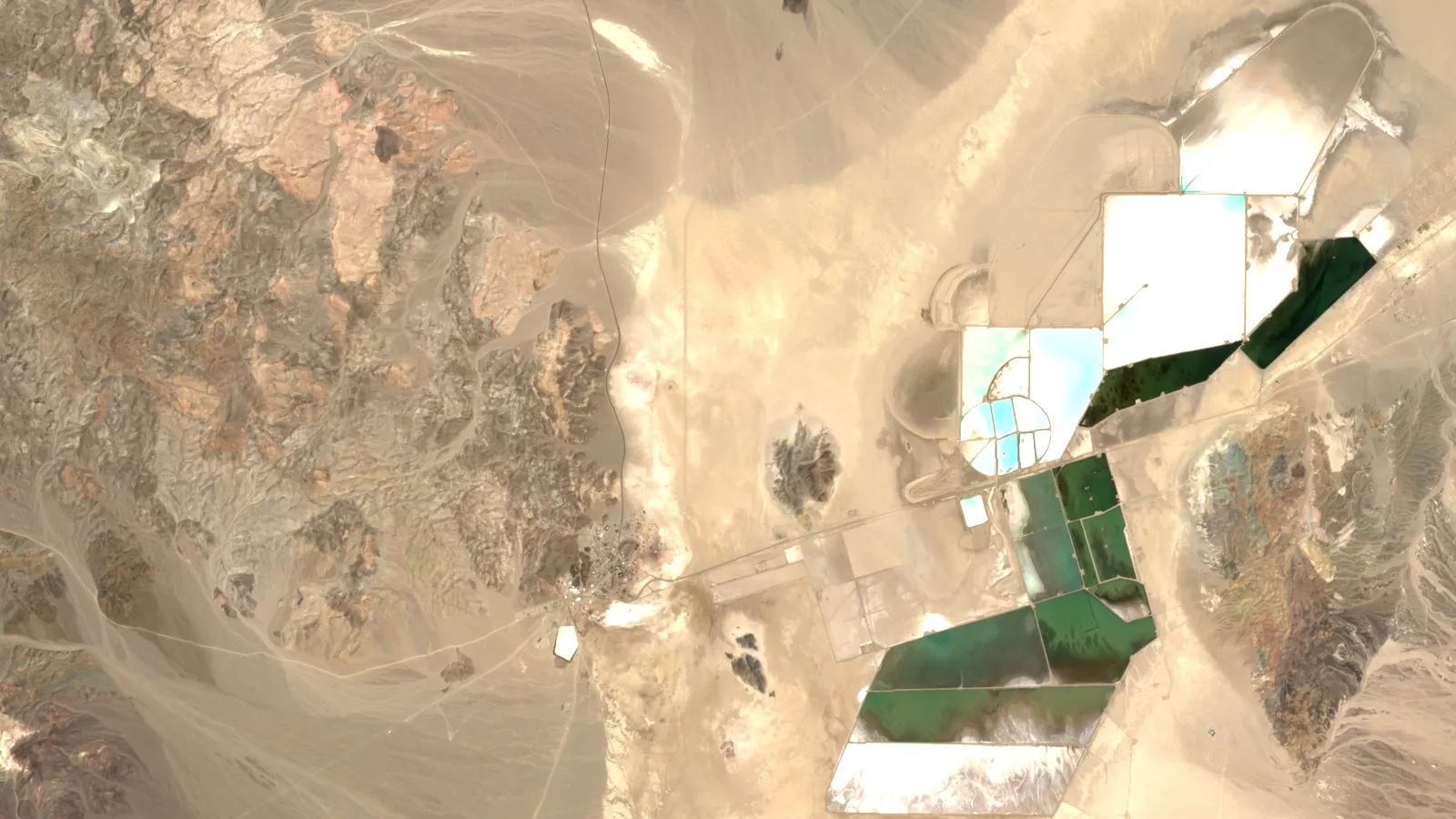
As of 28 October 2026, one lithium mine produces in Nevada: Albemarle’s Silver Peak brine operation in Clayton Valley, which the Bureau of Land Management (BLM) calls the only producing lithium mine in the United States (BLM, 27 February 2026). Four development projects are in line behind it. Thacker Pass, about 60 miles north-northwest of Winnemucca, has a proven and probable reserve of 14.3 million tonnes of lithium carbonate equivalent (LCE) and targets mechanical completion in late 2027. Tonopah Flats, Rhyolite Ridge and Angel Island hold roughly 2.4, 2.0 and 1.8 million tonnes of LCE in reserve.
Chart
Proven and probable reserve by project
Million tonnes of lithium carbonate equivalent (LCE); Tonopah Flats converted from tonnes of lithium metal (x5.323)
LCE is the standard yardstick: the tonnes of lithium carbonate that a given amount of lithium metal would make, found by multiplying lithium metal by 5.323. A reserve is the part of a deposit that a feasibility study shows can be mined at a profit; a resource is a wider estimate with less proof. The table lists the producer first and then the four projects in order of reserve size.
| Project | Where | Type | Operator | Stage (date of source) | Reserve, million t LCE |
|---|---|---|---|---|---|
| Silver Peak | Clayton Valley, Esmeralda County | Brine | Albemarle | Producing since 1965; expansion approved Feb 2026 | Not ranked |
| Thacker Pass | Humboldt County, near Winnemucca | Clay | Lithium Americas and General Motors joint venture | Under construction; mechanical completion targeted late 2027 (Aug 2026) | 14.3 |
| Tonopah Flats | Big Smoky Valley, near Tonopah | Clay | American Battery Technology Company | Pre-feasibility study Oct 2025; permitting | About 2.4 (converted) |
| Rhyolite Ridge | Esmeralda County | Lithium-boron sedimentary rock | ioneer | Permitted, permit under appeal; investment decision date not set (Oct 2026) | 2.04 |
| Angel Island | Clayton Valley, Esmeralda County | Clay with direct extraction | Century Lithium | Feasibility study Jan 2026; mine plan filed 3 Sep 2026 | 1.76 |
Tonopah Flats is converted from the company’s tonnes of lithium metal to LCE by multiplying by 5.323; the other reserve figures are as each company reports them.
How we chose and ranked these projects
We included every Nevada lithium site that is either producing or has a published reserve under a feasibility or pre-feasibility study (NI 43-101, S-K 1300 or JORC, the three main reporting codes). The state’s mining division, the Nevada Division of Minerals, lists Thacker Pass and Rhyolite Ridge as its lithium projects to watch and Tonopah Flats among its exploration projects (NDOM, May 2026). Angel Island qualifies through its January 2026 feasibility study. Earlier-stage projects without a reserve are listed further down.
The ranking metric is the proven and probable reserve in million tonnes of LCE, taken from each company’s own technical report or release. Silver Peak is listed first because it is the only producer, but it is not ranked: the sources used here give no reserve figure for it, and the US Geological Survey withholds US production data to protect company information (USGS Mineral Commodity Summaries 2026). Reserve figures use different dates and price assumptions, so treat the order as a size guide, not a verdict on quality. Nothing here is a recommendation to buy or sell any share.
Brine and clay: the two kinds of lithium ground in Nevada
Nevada’s lithium comes in two forms. Brine is salty groundwater pumped from beneath a dry lake bed (a playa) and dried in ponds or treated to pull the lithium out. Clay is soft volcanic sediment that holds lithium in its mineral structure, mined from an open pit and treated with acid. Our guide to lithium deposits: pegmatite, brine and clay explains how the three main deposit types differ.
Direct lithium extraction (DLE) is a family of methods that pull lithium from brine or leach liquor with a selective material instead of long pond evaporation. Silver Peak is a classic brine site. Angel Island sits in the same valley but is a clay project that plans to use DLE on its leach liquor. For the brine route step by step, see our lithium brine extraction process guide. The USGS notes that Clayton Valley is the only lithium brine-producing playa in the United States (USGS Scientific Investigations Map 3554).
Silver Peak in Clayton Valley: the only producing mine
Best for: seeing what real Nevada lithium production looks like today. Albemarle (NYSE: ALB) pumps lithium-bearing brine from the Clayton Valley basin in Esmeralda County. In February 2026 the BLM approved an expansion that authorizes operations on 8,058 acres, 1,601 of them public land, and said new technology is expected to raise lithium recovery by up to 100% from the same raw material (BLM, 2026). The mine has run since 1965, the BLM states.
- Facts row: brine, Esmeralda County; USGS reports that US lithium production data are withheld; a 2011 resource estimate quoted by the USGS puts the Silver Peak brine deposit at about 0.3 million tonnes of lithium metal (about 1.6 million t LCE), a resource and not a reserve. The Nevada Division of Minerals reports Nevada lithium compounds shipped in 2024 at 7,682,340 pounds (about 3,480 tonnes), worth $47.3 million (NDOM, May 2026).
- Pros: a producing, permitted operation with an approved expansion.
- Cons: no company reserve figure to compare with the projects below; the 2011 resource figure above is not a reserve, so it cannot be ranked against them.
In 2021 Albemarle announced plans to invest $30 million to $50 million to double Silver Peak output by 2025 (Albemarle, 7 January 2021).
Thacker Pass: the largest reserve, near Winnemucca
Best for: readers asking about a lithium mine near Winnemucca. Thacker Pass sits inside the McDermitt Caldera, roughly 60 miles north-northwest of Winnemucca on BLM land, in Humboldt County (Lithium Americas fact sheet, February 2025). It is not producing yet. Construction began in 2023 and the company targets mechanical completion of Phase 1 in late 2027.
- Facts row: proven and probable reserve of 14.3 million t LCE at 2,540 parts per million (ppm) lithium, from 1,056.7 million tonnes of clay; measured and indicated resource of 44.5 million t LCE at 2,230 ppm; inferred resource a further 21.6 million t LCE (Lithium Americas release, 7 January 2025, estimates as of 31 December 2024).
- Output plan: 40,000 tonnes a year of battery-grade carbonate in Phase 1, rising to 160,000 across four phases of 40,000 each in the December 2024 technical report (Lithium Americas release, 7 January 2025), with Phase 1 capital cost estimated at $2.93 billion in the December 2024 report, with a definitive estimate that accounts for tariffs under way in 2026 (Mining Technology).
- Status, 13 August 2026: more than 1,600 workers on site, off-site power work complete with energization targeted for the fourth quarter of 2026, and cumulative Department of Energy loan advances of $1.209 billion (Lithium Americas Q2 2026 results).
- Ownership: General Motors holds 38% of the joint venture and has a 20-year offtake for all Phase 1 volumes (Lithium Americas fact sheet).
- Pros: by far the largest reserve in Nevada, high clay grade, permits in hand, federal loan support.
- Cons: large capital bill, first product not before the plant is finished, and the company has raised extra funds during construction; none of the reserve is in production yet.
Tonopah Flats: a large claystone project
Best for: following a lower-grade, high-tonnage clay project through permitting. American Battery Technology Company (Nasdaq: ABAT) holds 517 unpatented lode claims, about 10,680 acres, roughly seven miles northwest of Tonopah in Big Smoky Valley (Mining Technology).
- Facts row: its October 2025 pre-feasibility study reports a proven and probable reserve of 559.85 million tonnes at 805 ppm lithium, containing 451,000 tonnes of lithium. At 5.323 that is about 2.4 million t LCE. The study assumes a 45-year life and about $2 billion of initial and pre-production capital over the first five years.
- Timeline: pilot operations are expected in 2026-27 and the first commercial phase in 2028, with full capacity in 2030-31 subject to market conditions. The federal permitting council listed the project as a FAST-41 transparency project in June 2025.
- Funding signal: a letter of interest from the US Export-Import Bank for $900 million, announced on 29 April 2025, would support a mine and a 30,000-tonne-a-year hydroxide refinery if it becomes a loan (Nasdaq, ABTC release). A letter of interest is not a commitment.
- Pros: second-largest reserve in the list and a refinery plan at the same site.
- Cons: the lowest grade of the four projects (805 ppm), so it moves far more rock per tonne of lithium, and commercial production is not due before 2028.
Rhyolite Ridge: lithium and boron together
Best for: understanding a by-product model, where boric acid sales lower the cost of the lithium. ioneer (ASX: INR, Nasdaq: IONR) owns 100% of the project in Esmeralda County, about halfway between Reno and Las Vegas. The BLM issued its Record of Decision in October 2024, and the US Department of Energy loan of $996 million, made up of $968 million of principal and $28 million of capitalized interest, closed in January 2025 with conditions before the first draw (ioneer release, 29 October 2025).
- Facts row: ore reserve of 266 million tonnes inside a 549-million-tonne resource, a 77-year plan at 3.4 million tonnes of ore a year. The company’s reserve table gives 2,039 thousand tonnes of LCE at an average 1,443 ppm lithium, a life-of-mine grade of 0.77% LCE.
- Output plan (years 1-25 average): about 24,500 t a year of LCE, about 27,800 t a year of lithium hydroxide from year three, and about 135,500 t a year of boric acid. All-in sustaining cost is estimated at $4,628 per tonne of LCE after boric acid credits for the first 25 years.
- Status: ioneer’s quarterly report of 27 October 2026 says its search for a strategic partner is now expected to finish in the fourth quarter, that the final investment decision has no date yet because it depends on that outcome and a refresh of project economics, and that it began drilling and access-road engineering. A US court upheld the federal permit, opponents appealed on 9 April 2026, ioneer filed its response brief on 25 September 2026 and a decision is anticipated in mid-2027; the company says the appeal is not expected to delay the start of construction (ioneer, quarterly report to 30 September 2026). In June 2026 it signed non-binding letters of intent with Korea’s KIND and Hyundai Engineering (International Mining, 23 June 2026).
- Pros: federal permit issued (under appeal), federal loan closed, boric acid revenue.
- Cons: the company raised about US$50 million of equity in February 2026 and held US$54.55 million of cash at 30 September 2026, but it still needs a partner, project funding and a final investment decision before it can build, and the federal permit is under appeal; capital cost of about $1.68 billion (June 2025 estimate plus $15 million).
Angel Island: the next Clayton Valley project
Best for: a mid-size clay project next door to Silver Peak with a recent feasibility study. Century Lithium (TSXV: LCE) owns 100% of Angel Island, also called the Clayton Valley project, in Esmeralda County. The updated feasibility study, effective 3 January 2026, shows an after-tax net present value of $4.01 billion at an 8% discount rate and a 27.4% internal rate of return, using a lithium carbonate price of $24,000 per tonne (MINING.COM, 23 February 2026).
Chart
Planned annual output of lithium chemicals
Tonnes a year as each company states it: carbonate for Thacker Pass Phase 1 and Angel Island, LCE for Rhyolite Ridge, hydroxide for the full Tonopah Flats refinery plan
- Facts row: proven and probable reserve of 287.65 million tonnes at 1,149 ppm lithium, containing 1.759 million t LCE; about 26,500 t a year of carbonate on average over a 40-year schedule; initial capital about $997 million.
- Process: hydrochloric acid leaching, direct lithium extraction and chlor-alkali processing to make carbonate on site, tested over four years in a pilot plant in Nevada (Century Lithium release, 9 March 2026).
- Status: the company filed its Mine Plan of Operations and Nevada reclamation permit application with the BLM’s Tonopah Field Office on 3 September 2026 (Proactive Investors, 9 September 2026). A Record of Decision is the next permit step.
- Pros: on the company figures in this guide, the lowest initial capital per annual tonne of output of the four, and a site close to the producing Silver Peak operation.
- Cons: the economics rest on a $24,000 per tonne price assumption, above the Benchmark figures quoted below, and the project still needs its Record of Decision and construction funding.
Grade against reserve: where the lithium sits
Grade is the amount of lithium in each tonne of rock, in parts per million (ppm); 1,000 ppm is 0.1%. Thacker Pass combines the highest grade with the largest reserve, which is why the chart below puts it far to the upper right. Tonopah Flats has the second-largest reserve but the lowest grade, which means moving more rock per tonne of lithium. Rhyolite Ridge’s grade is lower than Thacker Pass but it earns boric acid revenue from the same rock.
Chart
Reserve grade against reserve size
Parts per million lithium (x) against million t LCE (y)
When you read any reserve table, check the category. Proven and probable reserves have a feasibility study behind them. Measured, indicated and inferred resources do not, and inferred is the weakest category. Our guide to mineral resource estimation from inferred to measured shows how a resource moves up the ladder.
Is there a trillion dollar lithium deposit in Nevada?
The headline comes from a 2023 Science Advances study of the McDermitt Caldera, a collapsed volcano about 45 km long and 35 km wide on the Nevada-Oregon border. The authors estimated that its claystones hold 20 to 40 million tonnes of lithium metal, with grades up to about 1% in the Thacker Pass area in the south (MINING.COM, 11 September 2023). For scale, the same article quotes 10.2 million tonnes of lithium in the brine beneath Bolivia’s Salar de Uyuni.
Trillion-dollar figures are simple multiplication of contained metal by a price. Take 20 to 40 million tonnes of lithium, multiply by 5.323 to get 106 to 213 million t LCE, and multiply by Benchmark’s carbonate price of $18,160 per tonne on 10 August 2026 (Benchmark Mineral Intelligence). The result is about $1.9 trillion to $3.9 trillion. That is a sticker value, not a mine value: it ignores what can be recovered, the cost of digging and processing, and the fact that selling that much lithium would move the price.
The part of McDermitt that a feasibility study has tested is Thacker Pass. Its reserve of 14.3 million t LCE would be worth about $260 billion at the same price before any costs, and it is roughly 2.7 million tonnes of lithium metal. The study authors themselves note that thickness and grade changes could make their estimate too high. The calculator in the price section below lets you run the same multiplication with your own tonnes, grade and price.
Other Nevada lithium deposits and exploration projects
Beyond the five projects above, the Nevada Division of Minerals names Nevada Lithium’s Bonnie Claire, 3PL’s Railroad Valley, and Surge Battery Metals’ Nevada North among exploration projects to watch (NDOM, May 2026). They are early-stage, and no reserve for them is part of this ranking.
For Nevada lithium resources in general, the USGS lists US reserves at 4.4 million tonnes of contained lithium (USGS, 2026). The figure covers all states, but Thacker Pass alone converts to about 2.7 million tonnes of lithium. An older USGS compilation credits the Kings Valley hectorite clay in Nevada with 2.09 million tonnes of lithium and Silver Peak with 0.3 million tonnes (USGS Scientific Investigations Map 3554, based on 2011 estimates), which shows how much of the state’s lithium is in clays rather than brines.
Lithium companies in Nevada: exchanges and tickers
These are the listed companies behind the five projects, with the exchange and ticker each states in its releases of 2025 and 2026. The list is facts only and not investment advice. For a wider look at lithium stocks, see our guide to American lithium tickers and top companies.
| Company | Listing | Nevada asset | Stage |
|---|---|---|---|
| Albemarle | NYSE: ALB | Silver Peak | Producing |
| Lithium Americas | NYSE and TSX: LAC | Thacker Pass (joint venture with General Motors) | Under construction |
| American Battery Technology Company | Nasdaq: ABAT | Tonopah Flats | Pre-feasibility, permitting |
| ioneer | ASX: INR; Nasdaq: IONR | Rhyolite Ridge | Permitted, funding |
| Century Lithium | TSXV: LCE; OTCQX: CYDVF | Angel Island (Clayton Valley) | Feasibility done, permitting |
For a hard-rock contrast, the Bikita mine in Zimbabwe is covered in our Bikita lithium mine guide.
Lithium price and what it means for Nevada projects
Every Nevada feasibility number depends on a lithium price assumption, and that price has swung widely. The USGS records the annual average US price of battery-grade lithium carbonate at $11,700 per tonne in 2021, $63,700 in 2022, $39,000 in 2023, $11,800 in 2024 and an estimated $9,000 in 2025 (USGS, 2026).
Chart
Annual average US price of battery-grade lithium carbonate
US$ per tonne, real; 2025 is an estimate
In 2026 prices climbed and then eased. S&P Global data put battery-grade carbonate in China at $30,032 per tonne on 12 May, a two-year high. Benchmark assessed carbonate at $19,025 per tonne ex-works China at the end of the third quarter, down 20.8% over the quarter (Investing News Network, 14 October 2026). The bases differ: Benchmark’s 10 August figure of $18,160 per tonne was CIF Asia (cost, insurance and freight to Asian ports), and spot and contract prices are not the same thing. Check a live source before you use any figure in a model.
Use the calculator to see what a tonnage and grade could be worth. Enter your own ore tonnes, grade, recovery and price. The result is revenue before mining, processing, royalties and tax, so it is far above profit.
Calculator
What could a tonnage of lithium ore be worth?
Enter your own ore tonnes, lithium grade, recovery and price.
- Contained lithium metal (t): 10,000
- Contained LCE (t): 53,230
- Revenue at your price (US$): $809,096,000
Example values only, not a benchmark or forecast. Lithium metal x 5.323 gives lithium carbonate equivalent (LCE); the factor is fixed in the formula. Grade and recovery are examples; the price is an input: use today’s price. Revenue is before mining, processing, royalty, tax and costs.
How to stake lithium claims in Nevada
On federal land, lithium is a locatable mineral, which means a claim can be staked under the 1872 Mining Law. The Nevada Division of Minerals explains that brines with lithium as the main value are located as placer claims, while disseminated deposits in solid rock are located as lode claims (NDOM, Mining Claim Procedures, December 2019). Tonopah Flats, a clay project, holds lode claims. A placer claim gives no rights to a known lode inside its boundary.
Before staking, check who already holds the ground in the BLM’s Mineral and Land Records System. Then confirm the current filing and maintenance rules with the BLM Nevada office and the county recorder, because fees change.
Screening lithium ground from space
Satellite data can narrow a search before anyone drills. The USGS used ASTER, a satellite sensor with a 60-km swath, to rank Basin and Range playas by size, source rocks, vegetation as a water signal, known prospects and alteration minerals (USGS Scientific Investigations Map 3554). Clayton Valley stood out as the only producing playa.
Farmonaut’s satellite mineral detection lists lithium among the minerals it screens. A client sends a license or claim boundary as a KML, KMZ or polygon, and the report comes back in 5 to 20 business days. The results are exploration targets that sit ahead of a resource estimate. They are not a reserve figure and not an environmental or social clearance. See the satellite mineral detection page for the service.
Our spodumene and pegmatite guide for Quebec, Spodumene in James Bay, shows the same screening idea on hard-rock ground.

▶ How satellites are used to look for lithium, in a case study from Nigeria. · 10:49
Water, land and local communities
Lithium mining changes land and uses water, and the projects handle it differently. Lithium Americas’ feasibility design describes a pit shallower than 400 feet, filtered dry-stack clay tailings, zero liquid discharge, and process water recycled about seven times on average (company estimate from its November 2022 study, in the fact sheet above). The company also reported delivering a $5.0 million commitment to the Fort McDermitt Paiute and Shoshone Tribe’s Building Fund in the second quarter of 2026 under its Community Benefits Agreement.
At Rhyolite Ridge, the BLM completed its environmental impact statement process before issuing the October 2024 Record of Decision. At Silver Peak, the BLM’s 2026 approval sets the acreage the expansion may use. Whatever the project, a permit is a legal approval for the plan as filed; it is not a statement that no impact will occur.
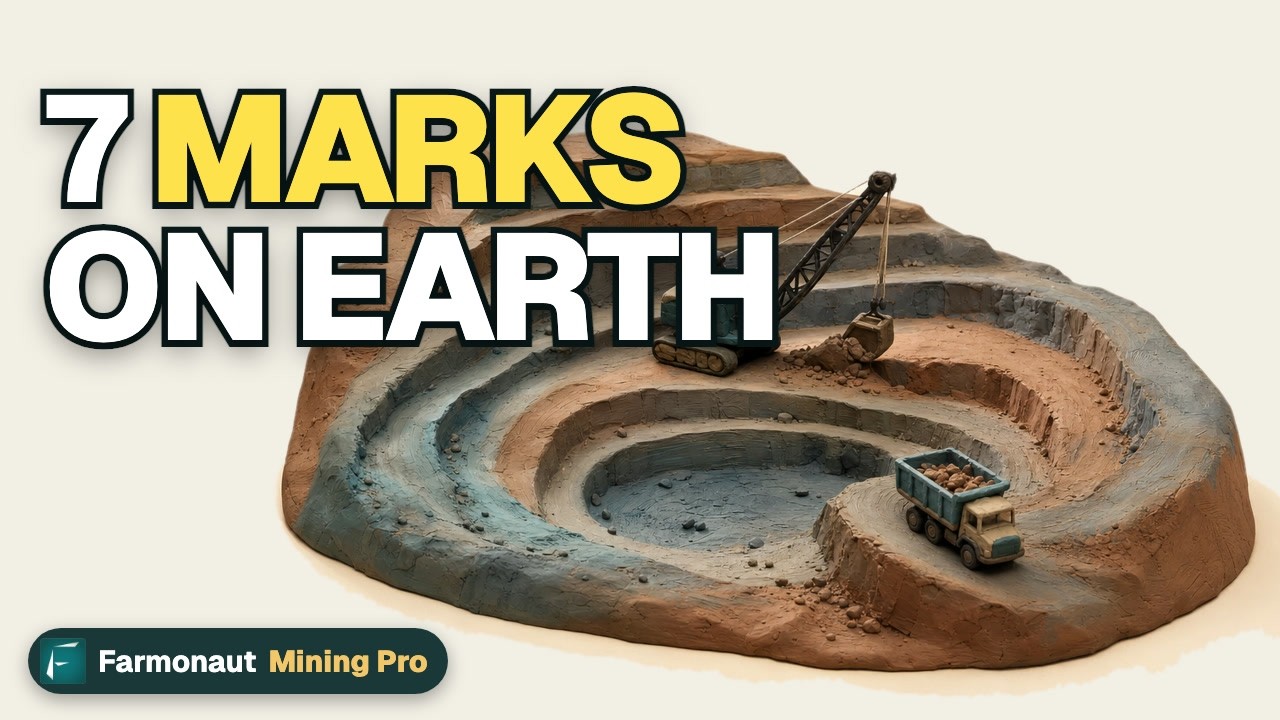
▶ The seven environmental impacts of mining, explained in clay. · 2:31
For projects outside the US, see lithium mining in Europe: ten projects ranked by stage.
For active mines in every state, see the US mining map.
Frequently asked questions
Which lithium mine is producing in Nevada?
Albemarle’s Silver Peak operation in Clayton Valley, Esmeralda County. The BLM describes it as the only producing lithium mine in the United States and says it has operated since 1965 (BLM, 27 February 2026).
Where is the lithium mine near Winnemucca?
Thacker Pass, in Humboldt County, is roughly 60 miles north-northwest of Winnemucca. It is under construction, not yet mining, with Phase 1 mechanical completion targeted for late 2027 (Lithium Americas, 13 August 2026).
How much lithium does Nevada have?
No single figure covers the whole state. Thacker Pass has a proven and probable reserve of 14.3 million t LCE (about 2.7 million tonnes of lithium) and a measured and indicated resource of 44.5 million t LCE. Tonopah Flats, Rhyolite Ridge and Angel Island add about 2.4, 2.0 and 1.8 million t LCE of reserve.
What is the biggest lithium deposit in Nevada?
By published reserve, Thacker Pass. The McDermitt Caldera that hosts it is estimated in a 2023 study to hold 20 to 40 million tonnes of lithium, a broader and less certain figure.
Is the trillion dollar lithium deposit real?
The tonnage estimate comes from a peer-reviewed study of McDermitt, but the trillion-dollar value is contained metal multiplied by a price. It is not the value of what can be mined at a profit. At $18,160 per tonne of LCE, 20 to 40 million tonnes of lithium multiplies out to about $1.9 trillion to $3.9 trillion.
What is in Clayton Valley?
Clayton Valley holds the Silver Peak brine mine and the Angel Island clay project. The USGS names it the only lithium brine-producing playa in the United States.
Which lithium companies operate in Nevada?
Albemarle at Silver Peak, Lithium Americas at Thacker Pass, American Battery Technology Company at Tonopah Flats, ioneer at Rhyolite Ridge and Century Lithium at Angel Island. Listings are in the table above. This is not investment advice.
Is lithium in Nevada mined from brine or clay?
Both. Silver Peak pumps brine. Thacker Pass, Tonopah Flats and Angel Island are clay projects, Rhyolite Ridge is a lithium-boron deposit in carbonate-rich lake sediments, and Angel Island plans direct lithium extraction on its leach liquor.
Can I stake a lithium claim in Nevada?
On open federal land, yes, under the General Mining Law, using placer claims for brines and lode claims for disseminated rock deposits. Check ownership in the BLM’s records first and confirm current fees and filing steps with the BLM and the county recorder.
When will Nevada lithium output grow?
The nearest step is Thacker Pass Phase 1 in late 2027 if construction holds. Rhyolite Ridge has no final investment decision date yet (ioneer, 27 October 2026), and Tonopah Flats targets commercial production from 2028. All dates are company targets and can move.
This page is for information only. It is not investment advice and not legal advice. Confirm claim and permit rules with the BLM and the Nevada Division of Minerals. Fieldwork on old mining ground is dangerous (open shafts, unstable ground, remote sites); follow BLM and state safety guidance.
Farmonaut mining
Screen lithium ground from space
Send a claim or license boundary and see a satellite screen of the ground before you plan fieldwork or a deal.

Mining Pro sample view, synthetic data
Keep reading
Sources
- USGS, Mineral Commodity Summaries 2026: lithium: pubs.usgs.gov
- USGS, Scientific Investigations Map 3554: lithium-rich playas in the Basin and Range: pubs.usgs.gov
- BLM, approval of the Silver Peak lithium mine expansion (27 February 2026): blm.gov
- Albemarle, Silver Peak expansion announcement (7 January 2021): albemarle.com
- Lithium Americas, second quarter 2026 results (13 August 2026): nasdaq.com
- Lithium Americas, Thacker Pass mineral resource and reserve release (7 January 2025): minedocs.com
- Lithium Americas, Thacker Pass overview fact sheet (February 2025): s203.q4cdn.com
- Mining Technology, Thacker Pass lithium project: mining-technology.com
- Mining Technology, Tonopah Flats lithium project: mining-technology.com
- American Battery Technology Company, EXIM letter of interest release (Nasdaq, 29 April 2025): nasdaq.com
- ioneer, further leach optimisation release (29 October 2025): sec.gov
- International Mining, ioneer letters of intent for Rhyolite Ridge (23 June 2026): im-mining.com
- MINING.COM, Century Lithium Angel Island feasibility update (23 February 2026): mining.com
- Century Lithium, feasibility study technical report release (9 March 2026): placera.se
- Proactive Investors, Century Lithium files mine plan (9 September 2026): proactiveinvestors.com
- Nevada Division of Minerals, Nevada mining update (May 2026): minerals.nv.gov
- Nevada Division of Minerals, Mining Claim Procedures (December 2019): minerals.nv.gov
- Benchmark Mineral Intelligence, Lithium price watch (August 2026): source.benchmarkminerals.com
- Investing News Network, Lithium market trends Q3 2026 review (14 October 2026): investingnews.com
- MINING.COM, McDermitt Caldera lithium study coverage (11 September 2023): mining.com
- ioneer, quarterly activities report to 30 September 2026 (27 October 2026): sec.gov
Discussion
Questions, corrections or field experience? Share them below. First-time comments are reviewed before they appear, and your email is never published.
No comments yet. Be the first to add a question or your experience.

 Riverside Resources Limited
 Congo Mining Solutions
 Mining SARL
 SenGold Invest SAS
 Sania Corporation
 Sean Mining Limited
 NTS Group (Pty) Ltd
 Mine4Africa
 Lithspo Minerals Limited
 Tintina Mining Group
 Dalgety Minerals Pty Ltd
 Vortex Minerals Pty Ltd
 Faith At Work (Pty) Ltd
 Geotech Mining Solutions plc
 Vulcan International Limited
 Kidepo Associates
 GKY Mining
 Alkimy SARL
 Double A Trading

 Licence holder · Nigeria · Gold + lithium










