

Ohio mineral rights · Price guide
Ohio Mineral Rights: Average Price per Acre in Lease Bids
Ohio has no official average. The best public figure is state-land bidding: the top offers on nine park and wildlife tracts (about 15,300 acres) averaged roughly $15,800 per acre, plus a 12.5% royalty, in the June 2026 meeting bid sheet. Road strips drew $500 to $5,000.
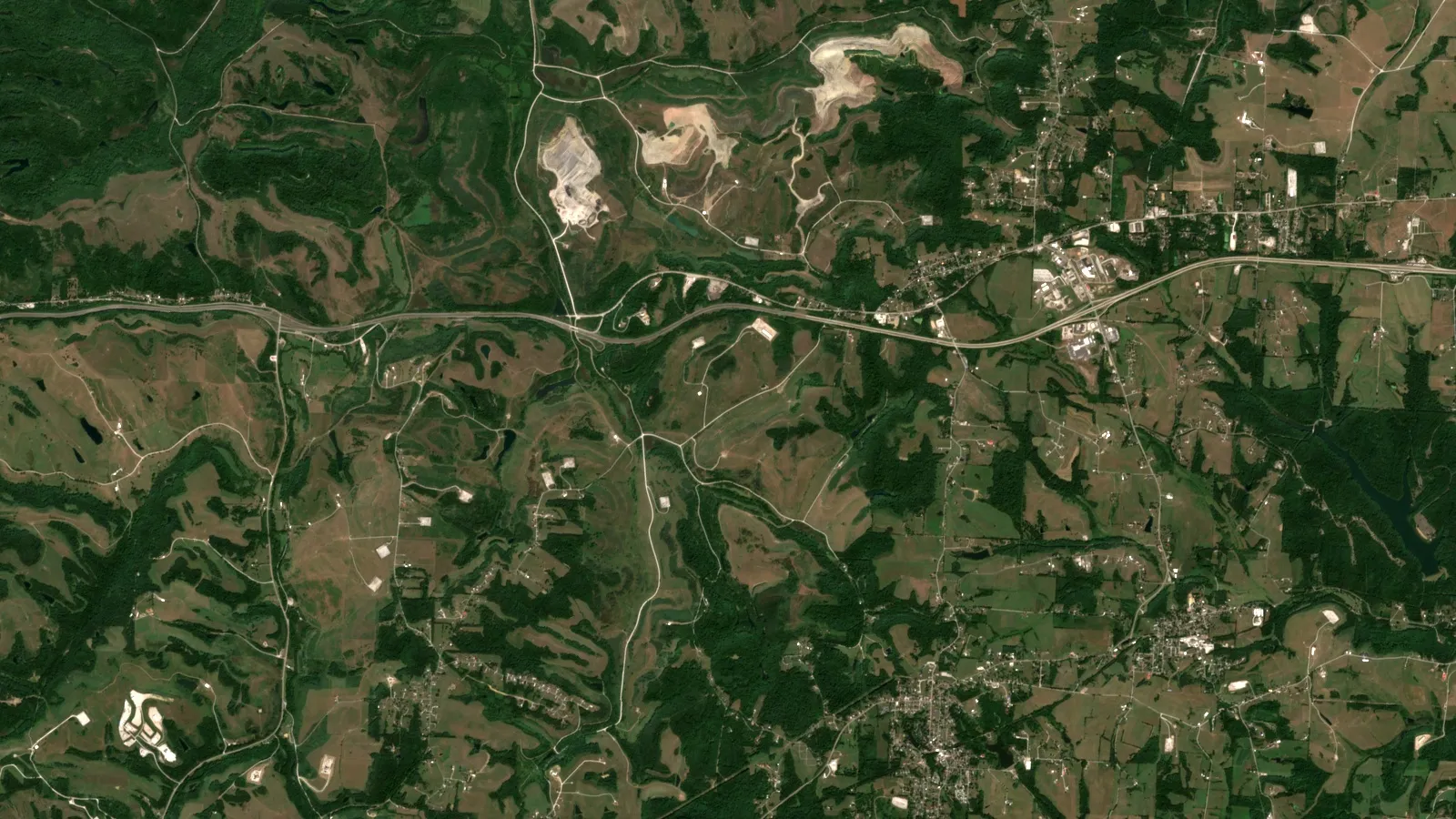
Key takeaways
- No state agency publishes an average price per acre for Ohio mineral rights, so quoted averages are estimates.
- On Ohio state land, the top offers averaged about $15,800 per acre by acre-weighted sum across nine tracts (about 15,300 acres), ranging $7,500 to $17,500 plus a 12.5% royalty; road strips drew $500 to $5,000 (Ohio Oil and Gas Land Management Commission bids, June 2026 meeting).
- Offers on one 383-acre parcel ran from $4,050 to $17,500 per acre, so get several written bids.
- Ohio cropland averaged $10,100 per acre in 2026 (USDA NASS); that is surface value, not mineral value.
- Lease bonus and royalty income are both ordinary income and subject to Ohio income tax; royalties are not subject to self-employment tax (Ohio State University Extension).
In this article
- Average price per acre for mineral rights in Ohio: what public records show
- How much are mineral rights worth per acre in Ohio? Why no single average exists
- What Ohio operators bid per acre for state land
- Bids on the same tract can differ by more than four times
- Key drivers of mineral rights price per acre in Ohio: what moves the number
- Mineral rights compared with Ohio farmland values
- Oil and gas lease price per acre: checking an offer
- Key lease considerations for Ohio landowners
- Pooling, unitization and dormant minerals in Ohio
- How lease bonus and royalty income is taxed
- Negotiation strategies and practical owner guidance
- Where satellite screening fits
- Frequently asked questions
Average price per acre for mineral rights in Ohio: what public records show
Ohio publishes no official average price per acre for mineral rights, and no state agency or university tracks private sales. The best public benchmark is what oil and gas operators bid for state-owned land. In the bid sheet for the June 2026 meeting of the Ohio Oil and Gas Land Management Commission, the top offers on parks and wildlife areas ran from $7,500 to $17,500 per acre, each with a 12.5% royalty. Offers on narrow road strips ran from $500 to $5,000 per acre.
Those numbers describe prime shale acreage in eastern Ohio, bid by operators active in the area. They do not describe a farm in the west of the state with no wells around it. This page shows the public data, explains why one tract can be worth many times another, and gives you a calculator and a checklist for testing an offer on your own land.
Mineral rights are the legal right to the oil, gas, coal or other minerals under the ground. In Ohio they can be owned separately from the surface, so the person who farms the land is not always the person who owns what lies below it.
How much are mineral rights worth per acre in Ohio? Why no single average exists
A per-acre value is really one of three different numbers, and online “averages” often mix them up.
- Lease bonus: a one-time payment per acre when you sign an oil and gas lease. It depends on how much drilling companies want your area on the day you sign.
- Royalty: your share of the value of what is produced, written as a fraction or percentage such as 1/8 (12.5%) or 3/16 (18.75%). It is paid only after a well produces. The state’s own bids use 12.5% as the base, and a private Ohio lease sets the rate by negotiation. For comparison, Penn State Extension notes that Pennsylvania law entitles landowners to at least 12.5% of the gas removed; see our Pennsylvania permits guide for that state’s rules.
- Sale price: what a buyer pays to own the minerals outright. Buyers usually price producing acreage from the royalty checks they expect, discounted for risk and time. Unleased acreage far from drilling can draw little or no offer.
The honest answer to “what is my acre worth” therefore comes from three things: your own lease history, production data for wells in your drilling unit, and several written offers. The sections below show what the public record can and cannot tell you.
What Ohio operators bid per acre for state land
The state leases oil and gas under public land through competitive bidding. Each offer is a lease bonus per acre, plus a 12.5% royalty on the offers we count and an “additional economic incentive” of 5.5% or 7.5% listed separately in the bid sheet. Confirm how an incentive is calculated in the lease itself before you compare it with a plain royalty.
Chart
Highest offer per acre on selected Ohio state tracts
US$ per acre, lease bonus only; June 2026 bid sheet
These are bids received, not confirmed awards or amounts paid. The table lists the highest offer on selected tracts in the sheet. Acreage is from the sheet; county names are as the sheet gives them.
| Tract | Acres | Highest offer per acre | Royalty and incentive |
|---|---|---|---|
| Egypt Valley Wildlife Area, Belmont County | 4,360 | $17,500 | 12.5% + 7.5% |
| Jockey Hollow Wildlife Area, Harrison County | 383 | $17,500 | 12.5% + 7.5% |
| Egypt Valley Wildlife Area, Belmont and Guernsey counties | 3,847 | $16,007 | 12.5% + 7.5% |
| Salt Fork State Park, Guernsey County | 513 | $7,500 | 12.5% + 7.5% |
| State Route 513 strip, Guernsey County | 0.8 | $5,000 | 12.5% + 5.5% |
| State Route 26 strip, Monroe County | 11.9 | $3,500 | 12.5% + 5.5% |
| State Route 558 strip, Columbiana County | 1.2 | $500 | 12.5% + 5.5% |
Across the nine park and wildlife-area tracts in the sheet that we summed (about 15,300 acres), the highest offers add up to roughly $241.5 million. That is an acre-weighted average of about $15,800 per acre (our calculation from the sheet). Treat it as a reference point for public land with strong shale interest, not as a typical private-land figure.
Press coverage gives the wider picture. Signal Ohio reported in July 2026 that state leases on roughly 22,000 acres had brought in about $314 million, most of it signing bonuses, plus royalty payments that had started to arrive from the first producing leases.
Two things stand out. First, bidders disagreed widely on the same tract. On one 4,360-acre parcel the offers that carried the 12.5% royalty ranged from $7,550 to $17,500 per acre, so even professional buyers did not share one view of value. Second, size and location matter: tiny road strips drew a fraction of what park tracts drew.
Bids on the same tract can differ by more than four times
Because the sheet lists every bid, it also shows how far apart the offers were. If four companies can bid between $4,050 and $17,500 per acre on one 383-acre parcel, a single landowner who takes the first offer may leave a lot on the table. The same pattern applies to private leases: ask more than one company.
Chart
Spread between offers on the same tract
US$ per acre; offers that carry the 12.5% royalty
State land is unusual in one respect: the state puts each tract out to competitive bid, which a private owner rarely does. If you hold a large contiguous block, a landman or attorney may be able to arrange something similar.
Key drivers of mineral rights price per acre in Ohio: what moves the number
1. Resource type and quality
The high bids above are for land in eastern Ohio counties, where horizontal shale wells are drilled. Other minerals, such as coal, have their own markets and their own lease practices. The Ohio Department of Natural Resources (ODNR) publishes quarterly production for horizontal wells and annual production for all wells, so you can see what nearby wells actually produce.
2. Location and distance to existing wells
Acreage close to producing wells, pipelines and processing is easier for an operator to develop. Tracts with limited road or utility access are worth less to a driller, whatever the rock below. The ODNR Well Locator map shows permitted and drilled wells so you can measure the distance for yourself.
3. Commodity prices and operator demand
Bonuses follow how much operators want to add acreage. When they are expanding, bonuses rise; when they are not, offers fall or vanish. This is why a figure quoted in 2014 or 2019 says little about an offer made today. Check the date of any number you are shown.
4. Leasing versus selling
A lease keeps ownership with you and pays a bonus plus royalties if a well is drilled. A sale gives immediate cash but ends any future royalty. Which is better depends on how close drilling is, how much you need cash now, and the tax treatment of each.
5. Surface use and split estates
If someone else owns the minerals under your farm, they can usually use part of the surface to reach them, and the terms of that use matter. If you own both, the lease should say where pads, roads and pipelines may go, how crops and drainage tile are repaired, and who pays for damage. For a wider view of how this works across states, see our guide to mineral rights value per acre by state and basin and the general explainer on how much mineral rights are worth per acre.
Mineral rights compared with Ohio farmland values
Farmland values give a useful anchor because they are published every year. In its July 2026 Land Values survey, the U.S. Department of Agriculture’s National Agricultural Statistics Service (NASS) put Ohio cropland at $10,100 per acre, farm real estate at $9,650 and pasture at $4,250. All three were higher than in 2022.
Chart
Ohio land values per acre
US$ per acre, annual survey averages for the surface land
These figures are for the land surface. They say nothing about the minerals, which may belong to someone else or may have been leased separately. A top park-tract bonus of $17,500 per acre is more than the $10,100 average cropland value, but that comparison only shows that shale rights can be worth more than the surface above them in a few places. It does not mean your minerals are.
Oil and gas lease price per acre: checking an offer
Before you accept a lease bonus or a purchase offer, gather evidence that is specific to your tract.
Infographic
Test an Ohio mineral offer in 5 steps
- 1Confirm titleCheck who owns the minerals and whether an old lease still binds them.
- 2Pull nearby leasesRead recorded lease memoranda at the county recorder.
- 3Check well dataUse ODNR production files and the Well Locator.
- 4Collect written offersAsk at least two companies for bonus, royalty and terms.
- 5Get a legal reviewHave an oil and gas attorney read the lease.
- Title first. Confirm you own the minerals and whether an old lease still binds them. A title attorney or abstractor can search the county recorder’s records.
- Nearby leases. Lease memoranda are recorded at the county recorder’s office. Recent ones in your township show which companies are active and when they signed.
- Well data. Use the ODNR production files and Well Locator to see which wells are near you and how much they produce. Production drives both bonuses and sale prices.
- More than one offer. Operators and mineral buyers often start low. Two or three written offers show the real range, as the state bid sheet does.
- Lease terms, not only the bonus. Check the primary term, how royalties are calculated and whether costs can be deducted.
- An oil and gas attorney. A review costs far less than a poorly drafted lease that runs for years.
Key lease considerations for Ohio landowners
The state’s own standard lease form is a useful example of terms to ask about. The May 2025 version of the Land Management Commission lease has a five-year primary term with a one-time option to extend by three years. It says royalties are paid without deduction for pre-production or post-production costs such as gathering, compressing, processing and transport. A private lease may say something very different, and deductions can cut a royalty check noticeably.
Bonus and royalty
The bonus is paid once, at signing. The royalty is paid on production, usually monthly or quarterly after the first sale. Some owners accept a lower bonus for a higher royalty rate, because the royalty continues for as long as the well produces. Which is better depends on how likely drilling is on your land.
Surface-use clauses
Ask for written limits on where pads and roads go, a plan for drainage tile and fences, payment for crop and timber damage, and restoration after work ends. These items do not show up in a per-acre figure, but they decide how much the lease costs you in practice.
Term and release
Shorter primary terms let you renegotiate sooner if no one drills. When a lease ends, make sure it is released in the county records so a buyer or a later operator can see that it no longer binds the land.
Pooling, unitization and dormant minerals in Ohio
Three rules can change what you earn or even who owns the minerals.
- Mandatory pooling. Modern shale wells have long horizontal sections that pass under many tracts. If an owner will not lease, the state can in some cases order the tract pooled into the unit. ODNR’s procedural outline (revised January 2015) requires the operator to document its attempts to lease, gives affected owners notice and a right to a hearing, and adds a $5,000 application fee to the standard permit fee.
- Unitization. A different process lets owners of at least 65% of the land over a pool apply to operate it as a unit, per ODNR’s unitization guideline (revised February 2022).
- Dormant minerals. Ohio’s Dormant Mineral Act lets a surface owner treat a long-unused severed mineral interest as abandoned, but only after following a notice procedure. In Dodd v. Croskey (Ohio Supreme Court, 18 June 2015), the court explained the 20-year look-back for events that save an interest and the 60 days a holder has after notice to file a claim to preserve it. The rules are technical, so use an attorney.
How lease bonus and royalty income is taxed
Ohio State University Extension’s tax fact sheet says both bonus and royalty payments are ordinary income, reported on Schedule E, and both are subject to Ohio income tax. Royalties are not subject to self-employment tax, and depletion can reduce the tax on royalties. Ask a tax professional how depletion applies to a bonus and whether you need quarterly estimated payments. The fact sheet is older, so confirm current rules before you file.
Negotiation strategies and practical owner guidance
- Appraisal: Get a recent appraisal or landman opinion for your tract, based on recorded leases and well results nearby.
- Independent review: Have an attorney or landman review the lease and check the title for old leases or reservations before you sign.
- Competing offers: Ask at least two companies. The state’s sheet shows how much bids on one tract can differ.
- Short or phased terms: These allow renegotiation if no well is drilled.
- Cost language: Ask for royalty language that states whether post-production costs may be deducted.
- Records: Keep copies of the lease, the recorded memorandum and every royalty statement. Compare the statements with ODNR production data for your unit.
Calculator
What is a lease bonus and royalty worth to me?
Enter your own acres, offer and well revenue. The amounts are in US$.
- Yearly royalty income (US$): $13,500
- Years of flat royalty to equal the bonus: 14.8
Example values only, not Ohio averages or forecasts. Royalty revenue per acre is an input: use figures from nearby wells in ODNR production data. Costs are deducted only if your lease allows it. Years-to-match assumes flat revenue; wells usually decline.
Where satellite screening fits
Satellite imagery cannot tell you the price of an oil or gas lease, and it does not replace well data. Where a tract may hold metals, industrial minerals or rare earths, Farmonaut’s satellite-based mineral detection can screen an area of interest from space and return target zones in 5 to 20 business days, depending on size and mineral. The results are exploration targets, not a resource estimate. To check who administers mineral titles elsewhere, see our list of mining cadastre portals by country, or compare how another state handles it in our guide to gold mining permits in Pennsylvania. You can request a quote or contact us.

▶ Explains how satellite mineral detection helps decide where to look before spending on drilling, which is the screening step this section describes. · 4:26
Frequently asked questions
What is the average price per acre for mineral rights in Ohio?
No official average exists. The best public benchmark is the June 2026 state-land bid sheet, where top offers on parks and wildlife areas were $7,500 to $17,500 per acre, with a 12.5% royalty. Private values range from nothing for unleased land far from drilling to well above those bids for producing units.
How much are mineral rights worth in Ohio per acre?
It depends on whether the land is in a shale drilling area, whether a well already pays you, and what the lease says. Use recorded nearby leases, ODNR production data and several written offers rather than a quoted average.
What is a typical lease bonus per acre in Ohio?
The state does not publish a private-market figure. On state land in the June 2026 sheet, bonuses on large tracts were between $7,500 and $17,500 per acre at the top end, and road strips drew $500 to $5,000.
What royalty rate do Ohio landowners get?
One-eighth (12.5%) is the traditional rate and is the base royalty in the state’s own leases, where an extra incentive of 5.5% or 7.5% is added. The rate in a private lease is a negotiated term, so ask for more than the traditional rate and read the cost-deduction language.
What are mineral rights in Ohio?
They are the ownership of the oil, gas, coal or other minerals under the surface. They can be sold or inherited separately from the surface, which creates a split estate.
Can I find out who owns the minerals under my land?
Yes. The county recorder holds deeds, reservations and lease memoranda, and a title attorney or abstractor can trace the chain of ownership.
Should I lease or sell my mineral rights in Ohio?
A lease keeps ownership and pays a bonus plus royalty if a well is drilled. A sale gives cash now and ends future royalty. Get offers for both and have an attorney and tax professional compare them.
Are lease bonuses and royalties taxed?
Yes. Ohio State University Extension says both are ordinary income for federal tax and are subject to Ohio income tax. Royalties are not subject to self-employment tax. Ask a tax professional about depletion and estimated payments.
Can I be forced to join a drilling unit?
In some cases the state can order mandatory pooling after an operator documents its failed attempts to lease and owners have had a chance to ask for a hearing. See the ODNR outline above.
Where can I see how much nearby wells produce?
ODNR posts quarterly horizontal-well production and annual production for all wells, and its Well Locator maps wells by location. Both are linked above.
Does satellite data show the value of my mineral rights?
No. Satellite data can flag mineral targets for metals and industrial minerals, but it does not set a lease price and it does not measure oil or gas in the ground.
This page is for information only. It is not investment, tax or legal advice. Confirm lease terms with an Ohio oil and gas attorney and the rules with ODNR.
Farmonaut mining
Own a mineral property? Get a quote
Request a quote for a satellite screening of your area of interest. Results are exploration targets, not a resource estimate.

Mining Pro sample view, synthetic data
Keep reading
Sources
- Ohio Oil and Gas Land Management Commission, selected bids, June 2026 meeting (ODNR): dam.assets.ohio.gov
- USDA NASS, Land Values 2026 Summary (July 2026): release.nass.usda.gov
- ODNR, Oil and Gas Land Management Commission standard lease form (May 2025): dam.assets.ohio.gov
- ODNR, Mandatory Pooling Procedural Outline (revised January 2015): dam.assets.ohio.gov
- ODNR, Unitization Application Procedural Guideline (revised February 2022): dam.assets.ohio.gov
- Ohio State University Extension, Income Tax Management of Oil and Gas Lease Payments: ohioline.osu.edu
- Penn State Extension, Negotiating Pipeline Rights-of-Way in Pennsylvania: extension.psu.edu
- Supreme Court of Ohio, Dodd v. Croskey (2015), via FindLaw: caselaw.findlaw.com
- ODNR, Oil and Gas Production data: ohiodnr.gov
- ODNR, Oil and Gas Well Locator: ohiodnr.gov
- Signal Ohio (Akron), Ohio has made $314 million by opening state lands to fracking (July 2026): signalakron.org
Discussion
Questions, corrections or field experience? Share them below. First-time comments are reviewed before they appear, and your email is never published.
No comments yet. Be the first to add a question or your experience.

 Jaunita Erss Ltd
 Almosi SARL
 SRK Consulting
 Berks Gold Limited
 Mwerezi Minerals Company Limited
 Mining SARL
 SenGold Invest SAS
 Sean Mining Limited
 NTS Group (Pty) Ltd
 Mine4Africa
 Lithspo Minerals Limited
 Tintina Mining Group
 Dalgety Minerals Pty Ltd
 Vortex Minerals Pty Ltd
 Faith At Work (Pty) Ltd

 Licence holder · Nigeria · Gold + lithium










