

Copper and gold mining · Health and safety guide
Copper Mining Health Risks: Limits, Data, Prevention
At US surface copper mines, 36.0% of personal silica samples in 2000 to 2019 were above the NIOSH limit of 50 µg/m3 (Misra et al., 2023). This guide covers each hazard in copper and gold mining, with limits, charts and a silica calculator.
Key takeaways
- At US surface copper mines, 36.0% of personal silica samples in 2000 to 2019 exceeded 50 µg/m3; across all US metal and nonmetal mines the share was 27.3% (Misra et al., 2023).
- MSHA’s 2024 silica limit of 50 µg/m3 (action level 25) is under a court stay; MSHA’s bulletin of 9 April 2026 says it still enforces the older standards.
- MSHA’s noise limit is 90 dBA over 8 hours; NIOSH advises 85 dBA, which allows under 15 minutes at 100 dBA against 2 hours under the OSHA rule, which uses the same 90 dBA and 5 dB basis as MSHA (OSHA noise page).
- Gold adds mercury and cyanide: small-scale gold mining emits 837,658 kg of mercury a year, 37.7% of human emissions to air (US EPA, from the 2018 Global Mercury Assessment).
- MSHA recorded 25 deaths in US metal and nonmetal mining in 2025, against 47 in 2000 (MSHA, 1900 to 2025 table).
In this article
- Copper mining health risks at a glance
- Silica dust: the main lung risk in copper and gold mines
- Noise limits and hearing loss in mining
- Diesel exhaust, heat and altitude
- Chemical hazards in copper processing
- Gold mining health risks: mercury, cyanide and dust
- Mining injuries and fatalities in the United States
- Community health beyond the mine gate
- How to prevent harm: controls in order of strength
- Where satellite data fit in a mine health plan
- Site-visit checklist for mining consultants
- Frequently asked questions
The main health risks in copper mining are silica dust, noise, diesel exhaust underground, heat and altitude, acid and metal exposure in processing, and injuries from machines and falls. Dust has the best data. In United States metal and nonmetal mines, 36.0% of personal silica samples taken at surface copper mines in 2000 to 2019 were above the 50 µg/m3 limit that NIOSH recommends (Misra et al., American Journal of Industrial Medicine, 2023). A µg/m3 is one millionth of a gram of dust in a cubic metre of air.
Gold mining shares most of these hazards and adds mercury and cyanide, so this guide covers both metals. It is written for mining consultants, safety managers and licence holders. It gives the limits and rules with their dates, charts the data we could trace to a primary source, and ends with a silica exposure calculator and a site-visit checklist. Limits are for the United States unless stated. Rules in other countries differ, so confirm them with your own regulator.
Copper mining health risks at a glance
Copper is mined in open pits and underground, then processed by crushing and milling or by leaching with acid. The U.S. Geological Survey counts about 13,000 workers at United States copper mines and plants in 2025 (estimate), and about 70% of US copper output comes from Arizona (USGS, Mineral Commodity Summaries 2026). Each stage of the work has its own exposures. The table lists the main ones and the reference point used in this guide.
| Hazard | Where it arises | Reference point | Main health effect |
|---|---|---|---|
| Respirable crystalline silica | Drilling, blasting, crushing, dry haul roads, maintenance | MSHA 2024 rule: 50 µg/m3 limit, 25 µg/m3 action level (enforcement stayed); NIOSH recommends 50 µg/m3 | Silicosis, lung cancer, kidney disease |
| Noise | Drills, crushers, mills, haul trucks | MSHA: 90 dBA 8-hour average limit, 85 dBA action level | Permanent hearing loss |
| Diesel particulate matter | Underground loaders and haul trucks | MSHA: 160 µg/m3 total carbon in underground metal and nonmetal mines | Lung cancer (IARC Group 1) |
| Heat and altitude | Desert pits, deep workings, Andes mines above 3,000 m | OSHA heat guidance: water, rest, shade, acclimatization | Heat illness; lower aerobic capacity at altitude |
| Copper dust and fume, sulfuric acid | Leach pads, electrowinning tank houses, hot work | OSHA: 1 mg/m3 copper dusts and mists, 0.1 mg/m3 copper fume | Metal fume fever; acid burns |
| Arsenic | Some ores; smelting of non-ferrous metals | IARC Group 1 carcinogen | Cancer |
| Injuries | Mobile equipment, falls, ground failure | MSHA fatality counts, 1900 to 2025 | Injury and death |
Terms used below. A permissible exposure limit (PEL) is a legal limit. A recommended exposure limit (REL) is advice from NIOSH, the US research agency for workplace health, and has no legal force by itself. An action level is a lower trigger, usually half the limit, at which monitoring or other duties start. A time-weighted average (TWA) is the exposure averaged over a standard 8-hour shift.
Silica dust: the main lung risk in copper and gold mines
Respirable crystalline silica is quartz dust fine enough to reach deep into the lung. It is released when rock that contains quartz is drilled, blasted, crushed or driven over. MSHA, the US mine safety regulator, lists silicosis, emphysema, chronic bronchitis, lung cancer and kidney disease as effects of silica exposure and says each one is chronic, irreversible and potentially disabling or fatal (MSHA, Respirable Crystalline Silica). The International Agency for Research on Cancer places crystalline silica in Group 1, carcinogenic to humans (IARC Monographs Volume 100C). Silicosis is the disease to plan for.
Chart
Share of personal silica samples above 50 µg/m3
Percent of samples above the NIOSH recommended limit; US figures are MSHA inspection samples, 2000 to 2019
The best public data set is the one MSHA inspectors built from personal samples. A 2023 study of 55,265 measurements from metal and nonmetal mines in 2000 to 2019 found that 27.3% of all samples were above the NIOSH REL and 11.8% were above the MSHA limit then in force, which the authors put at about 100 µg/m3 (Misra et al., 2023). The samples cover only dust with more than 1% quartz and were taken during compliance inspections.
At surface copper mines (639 samples), 36.0% were above the NIOSH limit and 17.8% were above the old limit. The geometric mean was 37.5 µg/m3, and the 95th percentile was 241.8 µg/m3, meaning one sample in twenty was at least that high. A geometric mean is the usual average for dust data because a few very high samples would distort a plain average. The study table lists no underground copper group with more than 100 samples. For gold ore it shows 65.6% above the NIOSH limit in processing facilities, 37.6% at surface mines and 35.8% underground.
A 2025 study of one underground copper mine in Zambia shows the same pattern outside the United States. Of 114 personal samples, 32.4% were above 50 µg/m3, and 13 of 111 (11.7%) were above South Africa’s limit of 100 µg/m3. In 11 of 18 work areas exposure was statistically above the limit. The authors note the mine was not at full capacity while samples were taken, and that it had the most certified pneumoconiosis cases in Zambia in 2015 (Annals of Work Exposure and Health, 2025).
Where the US silica rule stands
In April 2024 MSHA set a limit of 50 µg/m3 as an 8-hour average and an action level of 25 µg/m3 for all miners, with medical surveillance for metal and nonmetal miners and a new respirator standard. Metal and nonmetal mines had until 8 April 2026 to comply (30 CFR Part 60). On 11 April 2025 the Eighth Circuit Court of Appeals stayed compliance with the rule. MSHA’s bulletin of 9 April 2026 says it keeps enforcing the older standards, 30 CFR 56.5001, 56.5005, 57.5001 and 57.5005, until the stay ends (MSHA Program Information Bulletin P26-01).
The older standard uses the 1973 limits of the American Conference of Governmental Industrial Hygienists (ACGIH). Other benchmarks: OSHA (general industry) and NIOSH list the same figure, and ACGIH lists 25 µg/m3 (set in 2009) (OSHA chemical database, crystalline silica). For design work, 50 µg/m3 is the sensible benchmark, and 25 µg/m3 is the level at which to start closer monitoring.
Noise limits and hearing loss in mining
Noise is measured in A-weighted decibels (dBA), which follow how the human ear hears. Under MSHA’s noise rule the permissible exposure level is an 8-hour average of 90 dBA, the action level is 85 dBA, and no miner may be exposed above 115 dBA at any time. The rule uses a 5 dB exchange rate, which means allowed time halves for every 5 dBA increase. Above the limit the operator must use all feasible engineering and administrative controls and enrol the miner in a hearing conservation program (30 CFR Part 62). That program has five parts: noise monitoring, hearing protectors, audiometric (hearing) tests, training and records. A baseline hearing test must be offered within 6 months of enrolment, at no cost to the miner.
Chart
Minutes per day allowed at three noise levels
Daily time at a steady level, in minutes; 8-hour shift equals 480 minutes
NIOSH recommends a stricter 85 dBA 8-hour average with a 3 dB exchange rate (OSHA, noise standards). The gap grows fast with loudness. OSHA’s noise page gives the example that its own rule allows 2 hours at 100 dBA, while NIOSH advises under 15 minutes (OSHA, Occupational Noise Exposure). The chart applies both rules to three levels. NIOSH minutes were calculated from its 85 dBA, 3 dB rule (8 hours divided by 2 for every 3 dBA above 85).
Noise is measured with a dosimeter, a small meter clipped to the worker that logs the full shift. A reading taken with a hand-held meter at one spot rarely matches what a driller or crusher operator receives over 12 hours.
Diesel exhaust, heat and altitude
Diesel particulate matter is the soot from diesel engines, and it matters most underground where exhaust builds up. MSHA’s limit for underground metal and nonmetal mines is 160 µg/m3 of total carbon as an 8-hour average, in force since 20 May 2008 (30 CFR 57.5060). The rule covers underground mines only, so a surface pit is not covered by this particular limit. In June 2012 IARC classed diesel engine exhaust as carcinogenic to humans (Group 1) based on lung cancer evidence (IARC press release 213). Mine operators must give annual training on diesel particulate health risks to miners exposed to diesel emissions.
Heat illness is preventable, but OSHA reports that every year thousands of US workers become sick from heat at work and some cases are fatal. Its risk factors are heavy physical work, hot conditions, lack of acclimatization (a gradual build-up of time in the heat) and clothing that holds heat in. OSHA’s advice is water, rest and shade (OSHA, Heat). Deep underground workings and desert pits both need a written plan that covers new and returning workers.
Altitude is a separate load. Over about 40 years, mining in Chile has moved workers who live near sea level to jobs above 3,000 m, in what researchers call the Chilean model of chronic intermittent hypobaric hypoxia: long stays in thin air alternating with rest at low altitude. In a study of 153 heavy-truck operators on a seven-days-on, seven-days-off pattern, maximal oxygen uptake was 11.6% lower at 1,600 m and 25.9% lower at 2,500 m than at sea level, and a blood marker of inflammation was higher at both altitudes (Frontiers in Physiology, 2021). The same group had earlier found reduced aerobic capacity at 3,800 m. A medical check before a worker is posted to altitude is a sensible control.
Chemical hazards in copper processing
Many copper mines recover metal with acid instead of, or as well as, a mill. In heap leaching, crushed ore is piled on a lined pad and dilute sulfuric acid is sprayed on top. The copper-bearing “pregnant” solution is collected, and the copper is later plated onto cathodes in tanks filled with a copper sulfate and sulfuric acid electrolyte (University of Arizona Superfund Research Center). USGS counted 14 electrowon copper refineries in the United States in 2025, so electrowinning is common in US copper. Staff there face acid splashes, acid mist and wet floors, so closed piping, splash guards, eyewash stations and trained spill response are the first checks. For the full route from rock to cathode, the video below walks through each step.
Copper itself has defined limits. OSHA’s legal limit is 1 mg/m3 for copper dusts and mists and 0.1 mg/m3 for copper fume, each as an 8-hour average. Fume is the fine particles formed when copper is heated, for example in welding, cutting or smelting. Inhaling it can cause metal fume fever, a flu-like illness with a metallic taste, headache, fever and chest tightness that starts hours after exposure and usually lasts a day or two (New Jersey Department of Health, copper hazard fact sheet).
Arsenic is the metal to test for. IARC classes arsenic and inorganic arsenic compounds as carcinogenic to humans and names mining and smelting of non-ferrous metals among the major human sources of arsenic contamination (IARC Monographs Volume 100C). Arsenic content differs from ore body to ore body. Assay ore, concentrate and dust for it before choosing controls for the smelter, the concentrate store and the bag-house.
▶ Follows copper from the Atacama pits through concentrate to cathode and shows how satellite infrared is used to look for new deposits. · 6:03
Gold mining health risks: mercury, cyanide and dust
The two chemicals that set gold apart from copper are mercury and cyanide. Mercury is used by artisanal and small-scale gold miners (ASGM) to gather fine gold into an amalgam that is then heated, which sends mercury vapour into the air. The World Health Organization calls mercury use in small-scale gold mining particularly hazardous. Workers breathing elemental mercury at 20 µg/m3 or more for several years can show mild signs of nervous system toxicity, and kidney effects range from protein in the urine to kidney failure (WHO, Mercury and health). WHO says non-mercury gold extraction techniques need to be promoted, and that where mercury is still used, safer work practices are needed.
Chart
Largest human sources of mercury emissions to air
Tonnes of mercury per year, 2015 inventory published in the 2018 Global Mercury Assessment
Small-scale gold mining is the largest single source of human mercury emissions to air. The 2018 Global Mercury Assessment puts it at 837,658 kg of a total of about 2,220 tonnes a year, or 37.7% (US EPA, Mercury Emissions: The Global Context). Never use mercury when panning or testing a claim, and do not burn amalgam indoors.
Larger mines use cyanide instead. Cyanidation has been the main gold extraction method since the 1970s, using a dilute solution of 100 to 500 ppm cyanide. The Society for Mining, Metallurgy and Exploration describes cyanide as an acute toxin that may be fatal, and says mine staff are protected by limiting exposure through automation, protective clothing and respirators (SME technical briefing on cyanide). The voluntary International Cyanide Management Code, developed under the United Nations Environment Programme, audits signatory sites every three years, and more than 240 companies have signed (Cyanide Code). For how gold is recovered, see our guide to gold extraction methods.
Silica is as relevant in gold as in copper. In the MSHA data above, gold ore processing facilities had the highest share of samples over the NIOSH limit of any gold group, at 65.6%, ahead of surface mines at 37.6% and underground mines at 35.8%. The study lists crusher operators, front-end loader operators, laborers and truck drivers among the most-sampled jobs.
Mining injuries and fatalities in the United States
Not every mining harm shows up years later. MSHA keeps a count of deaths in metal and nonmetal mining back to 1900. The table includes sand and gravel and stone operations as well as metal mines, so it is not a copper-only figure. It recorded 25 deaths in 2025 among 265,965 miners, against 47 deaths in 2000 among 240,450 miners (MSHA, Metal/Nonmetal Fatalities 1900 through 2025). That is roughly 9 deaths per 100,000 miners in 2025 against roughly 20 in 2000, calculated from MSHA’s two columns. The annual count has stayed between 13 and 31 since 2009, with a low of 13 in 2017 and 31 in 2023, so progress is real but not steady.
Chart
Deaths in US metal and nonmetal mining, 2000 to 2025
Fatalities per year, including sand, gravel and stone operations
Community health beyond the mine gate
Workers are not the only people exposed. On 18 February 2025 a dam holding mining waste at a Sino-Metals Leach Zambia mine in Chambishi, in Zambia’s copper mining region, burst and released acidic effluent into the Kafue River’s watershed. Human Rights Watch reports that the spill killed fish, burned maize and groundnut crops and killed livestock. In August 2025, according to Human Rights Watch, a Finnish government travel advisory said water samples from the area held 24 heavy metals, 16 of them above World Health Organization thresholds, including nickel, lead, arsenic, zinc and uranium. The Zambian government has stated that lab results show acidity back to normal and heavy metal levels falling, while Human Rights Watch reports that activists still hear complaints of headaches, coughs and diarrhoea in affected communities (Human Rights Watch, 11 September 2025). Human Rights Watch calls for an investigation with international and domestic experts and for testing of affected communities for heavy metal poisoning.
The lesson for site design is distance and water. Dust, tailings and process water reach people through air, rivers and food, so a health plan needs downstream water sampling and an emergency plan alongside the workplace measures above. Our guides to the environmental effects of mining and to mining impacts on water areas cover those pathways in more detail. For where copper ore bodies occur, see porphyry copper deposits, and for the commercial side see junior copper exploration.
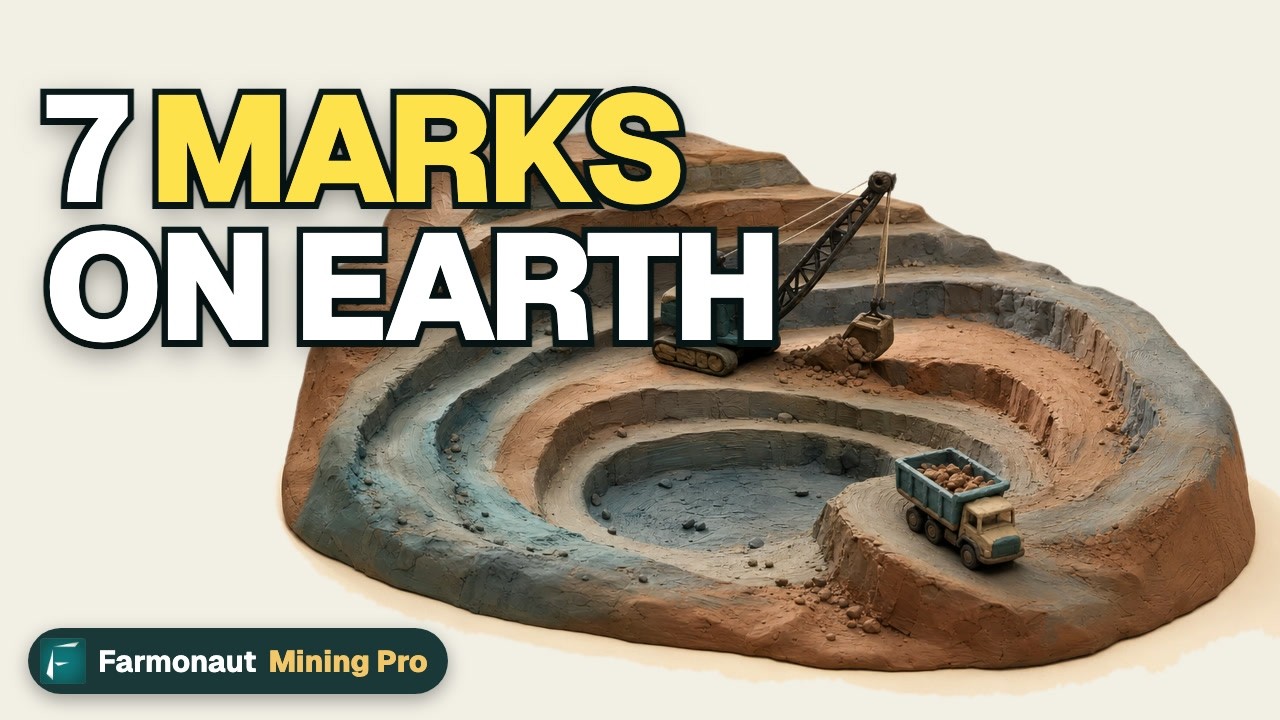
▶ Explains the seven environmental impacts of mining in plain words, including water pollution, dust and tailings dams. · 2:31
How to prevent harm: controls in order of strength
OSHA’s safety management guidance ranks controls from strongest to weakest: engineering solutions first (including removing or substituting the hazard), then safe work practices, then administrative controls, and personal protective equipment last (OSHA, Hazard Prevention and Control). In mining that gives the following order.
- Remove or replace the hazard. Examples are non-mercury gold recovery, which WHO promotes, and shorter exposure through remote or automated equipment.
- Engineering controls. Dust suppression, ventilation, enclosed and filtered operator cabs, quieter equipment, and closed acid piping. The text of the stayed silica rule requires operators to install and maintain feasible engineering controls first, supported by administrative controls when needed, and says rotating miners between tasks is not an acceptable administrative control (30 CFR 60.11).
- Work practices and administrative controls. Wet methods, haul road watering schedules, heat acclimatization schedules, and spill drills.
- Personal protective equipment. Respirators, hearing protectors, gloves and eye protection. The stayed rule treats respirators as temporary while engineering controls are being built, and it points to the ASTM F3387-19 respirator standard.
Monitoring and medical checks make the controls provable. Under the stayed rule, an operator would sample each exposed miner’s full-shift silica exposure, repeat sampling within 3 months when results are at or above the action level, and take corrective action when a result is above 50 µg/m3. Metal and nonmetal miners would also receive medical examinations covering a work history, a physical examination, a chest X-ray classified by a NIOSH-certified B Reader, and a lung function test (spirometry). Miners new to mining would have an examination within 60 days of starting and a follow-up within 3 years. While the stay lasts, operators can still adopt these checks voluntarily.
The calculator below turns task-by-task sampling results into a shift average, so you can see how a few dusty tasks move the total.
Calculator
What is your 8-hour silica average?
Enter the silica level and hours for up to three tasks. Results update as you type.
- Share of your chosen limit: 91.2%
- Share of the action level (half the limit): 182.5%
- Cut in dust needed to reach the limit: 0.0%
Example values only, not benchmarks. Silica levels are respirable crystalline silica in µg/m3 from your own personal samples. The result divides the total by 8 hours and treats unlisted hours as zero exposure. The limit field defaults to 50 µg/m3, the NIOSH recommendation and the limit in the MSHA 2024 rule (currently stayed) (OSHA lists the same figure; ACGIH uses 25). This is a screening aid, not a compliance test: use your regulator’s sampling method.
Where satellite data fit in a mine health plan
Satellite images cannot measure what a worker breathes, hears or drinks. Dust pumps, dosimeters, medical tests and water samples do that. Satellites help earlier, at the planning stage. Farmonaut screens a licence area from space before field teams deploy, which shortens early exploration from months to days and involves no ground disturbance in that phase, so fewer people and drills need to be on site until targets are ranked. Results are exploration targets, not a resource estimate. Details are on our satellite-based mineral detection page, and licence owners can ask for a price through the mining quote form. The video explains how remote sensing works.
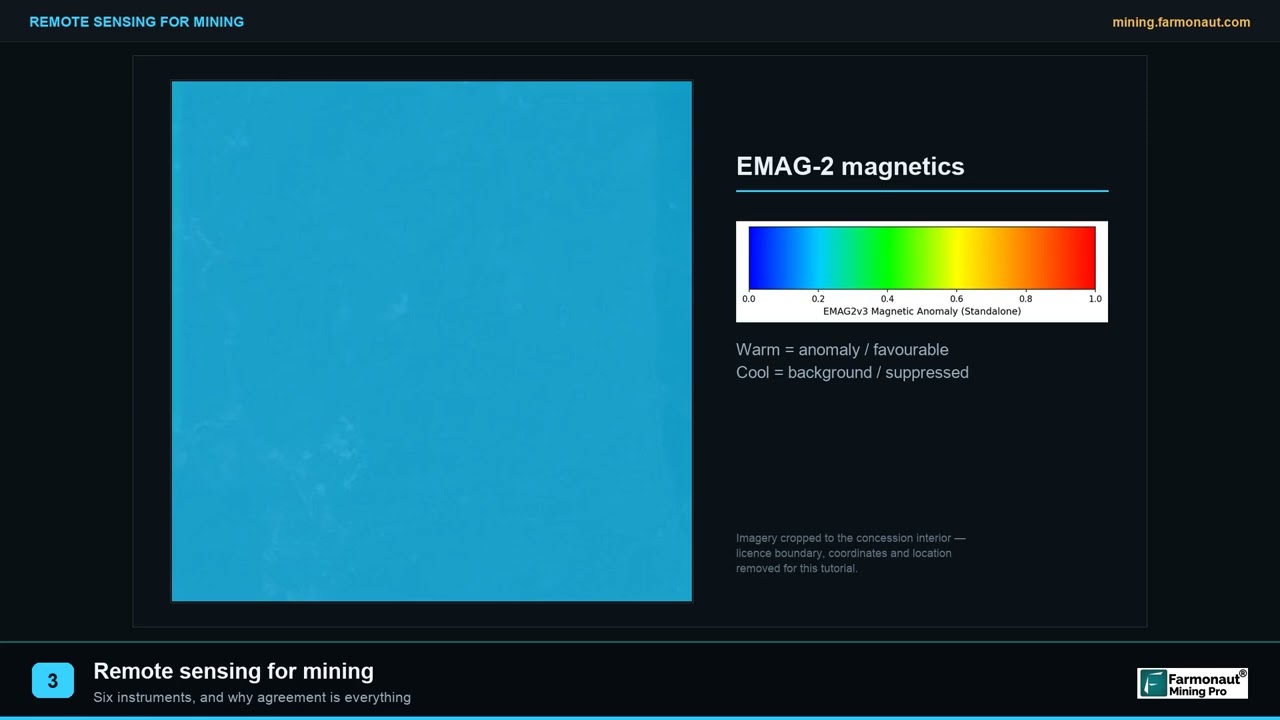
▶ A short explainer of what remote sensing for mining means and what the main instrument types detect. · 2:01
Site-visit checklist for mining consultants
Use these questions on a first visit to a copper or gold operation. Each one asks for a record that should already exist.
- Ask for personal silica results by job for the last two years. Flag every task above 25 µg/m3 and every result above 50 µg/m3.
- Check whether samples came from the highest-exposure jobs, such as crusher operators, drillers and cleaners, and not only from easy-to-reach staff.
- Ask for noise dosimetry by job and the list of workers enrolled in a hearing conservation program, with the date of each baseline and annual hearing test.
- Underground, ask for diesel particulate results against 160 µg/m3 total carbon and for maintenance records on engine filters.
- Read the heat plan. It should name water points, rest areas, and an acclimatization schedule for new and returning workers.
- At leach pads and tank houses, check eyewash stations, acid piping condition and spill response drills.
- For gold, confirm that no mercury is in use. Where cyanide is used, ask whether the site is certified under the Cyanide Code.
- Ask which ore and concentrate assays include arsenic and what the controls are at the smelter feed and the concentrate store.
- Ask for the respirator program: fit tests, medical clearance and cleaning.
- Inspect tailings dam inspection records, the emergency plan and downstream water sampling results.
If this topic matters to you, read Blast Vibration Monitoring in Mining: Limits and Steps next.
Frequently asked questions
What are the main health risks in copper mining?
Silica dust, noise, diesel exhaust underground, heat and altitude, acid and metal exposure in processing, and injuries. Silica has the strongest data: 36.0% of US personal samples at surface copper mines in 2000 to 2019 were above the NIOSH limit of 50 µg/m3.
What is the most dangerous dust in copper mining?
Respirable crystalline silica, which is quartz dust. MSHA lists silicosis, lung cancer, emphysema, chronic bronchitis and kidney disease as effects, and says they are irreversible. Copper dust and fume have their own OSHA limits, covered above.
What is the silica limit for US miners?
MSHA’s 2024 rule sets 50 µg/m3 as an 8-hour average with an action level of 25 µg/m3, but a court stay means MSHA is still enforcing the older standards, per its bulletin of 9 April 2026.
What is the noise limit for miners?
MSHA’s permissible exposure level is an 8-hour average of 90 dBA with a 5 dB exchange rate, an action level of 85 dBA, and a ceiling of 115 dBA. NIOSH recommends 85 dBA with a 3 dB exchange rate.
Is copper dust harmful?
OSHA limits copper dusts and mists to 1 mg/m3 and copper fume to 0.1 mg/m3 as 8-hour averages. Copper fume, formed when copper is heated, can cause metal fume fever, a flu-like illness that usually passes in a day or two.
What health risks does gold mining have that copper mining does not?
Mercury, used in small-scale gold mining, and cyanide, used in larger gold plants. Both are covered above. Silica, noise and injury risks are shared with copper.
Do copper miners get silicosis?
Silicosis is a risk wherever quartz-bearing rock is dusty. A Zambian underground copper mine had the most certified pneumoconiosis cases in the country in 2015, and 32.4% of the samples in a study published in 2025 were above the NIOSH limit.
How can health risks in copper mining be prevented?
Use controls in order of strength: remove the hazard, apply engineering controls such as dust suppression and ventilation, use work practices, and rely on protective equipment last. Monitor exposure by job and test miners’ lungs and hearing at set intervals.
How is a miner’s dust exposure measured?
A small pump worn by the miner draws air through a filter for a full shift. The filter is weighed and analysed in a laboratory for quartz. The Zambian copper mine study used NIOSH methods 0600 and 7602 for this.
Can copper mining affect the health of nearby communities?
Yes, through dust, water and food if tailings or process water escape. The February 2025 dam failure in Zambia’s copper mining region killed fish and livestock, and Human Rights Watch reports health complaints and has called for testing of affected communities.
How many miners die each year in the United States?
MSHA recorded 25 deaths in metal and nonmetal mining in 2025, and between 13 and 31 a year since 2009. The count covers sand, gravel and stone operations as well as metal mines.
Can satellites measure mining health risks?
No. Satellite images do not measure dust, noise or heat that a worker receives. They are used earlier, to screen areas and rank exploration targets before ground work begins.
This page is for information only. It is not legal or medical advice. Exposure limits and enforcement status change, so confirm the rules with MSHA, OSHA or your national regulator. Get permission before you enter or sample any site, and do not use mercury when panning or testing a claim.
Farmonaut mining
Map your mining site from space
Send a KML, KMZ or polygon and Farmonaut screens the area from satellite images before ground crews go in.
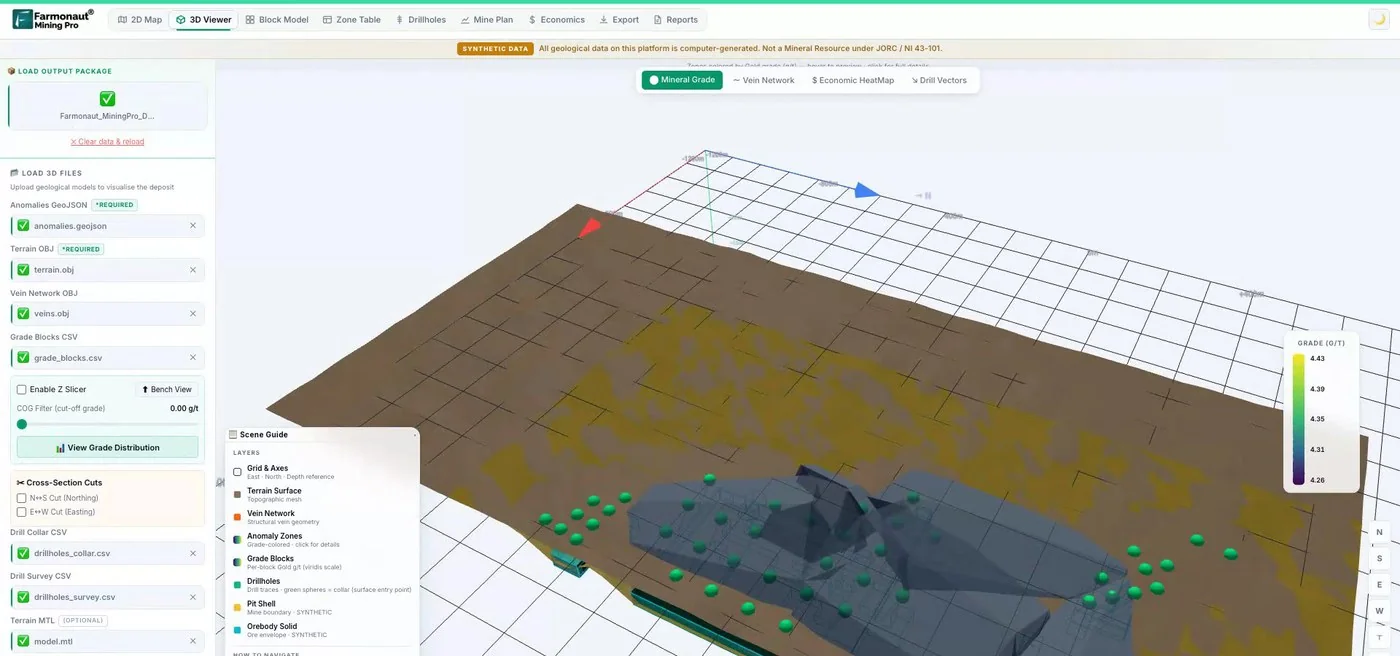
Mining Pro sample view, synthetic data
Keep reading


Sources
- Misra et al., Occupational exposure to respirable crystalline silica among US metal and nonmetal miners, 2000-2019, American Journal of Industrial Medicine (2023): pmc.ncbi.nlm.nih.gov
- Annals of Work Exposure and Health, Occupational exposure to respirable crystalline silica at an underground copper mine in Zambia (2025): pubmed.ncbi.nlm.nih.gov
- MSHA, Respirable Crystalline Silica final rule page (April 2024): msha.gov
- MSHA, Program Information Bulletin P26-01, Silica Enforcement for Metal and Nonmetal and Coal Mines (9 April 2026): msha.gov
- eCFR, 30 CFR Part 60, Respirable Crystalline Silica (sections 60.1 to 60.15): ecfr.gov
- eCFR, 30 CFR Part 62, Occupational Noise Exposure: ecfr.gov
- eCFR, 30 CFR 57.5060, Limit on exposure to diesel particulate matter: ecfr.gov
- OSHA, Chemical database: silica, crystalline, mixed respirable: osha.gov
- OSHA, Occupational Noise Exposure: Standards: osha.gov
- OSHA, Occupational Noise Exposure: Overview: osha.gov
- OSHA, Heat Exposure: osha.gov
- OSHA, Safety Management: Hazard Prevention and Control: osha.gov
- MSHA, Metal/Nonmetal Fatalities, 1900 through 2025: arlweb.msha.gov
- IARC Monographs Volume 100C, Arsenic, metals, fibres and dusts: inchem.org
- IARC, Press release 213: Diesel engine exhaust carcinogenic (12 June 2012): iarc.who.int
- Frontiers in Physiology, Cardiovascular risk in miners with chronic intermittent hypobaric hypoxia exposure from 0 to 2,500 m (2021): pmc.ncbi.nlm.nih.gov
- University of Arizona Superfund Research Center, Processing Copper Ores: superfund.arizona.edu
- New Jersey Department of Health, Hazardous Substance Fact Sheet: Copper: nj.gov
- USGS, Mineral Commodity Summaries 2026: Copper (February 2026): pubs.usgs.gov
- World Health Organization, Mercury and health: who.int
- US EPA, Mercury Emissions: The Global Context (Global Mercury Assessment 2018 data): epa.gov
- Society for Mining, Metallurgy and Exploration, The Safe and Effective Use of Cyanide: smenet.org
- International Cyanide Management Institute, About the Cyanide Code: cyanidecode.org
- Human Rights Watch, Zambia: Acid Spill Jeopardizes Residents’ Health (11 September 2025): hrw.org
Discussion
Questions, corrections or field experience? Share them below. First-time comments are reviewed before they appear, and your email is never published.
No comments yet. Be the first to add a question or your experience.

 Enterprise Takreem
 Sean Mining Limited
 NTS Group (Pty) Ltd
 Mine4Africa
 Lithspo Minerals Limited
 Tintina Mining Group
 Dalgety Minerals Pty Ltd
 Vortex Minerals Pty Ltd
 Faith At Work (Pty) Ltd
 Geotech Mining Solutions plc
 Vulcan International Limited
 Kidepo Associates
 GKY Mining
 Alkimy SARL
 Double A Trading
 GemSprout Metals Limited
 Qader Group
 Ileys General Trading
 SG Gold Mining LLC
 VRV Global Pte Ltd
 Omsri International FZE
 G.I.T.T.
 Jaunita Erss Ltd
 SRK Consulting
 Berks Gold Limited










