

Mine closure · Comparison guide
Mine Reclamation vs Restoration: Rules, Bonds, Costs
Reclamation returns mined land to a safe, stable, usable state set by the permit; restoration rebuilds a native ecosystem. This guide compares the rules, bonds and a real itemised closure cost, with a budget calculator.
Key takeaways
- BLM defines reclamation as meeting performance standards and the conditions it requires at the end of operations; it asks for self-sustaining vegetation, not a copy of the original ecosystem (43 CFR 3809).
- The Society for Ecological Restoration says rehabilitation used on mined land is sometimes called reclamation, and that restoration needs a native reference ecosystem and long periods of time (2nd edition, 2019).
- An individual BLM financial guarantee must cover what a third party would charge to carry out the reclamation plan, with a trust fund possible for long-term water treatment.
- The DeLamar gold project in Idaho costs reclamation at US$65.45 million, about 10% of initial and sustaining capital (excluding reclamation), and US$26.40 million of it is post-closure water treatment (feasibility study, December 2025).
- Newmont reported US$7,190 million of reclamation and remediation liabilities at the end of 2025; Freeport reported US$2.2 billion of US mine closure financial assurance (10-Ks, 2025).
In this article
- Reclamation vs restoration: the difference in one table
- How US law defines reclamation for hardrock and coal
- What ecological restoration asks for, and why it is rarer
- Rehabilitation, closure and post-mining land use: the other terms
- Reclamation bonds and financial assurance: how the money works
- What reclamation costs: a line-by-line example from Idaho
- A reclamation plan in five steps
- Choosing a target: reclamation, rehabilitation or restoration?
- Where satellite data helps before and after disturbance
- Closure budget calculator
- Frequently asked questions
Reclamation puts mined ground back into a safe, stable and usable state, usually the use the regulator and landowner agreed in the permit. Restoration aims higher: it tries to bring back a native ecosystem that matches a reference site. In the United States the law asks mine operators for reclamation and backs it with money. For hardrock mines on federal land, the Bureau of Land Management (BLM) requires an individual financial guarantee that covers the cost of paying a third party to finish the reclamation plan. Restoration usually appears only when a permit condition, a mitigation deal or a company target asks for it.
This guide is written for mine owners and licence holders who must write a closure plan, price a bond or choose an end use. It sets out the legal definitions, the wider vocabulary (rehabilitation, closure, post-mining land use), how bonds and company liabilities look in practice, and a line-by-line reclamation cost from a real Idaho feasibility study. A calculator at the end turns your own acreage and unit costs into a closure budget.
Reclamation vs restoration: the difference in one table
The two words are often used as if they meant the same thing. They do not, and the difference changes what you promise, what it costs and when a regulator will release your bond. The table sets out the contrast. The “typical regulator test” row is the practical one: reclamation is judged against permit standards, restoration against an ecosystem reference.
| Feature | Reclamation | Rehabilitation | Ecological restoration |
|---|---|---|---|
| Goal | Safe, stable, productive land that meets the permit | Repair of ecosystem function, not necessarily native species | Substantial recovery of a native ecosystem |
| Typical regulator test | Performance standards in the plan: contours, cover, erosion control, water quality | Progress against agreed targets for key ecosystem attributes | Match to a native reference ecosystem |
| Typical end use | Pasture, forestry, wildlife habitat, recreation, industrial | Mixed native and non-native vegetation that works as a system | The original native community |
| Time to finish | Years of earthworks and cover, then monitoring until bond release | Years to decades | Often decades; recovery usually takes long periods |
| Who writes the standard | The mine regulator and land manager | Regulator, company or both | Society for Ecological Restoration standards, where adopted |
The Society for Ecological Restoration (SER) is the main professional body on this question. Its international standards define ecological restoration as any activity with the goal of achieving substantial ecosystem recovery relative to an appropriate reference model. The same document explains that rehabilitation is a generic term for repair work that aims to restore ecosystem functioning rather than the full biodiversity of a native reference ecosystem, and that when rehabilitation is used for mined lands or post-industrial sites it is sometimes called reclamation. So in the SER vocabulary, reclamation sits on the same continuum as restoration, one step short of it.
How US law defines reclamation for hardrock and coal
There are two federal tracks. Hardrock minerals such as gold, copper and silver, mined on public land under the General Mining Law, fall under BLM’s surface management rules at 43 CFR 3809. Coal falls under the Surface Mining Control and Reclamation Act of 1977 (SMCRA), run by the Office of Surface Mining Reclamation and Enforcement. States add their own programmes on top, and they run the permits on private land.
Hardrock mines on BLM land
BLM’s rules define reclamation as taking measures to meet performance standards and achieve the conditions BLM requires at the end of operations. The listed components are practical: isolating or removing acid-forming or toxic material, regrading to fit the adjacent landforms, rehabilitating fish and wildlife habitat, placing growth medium and establishing self-sustaining vegetation, removing or stabilising buildings, plugging drill holes and closing underground workings, and post-mining monitoring or treatment.
The performance standards go further. Operators must start and finish reclamation at the earliest economically and technically feasible time on any part of the disturbed area they will not disturb again. That is the legal basis for progressive (also called concurrent) reclamation. Topsoil must be saved for final placement, erosion and runoff controlled, and toxic material isolated, removed or controlled.
Note what the text does not say. BLM asks for “self-sustaining revegetation” and rehabilitated habitat. It does not ask for a copy of the pre-mining ecosystem. For a Nevada project and its permits, see our guide to Walker Lane gold permits and BLM steps.
Coal under SMCRA
Coal is the one place where federal law is close to a restoration standard on landform. The statute requires operators to restore the land to a condition capable of supporting the uses it could support before mining, or better uses, and to backfill and grade to the approximate original contour with highwalls, spoil piles and depressions eliminated. The regulation defines approximate original contour as a surface that closely resembles the general shape of the land before mining and blends into the surrounding drainage. The statute also asks for a permanent vegetative cover of the same seasonal variety native to the area, although introduced species may be used where needed for the approved post-mining land use. Variances exist for some steep-slope and mountaintop sites.
State rules for private land
On private land, state agencies run the reclamation permits, sometimes alongside the federal agency. Nevada’s Bureau of Mining Regulation and Reclamation says its reclamation branch permits operations to reclaim disturbance to a safe and stable condition that supports a productive post-mining land use, and that a reclamation permit is needed before any exploration, mining or milling that will disturb more than 5 acres. In Arizona, reclamation on private land runs through the State Mine Inspector’s reclamation plan, with financial assurance in forms that include surety bonds, certificates of deposit, cash and corporate guarantees. Oregon’s surface-mining programme requires an operating permit once disturbance passes one acre in any 12-month period or 5,000 cubic yards of excavation.
What ecological restoration asks for, and why it is rarer
Ecological restoration starts with a reference ecosystem: a native community, usually described from nearby undisturbed sites and records, that acts as the model. SER’s second edition says full recovery means all key ecosystem attributes closely resemble the reference, and notes that substantial recovery usually requires long periods of time. Its attributes include absence of threats, species composition, community structure, physical conditions, ecosystem function and external exchanges. The third edition, published in the journal Restoration Ecology in June 2026, clarifies terminology and improves the Five-star System used to rate recovery progress.
For a mine, this has four practical effects:
- It needs a baseline. You cannot restore to a reference you have not described. Pre-disturbance vegetation, soil and water data have to be gathered before the first pit is dug.
- It needs the right ground. Native plant communities depend on soil depth, texture, chemistry and water. Backfilled waste rock rarely matches natural ground, so topsoil handling and cover design carry much of the result.
- It needs time and follow-up. Monitoring and adaptive fixes continue after the earthworks are done. A bond that is released after a few seasons of grass cover does not pay for that.
- It has no standard unit price. Reclamation can be priced from earthworks, cover material and seed. A restoration target is set site by site, so costs vary widely.
That is why most permits ask for reclamation and name a post-mining land use, and why restoration appears as a company goal, an offset, or a condition on sensitive sites. Open-pit operations and their wider environmental effects are covered in our open-pit environmental impacts guide.
▶ Explains the seven environmental impacts of mining in plain words, which is what reclamation and restoration plans have to answer. · 2:31
Rehabilitation, closure and post-mining land use: the other terms
Outside the United States the common word is rehabilitation. Ontario’s Mining Act defines a closure plan as a plan to rehabilitate a site or mine hazard that includes financial assurance to the Crown. If you hold a licence there, our guide to MLAS claims and exploration permits in Ontario shows where closure obligations begin. The International Council on Mining and Metals (ICMM) uses closure as the umbrella term in its guidance.
The ICMM Integrated Mine Closure guide, second edition (2019), makes three points that matter for budgets. First, closure should be designed in from the earliest stages of exploration and mine development, which makes final closure objectives easier and more cost-effective to reach. Second, it defines progressive closure as closing parts of the site while operations continue. Third, it asks for a defined post-closure land use, because the end use decides which reclamation or restoration steps make sense.
In short, closure is the whole programme (planning, earthworks, water treatment, monitoring, relinquishment). Reclamation and rehabilitation are the land and ecosystem repair inside it. Restoration is the most demanding target within that repair work.
Reclamation bonds and financial assurance: how the money works
A bond (or other financial assurance) is money or a guarantee held by the regulator so that the site can be reclaimed if the operator cannot do it. It is not a fee, and in most cases it is returned in stages as reclamation passes inspection.
Chart
Closure liabilities on three miners’ balance sheets
US$ million; Newmont reclamation and remediation, Freeport environmental and asset retirement, Agnico Eagle reclamation provision
- BLM land. The operator chooses between an individual guarantee, a blanket guarantee or an existing state guarantee. An individual guarantee must cover the cost as if BLM hired a third party, including treatment facilities and interim stabilisation. Where water has to be treated after closure, BLM can require a trust fund for long-term treatment and maintenance.
- Release in stages. BLM’s permit guide for Arizona notes that when all or part of the reclamation has been completed to the approved plan, the authorised officer may release the portion of the bond that covers the finished work.
- State land and private land. Rules vary. Oregon’s programme says its security is typically a performance bond or a letter of credit, and a deposit assignment may be used if the amount is under US$50,000.
How big is the money? The US Government Accountability Office reported that BLM held over US$3 billion in financial assurances as of October 2017, about US$11 million short of BLM’s estimate of what reclamation needed, and that the Forest Service held about US$251 million as of November 2018. Both figures date from 2017 and 2018.
Company filings show the scale of the larger obligations. Freeport-McMoRan reports that its US mine closure and reclamation or restoration financial assurance obligations totalled US$2.2 billion at 31 December 2025, of which US$1.2 billion was parent guarantees and US$0.6 billion letters of credit, bank guarantees and surety bonds. It also says closure plans must be updated every six years in Arizona and every five years in New Mexico and Colorado. Newmont’s balance sheet shows US$7,190 million of reclamation and remediation liabilities at the end of 2025, US$6,800 million of it reclamation. Agnico Eagle’s expected undiscounted reclamation cash flows were US$1,535.1 million, only US$149.5 million of it due in 2026 and US$853.7 million after 2030. The chart compares the balance-sheet amounts a year apart. Bases differ between companies (Freeport includes asset retirement obligations, Newmont includes remediation of former sites), so compare each company with its own prior year, not with the others.
What reclamation costs: a line-by-line example from Idaho
Public cost-per-acre figures for hardrock mines are scarce, because each site has a different mix of pits, heaps, waste rock and water. A recent feasibility study gives a rare itemised view. The DeLamar gold and silver project in Owyhee County, Idaho, was costed by Forte Dynamics for Integra Resources in a study dated 8 December 2025. It puts the reclamation capital cost at US$65.45 million: US$26.40 million for water treatment after operations, US$30.56 million of direct costs and US$8.49 million of indirect costs. That is about 10% of the project’s US$651.9 million of initial and sustaining capital (reclamation not included), and it was estimated with the Standardized Reclamation Cost Estimator (SRCE), version 1.4, developed with Nevada and federal agencies.
Chart
Where the reclamation money goes at DeLamar
US$ million, total 65.45; direct, indirect and post-closure water treatment
What the money buys is a textbook reclamation, not a restoration. Heap leach pads are detoxified by recirculating solution, regraded and capped with clay, non-acid-generating gravel and growth media. Waste rock dumps are regraded to a maximum 3:1 outer slope and covered with growth media that is revegetated. Pits are partly backfilled, and lined diversions carry pit-wall runoff to sumps. The plan targets self-sustaining vegetation and the post-mining land use, and the study says a full reclamation plan will be written in permitting to meet Idaho Department of Lands rules. The study describes covers and self-sustaining vegetation, not a rebuilt pre-mining plant community. The largest single line, water treatment, is a reminder that closure cost is often about water rather than soil or seed.
The same study shows the timing. Reclamation starts in mine year 4, while mining continues, and rises toward the end of operations, with the largest direct spend in year 13. The line chart shows direct spend by mine year, before water treatment and indirect costs. The back-loading is typical of progressive reclamation: early years cover dumps and heaps that are finished, and the final years handle roads, drainage, buildings and monitoring.
A reclamation plan in five steps
Regulators differ, but the sequence below fits most hardrock permits. It follows the BLM performance standards, the ICMM guidance and the cost structure above.
Chart
Direct reclamation spend by mine year at DeLamar
US$ million per year, direct costs only; excludes water treatment and indirect costs
- Baseline. Map soils, vegetation, drainage, cultural sites and wildlife before disturbance. This is also the reference you need if restoration is ever a goal.
- Plan and price. Choose the post-mining land use, write the reclamation plan and cost it as if a third party would do the work. This number sets the bond.
- Reclaim as you go. Reshape and cover finished areas early, as BLM’s standards require, and save topsoil for placement.
- Monitor and fix. Track cover, erosion and water quality, and repair failures.
- Request bond release. Ask the regulator to inspect and release the bond for finished work, in stages where the rules allow.
Choosing a target: reclamation, rehabilitation or restoration?
Use these questions to decide where your project sits. They are written for owners and operators, not as legal advice.
- What does the permit actually say? If it names a post-mining land use and performance standards, you are writing a reclamation plan. Read the exact wording before promising more.
- Is the site sensitive? Habitat for protected species, wetlands or cultural sites may call for restoration-level targets, either as a permit condition or in mitigation.
- Will you need long-term water treatment? If yes, budget a trust fund or equivalent. In the Idaho example it was the largest line.
- What does the landowner want? Grazing, forestry or cropland call for different cover and soil. If crops are planned, a dependable water supply decides success.
- Do you have a baseline? If not, collect one before the first disturbance. It is cheaper than rebuilding the record later.
- Can you reclaim early? Every acre finished while the mine runs is an acre your closure estimate no longer carries as a liability.
Where satellite data helps before and after disturbance
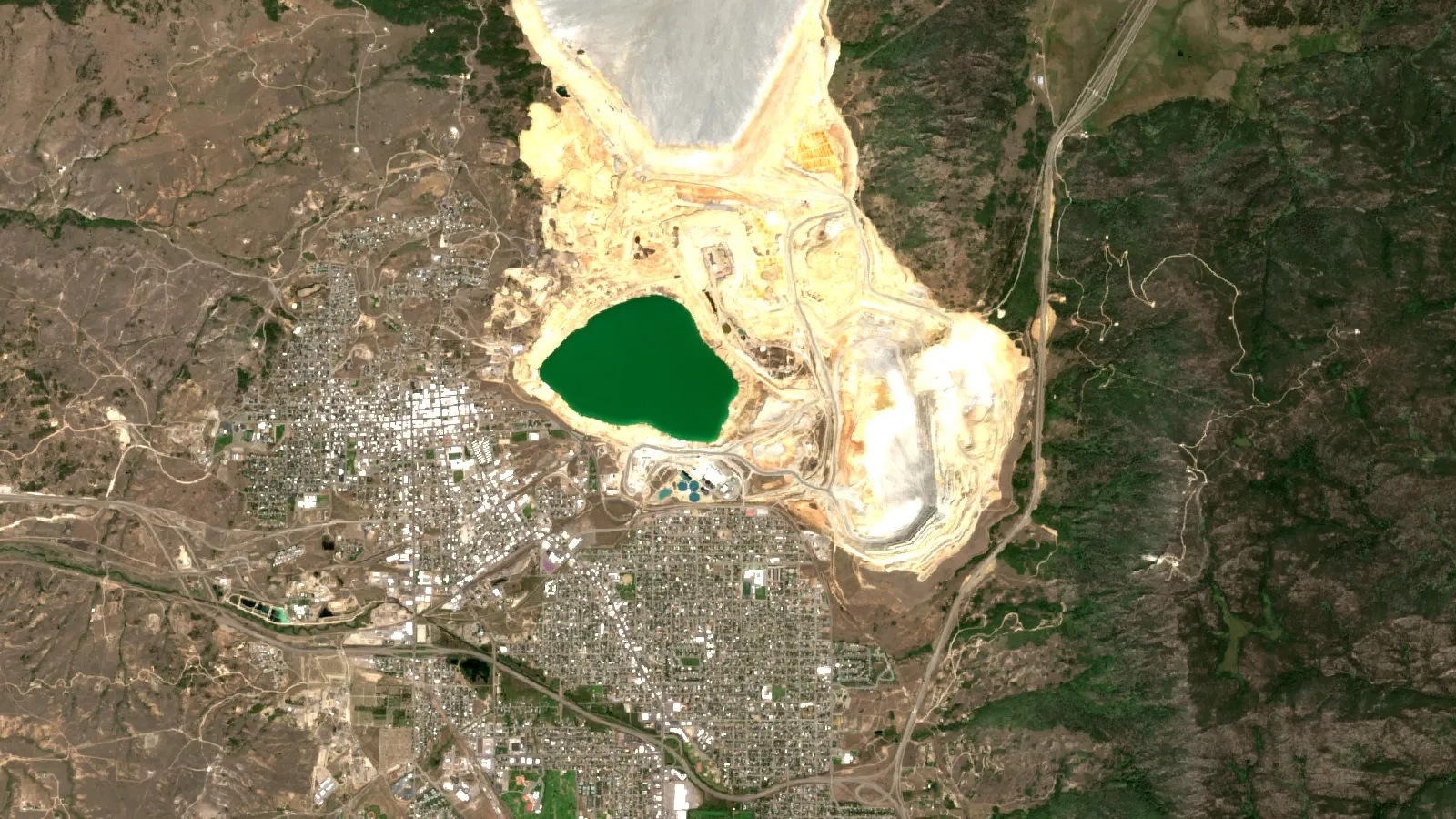
A before-and-after satellite record is one way to document land cover, bare ground and vegetation across a licence area, and to show a regulator what the baseline looked like. Farmonaut maps licence areas from satellite images, starting from a KML, KMZ or polygon, and can screen ground for minerals before any ground crew goes in, which keeps early disturbance down. If you have a boundary to map, you can send it for a quote or contact the team. The hero image at the top of this page was built from Sentinel-2 imagery of a mining district in Montana.
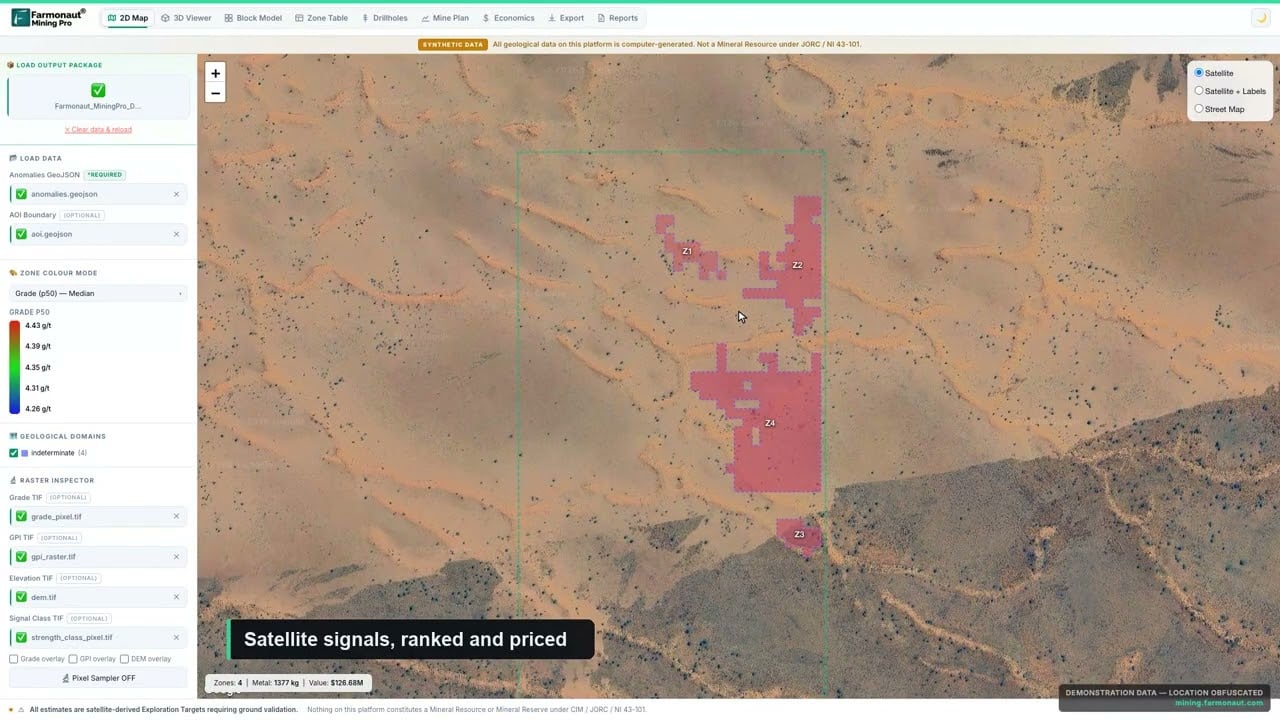
▶ A short look at Farmonaut Mining Pro, which turns a licence boundary into a geological and economic picture from satellite data. · 4:56
Closure budget calculator
Use the calculator on this page to turn acreage, a unit cost and a water treatment bill into a closure budget. The indirect cost default comes from the Idaho study, where indirect costs were about 28% of direct costs.
Calculator
What could your closure budget look like?
Enter your own acreage and unit costs. Results update as you type.
- Direct reclamation cost: $4,500,000
- Indirect costs: $1,260,000
- Water treatment, undiscounted: $7,000,000
- Closure budget as share of capital cost: 8.5%
Example values only, not benchmarks. Cost per acre is an input: use your own estimate or today’s contractor price. The 28% indirect default is derived from the DeLamar feasibility study (indirect US$8.49 million on direct US$30.56 million, Forte Dynamics, December 2025). Water treatment is simple annual cost times years, undiscounted. All money in US$.
For a closer look at a related question, see our guide: Golden Sunlight Mine Montana: Reclamation Status.
If this topic matters to you, read Mine Land Restoration: 7 Steps, Bonds and Timelines next.
Frequently asked questions
What is the difference between reclamation and restoration in mining?
Reclamation returns mined land to a safe, stable and usable condition that meets the permit, often with a new end use such as pasture or wildlife habitat. Restoration tries to rebuild a native ecosystem that matches a reference site. Most regulations require reclamation; restoration is a stricter, rarer target.
Is reclamation the same as rehabilitation?
Often, in practice. The SER standards describe rehabilitation as repair of ecosystem function without a native reference target, and note that when it is used for mined land it is sometimes called reclamation. Ontario uses “rehabilitation” in its Mining Act, while US rules mostly say “reclamation”.
Do mining companies have to restore the land they mine?
In the United States the legal duty is reclamation to the permit standards. For coal, the statute adds a return to the approximate original contour and to the uses the land supported before. A mine is only required to restore a native ecosystem if a permit condition or a mitigation agreement says so.
Who regulates mine reclamation in the US?
BLM regulates hardrock operations on public land under 43 CFR 3809, the Forest Service handles national forests, and the Office of Surface Mining Reclamation and Enforcement oversees coal. States such as Nevada, Arizona and Idaho run permits on private and state land, often together with the federal agency.
How is a reclamation bond calculated?
On BLM land an individual guarantee must cover the estimated cost of hiring a third party to carry out the reclamation plan, including treatment facilities and interim maintenance. The DeLamar study priced its Idaho reclamation with the Standardized Reclamation Cost Estimator, which grew out of a Nevada unit-cost project, and the Idaho Department of Lands sets the final assurance amount. The amount rises or falls as the plan or the cost estimate changes.
How much does reclamation cost?
It depends on the site. The Idaho DeLamar feasibility study puts total reclamation at US$65.45 million, about 10% of initial and sustaining capital cost (excluding reclamation), with 40% of that for post-closure water treatment. Use your own acreage and estimates in the calculator; do not apply that percentage to a different type of mine without checking.
How long does reclamation take?
Earthworks and covers can take several years, and monitoring continues until the regulator releases the bond. In the DeLamar plan, reclamation spending runs from mine year 4 to year 13, and water treatment costs were discounted over 75 years. Restoration to a full native ecosystem usually takes much longer, since SER says substantial recovery requires long periods.
What is progressive reclamation?
It means reclaiming parts of the site while the mine is still working. BLM’s performance standards require reclamation at the earliest economically and technically feasible time on areas that will not be disturbed again, and ICMM calls the same idea progressive closure.
When is a reclamation bond released?
When the regulator inspects and accepts the work. BLM guidance for Arizona says part of a bond may be released when the matching part of the reclamation has been finished to the approved plan. Long-term water treatment can keep a trust fund in place after the rest is released.
Do small exploration projects need reclamation?
Yes, but thresholds and paperwork differ. Nevada requires a reclamation permit for disturbance over 5 acres, and Oregon sets an operating permit threshold at one acre in 12 months for surface mining. Check your state agency and, on federal land, the BLM or Forest Service office before you start.
What is a post-mining land use?
It is the use agreed for the land after mining, such as grazing, forestry, wildlife habitat, recreation or industry. ICMM asks that it be defined early, because it decides the design of covers, slopes and drainage. A post-mining land use can be agreed together with the landowner and the regulator.
Is mine closure the same as reclamation?
No. Closure is the whole programme, including planning, earthworks, water treatment, monitoring and handing the land back. Reclamation is the land repair inside it.
This page is for information only. It is not legal advice or investment advice. Confirm reclamation, bonding and permit rules with the regulator and the land manager for your site.
Farmonaut mining
Get a quote to map your licence area from space
Send a KML, KMZ or polygon and Farmonaut screens the area from satellite images before ground crews go in.
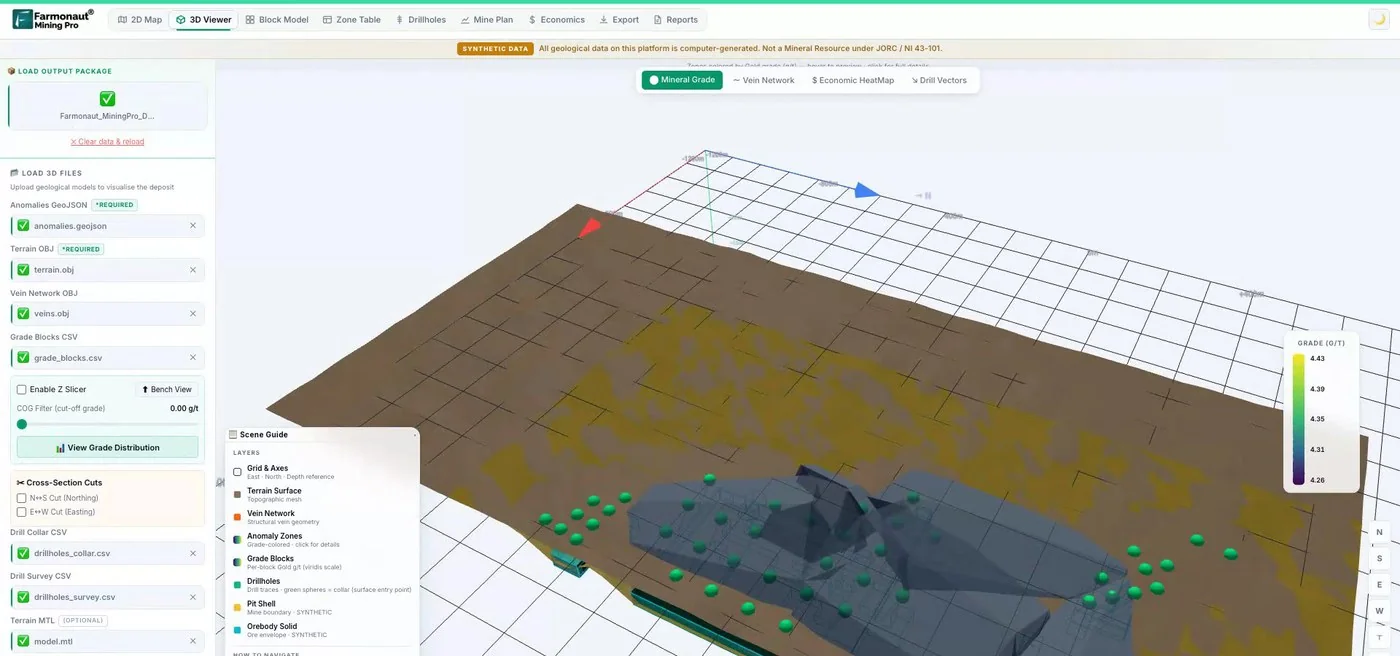
Mining Pro sample view, synthetic data
Keep reading
Sources
- US Code, 30 U.S.C. 1265: Environmental protection performance standards (SMCRA): law.cornell.edu
- eCFR, 30 CFR 701.5: Definitions (approximate original contour): law.cornell.edu
- eCFR, 43 CFR 3809.5: Definitions (reclamation): law.cornell.edu
- eCFR, 43 CFR 3809.420: Performance standards: law.cornell.edu
- eCFR, 43 CFR 3809.551: Choices for a financial guarantee: law.cornell.edu
- eCFR, 43 CFR 3809.552: What an individual financial guarantee must cover: law.cornell.edu
- Society for Ecological Restoration, International Principles and Standards for the Practice of Ecological Restoration, 2nd edition (2019), BLM-hosted copy: blm.gov
- Gann et al., International principles and standards for the practice of ecological restoration, 3rd edition, Restoration Ecology (June 2026): umimpact.umt.edu
- Nevada Division of Environmental Protection, Bureau of Mining Regulation and Reclamation: ndep.nv.gov
- Oregon DOGAMI, Mineral Land Regulation and Reclamation: surface mining: oregon.gov
- BLM and Arizona Department of Mines and Mineral Resources, Arizona Mine Permitting Guide: blm.gov
- ICMM, Integrated Mine Closure Good Practice Guide, 2nd edition (February 2019): icmm.com
- Ontario Ministry of Northern Development and Mines, Publicly Posting Financial Assurance Information: geologyontario.mndm.gov.on.ca
- Forte Dynamics for Integra Resources, DeLamar Project feasibility study (effective 8 December 2025): minedocs.com
- Newmont Corporation, Form 10-K for the year ended 31 December 2025: s24.q4cdn.com
- Freeport-McMoRan, Form 10-K for the year ended 31 December 2025: s22.q4cdn.com
- Agnico Eagle Mines, 2025 Annual Report: s205.q4cdn.com
- US Government Accountability Office, GAO-19-436R: Hardrock Mining financial assurances: gao.gov
Discussion
Questions, corrections or field experience? Share them below. First-time comments are reviewed before they appear, and your email is never published.
No comments yet. Be the first to add a question or your experience.

 Mining SARL
 SenGold Invest SAS
 Sania Corporation
 Sean Mining Limited
 NTS Group (Pty) Ltd
 Mine4Africa
 Lithspo Minerals Limited
 Tintina Mining Group
 Dalgety Minerals Pty Ltd
 Vortex Minerals Pty Ltd
 Faith At Work (Pty) Ltd
 Geotech Mining Solutions plc
 Vulcan International Limited
 Kidepo Associates
 GKY Mining
 Alkimy SARL
 Double A Trading
 GemSprout Metals Limited
 Qader Group
 Ileys General Trading
 SG Gold Mining LLC
 VRV Global Pte Ltd
 Omsri International FZE
 G.I.T.T.










