

Wind turbines · Rare earth data guide
Neodymium per MW Wind Turbine: kg by Drive Type
A direct-drive permanent-magnet turbine holds about 180 kg of neodymium per MW; a hybrid holds about 50 kg and a geared doubly-fed one about 12 kg (JRC, 2024). See kilograms per turbine, why sources disagree, the metal’s cost and who supplies it.
Key takeaways
- Direct-drive permanent-magnet turbines hold about 180 kg of neodymium per MW (plus or minus 30), hybrid designs about 50 kg and geared doubly-fed designs about 12 kg (JRC, 2024).
- A 6 MW direct-drive turbine holds roughly 1,080 kg of neodymium; the JRC lists no neodymium for direct-drive turbines with wound (electrically excited) generators (our calculation from JRC, 2024).
- An average wind-turbine magnet is 28.5% neodymium by weight and can weigh up to 4 tonnes per turbine (JRC, 2020).
- China produced about 69% of world rare earth mine output in 2025 (270,000 of 390,000 tonnes of oxide equivalent, USGS estimate).
- Trading Economics quoted neodymium at 947,500 yuan per tonne on 15 October 2026, about US$142 per kg, which puts about US$25,500 of metal in each direct-drive MW.
In this article
- How much neodymium is in one megawatt of wind power
- Direct drive, geared or hybrid: where the gap comes from
- How much neodymium is in a single wind turbine
- Why published figures disagree
- How many turbines use permanent magnets
- Where the neodymium comes from and who controls it
- What the neodymium in a turbine costs
- Recycling and end of life for turbine magnets
- Ways to cut neodymium use per megawatt
- Screening rare earth ground from space
- Frequently asked questions
A direct-drive wind turbine with a permanent-magnet generator holds about 180 kg of neodymium for every megawatt (MW) of capacity, according to the European Commission’s Joint Research Centre (JRC, 2024). A geared turbine with a doubly-fed generator holds about 12 kg per MW, and a turbine with a wound (electrically excited) generator holds none. That is a 15-fold gap, and it is why quoted figures range from nearly zero to more than 200 kg per MW. This page lists the figures by turbine type, converts them into kilograms per turbine, explains why sources disagree, and puts a price on the metal. It is written for consultants, analysts and buyers who need numbers they can trace.
How much neodymium is in one megawatt of wind power
Neodymium (symbol Nd) is a rare earth element. Its main use is in neodymium-iron-boron (NdFeB) magnets, an alloy discovered in the 1980s that is far stronger than older magnets (Royal Society of Chemistry). In a wind turbine those magnets sit in the generator. The amount depends on one design choice: whether the generator uses permanent magnets at all.
Chart
Neodymium per MW by generator type
Kilograms of neodymium per megawatt, median
The JRC’s 2024 update of wind material intensities gives a median and a spread for each generator type. For neodymium it reports 180 kg per MW (plus or minus 30) for a direct-drive permanent-magnet generator, 50 kg per MW (plus or minus 20) for a geared permanent-magnet design that uses a full-power converter, and 12 kg per MW (plus or minus 6) for a geared doubly-fed induction generator (JRC, Material requirements for wind turbines, 2024). Across all types the JRC range runs from 6 to 210 kg per MW.
Plain terms used here: a direct-drive turbine connects the rotor straight to the generator with no gearbox. A geared turbine uses a gearbox to spin a smaller, faster generator. A PMSG is a permanent-magnet synchronous generator, the type that holds the NdFeB magnets.
Direct drive, geared or hybrid: where the gap comes from
A slow-turning rotor needs a large-diameter generator with many magnet poles to make power, so direct-drive machines carry the most magnet. A geared machine lets the generator run fast, which needs far less magnet. Hybrid (medium-speed) designs sit in the middle. The JRC table also shows how the other magnet metals scale with the design. All values are kilograms per MW. The main figure is the median of the JRC’s reference values and the bracket is the range between the first and third quartiles; type F is given only as a range (7 to 34 for neodymium, 1 to 4.7 for dysprosium), and the JRC does not explain why a design without permanent magnets carries rare earths.
| Turbine type (JRC label) | Neodymium | Dysprosium | Praseodymium | Terbium |
|---|---|---|---|---|
| Geared, doubly-fed generator (C) | 12 (±6) | 2 (±1) | 0 | 0 |
| Direct drive, permanent magnet (D-PM) | 180 (±30) | 17 (±4) | 35 | 7 |
| Hybrid, permanent magnet (E-PM) | 50 (±20) | 4 (±3) | 4 | 1 |
| Hybrid (gearbox plus full-power converter), squirrel-cage generator (F) | 7 to 34 | 1 to 4.7 | 0 | 0 |
Source: JRC, Material requirements for wind turbines (2024), Table 1. The JRC lists no rare earth value for direct-drive turbines with electrically excited generators, which carry no permanent magnets. Dysprosium (Dy) and terbium (Tb) are added to magnets so they keep their strength at high temperature; praseodymium (Pr) is a close relative of neodymium that is usually supplied with it.
The same table shows why direct-drive magnets are the main cost and supply concern: at 17 kg of dysprosium per MW they hold more than eight times the dysprosium of a doubly-fed geared turbine. The JRC’s earlier study found that an average wind-turbine magnet is 28.5% neodymium, 4.4% dysprosium, 1% boron and 66% iron by weight (JRC, The role of rare earth elements in wind energy and electric mobility, 2020).
How much neodymium is in a single wind turbine
Multiply the per-MW figure by the turbine rating. A 3 MW direct-drive machine holds about 540 kg of neodymium, a 6 MW machine about 1,080 kg, and a 15 MW offshore machine about 2,700 kg. These are calculations from the JRC median of 180 kg per MW, not manufacturer data, and the middle half of the JRC’s reference values for direct-drive permanent-magnet turbines runs from about 150 to 210 kg per MW.
Chart
Neodymium in one direct-drive turbine
Kilograms of neodymium per turbine, by rating
The JRC’s 2020 report says an average permanent magnet set for a wind turbine weighs up to 4 tonnes. At 28.5% neodymium that is up to about 1.1 tonnes of the metal in the largest sets.
Older estimates agree in scale. A 2014 study by AMEC for Zero Waste Scotland assumed 186.6 kg of neodymium per MW and calculated 560 kg for a Siemens 3.0 MW turbine, 1,120 kg for a 6.0 MW unit and 1,493 kg for a Vestas 8 MW unit, scaling linearly with size (AMEC for Zero Waste Scotland, 2014). The same study counted the UK fleet and found that only 26 of about 3,900 large turbines (0.67%) used neodymium-based permanent-magnet generators, because many direct-drive machines, such as those from Enercon, use wound generators with no neodymium.
For scale, the Global Wind Energy Council (GWEC) reports 165 GW of new wind capacity in 2025 from 28,395 turbines, which is an average of about 5.8 MW per turbine (GWEC, Global Wind Report 2026). The division is ours.
Why published figures disagree
Published figures for this topic range from under 20 kg to 1 tonne per MW. The gaps come from four things:
Chart
Published ranges for rare earths per MW
Kilograms per MW; the sources count different things
- Different quantities. Some sources give magnet weight (500 to 600 kg per MW for direct drive in a 2011 Oeko-Institut presentation), some give all rare earths, and some give neodymium alone. Neodymium is under a third of the magnet by weight.
- Different designs. A figure for a direct-drive permanent-magnet machine is not a figure for a geared one. The Oeko-Institut slides separate them: up to about 200 kg of rare earths per MW for direct-drive permanent-magnet generators, about 30 kg for geared permanent-magnet designs, and none for electrically excited generators (Oeko-Institut, 2011).
- Different years. Magnet designs have changed. A 2011 US Geological Survey (USGS) report repeated a 2009 claim that wind generators can contain 1 tonne of neodymium per MW (USGS, Rare Earth Elements: End Use and Recyclability, 2011). The JRC’s 2024 median for the heaviest design is about one fifth of that.
- Different scope. A fleet average mixes magnet and non-magnet turbines. A per-model figure does not.
When you see a number, ask which quantity it describes, which generator type, and which year it comes from.
How many turbines use permanent magnets
The JRC’s 2020 report states that permanent-magnet generators were used in nearly all offshore wind turbines in Europe in 2018 and in about 76% of offshore turbines worldwide (JRC, 2020). It adds that it may be possible to replace permanent-magnet generators onshore, where compact, light generators matter less.
GWEC reports that 9.3 GW of offshore wind was connected in 2025, bringing offshore capacity to 92.3 GW (GWEC, 2026). If every one of those offshore machines were a direct-drive permanent-magnet design at the JRC median, the neodymium in them would be about 1,700 tonnes. That is an upper bound for offshore only, since some offshore units are geared; onshore permanent-magnet turbines are not counted. It is our arithmetic rather than a published estimate.
Where the neodymium comes from and who controls it
Neodymium is mined mixed with other rare earths and then separated. The USGS estimates world rare earth mine production at 390,000 tonnes of rare earth oxide equivalent in 2025, of which China produced 270,000 tonnes, about 69% (USGS, Mineral Commodity Summaries 2026). The United States produced an estimated 51,000 tonnes, with bastnaesite mined at Mountain Pass in California, and Australia 29,000 tonnes. USGS also reports that the United States imported 67% of its apparent consumption of rare earth compounds and metals in 2025 (estimate), and that 71% of its compound and metal imports in 2021 to 2024 came from China.
Chart
Rare earth mine production, selected countries
Selected countries; tonnes of rare earth oxide equivalent, 2025 estimate (world total 390,000 t)
Controls on exports matter for turbine makers because the magnet metals dysprosium and terbium are on China’s list. USGS records that in April 2025 China added controls on samarium, gadolinium, terbium, dysprosium, lutetium, scandium and yttrium, expanded them in October, and suspended the October expansion for one year in November. The International Energy Agency (IEA) reports in its Global Critical Minerals Outlook 2026 that prices for the heavy rare earths dysprosium and terbium in Europe were about five times Chinese domestic prices (IEA, Global Critical Minerals Outlook 2026). Neodymium itself was not on the April 2025 list, but the heavy rare earths that make a direct-drive magnet work at high temperature were.
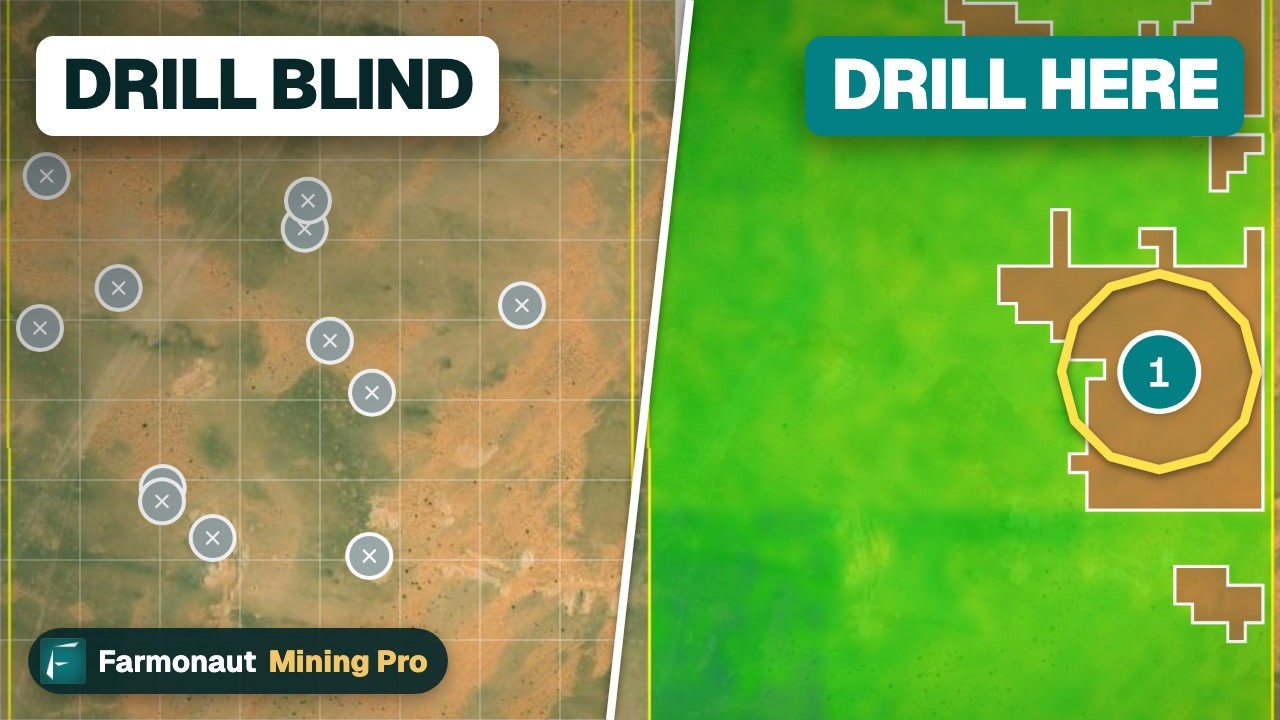
▶ Why the world needs mined energy-transition minerals, and what mining does for an economy. · 5:03
What the neodymium in a turbine costs
Trading Economics’ neodymium benchmark stood at 947,500 yuan per tonne on 15 October 2026, 30.7% above a year earlier (Trading Economics, 15 October 2026). At the exchange rate on the same page (6.69 yuan per US dollar) that is about US$142 per kilogram. At 180 kg per MW, the neodymium in one direct-drive megawatt is therefore worth about US$25,500, and a 6 MW turbine holds about US$153,000 of the metal. The price is an index quote for the metal, not what a magnet maker pays for alloy, and it does not include praseodymium, dysprosium or terbium.
For comparison, the USGS average for 2025 (estimate) was US$73 per kilogram for neodymium oxide and US$69 per kilogram for neodymium-praseodymium oxide. Our neodymium cost per kg and magnet price guide covers the price chain from oxide to finished magnet. The calculator below turns any per-MW figure and price into a project total.
Calculator
How much neodymium is in your wind project?
Enter your turbine size, count and a per-MW figure from your supplier.
- Neodymium per turbine (kg): 1,080
- Magnet mass if Nd is 28.5% of it (tonnes): 151.6
- Value of the neodymium at your price (US$): $6,048,000
Example values only, not a benchmark. The 180 kg per MW default is the JRC (2024) direct-drive median; use 12 for a geared doubly-fed design. The 28.5% neodymium share of the magnet is from the JRC (2020). The price is an input: example, use today’s price. Money is in US$ per kg.
Recycling and end of life for turbine magnets
Turbine magnets are not yet a meaningful source of neodymium. The USGS reports that only limited quantities of rare earths were recovered from batteries, permanent magnets and fluorescent lamps in 2025. The JRC’s 2020 report says there is no effective system for collecting and separating rare earth products at end of life and that most of the metal ends up in landfill or in steel and cement. It also notes that magnets can last far longer than the turbine and may be reused or remanufactured instead of recycled.
The AMEC study works on a 25-year turbine life and notes that recovery rates for post-consumer magnets are very low compared with global supply, partly because end-of-life magnets carry impurities and the exact alloy often does not suit direct reuse.
Ways to cut neodymium use per megawatt
- Hybrid drives. A smaller magnet with a gearbox can cut neodymium, praseodymium and dysprosium use by up to two thirds per turbine, according to the Centre for Sustainable Energy figure quoted by the JRC (2020). The 2024 JRC table is in line with this: 50 kg per MW against 180 kg is a cut of about 72%.
- Less dysprosium. The JRC reports that Siemens Gamesa and Goldwind had cut dysprosium in their generators to below 1% by 2018.
- No rare earths. Electrically excited direct-drive generators have no permanent magnets, and the JRC lists no neodymium for them. Ferrite-magnet prototypes were tested up to 12 MW at the time of the JRC’s 2020 report, though the JRC adds that most replacements are less efficient than neodymium magnets.
If you are comparing suppliers, ask for four things: the generator type, the magnet mass per MW, the neodymium and dysprosium share, and the origin of the magnet alloy.
Screening rare earth ground from space
Every kilogram above starts as rock. Consultants and licence owners who need to rank rare earth ground before drilling can use satellite data to screen an area; Farmonaut’s satellite-based mineral detection covers rare earth elements among more than 20 minerals and returns exploration targets in 5 to 20 business days. These are targets for sampling, not a resource estimate. For a scoped quote use the mining query form or contact us. Related reading: rare earth deposits and exploration, what rare earths are used for and NdPr price shifts.
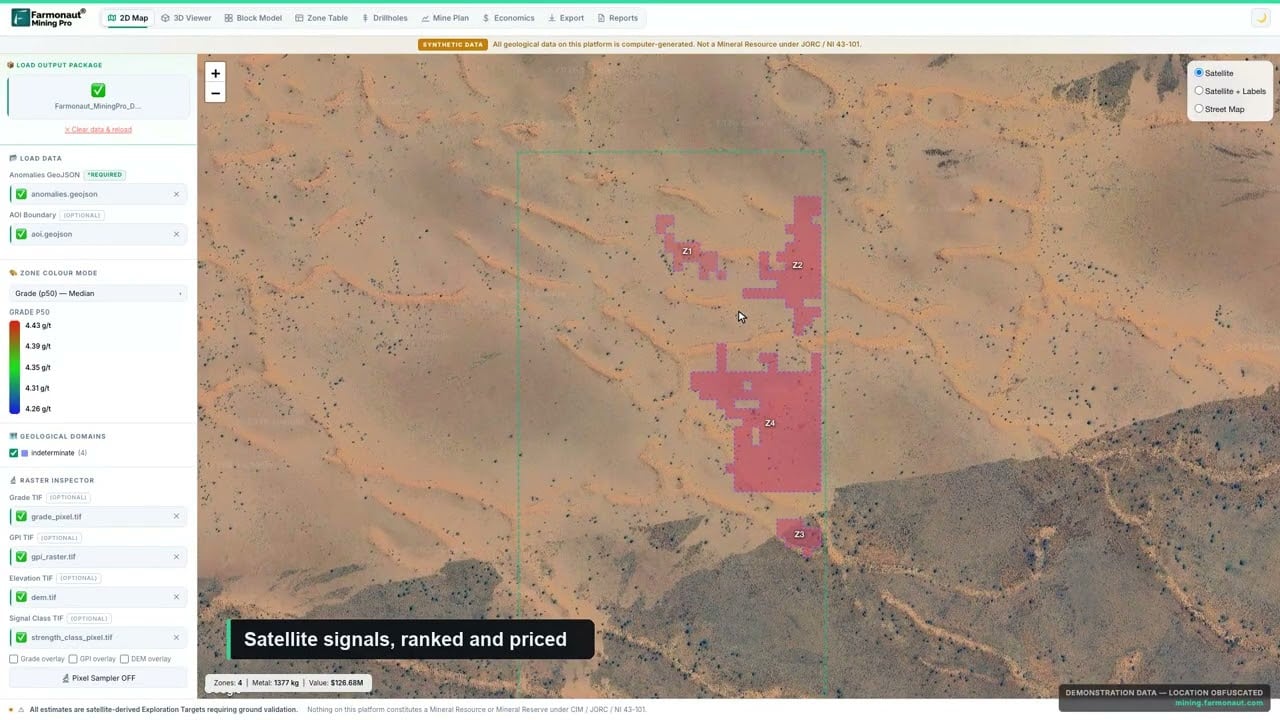
▶ A short look at Farmonaut Mining Pro, which turns a licence boundary into a geological and economic picture. · 4:56
Frequently asked questions
How much neodymium is in a 1 MW wind turbine?
For a direct-drive permanent-magnet design, about 180 kg (plus or minus 30), per the JRC’s 2024 median. A geared turbine with a doubly-fed generator holds about 12 kg, and a hybrid permanent-magnet design about 50 kg.
How much neodymium is in one 3 MW or 6 MW turbine?
If the turbine is direct drive with permanent magnets, about 540 kg for 3 MW and 1,080 kg for 6 MW at the JRC median. A geared turbine of the same size holds roughly 36 kg and 72 kg at 12 kg per MW.
Do all wind turbines use neodymium?
No. Turbines with electrically excited generators use none, and the JRC lists only small amounts (12 kg per MW for a geared doubly-fed machine, 7 to 34 kg for the squirrel-cage hybrid type) for designs without a full permanent-magnet generator. In 2018, permanent-magnet generators were in about 76% of offshore turbines worldwide (JRC, 2020), and only 0.67% of the large UK fleet used neodymium-based generators at the time of the 2014 AMEC count.
What percentage of a wind turbine magnet is neodymium?
About 28.5% by weight for an average wind-turbine magnet, with 4.4% dysprosium, 1% boron and 66% iron (JRC, 2020).
Why do some sources say 1 tonne of neodymium per MW?
The figure traces to a 2009 source repeated in a 2011 USGS report. It is about five times the JRC’s 2024 median for direct-drive machines, and magnet designs have since become lighter.
Why do direct-drive turbines use more neodymium?
The rotor turns slowly and drives the generator directly, so the generator must be large with many magnet poles. A geared turbine spins its generator faster and needs far less magnet.
How much dysprosium does a direct-drive turbine hold?
About 17 kg per MW (plus or minus 4) in the JRC’s 2024 table, against 2 kg per MW for a geared doubly-fed machine.
How much neodymium did the wind industry install?
No published total was found. For offshore wind alone, 9.3 GW connected in 2025 at 180 kg per MW would be about 1,700 tonnes if every machine were direct drive with permanent magnets; the true offshore figure is lower because some units are geared. Onshore permanent-magnet turbines add to the total, so this is not an upper bound for the whole industry.
Can the neodymium in turbine magnets be recycled?
In principle yes, but USGS reports only limited recovery from permanent magnets in 2025, and the JRC says collection systems for end-of-life products are not in place.
What does the neodymium in a turbine cost?
At the 15 October 2026 Trading Economics quote (about US$142 per kg), the neodymium in one direct-drive MW is worth about US$25,500. Use the calculator on this page with today’s price. This is not investment advice.
This page is for information only. It is not investment advice. Metal prices are index quotes on the date shown; confirm current prices and supplier specifications before you rely on them.
Farmonaut mining
Map your mining site from space
Consultants can screen a licence area for rare earth targets by satellite before committing to field work; results are exploration targets, ahead of any resource estimate.

Mining Pro sample view, synthetic data
Keep reading
Sources
- European Commission JRC, Material requirements for wind turbines (2024): publications.jrc.ec.europa.eu
- European Commission JRC, The role of rare earth elements in wind energy and electric mobility (2020): publications.jrc.ec.europa.eu
- USGS, Mineral Commodity Summaries 2026, Rare Earths: pubs.usgs.gov
- USGS, Rare Earth Elements: End Use and Recyclability, SIR 2011-5094 (2011): pubs.usgs.gov
- IEA, Global Critical Minerals Outlook 2026, executive summary: iea.org
- GWEC, Global Wind Report 2026 news release: gwec.net
- AMEC for Zero Waste Scotland, Wind turbine market and opportunities for recovery of neodymium magnets in Scotland (2014): cdn.zerowastescotland.org.uk
- Oeko-Institut, Rare Earths: a Bottleneck for future Wind Turbine Technologies? (2011): oeko.de
- Trading Economics, Neodymium rare earth price (15 October 2026): tradingeconomics.com
- Royal Society of Chemistry, Periodic Table: Neodymium: periodic-table.rsc.org
Discussion
Questions, corrections or field experience? Share them below. First-time comments are reviewed before they appear, and your email is never published.
No comments yet. Be the first to add a question or your experience.

 Sania Corporation
 Sean Mining Limited
 NTS Group (Pty) Ltd
 Mine4Africa
 Lithspo Minerals Limited
 Tintina Mining Group
 Dalgety Minerals Pty Ltd
 Vortex Minerals Pty Ltd
 Faith At Work (Pty) Ltd
 Geotech Mining Solutions plc
 Vulcan International Limited
 Kidepo Associates
 GKY Mining
 Alkimy SARL
 Double A Trading
 GemSprout Metals Limited
 Qader Group
 Ileys General Trading
 SG Gold Mining LLC
 VRV Global Pte Ltd
 Omsri International FZE
 G.I.T.T.
 Jaunita Erss Ltd
 SRK Consulting











