

Off Shore Wind Turbine & Wind Farm Innovations 2026: Transforming Renewable Energy for a Clean Future
“By 2026, offshore wind turbine efficiency is projected to increase by 15%, revolutionizing renewable energy production worldwide.”
Table of Contents
- Introduction: The Rise of Offshore Wind Turbines in 2026
- Why Offshore Wind? Unique Advantages of Wind Turbine Wind Farm Development
- Key Innovations in Offshore Wind Turbines & Wind Farms: 2024 vs. 2026
- Cutting-Edge Technology: Innovations Driving Offshore Wind Turbines
- GE Offshore Wind Turbine: Engineering the Future
- Economic & Environmental Benefits: Offshore vs. Onshore Wind Farms
- Infrastructure & Grid Integration: Meeting National & Regional Targets
- Offshore Wind for Agriculture, Forestry, and Coastal Regions
- Satellite-Driven Monitoring: Farmonaut’s Role in Clean Energy & Land Use
- Energy Security, Coastal Management & Defense
- Industry Trends and Future Directions for 2026 and Beyond
- FAQ: Offshore Wind Turbine & Wind Farm Innovations
- Conclusion: Shaping a Sustainable Global Future
Introduction: The Rise of Offshore Wind Turbines in 2026
As the global demand for clean and sustainable energy intensifies, the rise of the off shore wind turbine and innovative wind turbine wind farm technologies is transforming our renewable energy landscape in 2025 and beyond. Offshore wind turbines—strategically positioned in coastal bodies and on continental shelves—have emerged as a pivotal technology, offering reliable, large-scale outputs while minimizing land use conflicts prevalent in on shore wind farm projects. Especially relevant for sectors such as agriculture, forestry, and infrastructure, offshore wind solutions provide the dual benefits of sustainable energy and ecosystem preservation.
“Global offshore wind farm capacity is expected to surpass 120 GW by 2025, marking a new era in clean energy generation.”

By 2026, we are witnessing a robust expansion in offshore wind turbine capacities, highlighted by the development of turbines exceeding 14 MW per unit, as pioneered by leaders such as GE Offshore Wind Turbine. These advancements are paramount to national renewable energy targets and are influencing global economic and environmental strategies by promoting clean energy and decarbonization.
Why Offshore Wind? Unique Advantages of Wind Turbine Wind Farm Development
Offshore wind development is fundamentally reshaping how we source our energy:
- Stronger & More Consistent Winds: Coastal and marine regions benefit from stronger and more consistent wind speeds compared to many onshore areas, allowing turbines to generate electricity efficiently.
- Minimizing Land Use Conflicts: Offshore deployments do not compete for precious agricultural or forestry land, thus preserving ecosystems, farming areas, and reducing conflicts often seen with onshore projects.
- Scalable Renewable Source: Offshore wind farms can be built at a far larger scale than onshore projects, supporting substantial national and regional energy production goals.
The natural advantages of offshore wind allow us to address urgent global challenges, including reducing reliance on fossil fuels, boosting energy security, and fostering sustainable regional development.
Comparing Offshore and Onshore: Why Technology Matters
While the biggest onshore wind turbine capacities have reached around 6-8 MW by 2025, they remain outpaced by offshore units, which now commonly exceed 14 MW. The consistent marine wind conditions, coupled with advances in turbine design and grid integration, make offshore projects a cornerstone for future energy infrastructure.
Key Innovations in Offshore Wind Turbines & Wind Farms: 2024 vs. 2026
To underscore the rapid pace of technological advancement in this sector, here’s a table illustrating the projected evolution and impact of key offshore wind turbine and wind farm features from 2024 to 2026:
| Innovation / Feature | 2024 Status (Estimated) | 2026 Innovation / Projection (Estimated) | Impact on Efficiency (% Increase) | Impact on Cost Reduction (% Decrease) |
|---|---|---|---|---|
| Turbine Capacity (MW) | Up to 12-14 MW per turbine | Exceeding 16 MW per turbine | +10-15% | -5% |
| Blade Length (meters) | Up to 115 meters | 130+ meters | +7% | -3% |
| Floating Platform Adoption | ~5% of new projects | 15-20% of new projects | +12% | -7% |
| Maintenance Automation Level | Partial automation & remote monitoring | Full AI-driven predictive maintenance; robotics enabled | +15% | -12% |
| Grid Integration Advances | Basic digital monitoring; limited storage solutions | Smart grid-ready; hybrid energy integration, advanced storage | +15% | -8% |
As seen above, breakthrough innovations in offshore wind turbine design, floating platforms, and AI-powered maintenance are propelling the sector toward unprecedented efficiency and cost-effectiveness. This is revolutionizing the deployment of next-generation wind turbine wind farm projects across coastal and marine areas.

Cutting-Edge Technology: Innovations Driving Offshore Wind Turbines
Recent years have seen a bold expansion in both scale and capability of offshore wind turbine companies and their solutions. The following areas are particularly noteworthy:
- Advanced Rotor and Blade Designs: Turbines now feature larger rotor diameters and extended blade lengths, enabling them to capture more wind and increase electricity output significantly.
- Materials Engineering: Next-gen materials improve the robustness and longevity of turbines against harsh marine environments, reducing maintenance costs and downtime.
- Floating Foundations: Floating offshore platforms unlock previously untapped wind resources in deeper waters, expanding the viable locations for wind farms well beyond shallow continental shelves.
- Smart Automation & Remote Monitoring: Implementation of AI-driven analytics for predictive maintenance, digital twins, and real-time optimization, enhances system reliability and reduces operational risks in hostile marine conditions.
The integration of these technologies ensures the sustainable growth and viability of offshore wind energy in 2025 and beyond.
GE Offshore Wind Turbine: Engineering the Future
Among the key players in the offshore wind turbine sector, GE Renewable Energy stands out for its robust, scalable solutions that are shaping both current and future projects. The GE Offshore Wind Turbine models are renowned for:
- Exceeding 14 MW per unit—a leap from earlier generations, setting a new benchmark for capacity and efficiency in the global industry.
- Enhanced rotor sizes, larger diameters, and taller towers—allowing maximum wind capture and substantial energy yields even in lower wind conditions.
- Ability to withstand harsh marine environments—their design ensures durability and reliability under continuous saltwater exposure and heavy winds.
- Integrated AI-powered maintenance and operational services—GE’s holistic solutions include real-time monitoring and digital maintenance, minimizing downtime and maximizing output.
These advancements are critical to the global expansion of offshore wind farms and the ability to meet ambitious national and regional renewable energy targets.
Offshore Wind Turbine Companies Moving Beyond Manufacturing
It’s not just about building turbines; offshore wind turbine companies are providing an increasingly integrated approach, offering:
- Development, installation, operation, and maintenance services for complete wind farm solutions.
- Grid optimization and subsea cabling solutions to ensure seamless deployment and integration into energy infrastructure.
- Digital and AI-driven platforms for performance tracking and predictive analytics.
This holistic strategy helps guarantee the long-term viability and return on investment for offshore wind energy projects.

Economic & Environmental Benefits: Offshore vs. Onshore Wind Farms
Offshore wind energy is not only transforming electricity generation but is also delivering significant economic and environmental benefits:
- No Competition for Land: Unlike the on shore wind farm, offshore wind farms preserve valuable agricultural and forestry regions, thereby protecting ecosystems and supporting biodiversity.
- Job Creation: The development of offshore wind infrastructure in coastal regions fuels job and industry creation—ranging from manufacturing and engineering to port operations and maintenance.
- Emissions Reduction: Offshore wind energy helps nations reduce dependence on fossil fuels and cut greenhouse gas emissions, aligning with global clean energy agreements and local targets.
- Support for Coastal & Marine Industries: Fishing and farming activities in rich coastal areas benefit from unencumbered land access while also having reliable, clean energy nearby.
The Future of Land Use & Clean Technology Adoption
As offshore turbine technologies continue to evolve, the world’s rapidly urbanizing coastal regions gain access to scalable, efficient, and environmentally-friendly energy. This not only mitigates the environmental impact of traditional power production but also supports sustainable regional growth.
Infrastructure & Grid Integration: Meeting National & Regional Targets
The integration of offshore wind farms into global energy infrastructure necessitates substantial investment in:
- Modernized port facilities for turbine assembly and deployment
- Smart subsea cabling for reliable electricity transmission, connecting remote offshore platforms directly to onshore grids
- Advanced grid integration utilizing AI, energy storage, and hybrid solutions, ensuring stable electricity delivery even in fluctuating marine wind conditions
These upgrades bring lasting economic and strategic benefits: fostering new marine industries, enhancing regional development, and ensuring grid stability and resilience.
For advanced infrastructure monitoring and logistics—including satellite-powered fleet management, real-time monitoring, and resource optimization—visit the Farmonaut Fleet Management page.
Offshore Wind for Agriculture, Forestry, and Coastal Regions
Offshore wind expansion is having far-reaching impacts across agriculture, forestry, and other coastal sectors:
- Preserved Farmland and Forests: Offshore deployments mean agriculture and forestry lands remain untouched by energy infrastructure, supporting food security and environmental sustainability.
- Boosting Clean Energy Access for Crop & Forestry Sector: Reliable, local wind energy powers irrigation, greenhouse, and timber operations—important for efficiency and emissions reduction.
- Supporting Marine and Coastal Economies: By minimizing land-use conflicts and providing new jobs, coastal communities engaged in fishing, aquaculture, or farming also benefit.
For strategic insights and crop management powered by satellite technology and AI, see Farmonaut Large Scale Farm Management.
Satellite-Driven Monitoring: Farmonaut’s Role in Clean Energy & Land Use
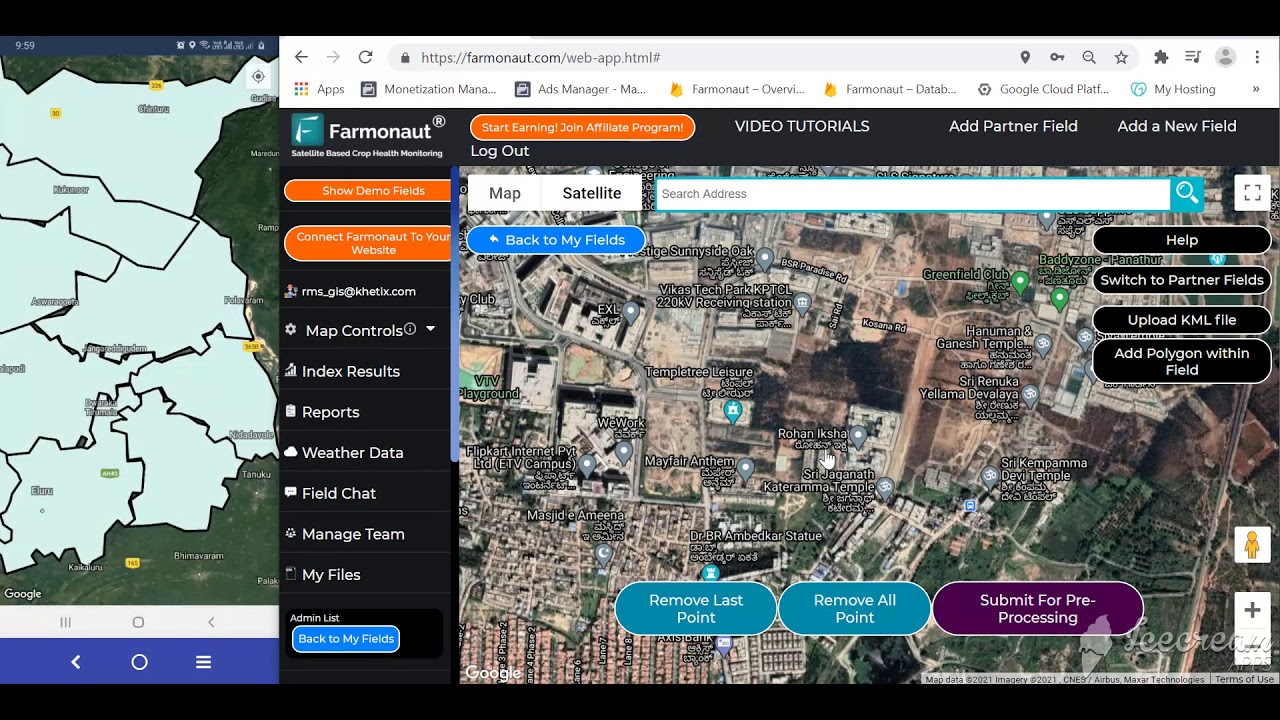
Satellite and remote sensing technologies, like what we provide at Farmonaut, are essential for the monitoring and sustainable management of land use, especially as offshore wind turbines and wind farms continue to expand. Our solutions deliver real-time data, AI-based advisory systems, and blockchain-enabled traceability to a variety of sectors—including farming, infrastructure, and coastal industries:
- Satellite-Based Monitoring: Monitor land use changes, vegetation health, and infrastructure development in regions affected by energy projects—helping reduce land-use conflicts and maintain ecological balance.
- Environmental Impact Tracking: Measure carbon footprints for agriculture, wind energy, and more, supporting sustainability and compliance.
- Resource Management: Optimize logistics, fleet usage, and land allocation—a key advantage in balancing competing land use by wind, farming, forestry, or industrial sectors.
-
Blockchain Traceability: Ensure transparency and traceability of supply chains—critical for agri-food, forestry, and renewable energy operations.
Learn more on our Traceability Solution Page.
To integrate satellite intelligence into your operations, businesses and developers can access the Farmonaut API and API Developer Docs.

Web App: Farmonaut

Android App: Farmonaut

iOS App: Farmonaut
Energy Security, Coastal Management & Defense
As global instability and the drive for energy security rise, offshore wind infrastructure has a strategic significance beyond clean energy generation:
- Resilience Against Global Fuel Supply Shocks: By providing a local, renewable, and reliable source of power, offshore wind farms decrease national dependence on fossil fuel imports and market volatility.
- Supporting Defense and Strategic Activities: Countries leverage offshore energy infrastructure for broader coastal zone management, bolstering defense readiness and securing critical assets.
- Data-Driven Decision Making: Real-time monitoring supports rapid response to environmental or security incidents—a benefit for governments and coastal authorities.
Industry Trends and Future Directions for 2026 and Beyond
Looking to 2026 and beyond, the offshore wind turbine and wind farm sector will continue to be defined by:
- Scaling Up: Projects are trending toward even larger capacities, with turbines exceeding 16 MW and new multi-GW scale offshore wind farms planned worldwide.
- Deepwater Expansion: Floating wind technology will unlock new offshore areas, previously inaccessible due to depth constraints, broadening the reach and impact of offshore energy.
- AI and Automation: Automation across the lifecycle (manufacturing, installation, operation, maintenance) will become the norm, improving efficiency and reducing O&M costs drastically.
- Hybridization: Integration with solar and energy storage will allow offshore wind farms to supply consistent power, smoothing variability even further.
- Sustainability & Traceability: Wind energy operations will increasingly adopt carbon accounting, traceability, and environmental monitoring to prove sustainability claims—enhanced by satellite and blockchain technology.
For plantation and forest advisory powered by satellite and AI, see our Crop Plantation Forest Advisory for sector-specific support.
Frequently Asked Questions: Offshore Wind Turbine & Wind Farm Innovations
What is the main advantage of offshore wind turbine projects compared to onshore wind farms?
The key advantage is access to stronger and more consistent wind resources, enabling greater electricity output per turbine. Offshore projects also avoid land use conflicts by not competing with agricultural, forestry, or urban land, and enable much larger renewable energy installations.
How large are the latest offshore wind turbines in 2026?
Offshore wind turbines have reached capacities exceeding 14-16 MW per unit, with blades over 130 meters and tower heights that maximize energy capture even in lower wind conditions.
What role does GE play in offshore wind turbine innovation?
GE Offshore Wind Turbine models are industry leaders in design, durability, and efficiency, having introduced turbine technology exceeding 14 MW, with advanced digital monitoring and AI-supported maintenance, setting new global standards for offshore wind farms.
What is unique about floating platform technology?
Floating offshore platforms allow wind farms to be deployed in deeper waters beyond the continental shelves, tapping into stronger wind resources and reducing seabed environmental impact, which supports the expansion of the sector into new coastal and marine regions.
How do offshore wind farms support environmental goals?
By providing a clean, reliable energy source, offshore wind farms significantly reduce greenhouse gas emissions, minimize direct impacts on land-based ecosystems, and support nation-wide transition strategies for climate resilience.
How can Farmonaut support offshore energy monitoring?
We provide satellite-based monitoring, AI advisory, and resource optimization tools that enable businesses, governments, and users to track infrastructure health, land-use, and environmental impact, supporting more informed decision-making across the offshore wind energy lifecycle.
Where can I access Farmonaut’s solutions?
Our solutions are accessible via web and mobile apps, with APIs available for direct integration into business and institutional workflows.
Conclusion: Shaping a Sustainable Global Future
The offshore wind turbine and wind farm sector is a transformative force in the global energy transition. By minimizing land use conflicts, reducing emissions, and driving new economic opportunities, offshore wind power is central to achieving sustainable development goals across 2025, 2026, and beyond. Companies like GE are leading technological innovation, while digital advancements and satellite-based intelligence—like those from Farmonaut—ensure project viability and environmental stewardship.
As nations and industries continue to invest in robust, scalable, and sustainable clean energy infrastructure, offshore wind turbine innovation stands at the forefront, powering not just homes and cities, but supporting the farming, forestry, and coastal sectors crucial to our global future.
Ready to integrate satellite insights into your workflow?
Explore our purpose-built solutions:
- Carbon Footprinting – Measure and reduce emissions for land and wind energy projects.
- Blockchain Traceability – Ensure supply chain transparency and compliance.
- Crop Loan & Insurance – Leverage satellite verification for financing in the agricultural sector.
- Fleet Management – Optimize coastal and infrastructure logistics.
- Large Scale Farm Management – Real-time crop and field monitoring for agriculture and forestry.
For further inquiries and to get started, visit our Farmonaut home page.
Disclaimer: Farmonaut is a satellite technology company providing remote sensing, monitoring, and advisory solutions across industries. Farmonaut does not manufacture wind turbines, supply farm inputs, or act as a regulatory authority.
Discussion
Questions, corrections or field experience? Share them below. First-time comments are reviewed before they appear, and your email is never published.
No comments yet. Be the first to add a question or your experience.

 Gen Chayat
 Chimera Innovation
 Hiteshi Infotech
 Clubhouse OS
 SkyHarvest
 Polaris Digitech
 Teledarbas
 Wild Oak Farm
 SFX
SFX BACF Africa
 Doodlakine
 Exurbia Geospatial
 FieldZero
 Indico Company
