

Gold company profile · Newfoundland
New Found Gold Stockhouse: Queensway and Hammerdown
The company behind the Stockhouse searches, New Found Gold (NFGC), declared commercial production at Hammerdown on 19 August 2026 and holds 1.39 Moz Measured and Indicated and 0.61 Moz Inferred at Queensway. This page checks both against its filings.
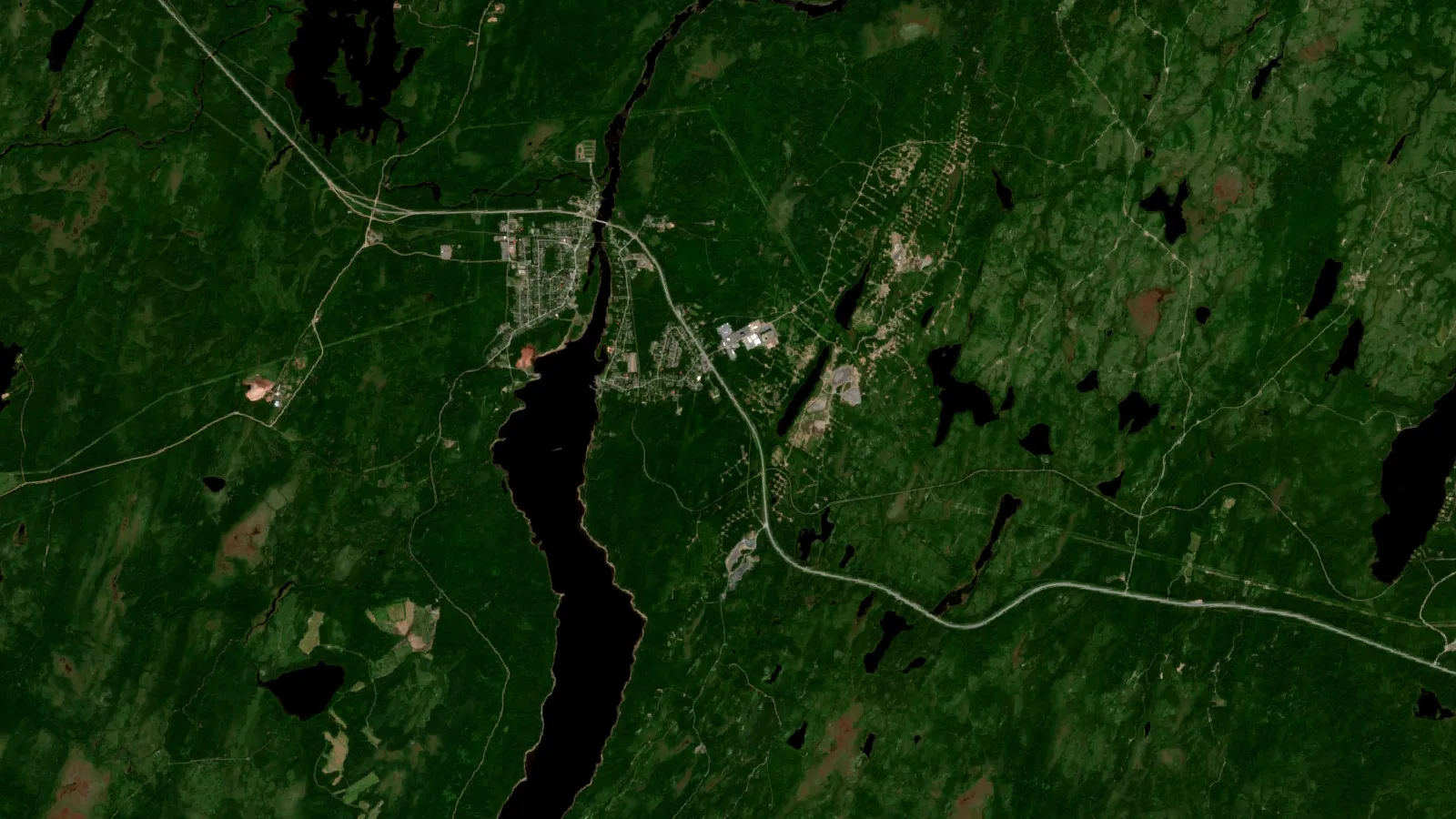
Key takeaways
- Hammerdown declared commercial production effective 19 August 2026; preliminary Q3 output was 4,863 oz at 85% recovery (company release, 15 October 2026).
- Queensway resource effective 15 March 2025: 1.39 Moz Measured and Indicated at 2.40 g/t and 0.61 Moz Inferred at 1.77 g/t (company PEA release, July 2025).
- Shares trade as NFGC on the TSX since 26 August 2026 and on NYSE American (company release, 25 August 2026).
- The company raised C$115 million in shares and drew C$70 million of a C$105 million credit facility in 2026 to fund Queensway Phase 1.
- Queensway Phase 1 needs an Environmental Preview Report; the company targets first material to the mill in Q4 2027 (company update, 6 July 2026).
In this article
- What a Stockhouse page tells you and what it does not
- NFGC at a glance
- Hammerdown gold mine: production, costs and the mill
- Queensway project: resource, PEA and the drill program
- Gold in the ground compared across both projects
- Hammerdown and Queensway Phase 1 side by side
- Risks the company lists in its own releases
- How to read a gold producer's quarterly release in five steps
- How the Maritime Resources deal built the plan
- How the work is funded
- Permits, water and land around the mines
- Newfoundland exploration spending
- Check the numbers with a Hammerdown-style calculator
- What to watch in the next filings
NFGC, the ticker of New Found Gold Corp., is the symbol to search on Stockhouse and other investor sites for a Newfoundland gold company that moved from explorer to producer in 2026. Its Hammerdown mine declared commercial production on 19 August 2026, and its larger Queensway project holds 1.39 million ounces of gold in the Indicated category and 0.61 million ounces Inferred (resource effective 15 March 2025). This page sets out what the company owns, what the filings say about each asset, and which dates to watch next. It gives facts only and is not investment advice.
What a Stockhouse page tells you and what it does not
Stockhouse is a third-party financial news site, so a post there is not a company statement and not a technical report. The dependable record is the company’s own news releases, its filings on SEDAR+ and EDGAR, and the technical reports prepared by qualified persons under National Instrument 43-101, the Canadian rule that sets standards for public mineral disclosure. This page leans on those documents and says which one each number comes from.
Two short terms help with everything below. g/t means grams of gold per tonne of rock; open-pit gold deposits often run from under 1 g/t to a few g/t. A mineral resource is gold that may be mined, with confidence graded as Indicated or Inferred, but it does not show that mining pays. A mineral reserve adds proven economics, and the company states that no reserves are defined for either project.
NFGC at a glance
| Item | What the company reports |
|---|---|
| Listings | Shares trade on the Toronto Stock Exchange and NYSE American under NFGC; the TSX listing began on 26 August 2026, replacing the TSX Venture Exchange symbol NFG (company release, 25 August 2026) |
| Producing mine | Hammerdown, open pit, central Newfoundland; commercial production declared effective 19 August 2026 |
| Processing plant | Pine Cove mill, 700 tonnes per day (tpd) today, planned conversion to 1,400 tpd by the fourth quarter of 2027 |
| Flagship project | Queensway, near Gander; 220,000 hectares with more than 110 km of strike length along two fault zones |
| Cornerstone holder | Eric Sprott, about 19% of shares as stated on 27 April 2026 |
| Cash and debt | About C$167 million cash and C$70 million debt at 30 September 2026 (preliminary) |
Dollar figures from the company are Canadian unless marked US$. The cash and debt line comes from the third-quarter production release of 15 October 2026; audited quarterly financial statements follow on 11 November 2026.
Hammerdown gold mine: production, costs and the mill
Hammerdown is an open pit in north-central Newfoundland, near King’s Point. Its ore goes about 95 km by road to the Pine Cove mill. The company bought both when it acquired Maritime Resources in November 2025 (company project page), and the first gold was poured that month.
The company defined commercial production as 60 consecutive days with mill throughput of at least 600 tpd, gold recovery of at least 80% and feed grade of at least 80% of the plan’s head grade. Over the period to 19 August 2026 it reports average throughput of about 748 tpd, 87.7% recovery and 2.92 g/t feed grade. Hammerdown produced 9,140 ounces in the first eight months of 2026, including 1,989 ounces in August (company release, 16 September 2026).
| Preliminary Q3 2026 result | Value |
|---|---|
| Gold produced | 4,863 oz |
| Gold sold | 6,035 oz |
| Average realized price | US$4,310 per oz |
| Ore mined | 97 thousand tonnes |
| Strip ratio (waste to ore) | 12.40 |
| Tonnes processed | 66 thousand tonnes |
| Grade processed | 2.76 g/t |
| Average recovery | 85% |
The strip ratio matters. Mining 12 tonnes of waste for each tonne of ore is costly, and the company reports an all-in sustaining cost (AISC) near US$2,500 per ounce at a run rate of 20,000 to 25,000 ounces a year (Q3 release). AISC follows voluntary World Gold Council guidance: it adds mine costs, refining, royalties and the capital needed to keep the mine running, and divides by ounces sold. Canadian Mining Journal quotes the company’s vice-president saying that narrow veins and dilution control, meaning waste rock mixed into ore, were the biggest challenges of the ramp-up (Canadian Mining Journal, 10 August 2026).
The February 2026 preliminary economic assessment (PEA), an early-stage study that may include Inferred resources and is not a reserve statement, covers three deposits feeding Pine Cove: Hammerdown, Orion and Stog’er Tight. It outlines 13 years, 251,287 recovered ounces, average cash costs of US$2,149 and AISC of US$2,429 per ounce, and an after-tax net present value at a 5% discount rate of C$199.2 million on a price deck averaging US$3,656 per ounce (company release, 26 February 2026). The resource behind it is 260,000 ounces Measured and Indicated plus 161,000 ounces Inferred.
Next steps named by the company: a permanent crusher and sorter, substantially complete in the fourth quarter of 2026 with ramp-up in the first quarter of 2027, to cut crushing costs and lift mill feed grade; an updated Hammerdown resource in 2027; and conversion of Pine Cove to a gravity carbon-in-leach (CIL) circuit, which first recovers coarse gold by gravity and then dissolves the rest in cyanide onto carbon, due in the fourth quarter of 2027. Its tests point to recovery rising from the 87% design to about 92% on Hammerdown feed (company update, 6 July 2026).
▶ Follows gold from rock to refined bar: drilling, crushing, leaching onto carbon and refining. · 5:27
Queensway project: resource, PEA and the drill program
Queensway lies along the Appleton Fault Zone near Gander. The company’s drilling there from 2020 found high-grade gold along a stretch of about 22 km, according to Canadian Mining Journal. The deposit is orogenic, meaning gold was deposited along faults during mountain building, and parts of its core sit within a few metres of surface under 2.5 to 9 m of overburden at Lotto. That allowed the company to strip the overburden at the Keats, Iceberg and Lotto zones and map and sample the veins directly. At Lotto, channel samples returned 23.7 g/t over 15.88 m, and underground infill drilling returned 43.5 g/t over 4.75 m (company release, 21 July 2026). Those are selected best intervals, not averages for the deposit.
The initial resource, effective 15 March 2025, is 18.0 million tonnes at 2.40 g/t for 1.39 million ounces Measured and Indicated, and 10.7 million tonnes at 1.77 g/t for 0.61 million ounces Inferred. Open-pit resources use a 0.3 g/t cut-off, the lowest grade counted as potentially mineable. The July 2025 PEA built three phases on it: Phase 1 is a small high-grade open pit trucking material to a mill (the 2025 study assumed a third-party toll mill; in January 2026 the company chose its own Pine Cove mill), Phase 2 an on-site 7,000 tpd plant, and Phase 3 an underground mine. The study reports 1.5 million recoverable ounces over 15 years and an after-tax NPV of C$743 million at US$2,500 gold (company release, 21 July 2025). That price is well below the market level on the date of this page, and the company plans to file an updated technical report in the second half of 2026 with a new resource estimate and new Phase 1, 2 and 3 designs and costs.
Phase 1, as described in the PEA, needs C$155 million of initial capital and averages 69.3 thousand ounces a year at an AISC of US$1,282 per ounce, mining 1.15 million tonnes at 9.64 g/t. The company’s July 2026 update keeps first Phase 1 material to the mill in the fourth quarter of 2027 and commercial production in the second half of 2028, while allowing that timelines may change.
The 2026 work program is a C$44 million, 90,000 m diamond-drilling plan with six rigs. About 45% targets discovery and growth: depth extensions of the AFZ Core, the Dropkick zone and regional targets such as Pauls Pond, Greenwood and Gazeebow South. The other 55% supports mine planning (company release, 2 June 2026). Dropkick, about 11 km north of the AFZ Core, was extended to 1.4 km of strike and 300 m of vertical depth by 2025 drilling, and was outside the initial resource (company release, 22 April 2026).
Gold in the ground compared across both projects
The two resources differ by a factor of about five in size (2.0 million ounces at Queensway against 421,000 at Hammerdown), and by a wide margin in grade and cost. The chart below sets the ounces side by side; the next one compares the unit costs each study reports. The PEAs used different gold prices and dates, so read the cost bars as each study’s own view, not as a like-for-like ranking.
Chart
Contained gold in the current resource estimates
Thousand ounces; Queensway effective 15 March 2025, Hammerdown effective 22 January 2026
Hammerdown and Queensway Phase 1 side by side
The two plans differ in grade, scale and money at risk. The figures below come from each study’s own summary, at its own gold price and date, so they show how the projects are designed rather than which one is better.
Chart
All-in sustaining cost reported by each plan
US$ per ounce. HD = Hammerdown, QW = Queensway; each study uses its own gold price
| Measure | Hammerdown (PEA, February 2026) | Queensway Phase 1 (PEA, July 2025; update, July 2026) |
|---|---|---|
| Mining | Open pits, contractor fleet, 13 years | Four open pits, contractor mining (July 2026 update), years 1 to 4 |
| Mill feed grade | 2.89 g/t after sorting | 9.64 g/t mined |
| Throughput | 700 tpd | About 700 tpd of pre-concentrated feed |
| Average output | 19.3 thousand oz a year | 69.3 thousand oz a year |
| Capital | C$24.3 million total capital with contingency | C$155 million initial capital |
| AISC | US$2,429 per oz (life of mine) | US$1,282 per oz (years 1 to 4) |
| Gold price basis | Deck averaging US$3,656 | US$2,500 base case |
Grade is the main reason for the gap. At Queensway Phase 1 the plan mines about 9.64 g/t, roughly three times the Hammerdown feed grade, so each tonne carries far more gold. The company says it excavated the Keats, Iceberg and Lotto zones to map and sample veins directly.
Risks the company lists in its own releases
- Studies are preliminary. Both PEAs include Inferred resources and the company states there is no certainty they will be realized.
- Approvals. Queensway Phase 1 still needs release from the environmental assessment and construction permits, and the company says it will keep assessing its timelines.
- Narrow veins. At Hammerdown, dilution and grade control drive results; the chief executive told Crux Investor that grade-control drilling moved from reverse circulation to core drilling in April 2026.
- Costs. The third-quarter strip ratio was 12.40 and the company guides to an AISC near US$2,500 per ounce, against the Queensway Phase 1 study figure of US$1,282.
- Funding and dilution. The 2026 share offering and credit facility fund Phase 1; Phase 2 in the 2025 PEA needs about C$442 million of growth capital.
How to read a gold producer’s quarterly release in five steps
- Find the head grade. Grade processed was 2.76 g/t in the third quarter; compare it with the plan figure of 2.89 g/t after sorting.
- Check recovery. The share of gold captured was 85% against a design of 87%.
- Look at the strip ratio. Waste tonnes per ore tonne (12.40) drive mining cost.
- Compare realized price with AISC. Realized US$4,310 less AISC near US$2,500 leaves about US$1,800 per ounce before tax, corporate costs and growth spending. That is arithmetic on rounded company figures, not a profit number.
- Read the next-steps list. Dates and permits show whether costs and output are likely to change.
How the Maritime Resources deal built the plan
The company completed its all-share acquisition of Maritime Resources Corp. on 13 November 2025, at about C$292 million, with 0.75 of a share issued per Maritime share (Lexpert). The deal brought Hammerdown, Pine Cove and the Nugget Pond gold plant into one group. The logic is a hub-and-spoke model: several deposits feed a single central mill rather than each building its own. Canadian Mining Journal describes Pine Cove as the hub and plans a stand-alone Queensway mill later as that project grows.
How the work is funded
In April 2026 the company closed a bought-deal share offering of C$115.06 million at C$2.96 a share (company release, 27 April 2026). It also agreed a senior secured credit facility of up to C$105 million with EdgePoint Investment Group, drawn C$70 million in May with C$35 million more available at the company’s option (company release, 19 May 2026). In that May release the company also disclosed, as US exchange rules require, that the audit report on its 2025 annual report carried a going-concern qualification; the funding above followed. The 15 October 2026 release reports about C$167 million cash and C$70 million debt at 30 September 2026 (preliminary).
Permits, water and land around the mines
Newfoundland’s environmental assessment process decides how fast Queensway moves. The province’s Environment Minister notified the company on 3 July 2026 that an Environmental Preview Report is required for Phase 1. The company expects guidelines within 60 days, a 35-day public review after submission and a ministerial decision within 45 days of submission (company update, 6 July 2026). Phase 1 plans a waste rock facility, water management facilities and, in the PEA, in-pit tailings placement. The Hammerdown PEA allows C$18.0 million for reclamation and closure. The company reports 445 people working at Hammerdown and Pine Cove as of 15 July 2026 (94 employees and 351 contractors), with over 90% of new hires from the province and 60% of the workforce living within an hour’s drive ( company release, 16 September 2026 ). Hydro transmission lines cross the Queensway property, and rerouting them is in planning.
▶ Explains the seven main environmental impacts of mining in plain words. · 2:31
Newfoundland exploration spending
The wider province matters for service costs, drilling availability and competing claims. Across Canada, Natural Resources Canada reports planned 2026 exploration and deposit appraisal spending up 21% to C$5.3 billion, largely driven by gold (NRCan, April 2026). The provincial statistics show exploration spending on the island of Newfoundland jumping from about C$36 million in 2019 to about C$220 million in 2022, then easing and rising again; the 2026 figure is spending intentions, not a result. Canadian Mining Journal cites a record forecast of $283 million for the whole province in 2026. For claim rules and what districts look like from space, see our guides on gold deposits in Newfoundland and mineral exploration spending in Canada. Our comparison of TSX, TSXV and CSE listing requirements explains the exchange step the company took in August.
Chart
Exploration spending on the island of Newfoundland
Million dollars as reported by the provincial Department of Natural Resources; 2025 preliminary, 2026 intentions
Check the numbers with a Hammerdown-style calculator
Use the calculator to see how mill size, grade, recovery, price and AISC combine into annual ounces and operating margin. Defaults are round examples near the company’s reported run rate, not guidance. Spot gold was US$4,157.70 per troy ounce on the Kitco quote of 16 October 2026 (Kitco); enter today’s price yourself.
Calculator
What could a 700 tpd gold mill earn per year?
Enter your own mill rate, grade, recovery, gold price and AISC.
- Revenue at your price (US$): $77,666,501
- Total AISC (US$): $48,541,563
- Margin before tax (US$): $29,124,938
Example values only, not guidance or a forecast. Gold price is an input: example, use today’s price. The AISC default is round and near the company’s stated run-rate cost (New Found Gold, October 2026). The result ignores tax, corporate costs and growth capital.
What to watch in the next filings
- 11 and 12 November 2026: third-quarter financial results and the company’s call.
- Second half of 2026: updated Queensway technical report with a new resource estimate and Phase 1, 2 and 3 designs.
- Environmental Preview Report: submission, 35-day public review and ministerial decision.
- Fourth quarter of 2026: crusher and sorter completion at Hammerdown.
- Fourth quarter of 2027: Pine Cove conversion and first Queensway Phase 1 material.
Each item is a company plan as stated in its releases of 6 July, 16 September and 15 October 2026.
Where satellite data fits an exploration story like this
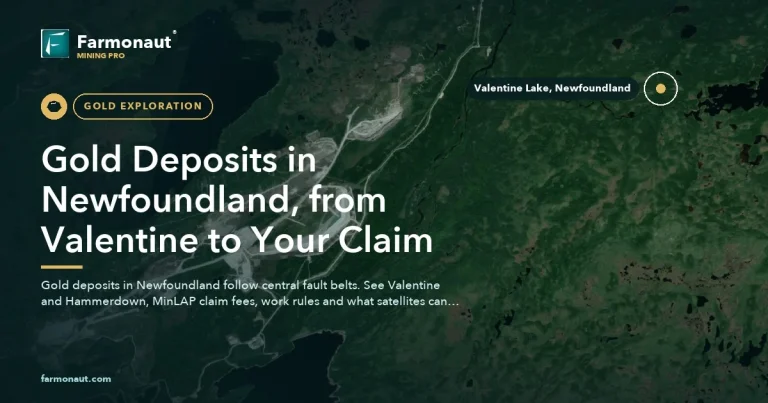
Satellites cannot see gold. They map surface clues such as iron-oxide staining, clay minerals and lineaments left by faults, which help rank ground to visit or drill. Queensway was proved by drilling, trenching and excavation, not by imagery. For licence owners and explorers, Farmonaut screens an area from satellite data and returns exploration targets that sit ahead of any resource estimate. You can request a quote or contact the team.

▶ Shows what satellites can and cannot see when mapping rock for gold exploration. · 4:25
Frequently asked questions
What does the Stockhouse page for this company show?
It is a third-party page about NFGC. Confirm every number on the company site, SEDAR+ or EDGAR.
Where does the company list its shares?
On the Toronto Stock Exchange and NYSE American, both as NFGC. The TSX listing started on 26 August 2026 and the TSX Venture symbol NFG ended.
Is Hammerdown in commercial production?
Yes. The company declared it effective 19 August 2026 after 60 days meeting its throughput, recovery and grade tests.
How much gold does Hammerdown make?
Preliminary Q3 production was 4,863 ounces, and the company expects a run rate of 20,000 to 25,000 ounces a year.
How much gold is at Queensway?
The resource effective 15 March 2025 is 1.39 million ounces Measured and Indicated and 0.61 million ounces Inferred. An update is planned for the second half of 2026.
When could Queensway produce gold?
The company targets first Phase 1 material to Pine Cove in the fourth quarter of 2027 and commercial production in the second half of 2028, subject to environmental approval.
What is a PEA and why is it not a reserve?
A preliminary economic assessment tests a concept and may use Inferred resources that are too uncertain for reserves, so there is no certainty it will be realized.
What does AISC mean?
All-in sustaining cost is mine costs, refining, royalties and sustaining capital divided by ounces sold.
Where is Queensway?
Near Gander in northeast Newfoundland, along the Appleton Fault Zone, reached from the Trans-Canada Highway.
Can satellite imagery find a deposit like this?
Not by itself. Imagery can rank alteration and structure for follow-up, and drilling decides whether gold is present.
This page is for information only. It is not investment advice. It gives no price targets, and every company figure comes from the company’s own releases for the dates shown. Company filings are on SEDAR+ and EDGAR.
Farmonaut mining
Screen a licence area from space
Investors can see how satellite data screens a licence area on land for minerals as an exploration target, ahead of a resource estimate.
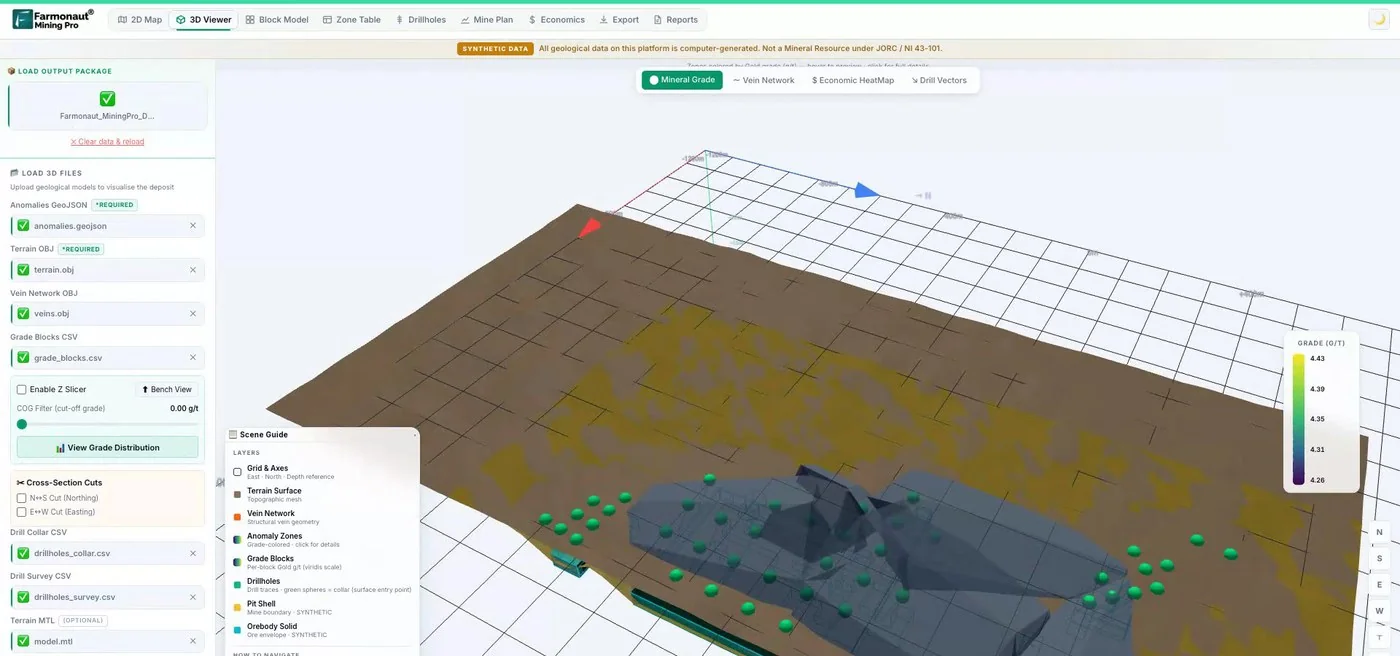
Mining Pro sample view, synthetic data
Keep reading

Sources
- New Found Gold, Q3 2026 preliminary production results (15 Oct 2026): newfoundgold.ca
- New Found Gold, Declares commercial production at Hammerdown (16 Sep 2026): newfoundgold.ca
- New Found Gold, Queensway PEA (21 Jul 2025): newfoundgold.ca
- New Found Gold, Expanded Queensway work program (2 Jun 2026): newfoundgold.ca
- New Found Gold, Queensway and Pine Cove update (6 Jul 2026): newfoundgold.ca
- New Found Gold, Graduation to the TSX (25 Aug 2026): newfoundgold.ca
- New Found Gold, Lotto results (21 Jul 2026): newfoundgold.ca
- New Found Gold, Dropkick zone results (22 Apr 2026): newfoundgold.ca
- New Found Gold, EdgePoint $70M initial draw (19 May 2026): newfoundgold.ca
- New Found Gold, Bought deal closing (27 Apr 2026): newfoundgold.ca
- New Found Gold, Hammerdown project page: newfoundgold.ca
- New Found Gold, Hammerdown PEA and resource update (26 Feb 2026): newsfilecorp.com
- Government of Newfoundland and Labrador, Mineral Exploration Statistics: geosurv.gov.nl.ca
- Canadian Mining Journal, From discoveries to mines (10 Aug 2026): canadianminingjournal.com
- Lexpert, New Found Gold completes Maritime acquisition (21 Aug 2026): lexpert.ca
- Crux Investor, Hammerdown commercial production interview (16 Sep 2026): cruxinvestor.com
- Kitco, Gold spot price (quote of 16 Oct 2026): kitco.com
- Government of Newfoundland and Labrador, Environmental Assessment: gov.nl.ca
- Natural Resources Canada, Canadian Mineral Exploration Information Bulletin (April 2026): natural-resources.canada.ca
- World Gold Council, Gold all-in sustaining costs: gold.org
Discussion
Questions, corrections or field experience? Share them below. First-time comments are reviewed before they appear, and your email is never published.
No comments yet. Be the first to add a question or your experience.

 GKY Mining
 Alkimy SARL
 Double A Trading
 GemSprout Metals Limited
 Qader Group
 Ileys General Trading
 SG Gold Mining LLC
 VRV Global Pte Ltd
 Omsri International FZE
 G.I.T.T.
 Jaunita Erss Ltd
 Almosi SARL
 SRK Consulting
 Berks Gold Limited
 Mwerezi Minerals Company Limited
 Mining SARL
 SenGold Invest SAS
 Sean Mining Limited
 NTS Group (Pty) Ltd










