

Farm business · Energy lease guide
Oil and Gas Companies on Farmland: A Lease Guide
Oil and gas companies pay farmland owners through a bonus, rent and royalty, and they cost every farm through fuel: US farms spent $15.6 billion on fuel in 2025 (USDA NASS). The surface terms you sign decide what happens to soil, drainage and water.
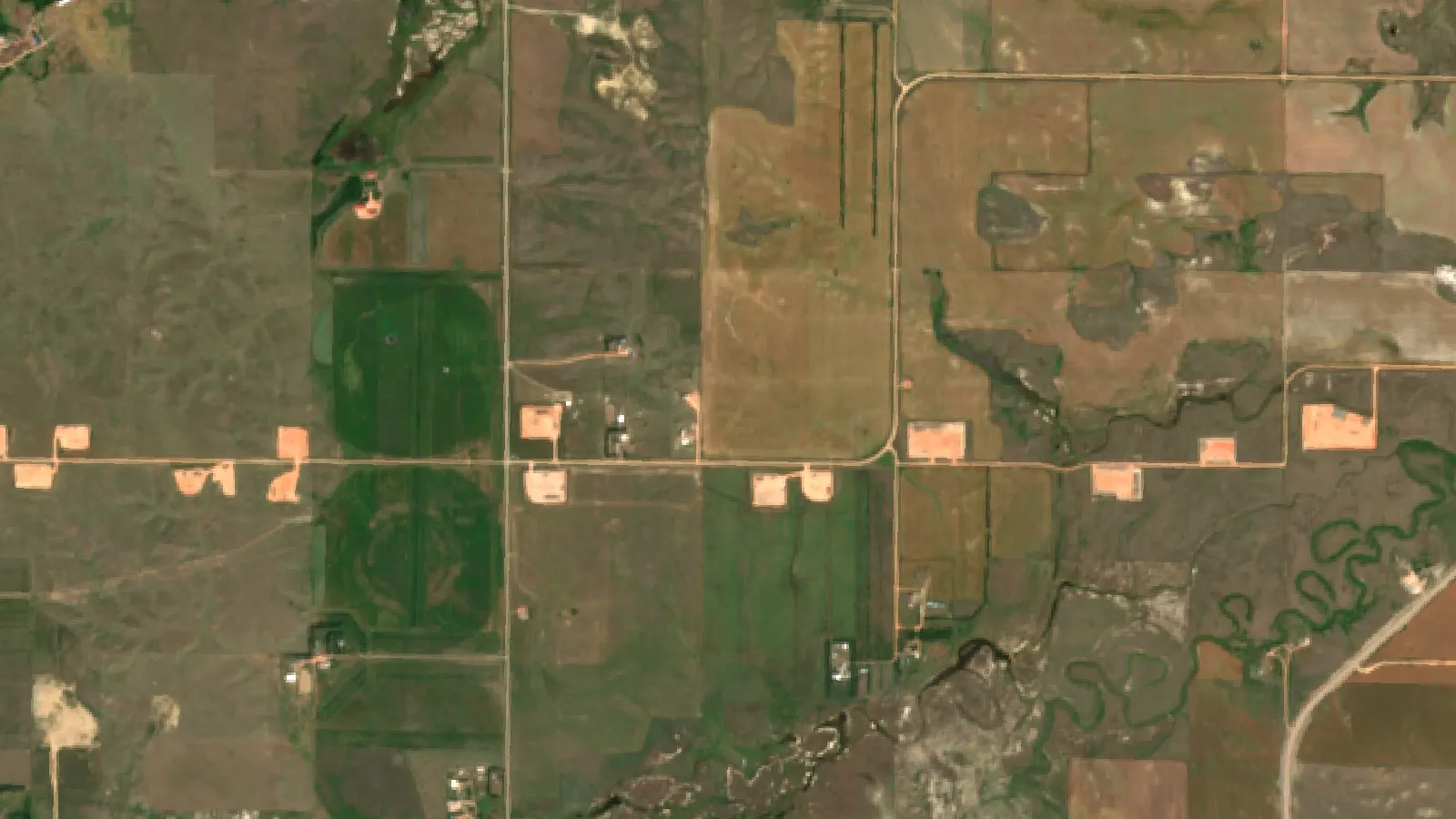
Key takeaways
- US farm fuel expense was $15.6 billion in 2025, of which diesel was $10 billion (USDA NASS).
- US retail diesel averaged $4.99 a gallon in 2022 and $3.66 in 2025 (EIA annual series).
- Federal leases carry a 16.67% royalty and $3-$15 per acre rent (BLM); Purdue calls one-eighth the customary private royalty.
- North Dakota law makes developers pay surface owners and tenants for lost farm production and income.
- Get topsoil handling, pipeline depth, tile repair, water tests and the royalty basis in writing, and have an attorney review the lease.
In this article
- Why oil and gas companies matter to farms
- How a mineral lease pays a landowner
- Who owns what: surface and mineral rights
- Core impacts on farmland and forest
- Pipelines across farmland
- 7 lease terms that protect farm sustainability
- How to value a damage offer
- What energy costs mean for farm budgets
- Common mistakes landowners make
- Comparative impact and sustainability table
- Checking the land after drilling
- Steps to follow when a landman calls
- Living with a well site on a working farm
- How we checked the numbers
When oil and gas companies come to farmland, the farm gains a new income line and takes on new risks. The income comes from a signing bonus, yearly rent and a royalty on production. The risks are lost crop ground, compaction, water use and roads, and they depend on what you sign. This guide sets out the money, the farm impacts and the lease terms a grower should ask for, with sourced numbers.
It is written for owners and tenants in the US, Canada, the UK, Europe and Australia. Laws differ by state, province and country. Treat it as a checklist for talks with an attorney, not as legal or financial advice.
Why oil and gas companies matter to farms
Energy firms touch farms in two ways. First, they can lease the minerals under a field and drill, lay pipe or build roads on it. Second, they sell the diesel, gasoline and propane that every farm burns. Both affect the bottom line.
Chart
US farm fuel expense by fuel type
Billion US dollars, 2025, all US farms
The fuel link is large. USDA’s National Agricultural Statistics Service puts total US farm fuel expense at $15.6 billion in 2025, out of $490.3 billion in total farm production expenses. Diesel alone was $10 billion, or 64.1 percent of the fuel bill. Gasoline was $2.7 billion, LP gas $2.0 billion and other fuels about $0.9 billion.
So fuel is a small share of total costs, about 3 percent on these figures. But it is a cost that moves fast with world oil markets, and it hits at planting and harvest when a farm cannot cut back.
Fuel prices a farm pays
The US Energy Information Administration tracks the retail price of No. 2 diesel. Its annual average US diesel price series shows $2.55 a gallon in 2020, a peak of $4.99 in 2022, then $4.21 in 2023, $3.76 in 2024 and $3.66 in 2025. These are retail pump averages, not the off-road farm diesel price, which is lower because it carries no road tax. The trend still shows how much a farm’s fuel budget can swing in two years.
Net farm income is the cushion that absorbs those swings. USDA’s Economic Research Service forecasts net farm income at $158.4 billion for 2026, 2.6 percent below 2025, not adjusted for inflation. When income is flat, a lease payment or a fuel saving matters more.
Chart
US retail diesel price, annual average
US dollars per gallon, No. 2 diesel, retail
How a mineral lease pays a landowner
A lease gives an energy company the right to explore for and produce minerals under your land for a set time. In return the mineral owner usually gets three kinds of payment.
- Signing bonus. A one-off payment per acre when the lease is signed. It varies widely with how promising the area is.
- Rent (delay rental). A yearly payment per acre that keeps the lease alive while no well is producing.
- Royalty. A share of the value of what is produced, paid for as long as the well produces.
Purdue Extension’s landowner guide notes that a customary royalty has been one-eighth of the value of production, which is 12.5 percent. Purdue also notes that landowners who bargain may get better bonus, rent and royalty terms, so do not treat one-eighth as a ceiling.
A public benchmark: federal lease terms
Private leases are set by negotiation, but federal terms give a useful public benchmark. The Bureau of Land Management says that, under the Inflation Reduction Act, federal royalty rates are 16.67 percent, up from the previous minimum of 12.5 percent. Rent is $3 per acre in years one and two, $5 per acre in years three to eight, and $15 per acre in years nine and ten. Before the change, rent was $1.50 per acre for five years and $2 after that, and the minimum bid rose from $2 to $10 per acre.
These figures apply to federal minerals only. They are not a rule for private land. Still, they are a useful point of comparison when an offer comes in.
Chart
Federal onshore lease rent per acre
US dollars per acre per year, by lease year, after the Inflation Reduction Act
Who owns what: surface and mineral rights
In much of the US, the surface of a field and the minerals beneath it can be owned by different people. This split is called a severed estate. If you own only the surface, the mineral owner signs the lease and gets the royalty. You may get only damage payments.
Purdue Extension warns that a standard lease may say little about where wells, pipelines and roads go, and advises lease provisions that cover well sites, pipeline placement and depth, roads and damage to crops. That is why surface terms, not just the royalty, decide how a lease affects your crops.
Some states add protection by law. North Dakota’s surface damage law, Century Code chapter 38-11.1, requires the developer to pay the surface owner, and any tenant, for lost farm production and income, lost land value, lost use of and access to the land, and lost value of improvements. It also requires at least seven days’ notice by registered mail or hand delivery before entry for surveys or staking, unless both sides waive it.
In Canada the picture is different. Most minerals belong to the Crown, and landowners deal with surface leases and rights boards. The Pembina Institute’s landowners’ guide to oil and gas development, fourth edition (October 2025), explains the Alberta process.
Core impacts on farmland and forest
The main farm effects come from building and running wells, roads and pipelines. They are physical and they can last.
- Land taken out of crops. Well pads, access roads, tanks and pipeline corridors remove ground from production, and they split fields so equipment must turn more.
- Soil damage. Heavy machines compact soil. Mixing topsoil with subsoil lowers yields for years.
- Drainage. Trenches can cut tile lines and change how water moves across a field.
- Water. Drilling and well completion use water. In dry areas that can compete with irrigation and stock water.
- Weeds, gates and fences. New traffic can bring in weeds, and open gates or cut fences create stock risks.
- Spills. Leaks of oil or produced water can damage soil and must be cleaned up under state rules.
Most of these can be limited by clear terms. That is the reason to negotiate before work starts, not after.
Pipelines across farmland
Pipelines often come with a separate right-of-way, also called an easement. Penn State’s agricultural law center explains that pipeline trenches are typically 5 to 6 feet deep, deeper at road and water crossings. It describes good practice on farm soil: strip and stockpile topsoil separately, avoid compaction, replace the topsoil, then deep-rip it to 16 inches and pick out rocks.
The same Penn State material says pipeline companies that are public utilities may be able to use eminent domain, and the type of line affects what rights the company has. Rules differ by state. Penn State’s landowners resource guide on pipeline easements adds that landowners often do better negotiating as a group, and that a contract should be reviewed by an attorney who knows the field.
7 lease terms that protect farm sustainability
These are the terms that most affect your soil, water and income. They come from extension guides at Purdue, Penn State and Texas A&M. Ask your attorney which ones apply where you farm.
1. Surface use agreement
Best for: anyone with crops or livestock on the leased acres.
A separate surface use agreement sets where pads, roads and lines go. Purdue suggests lease terms covering well sites, pipeline placement including laying technique and depth, and roads, with specifics for damage to farmland, crops and improvements. Ask for roads along field edges and pads on the least productive ground.
2. Crop and surface damage payments
Best for: owner-operators and tenants alike.
Put a clear damage formula in writing. Cover lost crops each year the ground is out, lost grazing, and fences, tile and gates. If you rent the land out, agree in writing how damage money is split with your tenant. North Dakota’s law gives the tenant a share of the payment where no agreement exists.
3. Topsoil and reclamation standards
Best for: high-value or irrigated fields.
Require topsoil to be stripped and stored apart, replaced last and decompacted, as the Penn State guide describes. Set a date for reclamation and a test for success, such as yield or plant cover compared with the rest of the field. Hold back part of the payment until it is met.
4. Pipeline depth and drainage repair
Best for: tiled or tilled land.
Ask for a depth that leaves room for deep tillage and future tile. Purdue suggests burial below tillage depth or at a set depth such as 36 inches, using the double-ditch method that keeps topsoil apart. Require the company to repair any cut tile to its original grade and to fix drainage problems that show up later, not only at the time of work.
5. Water terms
Best for: farms in dry regions or with shared wells.
State whether the company may use water from your wells, ponds or streams, and at what price. Ask for baseline tests of your water wells before drilling and repeat tests after. Keep copies.
6. Royalty basis and deductions
Best for: mineral owners.
The rate is only half of the royalty. Ask whether it is paid on the value at the well or after costs for gathering and processing are taken off. A higher rate with heavy deductions can pay less than a lower rate without them. Purdue’s guide lists the bonus, rental, royalty and damage terms to compare across offers.
7. Term, pooling and release
Best for: large holdings.
A lease can last as long as a well produces. A shorter primary term limits how long acres are tied up with no drilling. A Pugh clause can release acres outside a producing unit so they are free to lease again. Texas A&M’s handbook on petroleum production on agricultural lands has a checklist of lease terms and a chapter on pipeline easements.
How to value a damage offer
The calculator below compares a damage payment with the crop income you would lose. Enter the acres taken, the net income per acre you earn, the years the ground will be out and the payment offered. A positive result means the offer covers your crop loss on your own numbers. It does not include land value, fences, tile or time, which you should add if they apply.
Use net income per acre (revenue minus the costs you will no longer pay on those acres), not gross revenue. Your own records, or a state extension crop budget, are the best source for that figure.
Try the numbers for your own farm below.
Calculator
Does a damage offer cover your lost crop income?
Enter your own acres, net income per acre, years out of production and the offer.
- Crop income lost: $3,000
- Offer per acre per year: $200
Example values only, not a benchmark or a forecast; every number is your input. The defaults are set so the offer just equals the crop loss. Net income per acre should be revenue minus the costs you no longer pay on those acres. Land value, tile, fences and your time are not included. Get professional advice before you accept an offer.
What energy costs mean for farm budgets
Fuel is only one way energy prices reach a farm. Fertilizer, drying, irrigation pumping and freight all carry an energy cost too. When diesel rises by a dollar a gallon, a farm that burns 10,000 gallons a year pays $10,000 more. That is a simple sum, but it shows why many growers book fuel ahead of busy seasons or store fuel on the farm.
Chart
Farm fuel expense by US region
Billion US dollars, 2024 vs 2025, selected regions
Three steps help. First, track fuel use per acre for each field operation, so you know where it goes. Second, compare tillage passes; each pass skipped saves fuel and soil. Third, look at the timing of purchases and the contract terms your supplier offers. None of these needs new equipment.
A lease payment can offset part of these costs, but it should not be the reason to accept poor surface terms. A bonus is paid once. Lost yield on a badly restored strip can last for many seasons.
Common mistakes landowners make
- Signing the first offer. Offers are usually negotiable, and neighbours may have received better terms.
- Looking only at the royalty rate. The basis, deductions, term and surface rules can be worth more.
- Forgetting the tenant. If someone else farms the land, agree how damage money is shared before work starts.
- No baseline records. Without yield maps, photos and water tests from before drilling, it is hard to prove damage later.
- Oral promises. A promise from a land agent that is not in the signed agreement is hard to enforce.
Comparative impact and sustainability table
This table sums up the main farm effects and the lease term that limits each one.
| Farm effect | What happens | Term that helps |
|---|---|---|
| Lost crop ground | Pads and roads take acres out | Surface use agreement, damage formula |
| Soil compaction | Heavy equipment packs soil | Topsoil handling, deep ripping |
| Cut drainage | Trenches break tile lines | Tile repair to original grade |
| Water use | Drilling draws on local supplies | Water terms, baseline tests |
| Long lock-up | Acres held with no drilling | Shorter term, Pugh clause |
| Low royalty | Costs deducted before payment | Clear royalty basis |
Checking the land after drilling
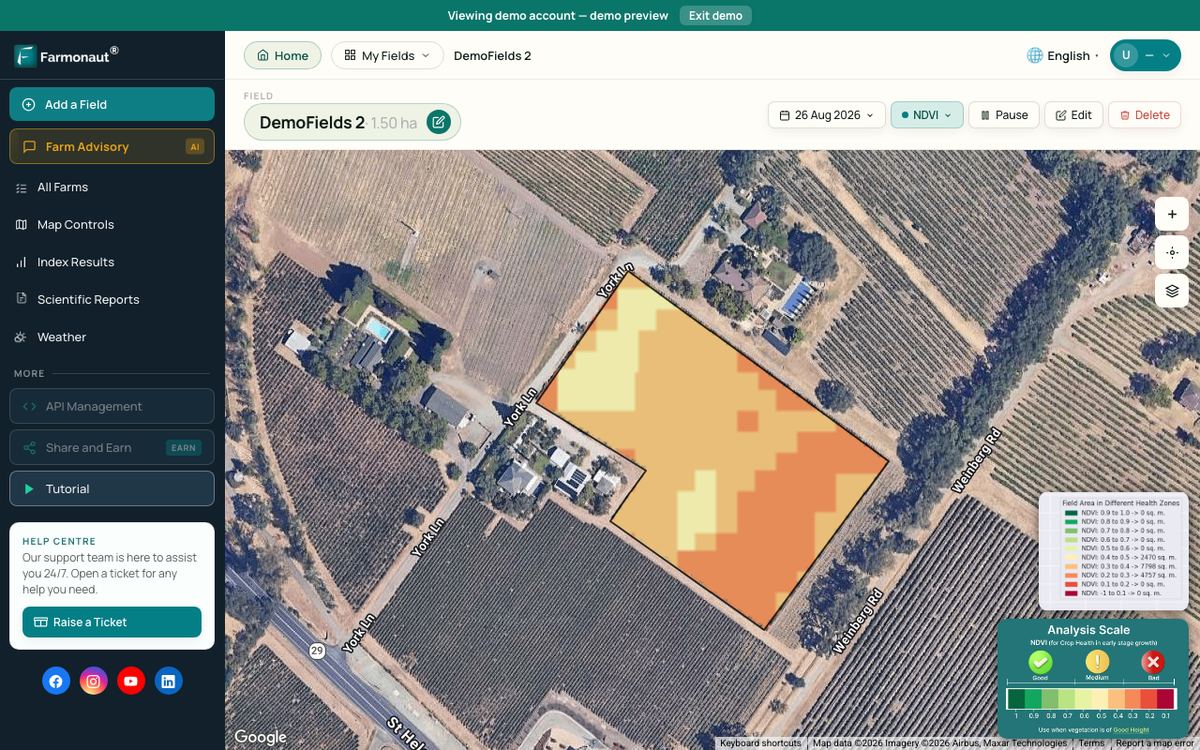
Reclamation can be judged in the field and from above. Satellite vegetation maps, such as NDVI from Sentinel-2, show whether a reclaimed strip is growing as well as the rest of the field across a season. That gives you a record if regrowth lags. A satellite cannot tell you why plants are weak, so walk the strip and test the soil if it stays behind.
Farmonaut Satellite + AI Farm Monitoring System lets you draw a field once and view its vegetation maps through the season, which can help you compare a pipeline strip with the ground beside it.
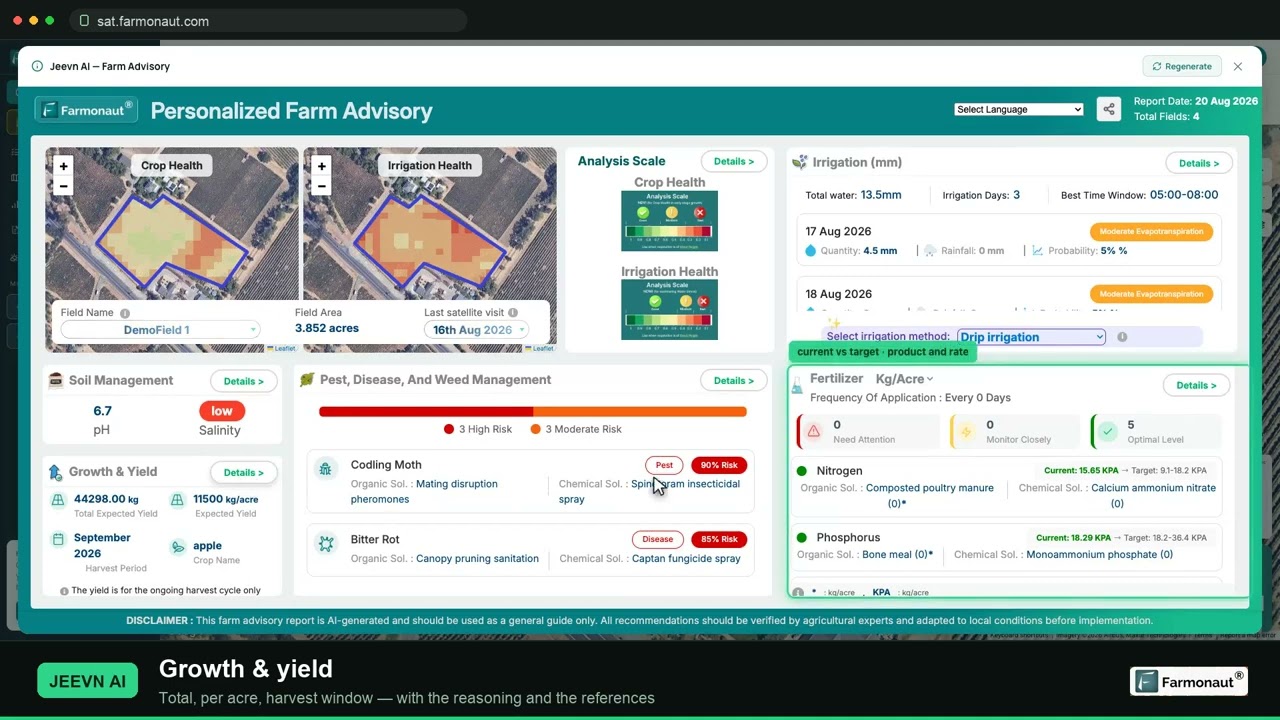
▶ A tutorial on reading satellite crop-stress maps across a season. · 19:36
Steps to follow when a landman calls
- Find out who owns the minerals under each field. Check county records.
- Ask for the full offer in writing: bonus, rent, royalty rate and basis, term.
- Talk to neighbours. Group talks can bring better terms on pipelines.
- Map your fields, tile and wells, and mark where you would accept pads and roads.
- Have an oil and gas attorney review the lease and surface agreement before you sign.
- Photograph and record yields on affected fields before work starts.
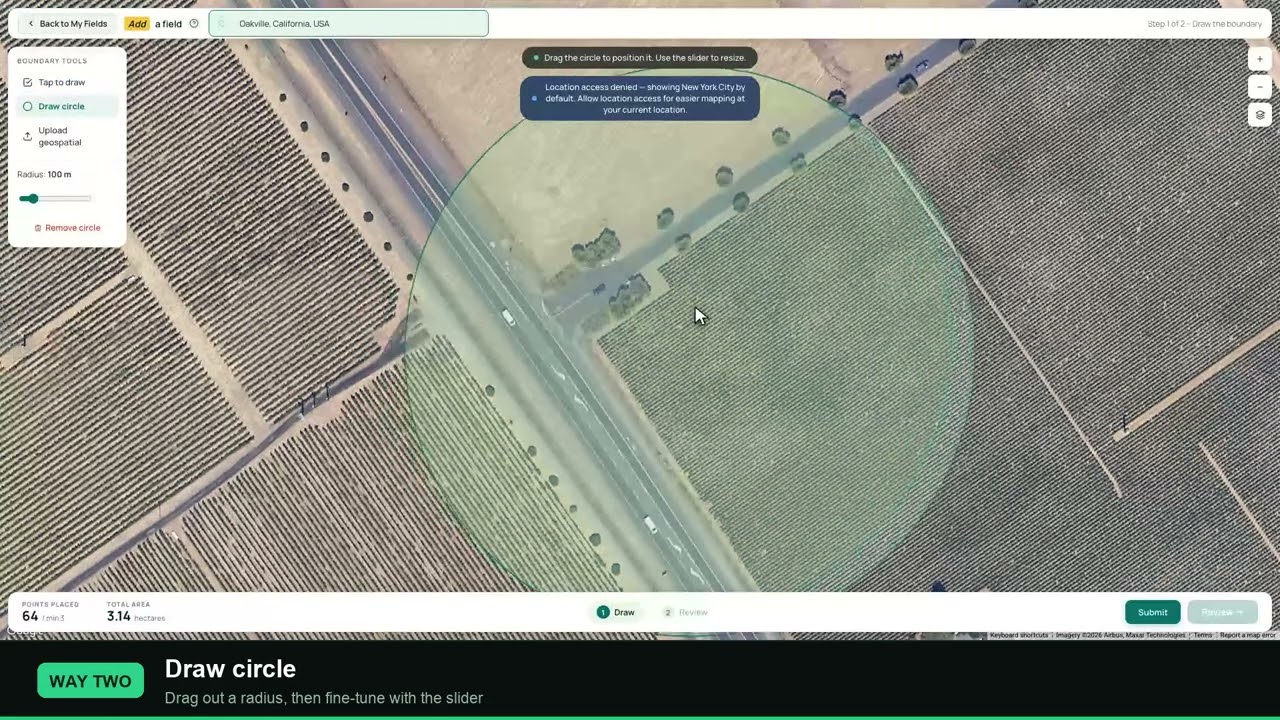
▶ How to add a field boundary in Farmonaut, useful for mapping where pads and lines may go. · 3:50
Living with a well site on a working farm
Once a pad is built, the farm and the operator share the land for years. Simple habits keep that working.
Access and traffic
Agree on one access route and gate for each site. Ask for gates to be kept closed where stock graze, and for cattle guards where trucks pass often. Write down who maintains the road and who clears snow or mud. Heavy trucks at harvest can block field entrances, so share your busy dates with the site contact.
Weeds and dust
New gravel and fill can bring weed seed. Ask the operator to control weeds on pads and road edges, and to tell you what herbicide they use near your crops. If you farm organic ground, say so in writing, because drift or fill could affect certification. Dust from gravel roads can coat leaves near the road; water or a dust treatment helps in dry spells. For any chemical use, follow the product label and local rules.
Records and contacts
Keep one file for each site: the lease, the surface agreement, maps, photos, payment records and the name and phone number of the field contact. Note every problem with the date, a photo and the field. A simple log like this makes later talks about damage much shorter.
Insurance and liability
Ask the operator to carry liability insurance that covers your land and to name you where possible. Check your own farm policy for any exclusions linked to energy work on the property. Your insurer or agent can tell you what applies.
When the well stops
Wells do not last forever. The surface agreement should say who plugs the well, removes equipment, takes out the pad base and restores the soil, and by when. Ask how that work is funded if the operator sells the lease or goes out of business. States set plugging and bonding rules, and your attorney can check what they cover.
How we checked the numbers
Fuel spending figures come from the USDA NASS farm production expenditures report for 2025, which surveys US farm operators. Diesel prices are EIA retail annual averages, not off-road farm prices. Federal royalty and rent figures are from BLM lease sale notices issued under the Inflation Reduction Act and apply to federal minerals only. Lease advice comes from extension and law-school guides at Purdue, Penn State and Texas A&M, and from North Dakota’s statute. We did not include private bonus or royalty averages, because no public source we found reports them on one consistent basis.
Related pages on our site: satellite-based mineral detection, the mining platform, the mining query form and contact us.
FAQ
How much do oil and gas companies pay farmers?
Payments come as a signing bonus, yearly rent and a royalty on production. Amounts vary by region and by how promising the area is. As a public benchmark, BLM’s federal terms are a 16.67 percent royalty and rent of $3 to $15 per acre a year. Private offers are negotiated.
Can a company drill on my farm if I only own the surface?
Often yes, if someone else owns the minerals and has leased them. The lease usually gives the right to use the surface as reasonably needed. Some states, such as North Dakota, require payment to surface owners for lost production and other damage. Check your state’s law with an attorney.
What is a normal royalty rate?
Purdue Extension describes one-eighth (12.5 percent) as the customary royalty. Federal leases now carry 16.67 percent. Private rates are negotiated, and the deductions taken before payment matter as much as the rate.
How deep should a pipeline be on cropland?
Penn State describes trenches as typically 5 to 6 feet deep. Ask for a depth in writing that suits your tillage and drainage, plus a duty to repair tile and decompact the soil.
Does a farm lease affect my tenant?
Yes. A tenant loses crops on damaged ground. Agree in writing how damage payments are split. Under North Dakota law the tenant can recover its share if there is no agreement.
Summary
Energy firms affect farms through fuel costs and through leases. Fuel cost US farms $15.6 billion in 2025, and diesel prices have swung by more than a dollar a gallon in recent years. A lease can add a bonus, rent and royalty, but the surface terms decide what happens to your soil, water and crops. Get the royalty basis, damage formula, topsoil rules, pipeline depth, water terms and lease term in writing. Check reclaimed ground each season. Before you sign, have an attorney who knows oil and gas law review the lease, and check your local rules.
Farmonaut crop monitoring
See your own fields from space
Draw your fields once and Farmonaut shows satellite vegetation maps for them through the season, on web, Android or iOS.



Keep reading

Sources
- USDA NASS, Farm Production Expenditures 2025 Summary (2026): esmis.nal.usda.gov
- US EIA, U.S. No 2 Diesel Retail Prices, annual (2026): eia.gov
- USDA ERS, Farm Sector Income Forecast (2026): ers.usda.gov
- Bureau of Land Management, Utah oil and gas lease sale notice with IRA terms: blm.gov
- Purdue Extension, EC-564 gas and oil leases for landowners: extension.purdue.edu
- North Dakota Century Code chapter 38-11.1, Oil and Gas Production Damage Compensation: ndlegis.gov
- Pembina Institute, Landowners’ Guide to Oil and Gas Development, 4th ed. (2025): pembina.org
- Penn State Center for Agricultural and Shale Law, Negotiating Pipeline Rights-of-Way in Pennsylvania: aglaw.psu.edu
- Penn State Center for Agricultural and Shale Law, Landowners Resource Guide: pipeline easements: aglaw.psu.edu
- Texas A&M AgriLife, Petroleum Production on Agricultural Lands in Texas handbook (2016): agrilife.org
Discussion
Questions, corrections or field experience? Share them below. First-time comments are reviewed before they appear, and your email is never published.
No comments yet. Be the first to add a question or your experience.

 Dirks Bros Farms
 Red August Group
 Farm Inc
 WeMe Global
 Pixxel
 Agrotoken
 Blue BearX
 Insignito
 Croptimum
 DnCubed
 Field Capacity
 Indosistim Teknologi
 Liquify Digital
 CU Foods
 BeyondTech Global
 Rouge VC
 AgroGreen Dynamics
 AgroRisk
 Oath Inc
