

Rare earths · Price guide
Monazite Concentrate Price per Tonne: Chart and Drivers
Monazite concentrate traded near US$6,142 per tonne on the SMM benchmark in April 2026 (54-55% TREO). Forecasts for ex-China sales run far higher. Here are the dated figures and a calculator for your own assay.
Key takeaways
- SMM’s spot benchmark for 54-55% TREO monazite concentrate was US$6,142 per tonne in April 2026 (reported 27 May 2026), and about US$6,400 for roughly 55% concentrate in Sovereign Metals’ 9 September 2026 study.
- A Project Blue forecast, reported by Crux Investor in May 2026, puts a 60% TREO concentrate at US$16,000 per tonne (base) to US$19,000 (high). It is a model, not a sale; Sovereign’s own study used 50-60% payability.
- Price follows the assay: NdPr, dysprosium, terbium and yttrium shares drive value more than headline TREO. The USGS range for monazite is 35-71% REO.
- NdPr oxide averaged US$69 per kilogram in 2025 (USGS estimate), against a US$110 per kilogram policy floor for MP Materials and Lynas.
- Monazite holds thorium (up to 20% ThO2 in the USGS table), so licensing and shipping rules can cut the number of buyers.
In this article
- Monazite concentrate price: what the published numbers say
- Reference prices and forecasts, with dates and basis
- How the price of a concentrate is built: TREO, basket and payability
- Monazite and xenotime: what each concentrate contains
- What moves the price of rare earth concentrates
- Thorium, uranium and shipping rules that change the price
- Where monazite concentrate comes from
- How to check a monazite or xenotime quote before you sell or buy
- Frequently asked questions
Monazite concentrate price: what the published numbers say
There is no single price. The Shanghai Metals Market (SMM) benchmark for monazite concentrate was about US$6,142 per tonne in April 2026 for 54-55% TREO material, as reported by Crux Investor on 27 May 2026, and about US$6,400 per tonne for roughly 55% concentrate in China by September 2026, according to Sovereign Metals’ 9 September 2026 scoping study. Outside China, a consultant’s forecast for a 60% TREO product is far higher, but that is a model, not a trade. This page shows each number with its date, grade and basis, then gives you the method to price your own lot.
TREO means total rare earth oxides: the combined weight of all rare earth oxides in the concentrate, as a percentage. A tonne at 55% TREO holds 550 kg of rare earth oxide. The buyer does not pay for that weight equally. A kilogram of neodymium-praseodymium (NdPr) oxide is worth far more than a kilogram of cerium oxide, so the mix matters as much as the grade.
For xenotime, we found no public price benchmark. Xenotime trades in small lots under private contracts, and its value depends on its yttrium and dysprosium content. Treat any “xenotime price per tonne” table that cites no assay and no date with caution.
Reference prices and forecasts, with dates and basis
The table lists every figure we could trace to a named source. Spot quotes and forecasts are kept apart because they answer different questions.
Chart
Monazite concentrate: spot, breakeven and forecast values
US$ per tonne of concentrate; grades 54-60% TREO, so not like-for-like; breakeven is a company cost-side figure, not a price quote
| Item | Grade | Value (US$ per tonne) | Date and basis |
|---|---|---|---|
| SMM spot benchmark | 54-55% TREO | 6,142 | April 2026, reported 27 May 2026 via Crux Investor |
| SMM spot benchmark | about 55% TREO | about 6,400 | Sovereign ASX scoping study, 9 September 2026 |
| Project Blue base-case forecast | 60% TREO | 16,000 | 2026 forecast, 60% payability, net of discounts, processing and shipping to Japan; reported 27 May 2026 via Crux Investor |
| Project Blue high-case forecast | 60% TREO | 19,000 | 2026 forecast, 70% payability; reported 27 May 2026 via Crux Investor |
| Sovereign breakeven for its by-product | 56.6% TREO target | about 4,140 | Company cost-side figure, not a price quote; scoping-study accuracy of plus or minus 30% (9 September 2026) |
The SMM series is the one most traders watch. SMM publishes it as a series specified for monazite concentrate of at least 60% REO, delivered to works in China, with 13% VAT included in the original price. The April and September values Sovereign quotes are described as 54-55% and about 55% material, so the exact SMM line behind them is not public. The daily values sit behind a sign-in, so check the page itself for today’s quote. As of its September 2026 announcement, Sovereign Metals had not signed an offtake (a sales contract) for its monazite, and realised prices depend on future negotiation.
Two further points on the forecasts. Sovereign said in May 2026 that Project Blue, a consultancy, forecast US$16,000 and US$19,000 per tonne; this is as reported by Crux Investor, and we have not seen the Project Blue report. Sovereign’s own September 2026 scoping study used a different basis: Argus price forecasts with 50% payability in its base case and 60% in its Western Supply Case.
Why is the forecast about 2.6 to 3.1 times the April 2026 SMM value? The forecast assumes ex-China buyers pay more for the oxides that China restricts, and it applies a payability factor. Payability is the share of the contained oxide value that the buyer pays the seller; the rest covers the buyer’s processing, risk and margin. The spot benchmark reflects the Chinese domestic market, where those premiums do not apply.
How the price of a concentrate is built: TREO, basket and payability
Most traders work in four steps. First, take the tonnes of concentrate and multiply by TREO percent to get kilograms of rare earth oxide. Second, value those kilograms at a basket price, which blends the oxide prices in proportion to the assay. Third, multiply by payability. Fourth, subtract freight, assay costs and any penalty for thorium.
The basket depends on the assay. In the Kasiya pits, the reported average split was 20.9% NdPr, 2.5% dysprosium plus terbium and 11.8% yttrium, according to a May 2026 report on its drilling. A different deposit will differ. The USGS lists typical monazite at 60-62% total rare earth oxides, but the range across deposits is 35-71% (USGS Scientific Investigations Report 2010-5220).
Delivery cost is a real line item. The September 2026 scoping study estimates total incremental cost of about US$1.39 per kilogram of rare earth concentrate FOB (loaded on the ship, seller’s cost ends there) at Dar es Salaam and about US$3.68 per kilogram delivered CIF to Houston. That equals roughly US$1,390 and US$3,680 per tonne, and includes mine-gate and processing costs, not freight alone. These are study-level estimates for one project, so use them only as a sense of scale.
The calculator below applies the four steps. Every price in it is an input: the defaults are round examples, not today’s quotes.
Calculator
What is your concentrate lot worth?
Enter your own assay, oxide prices, payability and freight.
- Oxide basket value per tonne, before payability: $11,044
- Payable value of the whole lot: $412,200
Example values only, not benchmarks. All prices are US$ and are inputs (example, use today’s price); the NdPr default is near the USGS 2025 average of US$69 per kilogram. Basket value is a simple two-part blend. Thorium penalties, assay costs and royalties are not included. The deduction default is near the FOB cost (about US$1,390 per tonne) in one scoping study; yours will differ.
Monazite and xenotime: what each concentrate contains
Both minerals are phosphates, usually recovered as by-products of mineral sands (heavy mineral beach and river deposits mined mainly for titanium and zircon minerals). Monazite is the light rare earth mineral, rich in cerium, lanthanum and neodymium. Xenotime is a yttrium phosphate that carries the heavy rare earths, dysprosium among them. The USGS gives 52-67% REO for xenotime, The same USGS table gives no thorium figure for xenotime.
Chart
Share of total rare earth oxide: monazite vs xenotime
Weight percent of REO in one sample of each mineral (Green Cove Spring, USA; Lehat, Malaysia)
The chart compares the shares of each element in one monazite and one xenotime sample used by the USGS: Green Cove Spring in the United States and Lehat in Malaysia. Only one sample of each is shown, so real deposits vary. The point is the shape. Monazite is mostly cerium, lanthanum and neodymium. Xenotime is mostly yttrium, with several times more dysprosium.
So the two concentrates are valued on different oxides. Yttrium and dysprosium sit among the seven elements China placed under export licensing in April 2025, so buyers outside China value feedstock that contains them.
What moves the price of rare earth concentrates
Concentrate buyers price off the oxides, so oxide moves flow through. The USGS puts the average NdPr oxide price at US$69 per kilogram in 2025 (estimate), down from US$124 in 2022 (USGS Mineral Commodity Summaries 2026). Three forces matter most.
Chart
NdPr oxide, average US price
US$ per kilogram, 99% minimum NdPr oxide, 2021 to 2025 (2025 estimated)
- Policy floors outside China. The US Department of Defense agreements set a US$110 per kilogram floor for NdPr oxide for MP Materials and Lynas Rare Earths. In August 2026, Benchmark Minerals reported ex-China NdPr oxide at US$95,000 per tonne CIF Europe and North America, below that floor, while Chinese PrNd oxide was assessed at RMB 721,500 per tonne (about US$107,504).
- Export controls. China’s April 2025 licensing rules cover samarium, gadolinium, terbium, dysprosium, lutetium, scandium and yttrium, and remained in force as of April 2026. The wider October 2025 package is suspended until 10 November 2026, according to a law firm summary of the Chinese announcements. Confirm the status before you price a contract past that date.
- Supply of feed. Monazite is a by-product, so its supply follows the titanium and zircon markets. Argus reported in May 2024 that interest in monazite as a feedstock was rising, with Energy Fuels’ White Mesa mill in Utah processing it into mixed rare earth carbonate. That is a May 2024 snapshot, so check current status.
Our other guides cover the oxide side in more detail: rare earth prices and NdPr trends and the rare earth deposits map.
Thorium, uranium and shipping rules that change the price
Monazite is radioactive because it holds thorium. The USGS table shows monazite with up to 20% thorium dioxide (ThO2) and up to 16% uranium dioxide, a wide range. Xenotime shows no thorium figure and up to 5% uranium dioxide. A concentrate with 1% ThO2 holds about 0.9% thorium by weight.
In the United States, the Nuclear Regulatory Commission defines source material as thorium or uranium in any physical or chemical form, and as ores with 0.05% or more of either (10 CFR 40.4, 2023 edition). A monazite concentrate usually sits well above that line, though exemptions exist in the same regulation. Handling, storage, transport and the buyer’s licence all follow from it. Other countries set their own limits, so confirm the rule with the regulator in the country of loading and the country of discharge.
In practice this means three things for price. Buyers may deduct for thorium or refuse high-thorium lots. Fewer buyers hold the licence to take them, which narrows your market. And freight to a licensed processor adds cost. In our reading, a processor that can recover thorium, as Argus reports the White Mesa mill can if needed, may be a more flexible buyer.
Where monazite concentrate comes from
World mine production of rare earths was an estimated 390,000 tonnes of REO in 2025 (USGS). These totals cover every rare earth source. The USGS says US output is mainly bastnaesite from Mountain Pass, California, while US monazite comes from heavy-mineral-sand concentrates in the southeastern states.
Chart
Rare earth mine production, 2025 estimate
Tonnes of rare earth oxide equivalent, selected countries; all rare earth sources, not monazite alone
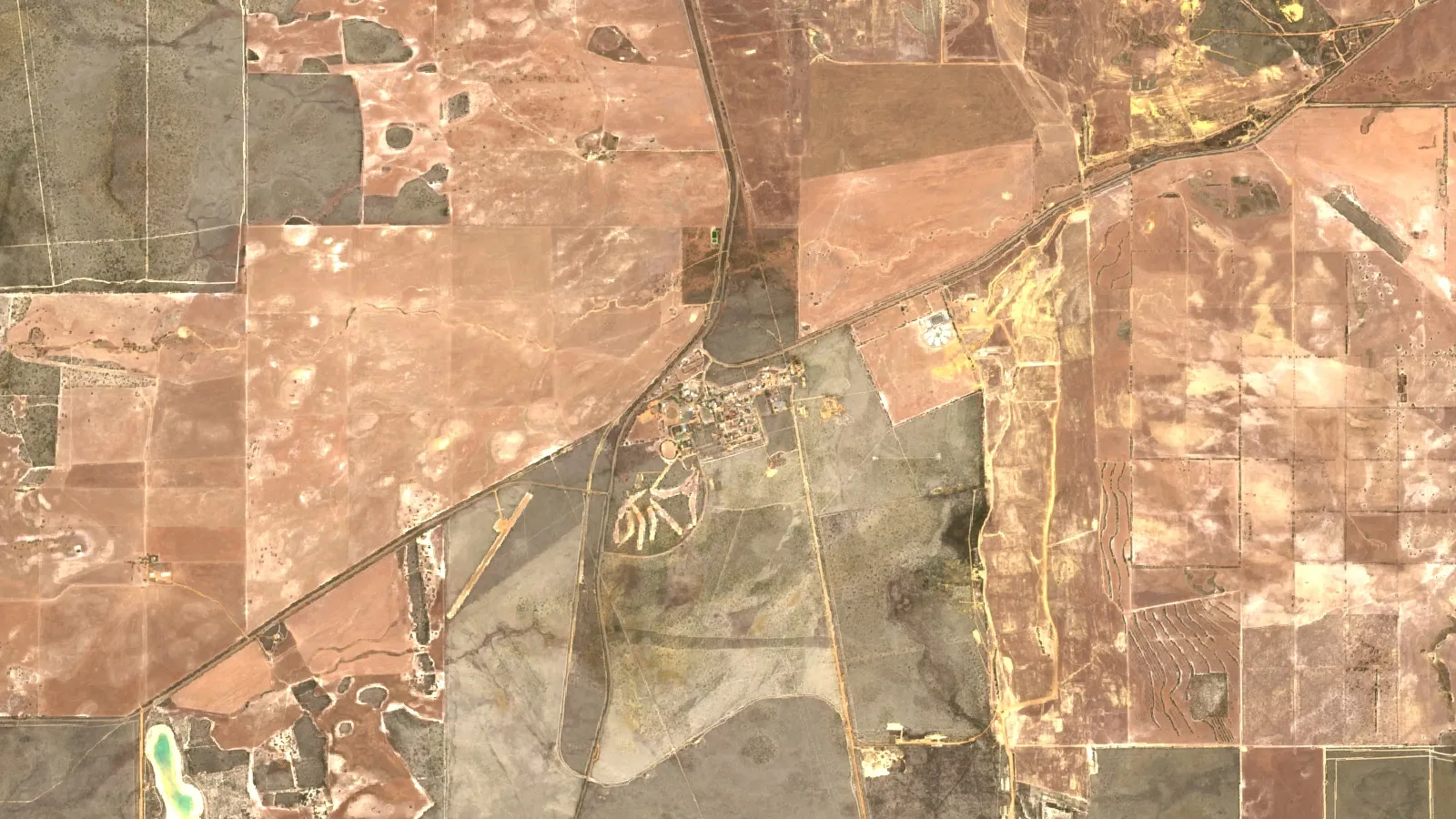
The USGS lists rare earth production in Australia, Brazil, Madagascar and Nigeria, and monazite is a by-product of some mineral sands mining, as is the case in the southeastern United States. Sovereign’s Kasiya project in Malawi is a mineral sands development with a monazite by-product study. In Western Australia, Argus reported in May 2024 that Iluka was commissioning a concentrator to feed its Eneabba refinery from monazite stockpiled at Narngulu since the 1990s; that status is two years old. A satellite view of a mineral sands district such as Eneabba (the hero image above) shows land cover and mine footprints, but it cannot show monazite grade. That needs sampling and an assay.
▶ Walks through the seven environmental impacts of mining in plain words, background for how rare earth concentrates are produced. · 2:31
How to check a monazite or xenotime quote before you sell or buy
- Ask for the full assay. You need TREO, the NdPr, dysprosium, terbium and yttrium shares, thorium, uranium and phosphate. A bare “55%” is not enough.
- Confirm the price basis. Is it ex-works, FOB or CIF? Does it include VAT? The SMM series is stated with 13% VAT included. If a quote includes VAT, remove it before comparing (about 11.5%).
- Ask what payability applies. Compare it with the cases above: Sovereign’s own study base case uses 50%, its Western Supply Case 60%, and the reported Project Blue cases 60% and 70%.
- Check the licences. Radioactive material needs permits to export, ship and receive. Ask who holds them.
- Fix the pricing date. Agree whether the price is fixed on loading, on arrival or on an average over a set window.
- Get an independent assay. Use an accredited lab at the port of loading and agree an umpire lab (a neutral second lab) for disputes.
Before concentrate exists, the question is where monazite-bearing ground lies. Farmonaut’s satellite-based mineral detection screens an area of interest for rare earth targets ahead of field work. Results are exploration targets, not resource estimates. If you need a quote for a licence area, use the mining query form or contact us. The same practical guide to listed names is in our note on companies that mine thorium and rare earths.
If this topic matters to you, read Magnetite Price per Tonne: Chart and Drivers next.
Related reading on this site: Tantalite Price per Tonne: Chart and Drivers.
Frequently asked questions
What is the price of monazite per tonne?
The SMM benchmark was about US$6,142 per tonne in April 2026 for 54-55% TREO (reported 27 May 2026), and about US$6,400 per tonne for roughly 55% in Sovereign Metals’ 9 September 2026 study. Check the SMM page for today’s value.
What is the xenotime price per tonne?
No public benchmark exists that we could find. Xenotime is sold under private contracts, and its value depends on its yttrium and dysprosium content. Ask the buyer for a quote against your assay.
What does TREO mean in a concentrate price?
TREO is total rare earth oxides, the combined weight percent of all rare earth oxides in the sample. Monazite typically holds 60-62% (USGS), and the USGS range across deposits is 35-71%.
Why do ex-China forecasts differ so much from the SMM benchmark?
The SMM series reflects Chinese domestic trade. Project Blue’s forecast of US$16,000 per tonne for a 60% concentrate assumes ex-China premiums for NdPr, terbium, dysprosium and yttrium and a payability factor of 60%, as reported by Crux Investor in May 2026. It is a forecast, not an observed sale, and we have not seen the Project Blue report.
What is payability?
Payability is the percentage of the contained oxide value that a buyer pays the seller. The buyer keeps the rest to cover processing, risk and margin. Project Blue is reported to have used 60% and 70% in its two cases, and Sovereign’s own study used 50% and 60%.
How much NdPr is in monazite?
It varies. The Kasiya drilling in Malawi averaged 20.9% NdPr in its TREO basket, while the USGS sample from Green Cove Spring shows about 22.5% (neodymium 17.5% plus praseodymium 5.0%).
Is monazite radioactive?
Yes. It contains thorium and some uranium. The USGS table lists up to 20% ThO2 and up to 16% UO2 in monazite. Handling and shipping are regulated in the United States as source material, and the rules differ by country.
Which countries produce rare earth concentrates?
The USGS estimates 2025 mine production at 270,000 tonnes REO in China, 51,000 in the United States, 29,000 in Australia and 22,000 in Burma. These totals cover all rare earth sources, not monazite alone.
How is the price of monazite concentrate calculated?
Multiply tonnes by TREO percent, value the oxide by a basket price that follows your assay, multiply by payability, then subtract freight and penalties. The calculator on this page does that with your own inputs.
What is the difference between monazite and xenotime?
Monazite is a light rare earth phosphate rich in cerium, lanthanum and neodymium. Xenotime is a yttrium phosphate rich in heavy rare earths such as dysprosium. Both occur in mineral sands.
Can satellite data tell me the grade of a monazite deposit?
No. Satellites can help screen terrain and flag targets, but grade needs sampling and laboratory assay.
This page is for information only. It is not investment advice. Prices are dated reference points and forecasts, not offers. Radioactive material is regulated: confirm licensing, shipping and export rules with the regulator.
Farmonaut mining
Screen ground for rare earth targets from space
Farmonaut's satellite-based mineral detection screens an area of interest for rare earth targets before field work; results are exploration targets, not resource estimates.
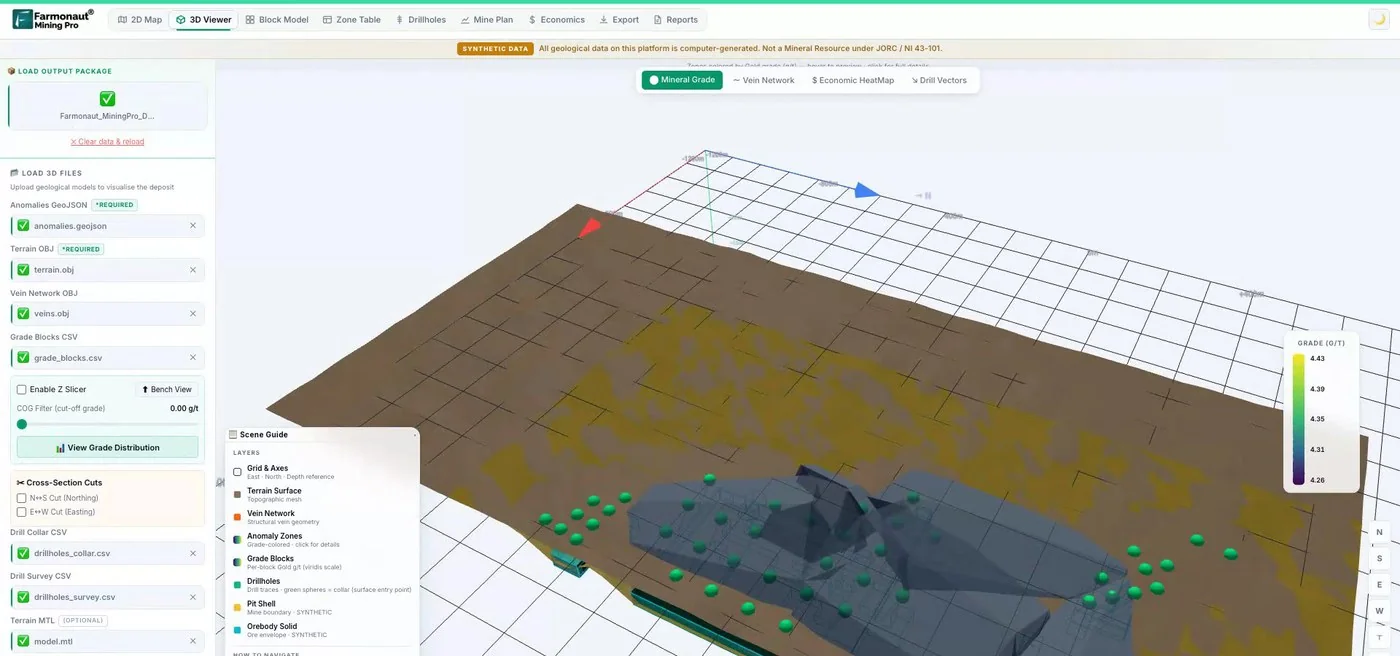
Mining Pro sample view, synthetic data
Keep reading
Sources
- USGS, Mineral Commodity Summaries 2026: Rare Earths (2026): pubs.usgs.gov
- USGS, The Principal Rare Earth Elements Deposits of the United States, SIR 2010-5220 (2010): pubs.usgs.gov
- Shanghai Metals Market, Monazite Concentrate price page (SMM-RE-OR-001): metal.com
- Crux Investor, Sovereign Metals recovers monazite from Kasiya DFS pits (27 May 2026): cruxinvestor.com
- Benchmark Minerals, Ex-China NdPr prices slip below $110/kg price floor (21 August 2026): source.benchmarkminerals.com
- Pillsbury, China suspends export controls on certain critical minerals items (2025): pillsburylaw.com
- Mining Technology, China rare earth export pause nears expiry (2026): mining-technology.com
- Argus Media, RE monazite demand shifts mineral sands supply chain (23 May 2024): argusmedia.com
- US Nuclear Regulatory Commission, 10 CFR 40.4 definitions (CFR 2023 edition, GovInfo): govinfo.gov
- Sovereign Metals Limited, ASX announcements: sovereignmetals.com.au
- Cornell Legal Information Institute, 10 CFR 40.4 (e-CFR): law.cornell.edu
- Sovereign Metals, ASX announcement: Scoping Study (9 September 2026; copy via Webull): bulletin.webull.com
Discussion
Questions, corrections or field experience? Share them below. First-time comments are reviewed before they appear, and your email is never published.
No comments yet. Be the first to add a question or your experience.

 WSP Investment Company
 Dalgety Minerals Pty Ltd
 Vortex Minerals Pty Ltd
 Faith At Work (Pty) Ltd
 Geotech Mining Solutions plc
 Vulcan International Limited
 Kidepo Associates
 GKY Mining
 Alkimy SARL
 Double A Trading
 GemSprout Metals Limited
 Qader Group
 Ileys General Trading
 SG Gold Mining LLC
 VRV Global Pte Ltd
 Omsri International FZE
 G.I.T.T.
 Jaunita Erss Ltd
 Almosi SARL
 SRK Consulting
 Berks Gold Limited
 Mwerezi Minerals Company Limited
 Mining SARL
