

Raw Gold in Nature: 7 Insights & What is Raw Gold
“Only about 0.004 parts per million of Earth’s crust is raw gold, making sustainable mining crucial for ecosystem health.”
Understanding Raw Gold in Nature: What is Raw Gold?
Raw gold in nature—also known as native gold—is a fascinating, naturally occurring metallic element. So, what is raw gold? It is the unrefined, natural form of gold as it exists within the earth, often found as small nuggets, grains, or visible flecks embedded in host rock. More than just a coveted precious metal, native gold reveals deep stories about mining, soil, water, ecosystem health, and sustainable land management.
Gold’s resilience is remarkable—it’s resistant to corrosion, does not oxidize easily, and can survive in harsh environments for long periods. Notably, its natural softness (ranked about 2.5 on the Mohs scale) makes it malleable and valuable for uses that require shaping and forming with simple tools. Gold is typically alloyed with trace elements in nature, which can modify its color and hardness and influence field identification.
Raw gold in nature is usually found embedded within host rocks (like quartz), as liberated placer grains in streambeds, or as visible veins and flecks in hard rock. Its appearance and behavior in the environment make it uniquely traceable during exploration.
The presence of raw gold is not only significant for jewelry or investments—it matters to farming, forestry, water management, ecological restoration, and the overall health of landscapes and rural communities.
Raw Gold: Formations, Appearances, and Field Identification
Raw gold can appear in a variety of natural forms. It’s often found as:
- ✔ Small nuggets—shaped by natural forces, sometimes smooth, sometimes rough.
- ✦ Grains and dust—fine particles mixed within riverbed sediments or soil.
- 🔎 Flecks embedded in visible rock veins—typically quartz or other host rocks.
- ⛏️ Alloyed forms—mixed with silver, copper, or other trace elements, affecting both color and hardness.
- 🧱 Bigger veins within hard rock lodes—these may require substantial excavation to expose.
Field prospectors commonly use basic physical tests (streak test, hardness/scratch, visual color, density, and malleability) to distinguish raw gold in nature from visually similar minerals like pyrite (“fool’s gold”). True gold will not oxidize or tarnish, and is denser, softer, and more malleable than most imposters.
Physical Characteristics of Raw Gold in Nature
- 🌟 Color: Metallic yellow, but can be pale (silver alloy) or coppery (copper alloy).
- 🔬 Hardness: 2.5–3 (Mohs scale), very soft compared to most rocks (raw iron, for example, is much harder).
- 💧 Density: Very heavy for its size, sinks quickly in water.
- 🛡️ Corrosion Resistant: Does not oxidize or degrade easily in nature.
- ⚡ Malleable: Can be flattened with a hammer; won’t shatter.
- 🎨 Trace Elements Modify: Silver, copper, or other trace minerals can alter color and hardness.
- 💎 Typical Form: Nuggets, grains, or visible flecks—often alloyed but occasionally nearly pure.
- 🪨 Host Rocks: Commonly quartz veins, sulfide minerals, or alluvial gravels.

Placer vs. Lode Deposits: How Raw Gold Appears in Nature
The deposits where raw gold is found can vary dramatically, shaping both how it is mined and how its presence impacts the surrounding environment.
Placer Gold Deposits: Nature’s Natural Concentrators
- Placer gold is liberated from parent rocks through natural weathering and erosion.
- These grains are transported by water, accumulating in riverbeds, stream bends, and alluvial fans where the current slows and heavy particles settle out—often forming visible nuggets or flakes.
- Because placer gold is already separated from hard rock, it is typically easier and less energy-intensive to recover—but care must be taken to protect aquatic and riparian habitats during extraction.
- ✔ Lower energy input needed compared to hard rock mining
- 🤝 Easier field identification—placer gold is visible, heavy, and settles quickly during panning
- 🌱 Potential for small-scale, artisanal mining that can coexist with farming and communities if sustainable practices are followed

Lode Gold Deposits: Gold Embedded in Host Rock
If gold hasn’t been weathered away and transported, it’s usually found as lode gold, embedded within hard rock, frequently in quartz veins or sulfide layers. Recovering lode gold requires more invasive extraction methods:
- 🪓 Excavation and removal of rock mass—disrupting land and ecosystems
- 🔄 Crushing and processing of ore to liberate gold from host minerals
- 🧪 Followed by chemical concentration, flotation, and refining steps—often using cyanidation
Despite the greater effort, most of the world’s gold is produced from lode sources. This puts increased responsibility on mining operators to implement sustainable, minimal-disturbance mining practices that protect soils, water, and forestry.
Impacts of Gold Mining on Soil, Water, and Ecosystems
The methods used to extract gold—whether from placer or lode deposits—have complex, far-reaching impacts. Both traditional mining and poorly managed artisanal operations can severely affect soil health, water quality, and surrounding ecosystems. The ecological consequences ripple far beyond the immediate mining site, affecting farming, forestry, fisheries, and local communities.
“Gold mining can increase soil erosion by up to 70%, impacting farming and forestry unless sustainable practices are used.”
Many believe that placer mining is naturally low-impact. However, unregulated placer operations can cause severe sedimentation, destroy aquatic habitats, and degrade farmland downstream. Careful planning and management are crucial!
Key Environmental Challenges of Gold Mining
- ⚠ Soil Erosion: Exposed mining areas and tailings piles increase the rate of soil loss, reducing productivity for agriculture and forestry.
- 💧 Water Contamination: Chemicals (like cyanide) and increased sediment loads can harm drinking water supplies and aquatic habitats.
- 🪴 Loss of Native Vegetation: Habitat fragmentation and loss of native species hinder post-mining ecosystem recovery.
- 🌊 Siltation of Streams: Sediment runoff from mining sites can bury spawning grounds and irrigation channels.
- 🍃 Long-term Unproductivity: Polluted or depleted soils are difficult to rehabilitate, reducing the health and resilience of local landscapes.

Why Sustainable Mining Practices Matter
- 🛡️ Protects soil, water, and habitats critical for farming, forestry, and healthy communities.
- 🌱 Preserves long-term ecosystem productivity and resilience in mineral-rich regions.
- 👍 Improves community health outcomes and reduces land-use conflicts between industries.
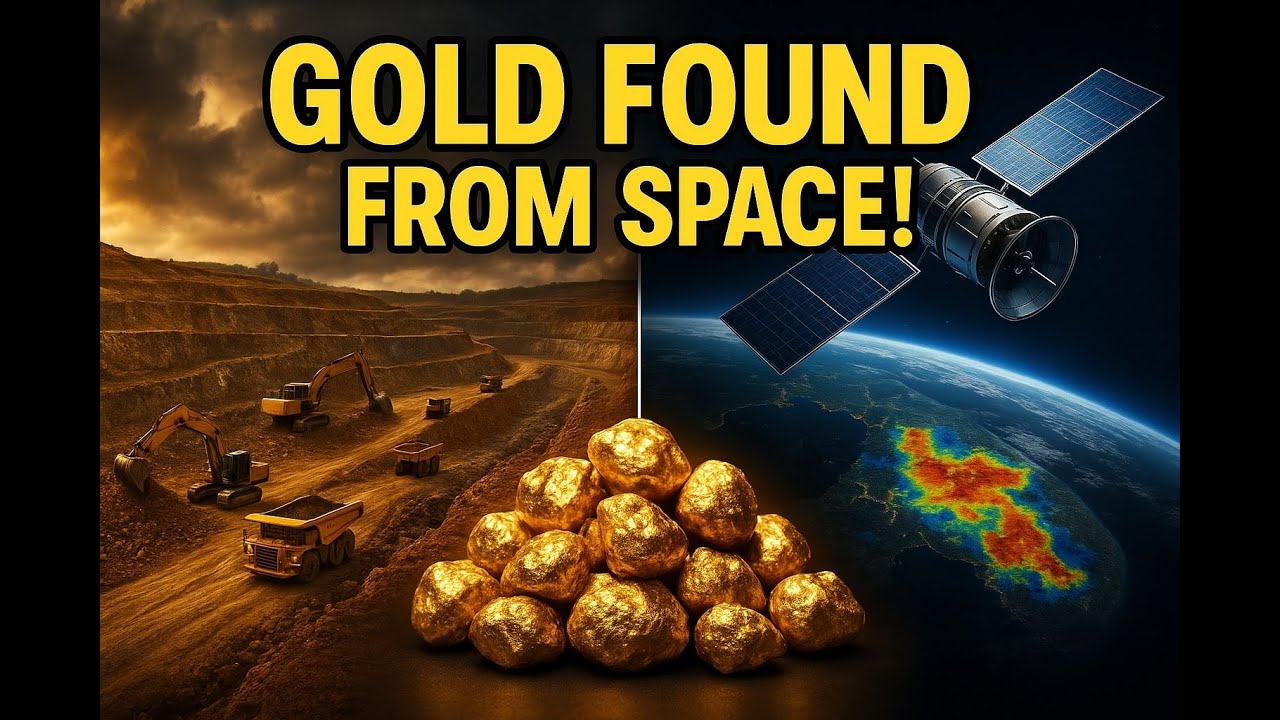
For those seeking smarter, lower-impact discovery and management of gold, Farmonaut’s satellite-based mineral detection platform offers a way to map and monitor gold deposits with zero early-stage ground disturbance, drastically reducing traditional mining’s footprint before any test drilling begins.
Comparative Impact Table: Mining Practices Versus Natural Occurrence
To clarify the varied impact pathways, here’s a side-by-side comparison of traditional mining, sustainable mining, and the natural occurrence of raw gold.
| Practice Type | Estimated Soil Degradation | Estimated Water Consumption (L/kg gold) | Biodiversity Impact | Suitability for Agricultural Land |
|---|---|---|---|---|
| Traditional Mining | 70–80% (severe degradation from excavation, tailings) | ~5000 L/kg | High | No |
| Sustainable Mining | 20–30% (minimized through rehabilitation and careful planning) | ~1500 L/kg | Medium-Low | Potentially Yes |
| Natural Raw Gold Occurrence | 0–1% (only natural baseline weathering) | 0 (no additional extraction water) | Low | Yes |
Moves toward sustainable gold mining (even prospecting) significantly reduce future land rehabilitation costs, regulatory risks, and ensure greater compatibility with local agriculture and forestry industries.

7 Key Insights About Raw Gold in Nature
Here are seven crucial insights into raw gold in nature, its environmental relevance, and how its management intersects with the broader agricultural, forestry, and mining industries:
- Natural raw gold is rare— With only 0.004 parts per million in Earth’s crust, its concentrations matter greatly for environmental stewardship and sustainable discovery.
- Gold’s chemical inertness helps it survive— It is resistant to corrosion, does not oxidize or degrade easily, and can persist in harsh environments for millions of years, even as other minerals weather away.
- Placer gold is easier to recover, but highly sensitive to water quality— Responsible management of sediments and watercourses ensures continued farming, forestry, and fishery productivity.
- Lode gold, often embedded in quartz or sulfide rocks, requires energy-intensive extraction— Making sustainable practices and careful land-use planning essential to minimize ecological disturbance.
- Gold deposits frequently contain valuable trace elements— Monitoring and regulating these is critical for soil health, crop resilience, and safe water supplies in adjacent agricultural lands.
- Restoration plans post-mining help restore habitats— Rehabilitation of soils, vegetation, and watercourses is vital for long-term productivity of mining-adjacent ecosystems.
- Sustainable discovery and site selection technology, like Farmonaut’s, accelerates responsible mining— Satellite-based mineral detection now allows non-invasive, rapid prospecting, preventing unnecessary disturbance, fostering sustainable co-existence with agriculture and forestry.
Choosing restoration-ready, low-impact mining methods—even during the earliest stages—greatly protects soil, water, crops, and the surrounding ecosystem for generations to come.

Farmonaut: Satellite Technology Transforming Gold Mining & Sustainability
Modern exploration is undergoing a revolution: we (at Farmonaut) combine Earth observation, advanced remote sensing, and the power of artificial intelligence to map, detect, and monitor raw gold in nature without disturbing the ground.
- 📡 Our satellite-based mineral detection platform screens large (hundreds or thousands of hectares) parcels for gold—and related minerals like raw iron—by analyzing their unique reflected spectral signatures.
- ⏱️ Time advantage: What used to take years through traditional field sampling now takes days or weeks, with zero land disturbance.
- 💰 Cost savings: Our tech can cut early-stage exploration costs by up to 85%—helping mining firms allocate capital more efficiently, and investors make higher-confidence decisions faster.
- 🌍 Environmental benefit: Early exploration with our satellite systems results in no habitat disruption, soil loss, or water consumption, directly supporting responsible ESG goals.
Our solutions now support both multispectral and hyperspectral mineral detection—mapping everything from precious metals like gold and silver, to base metals (copper, iron, cobalt, etc.), energy minerals (lithium, uranium), and industrial/minor minerals (gypsum, dolomite, and quartz).
Map Your Mining Site Here for a rapid, detailed, and non-invasive mineral prospectivity assessment. This empowers mining operators, geologists, and investors to focus only on the richest, least-ecologically disruptive target zones.

Want a deep-dive on subsurface prediction?
Explore our satellite-driven 3D mineral prospectivity mapping—see how advanced spectral and geospatial intelligence delivers 3D models of gold veins, drilling angle simulations, and ore intersection probability to inform the safest, most cost-effective field decisions.

Early site selection using satellite data helps avoid unnecessary exploration, drilling, or land disruption—ensuring a lighter ecological footprint, richer returns, and stronger alignment with green investment mandates.
To inquire about tailored project assessments, Get Quote or Contact Us.
Restoration & Sustainable Mining Practices
Whether using new technology or traditional methods, closing the loop with restoration is a must for the future of mining, agriculture, and forestry in gold-rich landscapes.
- ✔ Rehabilitating soil structure after mining helps prevent erosion and restores long-term productivity for farming and forest regrowth.
- ✔ Replanting native vegetation reestablishes wildlife corridors, improves water infiltration, and rebuilds ecosystem resilience.
- ✔ Monitoring and managing trace elements protects downstream crop, tree, and water health.
- ✔ Careful tailings management and sediment control minimizes aquatic pollution and maintains irrigation channel quality.
- ✔ Community involvement and livelihood diversification (agroforestry, sustainable gold mining, eco-rehabilitation jobs) ensures shared benefits and local stewardship.
Visual List: Steps for Sustainable Mining
- 🌍 Remote sensing and careful site selection
- 🌱 Minimize land clearance and soil disturbance
- 🚰 Water recycling and sediment traps on site
- 🍃 Rehabilitate and replant after mining
- 📊 Long-term monitoring of soil & water quality
Farmonaut’s remote mineral detection platform helps companies choose the least ecologically sensitive sites, reduce unnecessary excavation, and plan for effective land reclamation from the very beginning.
Connection Between Farming, Forestry & Gold Mining
The relationship between gold mining and agriculture/forestry is subtle yet significant. Here’s how raw gold in nature influences—and is influenced by—farming and forestry operations:
Key Connections and Principles:
- 🌾 Soil Health: Gold-bearing rocks and soils sometimes host trace minerals (like copper, iron, arsenic, trace gold) that can modify soil chemistry, pH, or plant growth. Responsible management ensures productive, non-toxic soil for future crops and forests.
- 🚜 Land-use Planning: Sustainable mining carefully considers landscape fragmentation, ensuring wildlife corridors remain open and soil profile is preserved.
- 💧 Water Management: Sediment control and clean water delivery are essential to irrigation, fisheries, and forestry—key drivers of rural community health.
- 🧑🌾 Diversified Livelihoods: Mixed strategies (agriculture + sustainable mining + forestry) can strengthen community resilience and reduce poverty traps.
- 🌱 Ecosystem Restoration: Post-mining rehabilitation with native plants supports long-term agricultural and forest productivity.
Visual List: Why Sustainable Approaches Matter
- 🌾 Protects crop yield & soil fertility
- 🦋 Supports biodiversity & native species
- 💧 Sustains clean water for communities
- 📈 Enhances rural livelihoods & resilience
- 🌳 Enables productive post-mining landscapes
- ✔ Restored sites can become valuable farming, forestry, or eco-tourism lands if planned properly.
- 📊 Data insight: Mining sites using Farmonaut’s satellite intelligence have a better chance of balancing exploration success with low environmental risk.
- ⚠ Risk or limitation: Poor planning can degrade land for decades, but sustainable practices enable future prosperity.
- ✔ Early mineral mapping using remote sensing supports smarter zoning and avoids overlap with sensitive agricultural lands.
- 📞 Contact us for more information on sustainable mineral mapping: farmonaut.com/contact-us
Frequently Asked Questions (FAQ)
What is raw gold in nature?
Raw gold in nature is naturally occurring, unrefined metallic gold as it is found within the Earth. It appears as small nuggets, grains, or embedded in host rock as visible flecks or veins. It is sometimes alloyed with silver, copper, or other trace elements that affect its color and hardness.
How is raw gold different from refined gold?
Raw gold is unprocessed and exists in its natural state, sometimes as an alloy with other elements. Refined gold is extracted, purified (to 99.99+% purity), and fabricated into bullion, coins, or jewelry. The processing eliminates impurities and unwanted minerals.
Does gold mining always harm soil and water quality?
Not always. Traditional, poorly managed mining can severely degrade soil and water quality. However, sustainable methods—especially those using careful site selection, remote sensing, limited excavation, water recycling, and ecological restoration—can greatly minimize or even reverse many environmental impacts.
Why is sustainable gold mining important for farming and forestry?
Soil and water are fundamental for productive farming and healthy forestry. Sustainable mining reduces erosion, contamination, and land-use conflicts—enabling successful post-mining agricultural or reforestation projects and safeguarding ecosystem health.
How can Farmonaut help with sustainable mineral exploration?
We apply satellite-driven mineral detection to map gold and associated deposits without early-stage ground disturbance. This empowers miners, governments, and investors to focus only on viable, low-impact targets.
Learn more about Farmonaut’s satellite-based mineral detection platform here.
What is the difference between placer and lode gold?
Placer gold is liberated by natural processes and deposited in sediments along rivers and streams—easier to recover and more sensitive to water quality. Lode gold is still embedded in hard host rock (often quartz or sulfide), requiring excavation and chemical processing for recovery.
Can gold mining and agriculture coexist?
It is possible—if sustainable practices and land-use planning are prioritized. Co-location of small-scale mining and farming is common in many areas; responsible oversight, ecological restoration, and early-stage non-invasive site selection are key.
Ready to transform your mineral exploration—and protect vital farmland or forestry?
Visit our Map Your Mining Site Here platform.
Start the journey with Get Quote for your custom satellite-driven mineral intelligence report, or Contact Us to discuss sustainable exploration tailored to your land and ecosystem needs.
Discussion
Questions, corrections or field experience? Share them below. First-time comments are reviewed before they appear, and your email is never published.
No comments yet. Be the first to add a question or your experience.

 Jaunita Erss Ltd
 Almosi SARL
 SRK Consulting
 Berks Gold Limited
 Mwerezi Minerals Company Limited
 Mining SARL
 SenGold Invest SAS
 Sean Mining Limited
 NTS Group (Pty) Ltd
 Mine4Africa
 Lithspo Minerals Limited
 Tintina Mining Group
 Dalgety Minerals Pty Ltd
 Vortex Minerals Pty Ltd
 Faith At Work (Pty) Ltd
 Licence holder · Nigeria · Gold + lithium










