

North Carolina gold · Visitor and history guide
Reed Gold Mine in North Carolina: Visit and History
Reed Gold Mine near Midland is the site of the first documented US gold find (1799) and is a state historic site open Tuesday to Saturday. A guided tour costs US$5 for adults and a pan US$5 (NC Historic Sites, October 2026). Prices, dates, nuggets and a value calculator follow.
Key takeaways
- Conrad Reed found a rock of about 17 pounds in 1799; a Fayetteville jeweler identified it as gold in 1802 and paid US$3.50 for it (NC Historic Sites).
- The site is open Tuesday to Saturday, 9 a.m. to 5 p.m.; adults pay US$5 for the guided tour and US$5 per pan (NC Historic Sites, checked 16 October 2026).
- North Carolina’s recorded gold output is about 1.1 million troy ounces through 1991, roughly a fifth of one year of US mine output in 2025 (NCGS; USGS).
- The largest nugget was Peter’s Nugget, 28 pounds, found in 1803; the last large one was 23 pounds in 1896 (NC Historic Sites).
- Before buying any North Carolina gold property, check mineral rights, the one-acre mining permit rule and public-land limits (NC Geological Survey).
In this article
- Visiting Reed Gold Mine: hours, tour and panning prices
- How gold was found at Reed: a dated timeline
- The Reed nuggets: how big were they?
- What a Reed-size nugget would be worth
- How much gold came from Reed and North Carolina
- Where the gold sits: the Carolina Slate Belt
- How gold was mined at Reed
- Where else to see or pan for gold in North Carolina
- Gold mine for sale in North Carolina: what to check first
- Frequently asked questions
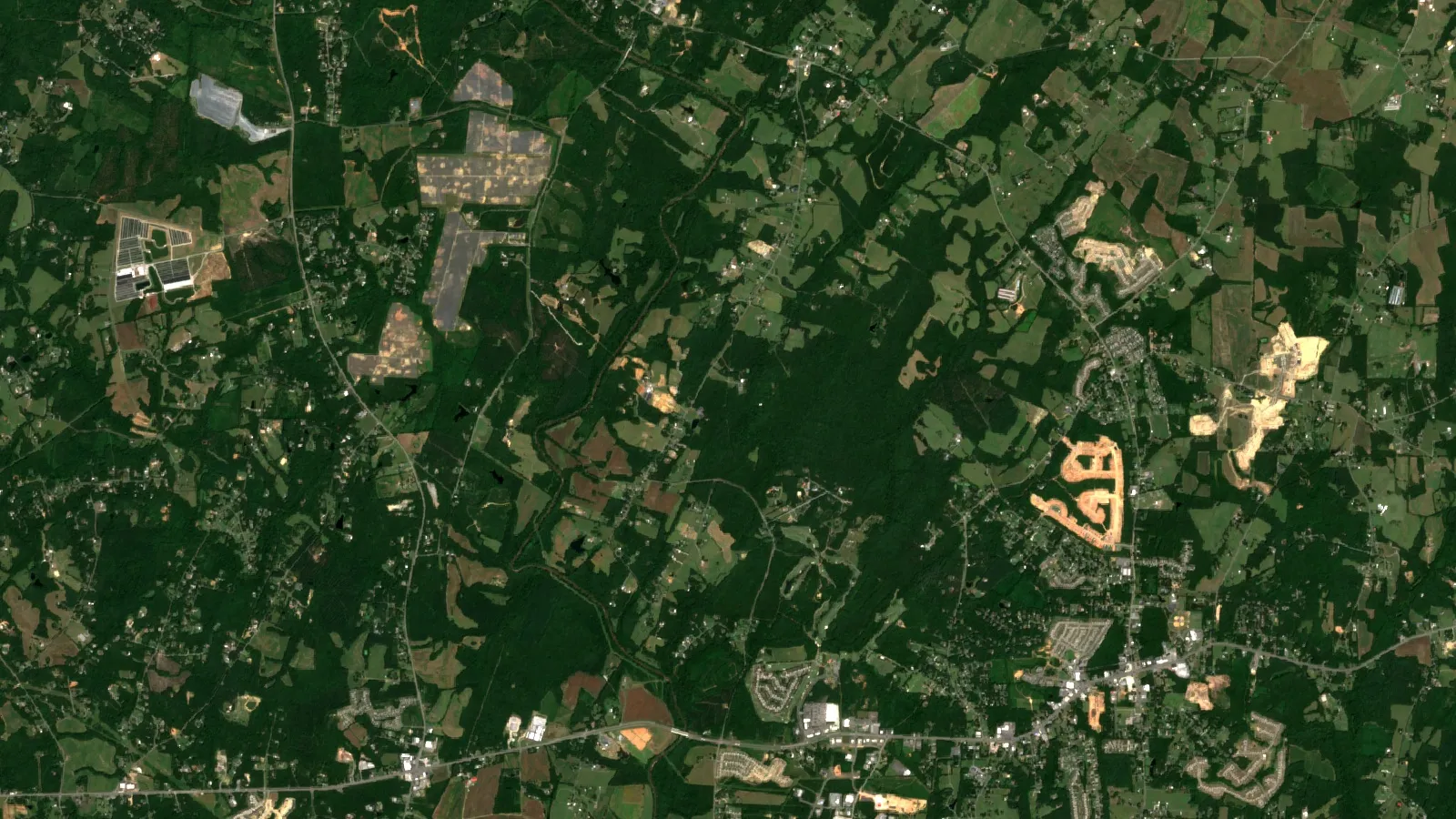
Reed Gold Mine, near Midland in Cabarrus County, North Carolina, is where the first documented gold find in the United States was made, in 1799. Today it is a state historic site that is open Tuesday to Saturday, 9 a.m. to 5 p.m. There is no general admission charge: you pay only for a guided underground tour (adults US$5) or a gold pan (US$5 per pan, plus sales tax) (NC Historic Sites, checked 16 October 2026). This guide covers prices, the real timeline, how much gold came out of the ground, nearby places to pan, and what to check before you look at any North Carolina gold property.
Visiting Reed Gold Mine: hours, tour and panning prices
The site is at 9621 Reed Mine Road, Midland, NC 28107. It is closed on Sunday, Monday and state holidays. The 2026 Sunday-hours pilot has ended, so plan for Tuesday to Saturday (NC Historic Sites, Plan Your Visit, checked 16 October 2026).
| What | Details (checked 16 October 2026) |
|---|---|
| Guided underground tour | 10:00, 11:00, 12:00, 1:30, 2:30 and 3:30; about 30 to 40 minutes; self-guided mine visits have ended |
| Tour price | Adults 18 to 64: US$5; seniors 65+ and military: US$4; youth 3 to 17: US$1; ages 0 to 2: no charge |
| Gold panning | US$5 per pan plus sales tax; year-round, Tuesday to Saturday, weather permitting |
| Panning sessions | March to November: 9:15, 10:15, 11:15, 1:00, 2:00, 3:00 and 4:00; December to February times vary |
| Tickets | Bought on site only (tour at the orientation desk, panning at the gift shop counter); no advance booking for individuals |
| Trails | About 3 miles across lode and placer areas, with the Upper Hill mill-house ruins and a boardwalk at Lower Hill |
Panning closes in moderate to heavy rain, after thunder (it closes for 30 minutes, then staff reassess) and when the heat index reaches 103 degrees. From March to November you pan in large outdoor wooden troughs; from December to February the troughs are next to the visitor center. Children under 8 cannot hold their own pan but can help an adult in their group. The visitor center has a 9-minute orientation film and exhibits on gold, geology and mining equipment. The restored tunnels date to the 1830s, and the reconstructed stamp mill represents machinery of the 1890s.
Schools and groups of 20 or more must reserve 2 to 3 weeks ahead. The site was fully booked for the autumn 2026 and spring 2027 field-trip seasons when we checked.
How gold was found at Reed: a dated timeline
The story is often retold with mistakes, so here are the dates from the state historic site and the North Carolina Geological Survey (NCGS).
- 1799: 12-year-old Conrad Reed finds a heavy yellow rock, reported at 17 pounds, in Little Meadow Creek on his father’s farm. The family uses it as a doorstop for about three years (NC Geological Survey).
- 1802: A jeweler in Fayetteville identifies the gold and buys it for US$3.50, about one-tenth of one percent of its true value. John Reed later returned and received roughly US$3,000 more (NC Historic Sites; NCGS Information Circular 29).
- 1803: Reed forms a partnership with three local men to dig the creek bed. Before the year ends, an enslaved boy named Peter unearths a 28-pound nugget.
- 1825 to 1831: Miners learn that gold also sits in white quartz veins. Underground work at Reed begins in 1831.
- 1835: A family dispute leads to a court injunction that closes the mine for about ten years.
- 1845: John Reed dies a wealthy man and the mine is sold at public auction.
- 1895 to 1896: New owners buy it for US$15,000 and install a 10-stamp mill. In April 1896 four men find a 23-pound nugget, the last large one reported from the property.
- 1912: The Kelly family ends underground mining after workings reach 150 feet without the hoped-for veins.
- 1971: The State of North Carolina buys the property from the Kelly family; it is now a state historic site (NCGS Information Circular 29).
Two points where older web pages are wrong or unclear. First, the 1802 sale was the identification of the nugget; mining at Reed began in 1803. Second, sources disagree on who found the 1896 nugget: the site credits Jacob Shinn, while some Cox family descendants say A. M. “Mack” Cox found it. The site notes that the evidence supports both versions.
The work at Reed relied on enslaved labour from the start, and the site’s own history says so. That is part of the record of how early Carolina gold was dug.
The Reed nuggets: how big were they?
The NCGS reports that 153 pounds of nuggets, from 1 pound to 28 pounds, were taken from the property, which makes it perhaps the richest placer deposit in the state. The three best-known pieces are compared below. A placer deposit is gold that erosion has moved into stream gravel; a lode is gold still sitting in a rock vein.
Chart
The three best-known Reed nuggets
Weight in pounds (avoirdupois), by year found
What a Reed-size nugget would be worth
Weights in old reports are in avoirdupois pounds (the everyday pound). Gold is priced per troy ounce, which is 31.1035 grams, so one avoirdupois pound is about 14.58 troy ounces. At a bid of US$4,157.70 per troy ounce (Kitco, 16 October 2026), 17 pounds of pure gold would be about US$1.03 million, and 28 pounds about US$1.70 million. Real nuggets contain silver and quartz, so the true figure is lower. In 1802 the same 17 pounds sold for US$3.50, and in 1896 the 23-pound nugget sold for US$4,800 at a fixed price of US$20.67 per troy ounce. Use the calculator to test your own weight, purity and price.
Calculator
What is your nugget worth?
Enter a weight in pounds, a purity and today’s gold price.
- Value at your price (US$): $925,967
- Multiple of the US$3.50 paid in 1802: 264,562
Example values only, not an appraisal. Uses 453.592 grams per pound and 31.1035 grams per troy ounce. The 90% purity is an example; real nuggets contain silver and quartz. Price is an example, use today’s price (Kitco bid was US$4,157.70 on 16 October 2026).
How much gold came from Reed and North Carolina
Reed’s output is hard to pin down because records are thin. The NCGS puts production from 1803 to 1835 at more than US$1 million; the encyclopedia NCpedia says the mine was said to have yielded US$1 million between 1804 and 1846 (NCpedia, Gold Rush). The state-wide picture is clearer:
Chart
Value of gold at the prices of the time
US$ million; three different measures, not one series
- North Carolina was the only gold-producing state from 1803 to 1828 and led the country until 1848, when California took over (NC Geological Survey).
- At the height of the rush more than 250 gold mines operated in the Piedmont, the rolling central region of the state. Over 600 inactive gold mines and prospects are scattered through the Piedmont and mountains today (NCGS Information Circular 29).
- Total production through 1991 is estimated at about 1.1 million troy ounces, worth up to US$25 million at historical prices (NCGS Information Circular 29). At the Kitco bid above, that many ounces would be about US$4.6 billion.
- A branch of the US Mint opened in Charlotte in 1837 and coined nearly US$5 million of southern gold in US$1, US$2.50 and US$5 pieces until 1861. The first coin was struck in 1838.
For scale, the USGS estimates US mine production at 160 tonnes in 2025, about 5.1 million troy ounces (USGS Mineral Commodity Summaries 2026). All of North Carolina’s recorded gold is therefore roughly a fifth of one year of current US output.
The last significant North Carolina gold, from 1954 to 1963, came as a by-product of copper mining at the Ore Knob Mine in Ashe County. There are no major commercial gold mining operations in the state today (NC Geological Survey, checked 16 October 2026).
Where the gold sits: the Carolina Slate Belt
Reed lies in the Carolina Slate Belt, a band of ancient volcanic and sedimentary rock that runs through the central Piedmont and into South Carolina. NC’s gold is found in six geologic belts, and most early production came from the central Piedmont, including the Slate Belt and Mecklenburg County. The Gold Hill and Cid districts, the Reed Mine and the Silver Hill Mine all sit in this area.
Chart
Haile Gold Mine, South Carolina: gold produced
Thousand troy ounces (koz)
The belt’s large modern producers are across the state line. A USGS-published study of the Russell mine in the Uwharrie Mountains notes that most Slate Belt production came from large mines in South Carolina; the Russell mine itself produced over 470 kilograms of gold at an average grade of about 3.4 grams per tonne (g/t) (Klein and others, Economic Geology, USGS Publications Warehouse). Grade is the amount of gold in a tonne of rock.
The Haile Gold Mine in South Carolina is wholly owned by OceanaGold. It produced 184,800 ounces in 2025 and 212,600 ounces in 2024, and the company plans to begin the Palomino Underground development there in 2026 (OceanaGold results, 18 February 2026). One year of Haile output (184,800 ounces) is about a sixth of the 1.1 million ounces North Carolina produced in its whole recorded history. This is context for the geology, not a view on the company or its shares.
How gold was mined at Reed
The technique changed in three steps. First came panning and cradle rocking in the creek, which needs only water and a shallow tray. Next came shaft and tunnel mining after 1831, when miners followed quartz veins underground; this took far more money, labour and machinery. Last, stamp mills crushed the hard ore so the gold could be freed, the same job a modern crusher and mill does. We explain the crushing step in more detail in our guide to rock crushing in mining.
The reconstructed stamp mill at the site shows the 1890s version. The Kelly-era mill, bought from a Charlotte ironworks, ran along Little Meadow Creek, and the last mill run came from a 20-foot zone that yielded about 3 ounces of gold per ton (NCGS Information Circular 29).
Modern gold mines follow the same chain of steps, only larger and with closed-circuit controls. The video below follows a nugget from rock to ring.

▶ How gold is mined and refined, from rock to ring. · 5:27
Where else to see or pan for gold in North Carolina
Reed is the best place to learn the history, but it is not the only place to try a pan.
- Gold Hill Mines Historic Park (Rowan County): gold was first found here in 1824. The Barnhardt Mine (about 435 feet deep) and Randolph Mine (about 850 feet deep) were among the most productive gold mines east of the Mississippi, with an estimated US$6 million in gold before the Civil War. The park has no admission charge and is open daily in daylight hours (Visit Rowan County, checked 16 October 2026). The village keeps the mining history alive through its historic district and trails, and holds a Founders Day festival each September.
- Cotton Patch Gold Mine (Stanly County): opened to panners and rock hobbyists in 1961 at New London, but its own site now says recreational prospecting has been closed since 2016, so do not plan a panning trip there. The state geological survey page still lists it as open, which is out of date (Cotton Patch Gold Mine).
- Uwharrie National Forest: Montgomery County says recreational panning is allowed on most of the forest with no fee or permit if you use only a shovel and pan and cause no significant stream disturbance (Montgomery County tourism). The same page rules out mechanical equipment and blasting, specimens for anything but personal non-commercial use, finds of archaeological value, and any collecting that conflicts with existing mineral permits or leases. Sluice boxes are not named, so stay with a shovel and pan. The state geological survey page is older and says only that prospecting or exploration permits are occasionally granted in national forests, so we follow the county page for the shovel-and-pan rule and advise confirming with the district ranger.
Most land in the state is private, so get the landowner’s permission first. Prospecting is not allowed in national parks or in state parks and forests. Never use mercury to collect fine gold; it poisons water and people. For technique, see our gold panning methods guide and the overview of how gold deposits are found.
Gold mine for sale in North Carolina: what to check first
Searches for a gold mine for sale in North Carolina lead to private listings, and Reed is not one of them: the state owns it and runs it as a historic site. If you are looking at a private property, the state geological survey gives this order of checks (NC Geological Survey, checked 16 October 2026):
- Who owns the minerals. Unless sold separately, mineral rights normally stay with the landowner. Property deeds are recorded at the courthouse in each county seat.
- What permit applies. Under the North Carolina Mining Act of 1971, a mine that affects more than one acre of surface must have a permit, a bond and a reclamation program. Safety rules from state and federal agencies also apply.
- Whether the land is public. Prospecting is not allowed in national parks or in state parks and forests; permits are occasionally granted in national forests through the district ranger.
- What the rock holds. Old mine dumps and shafts are not proof of ore. NCGS notes that many quartz veins exist but few carry gold, and that exploration companies in the state mainly look for fine gold tied to volcanic rocks.
- What a screening can show. Satellite imagery can map iron-oxide stains, clay and silica alteration across a parcel before anyone drills. The result is an exploration target, not a resource estimate.
Our overview of gold deposits in the United States by state puts the Carolina belts next to other US districts, and the guide to mining cadastre portals explains how to search claim and licence records in other countries. Farmonaut produces satellite mineral screening reports from a KML, KMZ or polygon boundary in 5 to 20 business days.

▶ How satellites help find gold: they map the rock around it, not the gold itself. · 4:25
Frequently asked questions
Is Reed Gold Mine open?
Yes, Tuesday to Saturday from 9 a.m. to 5 p.m. It is closed Sunday, Monday and state holidays. The 2026 Sunday-hours pilot has ended (NC Historic Sites, checked 16 October 2026).
How much does it cost to visit Reed Gold Mine?
There is no general admission. A guided mine tour costs US$5 for adults, US$4 for seniors and military, and US$1 for youth aged 3 to 17. Gold panning is US$5 per pan plus sales tax.
Who discovered gold at Reed Gold Mine?
Twelve-year-old Conrad Reed found a rock of about 17 pounds in Little Meadow Creek in 1799. A Fayetteville jeweler identified it as gold in 1802.
What was the largest nugget found at Reed?
Peter’s Nugget, 28 pounds, found in 1803. The site calls it the largest found at Reed and the largest found east of the Mississippi River.
How long is the mine tour?
About 30 to 40 minutes. Tickets are sold on site only, at the orientation desk, and cannot be bought in advance.
Can you tour the underground mine?
Yes, by guided tour only, at 10:00, 11:00, 12:00, 1:30, 2:30 and 3:30. The route is level gravel, with a short flight of steps at the end that visitors with limited mobility can avoid by returning through the level entrance.
Is gold still mined in North Carolina?
There are no major commercial gold mining operations in the state (NC Geological Survey). The last notable output, from 1954 to 1963, was a by-product of copper mining.
How much gold has North Carolina produced?
About 1.1 million troy ounces through 1991, worth up to US$25 million at historical prices (NCGS Information Circular 29).
When did North Carolina stop leading US gold production?
In 1848, when the California discoveries overtook it. North Carolina had been the only gold-producing state from 1803 to 1828.
Can I buy a gold mine in North Carolina?
Private mines and mineral rights can be bought or leased from landowners, but Reed Gold Mine is state property. Check who owns the minerals, which permit applies and what the rock holds before you pay for anything.
Where can I pan for gold near Charlotte?
Reed Gold Mine at Midland, in Cabarrus County, sells pans on site. Cotton Patch Gold Mine in Stanly County has been closed to recreational prospecting since 2016, and Gold Hill in Rowan County is a history park, not a panning site. For panning with no charge, the option is streams in the Uwharrie National Forest, using only a shovel and pan and causing no significant stream disturbance.
This page is for information only. It is not investment advice or legal advice. Confirm mining, permit and mineral-rights rules with the regulator and a local attorney. Get the landowner’s permission before you prospect, and never use mercury.
Farmonaut mining
Map your mining site from space
Request a quote for a satellite mineral detection report on your own area.
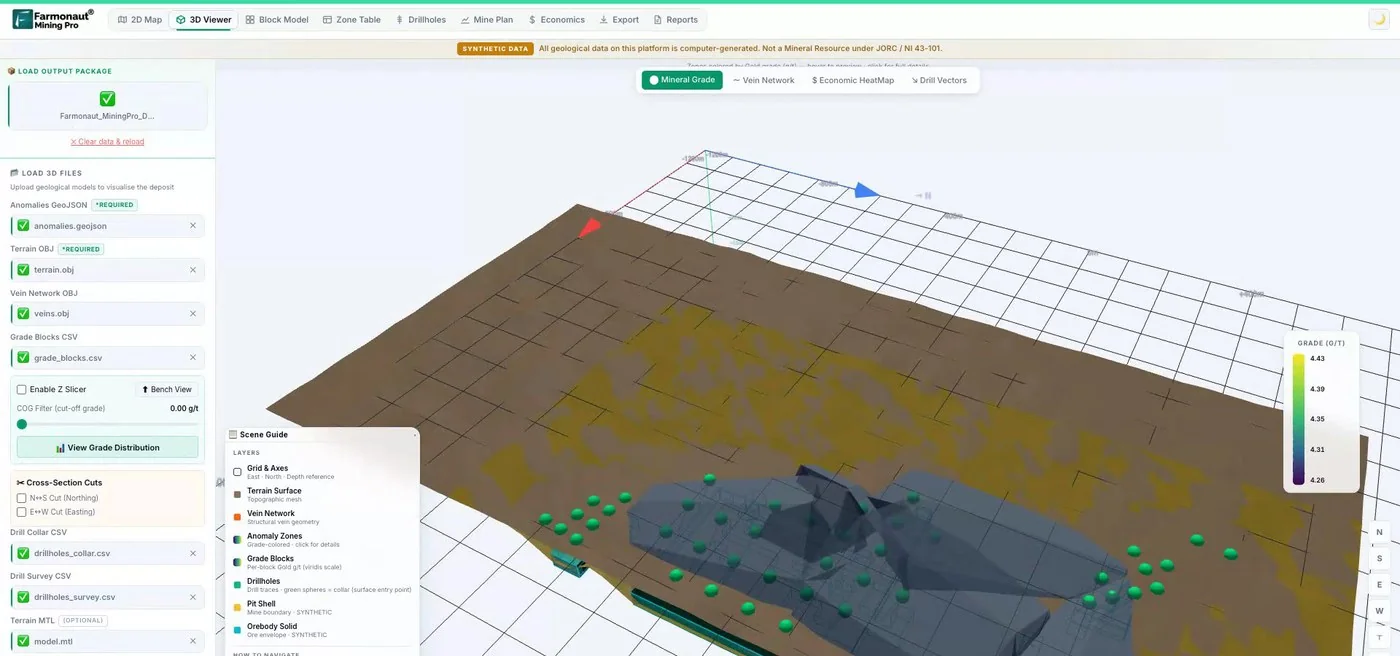
Mining Pro sample view, synthetic data
Keep reading
Sources
- NC Historic Sites, Reed Gold Mine: Plan Your Visit: historicsites.nc.gov
- NC Historic Sites, Reed Gold Mine: History: historicsites.nc.gov
- NC Historic Sites, Reed Gold Mine: historicsites.nc.gov
- NC Geological Survey, North Carolina Gold: deq.nc.gov
- NCGS Information Circular 29, Gold in North Carolina: files.nc.gov
- NCpedia, Gold Rush (Encyclopedia of North Carolina, 2006): ncpedia.org
- USGS, Mineral Commodity Summaries 2026: Gold: pubs.usgs.gov
- USGS Publications Warehouse, The Russell gold deposit, Carolina Slate Belt (Economic Geology): pubs.usgs.gov
- OceanaGold, 2025 results press release (18 February 2026): prnewswire.com
- Kitco, gold price chart (bid, 16 October 2026): kitco.com
- Visit Rowan County, Gold Hill: visitrowancountync.com
- Montgomery County NC, Pan for Gold in the Uwharries: montgomerycountync.gov
- Cotton Patch Gold Mine, history: cottonpatchgoldmine.com
Discussion
Questions, corrections or field experience? Share them below. First-time comments are reviewed before they appear, and your email is never published.
No comments yet. Be the first to add a question or your experience.

 Energy and Resources Ltd
 Mwerezi Minerals Company Limited
 Congo Mining Solutions
 Mining SARL
 SenGold Invest SAS
 Sania Corporation
 Sean Mining Limited
 NTS Group (Pty) Ltd
 Mine4Africa
 Lithspo Minerals Limited
 Tintina Mining Group
 Dalgety Minerals Pty Ltd
 Vortex Minerals Pty Ltd
 Faith At Work (Pty) Ltd
 Geotech Mining Solutions plc
 Vulcan International Limited
 Kidepo Associates
 GKY Mining
 Alkimy SARL








