

Small-Scale Gold Mining in Alaska: Equipment & Operations 2026
“Over 1,200 small-scale placer mining operations are active in Alaska, each subject to strict environmental regulations.”
Introduction: Alaska’s Golden Intersection
Small-scale gold mining in Alaska sits at a unique crossroads — an intersection of rural livelihoods, regional ecology, and intricate regulatory frameworks. As of 2026, the number of small-scale placer mining operations in Alaska remains highly significant, supporting hundreds of rural families and communities. Unlike the large commercial mining outfits that dominate in other regions, Alaska’s placer gold sector is characterized by individual operators, flexible work schedules, and operations that must adapt swiftly to the state’s ever-changing weather and river conditions.
For those working in forestry, fishing, or agriculture, or for anyone living in Alaska’s rural regions, the presence of gold mining is more than an economic footnote — it is a vital supplementary income source and a cornerstone of integrated land stewardship. This blog will explore the practices, gear, environmental implications, and the promising role of satellite technology in enabling sustainable operations for small-scale miners in Alaska through 2026 and beyond.
Context & Scale: Alaska’s Placer Mining Landscape
When considering placer gold mining in Alaska, the image is not one of booming industrial machinery, but rather of determined operators working riverbanks, alluvial gravels, and historic streams. Let us clarify the context, scale, and current state of small-scale gold mining in alaska:
- Dominance of Small Operators: The landscape is dominated by small-scale placer mining operations, rather than large commercial outfits. These are typically family-run or seasonal ventures, relying on modest equipment and agile methods.
- Geographic Spread: Operations are scattered across Alaska’s rivers, streams, and floodplains, with activity centering on areas with historic productivity and accessible gold deposits.
- Embedded in Local Economies: In rural regions, placer mining is often woven into the fabric of communities, complementing fishing, forestry, and subsistence activities.
- Variable Year to Year: While estimates vary annually, it is clear that the total number of small-scale placer mining operations in alaska remains significant—as confirmed by the Department of Natural Resources and local agencies.
- Employment & Livelihood: Hundreds of small operations offer alternative income sources where regional opportunities are otherwise limited.
The Allure of Alaska’s Gold Streams
Gold deposits in Alaska occur mainly in alluvial gravels deposited by episodic floods and upstream mineralization. Over centuries, these streams gained fame for their richness, with generations of prospectors returning year after year, chasing new pockets of gold. The enduring draw is not only in the value — but in the synergy with the rural lifestyle and the unique challenges and freedom that placer mining offers.
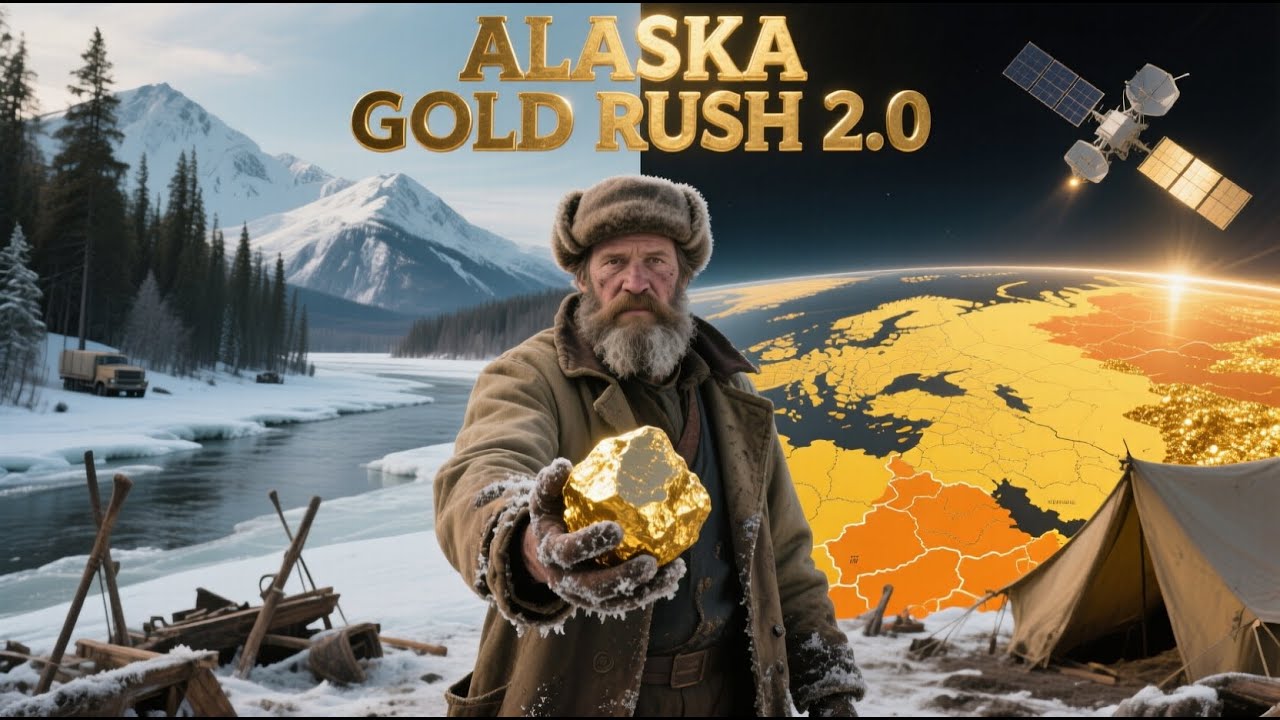
Watch how satellites are transforming modern gold prospecting in Alaska.
Small-Scale Gold Mining Equipment & Best Practices in Alaska
Small-scale gold mining equipment in Alaska reflects the core values of accessibility, portability, and minimal environmental impact. Operators rely on a diverse set of tools based on accessibility to river banks, seasonal flow rates, weather conditions, and the regulatory landscape. Here’s a deep dive into equipment and core practices:
Types of Common Equipment Used by Operators in Alaska
- ✔ Gold Pans & Hand Tools: Manual panning is the most accessible technique, requiring only a pan and shovel. It is the oldest and most environmentally benign method, making it ideal for small-scale miners and first-time prospectors.
- ✔ Sluice Boxes: These portable setups allow miners to wash larger volumes of alluvial gravels compared to gold panning. Sluices use the river’s natural flow to separate gold from sediments with minimal earth-moving.
- ✔ Suction Dredges & Highbankers: Lightweight, portable, gasoline-powered or battery-powered dredges enable deeper extraction—however, their use is subject to stricter regulatory controls, especially concerning water quality and streambank disturbance.
- ✔ Compact Trommels: Small, rotating screens that process even larger volumes of material, enabling increased productivity for experienced operators or small crews.
- ✔ Seasonal Equipment Upgrades: Many miners upgrade or retrofit their equipment as gold prices and conditions change, using battery technology or water-efficient pumps.
Key Practices for Sustainable Placer Mining
Alaska’s tight regulatory framework shapes every aspect of placer mining equipment deployment:
- ✔ Careful Sediment Management: Operators must return cleaned tailings to the origin site, reduce sediment discharge, and avoid excessive disturbance of aquatic habitat.
- ✔ Minimal Channel Disruption: Best methods emphasize working above the waterline, minimizing bank alteration, and precisely siting tailings piles away from critical habitat.
- ✔ Water Use Constraints: Water permits are required for pumps, dredges, and highbankers, often with stipulations to prevent siltation in downstream ecosystems.
- ✔ Portable & Flexible Setups: Most operators rely on portable equipment that can be quickly set up or moved, adapting to shifting river conditions and weather events.
- ✔ Seasonal Schedules: Each year, the work season is narrowly tied to snowmelt, rainfall, and ice-out conditions, with the number of operational days strictly dependent on safe river flow and permit windows.
“Alaska’s small-scale miners must reclaim 100% of disturbed land, ensuring sustainable gold extraction and habitat restoration.”

Explore the modern techniques of small-scale gold extraction.
Comparative Overview: Equipment Types, Environmental Impacts & Regulations (2026)
To foster informed decision-making and sustainability in small-scale placer mining operations across Alaska, here’s a quick-reference table contrasting main equipment types, typical costs, environmental impact, operational scale, and regulatory requirements for the 2026 season:
- 📊 Gold panning and sluicing remain the least disruptive and most accessible techniques for modern operators.
- ⚠️ Suction dredges and mechanical setups require strict adherence to state and federal permitting, reflecting their higher potential for habitat disturbance and sediment management challenges.
- 💡 Operational scale is directly tied to equipment investment and regulatory requirements. Larger operations must navigate a complex network of resource agencies and legal obligations.
- 🛠️ Choosing the right equipment can determine not only gold productivity but also community relationships and continued site access.
- 🌱 Environmental stewardship must be a core value for sustained placer mining access and success in Alaska’s rural regions.
Discover the global forces shaping modern gold mining activity.
Environmental & Regulatory Context: Sustainable Practices in Alaskan Placer Operations
Small-scale gold mining in Alaska is subject to a detailed web of state and federal agencies governing land access, water quality, and habitat conservation. The core objectives are to sustain environmental quality, safeguard habitat, and ensure long-term access to mineral resources for operators and future generations.
Key Alaska Regulatory Agencies & Frameworks (2026)
- ✔ Alaska Department of Natural Resources (DNR): Governs land use, placer permits, lease agreements, and reclamation standards.
- ✔ Alaska Department of Fish & Game (ADF&G): Focuses on protection of fish habitats, restrictions during salmon run, and site restoration.
- ✔ US Forest Service (USFS) & Bureau of Land Management (BLM): Manage placer mining on federal lands, requiring notices and strict mitigation plans for active sites.
- ✔ Alaska Pollution Discharge Elimination System (APDES): Issues discharge and water quality permits for operations using mechanical equipment or involving sediment movement.
Critical Environmental Practices for Small-Scale Gold Mining Operators
- 🌊 Seasonal Timing Restrictions: Field work and in-stream activity are constrained to avoid overlap with critical spawning seasons for salmon and migratory fish.
- 🛡️ Erosion Control & Land Reclamation: Miners must stabilize and reclaim every area they disturb. This includes re-sloping banks, returning topsoil, and re-seeding vegetation to prevent erosion.
- 📝 Reporting & Record-Keeping: Operators are required to keep detailed logs of sediment discharge, site reclamation, water use, and compliance activities — subject to periodic agency inspection.
- 🚫 Avoidance of Sensitive Habitat: Sites near wetlands, critical wildlife corridors, or archaeological resources require additional review and are often off limits entirely.
- 💧 Sediment Basins & Water Quality Buffers: The best-managed sites utilize sediment traps and buffer strips to reduce downstream siltation and improve water quality.
Consistent access to Alaska’s placer mining regions depends on a track record of responsible environmental management and cooperative relationships with local agencies and communities.

See how satellite data and AI change early-stage gold exploration (Farmonaut example).
Socioeconomic Realities & The Future Outlook for Small-Scale Placer Gold Mining in Alaska (2026+)
The number of small-scale placer mining operations in alaska continues to play a pivotal role in the state’s rural communities. For operators, the flexible, seasonal work schedules and the strong dependence on river accessibility remain a defining attribute—one that both empowers local resilience and requires constant adaptation.
Socioeconomic Benefits of Small-Scale Mining
- ✔ Alternative & Supplementary Income: Gold mining provides an income bridge during closures or off-seasons for fishing, forestry, or farming, supporting diverse rural livelihoods.
- ✔ Community Embeddedness: Many placer mining operations are family-run or operated by small, cooperative crews, increasing local economic retention and fostering stewardship of shared resources.
- ✔ Skill & Knowledge Transfer: Operational knowledge and compliance expertise are passed from one generation to the next, preserving a unique fusion of tradition and new technology.
- ✔ Market Sensitivity: Fluctuations in global gold prices directly impact the level of investment in equipment upgrades, operational days, and recruitment.

Ongoing Challenges and Tensions
- ⚠️ Land & Water Use Conflicts: Disputes over river access, competing land uses, and habitat management occasionally arise between miners, indigenous communities, conservation groups, and recreational users.
- ⚠️ Regulatory Complexity: The evolving patchwork of federal, state, and local permits can prove a navigational challenge, especially for new or small operators.
- ⚠️ Environmental Responsibility: Maintaining public support and continued site access depends on transparent, responsible operations and proactive engagement with community concerns.
What Lies Ahead? Trends Impacting 2026 and Beyond
- 🔍 Rising Regulatory Clarity: As new environmental and habitat standards are standardized, operators must pivot to even more sustainable, low-impact mining techniques — further emphasizing efficient, compliant equipment choices.
- ⚡ Technological Innovation: Expect an upswing in portable, lightweight gear, energy-efficient dredges, battery-powered trommels, and advanced sediment control measures.
- 🌐 Remote Sensing Integration: Satellite-based mineral detection and 3D mineral prospectivity mapping will help streamline site selection, validate claims, and minimize unnecessary river disturbance.
- 🧩 Community/Cooperative Governance: A move toward cooperative engagement — not just among miners, but between agencies, indigenous entities, and environmental organizations — will shape regulatorycraft and local access for years to come.
- 📈 Market Fluctuations: The global price of gold will continue to determine the number of small-scale placer mining operations in alaska running in any given year.

Learn how satellite intelligence is reshaping gold discovery around the globe.
How Satellite Technology Advances Mineral Exploration and Reduces Ecological Impact
In an age of environmental stewardship and rapid technological progress, satellite-driven mineral discovery is becoming an essential early-stage step for small-scale placer operations. Using advanced Earth observation, remote sensing, and artificial intelligence, platforms like satellite-based mineral detection radically alter traditional approaches to resource assessment.
Benefits of Remote Sensing for Alaska’s Small Placer Operators
- 📡 No Ground Disturbance: Satellite intelligence generates high-confidence mineral assessments without disturbing rivers, banks, or wildlife habitat.
- ⏱️ Dramatic Time & Cost Savings: Site validation and target mapping take days — not months or years — while reducing exploration budgets by up to 80–85%.
- 🔍 Rapid, Large-Scale Screening: Multiple historic deposits, alluvial bars, or mineralized areas can be evaluated simultaneously, greatly enhancing operational flexibility.
- 🗺️ 3D Prospectivity Mapping: Operators can visualize mineralization trends and optimal target zones, increasing efficiency and reducing environmental impact from exploratory digging or unnecessary claim staking.
- 📝 Professional Reporting: With structured, GIS-compatible deliverables, operators can more easily secure mining permits, demonstrate stewardship, and confidently approach investment or lease planning for the 2026 season and beyond.
Satellite-based mineral intelligence is set to become a compliance differentiator, a cost-saving tool, and a ticket to transparent resource management in Alaska’s small operator landscape. Operators and investors should strongly consider integrating these solutions into their annual field planning.
Start Mapping Your Claim Today
If you’re an operator, prospector, or analyst looking to reduce exploration risk, Map Your Mining Site Here and receive professional satellite insights before turning a single shovel.
For tailored mineral reports and AI-driven site prospectivity analytics relevant to both early stage placer operations and larger commercial assessments, get started with Farmonaut’s custom quoting platform.
Utilize the latest satellite-driven 3D mineral prospectivity mapping to avoid unproductive digging and improve compliance preparation. Download a sample report here.
- ✔ Lower risk and cost before ground operations begin
- ✔ Comply with new Alaskan environmental standards more easily
- ✔ Demonstrate stewardship with transparent, non-invasive exploration
- 📊 Visualize gold targets at landscape scale
- ⚡ Get reports in days — not months
- 🔗 Integrate data with physical survey and compliance efforts

Compare regional gold rushes and discover modern sustainable practices in mining.
🎯 Highlights & Practical Tips for Operators, Agencies, and Investors
Ignoring or underestimating annual changes in regulatory standards or water timing can result in permit revocation or fines. Always confirm requirements with the Alaska DNR and local authorities before every new work season.
Those leveraging portable, lightweight equipment and investing in compliance-friendly gear retain sustained access to the richest claims and the most flexible work schedules.
Maintain ongoing communication with adjacent land users, indigenous groups, and cooperative partners to prevent misunderstandings and sustain site access.
While gold prices drive short-term activity, long-term investment and site access increasingly favor sustainable, responsible placer operations integrating both best practices and satellite-enabled prospectivity mapping.
To get started with the latest in mineral intelligence or compliance mapping, contact Farmonaut today or use our site mapping portal for Alaskan miners.
Frequently Asked Questions: Small-Scale Gold Mining in Alaska
What is the most common equipment for small-scale placer mining in Alaska?
Gold pans, sluice boxes, and highbankers are the most widely used small-scale gold mining equipment in Alaska due to their affordability, portability, and relatively low environmental impact. More advanced operators may use suction dredges or compact trommels, subject to higher regulatory scrutiny and permit requirements.
What permits are required for small-scale placer mining in Alaska in 2026?
Permit requirements vary by scale of operation, equipment type, and land ownership (private, state, or federal). All mechanical equipment (dredges, trommels, highbankers) typically requires land use authorization from the Alaska DNR, water use/discharge permits (APDES), and notice to USFS or BLM for federal lands. In addition, fish habitat or timing restrictions from ADF&G may apply.
How has technology improved mineral discovery for small operators?
Recent advances in satellite imagery, AI, and remote sensing—such as Farmonaut’s satellite-based mineral detection platform—allow quick, non-invasive assessment of alluvial gold potential. These technologies save time, cost, and reduce the need for disruptive exploratory digging, supporting both regulatory and environmental goals.
Is small-scale gold mining still sustainable in Alaska?
Yes, when best-management practices are rigorously observed, regulations followed, and technology is used to minimize disturbance. As of 2026, Alaska’s regulatory framework ensures that each operator must reclaim 100% of disturbed land, making sustainability a core requirement for continuous access.
How do I start a new placer operation or map my site?
First, research permitting and site regulations with the Alaska Department of Natural Resources, ADF&G, and relevant federal authorities. For preliminary mineral assessment with zero ground impact, try Farmonaut’s satellite mapping platform for fast, professional, and compliance-friendly intelligence.
Conclusion: Adaptive Mining for Sustainable Communities
Small-scale gold mining in Alaska is set to remain a vital—if ever-adaptive—thread in the cultural and economic tapestry of the state’s rural regions. Amidst shifting river conditions, weather patterns, and evolving regulatory standards, operators will thrive by investing in light, portable equipment, embracing best environmental practices, and integrating satellite-driven intelligence into their annual workflows.
At Farmonaut, we’re deeply committed to advancing this future—offering satellite-enabled mineral detection for rapid, cost-effective, and environmentally sustainable decision-making for Alaska’s small placer miners and exploration communities alike.
Whether you’re a miner, a forester, a village leader, or an investor, the story of Alaskan placer gold is a timely reminder: The best outcomes for livelihoods, habitats, and economies come from adaptive management, cooperative governance, and the careful integration of new technology with historic local wisdom.
Get Quote
✔ For guidance, regulatory support, or service inquiries:
Contact Us
✔ Map Your Mining Site Here:
mining.farmonaut.com

See how global best practices and satellite intelligence support sustainable gold mining.

 Geotech Mining Solutions plc
 Vulcan International Limited
 Kidepo Associates
 GKY Mining
 Alkimy SARL
 Double A Trading
 GemSprout Metals Limited
 Qader Group
 Ileys General Trading
 SG Gold Mining LLC
 VRV Global Pte Ltd
 Omsri International FZE
 G.I.T.T.
 Jaunita Erss Ltd
 Almosi SARL
 SRK Consulting
 Berks Gold Limited
 Mwerezi Minerals Company Limited
 Mining SARL
 SenGold Invest SAS
