

Soil health · Farm guide
Solutions for Soil Pollution on Farms: 7 Steps That Work
About 95% of our food comes from soil (FAO). Seven practical fixes for polluted farm soil: test and map, stop the source, lime and phosphorus, organic matter and cover, plants that clean soil, removal or capping, and smarter crop choices, with US and EU rules.
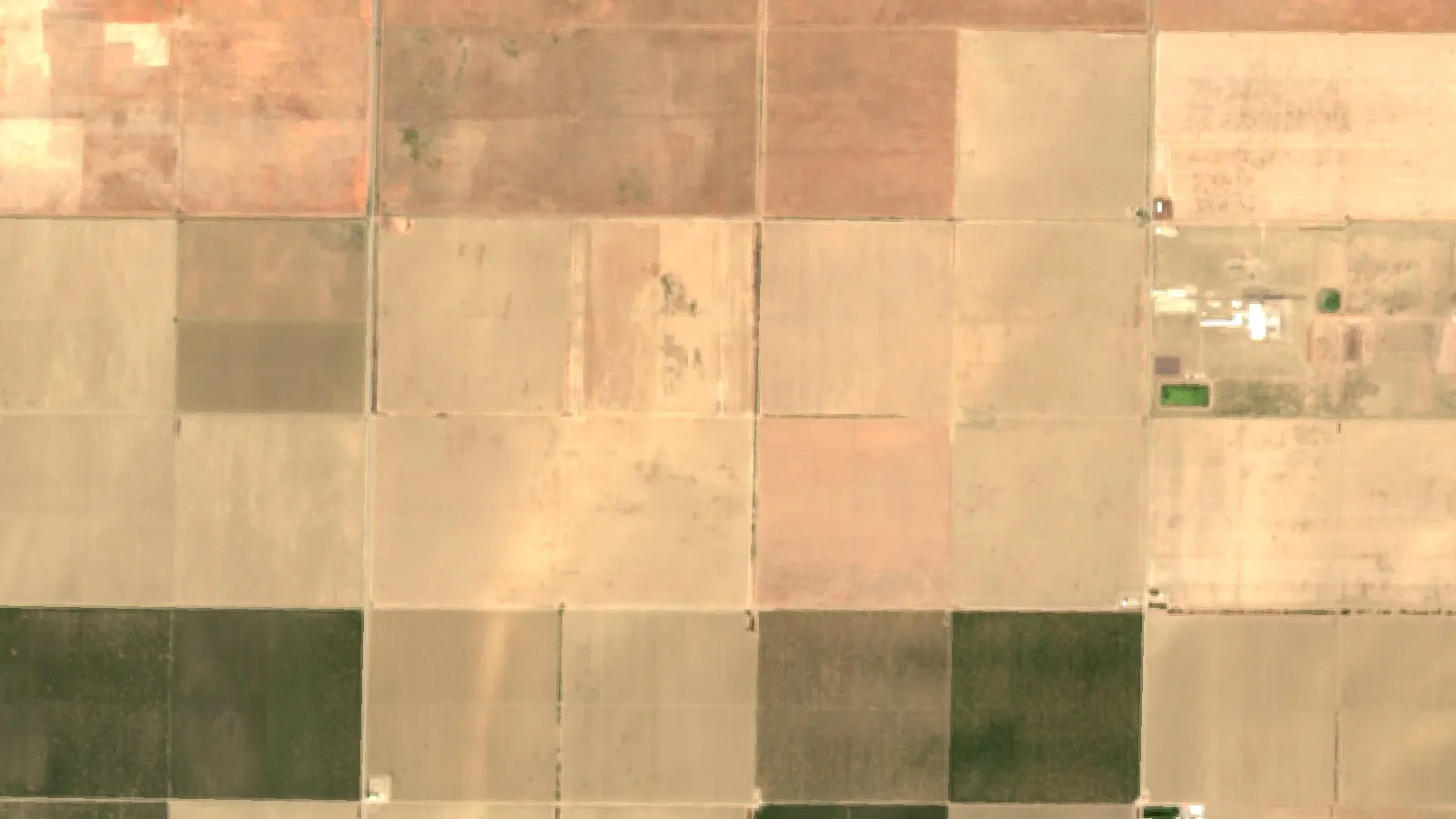
Key takeaways
- Test before you act: lead occurs naturally at about 10 to 50 ppm; higher readings usually point to human activity (Oregon State University Extension).
- Liming toward pH 7.0 and adding phosphorus where tests show it is low make lead and other metals less soluble, though total lead stays the same (OSU Extension).
- Plant-based cleanup is generally cheaper than digging soil out but can take several years (US EPA CLU-IN).
- Farm production used 12.5 million tonnes of plastic products in 2019, and film demand is forecast to reach 9.5 million tonnes by 2030 (FAO).
- The EU Soil Monitoring Law entered into force on 16 December 2025; the Commission says 60 to 70% of EU soils are unhealthy.
In this article
- Seven solutions for soil pollution at a glance
- What soil pollution means on a farm
- Start with a soil test and a map
- 1. Stop the source
- 2. Raise pH and phosphorus to lock metals in place
- 3. Add organic matter and keep soil covered
- 4. Use plants to clean or hold the soil
- 5. Remove, cap or replace the worst soil
- 6. Change the crop or the land use
- 7. Manage plastics and salts
- Is testing worth it on your field?
- Watch your fields for signs of trouble
- Rules and support in your region
- Limits of this guide
The best solutions for soil pollution on a farm are, in order: test the soil, stop the source, lock metals in place with lime, phosphorus and organic matter, cover bare ground, and remove or cap soil only where levels are very high. It matters because about 95 percent of the food we eat comes from the soil, according to the FAO Global Assessment of Soil Pollution. Most farms will never need a digger. They need a lab result and a plan.
This guide is written for farm owners and market growers in the US, Canada, the UK, Europe, Australia and New Zealand. It turns the evidence into seven practical steps. It shows the lead levels that change what you can grow, how much plastic farms use, and a calculator that compares the cost of testing with the value of the crop at risk on your own field.
Seven solutions for soil pollution at a glance
The table sums up each fix. Each one has its own section below, with the source behind it.
| Solution | What it does | Typical cost level | Time to work |
|---|---|---|---|
| Test and map the soil | Finds what is there and where | Low (lab fees per sample) | Weeks |
| 1. Stop the source | Keeps new pollution out | Low to medium | Starts at once |
| 2. Lime and phosphorus | Makes lead and other metals less soluble | Low | One season |
| 3. Organic matter and cover | Binds pollutants and stops dust | Low to medium | One to three seasons |
| 4. Plants that clean soil | Takes up or holds pollutants in roots and shoots | Medium | Several years |
| 5. Remove, cap or replace | Cuts contact with the worst soil | High | Weeks to months |
| 6. Change the crop or the use | Grows crops that carry less risk | Low | Next season |
| 7. Manage plastics and salts | Stops slow build-up of film fragments and salt | Low to medium | Ongoing |
Costs here are relative, not quotes. Ask your local lab, extension office or contractor for real prices in your area.
What soil pollution means on a farm
Soil pollution means a substance in the soil at a level that can harm crops, animals, people or water. Some of it is natural. Lead, for example, exists in soils at about 10 to 50 parts per million (ppm), which Oregon State University Extension calls the background level. Higher readings usually point to human activity.
The FAO lists the main groups of pollutants found in soils around the world:
- Heavy metals and metalloids: lead, cadmium, arsenic, mercury, copper and zinc. They come from old paint, leaded fuel, industry, some fertilizers, manure, sewage sludge and repeated fungicide sprays.
- Persistent organic pollutants: old pesticides, PCBs and dioxins. They break down very slowly.
- PFAS: “forever chemicals” that can reach fields through biosolids, sludge or water.
- Petroleum hydrocarbons: fuel and oil spills around tanks, yards and machinery.
- Excess nutrients and salts: nitrate, phosphate and salt from over-application or poor irrigation water.
- Plastics: fragments of mulch film, silage wrap and other farm plastic.
The FAO notes that, apart from farm chemicals, most releases to soil are hard to measure. That is why testing comes first in every plan below.
Plastic use on farms is large. In 2019, farm production used 12.5 million tonnes of plastic products, according to the FAO report on agricultural plastics. Crop and livestock farming used about 10 million tonnes of that each year.
Chart
Plastic used in farm production by sector
Million tonnes per year, FAO estimate based on 2019 data
Start with a soil test and a map
You cannot fix what you have not measured. A standard fertility test gives pH, phosphorus and potassium. For pollution, ask the lab for a total metals test (often lead, cadmium, arsenic and others) or for the specific substance you suspect.
How to sample:
- Split the farm into zones that look or behave differently: old orchard ground, field edges near roads, spots near old buildings, low areas where water collects.
- Take 10 to 15 small cores per zone, mix them in a clean plastic bucket, and send at least 2 cups of the mix.
- Keep a sample from a problem area apart from a sample from a normal area, so you can compare them.
- Repeat on a schedule. Clemson University Extension recommends soil sampling every year for the sites it covers.
Lab results for lead come in ppm on a dry weight basis. The numbers below show how US guidance treats bare soil. They are rules for homes and play areas, not crop limits, but growers use them as a guide for market gardens and farm stands.
Oregon State University Extension groups results like this: below 50 ppm, little or no lead contamination; 50 to 200 ppm, some lead from human activity, but any vegetable can be grown with care to limit dust; 200 to 1,200 ppm, do not grow leafy vegetables or root crops, which carry the highest risk; and at 1,200 ppm and higher, extension advice is not to grow vegetables in that soil.
Chart
Soil lead levels that change what you do
ppm total lead, dry weight, bare soil
1. Stop the source
Every other fix fails if the pollution keeps coming. Prevention is usually the cheapest step.
- Pesticides and fungicides: follow the label, calibrate sprayers, and avoid spills at the mixing site. Repeated copper sprays are a known case. The US National Organic Program allows copper products only if they are used in a way that minimizes accumulation in the soil, as the USDA technical report on copper products sets out.
- Biosolids, sludge and compost: ask suppliers for test results before you spread. Check what your state, province or country allows.
- Fuel and oil: store tanks on hard standing with a bund, fix leaks fast and keep a spill kit on hand.
- Old buildings and roads: keep crops back from painted barns and busy roadsides, where lead dust settles.
- Water: test irrigation water if it comes from a source near industry, mines or old landfill.
Always check the label and your local rules before you apply any product to soil.
▶ Seven simple farm practices that protect soil and water, from cover crops to careful input use. · 4:34
2. Raise pH and phosphorus to lock metals in place
Plants can only take up minerals that are dissolved in soil water. Lime and phosphorus change the soil so that lead, zinc, copper, cadmium and nickel dissolve less. Oregon State University Extension advises keeping soil pH near 7.0 by liming when soil lead is greater than 200 ppm.
This does not lower total lead. It lowers how much plants can take up. For most field crops, Penn State Extension says the target pH is between 6.0 and 7.0, so liming toward the top of that range also suits many crops. Some plants, such as blueberries, need acid soil; for those, cover bare ground with mulch instead of liming.
Phosphorus reacts with lead to form minerals that do not dissolve easily. Add it only where a soil test shows it is low, because extra phosphorus can wash into streams and cause a different kind of pollution.
3. Add organic matter and keep soil covered
Organic matter binds many metals and organic pollutants and feeds the soil life that breaks some of them down. Compost, manure and cover crops all add it.
For gardens and small plots, Oregon State University Extension suggests adding 1 to 2 inches of composted yard debris each year or mulching with leaves in the fall. On a field scale, cover crops and reduced tillage keep roots in the ground and soil out of the wind.
Cover also matters for people. On lead-affected sites, the main risk is often dust on leaves and skin rather than lead inside the plant. A layer of mulch, straw or grass cuts that dust.
Check any compost or manure for contaminants before use. Organic matter from a polluted source can add the problem you are trying to fix.

▶ Why organic matter matters for soil health and how farmers build it. · 7:33
4. Use plants to clean or hold the soil
Phytoremediation uses plants to take up, break down or hold pollutants. The US EPA’s CLU-IN service describes these methods as generally less energy-intensive and less costly than active methods such as digging soil out.
There are limits. Plants may take several years to establish and grow, so this is not a fix for urgent risks. It works best at low to moderate levels or as a final polishing step after other work. Plants that collect metals must be harvested and disposed of safely, or the metals return to the soil when leaves drop.
Some plants, called hyperaccumulators, can take up very high levels of certain metals. Alpine pennycress is one example named by CLU-IN. Research also covers plants for PFAS, but field results are still limited.
Deep-rooted grasses and trees can also hold polluted soil in place and stop it washing into ditches. That is useful on field margins and steep ground.
5. Remove, cap or replace the worst soil
Where levels are very high, the safest route is to cut contact with the soil. Options include:
- Digging out a hotspot and taking it to an approved site.
- Capping it with clean soil, gravel or paving.
- Growing food crops in raised beds filled with clean soil, with a barrier fabric underneath.
Under the EPA guidance cited by Oregon State University Extension, bare soil at 5,000 ppm lead or more must be paved over or otherwise removed at homes. Most farm fields are far below that level, but old orchards treated with lead arsenate and land near old smelters can be higher.
This is the most costly option. The FAO says remediation costs range from tens of thousands to hundreds of millions of US dollars per year, depending on the site. Get professional advice and check local rules before you move contaminated soil.
6. Change the crop or the land use
Crops take up metals in different amounts. Leafy greens and root vegetables carry more risk than fruiting crops such as tomatoes, beans or squash, because soil touches the edible part or the leaves collect dust. Grains, hay for non-food use, timber and flowers can be good uses for ground with moderate pollution.
Washing and peeling produce also helps, since dust on the surface is often the main risk. Keep records so you can show buyers where each crop was grown.
Maine shows that a serious finding does not have to end a farm. Its farm department works directly with farms affected by PFAS. It helps them find the source, change how they farm, and in some cases fund the changes. Maine says PFAS does not have to mean the end of a farm.
7. Manage plastics and salts
Farm plastic and salt both build up slowly. Neither shows in one season, but both can harm soil over ten or twenty years.
For plastics, the FAO says industry expects world demand for greenhouse, mulching and silage films to grow by 50 percent, from 6.1 million tonnes in 2018 to 9.5 million tonnes in 2030. Steps that help:
- Lift mulch film before it breaks up, and recycle it where a scheme exists.
- Pick thicker films that come off the field in one piece.
- Use certified soil-biodegradable mulch only where it suits the crop and local rules.
- Do not burn or bury plastic on the farm.
For salts, test irrigation water, leach salts below the root zone where drainage allows, and match fertilizer to soil test results. Salinity also links back to water: in dry regions, poor drainage lifts salt to the surface.
Chart
World demand for farm films
Greenhouse, mulching and silage films, million tonnes; 2030 is an industry forecast
Is testing worth it on your field?
A lab test is a small cost next to the crop on a field. The calculator below compares what testing costs with the value of the crop you could protect. Enter your own field size, sampling plan, lab price and crop value. The default numbers are examples only, set close to break-even, not benchmarks.
If the result is positive, testing pays for itself even when it only avoids a small share of loss. If it is negative, test fewer zones, or focus on the areas with the most risk, such as old orchard ground or field edges near roads.
Try the numbers for your own farm below.
Calculator
Does a soil pollution test pay for itself?
Compare lab costs with the crop value you could protect.
- Samples needed: 4
- Total testing cost: 240 $
- Crop value at risk: 240 $
Example values only, set near break-even; they are not benchmarks or lab quotes. Ask your lab for its price list and use your own crop value and risk estimate. The calculator ignores your own time and any cleanup costs.
Watch your fields for signs of trouble
Polluted patches often show up as crop stress: poor stands, stunted growth or early yellowing in one part of a field. Satellite crop health maps can show these patterns across a whole farm each week, so you know where to take extra soil samples.
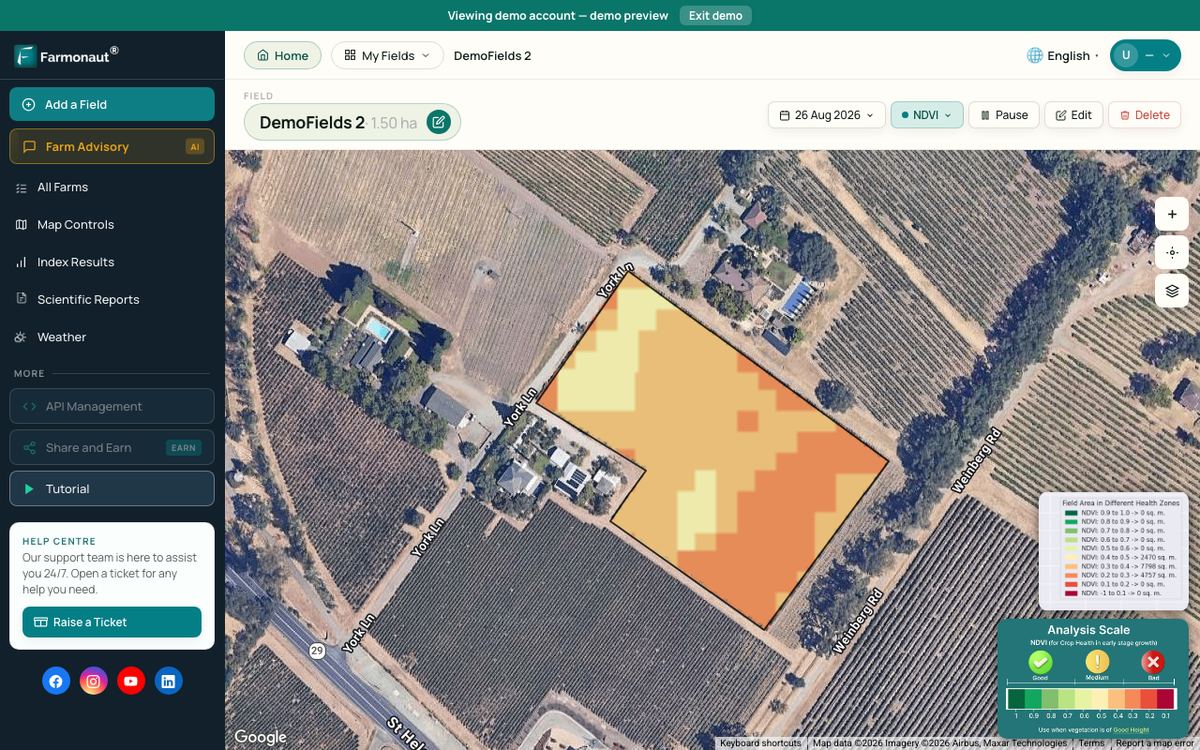
The Farmonaut Satellite + AI Farm Monitoring System shows vegetation and moisture maps for fields you draw once, on web, Android or iOS. A satellite cannot tell you what pollutant is in the soil. It can show you where to look, and whether a fix is working over the seasons.
Pair the maps with field walks and lab results. A weak patch can also come from drainage, compaction or pests, so check the cause before you act.
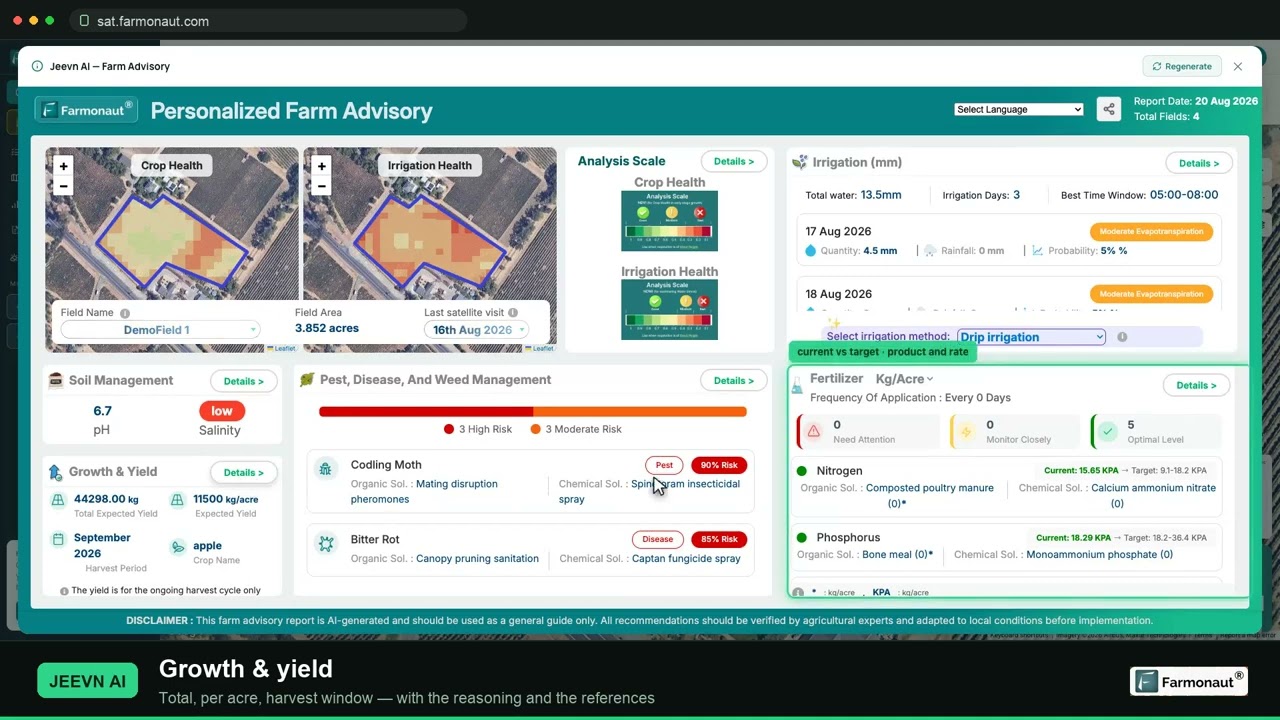
▶ A walkthrough of satellite crop monitoring: reading crop health maps to find stressed areas early. · 19:36
Rules and support in your region
Rules differ by country and state. A few points to know:
- United States: EPA guidance sets lead levels for bare soil at homes (200 ppm for play areas, 1,200 ppm on average for the rest of the yard). Many states run their own soil, biosolids and PFAS programs.
- European Union: The EU Soil Monitoring Law entered into force on 16 December 2025. The European Commission says 60 to 70% of EU soils are in an unhealthy state. Member states must put the law into national rules by 16 December 2028.
- UK, Canada, Australia and New Zealand: contaminated land is handled by national, state, provincial or local agencies. Your local council or environment agency can tell you which rules apply to farm land.
Health matters too. The FAO summary cites the Lancet Commission estimate that nearly 2 percent of annual global deaths are due to lead. If you think soil pollution affects your family or workers, speak to a doctor or public health office.
Limits of this guide
This guide covers common farm cases. It does not cover industrial sites, landfill or mine land, which need specialist assessment. Soil rules, lab methods and safe levels vary by country, and new evidence on PFAS and plastics is still coming in. For anything above background levels, get advice from your extension office, a certified soil scientist or your environment agency before you spend money on remediation.
Related pages on our site: integrated soil fertility management · satellite-based mineral detection · mining monitoring platform · mining query form · contact us
Related reading on this site: Erosion Solutions: 10 Powerful Ways to Protect Soil.
FAQ
What are the main solutions for soil pollution?
Test the soil, stop the source, raise pH and add phosphorus where tests show it is low, add organic matter, keep soil covered, use plants to clean or hold soil, and remove or cap the worst areas. Changing the crop and managing plastics and salts also help.
Can polluted soil be used for farming again?
Often, yes. Many sites can grow crops after liming, adding compost and choosing lower-risk crops. Maine’s PFAS program has helped affected farms adjust and stay in business. Very high levels may need soil removal or a change of use.
How long does it take to clean up soil?
Liming and compost work within a season or two. Plant-based cleanup can take several years. Digging out soil is fast but costly. Some pollutants, such as lead, stay in the soil for a very long time, so the aim is often to make them less available rather than to remove them.
What lead level is safe for growing vegetables?
Oregon State University Extension says levels below 50 ppm show little or no lead contamination, and from 50 to 200 ppm any vegetable can be grown with care to limit dust. From 200 to 1,200 ppm it advises against leafy vegetables and root crops, and at 1,200 ppm or more it advises against growing vegetables in that soil.
Does organic farming prevent soil pollution?
Not on its own. Organic rules limit many inputs, but some allowed products, such as copper fungicides, can build up in soil, which is why the rules say to use them in a way that limits buildup. Soil testing still matters on organic farms.
Farmonaut crop monitoring
See weak patches in your fields from space
Draw your fields once and Farmonaut shows satellite crop health and moisture maps through the season, on web, Android or iOS.



Sources
- FAO, Global Assessment of Soil Pollution: Summary for policy makers (2021): fao.org
- Oregon State University Extension, EC 1616 Reducing lead hazard in gardens and play areas: extension.oregonstate.edu
- FAO, Assessment of agricultural plastics and their sustainability: a call for action (2021): fao.org
- Clemson University HGIC, Soil Testing factsheet: hgic.clemson.edu
- USDA AMS, Copper Products technical evaluation report for the National Organic Program (2022): ams.usda.gov
- Penn State Extension, Soil Acidity and Aglime: extension.psu.edu
- US EPA CLU-IN, Phytoremediation overview: clu-in.org
- Maine Department of Agriculture, Conservation and Forestry, PFAS program: maine.gov
- European Commission, Soil Monitoring Law: environment.ec.europa.eu
- USDA AMS, Coppers, fixed technical report (2011): ams.usda.gov
Discussion
Questions, corrections or field experience? Share them below. First-time comments are reviewed before they appear, and your email is never published.
No comments yet. Be the first to add a question or your experience.

 Farms Easy
 Rouge VC
 Yutz Automation
 AgroGreen Dynamics
 AgroRisk
 Oath Inc
 Reddane Farming
 Esri North East Africa
 Cresol
 Atur Kuliner
 MDCV UK
 Zerella Group
 Etech Consulting Madagascar
 Vestlandsforsking
 Delicio
 WB Dev
 Sama Premium
 Prochecker
 Tres Valles
 LACOS Geoinformation
 Magrifly
 LatConnect 60
 Blickwinkel
 Exploration consultancy · South Africa · Gold
 Licence holder · Niger · Gold










