

Underground mining · Environmental impacts guide
Environmental Impacts of Underground Mining: Top 7
Underground mining mainly harms water, ground stability and air: acid mine drainage, subsidence and coal-seam methane. Underground mines supplied about 40% of US coal in 2024 (EIA). Seven impacts, sourced, with a lime-treatment calculator.
Key takeaways
- Underground mines produced 206 of 512 million short tons of US coal in 2024, about 40% (EIA, Annual Coal Report, 2024).
- At Tar Creek, Oklahoma, acid water began discharging in 1979 after lead-zinc mining ended in the early 1970s; about 76,000 acre-feet of shallow groundwater was contaminated (EPA, 2002).
- US coal-mining methane was 1,558 kilotonnes in 2022, about 60% below 1990; underground mines were approximately 72% of it after recovery (EPA inventory, 1990 to 2022).
- OSMRE estimated nearly US$12 billion of remaining abandoned coal mine problems at 30 September 2023, after US$14.1 billion in 2021 and US$11.6 billion in 2022.
- Lime needed for mine-water treatment scales directly with flow and acidity, so a measured acidity matters more than a guess.
In this article
- How we chose and ordered these seven impacts
- Underground versus surface mining: what differs
- Impacts 1 to 3: acid water, metals and mine-water rebound
- Impact 4: subsidence of the ground above the workings
- Impacts 5 and 6: methane and waste piles
- Impact 7: the cost of abandoned underground mines
- How operators reduce these impacts
- How much lime does mine-water treatment need?
- What to check before you buy, permit or finance an underground mine
- Frequently asked questions
The main environmental impacts of underground mining are acid and metal-laden mine water, ground subsidence above the workings, methane released from coal seams, and waste piles and abandoned openings that stay hazardous long after the mine closes. Much of it starts below ground, out of sight. In 2024, underground mines produced about 40% of US coal (206 of 512 million short tons), according to the US Energy Information Administration, so these are not rare problems.
This guide covers seven impacts, each tied to a government report or a peer-reviewed paper, with US coal data, a cleanup-cost chart and a calculator that estimates the lime needed to treat acid mine water. A short companion guide, shorter version of this topic, covers the same topic in a quicker format. Subsurface and underground mining mean the same thing here: ore or coal is reached through shafts, declines or adits instead of by stripping the surface. If you want the health side, see our post on human health risks of subsurface mining.
How we chose and ordered these seven impacts
We kept impacts that appear in official or peer-reviewed sources: the US Environmental Protection Agency (EPA), the US Geological Survey (USGS), the Office of Surface Mining Reclamation and Enforcement (OSMRE), the International Council on Mining and Metals (ICMM) and a refereed paper on mine-water chemistry. The order runs from water problems, which are the most widely documented, to long-term cost. It is not a measured severity score, because severity depends on the rock, the climate and the mine design. A gold mine in dry rock with no sulfide minerals can have little acid water, while a coal or lead-zinc mine in wet, sulfide-rich rock can have a lot.
Terms used below. Sulfide minerals are ore minerals that contain sulfur, such as pyrite (iron sulfide). Acid mine drainage is acidic water that forms when sulfide minerals meet air and water. Room-and-pillar mining removes ore in a grid of rooms and leaves pillars of rock to hold up the roof. Tailings are the fine waste left after ore is crushed and processed. Subsidence is the settling or sinking of the ground surface.
Underground versus surface mining: what differs
Both methods can pollute water and leave waste. What changes is where the harm shows up. Surface (open-pit and strip) mining removes soil and rock over a wide area at once, so the visible footprint is larger. Underground mining leaves much of the surface in place, but it adds hazards that belong to the openings below: ground movement, rising mine water, and gas. The EPA says underground coal mines account for the vast majority of methane emissions from coal mining in the United States and globally, and surface mines emit less methane. Our video on strip mining below shows the surface side of the comparison.
Chart
US underground coal output by state, 2024
Million short tons from underground mines; eight largest states
| Impact | Underground mines | Surface mines | Source |
|---|---|---|---|
| Acid mine water | Forms in flooded and drained workings | Forms in pits and waste dumps | Banks and others (1997); EPA |
| Subsidence | Yes, from collapse of openings | Pit and slope stability instead | USGS; ICMM |
| Methane | Vast majority of coal-mining methane | Smaller share | EPA |
| Waste piles and tailings | Yes | Yes | EPA; ICMM |
| Abandoned-site hazards | Shafts, gob piles, subsidence | Highwalls | OSMRE |
In US coal, the underground share is concentrated in a few states. West Virginia alone produced 62.9 million short tons from underground mines in 2024, ahead of Pennsylvania at 36.1 and Illinois at 33.5, per the same EIA table. The chart below shows the eight largest states.
▶ Explains strip mining, the surface side of the comparison, with pros, cons and fixes. · 4:37
Impacts 1 to 3: acid water, metals and mine-water rebound
1. Acid mine drainage
Pyrite and other sulfide minerals are stable when buried. When mining exposes them to air and water, they oxidise and release sulfuric acid and dissolved iron. In a peer-reviewed review of mine-water chemistry, Banks and co-authors (Environmental Geology, 1997) explain that oxidation of sulfides of the MS2 type produces acid rather than consuming it, and that pyrite is found in most metal sulfide and coal deposits. The same paper points out that not all mine water is acidic: some is salty formation water and some is alkaline, so each mine needs its own water testing.
Acid water also dissolves metals out of the rock. That is why acid mine drainage is both an acidity problem and a metals problem, and why the effects can last for decades after pumping and mining stop.
2. Metals in surface water and aquifers: the Tar Creek case
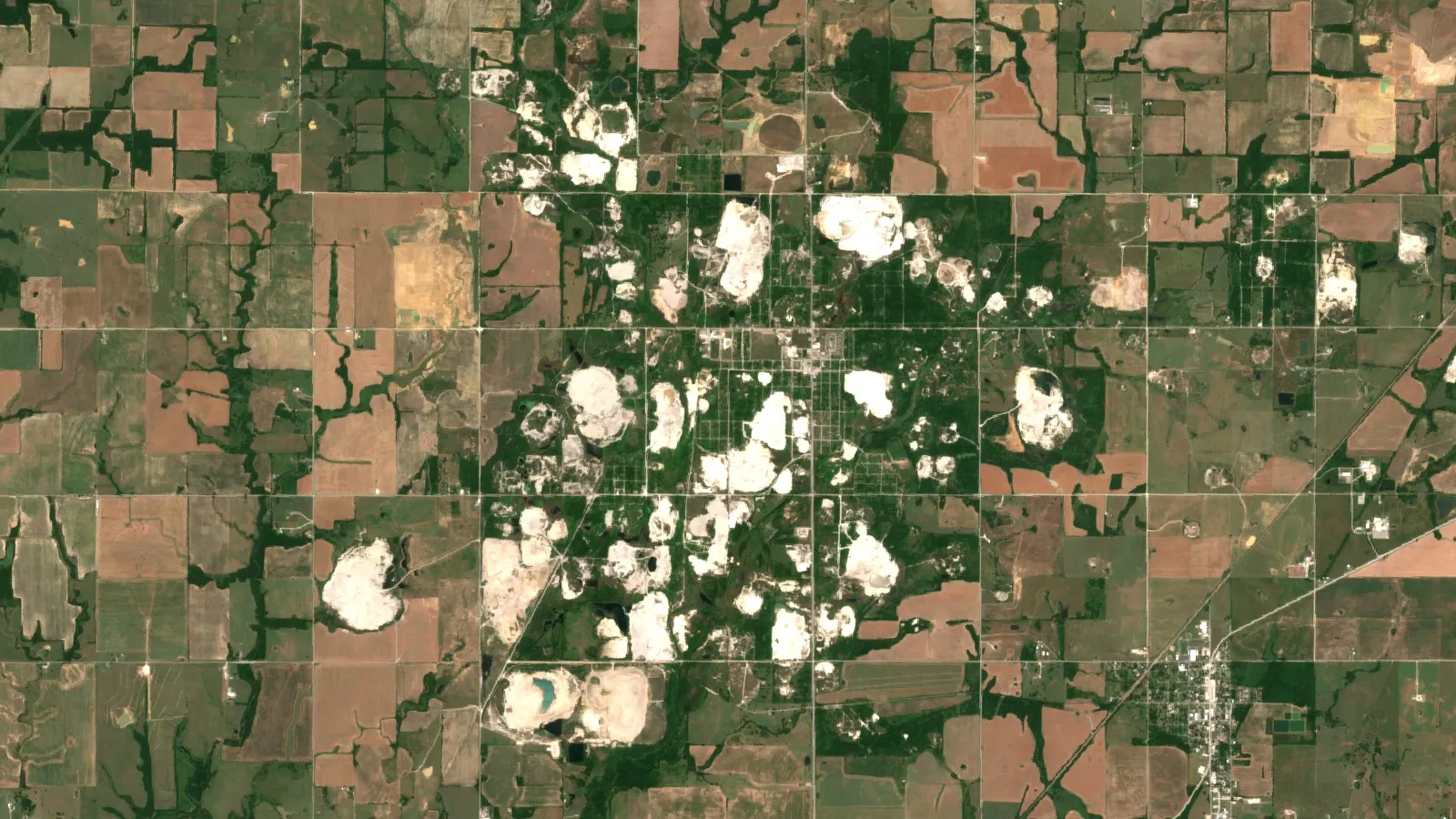
A well-documented US underground case is the Tar Creek site in northeastern Oklahoma, part of the Tri-State lead-zinc district. According to the EPA Region 6 site profile (updated 2002), room-and-pillar mining for lead and zinc ran from 1891 to the early 1970s. As the mines filled with water, sulfide minerals dissolved and made acid mine water, which began discharging into Tar Creek in 1979 from springs, boreholes and open shafts. The main pollutants were lead, cadmium and zinc. EPA estimated that about 76,000 acre-feet of shallow groundwater was contaminated, while the deep Roubidoux aquifer, the area’s drinking-water source, still met drinking-water standards at the time of that profile.
The first cleanup decision, signed in 1984, included plugging abandoned wells so that acid water could not move down into the deep aquifer, and keeping Tar Creek water out of two collapsed mine shafts in Kansas. The lesson is practical: old shafts, boreholes and wells are pathways between layers of water, and they need to be found and sealed.
3. Mine-water rebound after pumping stops
Working mines are usually kept dry by pumping. Banks and co-authors note that where pumping is constant and the water level is stable, little pyrite oxidises below the water line. But oxidation continues in the drained, unsaturated rock above it. If the pumps are switched off, the rising water flushes out the stored oxidation products and can produce a highly acid, metal-rich solution. This is called rebound.
The Wheal Jane tin mine in Cornwall, UK, is the paper’s case study. After a plug failed, mine water broke out and turned the Fal Estuary orange. Emergency pumping and treatment with aeration, lime and settling followed, removing more than 98% of the metals. Over four years of treatment, discharge ran between 5,000 and 40,000 cubic metres per day and iron in the pumped water fell from about 1,600 to 400 milligrams per litre. The authors also report that biological surveys of the estuary found little or no acute damage to marine life, so the main impact was visual. That outcome depended on fast pumping and treatment, which cost money every year.
Impact 4: subsidence of the ground above the workings
Underground voids can collapse, and the settlement can reach the surface. A USGS fact sheet on land subsidence reports that more than 17,000 square miles in 45 US states have been directly affected by subsidence, and it lists underground mining among the principal causes, next to groundwater pumping, drained organic soils and sinkholes. That figure covers all causes, not only mining, so it is not a mining total.
In the ICMM’s mine-closure guidance, subsidence areas are a type of mine void, created by collapse of underground openings. They can be created intentionally, as in caving methods where the ground is allowed to cave, or unintentionally. Room-and-pillar workings with weak or shrinking pillars are a classic case of the unintentional kind. Surface effects include cracked foundations, changed drainage and ground damage for roads and pipelines. Backfilling voids, leaving adequate pillars and monitoring ground movement are the standard controls.
Satellite radar can now track slow movement from space. The USGS notes that satellite InSAR can measure changes in the ground surface as small as a few millimeters, which makes it a useful screening tool over known workings.
Impacts 5 and 6: methane and waste piles
5. Methane from coal seams
Coal holds methane, and mining releases it. Methane is explosive when mixed with air, and it is a greenhouse gas that the EPA says is more than 28 times as potent as carbon dioxide over 100 years. In 2019, methane from coal mining and abandoned coal mines made up about 8% of total US methane emissions, the fifth-largest source, per the EPA.
Chart
US coal-mining methane by source, 2022
Kilotonnes of methane (net of recovery); total 1,558
The latest EPA inventory (1990 to 2022 data) puts total US coal-mining methane at 1,558 kilotonnes in 2022, about 60% below 1990, with underground mines accounting for approximately 72% after methane recovery, surface mines 14% and post-mining activities 14%. An earlier EPA report on US coal mine methane gives a gross split for 2017: underground mines were about 89% of coal-mining methane (3,337 million cubic metres), and most of that, 2,216 million cubic metres, left through ventilation air. Fans dilute the gas to about 0.1 to 1.0% so it stays below the explosive range of 5 to 15%. About 80% of the methane drained by degasification systems was recovered and used that year. Mines that emit 36.5 million cubic feet of methane a year or more must report to the EPA Greenhouse Gas Reporting Program. Closed mines can keep emitting: EPA counted over 400 gassy abandoned mines contributing in 2000.
6. Waste rock, chat and tailings
Underground mines still bring waste to the surface. At Tar Creek, EPA reported about 75 million tons of mine waste called chat sitting on the ground, with chat piles close to homes, and flotation ponds holding mine tailings covering roughly 800 acres. Waste from ore processing is, by nature, enriched in the minerals that were mined, so it can also make acid and release metals; the ICMM guidance says tailings need full geochemical testing at the design stage. The same guidance warns that tailings dam failures have caused catastrophic environmental damage and loss of life, and that poor design, construction and maintenance continue to cause failures. Those failures are a tailings problem, not an underground one: they apply to any mine with a tailings dam.
▶ Walks through seven environmental impacts of mining in plain words, as a claymation. · 2:31
Impact 7: the cost of abandoned underground mines
The last impact is the bill. Where no operator is left to pay, governments carry it. OSMRE runs the US inventory of abandoned coal mine problems, which covers subsidence, gob piles (waste coal piles) and highwalls among other features. The inventory only counts problems eligible for the federal fund, which means coal sites mined before the 1977 federal coal mining law. It does not count hard-rock mines. The latest estimate we found is nearly $12 billion as of 30 September 2023, covering more than 24,000 problem areas and all remaining Priority 1, 2 and 3 coal problems. Priority 1 and 2 sites threaten health, safety and property; Priority 3 sites harm land and water. The estimate has moved up and down: $9.9 billion as of September 2020, $14.1 billion as of September 2021 and $11.6 billion as of September 2022. States and Tribes enter these costs themselves, so changes reflect new inventory work as well as new damage.
Chart
Estimated unfunded US abandoned coal mine problems
US$ billion, all remaining priorities, by estimate date
These totals cover all abandoned coal mines, surface and underground, so they are not an underground-only figure. OSMRE’s own account of the fund shows that the Abandoned Mine Land Fund held about $13.561 billion in collected fees and interest as of 30 September 2024, and about 80% of that has already been appropriated or awarded.
How operators reduce these impacts
The ICMM closure guidance lists the standard toolkit. For acid water: keep sulfide rock away from air and water, neutralise acid with alkaline materials, and treat the water. Active treatment means neutralisation and metal precipitation, for example with lime dosing, as at Wheal Jane, and passive systems use constructed wetlands and reducing cells. For subsidence: backfill voids, leave pillars and monitor. For methane: capture degasification gas and use it, and where possible oxidise ventilation air. For waste: characterise geochemistry before design, then cap and monitor.
Planning helps more than cleanup. Siting shafts, portals and waste dumps away from streams and aquifers keeps them clear of the water pathways described above. Before any ground is disturbed, satellite images can show drainage lines, vegetation, bare ground and nearby buildings, and radar can show existing ground movement. Farmonaut maps licence areas from satellite images, from a KML, KMZ or polygon, to screen ground before crews go in. This is a screening step: it does not replace baseline water sampling, an environmental impact assessment or a permit. To scope a site, get a quote or read how satellite mineral detection works; for other questions you can contact the team.
▶ A two-minute explanation of remote sensing for mining, the kind of tool used to screen ground from a distance. · 2:01
How much lime does mine-water treatment need?
Acidity in mine water is reported as milligrams per litre of calcium carbonate (CaCO3) equivalent, which is the amount of limestone that would neutralise it. The calculator below turns your flow and acidity into tonnes of quicklime (CaO) per year and a reagent cost. It covers acidity only; metal precipitation, sludge disposal, power and labour add cost. Use it to see how quickly lime use scales with flow: Wheal Jane’s flows ran from 5,000 to 40,000 cubic metres a day, an eightfold range.
Calculator
How much lime will your mine water need?
Enter your own flow, acidity and lime price. Results update as you type.
- Acidity load as CaCO3 per year: 365
- Lime reagent cost per year: $45,422
- Lime cost per cubic metre (US$): 0.02
Example values only, not benchmarks. Acidity is measured as mg/L of CaCO3 equivalent. Quicklime (CaO) is 0.56 times the mass of CaCO3 for the same neutralising power (from molar masses). Hydrated lime, Ca(OH)2, needs about 0.74 times the CaCO3 mass; Wheal Jane’s plants dosed calcium hydroxide. Lime price is an input: example, use today’s price. Covers acidity only, not metal removal, sludge, power or labour. Money in US$.
What to check before you buy, permit or finance an underground mine
- Old workings: ask for historic mine maps and shaft locations. Unmapped openings are subsidence and water pathways.
- Sulfide content: have acid-generating potential tested on drill core and waste rock, using ICMM-cited methods such as the Global Acid Rock Drainage Guide.
- Water: get at least a full season of baseline groundwater and stream data, and model what happens if pumping stops.
- Gas: for coal, check methane content, ventilation design and reporting duties.
- Closure cost: ask what bond or financial assurance covers treatment after closure, since treatment can run for decades.
- Waste: confirm where waste rock and tailings go, and who inspects the dam or pile.
Rules differ by country and state, so confirm requirements with the regulator before relying on any figure here.
Frequently asked questions
What are the main environmental impacts of underground mining?
Acid mine drainage, metal contamination of water, mine-water rebound after pumping stops, ground subsidence, methane from coal seams, waste piles and tailings, and the long-term cost of abandoned sites. Not every mine has all seven; it depends on the rock and water.
Is underground mining better for the environment than surface mining?
It disturbs less land at the surface, but it has its own hazards: subsidence, mine water and, in coal, most of the methane. Which is better depends on the deposit, depth and the controls in place.
What is acid mine drainage and how does it form?
It is acidic, metal-bearing water formed when sulfide minerals such as pyrite react with air and water. Banks and co-authors describe the net reaction as producing acid, which then dissolves metals from the rock.
Does the acid water stop when the mine closes?
Not automatically. At Tar Creek, acid water began discharging in 1979 after mining ended in the early 1970s and the mines filled with water. The EPA profile shows this was still being managed in 2002.
What causes subsidence over underground mines?
Collapse of underground openings, such as failing pillars or roofs in room-and-pillar workings, or intentional caving. The ICMM treats subsidence areas as a type of mine void.
How much of US coal comes from underground mines?
About 40% in 2024: 206 million of 512 million short tons, from the EIA’s Annual Coal Report. By region, underground mines supplied about 86% of Illinois Basin coal and 80% of Appalachian coal.
How much methane do underground coal mines release?
In 2017 the EPA estimated 3,337 million cubic metres from US underground coal mines, about 89% of coal-mining methane, with most of it in ventilation air.
Can mine water be treated?
Yes. Active treatment with lime, aeration and settling can remove most metals (over 98% at Wheal Jane), and passive options such as constructed wetlands suit lower flows. Treatment may be needed for many years.
Who pays for abandoned underground mines?
In the US, abandoned coal mines are funded through the OSMRE Abandoned Mine Land Fund. OSMRE estimated unfunded coal problems at $14.1 billion in September 2021 and $11.6 billion in September 2022. The OSMRE inventory covers coal only; hard-rock sites sit outside it.
Can satellites help find these problems?
They can screen for surface change, drainage and ground movement. InSAR can detect millimetre-scale movement, but only fieldwork and sampling can confirm water quality or underground conditions.
What should a buyer or lender check first?
Mine maps, the acid-generating potential of the rock, baseline water data and the closure bond. These four items cover the water, rock chemistry, old workings and closure cost described above.
This page is for information only. It is not legal or engineering advice. Rules on mine water, closure bonds and reporting differ by country and state; confirm them with the regulator.
Farmonaut mining
Get a quote to screen your licence area from space
Send a KML, KMZ or polygon and Farmonaut maps the area from satellite images before ground crews go in.
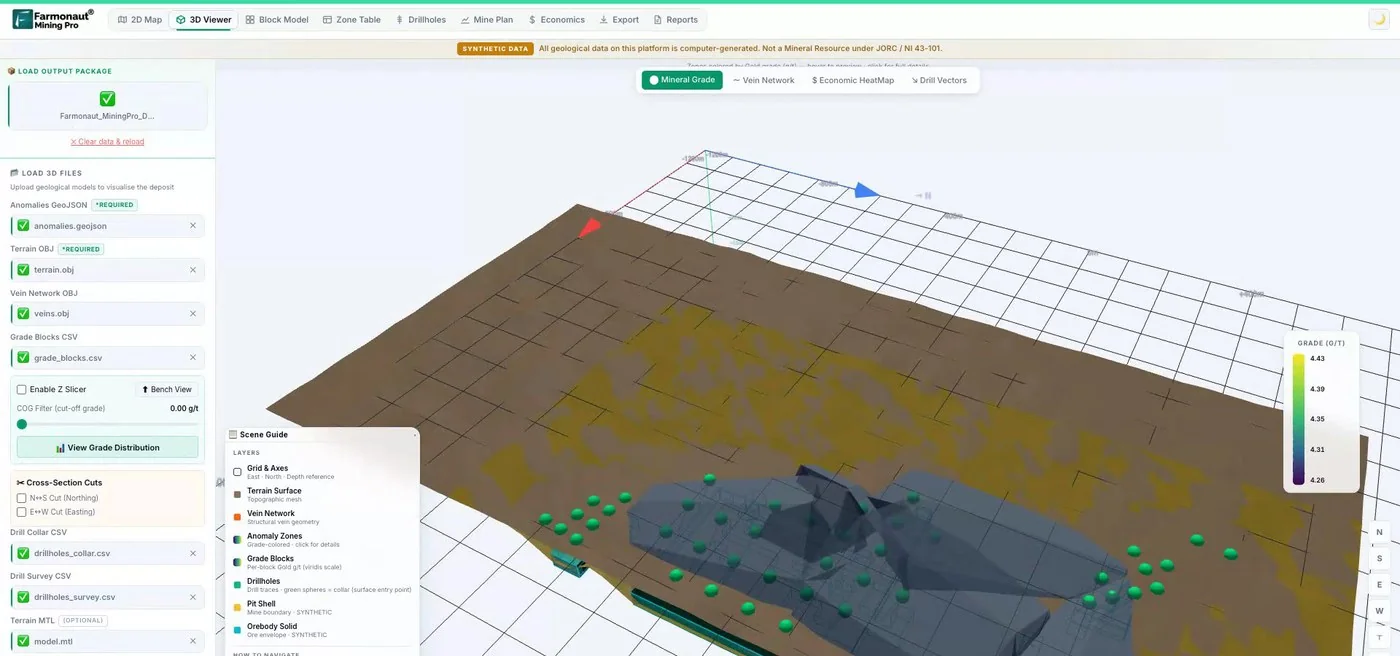
Mining Pro sample view, synthetic data
Keep reading
Sources
- US Energy Information Administration, Annual Coal Report 2024, Table 1: production by state and mine type: eia.gov
- US EPA Region 6, Tar Creek (Ottawa County) site profile, updated 2002: semspub.epa.gov
- Banks and others, Mine-water chemistry: the good, the bad and the ugly, Environmental Geology 32(3), 1997: literature.wolkersdorfer.info
- USGS, Land Subsidence in the United States, Fact Sheet 165-00: water.usgs.gov
- USGS, Measuring human-induced land subsidence from space, Fact Sheet 069-03: pubs.usgs.gov
- US EPA, About Coal Mine Methane: epa.gov
- US EPA, Coal Mine Methane Developments in the United States (EPA 430-R-18-002): epa.gov
- US EPA, Greenhouse Gas Reporting Program: Underground Coal Mines: epa.gov
- ICMM, Integrated mine closure: good practice guide (2019): icmm.com
- OSMRE, Budget Justifications fiscal year 2023 (estimates as of September 2021): doi.gov
- OSMRE, Budget Justifications fiscal year 2022 (estimates as of September 2020): osmre.gov
- OSMRE, Status of the Abandoned Mine Land Fund, 30 September 2024: osmre.gov
- OSMRE, Frequently asked questions: the AML inventory: osmre.gov
- US EPA, Inventory of U.S. Greenhouse Gas Emissions and Sinks 1990-2022, Chapter 3 Energy: epa.gov
- OSMRE, Budget Justifications fiscal year 2025 (estimates as of September 2023): doi.gov
- OSMRE, Budget Justifications fiscal year 2024 (estimates as of September 2022): doi.gov
Discussion
Questions, corrections or field experience? Share them below. First-time comments are reviewed before they appear, and your email is never published.
No comments yet. Be the first to add a question or your experience.

 Geotech Mining Solutions plc
 Vulcan International Limited
 Kidepo Associates
 GKY Mining
 Alkimy SARL
 Double A Trading
 GemSprout Metals Limited
 Qader Group
 Ileys General Trading
 SG Gold Mining LLC
 VRV Global Pte Ltd
 Omsri International FZE
 G.I.T.T.
 Jaunita Erss Ltd
 Almosi SARL
 SRK Consulting
 Berks Gold Limited
 Mwerezi Minerals Company Limited
 Mining SARL
 SenGold Invest SAS
 Exploration consultancy · South Africa · Gold










