

Gold · Country rankings
Gold Reserves by Country: Held Versus in the Ground
The United States holds the most gold, about 8,130 tonnes in Treasury stocks. Australia has the most in the ground, 13,000 tonnes of reserves. Two ranked lists, dated figures and a value calculator.
Key takeaways
- Official holdings: the United States has about 8,130 tonnes, then Germany, Italy, France, China and Russia (USGS, 2026; WGC data to June 2026).
- In the ground: Australia has 13,000 tonnes of reserves and Russia 12,000 tonnes; world reserves are 66,000 tonnes (USGS, 2026).
- World mine output was about 3,300 tonnes in 2025 (USGS estimate), so booked reserves equal roughly 20 years of mining at that rate.
- Central banks bought 863 tonnes in 2025 and 289 tonnes in Q2 2026 (World Gold Council).
- At about US$4,014 an ounce (Kitco, 26 October 2026), one tonne of gold is worth roughly US$129 million.
In this article
- Which countries have the most gold?
- Why the two rankings differ
- Gold reserves by country: central bank holdings
- The largest holders, one by one
- Which countries have the most gold in the ground?
- Who mines the most gold and how long reserves last
- Which central banks are buying and selling now
- How much is a country's gold worth?
- How we chose and sourced the figures
- Where satellite data fits
- Frequently asked questions
The United States holds the most gold of any country: about 8,130 tonnes in Treasury stocks (USGS, 2026), followed by Germany, Italy, France, China and Russia. That is the answer if you mean the gold that central banks and governments own. If you mean gold still in the ground, the order is different: Australia is first with 13,000 tonnes of reserves and Russia second with 12,000 tonnes in the same USGS table. This page ranks both lists side by side, shows the numbers and their dates, and lets you value any holding at today’s price.
Gold is counted in metric tonnes by governments and geological surveys, and in troy ounces by traders. One tonne is 32,150.7 troy ounces. On 26 October 2026 Kitco showed spot gold near US$4,014 an ounce (Kitco AM report, 26 October 2026), so one tonne was worth roughly US$129 million at that moment. Prices move daily, so use the calculator further down with the price on the day you read this.
Which countries have the most gold?
There are two honest answers, and most pages mix them up. The first is official holdings: gold bars and coins that a central bank or treasury owns and reports to the International Monetary Fund (IMF). The second is mineral reserves: gold in rock that a geological survey judges can be mined at a profit with today’s technology and prices. A country can top one list and barely appear on the other. The United States leads on holdings with 8,130 tonnes, yet its own mineral reserves are 3,000 tonnes. Australia has the largest mineral reserves, but its central bank holds only a small fraction of that.
Search queries show both meanings. People who type “gold reserves by country” or “which country has the most gold” are usually after official holdings. People who type “which country has the most gold in their land” want the ground. This page keeps the two apart and labels every figure so you can tell which one you are reading.
Why the two rankings differ
Four terms are often used as if they were the same. They are not.
- Official gold holdings. Metal already refined and owned by a government or central bank. The World Gold Council (WGC) compiles these from IMF statistics and central bank reports, and they change only when a bank buys or sells.
- Mineral reserves. The part of a deposit that could be economically extracted at the time of the estimate. USGS says reserves can shrink or grow as prices, costs and technology change (USGS, Mineral Commodity Summaries 2026, Appendix C).
- Resources. Gold that is known or likely to exist but is not yet proven to be mineable at a profit. USGS puts US gold resources at 33,000 tonnes, of which 15,000 tonnes are identified and 18,000 tonnes are undiscovered (USGS, 2026).
- Mine production. What comes out of the ground each year: about 3,300 tonnes worldwide in 2025 (USGS estimate).
Two checks follow from this. First, mined gold ends up in jewellery, bars, electronics and vaults, so the metal in central bank vaults is a small slice of all gold ever produced. The WGC says central banks account for around a fifth of all gold mined throughout history (World Gold Council, Gold Reserves by Country). Second, a large mineral reserve is not a vault balance. It is an estimate that depends on the gold price, and it only becomes metal after years of drilling, permitting, building and processing. Our guide to how to verify claims about the largest gold reserves goes through the checks a consultant should run before quoting any national figure.
Gold reserves by country: central bank holdings
The table lists ten large official holders in order of tonnes. Figures are rounded and use the latest WGC and IMF-based data, which are two months behind: most countries are shown as of June 2026, and a few late reporters as of March 2026 or earlier (WGC, data update of September 2026). The United States figure is the USGS number for Treasury stocks. China and Poland come from the WGC’s Q2 report. International bodies such as the IMF and the European Central Bank hold gold too, but they are not countries and are left out.
Chart
Largest official gold holdings
Tonnes, rounded; first eight of the ten holders in the table below; most countries as of June 2026
| Order | Country | Tonnes (rounded) | What to know |
|---|---|---|---|
| 1 | United States | 8,130 | Treasury stocks, 8,130 tonnes in every USGS year from 2021 to 2025 |
| 2 | Germany | 3,350 | Stored in Frankfurt, New York and London |
| 3 | Italy | 2,452 | 95,493 bars; 1,100 tonnes held in Italy |
| 4 | France | 2,437 | Reported to the IMF |
| 5 | China | 2,346 | People’s Bank of China reported holdings at end-June 2026 |
| 6 | Russia | 2,300 | Reported near 2,300 tonnes (WGC-based tables, dates differ); a net seller in Q2 (WGC) |
| 7 | Switzerland | 1,040 | WGC-based table, not checked at the Swiss National Bank |
| 8 | Japan | 846 | WGC-based table, not checked at the source |
| 9 | Poland | 632 | End-June 2026; a large buyer, with a stated 700-tonne target |
| 10 | Netherlands | 612 | WGC-based table; just behind Poland |
The table lists ten of the largest official holders in order of tonnes. It is not a complete world ranking: one further holder of about 880 tonnes is left out, so the numbers in the Order column are positions within this table, not world ranks. Poland has moved up the table through buying, and the order of positions 5 and 6 can flip between data releases because China and Russia report on different dates. A ranking on a fixed date, such as the one above, is only a snapshot.
The largest holders, one by one
1. United States
The US Treasury’s gold stock was 8,130 tonnes in every year from 2021 to 2025 in the USGS series. USGS values it at the official price of US$42.22 per troy ounce, which is the number on the books and not the market value (USGS, 2026). At that official price the stock is worth about US$11 billion; at the Kitco spot price of 26 October 2026 it is worth about US$1.05 trillion. The gap between the two is why you should always ask which price a “value of reserves” figure uses.
2. Germany
The Bundesbank describes Germany’s gold as the second largest in the world after the United States, and in 2013 it made up about two-thirds of the country’s foreign reserves (Deutsche Bundesbank, 2013). In August 2017 the Bundesbank finished moving its remaining Paris gold to Frankfurt, closing a storage plan launched in 2013 (Deutsche Bundesbank, 23 August 2017).
3. Italy
The Banca d’Italia says its total is 2,452 tonnes, mostly in 95,493 bars with a smaller part in coins, and calls itself the fourth-largest gold holder in the world after the US Federal Reserve, the Bundesbank and the IMF. It lists 1,100 tonnes held in Italy, 1,061.5 tonnes in the United States, 149.3 tonnes in Switzerland and 141.2 tonnes in the United Kingdom (Banca d’Italia, gold reserves page). Italy is a good example of how a national total can be stored in several countries.
4. France
France holds about 2,437 tonnes on WGC and IMF figures, per recent WGC-based tables.
5. China
The People’s Bank of China reported 2,346 tonnes at the end of June 2026 after adding 40 tonnes in the first half, including 33 tonnes in the second quarter, its largest quarterly addition since Q4 2023 (WGC, Gold Demand Trends Q2 2026, 30 July 2026). China is also the world’s largest gold miner at about 380 tonnes in 2025 (USGS estimate), yet its mineral reserves of 3,200 tonnes are small next to its production, which gives a reserve life of only about eight years on USGS numbers.
6. Russia
Russia’s holdings sit close to China’s, near 2,300 tonnes on WGC-based tables, and the two swap places between data releases. The WGC lists Russia as the only sizeable seller in Q2 2026, with a 22-tonne reduction (WGC, 30 July 2026). Russia is also second on the mineral-reserve list, with 12,000 tonnes (USGS, 2026).
7. Switzerland
Switzerland holds about 1,040 tonnes on WGC-based tables, a figure not checked against the Swiss National Bank. In the WGC’s 2026 survey of central banks, the Swiss National Bank was named as a preferred vaulting location by 6% of respondents, down from 12% in 2025 (WGC, Central Bank Gold Reserves Survey 2026).
8. Japan
Japan holds about 846 tonnes, a figure from WGC-based tables that was not checked against Japan’s own data.
9. Poland
The National Bank of Poland raised its holdings to 632 tonnes by the end of June 2026 after adding 51 tonnes in Q2 and 82 tonnes in the first half, which edges it toward a 700-tonne target (WGC, 30 July 2026). It was also the largest central bank buyer in 2025, adding 102 tonnes (WGC, Gold Demand Trends full year 2025).
10. Netherlands
The Netherlands holds roughly 612 tonnes on WGC and IMF figures, just behind Poland.
Which countries have the most gold in the ground?
For mineral reserves the best public source is the US Geological Survey. Its 2026 Mineral Commodity Summary lists world gold reserves of 66,000 tonnes, with 11,000 tonnes in the “other countries” group. The ranking is below, with a note on definitions.
Chart
Largest gold reserves in the ground
Tonnes of gold, USGS estimate, top 8
| Rank | Country | Reserves (tonnes) | 2025 mine output (tonnes, estimate) |
|---|---|---|---|
| 1 | Australia | 13,000 | 280 |
| 2 | Russia | 12,000 | 310 |
| 3 | South Africa | 5,000 | 90 |
| 4 | Indonesia | 3,600 | 90 |
| 5 (tie) | Canada | 3,200 | 200 |
| 5 (tie) | China | 3,200 | 380 |
| 7 | United States | 3,000 | 160 |
| 8 | Brazil | 2,500 | 80 |
| 9 | Kazakhstan | 2,300 | 130 |
| 10 (tie) | Peru | 2,200 | 110 |
| 10 (tie) | Uzbekistan | 2,200 | 130 |
Source for the table: USGS, Mineral Commodity Summaries 2026, February 2026 edition; 2025 output is an estimate. Ghana (1,000 tonnes) and Mexico (1,400 tonnes) follow in the same table.
One footnote matters for the top spot. USGS says Australia’s reserves under the Joint Ore Reserves Committee (JORC) code, or an equivalent standard, were 4,500 tonnes, which is lower than the 13,000 tonnes in the main table (USGS, 2026). JORC is the Australasian rule that sets how a company reports a mineable gold reserve. The 13,000-tonne figure draws on wider government and company data, so the two numbers measure different things. If you quote Australia as number one, say which measure you mean.
These numbers are national totals taken from company and government reports. They say nothing about where a new deposit will be found. Readers who want to see how a deposit is mined, crushed and refined can watch the short video below.

▶ A short clay-animation walk from rock to ring: how gold is found, drilled, crushed, dissolved and refined. · 5:27
Who mines the most gold and how long reserves last
Mine output follows a third order: China, Russia, Australia, Canada, the United States, Ghana. China produced about 380 tonnes in 2025, Russia about 310 tonnes and Australia about 280 tonnes, against a world total of about 3,300 tonnes (USGS estimates). Output across the leading countries was close to flat between 2024 and 2025. Our page on the top gold producing countries covers the full producer list.
Chart
Gold mine output, 2024 and 2025
Tonnes per year, six largest producers in the USGS table
Dividing reserves by yearly output gives a rough reserve life, meaning the years the booked reserves would last at the current mining rate. On the USGS figures, the world’s 66,000 tonnes against 3,300 tonnes a year is about 20 years. South Africa comes out near 56 years, Australia near 46 years, Russia near 39 years, the United States near 19 years and China near 8 years. This is our own calculation from the USGS table. It is a rough guide only, because reserves are replaced by new discoveries and by changes in price, so a country rarely “runs out” on the arithmetic date.
Mine output adds new metal each year, while official holdings change only when a bank buys or sells.
Which central banks are buying and selling now
Official holdings change slowly, but the direction is clear. Central banks bought 863 tonnes in 2025, below the 1,000-plus tonnes a year of the preceding three years (WGC, full year 2025). In Q2 2026 net purchases were 289 tonnes, a record for a second quarter, up from 178 tonnes in Q2 2025, although the first half of 2026 at 345 tonnes was the lowest since 2022 because of heavy sales in Q1 by Turkey, Russia and Azerbaijan’s State Oil Fund (WGC, 30 July 2026). The WGC also reports that its Q1 estimate was revised from 244 tonnes to 57 tonnes after new data, which shows how much these figures are revised.
Beyond the top ten, buyers in Q2 2026 included Uzbekistan (+16 tonnes), Kazakhstan (+15 tonnes), Jordan (+6 tonnes) and the Czech Republic (+6 tonnes). Turkey’s central bank reported a 4-tonne sale in Q2 and reduced its outstanding swaps from a peak of over 80 tonnes to about 60 tonnes by the end of June (WGC, 30 July 2026).
The IMF reports that the physical stock of official gold rose 0.8% in 2025 and that gold made up 26.2% of international reserves at the end of that year, with advanced economies holding about two-thirds of the stock (IMF Annual Report 2026, Appendix I). The WGC 2026 survey of 76 central banks found that 89% expected global central bank gold reserves to rise over the next 12 months, and a record 45% expected their own to rise (WGC, Central Bank Gold Reserves Survey 2026). Gold’s performance in crises, portfolio diversification and inflation hedging were the leading reasons given for holding it.
How much is a country’s gold worth?
Valuing a holding takes three numbers: tonnes, the price per troy ounce, and the size of the country’s other reserves if you want gold’s share. The calculator below does the sum. The defaults are examples, not any country’s figures; swap in a country from the tables and today’s price.
Calculator
What is a gold holding worth?
Enter tonnes, a gold price and the country’s other reserves.
- Gold as a share of total reserves: 39.1 %
- Value at the official US$42.22 per ounce: 1.36 US$ bn
- Value of one tonne at your price: 128.6 US$ m
Example values only, not any country’s figures. Conversion: 31.1035 grams per troy ounce, so one tonne is 32,150.7 ounces. The official US valuation of US$42.22 per ounce is the figure USGS uses for Treasury stocks. Prices are inputs: example, use today’s price (US$ per troy ounce).
How we chose and sourced the figures
For holdings we used the World Gold Council’s country dataset, which is built on the IMF’s International Financial Statistics, and cross-checked the largest holders against the issuing banks where their sites state a figure (the US Treasury through USGS, Banca d’Italia, the Bundesbank). Holders are ordered by tonnes; international institutions are excluded. For mineral reserves and mine output we used the USGS Mineral Commodity Summaries 2026 and listed every country with at least 2,200 tonnes. Rounded values are shown, and every figure carries its date. Treat small gaps between sources as within the uncertainty.
The ranking changes with each data release. Central banks report on their own schedules, and the WGC revises past quarters, so a table dated June 2026 can differ from one dated September 2026.
Where satellite data fits
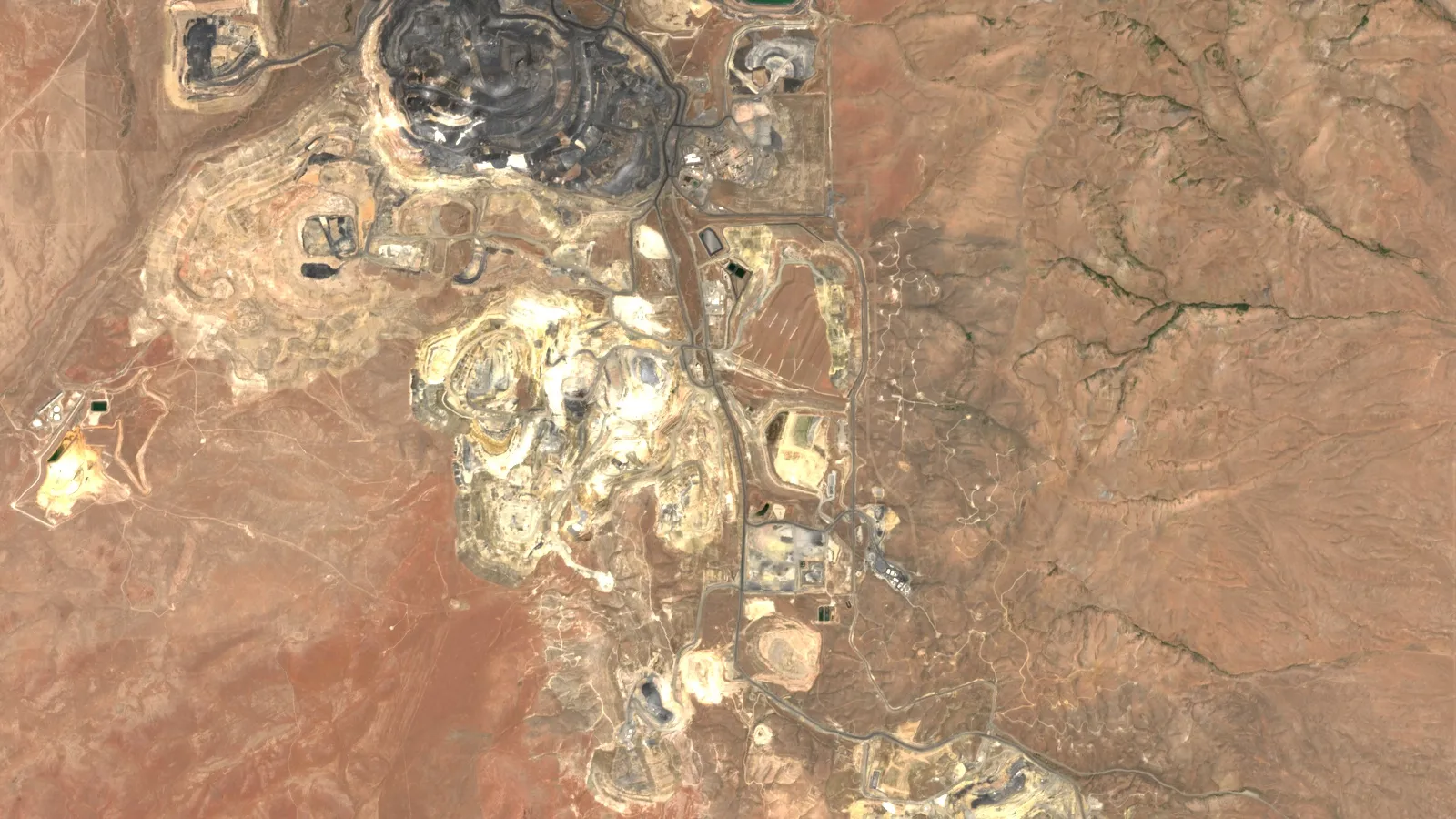
Reserve tables describe what has already been found and drilled. Finding the next deposit starts earlier, with regional screening of rock types and alteration. Satellites cannot see gold itself, but they can map the iron-oxide and clay zones that often surround a gold system, which helps a licence holder decide where to put the first drill holes. Farmonaut offers satellite-based mineral detection for a licence area; results are exploration targets that sit ahead of any resource estimate. You can also read about gold vein mining and use the mining query form to ask about a project. For the element itself, see gold on the periodic table.

▶ Explains that satellites cannot see gold itself but map the rock and alteration around it. · 4:25
Frequently asked questions
Which country has the most gold reserves?
The United States, with about 8,130 tonnes of official holdings (USGS, 2026). In terms of mineral reserves still in the ground, Australia is first with 13,000 tonnes in the USGS table, though only 4,500 tonnes meet JORC or an equivalent standard.
Which country has the most gold in its land?
Australia, then Russia, on USGS reserve estimates (13,000 and 12,000 tonnes). South Africa is third with 5,000 tonnes.
Which are the top countries for gold reserves?
By official holdings, the largest are the United States, Germany, Italy, France, China, Russia, Switzerland, Japan, Poland and the Netherlands (a table of ten, not a full world ranking: one further holder of about 880 tonnes is left out). By mineral reserves: Australia, Russia, South Africa, Indonesia, Canada and China (tied), the United States, Brazil, Kazakhstan, and Peru and Uzbekistan (tied).
How much gold does the United States hold?
8,130 tonnes in Treasury stocks, valued by USGS at the official price of US$42.22 per troy ounce. At Kitco’s spot price of about US$4,014 on 26 October 2026 the market value is roughly US$1.05 trillion.
How many tonnes of gold are mined each year?
About 3,300 tonnes in 2025, according to the USGS estimate. China, Russia and Australia are the three largest miners.
Why does China hold less gold than it mines?
Output and holdings are different things. Most mined gold goes to jewellery, investment and industry, and only part is added to official reserves. China’s central bank reported 2,346 tonnes at the end of June 2026, while its mines produced about 380 tonnes in 2025 (WGC; USGS).
What about Turkey’s gold reserves?
Turkey was the largest central bank seller in Q1 2026, then reported a small 4-tonne sale in Q2 and a cut in outstanding swaps, according to the WGC (30 July 2026). For the current tonnage, check the WGC country dataset, which updates monthly with a two-month delay.
Are central bank gold figures reliable?
They are reported to the IMF and updated with a lag of about two months (WGC). Banca d’Italia says its auditor checks the gold held in its vaults each year, but practice differs between banks.
Is a bigger gold reserve a sign of a richer country?
Not by itself. A holding is a form of savings, and the share of gold in a country’s total reserves varies widely between countries. It is not a measure of mining capacity: Germany, Italy and France hold large stocks but do not appear in the USGS mine-output table.
Information in this page is not investment advice.
This page is for information only. It is not investment advice. Prices and holdings change; check the sources for the latest figures.
Farmonaut mining
Screen a licence area from space
Consultants can have a licence area screened with satellite data to produce exploration targets, ahead of any resource estimate.
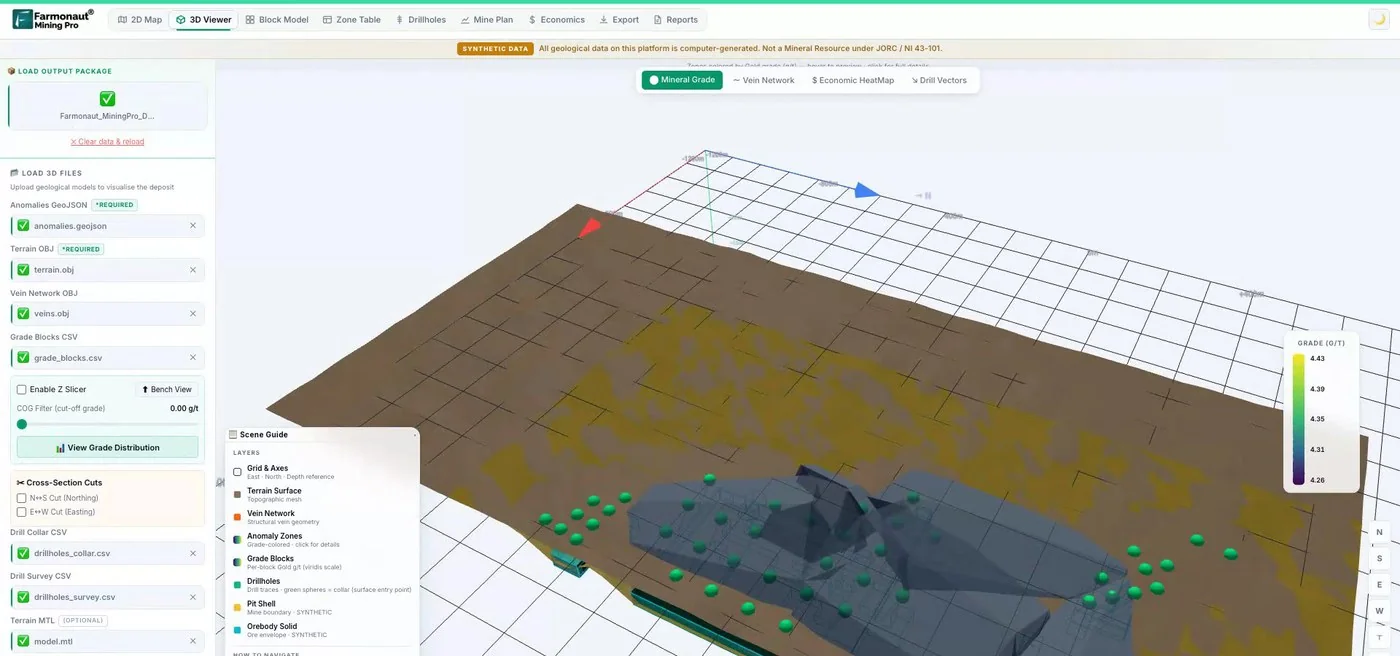
Mining Pro sample view, synthetic data
Keep reading
Sources
- USGS, Mineral Commodity Summaries 2026: Gold: pubs.usgs.gov
- USGS, Mineral Commodity Summaries 2026: Appendixes (reserve and resource definitions): pubs.usgs.gov
- World Gold Council, Gold Reserves by Country (data update September 2026): gold.org
- World Gold Council, Gold Demand Trends Q2 2026: Central Banks (30 July 2026): gold.org
- World Gold Council, Gold Demand Trends full year 2025: Central Banks: gold.org
- World Gold Council, Central Bank Gold Reserves Survey 2026: gold.org
- Kitco, Gold rebounds above $4,000 (AM report, 26 October 2026): kitco.com
- Banca d’Italia, Riserve in oro (gold reserves): bancaditalia.it
- Deutsche Bundesbank, The development of the Bundesbank’s gold reserves (2013): bundesbank.de
- Deutsche Bundesbank, Bundesbank completes gold transfers ahead of schedule (23 August 2017): bundesbank.de
- IMF, Annual Report 2026, Appendix I: International Reserves: imf.org
Discussion
Questions, corrections or field experience? Share them below. First-time comments are reviewed before they appear, and your email is never published.
No comments yet. Be the first to add a question or your experience.

 Almosi SARL
 SRK Consulting
 Berks Gold Limited
 Mwerezi Minerals Company Limited
 Mining SARL
 SenGold Invest SAS
 Sean Mining Limited
 NTS Group (Pty) Ltd
 Mine4Africa
 Lithspo Minerals Limited
 Tintina Mining Group
 Dalgety Minerals Pty Ltd
 Vortex Minerals Pty Ltd
 Faith At Work (Pty) Ltd
 Geotech Mining Solutions plc
 Licence holder · Nigeria · Gold + lithium










