

Countries With Most Gold Mines: Top Gold Countries 2026 – Unveiling Gold’s Impact on Sustainability, Agriculture, and Rural Development
Key Insight
The “countries with most gold mines” lens reveals much more than financial might. These nations catalyze rural transformation, advancing infrastructure and offering new livelihoods—yet the environmental and agricultural implications remain profound.
Introduction: Gold Geography & Sustainability
Gold has always been a critical asset across several sectors—finance, technology, infrastructure, and, increasingly, environmental stewardship. As we approach 2026, the strategic conversation around the countries with most gold, countries with the most gold mines, and gold-rich economies is rapidly shifting. Instead of focusing solely on purely financial metrics and bullion reserves, the narrative is now grounded in mineral governance, responsible extraction practices, and tangible regional development for rural and agricultural communities.
This blog investigates how global gold mining—from the arid mineral belts of Western Australia to the diversified landscapes of Ghana and South Africa—shapes not just economics but the social and environmental fabric of nations. We explore where the bulk of the world’s gold is located, which countries lead in the number and scale of mines, and how this intersects with agriculture, forestry, infrastructure development, and sustainability as we approach 2026.
Pro Tip
When exploring new gold deposits in agricultural or forested regions, prioritize tools and services that minimize land disturbance—like satellite-based prospectivity mapping. Farmonaut’s satellite-based mineral detection allows rapid, non-invasive targeting while supporting environmental commitments.
Where is the Gold? Leading Countries With Most Gold Mines (2026 Outlook)
The term countries with most gold often refers to two distinct measures:
- Gold Production: Nations producing the highest annual tonnage of gold, typically through fewer but larger high-grade mines.
- Gold Mines Count: Countries with the most operational gold mines, which can include numerous small and medium-size sites in addition to large-scale operations.
Some countries consistently appear in both discussions: China, Australia, Russia, the United States, Canada, Peru, South Africa, and Ghana. However, regional geology, mining codes, infrastructure, and environmental governance often result in vastly different footprints on the land, people, and agricultural ecosystems.

Understanding the “Most Gold” Metrics
- 💡 Gold reserves: The proven amount of gold still underground
- 📈 Annual gold output: Mine production in tonnes (metric tons) per year
- 🔄 Number and type of mines: Sheer count of operating gold mines vs. size, region, and type
- 🌍 Distribution across rural and forested belts: Geographical overlaps with agricultural and forest landscapes
Current Top-Ranking Gold Countries (2026 Outlook)
- 🇨🇳 China – Largest annual gold producer (est. 330-340 tonnes in 2026, numerous small-medium scale mines, continuing as global leader)
- 🇦🇺 Australia – 2nd largest by production, large-scale, highly developed operations, robust regulatory frameworks, and a sophisticated minerals supply ecosystem.
- 🇷🇺 Russia – Strategically increasing investment in regional mineral belts, significant reserves and major gold mine projects underway.
- 🇺🇸 United States – Nevada and Alaska are home to colossal open-pit and underground operations, with a blend of majors and juniors.
- 🇨🇦 Canada – Resurgence in gold exploration and mine start-ups, especially across Quebec, Ontario, and British Columbia, with growing ESG leadership.
- 🇵🇪 Peru – South America’s giant, with both modernized mines and artisanal mining, often intersecting with Amazonian, Andean, and agricultural zones.
- 🇿🇦 South Africa – Historically significant, fewer new mines but still massive underground reserves; facing challenges but innovating in sustainability.
- 🇬🇭 Ghana – Africa’s rising leader with burgeoning industrial mines and a critical small-scale sector impacting local communities and agricultural lands.
Data Insight
Some gold-rich countries like Australia and Canada host fewer, but much larger, technologically advanced mining operations versus regions like Ghana or Peru, which have numerous small and medium-sized mines.

As we move deeper into the decade, we see rising demand for sustainable gold extraction practices, especially in agricultural and forestry-dense regions. Responsible mining is now pivotal to both investment and local acceptance.
Top Gold-Producing Countries and Their Impact on Sustainability (2026 Estimates)
| Country | Estimated Gold Production (2026, tonnes) | Number of Major Gold Mines | Share of Global Production (%) | Major Agricultural Impact | Major Forestry Impact | Sustainable Mining Initiatives | Estimated Contribution to Rural Development |
|---|---|---|---|---|---|---|---|
| China | 335 | ~2000 (incl. small-medium) | 12% | Local water/rural competition; Investment in irrigation |
Expansion pressures in some forest belts | Yes* | High; supports rural jobs, but environmental trade-offs |
| Australia | 320 | ~490 | 11% | Supports high-tech precision farming via infrastructure | Limited; strict protection zones | Yes | Very high; model for sustainable rural transformation |
| Russia | 315 | ~350 | 10% | Development of remote agricultural regions | Forest impact in Siberian districts | Partial | Significant; rural electrification, community projects |
| United States | 210 | ~330 | 7% | Enhanced irrigation; opposition in sensitive arid zones | Minimal forestry overlap | Yes | Strong; leads post-mining land repurposing |
| Canada | 195 | ~295 | 6.5% | Supports local value addition & farm supply chains | Forest/eco-sensitive area debate ongoing | Yes | Model for eco-agro partnerships |
| Peru | 165 | ~200+ | 6% | Amazon/farming conflict; remediation gaining ground | Significant; forest restoration campaigns rising | Partial | Mixed; high employment/complex environmental legacy |
| South Africa | 92 | ~110 | 3% | Historic irrigation and farm labor support | Past impact, current controls stricter | Yes | High historic; present focus on sustainability |
| Ghana | 135 | ~350 | 5% | Major water/land competition; agri-compensation plans | Notable forest pressure; new protection initiatives | Yes* | Essential to rural livelihoods; dual-edged impact |
| Indonesia | 120 | ~90 | 4% | Palm farming intersects with gold mining | Forest conversion issues | Partial | Regional; more sustainable projects emerging |
| Uzbekistan | 110 | ~60 | 3% | Irrigation improvements in arid lands | Limited forestry | Partial | Medium; strong in rural job creation |
* Indicates emergent or enforcement-dependent sustainability standards.
Investor Note
Sustainable mining and rural infrastructure upgrades increasingly influence investment decisions. Satellite-based mineral prospectivity mapping, such as Farmonaut’s 3D prospectivity mapping, streamlines exploration in compliance with evolving environmental requirements.

Gold Mining & Agriculture: Intersections and Implications
How Gold Mining Drives Rural Agriculture: Opportunities & Trade-Offs
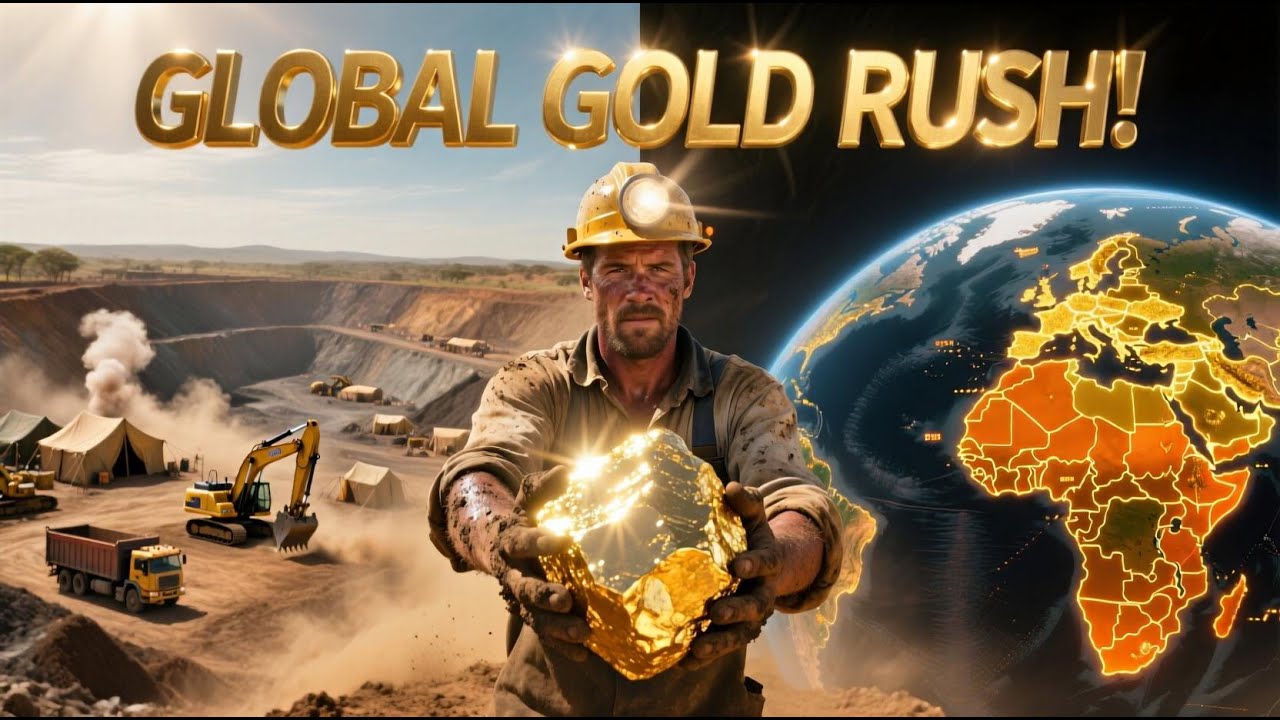
Mining activity reshapes rural and agricultural landscapes worldwide. The overlap of gold mines with farming regions can support local economies, job creation, and infrastructure—yet also cause resource competition and land use tensions.
- 🌱 Agricultural zones often intersect with gold-mining belts, especially in West Africa, South America, and Southeast Asia.
- 💧 Water resources become contested when extraction operations require substantial irrigation or tailings containment.
- 🚜 Mining-driven infrastructure can enable better farm accesses, equipment supply, and agro-processing investments.
- 🌄 Job and capital influx into rural communities: Mining companies attract skilled and unskilled labor, raising purchasing power and farm equipment demand.
Environmental Risks and Sustainable Practices
- ⚠ Land & Soil Degradation: Stripping, tailings handling, and expansion can degrade long-term farm productivity if not managed properly.
- 🚱 Water Pollution: Inadequate containment leads to contamination, harming crops, livestock, and irrigation.
- 🔄 Post-Mining Rehabilitation: Opportunities to restore land for agroforestry, pasture, or ecosystem services after mine closure.
Integrated watershed management, state-of-the-art tailings containment, and progressive post-closure land-use planning can ensure that productive rural land is restored—and even enhanced—after mining ceases. The shift to sustainable extraction benefits not just mining companies but also farmers, agricultural sectors, and community resilience.

Gold Mining in Forested Regions: Biodiversity, Water, and Sustainable Land Use
Many countries with most gold mines have extraction sites embedded in or bordering critical forested landscapes. Here, the tension between economic development, biodiversity conservation, and water resource management is most acute.
- 🌳 Forest Impact: Open-pit and alluvial operations may clear tracts of forest, reducing carbon sinks and threatening rare species.
- 💧 Integrated Water Management: Sustainable schemes combine tailings containment, constructed wetlands, and careful aquifer monitoring to protect downstream agriculture & forest.
Sustainable governance now requires post-mining reforestation, biodiversity safeguards, engagement with indigenous and farming communities, and enforceable restoration projects.
Common Mistake
Underestimating the cumulative environmental impact of many smaller gold mining operations in forest belts can lead to untracked deforestation, water loss, and unexpected loss of biodiversity. Rigorous monitoring and community engagement are non-negotiable!

Gold, Mining, and Infrastructure: Rural Development and Supply Chains
Mining investment brings large-scale infrastructure: roads, power lines, bridges, water supply facilities, and processing plants. This infrastructure not only serves gold mining operations but often benefits rural communities by providing enhanced access and logistical support for agricultural economies.
- 🛣️ Roads and Railways: Lowered transport costs for farm goods, timber, and community supplies
- ⚡ Power and Water: Rural electrification and cleaner water sources benefit farmers and miners
- 🔗 Supply Chains: Enhanced agricultural value chains and shortened time to market for food and timber
But infrastructure expansion can be a double-edged sword: improved access must be balanced with soil health, forest conservation, and responsible watershed management to maintain resilient rural economies.
Responsible Mining, Environmental Governance & Stewardship
By 2025 and into 2026, countries with most gold mines are under growing scrutiny to emphasize responsible stewardship. Leaders in sustainability focus on:
- Detailed environmental impact assessments prior to new mining projects
- Advanced water management and tailings containment
- Post-mining soil and land rehabilitation, often converting sites to agriculture, forestry, or pasture
- Certification schemes (e.g., IRMA, Responsible Gold Mining Principles) and third-party audits
- Transparent community engagement and compensation for affected farmers
- 🌍 Sustainable Watershed Management
- 🛑 Zero-discharge Tailings Practices
- 🔄 Productive Land Rehabilitation
- 📊 Real-time Environmental Monitoring
- 🤲 Community Compensation Schemes
Certification and progressive governance are now as critical to gold mining as ore grades and tonnage—especially in regions where agriculture and forestry underpin rural society.
Map Your Mining Site Instantly
Want to evaluate your gold mine or prospect with minimal land disturbance? Try Map Your Mining Site Here — the fastest way to access satellite-driven mineral intelligence for discovery, validation, and compliance in 2026.
How Gold Mining Shapes Rural Economies, Farming, and Livelihoods
Globally, gold mining serves as a critical asset—but also a source of price volatility and complex policy trade-offs for rural farmers and communities.
- ⚠️ Inflated Land Prices: Mining booms often drive local land and operational costs up, affecting farming viability.
- 📈 Stimulus for Modernization: Mineral revenues frequently fund infrastructure, rural irrigation, and farming credit projects.
- 🔗 Pressure to Diversify: Gold-rich regions increasingly link mining with value-added agro-processing and resilient economic diversification.
Governments channel mining revenues into agricultural subsidies, irrigation upgrades, and rural credit facilities—intended to shield farmers from mineral cycle fluctuations. Diversification and cross-sector support between agricultural, mining, and forestry sectors build more robust rural economies (see Satellite-Based Mineral Detection for smarter exploration).
- ✔ Gold revenues invested in local agro value chains
- ✔ Mine-affected soils converted to productive farming
- ✔ Farm input subsidies from mineral taxes
- ✔ Land use policies balancing mining and biodiversity
- ✔ Community compensation schemes for expropriated land

Farmonaut in Mining: Satellite Intelligence for Sustainable Discovery
We at Farmonaut are firmly dedicated to supporting sustainable mining, regional development, and environmental stewardship in the world’s most gold-rich countries. Our proprietary satellite analytics platform harnesses remote sensing, AI, and multispectral/hyperspectral data to:
- Identify high-prospect gold zones in any region or country—rapidly and with zero ground disturbance
- Reduce exploration timeframe and wasted expenditure by up to 80–85%
- Map sub-surface geological structures before physical exploration, preserving natural soil and water systems
- Support responsible, data-driven mining decisions that align with global ESG and local land-use standards
This approach enables quicker, environmentally non-invasive gold discovery—crucial for countries integrating sustainability, agriculture, and mining. For a detailed guide or cost estimate, reach out to us directly via our Get Quote page or Contact Us. Interested in deep technical insights? Learn more about our Satellite Driven 3D Mineral Prospectivity Mapping solution.
Did You Know?
Clients can map their mining site anywhere in the world using mining.farmonaut.com. Just upload your area of interest and mineral targets—our team delivers a full satellite-based mineral intelligence report in less than 3 weeks!
5 Bullet Points Recap: Why Country Gold Mine Geography Matters
- 🌏 Geography of mines determines infrastructure priorities and rural transformation in 2026.
- 🌱 Overlapping gold and agro belts require integrated land management and conservation.
- ⚖️ Investment in new mines triggers both economic growth and environmental risk in fragile or arid zones.
- 🔍 Modern exploration tools (like satellite analytics) boost sustainable development and ESG compliance.
- ⚒️ Countries with most gold must balance productivity with soil and water stewardship.
Key Takeaways & Actionable Insights: Countries With Most Gold Mines & 2026 Sustainable Growth
The future of countries with the most gold mines is not measured solely by ounces or output, but by the capacity to balance mining, agriculture, forestry, and rural livelihoods. Here’s what to prioritize as we head toward 2026:
- 📊 Meaningful Metrics: Go beyond production—track the number of mines, land-use impacts, infrastructure improvements, and community engagement.
- 🌿 Sustainability First: Encourage integrated watershed and tailings management, robust environmental governance, and stringent post-mining land restoration policies.
- 🤝 Engagement: Facilitate compensation schemes, soil/forest health initiatives, and resilience planning for farmers adjoining mining projects.
- 🚀 Smart Investment: Emphasize non-invasive mineral detection and precision mapping—cutting costs, risk, and environmental disturbance for all stakeholders.
- ⚡ Infrastructure for All: Leverage mining-driven roads, water, and electrification to enhance farm productivity, reduced transport costs, and strengthen local value chains.
The ultimate goal for countries at the forefront of gold mining is to serve as models for coexistence: where mining fuels economic advancement, supports agricultural modernization, and upholds the critical ecosystem services and biodiversity that healthy rural landscapes provide.
FAQ: Countries With Most Gold, Mines, and Sustainability (2026)
Q1: What is the difference between countries with most gold and countries with most gold mines?
A1: “Countries with most gold” refers to annual mine output or reserves, while “countries with most gold mines” counts the number of operational mines (including small-scale). Some countries, like China, are top in both, whereas nations like Australia excel in large, fewer, technologically advanced operations.
Q2: How do gold mines impact agriculture and forestry in leading countries?
A2: The implications are significant: mining activities may provide jobs and infrastructure but can also compete for water, land, and biodiversity. Leading countries now incentivize restoration and integrate agriculture/forestry with robust environmental stewardship schemes for resilient rural economies.
Q3: Can post-mining land be used for agriculture or forestry?
A3: Yes! Globally, there’s rising adoption of soil and land rehabilitation programs to convert former mine sites to agroforestry, pasture, or high-value crops—preserving long-term productivity and ecosystem health.
Q4: How does Farmonaut support sustainable gold exploration?
A4: We offer satellite-based mineral detection and 3D mapping to rapidly identify promising gold zones. This reduces ground disturbance and environmental risks, aligning exploration with sustainability goals.
Q5: Where can I map or validate my gold mining site?
A5: Instantly access Farmonaut’s Mining Site Mapping tool and get actionable analytics for mining, agriculture, and infrastructure planning—all from your mobile or desktop!
Conclusion: The 2026 Gold Mining Landscape—Sustainable, Integrated, and Globally Relevant
As the global conversation matures, we must view countries with most gold mines through the lens of sustainability and integrated development. Gold will remain a critical asset, but its legacy—in agriculture, forestry, soil, rural economies, and environmental health—will depend on how responsible mining and land stewardship are embedded across all gold-rich regions.
For miners, investors, and rural communities alike, now is the moment to harness smart technology, best practices, and strategic infrastructure for balanced prosperity. Ready to take action? Connect with us today to power your next project with sustainable mineral intelligence, and shape a thriving, resilient future for all.
Discussion
Questions, corrections or field experience? Share them below. First-time comments are reviewed before they appear, and your email is never published.
No comments yet. Be the first to add a question or your experience.

 Faith At Work (Pty) Ltd
 Geotech Mining Solutions plc
 Vulcan International Limited
 Kidepo Associates
 GKY Mining
 Alkimy SARL
 Double A Trading
 GemSprout Metals Limited
 Qader Group
 Ileys General Trading
 SG Gold Mining LLC
 VRV Global Pte Ltd
 Omsri International FZE
 G.I.T.T.
 Jaunita Erss Ltd
 Almosi SARL
 SRK Consulting
 Berks Gold Limited
 Mwerezi Minerals Company Limited
 Mining SARL
 SenGold Invest SAS
 Exploration consultancy · South Africa · Gold










