

Manganese · Ranked list
Top Manganese Mining Companies Ranked by Ore Output
South32’s two mines produced about 8.9 Mt on a 100% basis and Eramet’s Moanda mine 7.1 Mt of ore and sinter. This page ranks the producers that publish mine output, charts their prices and unit costs, and covers the 2026 ownership changes.
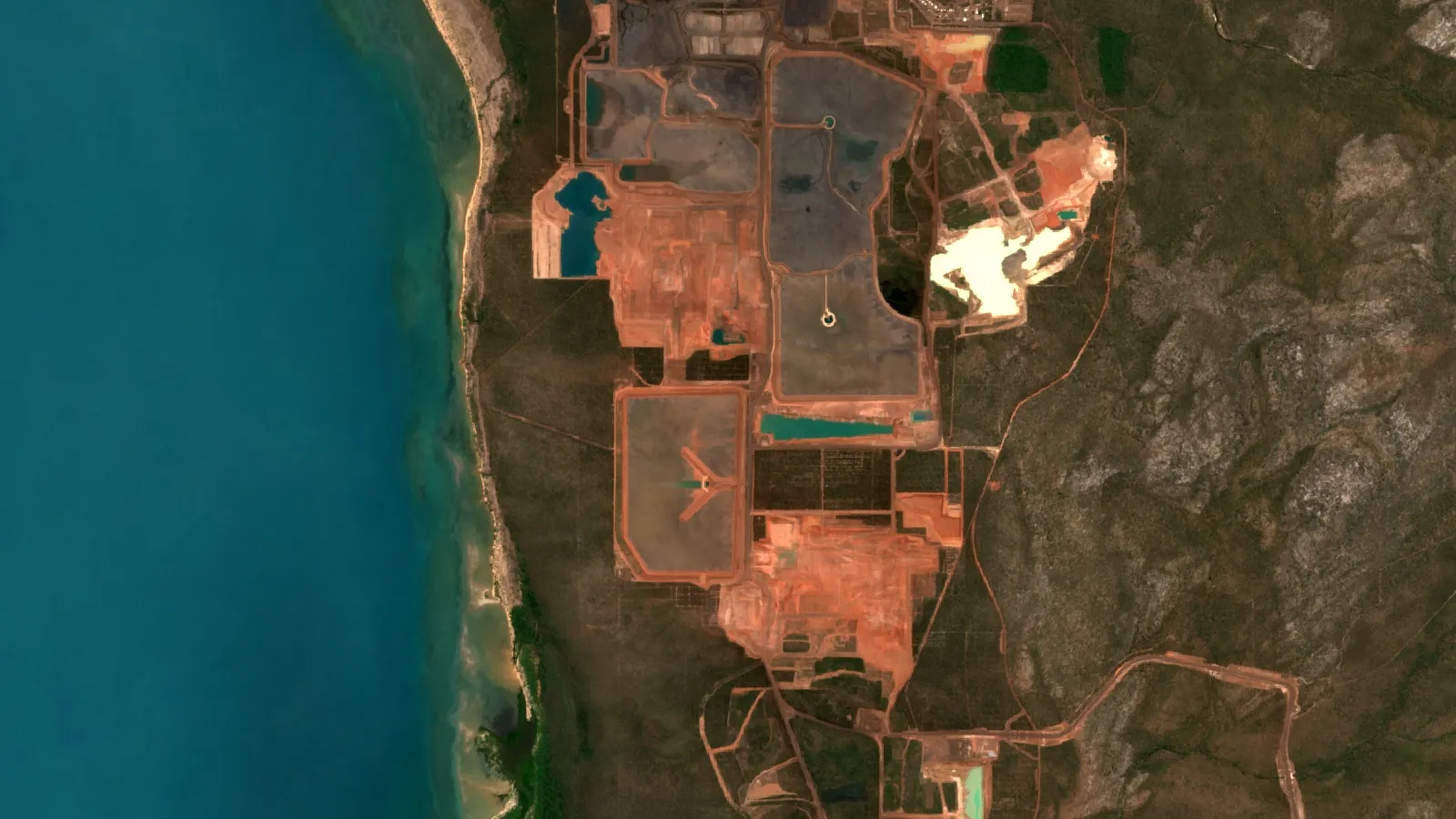
Key takeaways
- South32’s GEMCO and Hotazel mines together produced about 8.9 Mt on a 100% basis in the year to June 2026; South32’s own share was 5.1 Mt (South32, 2026; the 100% figure is our calculation).
- Eramet’s Moanda mine in Gabon produced 7.1 Mt of ore and sinter in 2025, but only 5.5 Mt was sold externally because of rail and port limits (Eramet, 2026).
- Realised FOB prices and unit costs in the year to June 2026 were US$4.23 and US$2.62 per dmtu at GEMCO, US$3.65 and US$3.22 at Hotazel, and US$3.55 and US$2.40 at Tshipi (South32; Jupiter Mines, 2026).
- Exxaro closed its purchase of 50.1% of Tshipi on 27 February 2026, and OM Holdings sold its Tshipi interest in the same deal (Exxaro; OM Holdings, 2026).
- South Africa mined an estimated 7,600 of the world’s 20,000 thousand tonnes of manganese content in 2025, and the United States has produced no ore of 20% manganese or more since 1970 (USGS, 2026).
In this article
- Top manganese mining companies ranked by ore output
- How the ranking works
- The producers in detail
- Why output moves from quarter to quarter
- Prices and unit costs: who earns a margin
- Where the manganese is: reserves versus output
- Ownership changes to know about
- Beyond steel: battery-grade manganese
- Land, water and rehabilitation at the large mines
- How to check a manganese producer before using its numbers
- Mine margin calculator
- Frequently asked questions
Top manganese mining companies ranked by ore output
Among the producers that publish mine-level figures, South32 and Eramet are the largest. South32’s two operations, Groote Eylandt in Australia and the Hotazel mines in South Africa, produced about 8.9 million tonnes (Mt) on a 100% basis in its year to June 2026, and Eramet’s Moanda mine in Gabon produced 7.1 Mt of ore and sinter in 2025. Assmang’s Black Rock mine (3.9 Mt) and the Tshipi mine (3.5 Mt) follow, both in South Africa’s Kalahari field. The sources are South32’s 2026 annual report, Eramet’s 2025 results release, African Rainbow Minerals’ 2026 results booklet and Jupiter Mines’ quarterly report of 31 July 2026.
Older lists of this kind often show owners that have since sold out and outputs with no source. This page uses company reports for the latest year, states the basis of every figure and marks the numbers we calculated ourselves.
| Rank | Company | Main mines | Latest output, 100% basis | Owners and share |
|---|---|---|---|---|
| 1 | South32 (ASX, LSE and JSE: S32) | GEMCO, Northern Territory, Australia; Mamatwan and Wessels, Northern Cape, South Africa | About 8.9 Mt in the year to June 2026 (5.05 Mt GEMCO plus 3.82 Mt Hotazel, calculated) | South32 share 5.1 Mt: 60% of GEMCO and 54.6% of Hotazel Manganese Mines (accounting basis) |
| 2 | Eramet Comilog (Eramet, listed in Paris) | Moanda, Gabon (Bangombé and Okouma deposits) | 7.1 Mt of ore and sinter in 2025 | Subsidiary of Eramet |
| 3 | Assmang | Black Rock (Nchwaning and Gloria), Northern Cape, South Africa | 3.94 Mt in the year to June 2026 | 50% African Rainbow Minerals (JSE: ARI) and 50% Assore |
| 4 | Tshipi é Ntle | Tshipi Borwa, Northern Cape, South Africa | 3.49 Mt in the year to June 2026 | 50.1% Exxaro (JSE: EXX) and 49.9% Jupiter Mines (ASX: JMS); Exxaro also holds 19.99% of Jupiter |
| Not ranked | Consolidated Minerals (ConsMin) | Woodie Woodie, Western Australia; Nsuta, Ghana | No comparable annual output published | Private; Nsuta is held through Ghana Manganese Company |
How the ranking works
The rank is the latest reported ore output of the mines each company operates or co-owns, restated to 100% of the mine so that a 49.9% holder does not look smaller than a 100% holder. Four limits apply, and you should keep them in mind when you compare the numbers.
Chart
Reported ore output of the four ranked producers
Million tonnes, 100% of the mines, latest financial year (South32 figure calculated from its share)
- South32 reports its own share. It publishes saleable production in thousand wet metric tonnes (kwmt) at 60% for GEMCO and 54.6% for Hotazel. We divided 3,031 kwmt by 0.60 and 2,085 kwmt by 0.546. These are our calculations, not company figures.
- Year-ends differ. South32, Assmang and Tshipi report to June 2026; Eramet reports calendar 2025.
- Tonnes are not manganese units. Ore grades differ, and so does the product. Tonnes of ore are not the same as tonnes of contained manganese, which is what the US Geological Survey (USGS) uses for country totals.
- Only published figures count. A producer that gives no mine-level output in public filings cannot be ranked. Targets and capacity are not output.
The producers in detail
1. South32: Groote Eylandt and Hotazel
Best for: following the seaborne market through two large mines on different continents.
GEMCO on Groote Eylandt is an open-cut strip mine that has run since the 1960s. South32 also holds a stake in Hotazel Manganese Mines, which runs the open-cut Mamatwan mine and the underground Wessels mine. Its 54.6% is an accounting figure: it holds 60% of Samancor, which owns 74% of the mines, giving an indirect 44.4%, and the higher figure is used until vendor loans owed by minority shareholders are repaid (South32, 2026).
- Output: GEMCO produced 3,031 kwmt on South32’s share in the year to June 2026, up from 1,106 kwmt the year before, when the mine was recovering from Tropical Cyclone Megan (March 2024). Hotazel produced 2,085 kwmt. Guidance for GEMCO is 2,650 to 2,900 kwmt for each of the next two years, limited by access to pits because of high water levels; Hotazel guidance is 2,000 kwmt.
- Reserves: GEMCO’s ore reserve is 52 Mt at 41.7% manganese on South32’s 60% interest, with a reserve life of 6 years at 30 June 2026.
- Price and cost: realised FOB prices of US$4.23 per dry metric ton unit (dmtu) at GEMCO and US$3.65 at Hotazel, against unit costs of US$2.62 and US$3.22.
- Watch points: South32 recorded a US$49 million impairment on Wessels in the year, and Hotazel’s guidance depends on continued use of higher-cost trucking.
- Beyond steel: the Clark battery-grade manganese deposit at the Hermosa project in Arizona had its exploration decline completed in the 2026 financial year.
2. Eramet Comilog: Moanda, Gabon
Best for: exposure to high-grade ore from a single large district.
Eramet calls Moanda the world’s largest manganese mine and says it is the leading producer of high-grade ore (Eramet). On our table, the two South32 mines together produce more, but they are two separate mines in two countries. Moanda output was 7,103 thousand tonnes of ore and sinter in 2025, up 4% from 6,803 thousand tonnes.
- Sales are limited by logistics, not by the mine. Only 6.1 Mt was transported and 5.5 Mt sold to outside buyers, both level with 2024, after problems at the port of Owendo and on the Transgabonese railway. Eramet expects 6.4 to 6.8 Mt to be transported in 2026 and plans about EUR 160 million of investment, of which about EUR 70 million is for logistics.
- Growth: mining at the Okouma deposit began in 2023, and Eramet says it will lift capacity to 10 Mt a year over time.
- Cost: FOB cash cost was US$2.4 per dmtu in 2025, up 9%, with mining taxes and royalties to the Gabonese State at US$0.2 per dmtu.
- Downstream: Eramet also makes manganese alloys (653 thousand tonnes in 2025) at plants in Gabon, the United States, Norway and France. Manganese EBITDA fell 37% to EUR 357 million in 2025 as prices fell.
3. Assmang: Black Rock, Northern Cape
Best for: a high-volume producer that sells both high-grade and low-grade ore.
Black Rock (the Nchwaning and Gloria mines) is held 50/50 by African Rainbow Minerals and Assore. In the year to June 2026 it produced 3,941 thousand tonnes, up 5%, and sold 4,493 thousand tonnes, of which 3,662 thousand tonnes was exported and 831 thousand tonnes sold in South Africa (ARM, 2026). Our earlier page on the Assmang Black Rock mine covers the site in more detail.
- Cost: unit cash cost rose 7% to R1,018 per tonne (South African rand).
- Prices: the average CIF index price for 43.5% high-grade ore fell 5%, while the index for 36.5% low-grade ore rose 8%.
- Changes: Assmang closed its Cato Ridge Works alloy complex, where operations stopped at the end of May 2025.
- Logistics: a consortium of four producers, which together account for more than 60% of South Africa’s manganese exports, is working with Transnet on rail and port capacity, including a planned Ngqura manganese export terminal.
4. Tshipi é Ntle: Exxaro and Jupiter Mines
Best for: a single open-pit mine with fully published quarterly data.
Tshipi has produced since 2012. Jupiter Mines, a Perth-based company that describes itself as a pure-play manganese business, holds 49.9% and reports every figure on a 100% basis. Tshipi produced 3,486,441 tonnes in the year to June 2026 (2,905,100 tonnes high-grade and 581,341 tonnes low-grade) and sold 3,488,925 tonnes. The average FOB price achieved was US$3.55 per dmtu against an FOB cost of production of US$2.40, and EBITDA was A$114.6 million (Jupiter Mines, 2026). The other 50.1% is held by Exxaro through Ntsimbintle Mining since February 2026 (see ownership changes below). For prices, see our guide to the manganese ore price per dmtu.
Not ranked: ConsMin and Ghana Manganese Company
Consolidated Minerals (ConsMin) is the operator of Woodie Woodie, about 400 km south-east of Port Hedland in Western Australia. The site has a processing plant with a capacity of 1.6 Mt a year, has been mined since the early 1950s and has a stated mine life of more than ten years. ConsMin plans to lift volumes to between 1.5 and 2.0 Mt a year (ConsMin).
In Ghana, Ghana Manganese Company is the country’s only manganese miner and exporter and operates the Nsuta open pit in the Western Region. It said in August 2026 that it expected 700,000 tonnes in that month and, per its August 2026 statement, keeps an annual target of eight million tonnes; Global Witness quotes a 2026 target of ten million (Ghana News Agency). A Global Witness investigation reports that the licence holder is 90% owned by Ningxia Tianyuan Manganese Industry through subsidiaries including ConsMin, with the Ghana government holding 10%, and that most of the ore goes to China. Neither company publishes a comparable annual output, so we do not rank them. For national scale, the USGS estimates Ghana’s 2025 output at 2,000 thousand tonnes of manganese content, up from 1,280 thousand tonnes in 2024.
Why output moves from quarter to quarter
Manganese mines are bulk operations, and a single event can change a year. South32’s quarterly figures show it clearly: the Australian mine ran at 854 kwmt in the September 2025 quarter and then fell to 589 kwmt in the March 2026 quarter, while the South African mines held between 500 and 551 kwmt. Three causes recur in company reports.
Chart
South32 manganese output by quarter
Thousand wet tonnes, South32 share, quarters ended June 2025 to June 2026
- Weather and water. South32 says GEMCO is managing elevated site water from groundwater inflows and wet-season impacts, with approvals and infrastructure still needed. The USGS records that the mine suspended operations in 2024 after a tropical cyclone and resumed in May 2025.
- Rail and port capacity. Eramet’s ore sales were held at 5.5 Mt by rail and port limits in Gabon, and South African producers work together on rail reform for the same reason.
- Mine development and maintenance. South32 puts the 3% fall in South African output in the 2026 financial year down to planned maintenance and extra underground development at Wessels.
Prices and unit costs: who earns a margin
Three of the producers publish both a realised FOB price and a unit cost, which lets you compare margins per dry metric ton unit (dmtu, one percent of manganese in one dry tonne). In the year to June 2026 the gap was widest at GEMCO (US$1.61) and narrowest at Hotazel (US$0.43). Definitions differ by company, so use the chart to see the order of magnitude, not to rank the three precisely.
Chart
Unit cost and realised FOB price per dmtu
US$ per dry metric ton unit, year to June 2026
The USGS puts the 2025 average price for 44% ore at US$4.50 per mtu delivered to China (CIF), down from US$5.53 in 2024, and Eramet reports a CRU index average of US$4.5 per dmtu for 2025. Its February 2026 price consensus for 2026 was about US$4.8 per dmtu. Our manganese ore price guide explains the CIF and FOB terms and tracks the quarterly data.
Where the manganese is: reserves versus output
South Africa accounts for an estimated 70% of the world’s manganese resources and 7,600 of the 20,000 thousand tonnes mined worldwide in 2025 (manganese content), according to the USGS Mineral Commodity Summaries 2026. Gabon, Ghana and Australia follow. The chart shows that reserves and output do not line up: Australia reports the largest reserves, but it mines far less than South Africa or Gabon.
Chart
Reserves do not match output
Reserves versus 2025 mine production, six selected countries, manganese content, million tonnes
The Kalahari field has three main ore types. The Mamatwan type holds 30 to 38.5% manganese, the Wessels type 42 to 60% and the supergene ore 40 to 42% (Ntsimbintle). This is why South African producers sell a mix of low-grade and high-grade lump.
The United States has produced no manganese ore of 20% or more since 1970. The USGS reports a net import reliance of 100% in 2021 to 2025 and, for 2021 to 2024, ore imports of 64% from Gabon, 24% from South Africa and 12% from Mexico. For a country-by-country view, read where manganese is mined and our review of manganese exploration in South Africa and Ghana.
Ownership changes to know about
- Exxaro enters manganese. On 27 February 2026 Exxaro closed the purchase of Ntsimbintle Mining, which owns 50.1% of Tshipi, together with 19.99% of Jupiter Mines, Ntsimbintle’s marketing business and a 9% stake in Hotazel Manganese Mines. The total price was R10.6 billion in cash. As of March 2026 the sale of the Mokala mine interest was still pending, with a long-stop date of 27 February 2027 (African Mining Market).
- OM Holdings sold its Tshipi interest. It sold its 26% holding in Ntsimbintle Mining (an effective 13% of Tshipi) to Exxaro for R1.86 billion under the sale agreement (the chairman’s letter in the same report cites about R1.95 billion). The sale closed on 27 February 2026, and OM Holdings continues to work with Exxaro on marketing Tshipi ore. Its own mine, Bootu Creek in the Northern Territory, has been on care and maintenance since January 2022, and after trials in 2024 and 2025 the company decided to return it to care and maintenance. OM Holdings now centres on its Sarawak smelter, which shipped 302,013 tonnes of manganese alloys in 2025 (OM Holdings, 2025 annual report).
- Assmang closed an alloy complex. Cato Ridge Works stopped operating at the end of May 2025, and Assmang is selling surplus land and houses there.
Beyond steel: battery-grade manganese
Eramet puts steel at about 90% of manganese use, with batteries the main non-metallurgical market. A few producers are working on battery-grade material. South32 describes Clark as a future opportunity through phased development, and Ghana Manganese Company says it supports the government’s plan for a manganese refinery. None of these is in production at the time of writing, so tonnages of battery-grade supply are still small. In the United States, the USGS lists animal feed, brick colorant, dry-cell batteries and fertilizer among the non-metallurgical uses of manganese ore.
Land, water and rehabilitation at the large mines
Investors and lenders now ask for evidence on closure and water, and the large producers publish some of it. Eramet reports that 581 hectares of the Bangombé plateau were rehabilitated in five years and that it set aside 10% of the Okouma plateau for biodiversity. South32 reports solar-powered pumping and refurbished boreholes for a community water project near Hotazel in the Joe Morolong Municipality, and describes water supply as a risk for its Wessels and Mamatwan mines. At GEMCO, its plan for the next year includes better water modelling, flood surveillance and wet-weather response procedures.
Ask for the same evidence from any producer you assess: hectares disturbed and rehabilitated, water balance, tailings and a closure cost estimate.
▶ A short claymation on the seven environmental impacts of mining. · 2:31
How to check a manganese producer before using its numbers
- Find the basis. Is the figure 100% of the mine or the company’s share? Wet or dry tonnes? Ore, lump, fines or sinter?
- Match the grade. A 36% semi-carbonate lump and a 44% high-grade lump do not earn the same price per tonne. Prices are per dmtu, so grade is part of the quote.
- Read the cost line. FOB cost, cash cost and all-in cost are different measures. Look for what is included: royalties, freight to port, marketing.
- Look at the bottleneck. Rail, port and water limits have capped sales at the producers above more than ore supply has.
- Check ownership in the filings. Use the exchange announcements (ASX, JSE) and the company’s annual report, because stakes change, as the Tshipi sales show.
- Separate resource from reserve. A resource is not a plan. Reserves carry cost and permit assumptions.
For a licence you hold or are buying, a satellite screen of the ground is a low-cost first step before fieldwork. Farmonaut screens a licence area from satellite imagery (manganese is among the minerals it covers) and delivers in 5 to 20 business days, so the results guide where you send a geologist. The output is an exploration target, not a resource estimate, and it does not replace sampling or a permit check. Learn more about satellite-based mineral detection or request a quote. Our earlier note on manganese production covers the supply side.
▶ A two-minute explanation of remote sensing for mining. · 2:01
Mine margin calculator
Use the calculator below to test what a manganese mine earns at a CIF price, a grade, a freight rate and a unit cost that you choose. The defaults are round example numbers close to the unit costs the producers above report (US$2.4 to US$2.6 per dmtu at Tshipi, Moanda and GEMCO), not forecasts and not a benchmark for any mine.
Calculator
What does a manganese mine earn per year?
Enter your own tonnes, grade, price, freight and costs. Results update as you type.
- Net FOB revenue: $56,500,000
- Production cost plus royalty: $49,950,000
- Operating margin per year: $6,550,000
- Margin per dmtu (US$): 0.35
- Break-even CIF price (US$/dmtu): 3.65
Example values only, not benchmarks or forecasts. Price is an input: example, use today’s price. One dmtu is 1% manganese in one dry tonne, so dmtu = tonnes x grade. The price is CIF, so net FOB revenue is the CIF value less sea freight. The default cost of US$2.50 per dmtu is a round number near the FOB costs reported by Tshipi (US$2.40, year to June 2026), Eramet Comilog (US$2.4, 2025) and GEMCO (US$2.62); the default royalty of US$0.20 per dmtu is close to the mining taxes and royalties Eramet reported in Gabon (US$0.2, 2025). Money is in US$.
Frequently asked questions
Who is the largest manganese mining company?
Among producers that publish mine-level output, South32 is the largest by combined mine output (Ghana Manganese Company’s Nsuta mine is not ranked because it publishes no annual figure), with about 8.9 Mt on a 100% basis across GEMCO and Hotazel in the year to June 2026 (5.1 Mt on its own share). Eramet’s Moanda mine in Gabon is the largest single mine in our table at 7.1 Mt of ore and sinter in 2025.
Which country mines the most manganese?
South Africa. The USGS estimates 7,600 thousand tonnes of manganese content in 2025 out of about 20,000 thousand tonnes worldwide, ahead of Gabon (5,000), Ghana (2,000) and Australia (1,600).
Is Moanda the world’s largest manganese mine?
Eramet describes it that way. Exxaro describes Tshipi as the fourth-largest manganese mine in the world. Both are company statements, and the ranking depends on whether you count ore, sinter or contained manganese.
Who owns the Tshipi mine?
Exxaro owns 50.1% through Ntsimbintle Mining, after buying it from Ntsimbintle Holdings and OM Holdings in a deal that closed on 27 February 2026. Jupiter Mines owns 49.9%.
Does the United States mine manganese?
No. The USGS says manganese ore with 20% or more manganese has not been produced in the United States since 1970, and net import reliance is 100%. Between 2021 and 2024, 64% of US ore imports came from Gabon.
What do manganese ore prices mean per dmtu?
A dry metric ton unit is one percent of manganese in one dry tonne, so a tonne of 37% ore holds 37 dmtu. A quote of US$4.00 per dmtu is therefore about US$148 per tonne before freight. The manganese ore price page has quarterly and yearly data.
Which listed companies have manganese as a main business?
Jupiter Mines (ASX: JMS) is the clearest pure-play, through its 49.9% of Tshipi. South32 (S32), Exxaro (EXX), African Rainbow Minerals (ARI) and Eramet also own manganese assets, but manganese is only part of their businesses. This is a list of facts, not advice to buy or sell.
What grade is manganese ore?
The USGS says manganese content typically ranges from 35% to 54% for ore. GEMCO’s reserve averages 41.7% manganese, while Kalahari ore types range from 30 to 60% depending on type.
Which manganese mines are growing?
Eramet says Moanda’s capacity will rise to 10 Mt a year over time, Ghana Manganese Company stated an eight-million-tonne annual target in August 2026, and Australia Manganese guides to 2,650 to 2,900 kwmt for the next two years. Each depends on logistics and water.
Is manganese used in batteries and fertilizer?
Yes, but steel is the main use. Eramet puts it at about 90% of consumption. Batteries are the main non-metallurgical market, and the USGS also lists animal feed, brick colorant and fertilizer among US non-metallurgical uses.
Can satellite data help find manganese?
It can help screen large areas for target zones before ground work, which narrows where to sample. It cannot give a resource estimate or grade. Farmonaut offers this screening for licence holders; ask for a quote on your own boundary.
This page is for information only. It is not investment advice, and naming a company is not a recommendation to buy or sell its shares. Figures are from company reports for the dates stated and may be revised.
Farmonaut mining
Screen your licence area from space
Send a KML, KMZ or polygon and ask for a quote on a satellite screen of your manganese licence, with results in 5 to 20 business days.

Mining Pro sample view, synthetic data
Keep reading
Sources
- USGS, Mineral Commodity Summaries 2026: Manganese: pubs.usgs.gov
- South32, Annual Report 2026: announcements.asx.com.au
- South32, Quarterly Report June 2026: announcements.asx.com.au
- Eramet, 2025 full-year results press release (18 February 2026): eramet.com
- Eramet, Manganese activity page: eramet.com
- African Rainbow Minerals, Condensed reviewed results for the year ended 30 June 2026: arm-ir-reports.co.za
- Jupiter Mines, Q4 FY2026 Quarterly Activities Report (31 July 2026): investorpa.com
- African Mining Market, Exxaro concludes the acquisition of select manganese assets (March 2026): africanminingmarket.com
- Exxaro, press release on the manganese acquisition (13 May 2025): exxaro.com
- OM Holdings, FY2025 Annual Report: omholdingsltd.com
- ConsMin, Woodie Woodie: consminerals.com.au
- Ghana News Agency, Ghana Manganese Company targets 700,000 tonnes production in August: gna.org.gh
- Global Witness, Murky manganese: Ghanaians pay the price for EV batteries: globalwitness.org
- Ntsimbintle Holdings, The Kalahari Manganese Field: ntsimbintle.co.za
Discussion
Questions, corrections or field experience? Share them below. First-time comments are reviewed before they appear, and your email is never published.
No comments yet. Be the first to add a question or your experience.

 Dalgety Minerals Pty Ltd
 Vortex Minerals Pty Ltd
 Faith At Work (Pty) Ltd
 Geotech Mining Solutions plc
 Vulcan International Limited
 Kidepo Associates
 GKY Mining
 Alkimy SARL
 Double A Trading
 GemSprout Metals Limited
 Qader Group
 Ileys General Trading
 SG Gold Mining LLC
 VRV Global Pte Ltd
 Omsri International FZE
 G.I.T.T.
 Jaunita Erss Ltd
 Almosi SARL
 SRK Consulting
 Berks Gold Limited
 Mwerezi Minerals Company Limited
 Mining SARL
 SenGold Invest SAS
