

Manganese · Price guide
Manganese Ore Price per dmtu: Chart and Drivers
Tshipi sold high-grade lump at US$4.95 per dmtu CIF in the June 2026 quarter, and the USGS estimates the 2025 average for 44% ore at US$4.50 (CIF China). This page explains dmtu, charts the data, compares South32 and Jupiter and corrects the Mukulu record.
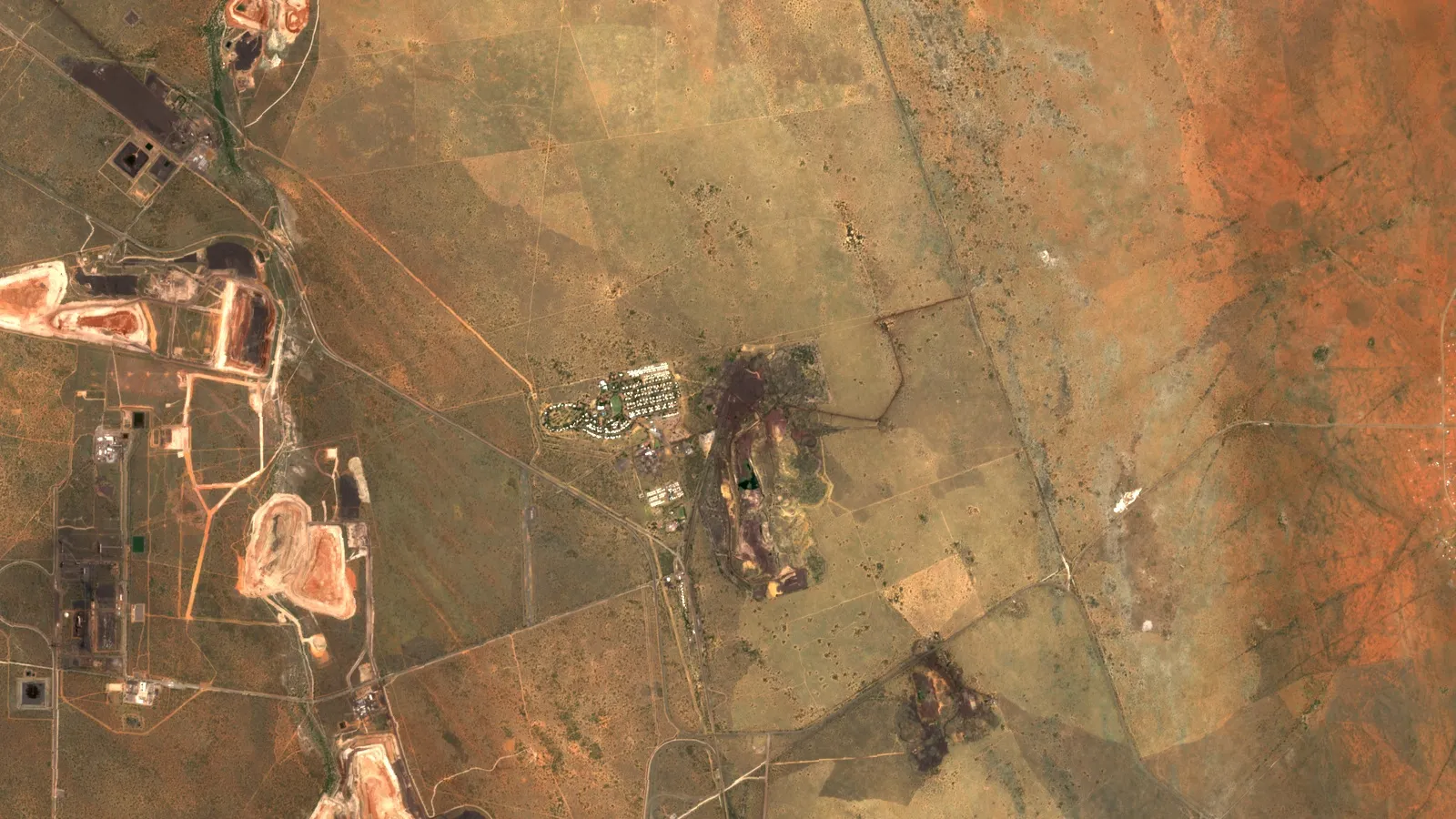
Key takeaways
- Tshipi’s average CIF price rose from US$3.86 to US$4.95 per dmtu between the September 2025 and June 2026 quarters; spot was US$4.38 at the end of July 2026 (Jupiter Mines, 31 July 2026).
- The USGS average for 44% ore CIF China was US$5.53 per mtu in 2024 and an estimated US$4.50 in 2025 (USGS, Mineral Commodity Summaries 2026).
- South32 realised US$4.23 per dmtu FOB in Australia and US$3.65 in South Africa in its 2026 financial year, against unit costs of US$2.62 and US$3.22 (South32, 2026).
- South Africa produced an estimated 7,600 of the world’s 20,000 thousand tonnes of manganese content in 2025 (USGS, 2026).
- Mukulu is a South African project in the Kalahari belt with about 200 Mt at 39.5% manganese reported in 2020; it is not in the Democratic Republic of Congo (International Mining, 2020).
In this article
- Manganese ore price: the latest figures and how to read them
- Manganese price chart: quarterly and yearly data
- What moves the manganese price
- Where the ore comes from: five largest producers
- South32 and Jupiter Mines compared: price, output and cost
- Mukulu manganese mine: location, size and status
- Manganese ore value calculator
- How to follow the price yourself
- What to watch next in manganese supply
- Frequently asked questions
Manganese ore price: the latest figures and how to read them
Manganese ore averaged about US$4.50 per metric ton unit in 2025 for 44% grade ore delivered to China, down from US$5.53 in 2024, according to the USGS Mineral Commodity Summaries (2026). In the June 2026 quarter the Tshipi mine in South Africa sold high-grade lumpy ore at an average of US$4.95 per dry metric ton unit CIF, and the spot price stood at US$4.38 at the end of July 2026, based on the Jupiter Mines quarterly report of 31 July 2026.
These numbers look small because manganese ore is not priced per tonne of rock. It is priced per unit of contained manganese. A metric ton unit (mtu) is 10 kilograms of manganese, which is 1% of one tonne. A dry metric ton unit (dmtu) is the same thing counted on dry ore, with the moisture taken out. A tonne of 37% ore therefore holds 37 dmtu, so a quote of US$4.00 per dmtu means about US$148 for that tonne before freight.
The terms on every quote
- Grade: the share of manganese in the ore. South African ore is sold at about 36% to 37% for the common semi-carbonate lump, and at about 42% to 46% for higher-grade lump from Gabon and Australia. The US Geological Survey notes that ore grade typically ranges from 35% to 54% manganese.
- CIF: cost, insurance and freight. The price includes shipping to the destination port, for example Tianjin in China.
- FOB: freight on board. The price is for ore loaded at the port of origin, so the buyer pays the sea freight. To get the FOB price per unit, divide the sea freight per tonne by the grade in percent and subtract the result from the CIF price per unit.
- Lump, fines and semi-carbonate: lump is coarse ore, fines is small ore, and semi-carbonate is a lower-grade carbonate-bearing ore type from the Kalahari field.
Port lists add the brand and the origin. The Mysteel portside list for Tianjin on 12 October 2026 separates South African semi-carbonate lump at 36.00% (UMK), 36.50% (Tshipi) and 37.50% (South32), Gabonese lump at 44.50% (Comilog) and Australian lump at 42.00% and 46.00%, and quotes them in yuan per dmtu; the price columns need a subscription (Mysteel). This is why two sources can show different numbers on the same day: they price different grades, brands, ports and currencies.
Manganese price chart: quarterly and yearly data
Two public data sets give a clean picture without a subscription. The first is the quarterly realised price that Jupiter Mines reports for Tshipi, which is a real sales record. The second is the USGS yearly average for 44% ore from CRU Group.
Chart
Yearly average, 44% ore CIF China
US$ per metric ton unit of manganese; 2025 is an estimate
Chart
Tshipi average CIF price by quarter
US$ per dmtu, high-grade lump, 100% basis, quarters ended June 2025 to June 2026
The Tshipi series rose each quarter from the September 2025 quarter to the June 2026 quarter, from US$3.86 to US$4.95 per dmtu CIF. The average for the full financial year to June 2026 was US$4.38 CIF (Jupiter Mines, 31 July 2026). Jupiter notes that the spot price at the end of July 2026 was 6% below the end of June and 5% above the four-year average.
The yearly series shows a different shape. The USGS average was US$5.27 in 2021, peaked at US$5.97 in 2022, fell to US$4.80 in 2023, recovered to US$5.53 in 2024 and was estimated at US$4.50 for 2025. The USGS also reports that year-to-date spot prices for 44% ore in China in October 2025 were 22% below the 2024 annual average.
What moves the manganese price
Nearly all manganese goes into steel, so the ore price follows steelmaking. The USGS says manganese use closely follows the steel industry, and that global finished steel consumption was unchanged in 2025 compared with 2024. Geoscience Australia’s Australia’s Identified Mineral Resources (2010) puts the share of world production used as a steel alloying agent at over 90%, with dry-cell batteries as the second use. Producers are also looking at battery-grade material: South32 reports completing the exploration decline at its Clark battery-grade manganese deposit in its June 2026 quarterly report.
Supply shocks at the large mines
A few operations supply a large part of seaborne ore, so one disruption moves the price. The USGS records that a manganese mine in northern Australia that suspended operations in 2024 after a tropical cyclone resumed in May 2025. That mine is the Groote Eylandt operation (GEMCO), and South32 reports that its output fell to 1,106 thousand wet metric tonnes (kwmt) in its financial year 2025 and recovered to 3,031 kwmt in financial year 2026 (60% share), in line with its revised guidance after wet-season impacts and high water levels in the pits (South32 June 2026 quarterly report).
New supply from Africa
The USGS estimates world mine production at 20,000 thousand tonnes of manganese content in 2025, up from 18,700 in 2024. Ghana’s estimated output rose from 1,280 to 2,000 thousand tonnes, and Gabon’s from 4,640 to 5,000. Faster growth in West and Central Africa adds ore to a market where China is the main buyer.
Freight and logistics
Freight is part of every CIF price. Jupiter reports the Port Elizabeth to Tianjin rate at US$33.80 per tonne at the end of June 2026 and US$38.70 at the end of July 2026. South32 says its South African operations use higher-cost trucking, and it keeps FY27 output guidance there at 2,000 kwmt. Mine owners track trucks and stockpiles with tools such as satellite fleet management and, for proving the origin of ore on the way to port, product traceability. A wider look at the shipping chain is in our supply chain guide for mining.
▶ Explains how mining feeds exports, jobs and the metals the energy transition needs. · 5:03
Where the ore comes from: five largest producers
South Africa produced an estimated 7,600 thousand tonnes of manganese content in 2025, about 38% of the world total of 20,000, and holds 550,000 thousand tonnes of the 1,800,000 world reserves (USGS, 2026). The USGS adds that South Africa accounts for an estimated 70% of world manganese resources. The United States has had no mine production of ore with 20% or more manganese since 1970 and imports all it uses.
Chart
Five largest manganese producers, 2025 estimate
Thousand metric tons of manganese content
The ore sits in the Kalahari Manganese Field in the Northern Cape. The field is described by its operators as the largest known land-based high-grade manganese deposit, with three ore types: Mamatwan-type ore at 30% to 38.5% manganese, Wessels-type ore at 42% to 60% and supergene ore at 40% to 42% (Ntsimbintle Holdings). This is consistent with South African semi-carbonate lump being quoted at 36% to 37% while Gabonese and Australian lump are listed at 42% to 46%.
For a broader view of deposits and exploration in South Africa and Ghana, see manganese exploration in South Africa and Ghana, for production by country see manganese production by country and use, and for the main regions see where manganese is mined.
South32 and Jupiter Mines compared: price, output and cost
Two listed companies publish the most useful price records. South32 (ASX) operates GEMCO in Australia and, through Samancor, the Mamatwan and Wessels mines in South Africa. Jupiter Mines (ASX: JMS) holds a 49.9% beneficial interest in Tshipi é Ntle, which operates the Tshipi mine in the Kalahari field and reports on a 100% basis. The figures below are for their financial years to June 2026.
Chart
South32 realised price, first and second half
US$ per dmtu FOB, external sales, financial year 2026
| Operation | Output FY26 | Realised price | Unit cost | Basis |
|---|---|---|---|---|
| South32 Australia Manganese (GEMCO, 60% share) | 3,031 kwmt | US$4.23/dmtu | US$2.62/dmtu | FOB, external sales |
| South32 South Africa Manganese (54.6% share) | 2,085 kwmt | US$3.65/dmtu | US$3.22/dmtu | FOB, external sales |
| Tshipi mine (100% basis) | 3,486,441 t | US$4.38 CIF, US$3.55 FOB | US$2.40/dmtu | High-grade lump (HGL) sales |
Sources: South32 Annual Report (published 27 August 2026) and the Jupiter quarterly report. Realised prices are calculated differently by each company, so do not subtract one from the other without checking the grade mix. South32 reports external sales revenue less freight and marketing costs divided by external sales volume; Jupiter reports the CIF or FOB price achieved on high-grade lump.
Within South32, the Australian operation sold at higher prices than the South African one because it makes higher-grade ore. In the second half of its financial year 2026 South32 realised US$4.66 per dmtu in Australia and US$3.95 in South Africa, up from US$3.81 and US$3.36 in the first half.
The cost side explains why the price matters. South32 expects its FY27 operating unit cost to rise to US$3.15 per dmtu in Australia and US$3.50 in South Africa, and guides Australian output to 2,650 to 2,900 kwmt for FY27 and FY28 because of high water levels. South32 also recorded a US$49 million impairment on the Wessels mine at Hotazel in FY26. At a South African realised price of US$3.65 and a unit cost of US$3.22, the gap per unit is thin, which is why small price moves show up quickly in profit.
South32 offer price
South32 also publishes an offer price to Chinese buyers each month. Mysteel reported on 24 August 2026 that it offered its 37% manganese South African semi-carbonate lump to China at US$4.20 per dmtu for October shipment, US$0.30 lower than the previous month’s offer (Mysteel). An offer price is a starting point for contracts, not the settled price.
Mukulu manganese mine: location, size and status
The Mukulu project is in South Africa, not in the Democratic Republic of Congo. It sits in the Kalahari manganese belt of the Northern Cape. International Mining reported on 21 November 2020 that China’s JCHX Mine Engineering Design Institute and South Africa’s AMG Group signed a mine design contract for the project (International Mining).
The same report gives the deposit figures. About 332 holes have been drilled for roughly 117.42 km. The shallow orebody is nearly horizontal, about 8 m thick, at 70 to 190 m depth. The deep orebody dips at 5 to 8 degrees, is 4 to 5 m thick and lies at 390 to 770 m. The total ore volume is about 200 million tonnes at an average of 39.5% manganese. That grade sits between the Mamatwan and Wessels types described above.
A design contract is an early step. It is not a production record, and the company price records used on this page (South32 and Jupiter) do not cover Mukulu. A claim that Mukulu is producing should come with a filing that shows tonnes sold. Ore at 390 to 770 m depth would likely call for underground mining, the method South32 uses at its Wessels mine.
For exploration services that work on other Kalahari-type sites, see Daskusta Exploration Services.
Manganese ore value calculator
The calculator in this article turns a quote into money. Enter your tonnes, grade, price and freight to see the contained units, the gross CIF value, the net FOB value and the break-even price for your own cost per unit.
Calculator
What is your manganese ore shipment worth?
Enter your own tonnes, grade, price and freight. Results update as you type.
- Gross CIF value: $14,800,000
- Sea freight: $3,500,000
- Net FOB value: $11,300,000
- Margin after your FOB cost: $2,050,000
- Break-even CIF price (US$/dmtu): 3.45
Example values only, not benchmarks or forecasts. Price is an input: example, use today’s price. One dmtu is 1% manganese in one dry tonne, so dmtu = tonnes x grade. The price is CIF and freight is sea freight per tonne, so FOB per dmtu = CIF price minus freight divided by grade. The default freight of US$35 per tonne is an example close to Jupiter’s reported Port Elizabeth to Tianjin rates of US$33.80 and US$38.70 (June and July 2026); the default cost of US$2.50 per dmtu is an example close to Tshipi’s reported FOB cost of production of US$2.48 per dmtu (June 2026 quarter). Money is in US$.
How to follow the price yourself
- Fix the grade and the basis. Write down the grade (for example 37% or 44%), CIF or FOB, and the port before comparing two numbers.
- Use company reports for realised prices. South32 and Jupiter Mines each publish a quarterly report on the ASX, and Jupiter’s covers Tshipi. These show what buyers actually paid.
- Use USGS for the yearly average and the supply picture. The USGS Mineral Commodity Summaries give the yearly 44% ore average, production by country and reserves.
- Use a paid index for daily moves. Mysteel, Fastmarkets and CRU Group publish daily or weekly lists by grade and port, behind a subscription.
- Convert with the formula. Value per tonne is the grade in percent times the price per dmtu. At 37% and US$4.00 it is US$148.
- Check the date. The spot price moved by 6% in one month in mid-2026, and the USGS reports a 22% drop in 2025 year-to-date prices against the 2024 average, so a figure without a date is not useful.
Satellite imagery does not set the price, but it can show surface changes at a mine such as pit extent, stockpiles and haul roads. Farmonaut offers satellite mapping of a licence area for this kind of site review.
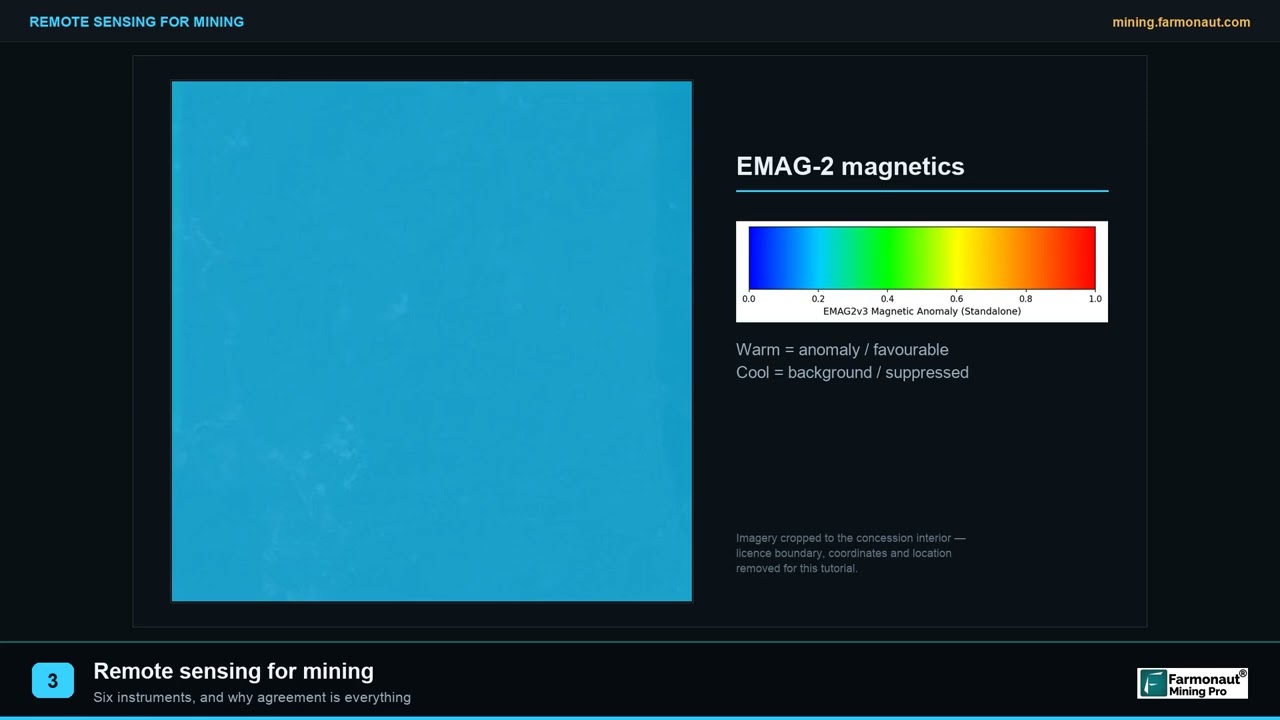
▶ A three-minute explanation of remote sensing for mining. · 2:01
What to watch next in manganese supply
- GEMCO water management: South32 says approvals and infrastructure for the pit water are ongoing, and FY28 guidance depends on them.
- South African trucking: South32 keeps its South African guidance at 2,000 kwmt on higher-cost trucking.
- The October quarterly reports: Jupiter and South32 will publish new realised prices, which show whether the June 2026 quarter peak held.
- Freight rates: the rise from US$33.80 to US$38.70 per tonne added about US$0.13 per dmtu to a 37% CIF price.
- Chinese steel demand: the USGS notes global steel consumption was flat in 2025.
We cover a connected topic in Gold Price per Ounce: Chart and Drivers.
For a closer look at a related question, see our guide: Copper Price per Pound Today: Refined, Scrap and Ore.
Frequently asked questions
What is the manganese price per tonne?
Manganese ore is not quoted per tonne. At US$4.38 per dmtu CIF (Jupiter, end of July 2026), one tonne of 37% ore is worth about US$162 delivered to China. Multiply the grade by the price to get the value of one tonne.
What is a dmtu?
A dry metric ton unit is 10 kilograms of manganese in dry ore, or 1% of a tonne. A tonne of 44% ore holds 44 dmtu.
What was the average manganese price last year?
The USGS estimates the 2025 average at US$4.50 per metric ton unit for 44% ore CIF China, compared with US$5.53 in 2024 and US$5.97 in 2022 (USGS, 2026).
Why is South African ore cheaper per unit than Australian ore?
South African semi-carbonate lump holds 36% to 37% manganese, while GEMCO ore is higher grade. South32 realised US$3.65 per dmtu in South Africa and US$4.23 in Australia in FY26, on its own freight and marketing basis.
Who are the largest manganese producers?
By manganese content in 2025 the USGS ranks South Africa (7,600 thousand tonnes), Gabon (5,000), Ghana (2,000), Australia (1,600) and Brazil (800).
Is Mukulu producing manganese?
International Mining reported a design contract signed in 2020 for a South African deposit of about 200 million tonnes at 39.5% manganese. It does not report production or sales.
Is the Mukulu mine in Congo?
No. The project is in the Kalahari manganese belt of South Africa’s Northern Cape, according to International Mining.
What does Jupiter Mines own?
Jupiter Mines holds a 49.9% beneficial interest in Tshipi é Ntle Manganese Mining, which runs the Tshipi mine in the Kalahari field. Tshipi sold 3,488,925 tonnes in FY26.
How do freight rates change the delivered price?
Freight is divided across the units in each tonne. A US$38.70 rate on 37% ore adds about US$1.05 per dmtu to the CIF price, and a rate of US$33.80 adds about US$0.91.
Where can I get daily manganese prices?
Mysteel, Fastmarkets and CRU Group publish daily or weekly ore prices by grade and port, but the full tables need a subscription. Company quarterly reports and the USGS Mineral Commodity Summaries are public.
This page is for information only. It is not investment advice. Prices change daily; check the date and basis of any figure before you rely on it.
Farmonaut mining
Check a site from space before you buy in
Send a KML, KMZ or polygon and Farmonaut screens the licence area from satellite images so you can see surface changes and plan ground checks.
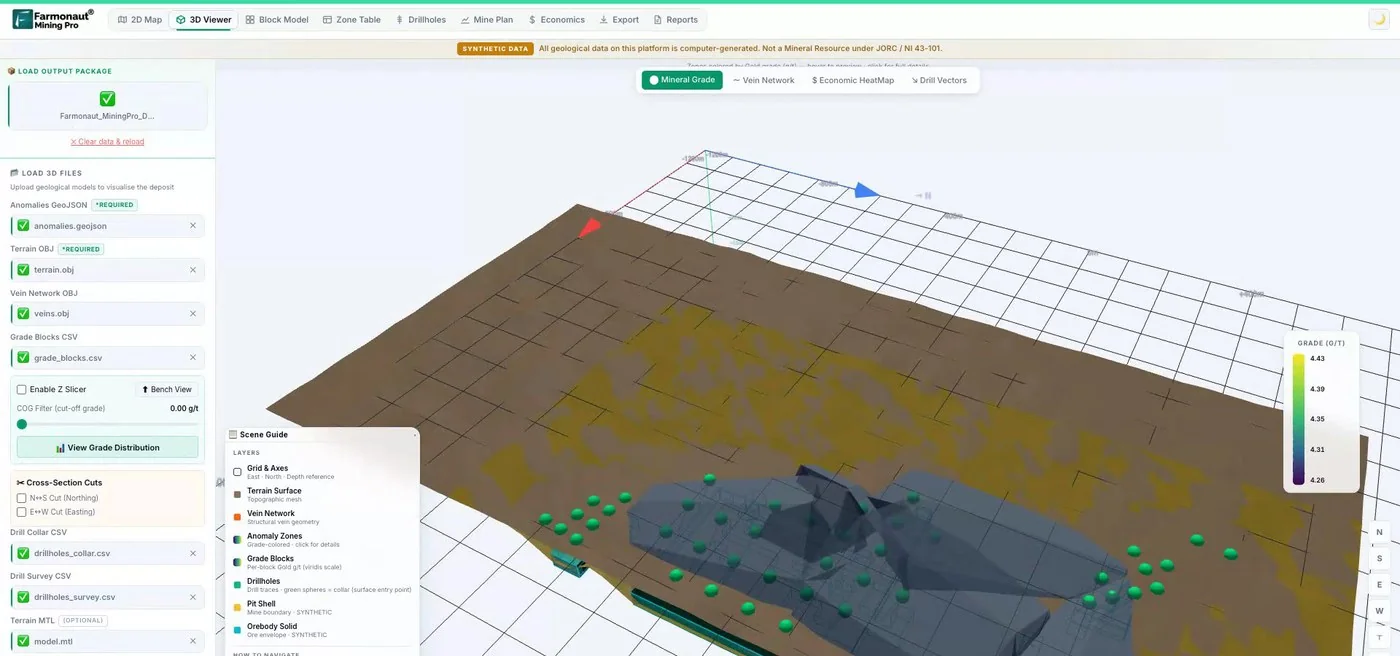
Mining Pro sample view, synthetic data
Keep reading
Sources
- USGS, Mineral Commodity Summaries 2026: Manganese: pubs.usgs.gov
- Jupiter Mines, Q4 FY2026 Quarterly Activities Report (31 July 2026): investorpa.com
- South32, Quarterly Report June 2026: announcements.asx.com.au
- South32, Annual Report 2026: announcements.asx.com.au
- Mysteel, South32 announces manganese ore prices to China (24 August 2026): mysteel.net
- Mysteel, Imported manganese ore portside prices: Tianjin port (12 October 2026): mysteel.net
- International Mining, JCHX signs mine design contract for Mukulu (21 November 2020): im-mining.com
- Ntsimbintle Holdings, The Kalahari Manganese Field: ntsimbintle.co.za
- Geoscience Australia, Australia’s Identified Mineral Resources 2010: ga.gov.au
- USGS, Mineral Commodity Summaries 2026 (full volume): pubs.usgs.gov
Discussion
Questions, corrections or field experience? Share them below. First-time comments are reviewed before they appear, and your email is never published.
No comments yet. Be the first to add a question or your experience.

 Southbridge & Wess PDC Ltd
 Qader Group
 Ileys General Trading
 SG Gold Mining LLC
 VRV Global Pte Ltd
 Omsri International FZE
 G.I.T.T.
 Jaunita Erss Ltd
 Almosi SARL
 SRK Consulting
 Berks Gold Limited
 Mwerezi Minerals Company Limited
 Mining SARL
 SenGold Invest SAS
 Sean Mining Limited
 NTS Group (Pty) Ltd
 Mine4Africa
 Lithspo Minerals Limited










