

Kalahari manganese · Mine profile
Tshipi Entle Manganese Mine: Owners, Output, Operations
Tshipi Entle runs the Tshipi Borwa open-pit manganese mine in South Africa’s Northern Cape. Exxaro owns 50.1% and Jupiter Mines 49.9%. It sold 3.49 million tonnes of ore in the year to June 2026 at a unit cost of US$2.40 a dmtu (Jupiter Mines).
Key takeaways
- Exxaro Resources owns 50.1% of Tshipi through Ntsimbintle Mining, and Jupiter Mines owns 49.9%; the Exxaro purchase closed on 27 February 2026 (Exxaro, African Mining Market).
- The mine produced 3,486,441 tonnes and sold 3,488,925 tonnes in the year to 30 June 2026, on a 100% basis (Jupiter Mines, July 2026).
- Average FOB cost of production was US$2.40 per dmtu, against an average CIF price of US$4.38 (Jupiter Mines, year to June 2026).
- Black Rock produced 3.94 million tonnes and Tshipi 3.49 million; Mamatwan and Wessels together were about 3.8 million wet tonnes, calculated from South32’s 54.6% share of 2.09 million (ARM, Jupiter, South32).
- South Africa mined an estimated 7,600 thousand tonnes of manganese content in 2025, about 38% of the 20,000 thousand world total (USGS, February 2026; share calculated by Farmonaut).
In this article
- Who owns Tshipi Entle manganese mine?
- How much ore does Tshipi Borwa produce?
- How Tshipi Borwa is mined and processed
- How the ore reaches the ports
- Tshipi costs, prices and margins
- Compare Tshipi with other Kalahari manganese mines
- South Africa manganese ore and alloy production figures
- Jobs, local hiring and community spending
- What investors and licence holders can check
- Mapping a pit like Tshipi from space
- Frequently asked questions
Tshipi é Ntle Manganese Mining (Pty) Ltd runs the Tshipi Borwa open-pit mine in South Africa’s Northern Cape. Since 27 February 2026 it has been owned 50.1% by Exxaro Resources, through Ntsimbintle Mining, and 49.9% by Jupiter Mines. In the year to 30 June 2026 it produced 3.49 million tonnes of manganese ore and sold the same amount, according to Jupiter’s quarterly report of 31 July 2026.
This page covers who owns the mine, how much it produces, what it costs to run, how the ore reaches the ports and how it compares with its neighbours in the Kalahari Manganese Field: Mamatwan and Wessels (Samancor and South32), Black Rock and Kalagadi. A calculator lets you test the margin on a tonne of ore with your own price and cost.
Who owns Tshipi Entle manganese mine?
Two owners share the mine: Jupiter Mines (ASX: JMS), which has held 49.9% throughout the changes, and Exxaro Resources, a South African company listed on the Johannesburg Stock Exchange, which holds the other 50.1%. Exxaro bought that stake from Ntsimbintle Holdings and OM Holdings (ASX: OMH). The sale closed on 27 February 2026. Exxaro paid R10.6 billion in cash at that closing, funded from its cash reserves, for a package of manganese interests that included the Tshipi stake (African Mining Market, 2 March 2026); the deal was first announced in a press release of 13 May 2025.
| Holder | Before 27 Feb 2026 | After | What changed |
|---|---|---|---|
| Jupiter Mines | 49.9% | 49.9% | Unchanged; markets its own share of the ore |
| Ntsimbintle Holdings (through Ntsimbintle Mining) | 37.1% | 0% | Sold its 74% of Ntsimbintle Mining to Exxaro |
| OM Holdings | 13.0% | 0% | Sold its 26% of Ntsimbintle Mining to Exxaro |
| Exxaro Resources | 0% | 50.1% | Owns 100% of Ntsimbintle Mining |
The percentages come from Jupiter’s September 2026 company update, which shows the old and current joint-control structure. Exxaro also took 19.99% of Jupiter itself, so it describes its effective interest in the mine as 60.1%. The same deal gave Exxaro 100% of Ntsimbintle Marketing and 9% of Hotazel Manganese Mines, the company behind Mamatwan and Wessels. A separate agreement for 51% of the Mokala manganese mine was still subject to conditions when the main deal closed, with a long-stop date of 27 February 2027.
OM Holdings’ annual report says its sale of the Ntsimbintle Mining interest became unconditional on 29 January 2026 and completed on 27 February 2026, and that it will keep working with Exxaro on marketing Tshipi ore. Jupiter sells its own 49.9% share of the ore through its marketing branch: 1,749,472 tonnes in the year to June 2026.
Two names cause confusion. Tshipi é Ntle is the operating company, and its own site shows the accented spelling. Tshipi Borwa is the mine and the orebody on the south-western edge of the field. Searches for either name lead to the same operation.
How much ore does Tshipi Borwa produce?
The mine produced 3,486,441 tonnes in the year to 30 June 2026 and sold 3,488,925 tonnes. Of the output, 2,905,100 tonnes (83%) was high-grade ore and 581,341 tonnes was low-grade ore. Sales beat the six-year average of 3.4 million tonnes a year that Jupiter quotes. The quarterly record from the same report:
| Quarter ended | Production (t) | Sales (t) | Avg CIF price (US$/dmtu) | FOB cost (US$/dmtu) |
|---|---|---|---|---|
| 30 Sep 2025 | 829,798 | 837,577 | 3.86 | 2.27 |
| 31 Dec 2025 | 840,688 | 867,619 | 4.10 | 2.24 |
| 31 Mar 2026 | 849,772 | 839,989 | 4.35 | 2.50 |
| 30 Jun 2026 | 966,183 | 943,740 | 4.95 | 2.48 |
| Year to 30 Jun 2026 | 3,486,441 | 3,488,925 | 4.38 | 2.40 |
Source: Jupiter Mines, Q4 FY2026 Quarterly Activities Report, all figures on a 100% basis. CIF means the price includes cost, insurance and freight to the buyer’s port; FOB means the price at the loading port, before shipping. A dmtu, or dry metric tonne unit, is 1% manganese in one dry tonne of ore, so 10 kilograms of contained manganese.
The June 2026 quarter was the strongest of the year, with production up 14% on the previous quarter and 23% on the same quarter a year earlier. Calendar 2025 exports, a different period, were 3,570,973 tonnes of lump and fines according to OM Holdings. Exxaro’s own accounts describe the mine as delivering approximately 3.5 million tonnes of manganese a year.
Jupiter’s flow-sheet slide gives the plant limits: run-of-mine ore capacity of 3.6 million tonnes a year, primary crushing of 3.9 million, secondary crushing of 4.5 million and load-out stockpiles of 5 million. The plant ran at 3.4 million tonnes through the run-of-mine, primary crushing and secondary crushing stages. Citing the research firm CRU, Jupiter ranks Tshipi as the fourth-largest manganese ore mine in the world and says more than 100 years of mine life remain at current rates. That life figure rests on the resource, not on a reserve: OM Holdings reports a mineral resource of about 422 million tonnes under the JORC Code (2012) at 30 June 2025. A resource is a deposit estimate with reasonable prospects of extraction; a reserve is the part a study shows can be mined at a profit.
How Tshipi Borwa is mined and processed
The orebody is a flat-lying manganese bed. The U.S. Geological Survey explains that the Kalahari field holds three manganese layers within the Hotazel iron formation, and the lower one is the principal source of ore, 15 to 45 metres thick. Ntsimbintle’s description of the field adds that the lower orebody is up to 45 metres thick near Tshipi Borwa, and that the field’s primary ore type, called Mamatwan-type, carries 30 to 38.5% manganese.
Infographic
From pit to port in 5 steps
- 1Drill and blastDrillers and blasters break the bottom cut of the manganese bed.
- 2Load and haulShovels load trucks that haul ore to the run-of-mine stockpile.
- 3Crush and screenThe plant crushes and screens ore into lump and fines.
- 4Stockpile and loadProducts wait in stockpiles before the rail load-out.
- 5Rail to portTrains, with some road trucks, take ore to the export ports.
At Tshipi the ore starts about 70 metres below the surface, sits in a mineralised zone 30 to 45 metres thick and dips gently, at roughly 5 degrees, to the north-west. The company mines and processes the lower 15 metres, called the bottom cut, because it is higher grade, and plans to stockpile part of the upper 15 metres, the top cut, for later. Mining is a conventional truck-and-shovel operation: ore is drilled, blasted, loaded and hauled to the run-of-mine (ROM) stockpile, which feeds a plant designed for 3.3 to 3.6 million tonnes a year. The mine description comes from OM Holdings’ annual report.
The mined volumes show how much rock moves for each tonne of ore. In the year to June 2026 the pit moved 11.89 million bank cubic metres (bcm, in-place volume): 11.02 million of waste and low-grade material and 0.87 million of graded ore. That is roughly 13 cubic metres of waste and low-grade rock for every cubic metre of graded ore (Farmonaut calculation from Jupiter’s table). In the last quarter, graded-ore mining rose 22% on the quarter because the mine worked more barrier pillar ore, the strips of ore left between earlier pit sections.

▶ Explains the seven environmental impacts of mining, which apply to any large open pit. · 2:31
How the ore reaches the ports
Tshipi ships by rail to the coast. Its exports leave through the Port Elizabeth multi-purpose terminal (including Coega), Saldanha, Lüderitz in Namibia and Durban. Jupiter’s September 2026 presentation adds KuGompo City, the new name for East London, which made Tshipi the first manganese producer to export through eight southern African commercial ports. It also reports a 10-year Manganese Export Capacity Allocation Agreement with Transnet, the state rail and port operator, and a Cape Town project to convert a multi-purpose terminal for container (skiptainer) exports until 2033.
In the year to June 2026, 2.84 million tonnes were sold CIF and 0.65 million tonnes FOB, so about 81% of volume carried shipping cost to the buyer. Freight matters: the Port Elizabeth to Tianjin rate was US$33.80 a tonne on 26 June 2026 and US$38.70 at the end of July 2026, per Jupiter’s quarterly report. South African road haulage was not used for ore in the June quarter, apart from the road leg of the Lüderitz route. On-land logistics, the leg from mine to port, moved 3,488,298 tonnes in the year to June 2026. For how mining groups plan these flows more generally, see the Farmonaut guide to supply chain management in mining.
Tshipi costs, prices and margins
Jupiter reports the mine’s average CIF price at US$4.38 a dmtu for the year to June 2026 (US$4.02 a year earlier) and its average FOB cost of production at US$2.40 (US$2.30). On a 100% basis the mine earned A$114.6 million of EBITDA and A$74.8 million of net profit after tax in the year, and held A$129.4 million in cash at 30 June 2026; Jupiter’s September 2026 presentation shows no debt. Its board declared a final dividend of ZAR350 million for the second half, of which Jupiter’s 49.9% share is ZAR165.9 million (Jupiter preliminary final report, 28 August 2026).
Chart
Tshipi price achieved against unit cost
US$ per dmtu, FOB basis, by quarter
Prices for this ore are quoted against a benchmark: the Fastmarkets semi-carbonate index for 36.5% manganese, CIF Tianjin. It fell from US$5.16 a dmtu on 27 March 2026 to US$4.64 on 26 June 2026, and Jupiter reports a spot price of US$4.38 at the end of July 2026, 6% below the end of June and 5% above the four-year average. Check the latest quarterly report for newer figures, because Jupiter updates them each quarter.
Costs differ between mines. South32 reports an operating unit cost of US$3.22 a dmtu FOB at its South Africa Manganese operation for the year to June 2026 and a realised FOB price of US$3.65, against Tshipi’s US$2.40 cost. The figures use different product mixes and company definitions, so treat them as a rough guide to where Tshipi sits on the cost curve.
Calculator
What margin does a tonne of manganese ore leave?
Enter your own price, cost and freight; the page starts with round example numbers.
- Revenue at the CIF price (US$ per year): $569,800,000
- Freight (US$ per year): $119,000,000
- Production cost (US$ per year): $310,800,000
- Margin per tonne of ore (US$): 28.00
- Margin per year (US$): $98,000,000
Example values only, close to Jupiter Mines’ averages for the year to June 2026 (CIF US$4.38 per dmtu, FOB cost US$2.40, Port Elizabeth to Tianjin freight US$33.80 per tonne on 26 June 2026). A dmtu is 1% manganese in one dry tonne. The price is your input; the starting value is only an example. The result is a simple margin before tax and capital, with royalties included only through the other-costs line, and it is not Tshipi’s reported EBITDA.
Compare Tshipi with other Kalahari manganese mines
The Kalahari Manganese Field sits in the Northern Cape around Hotazel and Kuruman. OM Holdings describes it as stretching about 35 km long and 15 km wide, and the USGS estimates South Africa holds about 70% of the world’s manganese resources. Four groups run the main mines, and a table makes the differences clear.
Chart
Reported manganese ore output, latest financial year
Million tonnes, year to 30 June 2026, 100% basis
| Mine | Owners | Method | Latest reported output |
|---|---|---|---|
| Tshipi Borwa | Exxaro 50.1%, Jupiter Mines 49.9% | Open pit | 3.49 Mt produced, year to June 2026 (Jupiter) |
| Mamatwan and Wessels | Samancor (South32 holds 60%); Exxaro 9% of Hotazel Manganese Mines | Mamatwan open cut; Wessels underground | About 3.8 Mt wet tonnes at 100% (South32’s 2.09 Mt share divided by its 54.6% interest), year to June 2026 |
| Black Rock (Nchwaning and Gloria) | Assmang: ARM 50%, Assore 50% | Underground, mechanised | 3.94 Mt produced, year to June 2026 |
| Kalagadi Manganese | Operated by Kalagadi Manganese | Underground board and pillar, with sinter plant | Design capacity 3 Mt a year of ore |
Samancor and South32’s Mamatwan and Wessels
Samancor is the joint venture behind Mamatwan and Wessels. South32’s annual report says it holds 60% of Samancor Holdings, which indirectly owns 74% of Hotazel Manganese Mines (HMM), giving South32 an indirect 44.4% interest. South32 accounts for 54.6% of the ore business, because loans that funded the black-ownership partners’ stakes are still unpaid. The company reports saleable production of 2,085 thousand wet tonnes for its 54.6% share in the year to June 2026, down 3%, which implies about 3.8 million wet tonnes for the two mines together (Farmonaut calculation), with 2,000 thousand expected in each of the next two years. It recorded a US$49 million impairment on Wessels and finished the sale of the idle Metalloys alloy smelter in June 2025. South32’s results document is on its financial results page.
Black Rock Mine
Black Rock Mine is the manganese division of Assmang, a 50:50 company owned by African Rainbow Minerals (ARM) and Assore. Its Nchwaning and Gloria mines lie about 80 km north-west of Kuruman. ARM’s results for the year to 30 June 2026 show production up 5% to 3.94 million tonnes, total sales of 4.49 million tonnes (3.66 million tonnes exported) and unit cash costs up 7% to R1,018 a tonne, as set out in the ARM condensed reviewed results. On those numbers it produced more than Tshipi, from underground mines rather than an open pit.
Kalagadi Manganese mine near Hotazel
The Kalagadi mine lies west of Hotazel on the R31 road. The International Manganese Institute describes a mechanised board-and-pillar underground mine on 6,300 hectares, started in March 2018, with capacity for 3 million tonnes of ore at 36 to 38% manganese and a sinter plant that makes 44 to 48% manganese product. The institute lists just over 960 permanent staff, but its page is a tour description, not a status report. In August 2026 the Supreme Court of Appeal dismissed Kalagadi’s challenge to the Industrial Development Corporation’s right to start business rescue over a debt of about R6 billion, so check the company’s and the IDC’s latest statements before treating it as a steady producer.
For wider background on manganese deposits beyond the Kalahari, see the Farmonaut guide to manganese exploration in South Africa and Ghana and the page on manganese ore mining trends. Another Kalahari-region project, in copper rather than manganese, is covered in the guide to the Khoemacau copper mine in Botswana.
South Africa manganese ore and alloy production figures
For a country-level picture, the USGS Mineral Commodity Summaries show South Africa mining 7,490 thousand tonnes of manganese content in 2024 and an estimated 7,600 thousand in 2025, the largest of any country, out of a world total of 18,700 thousand and 20,000 thousand. South African reserves are 550,000 thousand tonnes of the world’s 1,800,000 thousand. Steel and cast iron production account for 77 to 90 percent of manganese consumption, which is why steel output drives the ore price.
Chart
South Africa manganese ore production index
Volume of mining production, 2019 = 100, 15 months
Chart
World manganese mine production, selected countries
Thousand tonnes of contained manganese
Using Jupiter’s 3.49 million tonnes and a grade of about 37% manganese, Tshipi’s ore holds up to about 1.3 million tonnes of manganese, roughly one-sixth of the USGS 2025 estimate for the country (Farmonaut calculation; the share is slightly lower in practice because the low-grade tonnes carry less manganese).
For month-by-month volumes, Statistics South Africa publishes a mining production index. The August 2026 release puts manganese ore at 143.0 on its volume index (2019 = 100), up 4.1% on August 2025, with the 15 months from June 2025 to August 2026 in the chart below. Mineral sales of manganese ore were R4,617 million in August, up 8.8% year on year at current prices. The index covers ore only: Statistics South Africa publishes no manganese alloy volume series, so alloy figures come from the producers. ARM’s Cato Ridge works sold 27,000 tonnes of high-carbon ferromanganese in the year to June 2026, down 21%, from stock, because production there stopped in May 2025, and South32 completed the sale of its Metalloys smelter in June 2025.
Jobs, local hiring and community spending
Jupiter’s FY26 sustainability highlights say 80% of Tshipi’s employees are local people from the Northern Cape, up from 73% a year earlier, that the mine recorded zero dust exceedances across residential and non-residential monitoring points and provided 66 bursaries, internships and learnerships (39 the year before). It also reached Level 1 on South Africa’s B-BBEE scorecard, the national measure of black ownership and participation. The mine had no lost-time injuries in the June 2026 quarter and a total recordable injury frequency rate of 0.37.
A water project under the mine’s Social and Labour Plan repaired flood-damaged infrastructure at Manyeding Village and gave 1,583 residents in 415 households access to safer water, at a cost of ZAR 11.04 million, and created 20 local jobs (Jupiter, September 2026). Learnerships last one year and combine on-the-job training with a stipend.
▶ Follows what mining does for an economy: exports, jobs, revenue and energy-transition minerals. · 5:03
What investors and licence holders can check
Facts about the mine change by quarter, so go to the primary documents. These are the ones that matter, and none of them is advice to buy or sell anything:
- Jupiter Mines quarterly and annual reports (ASX: JMS): production, sales, prices, unit cost, EBITDA and cash for Tshipi on a 100% basis, plus the mineral resource statement.
- Exxaro announcements and results (JSE): the status of the Mokala condition and how the new manganese segment is reported.
- South32 and ARM results: the neighbouring mines’ output and unit costs, for comparison.
- Transnet rail and port notices: allocation of rail capacity and port performance decide how much ore can leave.
- The benchmark price and the rand: cost is in rand and prices are in dollars, so a stronger rand lifted Tshipi’s dollar cost in the year to June 2026.
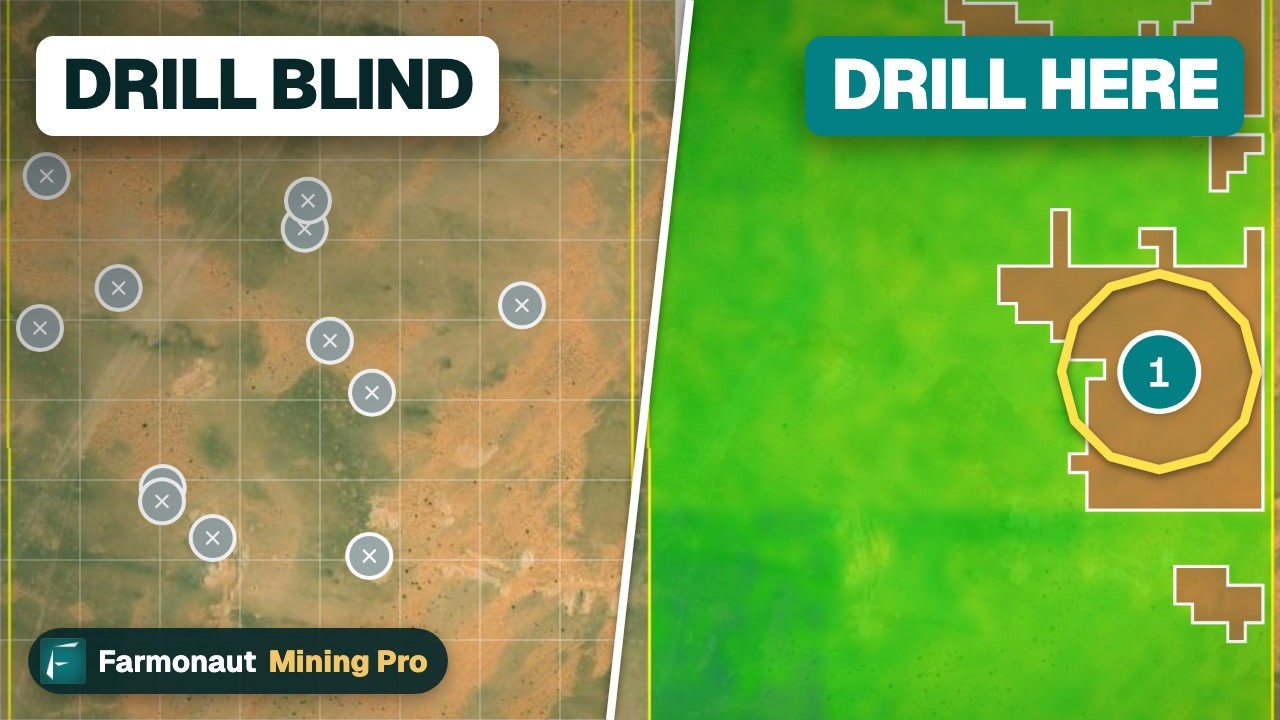
Licence holders weighing a Kalahari manganese target face a different problem: the ore lies under cover, 70 metres down at Tshipi, so the work starts with geology, drilling and geophysics. Sentinel-2 imagery can help with surface context, such as access tracks, land use, stockpiles and waste dumps, but it cannot see buried manganese beds.
Mapping a pit like Tshipi from space
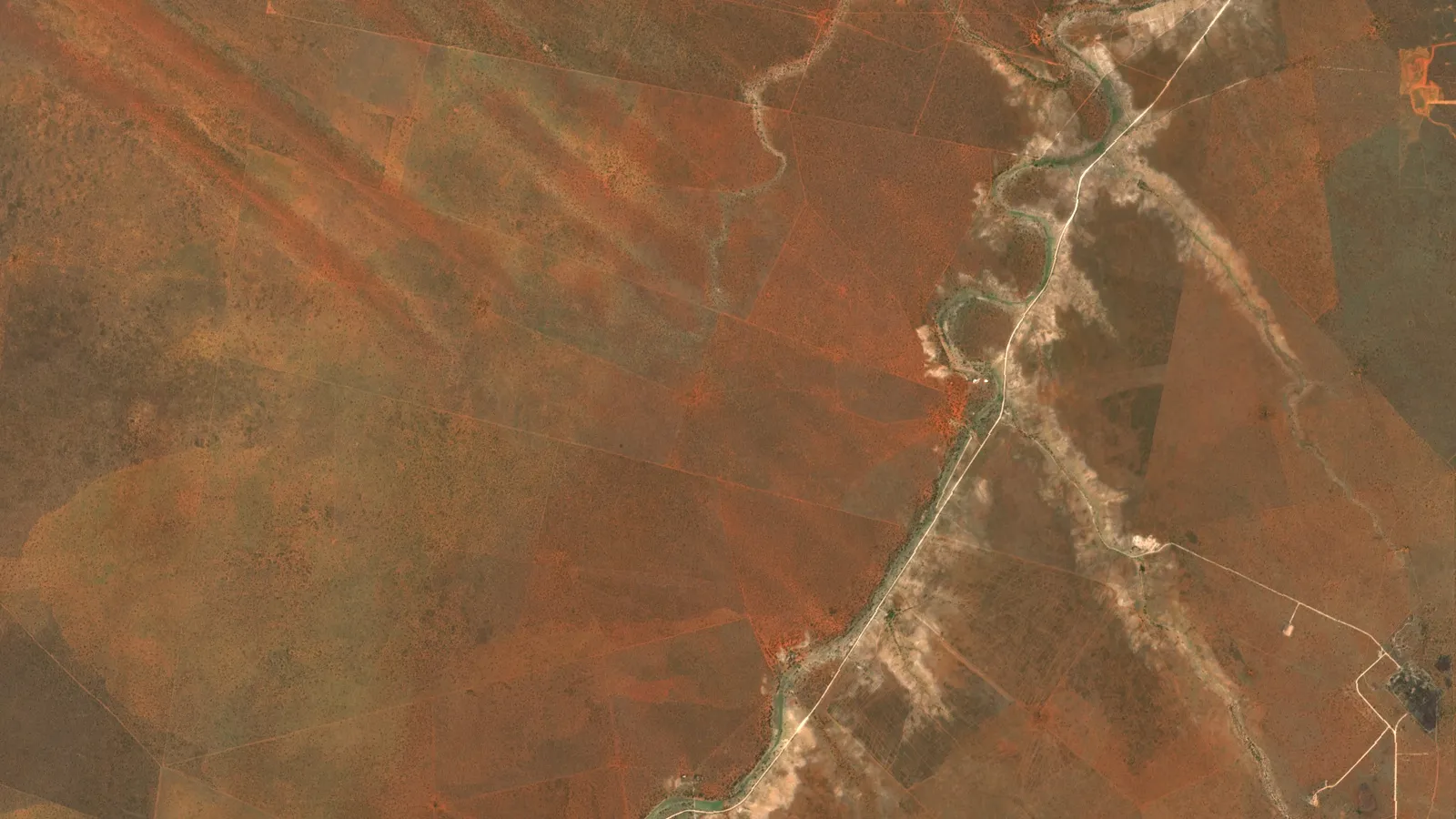
An open pit of this size is easy to follow in Sentinel-2 images, which show the pit footprint, waste dumps, stockpiles and the rail loop. Comparing summer composites from different years shows how fast the disturbed area grows. This is the kind of view behind the satellite image at the top of this page. Farmonaut offers a satellite-based mineral detection service for explorers who need ground screened before they commit to drilling. Satellite results are exploration targets, not a resource estimate.
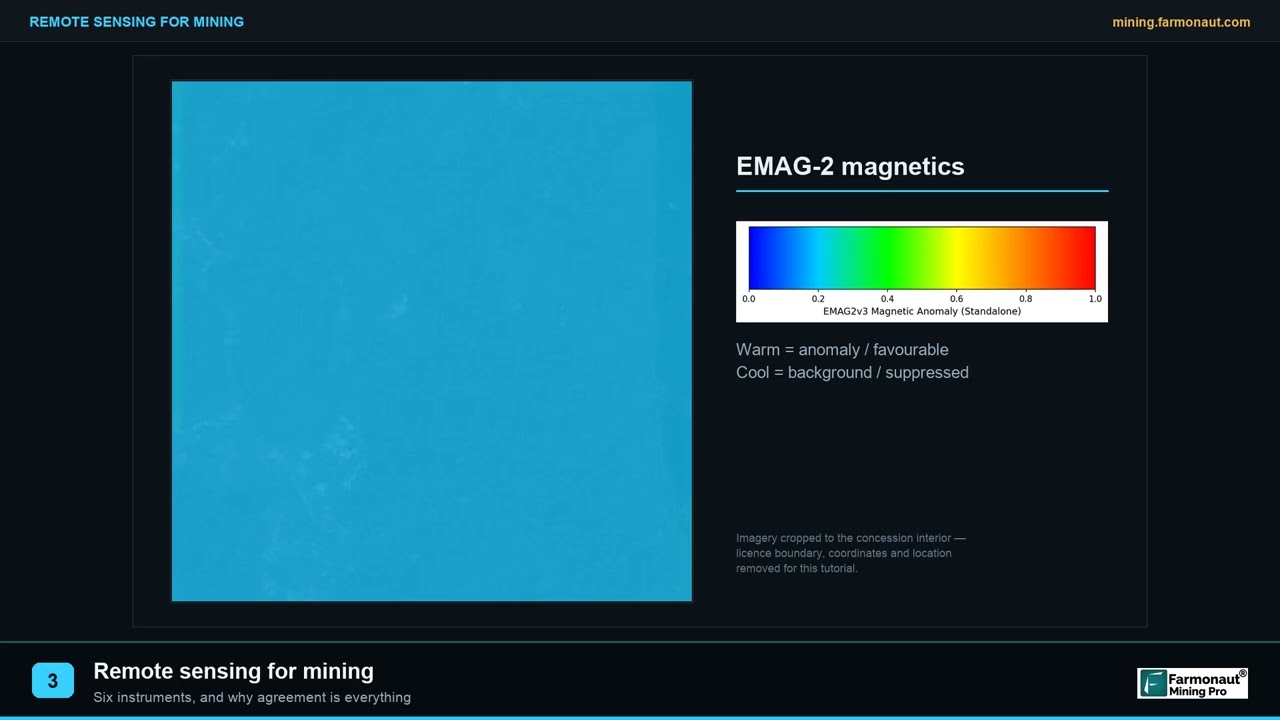
▶ Explains in three minutes how remote sensing is used in mining. · 2:01
Frequently asked questions
Who owns the Tshipi Entle manganese mine?
Exxaro Resources owns 50.1% through its wholly owned Ntsimbintle Mining, and Jupiter Mines owns 49.9%. The ownership changed on 27 February 2026, when Exxaro bought the stakes of Ntsimbintle Holdings and OM Holdings.
Where is the Tshipi mine located?
The mine is in the Kalahari Manganese Field in the Northern Cape province of South Africa, about 20 km south-west of Hotazel, on the south-western outer rim of the field.
How much manganese does Tshipi produce a year?
In the year to 30 June 2026 it produced 3,486,441 tonnes of ore and sold 3,488,925 tonnes. Its six-year average for sales and production is about 3.4 million tonnes a year, per Jupiter.
Is Tshipi the biggest manganese mine in the world?
No. Jupiter, citing CRU, ranks it fourth largest by ore sales. Its own presentation calls it one of the largest and longest-life manganese mines, and the Kalahari field also holds Black Rock, which produced 3.94 million tonnes in ARM’s year to June 2026.
What is the difference between Tshipi Borwa and Tshipi é Ntle?
Tshipi é Ntle Manganese Mining (Pty) Ltd is the company. Tshipi Borwa is the mine it operates. The accent in the company name is often lost or mangled online.
Who sells the ore from Tshipi?
Jupiter markets its 49.9% share through its marketing branch. The rest is sold through the marketing arrangements of the other owner: Exxaro bought Ntsimbintle Marketing in the same deal, and OM Holdings says it will keep working with Exxaro on marketing the ore.
Who owns Samancor, and is it the same as Tshipi?
No. Samancor is a separate joint venture that holds Hotazel Manganese Mines (Mamatwan and Wessels). South32 owns 60% of Samancor Holdings. Exxaro holds 9% of Hotazel Manganese Mines, which is its only link to that group.
What is the Black Rock manganese mine?
Black Rock Mine is Assmang’s manganese operation, made up of the Nchwaning and Gloria underground mines north-west of Kuruman. ARM and Assore each own 50% of Assmang.
Is the Kalagadi manganese mine at Hotazel operating?
The International Manganese Institute describes it as a producing underground mine and sinter complex that started production in March 2018 with design capacity of 3 million tonnes a year of ore. That page does not give current output or status. In August 2026 the Supreme Court of Appeal dismissed Kalagadi’s challenge to the IDC’s right to start business rescue over a debt of about R6 billion, so confirm the current position in the company’s own statements.
How much manganese ore did South Africa produce recently?
Statistics South Africa’s index for manganese ore stood at 143.0 in August 2026 (2019 = 100), up 4.1% on a year earlier. The USGS estimates 7,600 thousand tonnes of manganese content for 2025.
Does Tshipi ore go into electric vehicle batteries?
Tshipi sells ore, and the USGS says steelmaking takes 77 to 90 percent of manganese. Jupiter lists battery supply as a possible future step in its five-year strategy, and it is still at the strategy stage.
What price does Tshipi get for its ore?
Its average CIF price was US$4.38 a dmtu in the year to June 2026 and US$4.95 in the June 2026 quarter. Jupiter reported spot at US$4.38 at the end of July 2026.
This page is for information only. It is not investment advice and it names no share to buy or sell. Check each company’s filings.
Farmonaut mining
Screen ground from space before you drill
Investors can request a satellite screening of a licence area that ranks ground as exploration targets, ahead of any resource estimate.

Mining Pro sample view, synthetic data
Keep reading
Sources
- Jupiter Mines, Q4 FY2026 Quarterly Activities Report (31 July 2026): investorpa.com
- Jupiter Mines, Preliminary Final Report for FY2026 (28 August 2026): bulletin.webull.com
- Jupiter Mines, Company Update, Africa Down Under (2 September 2026): bulletin.webull.com
- Exxaro, press release on the manganese acquisition (13 May 2025): exxaro.com
- African Mining Market, Exxaro concludes the acquisition (2 March 2026): africanminingmarket.com
- Exxaro, Integrated Report 2025, report of the directors: investor.exxaro.com
- Tshipi é Ntle, welcome to the Exxaro-Safika-Ntsimbintle deal (29 May 2025): tshipi.co.za
- OM Holdings, Annual Report 2025: omholdingsltd.com
- South32, Annual Report 2026 (ASX, 27 August 2026): announcements.asx.com.au
- South32, Financial results and outlook, year ended 30 June 2026: south32.net
- African Rainbow Minerals, condensed reviewed results, year to 30 June 2026: arm-ir-reports.co.za
- African Rainbow Minerals, ARM Ferrous: arm.co.za
- International Manganese Institute, the Kalagadi manganese mine: manganese.org
- Ntsimbintle Holdings, the Kalahari Manganese Field: ntsimbintle.co.za
- Mining Technology, Tshipi Borwa open pit mine: mining-technology.com
- USGS, Mineral Commodity Summaries 2026: Manganese: pubs.usgs.gov
- USGS, Professional Paper 1802-L: Manganese: pubs.usgs.gov
- Statistics South Africa, Mining: Production and sales, August 2026 (P2041): statssa.gov.za
- Statistics South Africa, Mining: Production and sales, February 2026 (P2041): statssa.gov.za
- Statistics South Africa, Mining: Production and sales, November 2025 (P2041): statssa.gov.za
Discussion
Questions, corrections or field experience? Share them below. First-time comments are reviewed before they appear, and your email is never published.
No comments yet. Be the first to add a question or your experience.

 Omsri International FZE
 G.I.T.T.
 Jaunita Erss Ltd
 Almosi SARL
 SRK Consulting
 Berks Gold Limited
 Mwerezi Minerals Company Limited
 Mining SARL
 SenGold Invest SAS
 Sean Mining Limited
 NTS Group (Pty) Ltd
 Mine4Africa
 Lithspo Minerals Limited
 Tintina Mining Group
 Dalgety Minerals Pty Ltd

 Licence holder · Nigeria · Gold + lithium










