Reviewed August 2026 against USDA NASS livestock inventory data, USDA Economic Research Service grazing adoption research, and DataHorizzon Research market sizing.
Try it: Enter your numbers above. →
The best grazing apps solve three jobs at once: mapping paddock boundaries, scheduling rotations against rest periods, and tracking pasture condition between visits. Six platforms compete for that job in the US market — AgriWebb, MaiaGrazing, Mobble, Smart Paddock, Volly Solutions’ Paddock Grazing Planner, and Farmonaut — and they split along a clear line: livestock-record platforms that added mapping, versus satellite-monitoring platforms that added livestock tools. Below is what separates them, what adoption actually looks like across US regions, and a rest-period calculator you can run against your own paddock count before picking one.
Table of Contents
- Grazing Software Adoption: Where the US Stands
- Best Grazing Apps Compared: Feature Table
- Paddock Mapping Software and Apps: What to Look For
- Rotational Grazing Software: Scheduling and Rest Periods
- The 6 Platforms, One by One
- Breedr and the Livestock-Trading Adjacent Category
- Farmonaut’s Satellite Approach to Paddock Management
- Rest-Period Calculator
- What Grazing Management Software Actually Costs
- Choosing Between Them
- FAQ
- Try it: Enter your numbers above.



Grazing Software Adoption: Where the US Stands
USDA NASS counted 86.2 million cattle and calves on US farms as of January 1, 2026 — 27.6 million beef cows and 9.57 million dairy cows among them, per the USDA NASS January 2026 cattle inventory report. That’s the herd base every grazing app in this article is built to manage. NASS reissues this count every January; check the Newsroom report page or NASS Quick Stats directly for the next release before citing these numbers as current.
On the practice side, the USDA Economic Research Service found that 40% of US cow-calf operations used rotational grazing in its 2023–2024 survey window — the exact practice all six platforms below are built to schedule. Adoption isn’t even across the country: the Northern Plains and Western Corn Belt region reported 49% adoption, while the Southern Plains came in at 25%. That 24-point gap tracks rainfall variability and paddock subdivision cost more than software availability — a Southern Plains operation running fewer, larger paddocks has less to gain from rotation-scheduling software until it subdivides.
The market itself is still small in absolute terms. DataHorizzon Research sized the global grazing management software market at $112.14 million in 2024, projecting growth to $334.89 million by 2033 — roughly a threefold increase over nine years. North America held 52% of that 2024 revenue, per the market compilation cited by DataHorizzon Research’s market report. That combination — small total market, majority North American, low adoption outside the Northern Plains — is exactly why AI Overviews summarizing “what is grazing software” can’t tell you which of six real products to actually buy; that’s what the comparison below is for.
Best Grazing Apps Compared: Feature Table
Here’s how the six platforms line up on the features that actually decide a purchase — paddock mapping, rotation scheduling, and how livestock get tracked between paddocks.
| Platform | Paddock Mapping | Rotation Scheduling | Livestock Tracking | Pasture/Satellite Monitoring | Built For |
|---|---|---|---|---|---|
| AgriWebb | Full farm mapping | Grazing planner + calendar | Herd records, mustering | Satellite pasture cover | Mixed livestock operations, larger herds |
| MaiaGrazing | Paddock inventory | Feed budgeting + scenario planning | Stock reconciliation | Pasture growth modeling | Graziers running feed-budget-driven rotations |
| Mobble | Basic paddock maps | Grazing management module | Mob movement records | Not a core feature | Small-to-mid operations wanting simplicity |
| Smart Paddock | Paddock + water point mapping | Basic scheduling | GPS ear tags, movement alerts | Not a core feature | Operations prioritizing GPS livestock tracking |
| Volly Paddock Grazing Planner | Visual farm maps | Queue-based rotation planner | Not a core feature | Not a core feature | Rotation-planning-first users |
| Farmonaut | Satellite-based boundary mapping | NDVI-informed rotation timing | Fleet/resource tracking (not GPS ear tags) | Multispectral NDVI, moisture, AI advisory | Operations wanting satellite pasture data over ear-tag GPS |
Note the split: AgriWebb, MaiaGrazing, Mobble, Smart Paddock, and Volly are livestock-record platforms with mapping bolted on. Farmonaut is a satellite-monitoring platform with grazing tools bolted on. Neither approach is strictly better — it depends on whether your bottleneck is “I don’t know where my mob is” (favors Smart Paddock’s GPS ear tags) or “I don’t know if this paddock has regrown enough to graze” (favors satellite NDVI).
Paddock Mapping Software and Apps: What to Look For
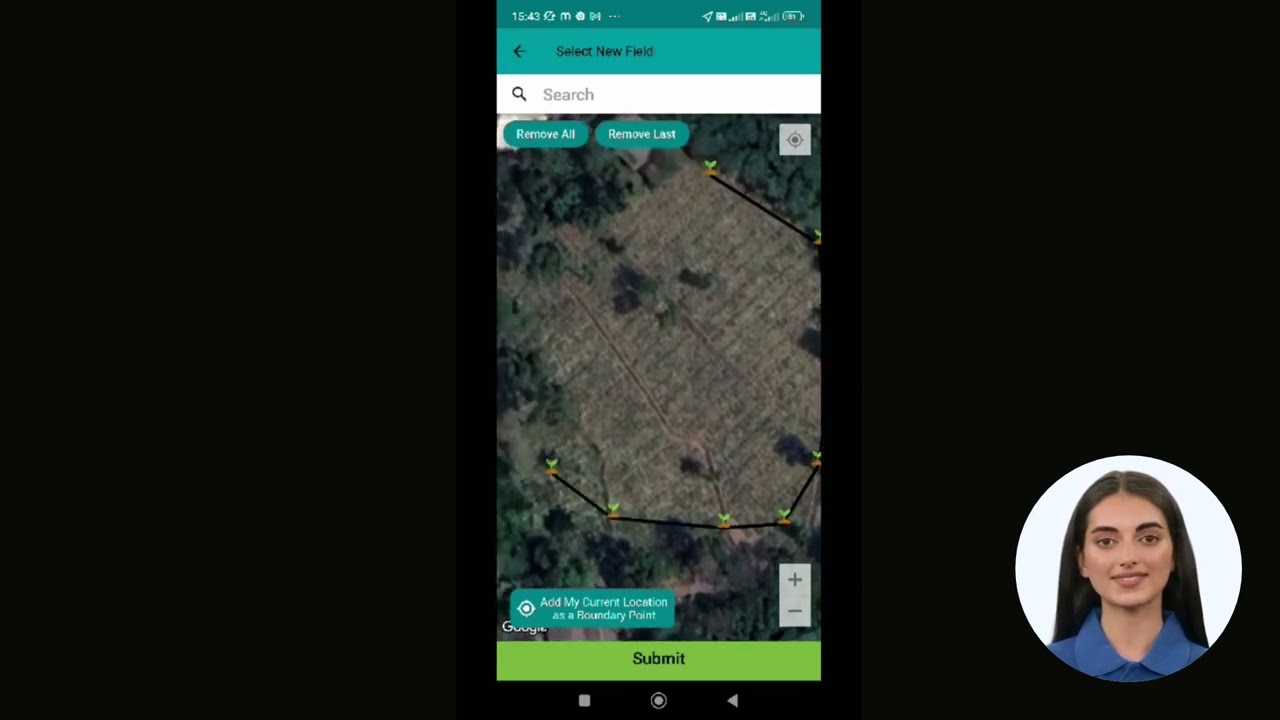
“Paddock mapping software” and “paddock mapping apps” turn up as separate searches because buyers want different things from each. A mapping app search usually means: can I walk or drive a fence line on my phone and get a boundary polygon without a survey crew? A mapping software search usually means: can I manage 40+ paddocks with attached metadata — water points, fencing type, last-grazed date, rest-period countdown — from a desktop dashboard.
Both matter, but they’re not the same feature. When evaluating paddock mapping specifically, check for:
- Boundary capture method: GPS walk/drive tracking versus satellite-derived polygons versus manual drawing on aerial imagery. Satellite-derived boundaries (Farmonaut’s approach) skip the walk but depend on imagery resolution and update frequency.
- Water point and infrastructure layers: Smart Paddock and AgriWebb both let you pin water sources and fencing onto the map — critical when a rotation plan assumes stock will move themselves toward water.
- Offline capability: Paddocks are often outside cell coverage. A mapping app that requires live connectivity to load or edit boundaries fails exactly where it’s needed.
- Export format: Whether paddock boundaries export as shapefiles or KML for use with other farm software, insurance verification, or a lender’s records.
For the wider question of preventing overgrazing and soil erosion once paddocks are mapped, see Farmonaut’s separate guide on soil health practices, which covers rest-period science and erosion controls that apply regardless of which app you choose.
Rotational Grazing Software: Scheduling and Rest Periods
Rotational grazing software’s core job is turning a rest-period rule into a calendar. The rule itself — how many days a paddock needs to recover before the next graze — depends on growing season, forage species, and rainfall, and no app can invent that number for you; it comes from your own regrowth observation or your state extension service’s grazing charts. What the software adds is automation once you’ve set it: drag-and-drop rotation cycles, notifications when a rest period is ending, and a record of which paddock was grazed when.
This is where the platforms diverge most. MaiaGrazing builds its whole workflow around feed budgeting — matching forage supply to herd demand before scheduling the next move. Volly’s Paddock Grazing Planner is queue-based: paddocks line up in a rotation order and the software tracks whose turn is next. Farmonaut ties the trigger to NDVI regrowth data rather than a fixed calendar count, so a paddock that’s slow to recover after a dry spell doesn’t get grazed on schedule just because the calendar says it’s ready.
None of these replace the underlying agronomic decision. What they remove is the manual spreadsheet or paper chart tracking which of, say, 20+ paddocks was last grazed on which date — the exact record-keeping gap identified in the 40%-vs-25% regional adoption difference above, where operations without subdivided paddocks have nothing to schedule in the first place.
The 6 Platforms, One by One
AgriWebb
AgriWebb combines farm mapping, a grazing planner, and satellite pasture monitoring in one platform, aimed at operations that want herd records and paddock records in the same system rather than two separate tools. Explore AgriWebb
Smart Paddock
Smart Paddock’s differentiator is GPS-enabled livestock tracking — ear tags or collars reporting animal location — paired with water point monitoring and movement alerts. It’s the pick when the priority is knowing where the herd physically is, not modeling pasture growth. Discover Smart Paddock
MaiaGrazing
Built by graziers, MaiaGrazing’s strength is feed budgeting and scenario planning — running “what if” rotations against projected forage supply before committing the herd to a paddock. Try MaiaGrazing
Mobble
Mobble prioritizes simplicity: mobile-first grazing management and mob-movement recording without the feed-budget modeling layer MaiaGrazing carries. Get to Know Mobble
FarmSimple
FarmSimple integrates record-keeping, task allocation, and resource management for teams that need shared oversight across multiple people working the same paddocks. Check out FarmSimple
Paddock Grazing Planner by Volly Solutions
Volly’s tool is rotation-planning-first: visual farm maps paired with a queue-based system that tracks which paddock is next in the grazing order. Review the Grazing Planner
Breedr and the Livestock-Trading Adjacent Category
Breedr turns up in grazing software searches because it shares the same buyer — cattle producers managing herd data on a phone — but it solves a different problem. Breedr is built around livestock performance tracking, weight gain monitoring, and connecting producers to buyers for direct trading, not paddock mapping or rotation scheduling. If your search intent is specifically grazing rotation or pasture mapping, Breedr isn’t a substitute for the six platforms compared above; it’s a complementary tool for the sell side of the operation, not the grazing-management side.
Farmonaut’s Satellite Approach to Paddock Management
Farmonaut takes the satellite-monitoring-first route rather than the livestock-record-first route the other five platforms take. Through its app (available on Android and iOS), the core paddock tools are:
- Satellite-Based Monitoring: Multispectral NDVI maps flag overgrazing and track pasture regrowth so rotation timing follows actual forage condition rather than a fixed calendar.
- AI-Driven Advisory (Jeevn AI): Weather and pasture-condition insights feed into rotation and rest-period decisions.
- Blockchain Traceability: Documents livestock and produce origin for supply-chain verification. Discover Farmonaut’s Traceability Solutions
- Fleet and Resource Management: Centralizes vehicle use for feed deliveries and livestock moves. Learn about Fleet Management
- Carbon Footprinting: Tracks emissions tied to grazing operations. Explore Farmonaut’s Carbon Footprinting Tool
- Crop Loan & Insurance Support: Satellite-based farm verification for financing. See how Farmonaut Helps with Crop Loans and Insurance
- Large-Scale Operation Management: Multi-paddock oversight via the Agro-Admin App.
What Farmonaut doesn’t do that Smart Paddock does: GPS ear-tag tracking of individual animals. The trade-off is directional — Farmonaut answers “is this paddock ready to graze again,” Smart Paddock answers “where is my herd right now.” Developers integrating pasture data into other systems can use the API, documented at the API developer docs.

Rest-Period Calculator
Use your own paddock count and target rest period to see how many paddocks a rotation actually needs, and how long your full rotation cycle runs — the number every platform above is scheduling against.
Enter your numbers above.
Assumes even paddock size and a fixed graze-and-rotate pattern with no double-grazing. It excludes drought slowdowns in regrowth, seasonal forage differences, and stocking-rate adjustments — use it as a starting paddock count, then confirm against your own regrowth observation or your state extension service’s grazing charts.
What Grazing Management Software Actually Costs
None of the six platforms above publish flat per-seat pricing on their marketing pages, so the only sourced cost figure available is an implementation-cost range, not a subscription price. DataHorizzon Research put average grazing management software implementation cost at $8,000 to $45,000 per operation for 2024 — a range that reflects setup, data migration, and integration work rather than a monthly license fee. That’s a wide spread, and it scales with paddock count, GPS hardware (ear tags or collars), and whether the operation needs custom integration with existing farm software.
For actual subscription pricing, per-seat costs, and current tiers, the brief for this article did not turn up published per-unit rates for AgriWebb, MaiaGrazing, Mobble, Smart Paddock, or Volly — request a quote directly from each vendor, since most price by herd size or paddock count rather than a flat fee. If you want a documented ROI or payback period for your specific operation before committing to the $8,000–$45,000 implementation range, that figure also isn’t published in aggregate; track your own feed-cost and stocking-rate change for one full season after adoption rather than relying on a vendor’s average claim.
Choosing Between Them
Match the platform to the specific query that brought you here:
- Searching “paddock mapping app” or “paddock mapping software”: Prioritize AgriWebb or Farmonaut — both treat the map as the primary interface rather than an add-on to livestock records.
- Searching “rotational grazing software” or “grazing management software”: MaiaGrazing (feed-budget-driven) or Volly (queue-based) fit a calendar-first workflow; Farmonaut fits an NDVI-triggered workflow.
- Searching “grazing management software usa”: All six operate in the US; regional adoption data above shows Northern Plains and Western Corn Belt operations (49% rotational grazing adoption) as the highest-density current user base.
- Prioritizing individual animal location over pasture condition: Smart Paddock’s GPS ear tags are the most direct fit.
- Wanting satellite pasture data, carbon tracking, and traceability in one app: Farmonaut bundles these; check the web app directly to see current feature availability for your region.
Beyond category fit, evaluate every platform on user-friendliness for field staff, integration with existing farm software or IoT devices, offline mobile access, and vendor support responsiveness — these determine whether a tool gets used daily or abandoned after onboarding, regardless of feature list.
FAQ
What is the best grazing app for a US cattle operation?
It depends on your bottleneck. For paddock mapping and satellite pasture condition, AgriWebb or Farmonaut lead. For GPS livestock tracking specifically, Smart Paddock is purpose-built for it. For feed-budget-driven rotation planning, MaiaGrazing is the closest fit. There is no single “best” across all six — match the tool to the specific gap in your current workflow.
What’s the difference between paddock mapping software and grazing management software?
Paddock mapping software focuses on capturing and storing boundary, water point, and infrastructure data. Grazing management software is broader — it adds rotation scheduling, rest-period tracking, and often livestock or feed data on top of the map. Most platforms in this comparison do both to some degree; the difference is which one is the primary interface.
Is Breedr a grazing management app?
No. Breedr focuses on livestock performance tracking, weight gain, and connecting producers to buyers for trading. It doesn’t offer paddock mapping or rotation scheduling, so it sits in an adjacent category rather than competing directly with the six platforms compared here.
How much does grazing management software cost?
Published subscription pricing isn’t available for most platforms in this comparison. The only sourced figure is average implementation cost, at $8,000 to $45,000 per operation for 2024 per DataHorizzon Research — request a direct quote for subscription tiers, since pricing typically scales with paddock count and herd size.
How many US operations actually use rotational grazing?
40% of US cow-calf operations reported using rotational grazing in the USDA Economic Research Service’s 2023–2024 survey window, with regional adoption ranging from 49% in the Northern Plains and Western Corn Belt to 25% in the Southern Plains. See the full ERS Chart of Note for the regional breakdown.
Can I track livestock in real time with these apps?
Smart Paddock and AgriWebb both support GPS-based tracking with movement alerts. Farmonaut tracks fleet and resource movement rather than individual animal GPS location, relying instead on satellite pasture data to inform rotation timing.
Ready to compare paddock mapping against your own land? Visit Farmonaut’s app and check satellite pasture data for your paddocks today.