

Crop protection · Plain-English guide
Phytotoxicity Meaning: Causes, Signs and Safe Spray Mixes
Phytotoxicity is plant damage caused by a chemical or other substance: herbicide drift, oils and sulfur in the heat, fertilizer salts or a strong baking soda spray. Here is how to spot it, tell it from disease and keep mixes in the safe range.
Key takeaways
- Phytotoxicity is a disorder caused by a non-living agent such as a herbicide, not an infection (Mississippi State University Extension).
- Oil sprays should not go on above 90°F or within 2 weeks of sulfur (University of Connecticut; UC Statewide IPM Program).
- Bean and strawberry yields start to fall at a soil salinity of 1.0 dS/m; barley tolerates 8.0 dS/m (FAO crop salt tolerance data).
- Even a 1% baking soda spray can cause severe leaf damage; 0.5–1.0% mixes were used without injury in greenhouses (Washington State University review).
- Dicamba and 2,4-D can move as a gas after application when air temperature spikes (Ohio State University).
In this article
- Phytotoxicity meaning in plain words
- Common causes of phytotoxicity in crops
- How sensitive is each crop to salt injury?
- Phytotoxicity symptoms to look for
- Phytotoxicity vs disease: how to tell them apart
- Baking soda and phytotoxicity: what the research says
- Check your spray strength before it touches the leaves
- Tank mixes and adjuvants: hidden causes of crop injury
- How to prevent phytotoxicity on your farm
- What to do when chemical injury happens
- Using satellite maps to spot damage early
- How we checked the numbers
- FAQ
Phytotoxicity means damage to a plant caused by a chemical or other substance, such as a pesticide, fertilizer salt, herbicide drift or a home remedy like baking soda. The plant shows burned leaf edges, yellowing, spots, cupping or stunted growth because the dose, timing or weather was wrong for that crop. A Washington State University review found that even a 1% baking soda spray can cause severe foliar damage on some plants.
This guide explains the phytotoxicity meaning in plain words, shows how to tell chemical injury from disease, and gives dated numbers from extension services and FAO. It also has a spray-strength calculator, so you can check a home or tank mix before it reaches the leaves.
Phytotoxicity meaning in plain words
The word comes from the Greek “phyton” (plant) and “toxikon” (poison). Phytotoxic simply means “toxic to plants”. In farming, phytotoxicity is the injury a crop suffers from something applied to it or to the soil around it. The substance is often useful at the right rate. It becomes harmful when the rate is too high, the plant is sensitive, or the weather makes the plant take up more than it can handle.
Agronomists call this a disorder, not a disease. Mississippi State University Extension explains that a disorder is an abnormality caused by a non-infectious agent, such as weather, nutrient shortage or a chemical like a herbicide. A disease, by contrast, is caused by a living organism such as a fungus or bacterium. That difference matters, because a fungicide will not fix chemical injury, and a second spray can make it worse.
In Spanish the term is “fitotoxicidad”. Labels in any language use the same idea: a warning that the product may injure certain crops, varieties or growth stages.
Common causes of phytotoxicity in crops
Cases fall into a few groups. Each has its own trigger and its own fix.
| Cause | How it injures plants | Main trigger |
|---|---|---|
| Herbicide drift | Droplets or vapour land on a crop the product was not meant for | Wind, hot weather, volatile products |
| Oil sprays | Oil burns leaf tissue or blocks gas exchange | Heat above 90°F, drought stress, sulfur nearby |
| Sulfur | Leaf burn on sensitive crops | Heat, oil spray within 2 weeks |
| Baking soda sprays | Sodium and high pH damage leaves | Strong mixes, repeat sprays |
| Fertilizer salts | Salt in the root zone draws water out of roots | High rates, dry soil, saline water |
| Tank mixes | Two products react or add up | Mixing without a jar test |
Herbicide drift and vapour
The US EPA defines spray drift as the movement of pesticide dust or droplets through the air at the time of application or soon after, to any site other than the one intended. Some products can also move as a gas. Ohio State University notes that dicamba and 2,4-D are among the small number of pesticides highly prone to volatilize, and a spike in air temperature can turn them into a gas even after a clean application.
Calm, clear evenings carry their own risk. North Dakota State University’s guide on air temperature inversions and spray drift (revised June 2024) explains how cool air near the ground can trap fine droplets and carry them a long way. Neighbouring vineyards, tomatoes, beans and gardens are often the first to show it.
Oils and sulfur
Horticultural oils are useful against mites, scale and powdery mildew, but they can burn leaves. The University of Connecticut’s horticultural oils fact sheet says not to apply them above 90°F or below 40°F, to avoid plants under drought stress, and not to use them with sulfur or within 2 weeks of a sulfur spray.
Sulfur has its own limits. The UC Statewide IPM Program’s powdery mildew guide for vegetables warns that sulfur can damage some squash and melon varieties and should not be applied when air temperature is near or over 90°F.
Fertilizer salts and irrigation water
Too much fertilizer, or salty irrigation water, raises the salt level around roots. FAO’s crop salt tolerance tables give a threshold for each crop: the soil salinity (ECe, in dS/m) above which yield starts to fall. Sensitive crops such as beans and strawberries have a threshold of 1.0 dS/m, while barley tolerates 8.0 dS/m, according to the FAO crop salt tolerance data (Maas and Grattan, reproduced by FAO).
Specific ions add to the problem. FAO’s water quality for agriculture case studies describe drainage water with boron at 3 to 10+ mg/l and a high sodium hazard, which limits the crops that can be grown with it.
How sensitive is each crop to salt injury?
Salt injury is a common problem in irrigated fields, and crops differ a lot. The chart compares the yield-loss threshold for seven crops. A lower bar means the crop is hurt sooner.
Chart
Soil salinity at which yield starts to fall
Threshold ECe in dS/m (saturated paste), selected crops
Above the threshold, FAO uses a straight-line rule: relative yield = 100 minus the slope times (ECe minus the threshold). For common bean the slope is 19% per dS/m; for tomato it is 9.9%; for barley it is 5.0%. The line chart applies that rule to the three crops so you can see how fast yield drops once salt passes the safe level.
Use these values as a guide only. Real fields vary with soil texture, leaching and the growth stage of the crop. A soil test with ECe is the reliable way to know where a field stands.
Chart
Relative yield as soil salinity rises
% of full yield at each ECe (dS/m), calculated with FAO threshold and slope values
Phytotoxicity symptoms to look for
Symptoms depend on the product, the dose, the crop and its age. Mississippi State University Extension lists stunting, wilting, fruit deformation, leaf distortion (cupping, curling, twisting), yellowing and tissue death as signs of herbicide exposure in tomatoes.
- Leaf burn or scorch: brown, dry edges or tips, common with oils, sulfur, salts and strong home sprays.
- Spotting: small dead spots where droplets dried on the leaf.
- Cupping and strapping: cupped leaves or narrow leaves with parallel veins point to growth-regulator herbicides such as dicamba or 2,4-D.
- Chlorosis: yellowing of the leaf or the veins.
- Stunting: new growth stops or slows, often with short spaces between nodes.
- Poor fruit set or deformed fruit: seen after exposure during flowering.
Ohio State University adds that in grapes, dicamba more often causes cupped leaves, while 2,4-D causes narrow leaves with parallel veins. Symptoms can show within hours when plants grow fast, or take a few days when growth is slow, according to its drift questions and answers.
▶ Our walkthrough of phytotoxicity in crops: how chemical applications cause it, the symptoms and how to manage it. · 19:28
Phytotoxicity vs disease: how to tell them apart
Chemical injury and disease can look alike. A few field clues help.
| Clue | Points to phytotoxicity | Points to disease |
|---|---|---|
| Pattern | Straight lines, sprayer passes, field edges, upwind side | Patches that spread over time |
| Timing | Appears within days of a spray or a hot spell | Builds slowly, linked to wet or humid spells |
| Plant parts | Leaves that were exposed; new growth may be normal | New and old tissue keeps getting infected |
| Signs | No spores, mould or ooze | Spores, powdery growth, lesions with margins |
| Several species | Weeds and crops hurt in the same strip | Usually one host crop |
Write down what was sprayed, the rate, the date, the temperature and the wind. Take photos of the pattern from a height and of single leaves. If you are unsure, send a sample to your state or provincial plant diagnostic lab.
Baking soda and phytotoxicity: what the research says
Many growers search for baking soda as a gentle fix for powdery mildew. The Washington State University review by Linda Chalker-Scott sums up the research. Sodium bicarbonate does not kill fungi; it stops spores from growing while the leaf surface stays alkaline. In lab work, low levels of 0.5–2% reduced the growth of several mildew species. In greenhouses, weak solutions of 0.5–1.0% were used without injury.
Chart
Baking soda strengths reported in research
Sodium bicarbonate solution strength, % by weight, by use
The same review warns that phytotoxicity rises with strength. Even a 1% solution can cause severe foliar damage on leaves, and a 2% solution caused severe damage on rosemary. Baking soda alone gave mixed results in the field, and it washes off with the next rain. Results were better when it was mixed with horticultural oil.
The UC IPM guide lists horticultural oils, neem oil, jojoba oil, sulfur and a biological product as low-toxicity options for powdery mildew on vegetables. Oils work best as eradicants; sulfur works only before symptoms appear. Never put oil and sulfur on the same plants within 2 weeks.
If you still choose baking soda, test it on a few leaves first, keep the mix weak, spray in the cool part of the day and watch the plants for 3–5 days. Check product labels, your local rules and, on commercial crops, get professional advice before you spray anything on a crop for sale.
Check your spray strength before it touches the leaves
Home-made mixes are often measured by eye, which makes it easy to double the strength by mistake. Enter the weight of product you add and the volume of water. The calculator shows the mix strength by weight and compares it with the upper limit you choose, such as a label rate or the 1% level the WSU review linked to leaf damage.
Try the numbers for your own farm below.
Calculator
How strong is your spray mix?
Enter the weight of product you add and the water you use.
- Your mix as a share of your limit: 97 %
- Most product for this water at your limit: 1.35 oz
Example values only, not a recommendation. Strength is by weight: 1 US gallon of water weighs about 8.34 lb (133.4 oz), a fixed constant in the formula. The upper limit is your input: use the product label, or the 1% level at which the WSU review reported severe leaf damage on some plants. Check the label and local rules, and test on a few plants first.
Tank mixes and adjuvants: hidden causes of crop injury
A product that is safe alone can injure a crop when it is mixed with another. Oils plus sulfur is the best-known example, which is why UConn and UC IPM both set a 2-week gap between them. Surfactants and crop oil concentrates help a spray stick and spread, but they can also help more of a product enter the leaf, so a label may limit which adjuvants to add on sensitive crops.
Water quality plays a part too. Hard or alkaline water can change how some products behave in the tank, and salty water adds its own sodium and chloride to every pass. If you mix with well or pond water, a basic water test once a season is worth the cost.
Three habits cut the risk. First, follow the mixing order on the label. Second, do a jar test whenever you try a new combination. Third, never add a home remedy, such as baking soda or dish soap, to a tank of commercial product unless the label allows it. Each extra ingredient is one more thing that can push the mix past what the crop can take.
How to prevent phytotoxicity on your farm
- Read the whole label. Look for crop and variety warnings, temperature limits, intervals between products and tank-mix rules.
- Measure, don’t guess. Calibrate the sprayer each season and weigh dry products.
- Do a jar test. Mix products in a clear jar in the same order and ratio as the tank. Clumps, layers or heat mean the mix is not safe.
- Test a small area. Spray a few plants or one row and wait several days before treating the whole block.
- Watch the weather. Avoid spraying oils and sulfur near 90°F, skip stressed plants, and avoid calm evenings with an inversion risk.
- Respect spacing between products. Keep at least 2 weeks between oil and sulfur, as UConn and UC IPM advise.
- Manage salts. Split fertilizer, irrigate after heavy rates, and test soil and water salinity where crops are sensitive.
- Keep records. Rate, product, time, temperature and wind for each pass make later diagnosis far easier.
A wider set of field practices is covered in our guide to crop management strategies, and practical steps on dose and timing are in our page on how to prevent phytotoxicity.
What to do when chemical injury happens
- Stop and record. Note the product, rate, time and weather. Photograph the pattern and close-ups.
- Rinse if it was very recent. For a fresh spill or strong spray on foliage, a clean water rinse may dilute what has not yet entered the leaf.
- Leach salts. Where fertilizer burn is in the root zone, a deep irrigation can move salts below the roots, if drainage allows.
- Do not spray again. More product, foliar feeds or “cures” add stress. Let the plant put out new growth first.
- Support recovery. Keep water steady and avoid other stresses. Mississippi State notes that plants may recover if exposure was light.
- Report drift. In the US, suspected drift from a neighbour can be reported to your state pesticide regulatory agency.
Using satellite maps to spot damage early
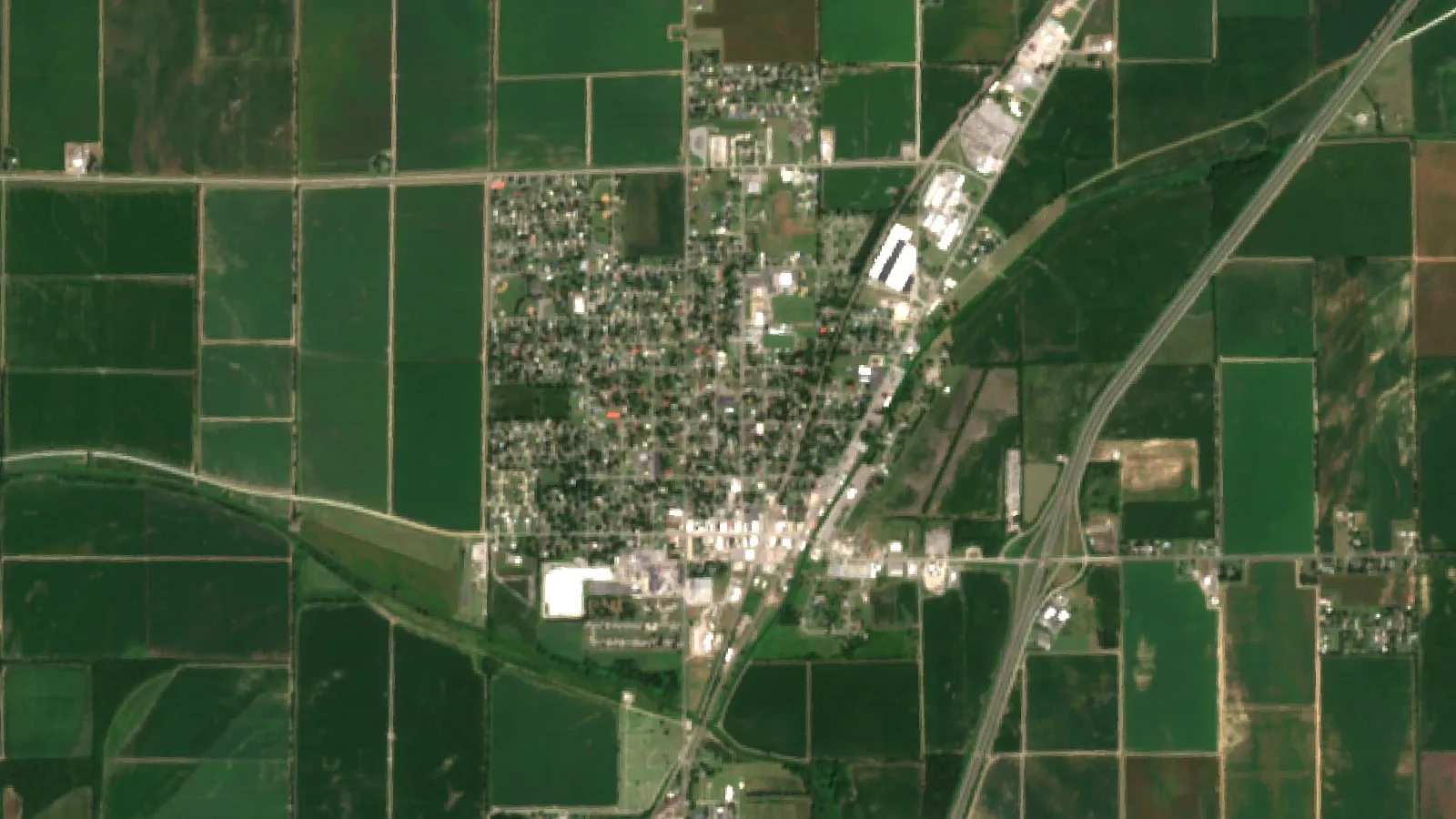
Chemical injury often follows a clear shape: sprayer passes, a field edge or the downwind side of a block. Satellite vegetation maps make those shapes easier to see across a whole farm. A sudden drop in a vegetation index along straight lines after a spray date is a reason to walk that part of the field.
The Farmonaut Satellite + AI Farm Monitoring System shows satellite vegetation maps for each field through the season. Teams that build their own tools can use the Farmonaut API documentation and the weather API documentation to pull field data and temperature into their own spray records. A map cannot name the chemical, so always confirm on the ground.

▶ How to read satellite crop maps and spot stressed areas in a field before they are obvious on the ground. · 19:36
How we checked the numbers
Salt thresholds and slopes come from the FAO crop salt tolerance annex, which reproduces the Maas and Grattan data. Baking soda strengths come from the Washington State University review. Temperature limits for oils and sulfur come from the University of Connecticut and the UC Statewide IPM Program. Drift and symptom details come from the US EPA, Ohio State University, North Dakota State University and Mississippi State University. Sources were opened in November 2026.
Related pages on our site: sustainable crop management.
FAQ
What is the meaning of phytotoxicity?
Phytotoxicity means injury to a plant caused by a chemical or other substance, such as a pesticide, herbicide drift, fertilizer salt or a strong home spray. It is a disorder, not an infection.
What does phytotoxic mean on a pesticide label?
It means the product can injure some plants. Labels list sensitive crops, varieties, temperatures or tank mixes to avoid. Follow those lines exactly.
Can baking soda cause phytotoxicity in plants?
Yes. The WSU review reports severe leaf damage on some plants from a 1% solution, and on rosemary from 2%. Weak 0.5–1.0% mixes were used without injury in greenhouses.
How long do phytotoxicity symptoms take to appear?
Growth-regulator herbicides can show cupping within hours on fast-growing plants, or within a few days when growth is slow, according to Ohio State University.
Can plants recover from phytotoxicity?
Often, if the dose was light. Damaged leaves do not heal, but new growth can be normal. Severe injury or high salt levels can still cut yield.
How do I treat phytotoxicity in plants?
Stop spraying, rinse very recent residues with clean water, leach salts where drainage allows, keep watering steady and wait for new growth. There is no spray that reverses chemical injury.
Farmonaut crop monitoring
See your own fields from space
Draw your fields once and Farmonaut shows satellite vegetation maps for them through the season, on web, Android or iOS.




Sources
- Chalker-Scott, L., Baking soda: miracle, myth or marketing, Washington State University, MasterGardener (2009): s3.wp.wsu.edu
- Mississippi State University Extension, Herbicide Damage in Tomatoes: extension.msstate.edu
- US EPA, Introduction to Pesticide Drift: epa.gov
- Ohio State University, An Overview of Dicamba and 2,4-D Drift Issues: ipm-drift.cfaes.ohio-state.edu
- Ohio State University, Dicamba and 2,4-D drift: Frequently Asked Questions: ipm-drift.cfaes.ohio-state.edu
- North Dakota State University, Air Temperature Inversions and Pesticide Spray Drift (AE1705, revised June 2024): ag.ndsu.edu
- University of Connecticut, Horticultural Oils fact sheet: homegarden.cahnr.uconn.edu
- UC Statewide IPM Program, Powdery Mildew on Vegetables (Pest Notes): ipm.ucanr.edu
- FAO, Annex 1. Crop salt tolerance data: fao.org
- FAO, Water quality for agriculture (Irrigation and Drainage Paper 29): fao.org
Discussion
Questions, corrections or field experience? Share them below. First-time comments are reviewed before they appear, and your email is never published.
No comments yet. Be the first to add a question or your experience.

 Zerella Group
 Agroes
 Etech Consulting Madagascar
 Vestlandsforsking
 Agritein
 Delicio
 WB Dev
 Sama Premium
 Prochecker
 Tres Valles
 LACOS Geoinformation
 Magrifly
 LatConnect 60
 WebsEdge
 Blickwinkel
 Agricultural Credit Policy Council
 Marei Nursery
 eKGIS
 Mostas Tech
 Andex

 Exploration consultancy · South Africa · Gold
 Licence holder · Niger · Gold
 Licence holder · Nigeria · Gold + lithium
 Client · Tanzania · Gold
 Client · Somalia · Gold
 Client & affiliate partner · Ghana · Gold










