5 Powerful Ways Satellite Imagery in Farming Boosts Yields


Introduction: Satellite Imagery in Farming

The agricultural landscape has undergone a remarkable transformation in the last decade, driven by advances in satellite imagery in farming and allied technologies. What started as a revolutionary idea has become a mainstream approach for farmers and agribusinesses seeking to boost yields, optimize resources, and adopt more sustainable practices. Today, satellite images for agriculture ensure we can monitor vast fields, analyze crop health, and make data-driven decisions—all from space.

In this comprehensive guide, we’ll explore the five most powerful ways satellite imagery in farming boosts yields—from early crop health monitoring to precision irrigation management. We’ll also give insight into how to access free agriculture satellite imagery, integrate new technologies, and navigate the challenges to harness this technology for modern, efficient, and sustainable agriculture.

“Satellite imagery can monitor crop health across fields up to 100,000 hectares in a single satellite pass.”

How Satellite Imagery in Farming Works

The foundation of farming satellite agriculture is built on advanced remote sensing technologies on board Earth-observing satellites. These satellites, orbiting hundreds of kilometers above the planet, capture multispectral and hyperspectral images of agricultural land. The data includes visible light, near-infrared, short-wave infrared, and even thermal bands. By processing and analyzing these images, farmers and experts gain profound insights into crop health, soil moisture, pest risks, and more, all without setting foot in the field.

  • Multispectral Imaging: Collects data from specific bands; helps generate vegetation indices like NDVI.
  • Hyperspectral Imaging: Builds detailed spectral ‘signatures’ to identify subtle changes in crop and soil conditions.
  • Temporal Monitoring: Frequent satellite revisits enable tracking of growth stages and emerging issues.

The result? Real-time, actionable data delivered straight to apps, platforms, and advisory dashboards, supporting everything from resource allocation to yield forecasting.

1. Crop Health Monitoring: Early Detection for Optimized Interventions

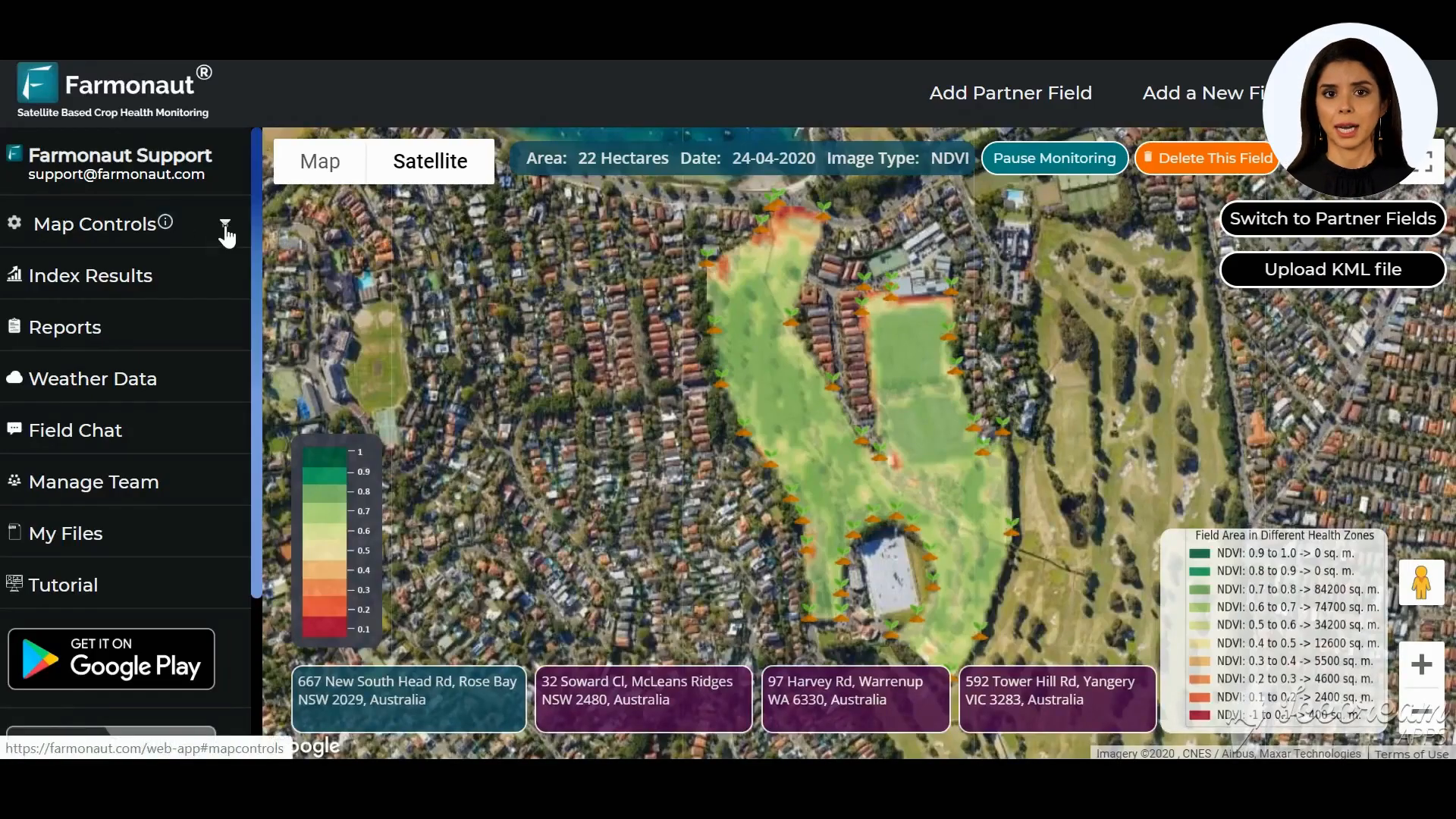
One of the signature advances in satellite imagery in farming is crop health monitoring. Using farmland satellite imagery, we can now obtain precise, detailed insights into plant growth stages and identify stress factors at scale.

Vegetation Indices: NDVI and Beyond

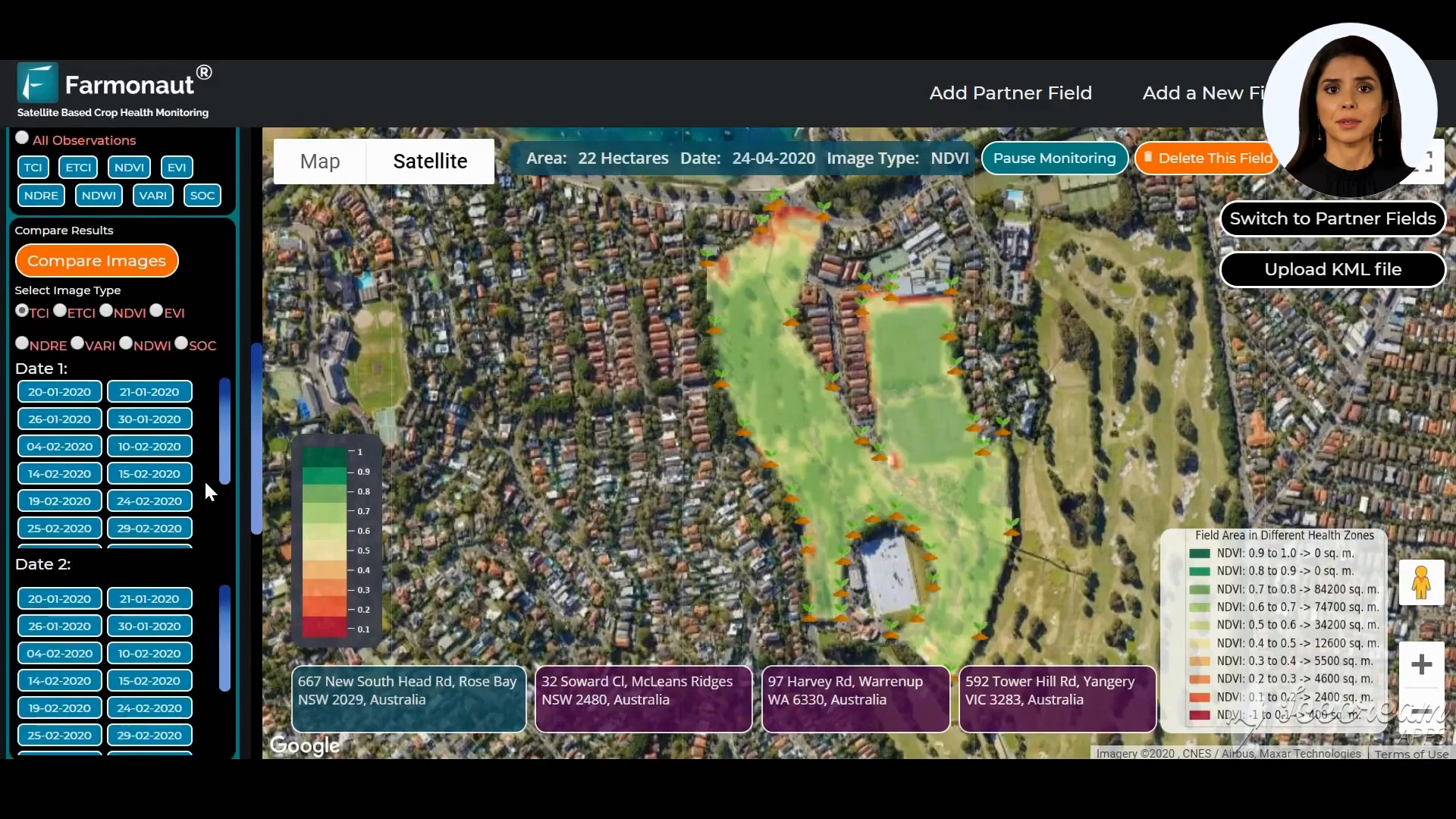
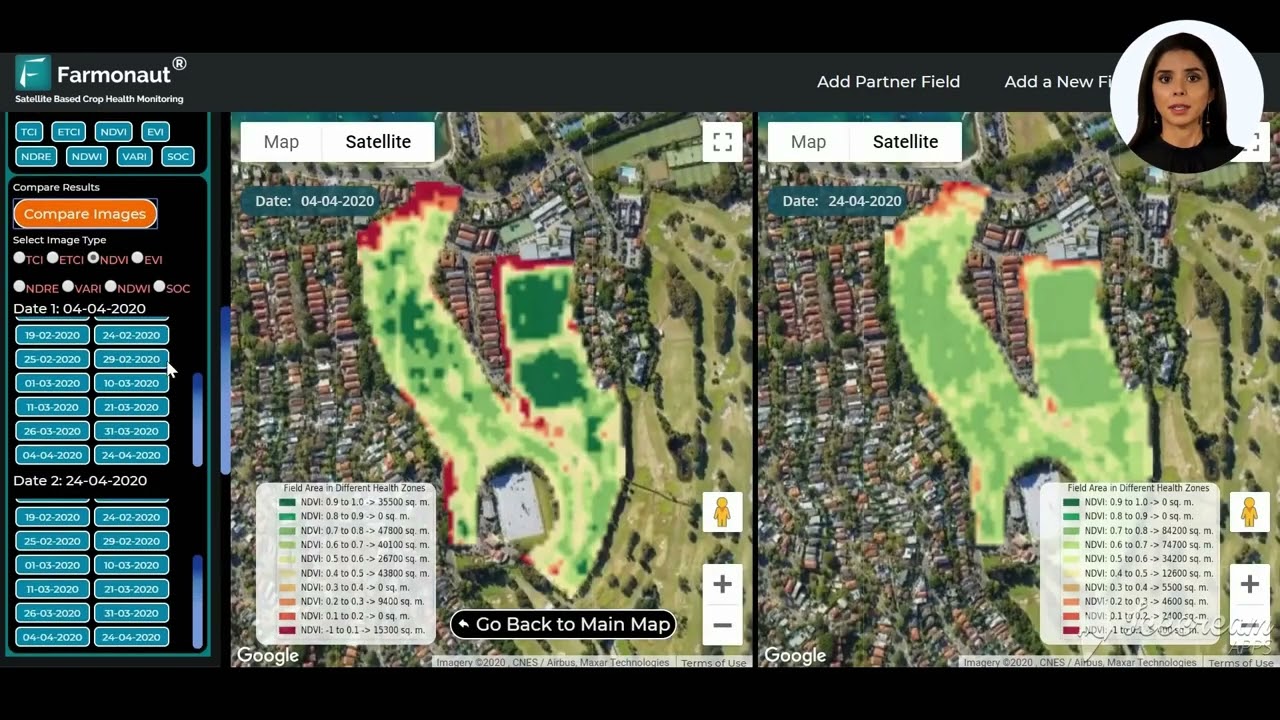
  • Normalized Difference Vegetation Index (NDVI): This index is formulated from the red and near-infrared bands of multispectral satellite images. Healthy, photosynthetically active plants reflect more NIR and less red light—NDVI quantifies this, enabling us to detect and map healthy versus stressed vegetation.
  • Other Indices: Enhanced Vegetation Index (EVI), Soil-Adjusted Vegetation Index (SAVI), etc., help provide a full spectrum of crop health information.

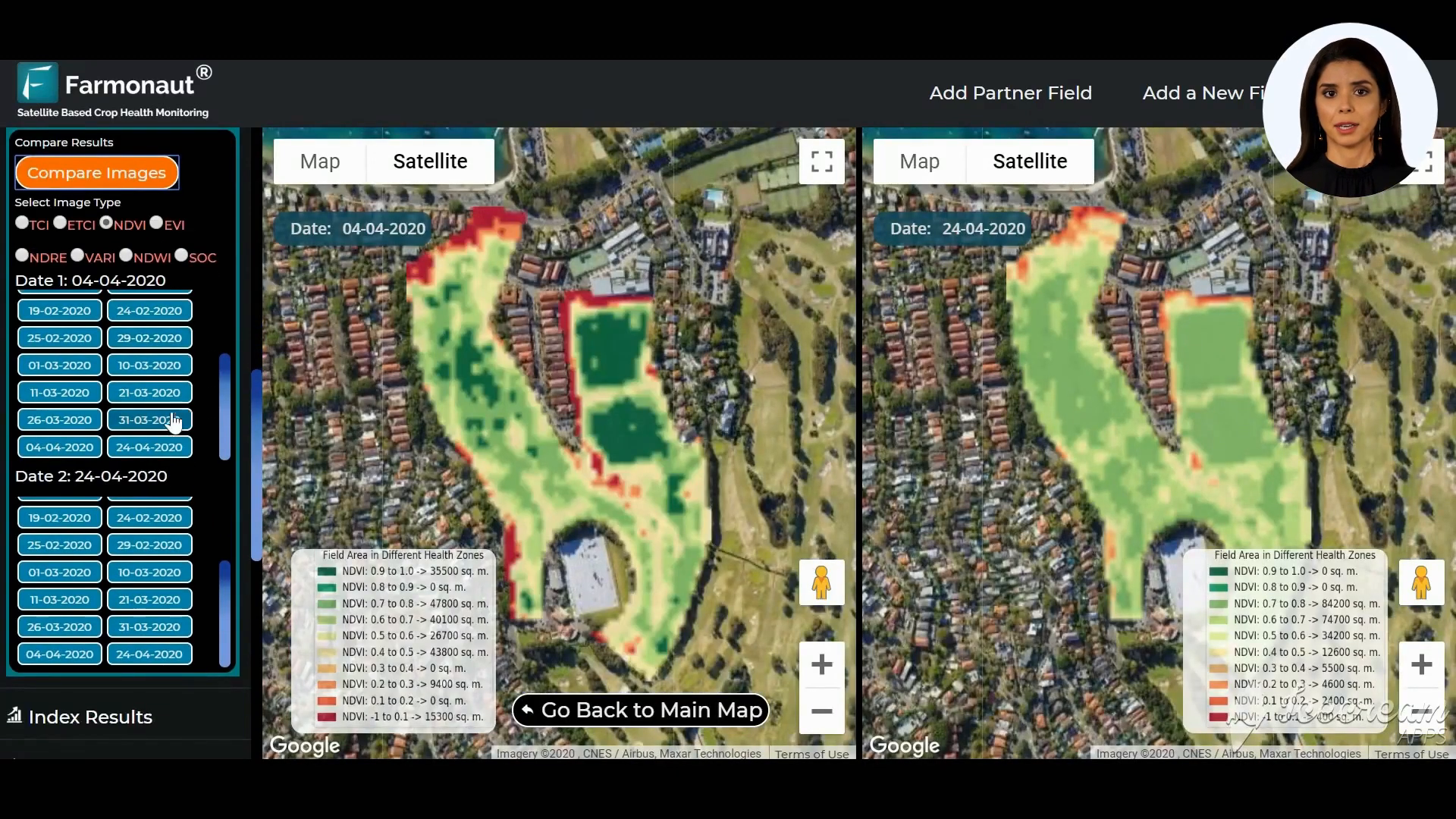
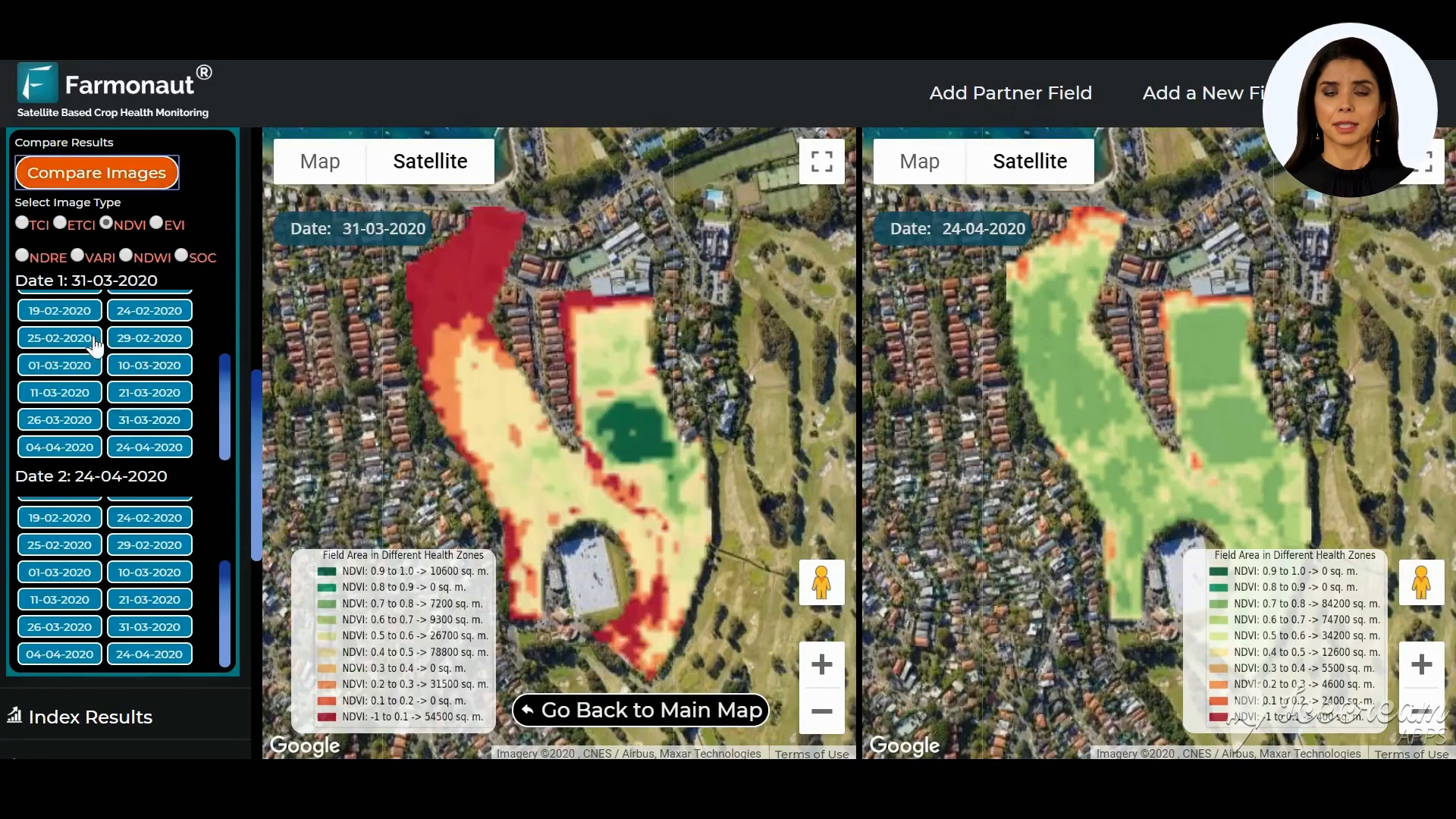
Why does this matter? By monitoring NDVI changes over time, we can spot:

  • Water scarcity or drought stress before visual symptoms appear
  • Nutrient deficiencies such as nitrogen, potassium, or phosphorus shortage
  • Disease outbreaks via patchy, declining NDVI values
  • Unusual growth patterns signaling environmental issues

Timely interventions—including targeted fertilization, precise irrigation, and pest/disease management—are possible thanks to rapid detection of problem areas.

Leading-edge platforms like Farmonaut translate satellite images for agriculture into user-friendly advisory dashboards, with capabilities such as real-time alerts and carbon footprint tracking. These tools enable farmers to act effectively, conserve inputs, and boost productivity.

Learn more about our AI-based crop health monitoring, which blends NDVI and AI-driven analysis for actionable farm-level insights.

2. Soil Health Assessment: Mapping Moisture and Fertility

The soil is the foundation of all crop production—yet, traditional testing methods are laborious and often not scalable. Here, satellite imagery in farming truly shines: advanced satellites and free agriculture satellite imagery can reveal soil moisture levels and organic matter distribution across large areas, down to the field level.

Key Applications of Soil Monitoring

  • Soil Moisture Mapping: Through thermal infrared and microwave sensing, we can measure how much water is retained at surface and root zone depths. Moisture fluctuations may indicate irrigation issues, potential drought, or root health problems.
  • Organic Matter Assessment: Using hyperspectral data, satellites infer surface organic content, supporting better fertilizer and soil amendment decisions.
  • Nutrient Deficiencies: Changes in crop vigor and coloration in satellite images for agriculture can reveal soil-induced nutrient constraints.

Maps generated from satellite data enable stratified field management—identifying which sections require more (or less) inputs, catching issues before they escalate, and improving both yield and resource efficiency.

Farmonaut’s large-scale farm management app uses this methodology to provide real-time, spatially-detailed information for field managers. Learn how crop plantation and forest advisory can also optimize management over vast agricultural and forest lands.

3. Pest & Disease Monitoring: Catching Issues Early

Satellite imagery in farming isn’t just about seeing plants grow—it’s also a powerful tool for early pest and disease detection. Hyperspectral imagery can identify subtle changes in leaf reflectance and color—often days before symptoms are visible to the naked eye.

How Does Satellite-Based Early Detection Work?

  • Hyperspectral satellites detect unique reflectance patterns—such as yellowing, wilting, or dry patches—pointing to pest infestations or pathogen outbreaks.
  • Temporal Analysis: When rapid NDVI decline or ‘spotting’ occurs over days, it can signal beetle, locust, or fungal invasions.
  • AI Integration: Platforms like Farmonaut‘s AI-Advisory System combine satellite images for agriculture and local weather data to provide custom pest risk alerts and recommended measures—ermarkably reducing unnecessary pesticide usage.

With targeted interventions thanks to early detection, farmers minimize damage, reduce lost yields, and save on input costs—all while being more environmentally sustainable.

Explore more about our advanced blockchain-based product traceability ensuring every produce step is trustworthy—from healthy, pest-free fields to the end consumer.

“Farmers using satellite data have reported yield increases of up to 20% through improved land management decisions.”

4. Yield Forecasting: Predicting Outputs with Data

Accurate yield forecasting lies at the heart of profitable, resilient farming. Satellite data analyzes growth patterns, environmental factors, and crop development stages to predict final yields well before harvest.

Why Does Yield Prediction Matter?

  • Market Planning: Informed predictions enable smarter supply chain management, influencing storage, distribution, and market strategies.
  • Financial Security: Better forecasts support more accurate crop loan and insurance products, reassuring financial planners and farmers alike.
  • Food Security: Governments, NGOs, and agribusinesses utilize regional forecasts for food security and policy decisions.

Modern yield prediction models combine satellite imagery in farming with historic yield records, weather data, and real-time crop health statistics for extraordinary precision.

5. Irrigation Management: Water Efficiency & Growth

Water is one of the most precious—and costly—inputs in agriculture. Satellite imagery in farming has revolutionized how we assess soil moisture, plant water uptake, and evapotranspiration rates.

Key Benefits of Satellite-Based Irrigation Monitoring

  • Evapotranspiration Assessment: By combining soil moisture data with measures of plant water loss, satellite images allow for optimized irrigation scheduling.
  • Field Water Stress Maps: Quickly identify zones under water stress to prioritize interventions and prevent yield loss.
  • Resource Conservation: Applying the right amount of water at the right time minimizes environmental impact and reduces costs.

By leveraging satellite images for irrigation, we not only save water but also stabilize and improve crop growth across every field segment.

Benefits of Satellite Imagery in Farming: Impact Overview

Satellite Imagery Application How It Works Estimated Yield Improvement (%) Supporting Example
Crop Health Monitoring NDVI and spectral analysis reveal plant stress, enabling quick interventions. 10-20% Spotting early drought/deficiency zones for selective fertilization.
Precision Irrigation Satellite assessment of moisture and evapotranspiration guides optimal watering. 8-15% Adjusting water flow to match real-time crop needs, reducing waste.
Pest/Disease Detection Hyperspectral patterns indicate early infestation/disease for rapid response. up to 15% Spot spraying and reduced crop loss via early warnings.
Land Use Optimization High-resolution mapping for planning, rotation, and expansion. 6-12% Mapping field boundaries, identifying underperforming zones.
Sustainability Insights Tracking carbon footprint and land cover changes for sustainable farming. Variable Monitoring carbon emissions, optimizing resource allocation.

How to Access Free Agriculture Satellite Imagery

Thanks to global initiatives, farmers and agri-professionals can obtain free satellite imagery in farming from several renowned sources. Here are the top options:

  • Landsat Program:
    Operated by NASA and USGS, Landsat satellites provide a 50+ year archive of Earth images. These are invaluable for tracking land use and agricultural trends over time.
  • Sentinel-2 Mission:
    The ESA’s Sentinel-2 delivers high-resolution, multispectral imagery every five days. This is ideal for crop health monitoring, land mapping, and environmental assessment.
  • Bhuvan Portal:
    For India-centric data, ISRO’s Bhuvan offers thematic maps and agricultural monitoring information. It’s a critical resource for crop management and policy-making across India’s vast farmland.

Commercial agricultural platforms (such as Farmonaut) regularly mix free and premium data, delivering seamless, practical solutions via web, Android, and iOS apps. For bespoke needs and API integration of satellite and weather data, visit our API portal and see developer documentation for technical integration.


Farmonaut Web App - Satellite Imagery in Farming App


Farmonaut Android App Button - Crop Health, Remote Sensing


Farmonaut iOS App Button - Satellite Images for Agriculture

Farmonaut API

Integration with Modern Technologies & Tools

Farming satellite agriculture thrives when satellite imagery is integrated with other technologies, making farming smarter and more efficient:

  • Remote Sensing & Smartphones:

    Modern remote sensing applications bring satellite imagery directly to farmers’ smartphones. Apps (like those from Farmonaut) fuse weather updates, growth monitoring, and field alerts—ensuring information is always accessible, anytime, anywhere.
  • Artificial Intelligence (AI) and Machine Learning:

    AI systems ingest petabytes of satellite images for agriculture, detecting patterns, anomalies, and predicting risks such as upcoming water stress, nutrient deficiencies, or pest/disease outbreaks. The result? Exceptionally precise guidance and proactive interventions for better outcomes.
  • Blockchain Traceability:

    With traceability solutions (explore Farmonaut Product Traceability), each agricultural product is linked to immutable digital records. This builds end-to-end trust between fields and consumers, especially for premium commodities.
  • Resource and Fleet Management:

    Satellite-informed fleet tracking (see Farmonaut Fleet Management) helps keep machinery and logistics cost-effective—optimizing fuel, labor, and equipment utilization.
  • Environmental Impact Tracking:

    Carbon footprint features (discover Farmonaut Carbon Footprinting) allow agribusinesses to monitor sustainability efforts and regulatory compliance.

Integration of these technologies transforms data into practical value, directly supporting field operations, supply chain management, and business planning.

Farmonaut: Making Precision Agriculture Accessible

At Farmonaut, our mission is to democratize precision farming. By harnessing satellite imagery in farming alongside AI, blockchain, and cloud technology, we empower farmers worldwide to:

  • Monitor crop health and soil conditions in real-time, reducing guesswork and traditional inefficiencies
  • Receive personalized, AI-driven advice through our Jeevn AI Advisory System—improving planning, resource usage, and risk management
  • Ensure traceable, secure supply chains via blockchain-enabled record-keeping—building trust throughout the food value chain
  • Track carbon emissions and sustainable practices through our dedicated carbon footprint monitoring tools
  • Boost access to finance through satellite-based verification for loans and insurance, reducing delays and fraud
  • Scale operations from smallholder to corporate thanks to a modular, affordable, subscription-based platform

Our platform is accessible through web, Android, and iOS apps, as well as through robust API access. For those managing large portfolios, our large-scale farm management suite integrates field, fleet, and climate monitoring under one roof.

We believe that cutting-edge technology should be within reach of every farmer. Explore our affordable subscription plans below and join the future of smart, sustainable agriculture!


Challenges and Considerations in Implementing Satellite Imagery in Farming

While the benefits are significant, there are a few hurdles to widespread adoption of satellite imagery in farming:

  • Data Interpretation: Making sense of satellite data requires specialized expertise. Robust training and easy-to-use platforms (like Farmonaut’s mobile and web dashboards) help bridge this gap, but ongoing education is essential.
  • Accessibility and Processing: While free agriculture satellite imagery is available, downloading and processing large datasets can be demanding, especially in areas with low digital infrastructure.
  • Integration with Existing Systems: Adopting new tools may require changes to established farm management workflows. For maximum value, seamless integration is critical.
  • Weather/Cloud Cover: Optical satellites struggle under persistent clouds—combining different data sources and frequency of revisits helps manage these blindspots.
  • Costs (for Premium Data): While much data is free, higher-resolution or hyperspectral products may have associated costs—though these are dropping year by year.

Future of Satellite Imagery in Farming

With the market for agriculture satellite imagery projected to reach $14.19 billion by 2030, we are entering a new era of data-driven agriculture. Expanding satellite constellations (such as Sentinel-2, Landsat, and emerging commercial providers) will continue to make imagery more accessible, higher in resolution, and available with minimal delay.

  • AI advancements will unlock even deeper predictive analytics and farm-level automation.
  • Integration with IoT devices (sensors, drones, smart weather stations) will ensure hyper-local, granular monitoring.
  • Environmental and sustainability pressures will drive more widespread adoption, especially for tracking carbon, optimizing fertilizer use, and reporting regulatory compliance.

As the technology matures, satellite imagery in farming will move from being a ‘bonus feature’ to an essential pillar of every modern farming enterprise.

Frequently Asked Questions (FAQ)

1. What is the primary advantage of satellite imagery in farming?

Satellite imagery provides fast, precise, and actionable insights about crop health, soil conditions, and field management at scale—enabling optimized resource use, timely interventions, and ultimately higher yields.

2. Are these satellite images available for free?

Yes, global missions like Landsat and Sentinel-2 provide openly licensed satellite data, while platforms like Farmonaut make them accessible through easy-to-use apps.

3. Can smallholder farmers benefit or is it only for large agribusinesses?

Absolutely—Farmonaut’s mission is to make precision farming affordable for any size of farm. Our modular pricing, accessible apps, and AI-driven insights are designed for everyone from single-field operators to large-scale managers.

4. How secure is my farm data with a satellite-based app?

Security is top priority. Farmonaut’s blockchain-based solutions ensure traceable data flows and enhanced transparency for users and end consumers alike.

5. What other benefits does Farmonaut offer?

Beyond crop health imaging, we provide tools for carbon footprint tracking, fleet management, traceability, and satellite-based verification for crop loans and insurance.

6. What are the technical requirements for implementation?

Minimal—you only need standard internet access and a device (smartphone, tablet, or computer). For custom integrations, refer to our API developer documentation.

Conclusion: Transforming Agriculture with Satellite Imagery

Satellite imagery in farming has ushered in an unprecedented era of visibility, precision, and sustainability in agriculture. From monitoring crop health via NDVI, diagnosing soil moisture with remote sensing, to leveraging AI for early pest detection and optimizing irrigation—this technology bridges traditional knowledge with new, impactful insights.

With platforms like Farmonaut, these advances are no longer reserved for a select few. We’re making world-class, actionable data available—on-demand and at affordable rates—enabling farmers everywhere to maximize yields, reduce waste, and cultivate more resilient, future-ready agriculture.


Farmonaut Web App - Satellite Imagery in Farming App


Farmonaut Android App Button - Crop Health, Remote Sensing


Farmonaut iOS App Button - Satellite Images for Agriculture

Farmonaut API

Start your journey into smart, data-driven farming today—unlock higher yields, conserve resources, and build a more sustainable future with satellite imagery!