

Vertical Farming Scotland: Facts, Jobs & Organic Farmland (2025 & Beyond)
“By 2025, vertical farming in Scotland is projected to increase organic crop yields by up to 30% per hectare.”
“Scotland’s vertical farming sector is expected to create over 500 new rural jobs by 2025, supporting local economies.”
- Introduction: Scotland’s Agricultural Landscape & Pressures
- Vertical Farming Scotland: What Does It Bring?
- Comparative Impact Table: Conventional vs Vertical Farming in Scotland (2025)
- Impact on Farmland, Rural Economy & Farming Jobs Scotland
- Organic Farming Scotland: Standards, Certification & Integration
- Policy, Pilots & Strategic Implementation for 2025 and Beyond
- How Farmonaut Enables Modern Agricultural Management in Scotland
- Frequently Asked Questions
- Summary: A Credible Chapter for Scotland’s Agriculture
Introduction: Scotland’s Agricultural Landscape & Pressures
Scotland’s agricultural landscape moving into 2025 and beyond faces twin challenges that are reshaping the way we think about sustainable farming and land management: a rising demand for sustainable, locally-produced food and the need to protect scarce farmland in Scotland while actively reducing agriculture’s carbon intensity. Traditional farming in Scotland is defined by its mixture of arable crops, grassland, forests, and rugged upland, creating a rich patchwork of agricultural production with deep environmental and social significance.
However, this landscape faces intense pressures from urban encroachment, climate variability, soil degradation, and the growing expectations from both policy-makers and consumers for resilient, low-carbon, and high-quality food supply chains. As we look toward Scotland’s environmental ambitions for 2026 and beyond, it’s evident that innovative, sustainable, and resource-efficient agricultural solutions are no longer optional—they’re essential.
Scotland’s agricultural innovation isn’t about eliminating traditional farms—instead, it’s about strategic augmentation. Vertical farming Scotland supports the nation’s ambitions in sustainable food production, land-use resilience, and rural economic vitality, fitting seamlessly within the country’s diverse agricultural, forestry, and infrastructure sectors.
Vertical farming Scotland emerges as a complementary path—one that aligns with Scotland’s ministers’ ambitions for high-tech, sustainable food production, enhances local food resilience, diversifies rural jobs, and drives organic innovation, making it a strategic focus for 2025 and the years ahead.
Vertical Farming Scotland: What Does It Bring to the Mix?
Vertical farming Scotland refers to a controlled-environment agriculture technique in which crops are grown indoors, often in stacked layers, using LED lighting, hydroponic or aeroponic systems, and precisely managed inputs. This approach transforms how we use farmland in Scotland and opens up opportunities to bolster local food security, reduce carbon footprint, and strengthen rural job creation. Below, we explore the key features that vertical farming brings to Scotland’s agricultural mix:
Key Features & Benefits of Vertical Farming Scotland
- ✔ Year-Round Production with Controlled Environments: By using advanced lighting, climate control, and precise nutrient management, vertical farms produce leafy greens, herbs, and specialty crops regardless of Scotland’s cooler, variable climate—minimizing dependence on seasonal weather.
- 📊 Water & Resource Efficiency: Recirculating hydroponic systems minimize water loss, supporting Scotland’s sustainable water strategy even in areas with variable rainfall.
- ⚡ Energy Mix & Sustainability: Scotland’s strong commitment to renewable energy enhances the sustainability profile of vertical farming, especially when paired with efficient HVAC systems and heat recovery.
- 🚚 Local Food Supply Chains: Urban and peri-urban vertical farms shorten transport distances, increasing freshness and resilience against supply chain disruptions for Scottish consumers.
- 🏢 Land-Use Diversification: Vertical farming offers a way to augment the capability of farm businesses, especially where traditional land access is constrained, or soil quality is declining.

How Vertical Farming Supports Scotland’s Sustainability and Environment in 2025+:
- ✔ Reducing Agricultural Water Footprint: Uses recirculating nutrient solutions minimizing water consumption compared to conventional farms.
- ✔ Boosting Organic Crop Output: Controlled inputs help reduce pesticide use and enhance organic certification potential (see “Organic Farming Scotland” below for more).
- ✔ Creating Skilled Rural Jobs: New careers arise in design, data analytics, system maintenance, and crop selection—addressing farming jobs Scotland priorities.
- ✔ Reclaiming Marginal Farmland: Makes use of farmyard, urban, and peri-urban spaces unsuited to traditional production.
- ✔ Enhancing Food Security: Reduces Scotland’s dependence on imported produce.
For Scottish farmers, adding small-scale vertical units alongside traditional operations provides a way to diversify risk, pilot new crops, and test market potential for premium organic produce—all without the need to abandon productive arable land.
Comparative Impact Table: Conventional vs Vertical Farming in Scotland (2025)
Examining the differences between traditional and vertical farming Scotland methods reveals why the latter enables more sustainable, efficient, and resilient food production. Here is a side-by-side comparison based on estimated values for 2025:
Key Takeaways: Vertical farming uses dramatically less land and water, with higher organic yields per acre. Its higher energy consumption is offset by Scotland’s green electricity mix and is associated with over twice as many rural jobs per unit output compared to traditional farming methods.

🌱 How Vertical Farming Stacks Up:
- ✔ Efficiency
A fraction of the land area produces more food, year-round, unaffected by outdoor climate or weather. - ✔ Predictability
Controlled environments let farmers stabilize yields and plan with confidence, reducing risks of crop loss. - ✔ Reduced Inputs
Lower pesticide and water usage fits Scotland’s commitment to sustainable food systems. - ✔ New Career Paths
Enables creative rural jobs across tech, data, organic produce, and system maintenance.
Vertical farming in Scotland is viewed as an “augmentation”—not a replacement—of conventional farmland. It strategically uplifts land productivity, enhances food resilience, and opens new high-tech rural jobs, aligning with Scotland’s Net Zero ambitions for 2026+.
“By 2025, vertical farming in Scotland is projected to increase organic crop yields by up to 30% per hectare.”
Impact on Farmland, Rural Economy & Farming Jobs Scotland
Embracing vertical farming Scotland is about enabling land-use diversification and economic resilience, not about eliminating traditional farming in Scotland. Here is how the shift is affecting the social and economic fabric of the nation:
Land-Use Diversification, Management & Rural Job Creation
- ✔ Land-Use Augmentation: Farmers can add small vertical units to farmyards, barns, or marginal land, diversifying revenue without giving up conventional arable land or livestock.
- 🌍 Supporting Scotland’s Rural Economy: New supply chains for equipment, substrates, and energy stimulate local business ecosystems, from engineering and IT to logistics and agri-inputs.
- 🧑🔧 Farming Jobs Scotland: Roles include system design, data analytics, crop R&D, food safety monitoring, and vertical facility maintenance — attracting younger generations and upskilling rural talent.
- ⚙ Pilot Opportunities: Pilot programs allow farm owners to test small-scale vertical systems or partner with vertical farming operators, ensuring new approaches work alongside established practices.
- 🔄 Bolstering Rural Resilience: By diversifying sources of rural income, Scottish communities are better insulated from commodity market swings and climate-driven crop crises.
🟩 What Rural Scotland Gains with Vertical Farming:
- ✔ Broader Job Base:
From IT and agricultural engineers to organic compliance and data specialists. - ✔ New Local Markets:
Ultra-fresh herbs, leafy greens, and urban-grown salads for city and rural stores. - ✔ Circular Resource Use:
Waste heat recovery, rainwater harvesting, and recycling integrated into new farm infrastructure. - ✔ Skills for the 2020s & 2030s:
Training in energy-efficient systems, AI-driven crop monitoring, and food traceability.
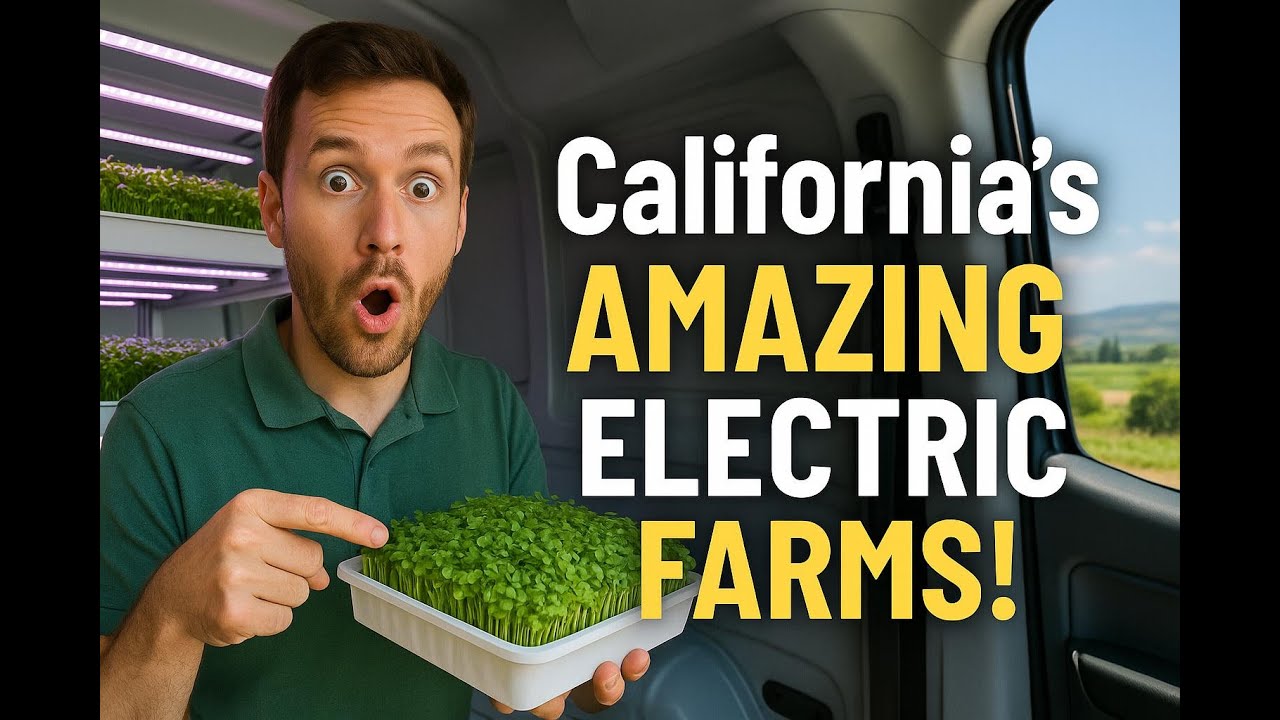
Believing vertical farming will eliminate rural farmland—when in reality, it augments Scotland’s land management, opens up new career paths, and enriches the rural economy through sustainable diversification.
Overall, vertical farming Scotland empowers farmers and rural businesses to adapt to the twin pressures of rising demand and land scarcity, making Scotland’s agricultural landscape more resilient, strategic, and opportunity-rich for 2026+.
Organic Farming Scotland: Standards, Certification & Integration
Organic farming Scotland is central to Scotland’s vision of environmental stewardship and premium food markets. The rise of vertical farming Scotland brings both new opportunities and important considerations for organic compliance, standards, and soil and ecosystem health in 2025 and beyond.
Organic Certification and Market Access in Vertical Farming
- ✔ Strict Input Control: Vertical systems allow for tight management of water, nutrients, and environmental factors, including inputs free from pesticides. This supports better alignment with organic standards in Scotland.
- 📝 Certification Challenges: To achieve organic status, vertical producers must demonstrate compliance from the outset: using approved substrates, traceable nutrient sources, and documented avoidance of prohibited treatments. Certification is critical for accessing Scotland’s premium organic market.
- 📦 Traceability: Digital traceability (see below for Farmonaut’s blockchain-based Product Traceability platform) enables Scottish producers to guarantee provenance, organic status, and input purity to retailers and consumers, supporting food security and market trust.
- 🌱 Organic-Soil Disconnect: While vertical farming is soil-free, it allows farmland in Scotland to be reallocated for regenerative forestry, hedgerow planting, or soil health improvements—reducing pressure on productive fields and supporting ecosystem services.
- ♻ Sustainable Circular Design: Recirculated water and renewable energy inputs reduce resource loss and complement Scotland’s broader sustainability policy goals.

Certification for organic vertical production in Scotland requires early planning and careful substrate, nutrient, and input selection. Traceability solutions like those provided by Farmonaut are instrumental for market access and organic guarantees.
Organic Standards: The Key Steps for Scottish Vertical Producers
- Select approved growing media and nutrient sources.
- Document all inputs, treatments, and harvests.
- Implement digital traceability to track supply chains and prove organic integrity.
- Engage with Scottish organic certification bodies from project inception.
- Complement indoor organic production by contributing to soil health initiatives on surrounding landscapes.
Through thoughtful integration and robust traceability, organic farming Scotland can flourish even in non-traditional, soil-free environments, while freeing up farmland for ecosystem restoration and regeneration.
Policy, Pilots & Strategic Implementation for 2025 and Beyond
For Scotland to maintain its leadership in sustainable food systems, policy-makers must align infrastructure, rural development, and innovation funding to ensure vertical farming complements traditional sectors. Here’s how Scotland’s policy and practical steps can bolster this transition:
Key Policy Considerations (2025+)
- ✔ Pilot Programs: Scottish Enterprise, rural development agencies, and Innovate UK funding can support pilots on peri-urban sites to validate new crops, climate control efficiency, and modular farm designs.
- 🗺 Infrastructure Synergy: Integrate vertical farms with rural water supply, energy, local logistics, and waste management networks—leveraging Scotland’s renewables-driven grid for sustainable growth.
- 💡 Data-Driven Decision Making: A culture of farm performance benchmarking, climate analytics, and crop monitoring will define best practice for Scotland’s next generation agriculture (see our Farmonaut solutions below).
- 👩🎓 Community & Education: Partnerships with Scottish colleges and digital training resources help the rural workforce transition towards high-tech, sustainable, and organic-focused roles.
- 🌱 Regeneration and Soil Health: Policy incentives can encourage the restoration of open farmland toward woodland, hedgerows, or low-input grazing, further augmenting Scotland’s environmental profile.
How Farmonaut Enables Modern Agricultural Management in Scotland
At Farmonaut, we provide advanced satellite-based and AI-powered solutions that seamlessly complement vertical farming Scotland, traditional farming, and rural innovation strategies:
- ✔ Satellite Monitoring: Track crop, soil, and land change dynamics in real time, supporting both open-field and vertical farm managers across Scotland.
- 📦 Product Traceability: Our blockchain-based platform verifies supply chain integrity for organic and sustainable Scottish produce, crucial for organic certification and premium market access.
- 🌱 AI-Driven Advisory: “Jeevn AI” delivers crop, climate, and resource optimization guidance by analyzing real-time weather and growth patterns on Scottish farms (learn more on our large-scale farm management app).
- ⚡ Environmental Stewardship: Our tools provide carbon footprinting and environmental impact tracking to support Scotland’s ambitious sustainability targets, including those for vertical and organic farming.
- 🚚 Smart Fleet & Resource Management: With fleet monitoring and logistics optimization, rural agri-businesses can minimize resource waste and maximize operational efficiency.
- ☁ API Integration: Access our open API for seamless integration into Scottish infrastructure, government, and rural enterprise systems. Our developer documentation supports quick scaling and integration.

Our platform is accessible across web,
Android,
and iOS,
ensuring Scottish farmers, operators, and policy-makers can unlock insights wherever they are:



Farmonaut’s modular, satellite-driven technology supports farms, rural businesses, and government policy in Scotland, driving improvements in food resiliency, carbon reduction, and sustainable rural economies.

Satellite analytics and blockchain-based traceability are rapidly becoming core requirements for premium organic, sustainable, and vertically-grown produce—allowing Scottish farms, government, and investors to manage risk and unlock new revenue models.
Frequently Asked Questions — Vertical Farming Scotland
How does vertical farming Scotland affect traditional rural jobs?
Vertical farming Scotland creates new jobs in system design, engineering, analytics, horticulture, and digital compliance, complementing traditional field-based roles and helping attract younger talent to Scottish agriculture.
Will vertical farming eliminate the need for farmland in Scotland?
No. Vertical farming Scotland is an augmentation—not a replacement. It increases food production efficiency and augments farm incomes while allowing traditional farmland to be restored, diversified, or intensified according to Scotland’s environmental goals.
Is organic vertical farming possible in Scotland?
Yes, provided producers plan early for organic certification by using compliant substrates and nutrients, and implement digital traceability, such as via Farmonaut’s blockchain solution, to prove organic status and supply chain integrity.
How is energy usage addressed in vertical farms?
While vertical farming requires more electricity (especially for LED lighting and HVAC) per ton output, Scotland’s renewable energy resources (wind, hydro, solar) help keep the carbon profile low. Innovations in heat recovery and efficient design further lessen the footprint.
How can rural Scottish farms access vertical farming technology?
Government policy, rural development funding, and pilot programs make it possible for farm businesses of all sizes to pilot or partner in vertical farming. Farmonaut offers the digital monitoring and advisory tools they need to optimize operations and ensure compliance.
Summary: Vertical Farming in Scotland — A Credible Chapter for 2025+ Agriculture
As Scotland embraces the demands of the 2026+ landscape, vertical farming Scotland embodies a strategic, sustainable complement to the nation’s farming, forestry, and rural economies. By offering year-round production in controlled environments, maximizing water and land-use efficiency, creating skilled jobs, supporting organic farming Scotland standards, and leveraging Scotland’s green energy capacity, this innovation opens an inspiring new chapter for the agricultural sector.
With robust policy, rural pilot support, and advanced tech—like Farmonaut’s satellite analytics, blockchain traceability, and AI-driven resource management—Scottish farming is equipped to deliver on its ministerial ambitions: increased food resilience, low-carbon growth, environmental health, and rural prosperity.
In summary, vertical farming Scotland serves not as a replacement, but a vital augmentation, positioning the nation as a leader in modern, organic, and sustainable agriculture.
Scotland’s best path forward combines robust rural traditions with innovative, high-tech farming—where vertical and organic approaches together secure food, jobs, and nature for generations to come.


