

County GIS · Farm parcel guide
Beacon Schneider: Search Farm Parcels and Tax Data
Beacon Schneider is Schneider Geospatial’s county site for parcel maps, owners, values and taxes. Here is how a farmer reads it, with Indiana farmland values (USDA, Purdue), the 2% farmland tax cap and a tax estimator.
Key takeaways
- Beacon is run county by county, so tools and update dates differ; check the county’s own page.
- Indiana caps farmland tax at 2% of assessed value, with voter-approved referendum taxes outside the cap (Boone County Auditor).
- Indiana cropland averaged $8,600 per acre in 2026, up 4.2% (USDA NASS, July 2026).
- Purdue’s June 2026 survey put top-quality Indiana farmland at $14,909 per acre and cash rent at $305.
- Parcel lines are not a survey; confirm acres, soils and boundaries before a lease or purchase.
In this article
- How to search a farm parcel on Beacon
- What a Beacon parcel record can show a farmer
- Bartholomew County and Schneider's parcel portals
- How Indiana sets the assessed value of farmland
- Property tax caps for Indiana farmland
- Estimate a farm parcel tax bill
- What Indiana farmland sells and rents for
- How Indiana cropland values compare with nearby states
- Use soil and satellite data next to the county map
- Checklist before you rent or buy farmland using county data
- If your assessment looks wrong
- Who uses county GIS data on the farm side
- Limits and privacy of public property data
- FAQ
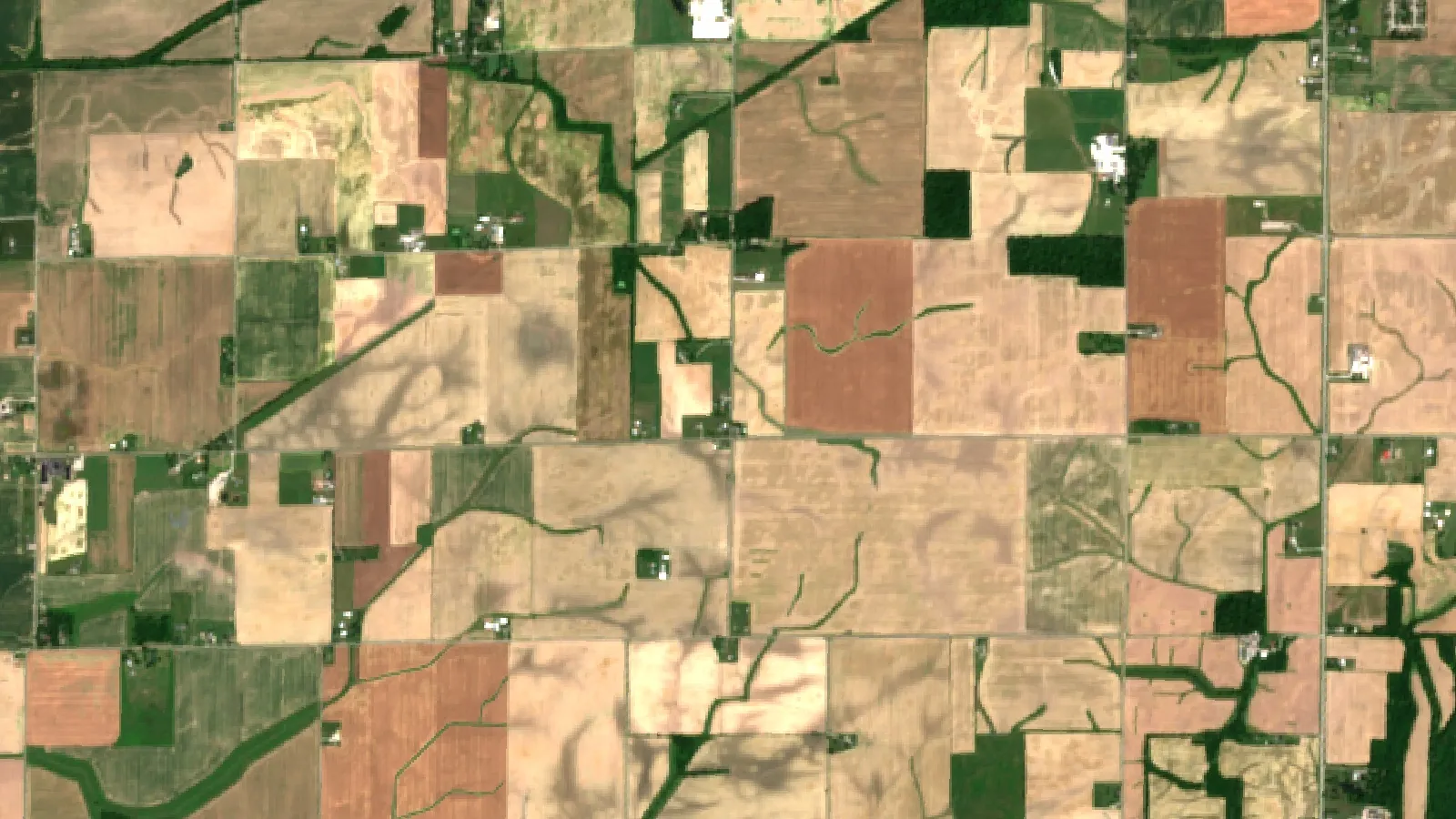
Beacon Schneider is the name many people use for Beacon, the county property search site built by Schneider Geospatial. You pick a county, type an owner name, address or parcel number, and see the parcel on a map with its owner, assessed value, sales and tax details. Each county sets up its own site, so what you see depends on the county. This guide shows farmers and farm advisers how to read a parcel record, what the Indiana farmland numbers mean, and how to estimate a farm tax bill.
The page started as a note about Bartholomew County, Indiana, which has used Schneider Geospatial’s parcel portals. We kept that local angle, removed claims we could not check against an official source, and added the farm side: land values, cash rents, tax caps and a tax calculator.
How to search a farm parcel on Beacon
Beacon sites commonly work in a similar way, though we did not find a Schneider help page to confirm every step. Check the county’s own page for the exact link, because the county sets which tools it switches on.
- Open your county’s Beacon site and accept the terms page if one appears.
- Choose the search type: owner name, parcel number or street address. For farm ground without an address, the parcel number from your tax bill is the most reliable key.
- Open the parcel record. Read the owner, legal description, acres and land classes.
- Switch to the map tab. Turn on the aerial photo layer and check that the boundary matches the fields you farm.
- Open the tax or sales tabs if the county shows them, and note the date of each record.
If the county has a separate page for paying taxes, use that and not the map. Bartholomew County, for example, lists “View/Pay Taxes Online” on its county home page (checked October 2026).
What a Beacon parcel record can show a farmer
The table lists the items farm users look for first. It is a checklist of what a county parcel record may hold, not a feature list for Beacon; not every county shows every item, and the county decides how often the data is refreshed.
| Item | Why a farmer checks it | Check against |
|---|---|---|
| Owner and mailing name | Find who to call about a lease or purchase | County recorder deed |
| Parcel number | Key to the tax bill and to FSA paperwork | Your tax statement |
| Acres by land class | Cropland, woods and waste are taxed differently | Your farm plan or FSA map |
| Assessed value | Starting point for the tax bill | Assessor notice |
| Sales history | Context for price per acre in your area | Sales disclosure form |
| Aerial photo | Spot tile lines, new buildings, field edges | Your own satellite or drone images |
| Soil map | Productivity affects the assessment | USDA Web Soil Survey |
Treat the map as a guide, not a survey. Parcel lines on a county map are drawn from deed records and can sit many feet off the true boundary. For a fence, a drainage dispute or a purchase, hire a licensed surveyor.
Bartholomew County and Schneider’s parcel portals
Bartholomew County, Indiana, covers 409 square miles around Columbus, and the county says agriculture, manufacturing and tourism make up most of its economy (county website, October 2026). Schneider’s own Elevate page says the portal is now part of Schneider Geospatial and lists a login for Bartholomew County among 16 Indiana counties (Schneider Geospatial, page read October 2026).
Our first version of this post gave a go-live date and a training-session headcount. We could not match those to a current official page, so they are gone. For dates, phone numbers and any training, use the county assessor’s office.
For a landowner the practical point is this: older Elevate links may still appear in searches, so start from the county home page or the assessor’s office to find the current parcel search.
How Indiana sets the assessed value of farmland
Indiana does not value farmland at market price. The state Department of Local Government Finance (DLGF) publishes a base rate per acre each year. It is the starting point for farmland assessment. Purdue’s Larry DeBoer explains that the base rate comes from farm income per acre divided by a capitalization rate, using six years of data and dropping the highest year (Purdue Capital Comments, January 2024). For each acre the base rate is then adjusted for soil productivity and, in some cases, for influences such as frequent flooding.
Chart
Indiana farmland base rate set by the state
US$ per acre, for property taxes payable in each year
The chart shows how fast the base rate rose in the years the Purdue article covers. A new base rate is published each year, and Indiana’s 2025 law (Senate Enrolled Act 1) lowered the rates that followed the $2,280 shown for 2025, so use the DLGF figure for the year of your bill.
Property tax caps for Indiana farmland
Indiana caps tax bills as a share of assessed value. A county auditor’s page states the limits: 1% for homesteads, 2% for other residential property and farmland, and 3% for all other property (Boone County Auditor, October 2026). The credit is applied to the bill automatically. Taxes approved by voters in a referendum fall outside the caps, so a school referendum can push a bill past 2%.
Purdue adds that the caps are percentages of assessed value, so they do not stop a bill from rising when assessments rise (Purdue Capital Comments, March 2023). This is general information, not tax advice. Ask your county auditor or a tax professional about deductions, exemptions and your own bill.

▶ Our short video on a county property tax levy and what it means for farmers and homeowners. · 2:03
Estimate a farm parcel tax bill
The calculator below applies the base rate, a soil factor, your local tax rate and the 2% farmland cap. It is a rough check against the bill your county sends. It ignores deductions and special assessments.
Try the numbers for your own farm below.
Calculator
What might my Indiana farm parcel tax be?
Enter your own acres, base rate, soil factor and local tax rate.
- Assessed value: $182,400
- Tax before the cap: $3,466
- Cap at 2%: $3,648
- Cap credit: $0
- Tax per acre: $43
Example values only, not a forecast or a benchmark. Use the base rate and tax rate shown on your own assessment and tax bill. The 2% farmland cap is fixed in the formula (Boone County Auditor, October 2026); it ignores deductions, special assessments and referendum taxes, which sit outside the cap. The default base rate is the figure for taxes payable in 2025 reported by Purdue Extension; later years were lowered by 2025 state law, so replace it with the rate on your own assessment.
What Indiana farmland sells and rents for
Beacon shows sales and assessments, but market price is a different number. The Purdue survey of farm managers, appraisers and lenders puts top-quality Indiana farmland at $14,909 per acre in June 2026, up 0.6% on June 2025. Average-quality land fell 1.1% to $12,121 and poor-quality land fell 3.1% to $9,460 (Purdue Agriculture, September 2026). These are survey estimates for unimproved land, not recorded sales.
Chart
Indiana farmland price by quality
US$ per acre, unimproved land, Purdue survey, June 2026
The USDA’s state averages are lower because they cover all farm real estate or all cropland in the state. USDA NASS reports Indiana farm real estate at $9,150 per acre in 2026, cropland at $8,600 and pasture at $2,850 (USDA NASS Land Values 2026 Summary, July 2026). The two sources differ because they ask different questions, so do not mix them in one comparison.
Purdue also reports average Indiana cash rents for tillable bare land in 2026: $305 per acre for top-quality land, $260 for average and $214 for poor (Purdue Center for Commercial Agriculture). Purdue says prices of land moving out of farming into other, typically higher-value uses were $27,260 per acre on average, down 6.1%.
Chart
Indiana land value per acre, USDA
US$ per acre, farm real estate, cropland and pasture, 2022 to 2026
How Indiana cropland values compare with nearby states
USDA NASS gives the same cropland measure for every state, which makes a fair comparison. Indiana cropland rose 4.2% to $8,600 per acre between 2025 and 2026 and sits below Illinois, Iowa and Ohio among the states shown.
Chart
Cropland value per acre, selected states
US$ per acre; seven states shown, not all states
Use soil and satellite data next to the county map
A county map shows who owns a parcel and what it is assessed at. It does not show how the field is performing. Two tools fill that gap.
- USDA Web Soil Survey. It provides soil data from the National Cooperative Soil Survey and says soil surveys can be used for farm and local planning (NRCS Web Soil Survey, October 2026). Draw your parcel and read the soil map units before you rent or buy.
- Satellite crop monitoring. Farmonaut Satellite + AI Farm Monitoring System lets you draw a field boundary and follow crop vegetation indices over the season. It shows vegetation change, not the cause, so confirm by scouting.

▶ Farmonaut web system tutorial: monitor crops with satellite imagery and AI. · 8:43
Checklist before you rent or buy farmland using county data
A parcel record is the first step, not the last. These checks help catch common surprises.
- Match the parcel number on Beacon to the number on the listing or lease.
- Compare the acres on the record with the acres on the FSA farm map and the deed.
- Open the aerial photo and look for field edges, wet spots, tile outlets and buildings that the listing does not mention.
- Pull the soil map units from Web Soil Survey and compare them with the soil factor used in the assessment.
- Read the last two or three tax bills and note any referendum taxes, which sit outside the cap.
- Ask the seller or landlord for yield history, and compare the cash rent with the Purdue figures above.
- Order a survey if any boundary matters to the deal.
If your assessment looks wrong
Start with the land classes and acres on the record. A field coded as cropland that is mostly woods, or a parcel with the wrong acreage, changes the assessed value. Take a dated aerial photo, the soil map and your deed to the county assessor’s office and ask how to request a review. Deadlines are printed on the assessment notice, so act as soon as it arrives. A tax professional or attorney can advise on formal appeals.
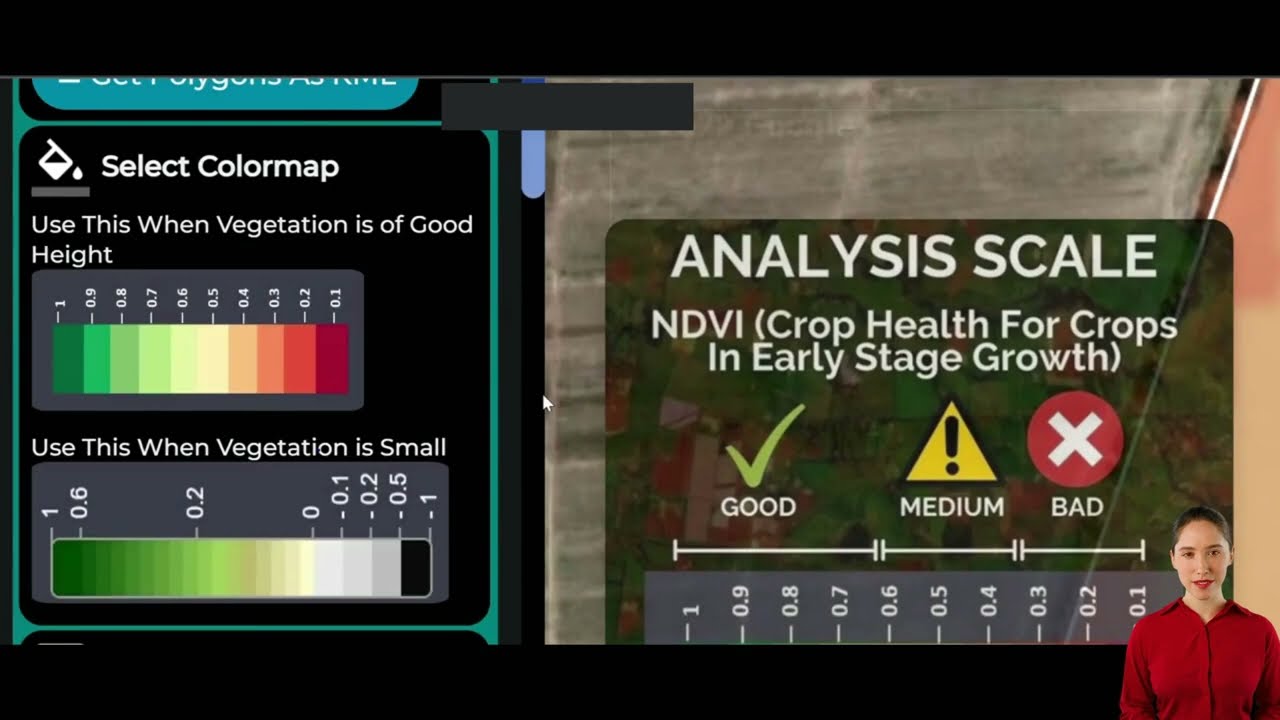
▶ A guide to interpreting satellite data in the Farmonaut web app. · 10:16
Who uses county GIS data on the farm side
Farm consultants and agronomists use parcel data to match fields to owners and acres before a visit. Lenders and appraisers use sales and assessed values for a first look. Landlords and tenants use the parcel number and acres to check lease terms. Lawyers and title companies use the deed link.
Limits and privacy of public property data
- Data lags. The assessor updates records on its own schedule, so new buildings and splits may not show yet.
- Acres on the record can differ from acres on your FSA map or deed.
- Owner names and addresses are public in many counties, but rules differ. Ask the county about confidentiality options.
- Do not use a county map for legal boundaries, easements or flood-zone decisions. Use a survey and official flood maps.
FAQ
What is Beacon Schneider?
It is the common name for Beacon, a county property and map website from Schneider Geospatial. Each county runs its own Beacon site with parcel, ownership, valuation and tax information.
Is the Beacon site the official tax record?
No. The county auditor and treasurer hold the official tax record. Use Beacon to look things up, then check the tax statement or ask the county office.
How do I find a farm field on Beacon without an address?
Search by the parcel number on your tax bill, or by owner name. Then use the map tab and the aerial photo to confirm the field.
Why does my farmland assessment differ from market value?
Indiana starts from a state base rate per acre and adjusts it for soil and other factors. Market price is what a buyer pays, and the Purdue survey shows it is higher than the USDA average for cropland.
Does the 2% cap stop my farm tax from rising?
The cap limits the bill to 2% of assessed value, with voter-approved referendum taxes outside it. If assessed value rises, the cap rises with it. Ask your auditor about your own parcel.
Where can I check soils for a parcel?
Use the USDA Web Soil Survey. Draw the area of interest and read the soil map units and their ratings.
Sources and prices on this page were checked in October 2026. USDA and Purdue figures are survey estimates, not offers to buy or sell. Check the DLGF, your county auditor and a tax professional before you act on any tax figure.
Farmonaut crop monitoring
See your own fields from space
Draw your parcel boundary and follow crop health through the season with satellite images.




Keep reading
Sources
- USDA NASS, Land Values 2026 Summary (July 2026): nass.usda.gov
- Purdue Agriculture, Indiana farmland values hold steady amid regional shifts (September 2026): ag.purdue.edu
- Purdue Center for Commercial Agriculture, Indiana’s Farmland Market Holds Steady as Regions Swap Places (2026): ag.purdue.edu
- Purdue Extension, Capital Comments: Farmland Property Taxes May Keep Increasing (January 2024): extension.purdue.edu
- Purdue Extension, Capital Comments: Property Tax Bills are Increasing a Lot in 2023 (March 2023): extension.purdue.edu
- Boone County, Indiana Auditor, Property Tax Caps: boonecounty.in.gov
- Bartholomew County, Indiana, county home page: bartholomew.in.gov
- Schneider Geospatial, Elevate: schneidergis.com
- USDA NRCS, Web Soil Survey: websoilsurvey.nrcs.usda.gov
- USDA NASS, Cash Rents by County survey page: nass.usda.gov
Discussion
Questions, corrections or field experience? Share them below. First-time comments are reviewed before they appear, and your email is never published.
No comments yet. Be the first to add a question or your experience.

 MISE Maroc
 Drift-Sense
 NWNS
 Hydenmet
 Dirks Bros Farms
 Red August Group
 Farm Inc
 WeMe Global
 Agrotoken
 Blue BearX
 Insignito
 Croptimum
 DnCubed
 Field Capacity
 Indosistim Teknologi
 Liquify Digital
 CU Foods
 BeyondTech Global

 Licence holder · Niger · Gold
 Licence holder · Nigeria · Gold + lithium










