

Reviewed August 2026 against USDA Farm Service Agency lending-rate notices and Michigan State University farm equipment cost estimates.
Try it: Run your own numbers →
A farm machinery loan is financing used to buy tractors, combines, tillers, and other equipment, typically repaid over 3-7 years with schedules built around harvest income rather than fixed monthly payments. USDA’s Farm Service Agency (FSA) sets direct lending rates monthly — 5.250% for operating loans and 6.000% for farm ownership loans as of the August 2026 announcement — while commercial banks and equipment dealers set their own rates based on credit, collateral, and equipment age. Below: current rate benchmarks, what machinery actually costs in 2025, how FHA/USDA loans differ from a commercial farm machinery loan, and a calculator to estimate your own payment.
2025 Veg Equipment Boom ? Smart Farming, AI Telematics & $2.3B Market Powered by Farmonaut
Table of Contents
- Current Farm Machinery Loan Rates
- FHA Farm Loans vs. USDA FSA Loans: What’s the Difference
- What Farm Equipment Actually Costs in 2025
- Where to Get a Farm Machinery Loan
- Power Tiller & Small Equipment Financing
- Loan Payment Calculator
- How to Apply: Step by Step
- Factors That Change Your Rate and Terms
- Market Size and Where Financing Is Headed
- Satellite Data and Loan Verification
- How Farmonaut Fits Into Financed Equipment Use
- Frequently Asked Questions
- Farmonaut Subscription Plans
- Try it: Run your own numbers
Current Farm Machinery Loan Rates
The most current, publicly posted benchmark for U.S. agricultural lending comes from USDA’s Farm Service Agency, which resets its direct loan rates monthly. As of the August 2026 USDA FSA lending-rates announcement, the direct operating loan rate — the category that covers machinery purchases — stood at 5.250%, and the direct farm ownership loan rate stood at 6.000%. These are not projections; they are the rates FSA published for that month, and FSA republishes updated figures on its news page every month, usually within the first three business days.
Commercial banks and captive equipment lenders (the finance arms of tractor manufacturers) do not follow the FSA rate directly, but they price against it. A borrower with strong credit, an active operation, and a modest loan-to-value ratio commonly lands within a few points of the FSA benchmark; thinner credit files, older used equipment, or first-time borrowers see wider spreads. Because commercial rates move with the broader interest-rate environment and are not centrally published the way FSA’s are, the reliable way to get a current commercial number is to request quotes directly from two or three lenders in the same week — rate sheets change often enough that a figure printed here would be stale within a quarter.
For total farm debt context: farm loans held at U.S. banks and thrifts totaled $205 billion as of Q4 2024, per S&P Global Market Intelligence data referenced by USDA’s Farm Service Agency network. That figure gives a sense of scale — machinery loans are one slice of a much larger farm-debt market that also includes real estate and operating credit.
FHA Farm Loans vs. USDA FSA Loans: What’s the Difference
Searches for “FHA farm loan” usually mean one of two things, and it’s worth separating them plainly because they are not the same program. The Federal Housing Administration (FHA) insures residential mortgages and does not offer a dedicated farm machinery or farm operating loan product — FHA loans are for home purchases, and FHA financing rules explicitly restrict properties with extensive land used for income-producing agriculture. If your search intent is financing for equipment, land, or operating costs on a working farm, the federal program that actually applies is USDA’s Farm Service Agency (FSA), not FHA.
FSA offers three loan categories relevant to machinery buyers:
- Direct Operating Loans — used for equipment, livestock, seed, and other operating costs; direct rate was 5.250% in August 2026.
- Direct Farm Ownership Loans — used for land and major long-term investments including large equipment tied to a real estate purchase; direct rate was 6.000% in August 2026.
- Guaranteed Loans — FSA guarantees a portion of a loan made by a commercial bank, letting the bank extend credit it might not otherwise approve; rates are set by the participating lender, not FSA.
We could not locate published, distinct “FHA farm loan” statistics — because the product as commonly searched doesn’t exist as a separate federal offering — so if you’ve seen the term used by a lender’s marketing material, ask them directly whether they mean an FSA-guaranteed loan or a different in-house product before applying.
What Farm Equipment Actually Costs in 2025
Before comparing loan terms, it helps to know what you’re actually financing. Michigan State University’s Department of Agriculture publishes annual custom-work and machinery cost estimates; for 2025, the average cost of a 40-HP tractor was $33,000, a 105-HP MFWD (mechanical front-wheel drive) tractor averaged $173,000, and a 200-HP MFWD tractor averaged $387,000. These are national averages across dealers and configurations, not a single model’s sticker price, so treat them as planning benchmarks rather than a quote.
On the used-equipment side, Sandhills Global — which tracks auction and dealer asking prices across North America — reported that used tractor asking prices fell 6.5% year-over-year in 2025. That’s a meaningful data point for anyone financing a used machine: a lower asking price changes your loan-to-value math and can improve approval odds versus new equipment at full price. Sandhills publishes updated market reports on a rolling basis at sandhillsglobal.com, broken out by equipment category, so check there for the current asking-price trend before you lock in a purchase price.
Financing New vs. Used: What Changes
| Factor | New Equipment | Used Equipment |
|---|---|---|
| 2025 average cost reference | $33,000-$387,000 depending on horsepower class (MSU) | Asking prices down 6.5% year-over-year (Sandhills Global) |
| Typical collateral value | Full purchase price, depreciates from day one | Lower principal, but faster depreciation curve on older units |
| Manufacturer financing programs | Often available at promotional rates | Rarely offered; commercial bank or FSA financing more common |
| Typical loan term | Up to 7 years on large equipment | Shorter terms common, tied to remaining useful life |
Where to Get a Farm Machinery Loan
Three broad channels handle most U.S. farm machinery financing: USDA’s Farm Service Agency (direct and guaranteed loans), commercial banks and farm credit associations (Farm Credit System lenders), and manufacturer captive finance arms (the lending divisions attached to major tractor and combine brands). Each serves a different borrower profile.
- FSA direct and guaranteed loans — best for beginning farmers, smaller operations, or borrowers who don’t qualify at a commercial bank on their own; rates are the lowest of the three channels as of the August 2026 posting (5.250%-6.000% direct).
- Farm Credit System associations and commercial banks — best for established operations with several years of financial records; rates track the broader credit market and vary by lender, so request current quotes rather than relying on a published average.
- Manufacturer captive finance — often the fastest approval at the point of sale, and sometimes subsidized to move new inventory, but usually restricted to that manufacturer’s own equipment.
Because commercial and captive-finance rates are not centralized the way FSA’s are, the only reliable way to compare current offers is to pull two or three live quotes in the same week and set them against the FSA benchmark above.
Power Tiller & Small Equipment Financing
For smaller mechanization — power tillers, walk-behind implements, and similar low-horsepower equipment — a dedicated “power tiller loan” product is not something we found offered by name at U.S. banks or FSA; this term is more commonly associated with smallholder finance programs outside the United States. In the U.S. market, a power tiller or comparable small implement is financed the same way as any other piece of equipment under $33,000: through an FSA direct operating loan, a small-equipment line from a Farm Credit association, or dealer financing at point of sale. Given the MSU figure of $33,000 for even a 40-HP tractor, a power tiller sits well below that, which typically means a smaller principal, a shorter term, and less documentation than financing a full-size tractor. If you’re shopping this category, ask your local FSA office or Farm Credit association whether they have a minimum loan size — some lenders set a floor that makes very small equipment purchases better suited to a personal or dealer installment loan than a formal ag loan product.

Use Farmonaut Web App for real-time, satellite-based farm monitoring, data-driven crop health analysis, and resource optimization.



Farmonaut at 6 Years: How We’re Transforming Farming in 40+ Countries with Satellite Technology
Loan Payment Calculator
Estimate a monthly payment using the equipment cost ranges and FSA rate benchmarks above — enter your own numbers to see how term length and down payment change the result.
Run your own numbers
Assumes a standard amortizing loan with equal monthly payments. Excludes insurance, dealer fees, taxes, and any FSA guarantee fees or subsidy adjustments. Use the FSA rate (5.250%-6.000% as of August 2026) or a current lender quote in place of the default rate shown.
Explore Carbon Footprinting, Blockchain-Based Traceability, and Satellite Crop Loan/Insurance Tools for sustainable, transparent, and financially-empowered agriculture.
Farmonaut Introduction – Large Scale Usage For Businesses and Governments
How to Apply: Step by Step
- Get a current rate quote. Check the USDA FSA lending-rates page for the current direct-loan rate, then request quotes from at least one commercial bank or Farm Credit association and, if buying new, the manufacturer’s captive finance arm.
- Price the equipment. Use MSU’s published averages ($33,000 for 40-HP, $173,000 for 105-HP MFWD, $387,000 for 200-HP MFWD in 2025) as a sanity check against dealer quotes, and check Sandhills Global’s current asking-price data if you’re buying used.
- Assemble documentation. Typically: ID, land ownership or lease records, two to three years of farm income/tax records, and a proforma invoice or dealer quote for the equipment.
- Choose the right program. FSA direct loan for beginning or credit-constrained borrowers; FSA guaranteed loan through a bank if you need a larger amount than direct lending offers; commercial or captive financing if you have an established credit history and want faster approval.
- Apply. FSA applications go through your local FSA county office; commercial and captive lenders increasingly offer online applications with digital document upload.
- Structure repayment around your income. Ask specifically about seasonal or annual payment schedules tied to harvest timing rather than defaulting to equal monthly payments if your cash flow is seasonal.
- Verify farm and equipment records. Some lenders now accept satellite-based field verification (see the Technology section below) alongside or instead of an in-person site visit.

Farmonaut Web App Video
Factors That Change Your Rate and Terms
- Loan type. FSA direct loans are priced off a single published rate (5.250% operating / 6.000% ownership as of August 2026); commercial and guaranteed loans are priced individually by the lender.
- New vs. used equipment. Used tractor asking prices fell 6.5% year-over-year in 2025 per Sandhills Global, which lowers the principal you need to finance but can also mean a shorter term if the lender caps financing to the machine’s remaining useful life.
- Horsepower/equipment class. MSU’s 2025 averages span an order of magnitude — $33,000 to $387,000 — so the same interest rate produces very different monthly payments depending on the machine.
- Credit history and farm financial records. Lenders outside FSA’s published-rate direct program set spreads individually; borrowers with several years of clean records typically qualify for tighter spreads than first-time applicants.
- Collateral and loan-to-value. A larger down payment or trade-in reduces principal and often improves the rate a commercial lender will offer.
- Program eligibility. Beginning farmers, veterans, and underserved producers may qualify for FSA target funding pools or reduced-rate programs — ask your local FSA office which pools are open, since availability changes by fiscal year and region.
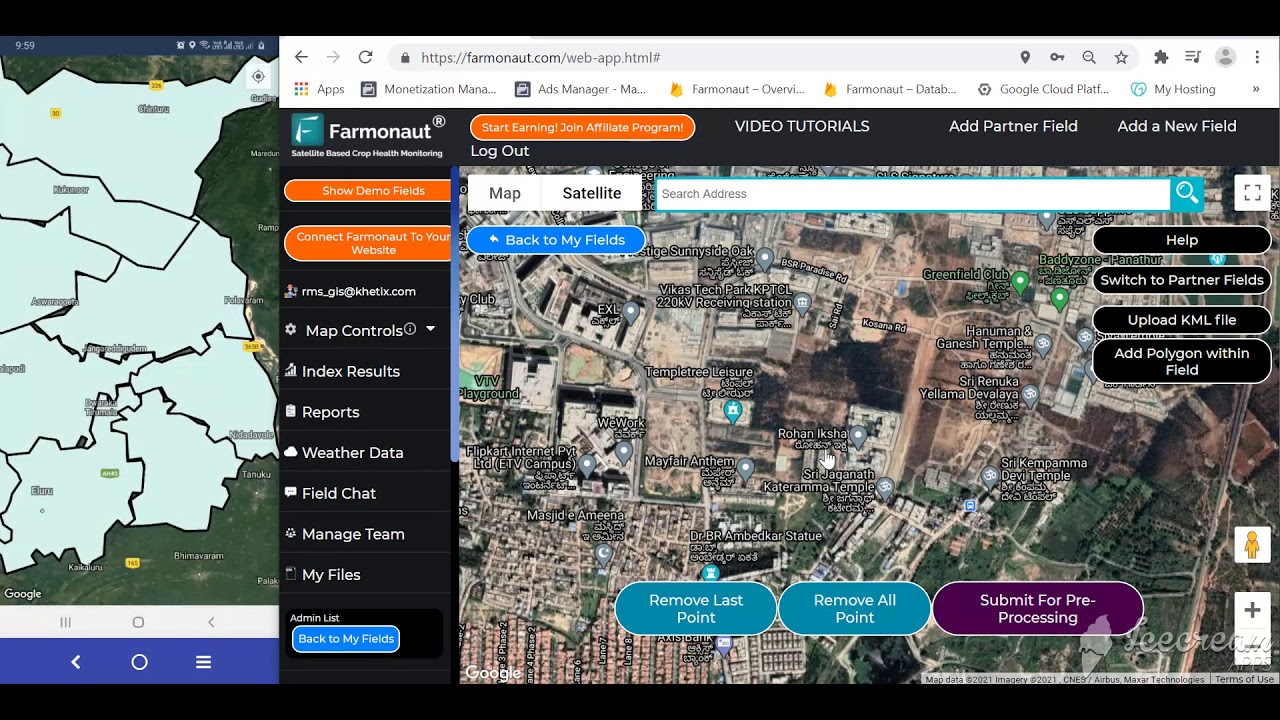
Farmonaut Large Scale Field Mapping & Satellite Based Farm Monitoring | How To Get Started
Market Size and Where Financing Is Headed
The global agricultural equipment finance market was valued at $74.5 billion in 2024, according to GM Insights, which projects a 6.3% compound annual growth rate from 2025 through 2034. That growth reflects both rising equipment prices and continued replacement demand as older fleets age out — MSU’s cost data above shows what that replacement demand costs per unit today, and the -6.5% used-price move from Sandhills Global shows the used market cooling even as new-equipment financing volume grows.
On the domestic side, the $205 billion in farm loans held at U.S. banks and thrifts as of Q4 2024 (S&P Global Market Intelligence, via USDA FSA) gives a baseline for how much of the balance sheet farm debt already represents — machinery loans are a component of that total alongside real estate and operating lines, and USDA’s Economic Research Service publishes updated farm asset, debt, and wealth figures annually, typically in July or August, at its farm sector income and finances page.

Farmonaut Large Scale Farm Mapping And Satellite Based Farm Monitoring
Satellite Data and Loan Verification
A growing number of lenders — particularly those handling FSA-guaranteed loans and larger commercial ag portfolios — now accept satellite-based field verification alongside or in place of an in-person inspection. This matters for machinery financing specifically because loan approval and collateral valuation both depend on confirming that the acreage, crop history, and operational scale claimed on the application match what’s actually on the ground.
- Field verification: Satellite monitoring platforms can confirm planted acreage and crop health history without a site visit, which shortens the document-review stage of an application.
- Ongoing collateral monitoring: Once a loan is disbursed, some lenders use continued satellite monitoring to track field conditions relevant to the borrower’s ability to repay on schedule.
- Traceability records: Platforms like Farmonaut’s product traceability tools can document input and equipment use for lenders or insurers who require an audit trail.
- Fleet and resource management: Machinery bought on credit generates a better return when utilization is tracked — see digital fleet management for how operations schedule and maintain financed equipment.
Learn more about admin tools for large-scale farm management, which some larger operations use to track multiple financed machines across several fields or business units.
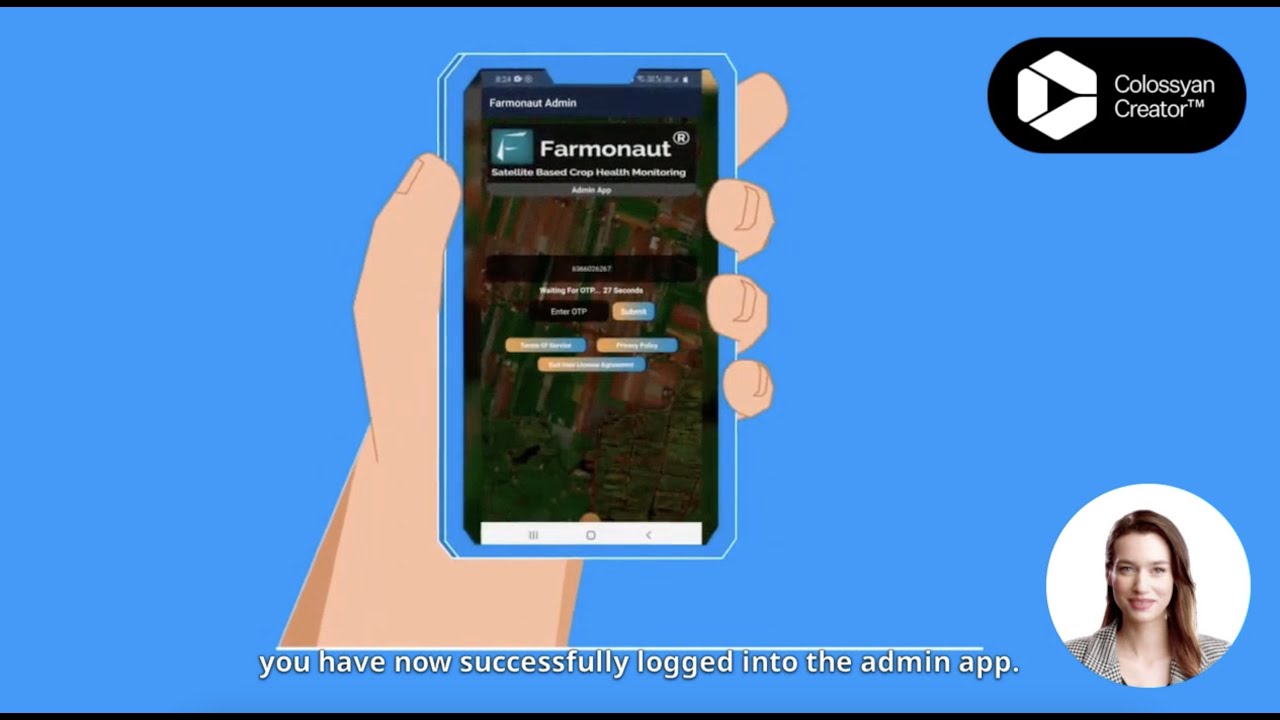
Farmonaut For Admins Tutorial Video
How Farmonaut Fits Into Financed Equipment Use
Farmonaut is a satellite-based farm management platform. It does not originate or underwrite loans — it provides the field data that helps borrowers get more value out of equipment they’ve already financed, and in some cases helps lenders verify claims faster.
- Satellite Crop Health Monitoring: Track NDVI, soil moisture, and stress indicators to time machinery use — fertilizer spreading, irrigation runs, harvest — more precisely, which improves the return on a financed machine.
- Jeevn AI Advisory: Data-driven recommendations on when to deploy equipment, reducing wasted passes and fuel cost on financed machinery.
- Carbon Footprinting: The carbon footprinting platform quantifies emissions from mechanized operations, which can support applications to green-financing programs that some lenders now offer alongside standard equipment loans.
- API access: Lenders or agri-fintech integrators can connect satellite verification data directly via the API, documented at the developer docs.
- Crop Loan & Insurance Tools: Satellite imagery used to validate loan or insurance claims, which can speed up approval and payout timelines when a claim depends on field condition evidence.
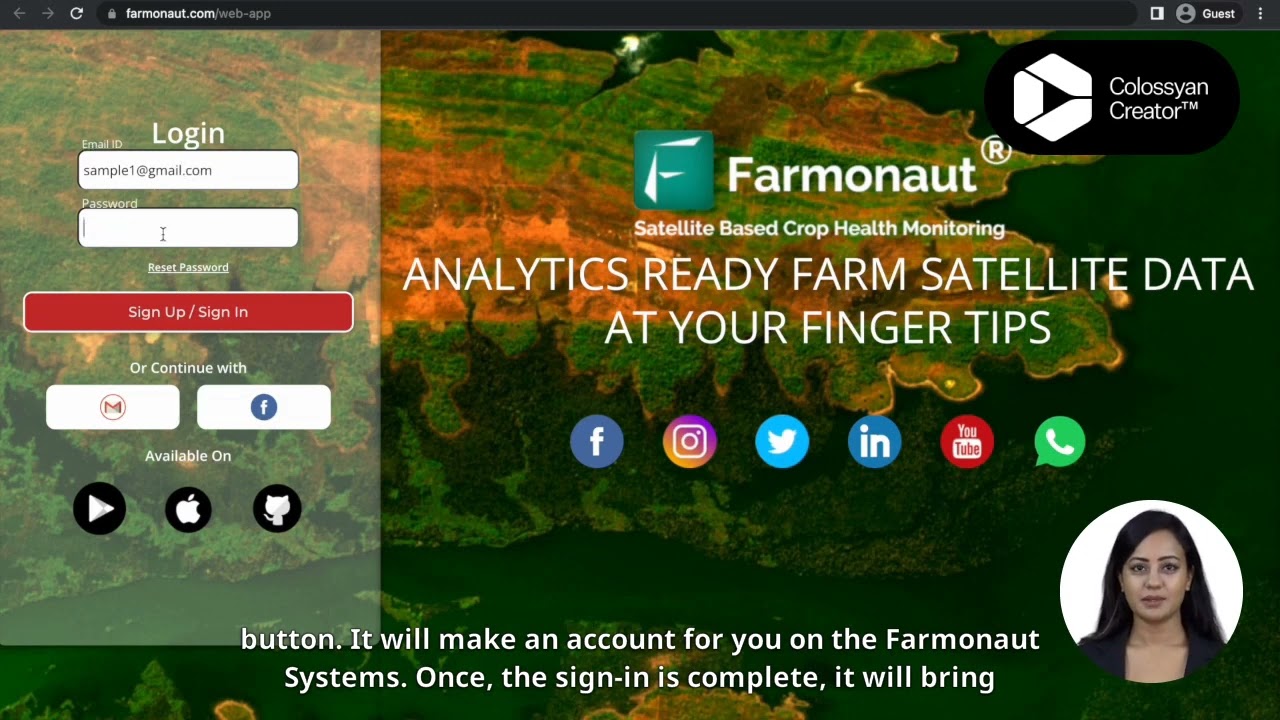
Farmonaut API Video Tutorial – How To Make API Account
Frequently Asked Questions
What is a farm machinery loan?
Financing specifically for agricultural equipment — tractors, combines, planters, tillers, irrigation systems — usually repaid over 3-7 years with a schedule that can be aligned to harvest income rather than fixed equal monthly payments.
What is the current interest rate for a farm machinery loan?
USDA FSA’s direct operating loan rate was 5.250% and its direct farm ownership loan rate was 6.000% as of the August 2026 lending-rates announcement. Commercial bank and captive-finance rates vary by lender and borrower credit; FSA republishes its own rates monthly, so check the FSA lending-rates page for the current figure.
Is an FHA farm loan the same as a USDA farm loan?
No. FHA insures residential mortgages and does not have a dedicated farm machinery or operating loan program; income-producing farmland is generally outside FHA’s residential scope. The federal program that actually finances farm equipment and operations is USDA’s Farm Service Agency (FSA), through direct and guaranteed operating and ownership loans.
How much does farm machinery actually cost?
Per Michigan State University’s 2025 figures: a 40-HP tractor averaged $33,000, a 105-HP MFWD tractor averaged $173,000, and a 200-HP MFWD tractor averaged $387,000. Used tractor asking prices were down 6.5% year-over-year in 2025 according to Sandhills Global.
Is there a specific loan for power tillers?
We did not find a U.S. lender offering a power-tiller-specific loan product by that name. Small implements are typically financed the same way as any sub-$33,000 equipment purchase — through an FSA direct operating loan, a Farm Credit small-equipment line, or dealer installment financing. Ask your lender whether they have a minimum loan size before applying.
What documents do I need to apply for a farm machinery loan?
Typically: identification, proof of land ownership or lease, two to three years of farm income or tax records, and a proforma invoice or dealer quote for the equipment being financed. FSA and commercial lenders may request additional operating history for larger loans.
Can satellite data speed up my loan approval?
Some lenders accept satellite-based field verification in place of, or alongside, an in-person visit, which can shorten the document-review stage. Platforms such as Farmonaut’s traceability tools are used by some borrowers to support this kind of verification.
Farmonaut Subscription Plans
Get started with scalable subscription plans to help track and manage the equipment and fields your financing covers:
Choose a plan based on field size, number of updates, and value-added features like AI advisory, carbon footprint monitoring, blockchain traceability, fleet management, and developer API access.
Ready to get more from your financed equipment? Explore Farmonaut’s Precision Agriculture Platform for field-level data that helps you use financed machinery more efficiently.
For developers and integrators: view the API Documentation.
Rates and equipment costs above carry the citations they need to be checked directly: USDA FSA republishes lending rates monthly, Michigan State University updates machinery cost estimates annually, and Sandhills Global tracks used-equipment pricing on a rolling basis — bookmark those three if you’re financing equipment again next season.

 Sun Palm Australia
 Grandstream Algérie
 XOS Realty
 Geospatial Lab Africa
 KhetiBuddy
 Agro La Gándara
 HIPSAC
 ZOL Zimbabwe
 Juligerm
 AdBio
AdBio MISE Maroc
 NWNS
NWNS Red August Group
 Farm Inc
 WeMe Global
 Agrotoken
 Blue BearX
 Insignito
 Croptimum
 DnCubed
