

Reviewed August 2026 against National Jeweler and the International Gem Society.
Try it: Run your own numbers →
Taaffeite sells for $1,500 to $2,500 per carat at light saturation, $5,500 to $7,500 per carat for fine, well-saturated color, and up to $15,000 per carat for intensely colored, eye-clean stones, according to National Jeweler’s gemstone pricing coverage. It is one of the rarest gem minerals on record — gemologists have catalogued roughly 50 identified specimens worldwide, sized between 0.84 and 13.22 carats, per the International Gem Society. No government agency tracks it as a commodity, so the numbers below come from trade publications and gemological societies, not a price index.
What Is Taaffeite? Origin, Discovery, and Chemistry
Taaffeite was identified in Dublin, Ireland, in 1945, when gemologist Richard Taaffe examined a faceted stone he had purchased as spinel and noticed it was doubly refractive — spinel is not. That single 1.419-carat stone, later recut to 0.55 carats, turned out to be a mineral nobody had described before, and it now carries his name. That discovery story is the reason taaffeite still gets misidentified today: it forms in the same gravel beds as spinel, looks similar to the naked eye, and only reveals itself under refractometer testing.
Chemically, taaffeite is a beryllium-bearing magnesium aluminum oxide, formula BeAl6O12 (also written as magnesiotaaffeite-2N’2S in current mineralogical nomenclature). The beryllium content is the key: it requires a narrow set of geochemical conditions — beryllium migrating into a magnesium-aluminum-rich host — that rarely occurs in nature. That scarcity of formation conditions, not mining activity, is the root cause of every price figure in this article.

Taaffeite Price Per Carat: What the Data Shows
National Jeweler’s gemstone reference breaks taaffeite pricing into three bands by color saturation and clarity, and these are the only published, sourced retail figures available for this stone:
- $1,500–$2,500 per carat — light color saturation, the entry point for a genuine faceted taaffeite.
- $5,500–$7,500 per carat — fine color with good saturation, the range most collector-grade stones fall into.
- Up to $15,000 per carat — intense color combined with eye-clean clarity, the ceiling for documented retail sales.
There is no US government price index for taaffeite — the US Geological Survey does not track it, because it is not mined domestically and the volumes are too small to register in commodity statistics. There is also no import/export tracking through the Census Bureau or the Commerce Department, since taaffeite is not classified as a monitored trade commodity. That means every number you will find, including the ones above, is qualitative retail guidance rather than a market-weighted average. If you need a live comp for a specific stone, the closest thing to a public record is auction results from Christie’s, Sotheby’s, or Bonhams, or a direct quote from a GIA- or AGS-member dealer — cross-check any of the three before you treat a quoted price as market rate.
Taaffeite Price by Quality Grade (Comparison Table)
The table below converts the National Jeweler bands into a quick reference. Use it to sanity-check a quote — a dealer asking $20,000 per carat for a “fine” stone, or $1,000 for an “intense, eye-clean” stone, is outside the documented range and worth a second opinion.
| Quality Grade | Price per Carat (USD) | Color Characteristics | Clarity Expectation |
|---|---|---|---|
| Light saturation | $1,500 – $2,500 | Pale lilac, pink, or mauve; weak color intensity | Visible inclusions acceptable |
| Fine color, saturated | $5,500 – $7,500 | Well-saturated pink or violet | Minor inclusions |
| Intense color, eye-clean | Up to $15,000 | Deep, saturated violet or pink | Eye-clean, minimal inclusions |
Source: National Jeweler, “5 Things to Know About Taaffeite”. These bands are the trade’s own reference ranges, not a formula — actual sale prices still depend on stone size, cut quality, and buyer demand at the time of sale, since no market-weighted average exists for this stone.
How Rare Is Taaffeite, Really?
The International Gem Society’s archive puts the count at roughly 50 identified taaffeite specimens globally, ranging from 0.84 to 13.22 carats. That figure is a running tally of documented, catalogued stones — not an annual production number, because there is no annual production to measure. New finds get added to gemological databases (GemDat) and museum catalogs (the Natural History Museum in London, the Smithsonian) as they surface, so the count changes slowly and only upward.
Three factors drive that scarcity:
- Narrow formation chemistry. Taaffeite requires beryllium to migrate into a magnesium-aluminum-rich rock environment — a geochemical coincidence, not a mineable ore body.
- Small crystal size. Most gem-quality taaffeite is cut under 2 carats; the original 1945 specimen itself was only 1.419 carats before recutting to 0.55.
- Visual confusion with spinel. Taaffeite forms in the same gravel deposits as spinel and looks similar without lab testing, so miners and dealers can pass over it without recognizing what they have.
There is no official rarity registry, so if you want the most current specimen count, the practical method is to check the International Gem Society’s taaffeite archive directly and cross-reference GemDat or the museum catalogs above for anything added since this review.

Taaffeite Gem Properties and Crystal Structure
Taaffeite crystallizes in the trigonal system, typically forming hexagonal or pseudo-cubic facets. Its physical profile:
- Chemistry: Beryllium-bearing magnesium aluminum oxide, BeAl6O12
- Crystal system: Trigonal
- Hardness: 8 on the Mohs scale
- Luster: Vitreous
- Transparency: Transparent to translucent
- Typical cut size: Under 2 carats for the large majority of faceted stones
That Mohs 8 hardness sits below sapphire (9) but well above quartz (7), which makes taaffeite durable enough for ring and pendant settings, provided the setting protects the facet edges from daily knocks the way any Mohs-8 stone requires.

Color and Pleochroism: Why the Same Stone Looks Different
Taaffeite is pleochroic — a single stone shows different colors depending on the viewing angle relative to its crystal axis. That’s why the same rough can be cut to emphasize either its pink or its violet component, and why two taaffeite stones of identical carat weight can be priced at opposite ends of the National Jeweler bands above. The documented color range includes pale lilac, pink, mauve, and violet, with the intense, saturated violet-to-pink stones commanding the $15,000-per-carat tier and pale, weakly saturated stones sitting at $1,500–$2,500.
When you’re evaluating a specific stone, ask the seller which axis it was cut to favor and view it under both daylight-equivalent and incandescent lighting — pleochroic color shift is easiest to see when you rotate the stone under a single light source rather than comparing two stones side by side.
The US Gemstone Market and Where Taaffeite Fits
The broader context for any US buyer: the domestic gemstone market was valued at $12.70 billion in 2025 and is projected to reach $13.50 billion in 2026, according to Future Market Insights, which models a 6.30% compound annual growth rate through a 2036 baseline. Taaffeite itself is far too small in volume to move that total — there’s no published segment breakout for it — but the growth trend explains why rare-stone categories broadly, including taaffeite, have seen more collector and auction interest than a decade ago: more capital is flowing into the colored-gemstone category overall.
Source: Future Market Insights, United States Gemstone Market report. Future Market Insights updates this figure annually — check the report page directly for the current-year estimate rather than relying on this snapshot past 2026.
Taaffeite Value Estimator
Enter a stone’s carat weight and choose its color grade to see where it likely falls in the documented National Jeweler pricing bands.
Run your own numbers
Assumptions: uses National Jeweler’s three published retail bands (light, fine, intense/eye-clean) as of the source article, scaled linearly by carat weight, with an optional manual clarity discount you set yourself. It excludes cut quality, specific origin, auction-house premiums, and any certification costs — none of which are captured in a per-carat average because no market-weighted taaffeite index exists. Treat the output as a starting point for a conversation with a certified dealer, not an appraisal.
Buying and Verifying a Taaffeite Stone
Because taaffeite resembles spinel closely enough to fool the naked eye, and because no lab issues a taaffeite-specific grading scale the way GIA does for diamonds, verification has to happen through general gemological testing rather than a named certificate tier. A durable checklist:
- Insist on a refractive index and birefringence test. Spinel is singly refractive; taaffeite is doubly refractive. This is the exact test that revealed the original 1945 specimen and remains the fastest way to separate the two.
- Ask for a lab report from a recognized gemological lab (GIA, AGS, or an equivalent independent lab) confirming species identification — even though no taaffeite-specific grading scale exists, species ID and basic clarity/color notes are standard and available.
- Check pleochroism under rotation. A genuine taaffeite should show a visible color shift (pink to violet) as you rotate it under one light source.
- Cross-check the quoted price against the three National Jeweler bands above. A quote well outside $1,500–$15,000 per carat, without a documented auction comp, is a reason to ask more questions before buying.
- For high-value purchases, ask for provenance documentation tracing the stone to a known mining region — Sri Lanka, Myanmar, China, or Australia are the documented occurrence localities per the International Gem Society.
This checklist doesn’t expire the way a price figure does — the refractive-index test and the request for species-ID documentation apply whether you’re buying next month or five years from now.
Where Taaffeite Comes From: Sourcing and Mine-Site Monitoring
Taaffeite occurs in alluvial deposits, most notably in Sri Lanka, Myanmar, China, and Australia, per the International Gem Society’s geographic survey. Because it forms in the same secondary gravel deposits as spinel and sapphire — the kind of placer environment described in Farmonaut’s placer deposit guide — most taaffeite recovered to date has come as a byproduct of gemstone gravel washing rather than targeted taaffeite exploration.
That byproduct sourcing pattern is also why online gem trading has expanded access to verified stones: platforms covered in Farmonaut’s piece on gemstone trade technology are increasingly where buyers outside traditional gem centers find documented taaffeite listings, provided the seller can back the listing with a lab report.
For companies operating in or sourcing from placer gemstone regions, monitoring the physical footprint of that extraction matters for both compliance and buyer due diligence. Farmonaut’s satellite-based tools support that layer of oversight:
- Multispectral imaging to track land disturbance around alluvial gravel workings over time
- Carbon footprint tracking via Farmonaut’s carbon footprinting tools for operations reporting environmental impact
- Supply chain traceability through Farmonaut’s traceability solutions, which give buyers a documented chain from extraction site to market
- Fleet and logistics tracking for operations moving material between sites, via Farmonaut’s fleet management tools

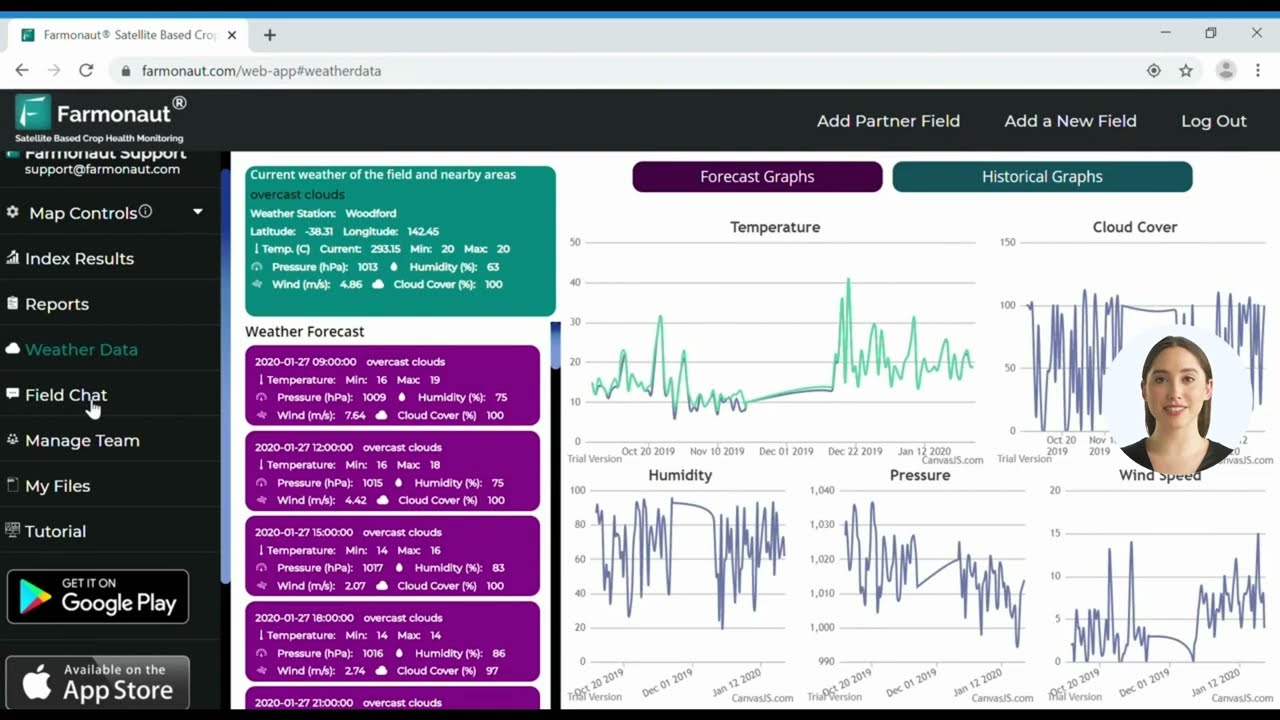
Developers building on top of this kind of monitoring can integrate directly: Farmonaut’s open satellite API and its developer documentation cover the same multispectral and weather layers used for site oversight. Organizations managing land at scale — multiple mining or gemstone-adjacent sites — can use the large-scale admin platform to track several locations from one dashboard.

Try the monitoring tools yourself:






FAQ: Taaffeite Gemstone
- What is taaffeite made of?
A beryllium-bearing magnesium aluminum oxide, BeAl6O12. The beryllium is what separates it from spinel, which shares a similar look but a different formula and single refraction. - How much is taaffeite worth per carat?
National Jeweler documents three retail bands: $1,500–$2,500 per carat for light color saturation, $5,500–$7,500 per carat for fine, saturated color, and up to $15,000 per carat for intense color with eye-clean clarity. There is no government or market-weighted index behind these figures — they are trade-reported retail ranges. - What is the price of a taaffeite stone versus taaffeite rough?
The published bands above apply to faceted, retail-ready stones. Rough taaffeite pricing isn’t separately published; if you’re sourcing rough, get a per-stone quote from a dealer and have it independently verified against a refractive-index test before agreeing to a price. - How rare is taaffeite compared to other gemstones?
The International Gem Society’s archive lists roughly 50 identified specimens worldwide, ranging from 0.84 to 13.22 carats. That’s a catalogued-specimen count, not an annual mining yield — there is no annual production figure because taaffeite isn’t extracted as a targeted commodity. - How can I tell taaffeite from spinel?
Spinel is singly refractive; taaffeite is doubly refractive and pleochroic, showing a color shift (typically pink to violet) as the stone is rotated under a single light source. A refractive-index test at a gem lab is the definitive check — this is the same test that identified the original 1945 specimen. - Where does taaffeite come from?
Documented occurrences include Sri Lanka, Myanmar, China, and Australia, per the International Gem Society. It typically turns up as a byproduct of alluvial gravel washing for spinel and sapphire, not from dedicated taaffeite mining. - Does GIA grade taaffeite on its own scale?
No. GIA, AGS, and other major labs do not issue a taaffeite-specific grading scale. You can still get species identification and general clarity/color notes from a standard lab report — just don’t expect a graded scale comparable to diamond grading. - Is taaffeite a good investment?
There’s no published data on taaffeite’s price history, demand elasticity, or resale liquidity, so treat any investment claim skeptically. What is documented is extreme rarity (about 50 known specimens) and a wide, verified retail band ($1,500–$15,000/ct). If you’re buying to hold, prioritize a lab-verified species ID and provenance documentation over any prediction about future price.
The Bottom Line on Taaffeite Value
Taaffeite’s price sits in three documented bands — $1,500–$2,500, $5,500–$7,500, and up to $15,000 per carat — driven almost entirely by color saturation and clarity, not by a market you can chart the way you’d chart gold or diamonds. That’s because it isn’t a tracked commodity: no USGS production data, no Census trade classification, no lab-specific grading scale. The durable part of this story isn’t a number — it’s the verification method. Refractive index and birefringence testing is what separated the first taaffeite from spinel in 1945, and it’s the same test that protects a buyer today, regardless of what the quoted price happens to be next year.
If you’re evaluating a specific stone, start with the checklist in this article — refractive index test, lab species ID, pleochroism check under rotation, and a price cross-check against the three National Jeweler bands — before you rely on any quoted number, including the ones cited here.
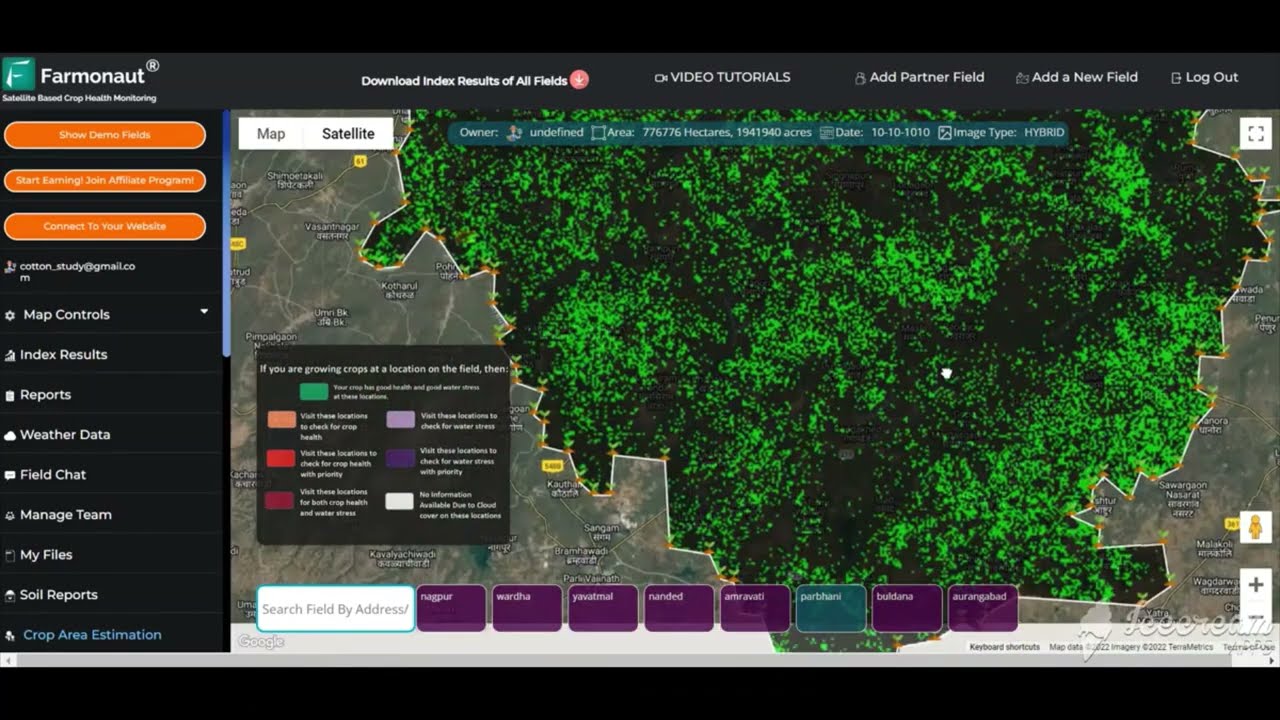
For teams tracking gemstone or mineral extraction sites more broadly, Farmonaut’s large-scale mapping platform supports land management across multiple locations, for both agricultural and mining-adjacent operations.
For more on supply chain authenticity for rare minerals, see Farmonaut’s traceability solutions.


 Huckleberry Garnet LLC
 Dalgety Minerals Pty Ltd
 Vortex Minerals Pty Ltd
 Faith At Work (Pty) Ltd
 Geotech Mining Solutions plc
 Vulcan International Limited
 Kidepo Associates
 GKY Mining
 Alkimy SARL
 Double A Trading
 GemSprout Metals Limited
 Qader Group
 Ileys General Trading
 SG Gold Mining LLC
 VRV Global Pte Ltd
 Omsri International FZE
 G.I.T.T.
 Jaunita Erss Ltd
 Almosi SARL
 SRK Consulting
 Berks Gold Limited
 Mwerezi Minerals Company Limited
