

Montana mines · Status guide
Montana Gold and Silver Mines: Open, Closed, Proposed
No large Montana site now produces gold or silver as its main product. Stillwater mines palladium, Butte mines copper, Golden Sunlight closed in 2019 and Montanore is an exploration project. Status table, resource charts and a value calculator.
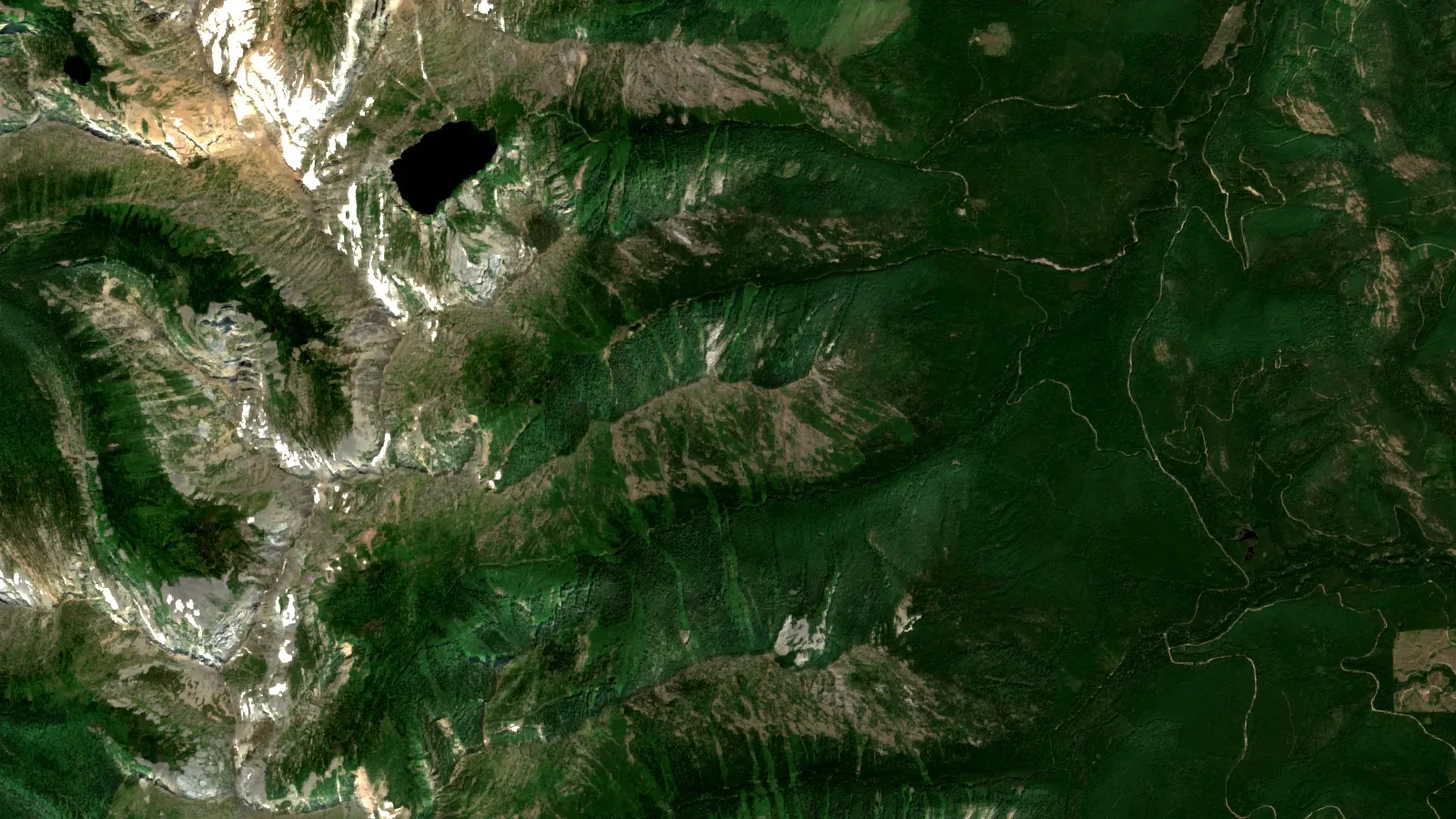
Key takeaways
- Montanore is not a working mine: Hecla runs it as the Libby Exploration Project, and the Forest Service approved underground exploration only in October 2025 (MTFP).
- Hecla reports an inferred resource at Libby of 183.3 million ounces of silver and 759,420 tons of copper (Hecla, 31 December 2025); inferred is the lowest-confidence class.
- Golden Sunlight produced over 3 million ounces of gold before closing in 2019; it now reprocesses tailings (Mining Technology, 2022).
- Montana’s operating precious-metal mines produce palladium and platinum: Sibanye-Stillwater mined 284,069 ounces of 2E PGM in 2025 (Sibanye, 2026).
- Montana Tunnels has been idle since 2008; Montana DEQ received US$20.78 million for reclamation on 11 September 2026.
In this article
- Which Montana gold and silver mines are operating
- Montanore and the Libby Exploration Project explained
- Libby and Rock Creek compared: silver, copper and grade
- How to read resource classes in a Montana mine report
- What the metal in a silver-copper deposit could be worth
- Golden Sunlight: the gold mine now in closure
- Butte: from placer gold to silver and copper
- Stillwater and East Boulder: Montana's palladium and platinum mines
- Montana Tunnels: idle since 2008
- Where Montana sits in US gold and silver output
- How to check a Montana mine, permit or claim yourself
- Frequently asked questions
Which Montana gold and silver mines are operating
None of the large sites below is producing gold or silver as its main product. The Montana mines that operate at scale mine palladium and platinum (Stillwater and East Boulder) or copper and molybdenum (Butte). The best-known gold mine, Golden Sunlight, closed in 2019, and the silver-copper deposit often called Montanore is at the exploration stage, not in production. The table sets out what each site is and where it stands, using the operator, regulator or government source named on each row.
| Site | Main metals | Status | Source |
|---|---|---|---|
| Stillwater and East Boulder (Sibanye-Stillwater) | Palladium, platinum | Operating (Stillwater East and East Boulder); Stillwater West is on care and maintenance. US operations mined 284,069 ounces of 2E PGM (palladium plus platinum) in 2025 | USGS; Sibanye-Stillwater |
| Montana Resources, Butte | Copper, molybdenum | Operating; the company says reserves support mining through 2054 | Montana Resources |
| Golden Sunlight (Barrick), near Whitehall | Gold | Mine closed 2019; tailings reprocessing plant opened in 2022 | Mining Technology |
| Montana Tunnels, near Jefferson City | Gold, silver, zinc, lead | Idle since 2008; sold out of bankruptcy, DEQ received US$20.78 million for reclamation on 11 September 2026 | Montana DEQ |
| Libby Exploration Project (formerly Montanore), Hecla | Silver, copper | Forest Service approved underground exploration in October 2025; no mine permitted | MTFP; Hecla |
| Rock Creek, Hecla | Silver, copper | Hecla says it will not seek exploration permits until Libby advances | MTFP; Hecla |
This table lists the major sites, not every small operation, placer or exploration project in the state. For permit-level detail, the Montana Department of Environmental Quality (DEQ) publishes operating permits and notices. Mining consultants who need a state-wide screen can pair that record with the claim data described in the last section.
Montanore and the Libby Exploration Project explained
The Montanore name belongs to a silver and copper deposit in the Cabinet Mountains of Lincoln County, about 20 miles south of Libby, not to a producing mine. A mine was first proposed in the early 1980s and a roughly 14,000-foot tunnel (an adit) was driven toward the deposit. After a series of small owners, Hecla bought it in 2016 for US$30 million, according to MTFP. Hecla now calls the project the Libby Exploration Project, and it is run by Hecla’s subsidiary Montanore Minerals.
Chart
Contained silver in Hecla’s two Montana inferred resources
Million ounces, inferred resource, 31 December 2025
The deposit is large but unproven. In its table of resources and reserves dated 31 December 2025, Hecla reports an inferred resource at Libby of 112.2 million short tons grading 1.63 ounces of silver per ton and 0.68% copper. That holds 183.3 million ounces of silver and 759,420 tons of copper. “Inferred” is the lowest-confidence resource class: the estimate rests on limited drilling and cannot be used for a mine plan. Hecla calculated it at assumed prices of US$26 per ounce of silver and US$4.00 per pound of copper, with a cut-off value of US$35.10 per ton of net smelter return (the value of the metal after smelting charges).
The Kootenai National Forest issued a decision approving exploration in early October 2025. Under the plan, Hecla would dewater the flooded part of the existing adit (about 7,000 feet is underwater), extend it by 4,200 feet and add about 6,300 feet of new tunnels from which to drill. The evaluation would run 16 years and employ 30 to 35 people, and Hecla says no new surface land will be disturbed beyond the 11.6 acres already cleared. Any mine would need a new proposal and a new environmental review.
As of the latest dated report (MTFP, 9 October 2025), DEQ had not issued the water discharge permit Hecla needs, and Hecla had said it expected it by mid-2026. DEQ had issued a draft permit for the Libby Creek Adit in November 2024, then withdrew the notices on 15 November 2024 because the applicant planned to submit more information. Opponents including the Montana Environmental Information Center say the federal review was rushed and did not address the risk of draining water from wilderness lakes and streams; the site lies beneath the Cabinet Mountains Wilderness near habitat for grizzly bears and bull trout.
A rough picture of scale helps. The deposit is large enough to put Montana on the map for future silver, but no production date has been set. Hecla itself says mining would be about a decade away if exploration proves it worthwhile. For a look at the state’s gold side, our guide to gold mining in Montana: permits, fees and satellite targets covers the rules.
Libby and Rock Creek compared: silver, copper and grade
Hecla holds a second silver-copper deposit in the same belt, Rock Creek in Sanders County, which it gained when it bought Revett Mining in 2015. Both are reported as inferred resources in the same Hecla table, so they can be compared on the same basis. Libby holds more silver, but the grades are close.
Chart
Grades are close at the two Montana deposits
Inferred resource grade, 31 December 2025
Two cautions apply. First, a larger inferred resource is not a better mine: neither deposit has a feasibility study. Second, Hecla’s own table sets the Libby figures against a 15-foot minimum thickness and recoveries of 88% for silver and 92% for copper, and those are the assumptions behind the numbers, not results from a plant.
How to read resource classes in a Montana mine report
Most confusion about Montana gold and silver mines comes from mixing up resources and reserves. A short guide helps when you read a company table or a technical report.
- Grade is the amount of metal in the rock. Silver is quoted in ounces per short ton (oz/ton) in US reports, gold in grams per tonne (g/t) or ounces per ton, and copper in per cent.
- Inferred resource is the lowest-confidence class. It rests on limited sampling, and it cannot be converted directly into a reserve. Both Libby and Rock Creek are inferred.
- Indicated and measured resources have more drilling behind them. They can feed a feasibility study.
- Reserves are the part of a resource shown to be economic after mining, processing, cost and permit tests. A reserve is the only class that belongs in a mine plan.
- Cut-off value is the lowest ore value that still pays for mining and processing. Raise the assumed price and the cut-off falls, which makes a resource look bigger. Always read the price deck in the footnotes.
- NSR (net smelter return) is the value left from a ton of ore after smelting and refining charges.
Apply that to the Hecla table. Its Libby and Rock Creek rows both state the metal prices used, the minimum thickness and the assumed recoveries. A claim that a Montana deposit “holds” a number of ounces is only as good as that footnote.
What the metal in a silver-copper deposit could be worth
The calculator below turns tonnage, grade, recovery and price into contained and recovered metal. The defaults are round example numbers that sit near the Libby inferred resource; they are not Hecla’s figures and not a forecast. The result is gross metal value before mining, processing, transport and royalty costs, so it is never profit. If you are screening a deposit for a client, change every input to the figures in the technical report you are reading.
Calculator
What is the metal in a silver-copper resource worth?
Enter your own tonnage, grades, recoveries and prices.
- Contained copper: 700 k tons
- Recovered silver value: 3,825 US$ million
- Recovered copper value: 5,040 US$ million
- Gross recovered metal value: 8,865 US$ million
Example values only, near the order of Hecla’s Libby inferred resource but not its figures and not a forecast. Prices are inputs: example, use today’s price. Short tons and US$ throughout. The result is gross metal value before mining, processing, transport and royalty costs, so it is not profit. Copper is converted at 2,000 pounds per short ton.
Golden Sunlight: the gold mine now in closure
Golden Sunlight in Jefferson County produced more than three million ounces of gold over nearly 40 years and closed in 2019 when gold production was no longer economically viable, according to Mining Technology. Barrick, the owner, then built a plant that reprocesses the old tailings (the crushed rock left after gold was extracted) to remove and concentrate the sulphur-bearing mineral pyrite. The pyrite is sold on to Barrick’s Nevada Gold Mines for use in gold processing, and the remaining material is backfilled into the Mineral Hill pit. The plant opened in February 2022, and Barrick said removing the pyrite also takes away a possible source of groundwater contamination.
Chart
US gold mine production keeps drifting down
Metric tons per year; 2025 is an estimate
That makes Golden Sunlight a closure project, not a producing gold mine. It also shows a pattern in the national numbers: US gold output has been drifting down while the value of each ounce has risen. The USGS puts US mine production at 160 tons in 2025, down from 187 tons in 2021.
▶ Follows gold from rock to ring: drilling, crushing, dissolving and refining. · 5:27
Butte: from placer gold to silver and copper
Butte began as a placer gold camp. Prospectors were washing gold from the creek gravels by 1864, and by 1871 the placers had been worked as far as the water supply allowed, according to the Mining History Association. Silver was found in the veins, and after the railway arrived in 1880 growth was rapid. Copper then took over: by 1896 the district was producing about 210 million pounds of copper a year, over 26% of world supply and 51% of the US supply,, the share behind Butte’s old nickname, the “Richest Hill on Earth”.
Today the mine at Butte is a copper and molybdenum operation. Montana Resources, owned by The Washington Companies, runs the Continental open pit and concentrator, and says it has produced over 2.5 billion pounds of copper and 300 million pounds of molybdenum since 1986. It also says current reserves support mining through 2054. Those are company statements, so read them as such. Silver here was historically a by-product of copper-lead-zinc ore, which is how many US silver ounces are produced today.
Stillwater and East Boulder: Montana’s palladium and platinum mines
Montana’s biggest active hard-rock miner of precious metals produces neither gold nor silver. The USGS reports that one company in Montana mined and processed platinum-group metals worth an estimated US$290 million in 2025, down 31% from 2024, because one operation was on care and maintenance. That company is Stillwater Mining, a subsidiary of Sibanye-Stillwater. Sibanye reported that its US operations mined 284,069 ounces of 2E PGM (palladium plus platinum) in 2025, which was 33% lower than a year earlier, at an average basket price of US$1,195 per ounce.
The East Boulder mine has an approved state plan to keep going. In August 2024 DEQ and the Custer Gallatin National Forest published a final environmental impact statement for an expansion that would add a tailings storage facility and waste rock storage, giving capacity for about 11 to 14 years at current rates. Local land and water questions are covered in our Sibanye-Stillwater Montana impacts guide.
▶ A plain-language claymation on the seven environmental impacts of mining. · 2:31
Montana Tunnels: idle since 2008
Montana Tunnels near Jefferson City was an open-pit mine for gold, silver, zinc and lead. DEQ states that it has been idle since 2008, that its permit was suspended in 2018 for inadequate bonding, and that the bond was forfeited in 2024. On 11 September 2026 DEQ announced that it had received US$20.78 million from the mine owner’s bankruptcy, through a structured sale to Silver Bow Mining Corp. and Silver Bow Tunnels Corp. DEQ says the payment ensures reclamation requirements can be met and may open a path for the buyers to become a permitted operator. Nothing in that notice sets a restart date.
For the wider history of mining damage in the state, see our article on the Anaconda mining company in Montana and its effect on soil and water.
Where Montana sits in US gold and silver output
Montana is not a leading state for either metal. The USGS says Nevada produced about 64% of US gold in 2025 and Alaska about 22%, and that Alaska led US silver production, followed by Nevada. About 7% of US gold is recovered as a by-product of base-metal ores, chiefly copper. Silver output is steadier: US mines produced about 1,100 tons in 2025, up from 1,020 tons in 2021, from 4 silver mines and 31 base- and precious-metal operations (USGS).
Chart
US mine silver production, 2021 to 2025
Metric tons per year; 2025 is an estimate
The price side moves more than the tonnage. The USGS gives an average silver bullion price of US$38 per troy ounce for 2025 against US$28.37 for 2024. That helps explain why silver-copper projects such as Libby are being drilled again.
How to check a Montana mine, permit or claim yourself
- Search the claim record. The Bureau of Land Management (BLM) runs the Mineral and Land Records System (MLRS), where unpatented lode and placer claims can be looked up. BLM’s Montana mining claim packet explains the process.
- Check recording deadlines. A new claim needs a certificate of location and map recorded with the county Clerk and Recorder within 60 days of the location date, and a copy filed with BLM by the 90th day (BLM, February 2026).
- Look up the operating permit. Hard-rock operations need a DEQ operating permit, and discharge permits are published as public notices with comment windows.
- Read the resource class. Ask whether a figure is inferred, indicated, measured or a reserve before you rely on it, and which prices it assumes.
- Screen the ground. Satellite imagery can map alteration and structure over a licence area as an exploration target, ahead of any resource estimate. Our guide to US copper, gold and uranium sites shows how that fits with public records.
Prospecting on public or private land needs permission from the landowner or land manager, the right licence or claim, and safe practice. Never use mercury.

▶ Explains what satellites can and cannot show when screening ground for minerals. · 4:25
If this topic matters to you, read Blue Lace Agate Mine: Location, Status and Fire Agate next.
Related reading on this site: Diamond Mines in Australia: Operating, Closed, Planned.
Frequently asked questions
Is the Montanore mine open?
No. Montanore is an undeveloped silver-copper deposit that Hecla now explores as the Libby Exploration Project. The Forest Service approved underground exploration in October 2025, and no mine has been permitted.
Who owns the Montanore deposit?
Hecla Mining Company owns it through its subsidiary Montanore Minerals. Hecla bought the project in 2016, according to MTFP.
How much silver is at Libby?
Hecla’s table of 31 December 2025 lists an inferred resource of 183.3 million ounces of silver and 759,420 tons of copper. Inferred means low confidence, so it is not a reserve.
Is there an active gold mine in Montana?
None of Montana’s large mines produces gold as its main product. Golden Sunlight closed in 2019 and Montana Tunnels has been idle since 2008. The USGS lists more than 40 US lode gold mines in 12 states, and small placer and exploration operations exist in Montana, so check DEQ permits for the latest list.
Which Montana mine makes the most precious metal?
Stillwater and East Boulder, which mine palladium and platinum. Their US operations mined 284,069 ounces of 2E PGM in 2025 (Sibanye-Stillwater).
What happened to Golden Sunlight?
The mine produced more than three million ounces of gold, closed in 2019 and now hosts a tailings reprocessing plant that recovers pyrite for Nevada Gold Mines.
Is Montana Tunnels going to reopen?
DEQ says the mine has been idle since 2008 and was sold out of bankruptcy in September 2026. The buyers might become permitted operators, but DEQ gives no restart plan.
Where was most of Montana’s historic silver mined?
At Butte, where silver was found in the veins after the placer gold ran out. Copper later became the main product.
How do I stake a mining claim in Montana?
Locate the claim on open federal land, record a certificate of location and map with the county within 60 days, and file with BLM by day 90. Check land status in MLRS first.
Can satellites find gold or silver in Montana?
They cannot see metal. They map the iron-oxide, clay and structural patterns around mineral systems, which helps rank ground for field work. Farmonaut offers this kind of screening for a licence area in 5 to 20 business days.
This page is for information only. It is not investment advice or legal advice. Resource figures are company estimates, not reserves. Confirm claim and permit rules with BLM and Montana DEQ.
Farmonaut mining
Map your mining site from space
Consultants can screen a licence or claim area with satellite data as an exploration target, ahead of any resource estimate.

Mining Pro sample view, synthetic data
Keep reading
Sources
- Hecla Mining, Reserves and Resources Table (31 December 2025): hecla.com
- MTFP, Trump administration approves mine exploration project near Libby (9 October 2025): montanafreepress.org
- The Western News, Feds approve Libby mine exploration project (7 October 2025): thewesternnews.com
- Montana DEQ, Montanore permit notices MT-24-11 and MT-24-13 (November 2024): deq.mt.gov
- Montana DEQ, $20.78 million for Montana Tunnels reclamation (11 September 2026): deq.mt.gov
- Montana DEQ, final EIS for the East Boulder Mine expansion (August 2024): deq.mt.gov
- USGS, Mineral Commodity Summaries 2026: Platinum-group metals: pubs.usgs.gov
- USGS, Mineral Commodity Summaries 2026: Gold: pubs.usgs.gov
- USGS, Mineral Commodity Summaries 2026: Silver: pubs.usgs.gov
- Sibanye-Stillwater, Form 6-K with H2 2025 results (SEC): sec.gov
- BLM, Montana mining claim packet (9 February 2026): blm.gov
- Montana Resources, About: montanaresources.com
- Mining History Association, Butte history: mininghistoryassociation.org
- Mining Technology, Golden Sunlight tailings reprocessing (14 February 2022): mining-technology.com
Discussion
Questions, corrections or field experience? Share them below. First-time comments are reviewed before they appear, and your email is never published.
No comments yet. Be the first to add a question or your experience.

 VRV Global Pte Ltd
 Omsri International FZE
 G.I.T.T.
 Jaunita Erss Ltd
 Almosi SARL
 SRK Consulting
 Berks Gold Limited
 Mwerezi Minerals Company Limited
 Mining SARL
 SenGold Invest SAS
 Sean Mining Limited
 NTS Group (Pty) Ltd
 Mine4Africa
 Lithspo Minerals Limited
 Tintina Mining Group
