

Diamond exploration · Tool comparison
AI Tools for Diamond Exploration: 7 Systems Compared
Seven named AI and automation systems used or tested in diamond exploration, mining and sale, from Botswana prospectivity models to X-ray sorting, each with its evidence level, its main limit and a recovery-gain calculator.
Key takeaways
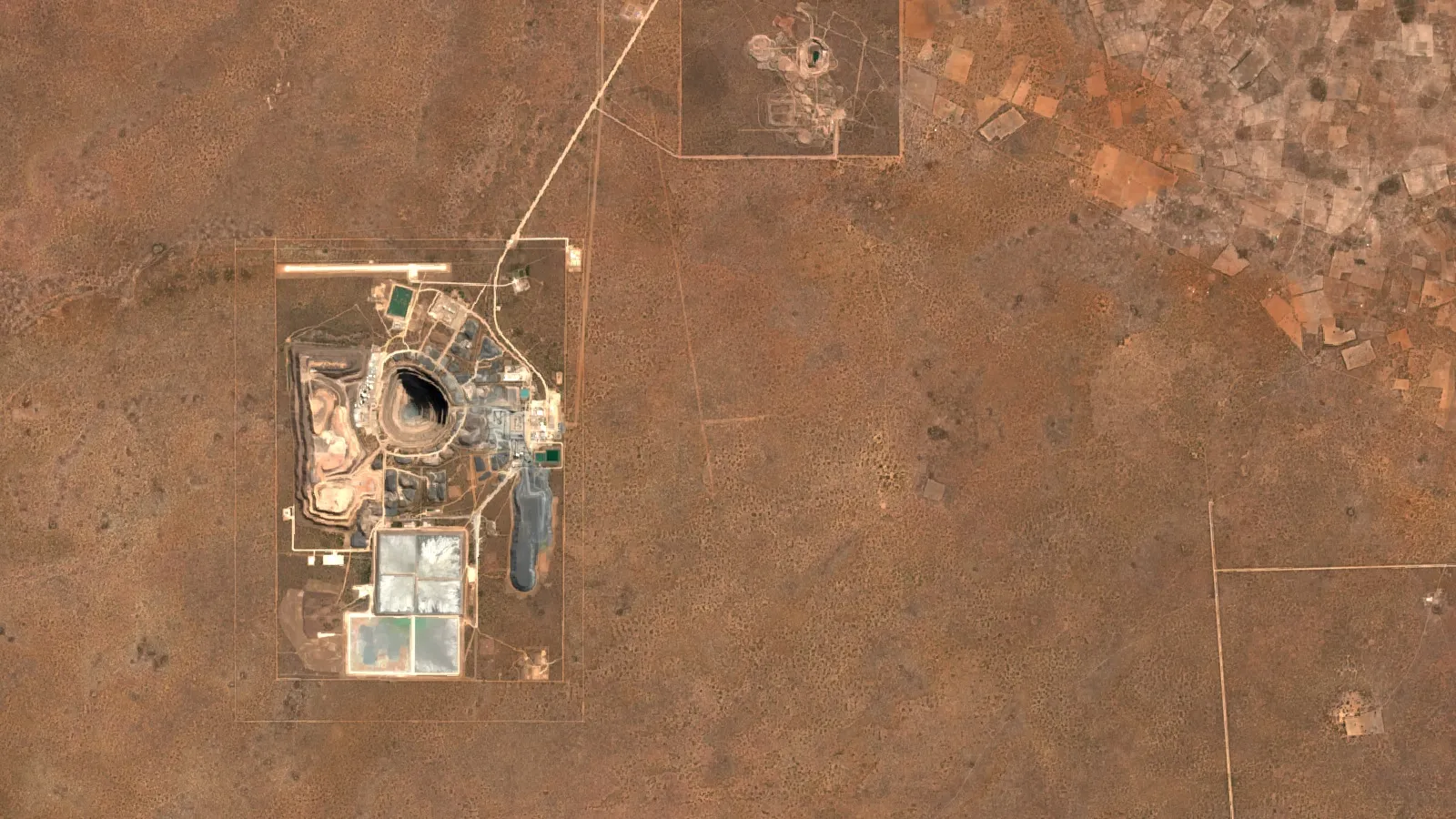
- AI targeting in Botswana produced licences and targets: four prospecting licences covering 2,644 km² were reported in 2025, but the sources opened report no drilled discovery (Mining Technology).
- A 2024 zircon study found a random forest model had an overall error rate of about 7%, while an older tree method misclassified about 36% of the kimberlite zircons in the same data set (the two figures measure different things) (Hardman and others, 12th International Kimberlite Conference).
- X-ray transmission sorting has the clearest mine record: Lucara reported a 2,492 carat stone from its Karowe circuit in 2024, but the sources do not say machine learning does the detecting.
- Most diamond ore bodies hold less than 1 to about 6 carats per ton, and U.S. gemstone imports fell 44% in 2025 (estimate) to about US$11 billion (USGS, 2026).
- Ask any vendor what it found, who checked it and which step uses machine learning before you pay.
In this article
- How we chose these AI tools
- 7 AI and automation tools for diamond exploration and mining
- Comparison of the seven tools
- How accurate is machine learning on diamond indicator minerals
- Why diamond miners want cheaper searching
- What a small recovery gain is worth
- Where AI fits between licence and sale
- What to check before you buy an AI diamond tool
- Searching for diamonds yourself
- Where satellite screening fits
- Frequently asked questions
AI and automation are used in diamond work today in five main jobs: ranking ground for exploration, classifying minerals, sorting ore, running machines and planning or grading stones. The public evidence is uneven. X-ray sorting and autonomous machines have documented mine installations. AI targeting for new kimberlite pipes rests mostly on company reports and research papers, and the sources behind this page do not show a pipe found and proven by AI alone. This guide lists seven named systems, says what each one is and gives its evidence level and its main limit.
Tools 3, 4 and 6 below are image analysis, sensing and machine automation. They are included because sellers market them as AI, and the text says what each source shows. Two terms first. A kimberlite is a volcanic rock that forms a pipe-shaped body and carries diamonds up from the mantle. Indicator minerals are minerals that travel with kimberlite and can be found in soil or stream samples, so geologists trace them back to the source. A carat is the weight unit for diamonds. This page gives facts and sources. It is not investment advice.
How we chose these AI tools
We kept a tool only if a source we opened names the system, the user or author, and what it was used for. We left out claims with no named example. The order follows the value chain from exploration to sale, not a score, so number 1 is not the best.
Each tool gets an evidence label. In operation means a mine or lab uses it and a dated source says so. Company-reported means the company says it works and no outside check is published in the sources we opened. Research means a paper or conference abstract tested the method, often on a small or simulated data set. Company roadmap means a plan, not a result. Announced pilot means a test that was announced, with no finished result in the sources we opened.
The old version of this article gave a table of efficiency gains such as 40-55% for data platforms and said that more than 70% of new exploration projects would use AI. We found no source for those figures, so we removed them. This page gives no invented percentages.
▶ Explains the three jobs an AI mining app can do, finding places to look, planning the mine and running it, and who builds such apps. · 3:52
7 AI and automation tools for diamond exploration and mining
1. AI prospectivity mapping from old survey data
Best for: juniors and licence holders with decades of airborne survey, soil and drilling records. Example: Botswana Minerals plc (AIM: BMIN, formerly Botswana Diamonds) used the Xplore platform from Planetary AI (Mining Weekly, December 2024) on its geological database. Evidence: company-reported.
The company’s models weighed mineral chemistry, distance to major structures and geophysical anomalies, plus signals such as slightly abraded stones, shallow Kalahari sand cover and the low magnetic signature typical of ilmenite-poor Group 2 kimberlites. Mining Technology reported four prospecting licences covering 2,644 km² that came out of the programme (RNS of 29 July 2025: PL298, PL303, PL304 and PL305, reported as valid until 2025). In February 2026 the company changed its name after an AI review of a 95,000 km² database, with 375,000 line kilometres of geophysics, pointed to eleven copper target areas and eight new copper licences, and also flagged more diamond ground.
Pros: cheap compared with new surveys, because it reuses data the company already owns. Limits: a target is not a discovery, and the sources we opened report licences and targets, not a drilled and proven pipe. Results depend on the quality of the old data, and a model can only repeat patterns that are in it.
2. Machine learning on indicator-mineral chemistry
Best for: teams with sample geochemistry who need to tell kimberlite minerals from look-alikes. Example: a 2024 extended abstract by researchers at the Gemological Institute of America, the University of Alberta, the Geological Survey of Brazil and the British Columbia Geological Survey. Evidence: research.
The authors trained random forest models on trace-element ratios in zircon, a tough mineral that survives weathering and river or glacial transport. A random forest is a set of decision trees that vote on an answer. Their preliminary model separated kimberlite zircon from other rock types with an error rate of about 7%, while an older classification-tree method misclassified about 36% of the kimberlite zircons in their new data set.
Pros: measurable error rates and a method others can repeat. Limits: the authors call the results preliminary and note overlap between kimberlite and carbonatite zircon. A model like this ranks samples. It does not locate a pipe by itself.
3. Satellite and airborne image classification
Best for: screening large licences before ground work. Example: a 2024 Geological Survey of Brazil paper on the Redondão kimberlite crater in the Parnaíba Basin. Evidence: research.
The study combined airborne gamma-ray data with ASTER satellite images. It reported that potassium concentrations inside the intrusion stood out from the surroundings and that three spectral signatures suggest chlorite, diopside and phlogopite, but it also says the source of the potassium is unclear and recommends further work with hyperspectral data. The paper does not use machine learning: it applies spectral and radiometric analysis, the kind of input that AI models take. Satellites cannot see a diamond. They map surface rock, soil and structure, which can flag a crater, a lineament or an alteration zone worth a visit.
Pros: covers large areas without field crews. Limits: sand, soil or vegetation cover hides many kimberlites, and the result is a target to check on the ground.
4. X-ray transmission sorting for large stones
Best for: mines that produce large, valuable stones and want to save them from crushing damage. Example: TOMRA X-ray transmission (XRT) sorters at Lucara’s Karowe mine in Botswana. Evidence: in operation.
XRT sorters detect the atomic-number signature of diamond, according to TOMRA’s segment manager in a 2017 trade report. The first six sorters at Karowe were commissioned in April 2015. A Mega Diamond Recovery circuit, added in 2017, sits after the primary crusher and before milling, so big stones come out before they can break. Lucara reported a 2,492 carat diamond recovered with this technology in 2024.
Pros: documented large-stone recoveries. Limits: XRT is a sensor method. The sources we opened do not say that machine learning does the detecting, and the 2015 plant still sends the concentrate to hand sorting in secure glove boxes. Vendor statements are the vendor’s own claims.
5. Machine-learning classifiers for sorting rock
Best for: research groups looking at earlier sorting, before crushing. Example: a 2018 University of Johannesburg conference paper on positron emission tomography (PET) images of kimberlite rock. Evidence: research, on simulated data.
The authors reconstruct 3D images from detector hits and feed bright-spot features to machine-learning classifiers. They tested simulated 10 cm kimberlite rocks holding diamonds of various sizes and describe the result as the first application of automated diamond detection with machine classifiers. The goal is to find diamond-bearing rock before crushing breaks stones and before water and energy go into barren rock.
Pros: a clear route to less breakage and less waste. Limits: the abstract reports simulated rocks only, so it is a method under test, not a plant in use.
6. Autonomous underground fleets
Best for: large underground diamond mines that want fewer people in hazardous areas. Example: the De Beers Venetia Underground mine in South Africa, with Sandvik as the primary technology partner. Evidence: company roadmap.
De Beers described a phased plan in 2023: first automated machines that still carry an operator, then autonomous machines, then full autonomous systems run by a central traffic management system. The stated aim was several autonomous mining systems working on multiple processes by 2027. The mine replaces the open pit and extends life to at least 2046, using sub-level caving.
Pros: safety gains and steadier cycles are the stated goals. Limits: the roadmap is dated March 2023 and its 2027 target is a plan, not a result. Autonomy here is machine control and traffic management, which is automation more than AI. De Beers staff also noted that the company’s 2005 haul loop at Finsch covered one machine type on a single level.
7. AI planning and grading of stones
Best for: manufacturers deciding how to cut rough, and labs grading polished stones. Examples: Sarine’s MVP planning service and the GIA and IBM clarity-grading project. Evidence: company-reported (Sarine) and announced pilot (GIA, 2020).
Sarine, listed in Singapore and Tel Aviv, says MVP uses algorithms and cloud computing to generate and evaluate millions of planning options for a rough stone, with AI used to speed up development of those algorithms. GIA announced in 2020 that it was training an IBM system on its reference stones, and tested it internally on stones of 4 carats and under with human graders checking the output.
Pros: repeatable results and speed. Limits: these tools sit after the mine, so they do not help you find diamonds. GIA’s 2020 plan was to begin sending AI-graded stones out in 2021.
Comparison of the seven tools
| Tool | Stage | Named example | Evidence | Main limit |
|---|---|---|---|---|
| 1. Prospectivity mapping | Targeting | Botswana Minerals with Planetary AI Xplore | Company-reported | Targets, not proven discoveries |
| 2. Indicator-mineral ML | Sample analysis | Zircon random forest (2024 abstract) | Research | Preliminary, class overlap |
| 3. Image classification | Screening | Redondão ASTER and gamma-ray study | Research | Cover hides pipes |
| 4. XRT sorting | Recovery | TOMRA XRT at Karowe | In operation | Sensor method, not shown to use ML |
| 5. ML rock sorting | Early sorting | PET imaging with classifiers | Research (simulated) | Simulated rocks only |
| 6. Autonomous fleets | Mining | Venetia Underground and Sandvik | Company roadmap | Roadmap dated 2023 |
| 7. Planning and grading | Cutting and sale | Sarine MVP, GIA and IBM | Company-reported / pilot | Works after the mine |
How accurate is machine learning on diamond indicator minerals
The sources we opened gave few published error rates, so the zircon study is useful as a yardstick. It reports three random forest results: about 7% error when separating kimberlite zircon from other rock types, about 10% for kimberlite versus a mantle rock suite called MARID, and about 17% when trying to pick zircon from kimberlites that host very deep (“superdeep”) diamonds. The 17% case is the hardest and the authors say it needs more samples from more localities.
Chart
Zircon classification error, by question asked
Percent misclassified. Older method: kimberlite zircons only. Random forest: overall error for each question (preliminary models)
The chart shows why a stated error rate matters. The random forest error rates run from about 7% to about 17% depending on the question asked, and the older method’s 36% is a separate measure taken on kimberlite zircons only. When a seller of an AI diamond tool quotes a success rate, ask what the test data were and who checked.
Why diamond miners want cheaper searching
The market is under pressure. The USGS says the natural diamond downturn that began in early 2023 hit the lower end hardest, and cut the ability of mining companies to keep operating. U.S. imports of gemstones were about US$11 billion in 2025 (estimate), a 44% fall from US$19.6 billion in 2024. For the wider diamond market, the USGS names weaker luxury demand, excess stock and cheaper synthetic diamonds as causes of the downturn.
Chart
U.S. gemstone imports for consumption, 2021 to 2025
US$ billion; all gemstones, not only diamond; 2025 is an estimate
Chart
Gem-quality diamond mine production, 2025 estimate
Million carats, seven largest-producing countries
Ore bodies are lean. The USGS says most diamond ore bodies hold from less than 1 carat to about 6 carats per ton of ore. Russia, Botswana, Canada and Angola produce most gem-quality stones, so most AI exploration money in diamonds follows those regions. Natural stones are also a small share of the industrial market: natural diamond is less than 1% of all industrial diamond used, so the exploration case rests on gem-quality stones.
What a small recovery gain is worth
A tool that raises recovery by a small amount can pay for itself on a lean ore body, or not. The calculator below uses your own tonnes, grade, stone value, gain and annual cost. Every number is an example to replace, not a benchmark.
Calculator
What is a small recovery gain worth per year?
Enter your own tonnes, grade, stone value, gain and tool cost.
- Extra revenue per year: $500,000
- Extra revenue minus tool cost: $300,000
- Break-even recovery gain: 0.40 %
Example values only, not a benchmark. The 0.5 carats per tonne grade sits inside the USGS range for diamond ore (less than 1 to about 6 carats per ton; USGS writes ton, this calculator uses metric tonnes, and a short ton is about 10% lighter, so the figures are close but not identical; Mineral Commodity Summaries 2026). Extra recovery means the percentage of the carats in your ore that the tool adds to what you already recover, for example 1% of 500,000 contained carats is 5,000 carats. The stone value, recovery gain and tool cost are assumed examples: use your own and today’s rough prices. Result is gross revenue only; mining cost, royalties and tax are not included.
Where AI fits between licence and sale
The seven tools cover different stages and do not replace each other. A prospectivity model helps decide where to sample. Geochemistry and image work then narrow the list of targets. Only drilling and bulk sampling show whether a pipe carries diamonds in paying amounts. Sorting and planning tools matter after that.
Infographic
Where AI enters the diamond chain in 5 steps
- 1Screen the groundProspectivity models and satellite or airborne images rank areas to visit.
- 2Test samplesIndicator-mineral chemistry and machine-learning classifiers narrow the target list.
- 3Drill and evaluateDrilling and bulk sampling show whether a pipe carries diamonds in paying amounts.
- 4Mine and recoverAutonomous machines and X-ray sorters move and recover ore and protect large stones.
- 5Plan, grade and sellPlanning software and clarity grading support cutting and sale of the stones.
What to check before you buy an AI diamond tool
- What exactly did it find? Ask for a named discovery, a drilled hole or a recovery figure, not a “target” count.
- Who checked the result? Look for an independent test, a paper or a regulator filing, not only a press release.
- What data does it need? A model trained on 375,000 line kilometres of survey data will not help with one sample batch.
- Is the AI claim real? XRT detection and machine control are sensing and automation. Ask which step uses machine learning.
- What does it cost per licence or per tonne? Put the price into the calculator above before you sign.

▶ Six kinds of AI geology tools, what each one does, and three questions to ask before picking one. · 3:18
Searching for diamonds yourself
If you came here for a hobby search, no app we found finds diamonds for you. The place where the public can search for natural diamonds in their volcanic source is Crater of Diamonds State Park in Arkansas, where visitors search a 37-acre plowed field and keep what they find. As of 13 January 2026, park visitors had found more than 37,377 diamonds since 1972, including the 40.23-carat Uncle Sam, the largest unearthed in the U.S. Park staff identify finds on request. Away from the park, get the landholder’s permission and the right permit before you dig, check local mining and land-access law, and follow site safety rules for digging, water and heat.
Where satellite screening fits
Satellite screening sits at the start of the chain, in tool 3 above. Farmonaut lists diamonds among the materials its satellite mineral-detection service targets: a licence owner or consultant sends a KML, KMZ or polygon file and receives exploration targets to check on the ground. These are targets ahead of a resource estimate, not a diamond-grade result, and drilling is still needed. For related reading, see our guides to diamond drilling companies, survey sequencing for a first field season and exploration technologies.

▶ Why satellites cannot see gold itself but map the rock, iron stains, clay minerals and cracks around it; the same logic applies to kimberlite targets. · 4:25
Related reading on this site: GIS for Gold Exploration: 10 GIS and 3D Tools Compared.
Frequently asked questions
Can AI find diamonds?
AI can rank ground and samples, but it does not find a diamond by itself. The sources we opened show AI producing licences and targets, and research models that classify indicator minerals. Only drilling and sampling show whether a pipe holds diamonds.
What is the best AI tool for diamond exploration?
There is no single best tool, because the tools do different jobs. For targeting, look at prospectivity mapping and indicator-mineral models. For recovery, X-ray sorting has the clearest mine record. Match the tool to your stage and ask for tested results.
How does AI help find kimberlite pipes?
It combines airborne magnetic and other geophysical data, soil chemistry and structure maps and scores each area. The Botswana example weighed mineral chemistry, distance to structures and magnetic signatures, then used the scores to choose licence areas.
Can satellites see diamonds?
No. Satellites map surface rock, minerals such as chlorite, soil and structure. The Redondão study used ASTER images and gamma-ray data to pick out the crater, and it recommends hyperspectral work for more detail. A satellite result is a target to check on the ground.
Does AI sort rough diamonds better than people?
TOMRA says its X-ray sorters detect all diamonds in the feed, including low-luminescence stones that other recovery methods can miss, and at Karowe they protect large stones from breakage. The plant still hand-sorts the XRT concentrate. The sources we opened do not compare error rates between machines and people.
Is AI used to grade diamonds?
GIA announced in 2020 that it was testing an IBM system for clarity grading, with human graders checking results. Sarine describes its diamond grading as AI-enabled, but the press release we opened gives no detail on how it is used. Neither tool helps with finding diamonds.
Which companies make AI tools for diamonds?
Named in the sources we opened: Planetary AI (prospectivity platform Xplore), TOMRA (XRT sorters), Sandvik (underground machines at Venetia), Sarine (planning and grading) and IBM with GIA (clarity grading). Check each company’s own materials for current products.
How much diamond is in the ore?
The USGS says most diamond ore bodies hold from less than 1 carat to about 6 carats per ton of ore. That is why small recovery gains and early detection matter, and why the calculator above uses carats per tonne as an input.
Will AI make diamond mining cheaper?
Not by a figure we can source. Some tools aim to reduce breakage, waste or drilling, but the sources we opened do not give cost savings. Use the recovery-gain calculator with your own numbers, and ask vendors for tested results on similar ore.
Can I use AI to search for diamonds as a hobby?
No app that finds diamonds for you appears in the sources we opened. The public search site we found is Crater of Diamonds State Park in Arkansas, where finds are kept by the visitor. Follow the park rules and ask permission on private land elsewhere.
This page is for information only. It is not investment advice. Company statements are the companies’ own claims unless an outside source is named. Get the landholder’s permission and any permit before you dig or sample.
Farmonaut mining
Screen your licence area from space
Mining business owners can send a licence boundary as KML, KMZ or a polygon and request a quote for satellite-derived exploration targets, ahead of any resource estimate.

Mining Pro sample view, synthetic data
Keep reading
Sources
- USGS, Mineral Commodity Summaries 2026: Gemstones (February 2026): pubs.usgs.gov
- USGS, Mineral Commodity Summaries 2026: Diamond (industrial) (February 2026): pubs.usgs.gov
- Hardman and others, zircon and machine learning, 12th International Kimberlite Conference (2024): rigeo.sgb.gov.br
- Geological Survey of Brazil, Redondão kimberlite crater, ASTER and gamma-ray spectrometry (2024): jgsb.sgb.gov.br
- South African Institute of Physics, machine learning for sorting diamondiferous rock (2018): events.saip.org.za
- Mining Technology, Botswana Diamonds secures licences with AI exploration (2025): mining-technology.com
- The Energy Year, AI review prompts Botswana Diamonds to pivot to copper (25 February 2026): theenergyyear.com
- Crown Publications, XRT technology ushers in a new era in diamond recovery (7 June 2017): crown.co.za
- International Mining, TOMRA XRT units help recover unbroken 998 ct diamond at Karowe (11 November 2020): im-mining.com
- Miningmx, Lucara recovers huge 2,492 carat diamond from the Karowe mine (2024): miningmx.com
- International Mining, An autonomous mining roadmap for De Beers’ Venetia Underground (2 March 2023): im-mining.com
- National Jeweler, GIA will start using artificial intelligence for diamond clarity grading (6 August 2020): nationaljeweler.com
- Sarine Technologies, press release on AI at the CIBJO Centenary Congress (7 September 2026): links.sgx.com
- Arkansas State Parks, Crater of Diamonds State Park (accessed October 2026): arkansasstateparks.com
- Mining Weekly, Botswana Diamonds uncovers new kimberlite targets using AI (12 December 2024): miningweekly.com
Discussion
Questions, corrections or field experience? Share them below. First-time comments are reviewed before they appear, and your email is never published.
No comments yet. Be the first to add a question or your experience.

 WSP Investment Company
 Dalgety Minerals Pty Ltd
 Vortex Minerals Pty Ltd
 Faith At Work (Pty) Ltd
 Geotech Mining Solutions plc
 Vulcan International Limited
 Kidepo Associates
 GKY Mining
 Alkimy SARL
 Double A Trading
 GemSprout Metals Limited
 Qader Group
 Ileys General Trading
 SG Gold Mining LLC
 VRV Global Pte Ltd
 Omsri International FZE
 G.I.T.T.
 Jaunita Erss Ltd
 Almosi SARL
 SRK Consulting
 Berks Gold Limited
 Mwerezi Minerals Company Limited
 Mining SARL
