

Quartz · Properties guide
Quartz Material Properties: Crystal Form, 7 Types, Uses
Quartz is trigonal SiO2 with Mohs hardness 7, density 2.65 g/cm³, conchoidal fracture and a piezoelectric response (Handbook of Mineralogy). High-purity grades hold under 100 ppm impurities and sold for US$500 to US$12,000 a tonne in 2025 (USGS).
Key takeaways
- Core properties: SiO2, trigonal, Mohs 7, density 2.65 g/cm³, refractive indices 1.544 and 1.553 (Handbook of Mineralogy, 2001).
- Alpha quartz turns into beta quartz at 573 °C with a sudden volume change that can crack rock and ceramics.
- Colour varieties such as amethyst, citrine and smoky quartz come from trace elements, radiation or inclusions; most citrine sold is heated amethyst (GIA).
- High-purity quartz has under 100 ppm impurities; US value ranged US$500 to US$12,000 per tonne in 2025 (USGS, 2026).
- The US sold about 120 million tonnes of industrial sand and gravel in 2025, 81% for fracking and well work (USGS, 2026).
In this article
- Quartz material properties at a glance
- The crystal form of quartz: structure and shape
- Physical properties of quartz: hardness, density and fracture
- Optical and electrical properties of quartz
- Thermal properties: what happens to quartz when it is heated
- 7 types of crystal quartz compared
- Crystal white quartz: milky quartz in mining
- High-purity quartz: purity grades and US prices
- Industrial uses of quartz and silica sand
- How quartz is mined and processed
- Safety: respirable crystalline silica
- What to check before developing a quartz deposit
- Frequently asked questions
Quartz is silicon dioxide (SiO2) that crystallises in the trigonal system. Its core material properties are a Mohs hardness of 7, a density of 2.65 g/cm³, no useful cleavage, a glassy (vitreous) lustre, refractive indices of 1.544 and 1.553, and a piezoelectric response, according to the Handbook of Mineralogy data sheet. Low-temperature (alpha) quartz is stable up to 573 °C, where it changes to beta quartz.
Those numbers explain why the same mineral turns up in watch oscillators, solar crucibles, glass furnaces, oil-well sand and jewellery. This guide gives the full property table, the crystal form, the seven main types of crystal quartz, purity grades and the dated US prices for high-purity quartz, plus a calculator for anyone sizing a quartz or silica sand deposit.
Quartz material properties at a glance
The table below collects the properties that buyers, engineers and geologists ask about most. Values are for ordinary alpha quartz at room temperature unless the row says otherwise.
| Property | Value | Why it matters |
|---|---|---|
| Chemical formula | SiO2 with traces of other elements | Trace elements set the purity grade and the price |
| Crystal system | Trigonal (point group 32), space group P3121 or P3221 | No centre of symmetry, so the crystal is piezoelectric |
| Unit cell | a = 4.9135 Å, c = 5.4050 Å, Z = 3 | Used to identify quartz by X-ray diffraction |
| Mohs hardness | 7 (varies slightly by direction) | Scratches glass and steel; resists wear |
| Density | 2.65 g/cm³ (2.59 to 2.63 when massive) | Baseline for tonnage and gravity separation |
| Cleavage and fracture | Cleavage rarely seen; conchoidal fracture; brittle | Breaks into sharp, curved fragments |
| Lustre and streak | Vitreous; white streak | Field identification |
| Optical class | Uniaxial positive; nω = 1.544, nε = 1.553 | Birefringence of about 0.009 is used in optics |
| Electrical behaviour | Piezoelectric and pyroelectric; may be triboluminescent | Basis of quartz oscillators and sensors |
| Alpha to beta transition | 573 °C at normal pressure | Sudden volume change can crack rocks and ceramics |
| Melting behaviour | 1670 °C (as tridymite) to 1713 °C (as cristobalite) | Why fused quartz needs very hot furnaces |
Sources for the table: the Handbook of Mineralogy (Mineral Data Publishing, 2001), the Webmineral quartz data sheet for the space group and calculated density, and the summary of Deer and co-authors on the quartz reference page for the melting values.
The crystal form of quartz: structure and shape
Every quartz crystal is built from silicon-oxygen tetrahedra: one silicon atom sits inside four oxygen atoms. Each oxygen is shared by two tetrahedra, which gives the overall formula SiO2 and a continuous three-dimensional framework. Because there are no weak layers in that framework, quartz has no easy cleavage plane. It breaks with a shell-like (conchoidal) fracture instead.
The tetrahedra link in spirals that run along the long axis of the crystal. The spirals can turn left or right, so quartz exists as left-handed and right-handed crystals. This lack of mirror symmetry is why quartz rotates polarised light and why it produces a voltage when squeezed.
What a quartz crystal looks like
The classic crystal is a six-sided prism capped by a pyramid-like point. The Handbook of Mineralogy notes prism faces striated across the long axis, more than 500 recorded crystal forms, and single crystals up to 6 m long and 36 t in weight. Quartz also grows as needles, flattened or twisted crystals, drusy crusts and as fine-grained masses (chalcedony).
Twinning
Twinning is very common. The Handbook of Mineralogy lists Dauphiné and Brazil twins, which grow through one another, and Japan-law contact twins, among several other twin laws. Twinned natural crystals are a problem for electronics, which is one reason industry now grows its own crystals (see the section on cultured quartz).
Alpha and beta quartz
All quartz at room temperature is alpha (low) quartz, which is trigonal. Above 573 °C it turns abruptly into beta (high) quartz, which is hexagonal. The change involves a jump in volume, so rocks and ceramic bodies heated or cooled through 573 °C can micro-crack. The transition temperature rises with pressure. Other silica minerals with the same formula but different structures include tridymite, cristobalite, coesite and stishovite.
Physical properties of quartz: hardness, density and fracture
Quartz sits at 7 on the Mohs scale, the ranking of scratch resistance from talc (1) to diamond (10). It scratches window glass, a steel knife blade and a steel file, which Geology.com’s Mohs scale guide rates at about 5 to 6.5. That is why quartz sand wears down tools, conveyor liners and drill bits, and why quartz is a standard abrasive.
Chart
Where quartz sits on the Mohs hardness scale
Mohs hardness of the reference minerals, 1 (softest) to 10
The measured density of a pure crystal is 2.65 g/cm³; massive or impure quartz runs 2.59 to 2.63 g/cm³. For a resource estimate, solid vein quartz is often tonnaged at close to 2.65 t/m³, while broken rock and sand need a lower bulk density that allows for voids. Engineers should measure bulk density on their own samples rather than borrowing a textbook figure.
- Tenacity: brittle as single crystals, tough when massive.
- Chemical resistance: insoluble in water at normal conditions and chemically inert in contact with most substances.
- Weathering: survives where most other minerals break down, so it builds up in sand, soils and sandstone.
Optical and electrical properties of quartz
Clear quartz is transparent. It is uniaxial positive: light splits into two rays with refractive indices of 1.544 and 1.553. That small birefringence, plus optical activity, makes quartz useful for wave plates and polarising optics. Melted and re-formed (fused) quartz from high-purity feed is used for high-temperature lamp tubing and fibre-optic products (USGS, 2026).
The best-known electrical property is piezoelectricity: squeezing a crystal makes a voltage, and an alternating voltage makes the crystal vibrate at a very steady frequency. Walter Cady built the first quartz oscillator in 1921, and quartz clocks were built on his and George Pierce’s work. Quartz is also pyroelectric (it builds a charge when heated) and can be triboluminescent (it gives off light when struck or rubbed).
Thermal properties: what happens to quartz when it is heated
Quartz handles heat well up to 573 °C. Above that, the change to beta quartz and its volume jump can crack glass batch, refractory bricks and foundry moulds, so manufacturers control heating rates. At higher temperatures silica changes to tridymite and cristobalite before melting at about 1670 to 1713 °C. Fused quartz made from melted high-purity quartz is used for crucibles that hold molten silicon for solar and semiconductor wafers.
7 types of crystal quartz compared
Varieties of quartz differ in colour, transparency and grain size, not in chemistry. Colour comes from trace elements, natural radiation or tiny inclusions. The table lists the seven types most often traded or mined, with the cause of colour given by the Gemological Institute of America (GIA) and standard mineral references.
| Type | Colour | Cause of colour | Main uses |
|---|---|---|---|
| Rock crystal (clear quartz) | Colourless | Absence of impurities | Optics, specimens, feed for fused quartz |
| Milky (white) quartz | White | Tiny fluid inclusions of gas or liquid | Vein quartz, ornamental stone, silica feed |
| Amethyst | Light lilac to deep purple | Iron impurities with natural irradiation | Gemstones, geodes, specimens |
| Citrine | Yellow to reddish orange | Iron; most market citrine is heat-treated amethyst | Gemstones |
| Smoky quartz | Grey, brown to black | Aluminium colour centres activated by natural radiation | Gemstones, large carvings |
| Rose quartz | Pale pink | Microscopic fibrous inclusions | Carvings, beads, spheres |
| Chalcedony group (agate, jasper, onyx) | Varied, often banded | Microcrystalline quartz with impurities | Ornamental stone, beads, lapidary |
How we chose the seven
We picked the varieties that dominate the trade in rough and cut quartz and the coloured varieties named by GIA and the International Gem Society. Rarer types such as prasiolite (green, usually heated amethyst), ametrine and rutilated quartz are left out of the table but follow the same rules: same mineral, different trace content or inclusions.
Amethyst
GIA describes amethyst as the purple variety of quartz, with colour ranging from light lilac to deep royal purple and frequent angular colour zoning. Major sources of amethyst clusters and geodes include Brazil and Uruguay. Heat can change its colour, which matters for anyone processing rough.
Citrine and smoky quartz
Natural citrine is rare. GIA notes that most citrine on the market is amethyst that has been heat-treated to turn yellow or orange. Smoky quartz gets its brown tone from aluminium-related colour centres created by natural radiation in the host rock, and it often grows in large crystals in granites and pegmatites.
Rose quartz and chalcedony
Rose quartz is usually massive and cloudy; transparent material is unusual. Chalcedony is quartz in crystals too small to see, and its banded form is agate. These are mostly lapidary materials sold by weight or by piece rather than by purity.
Crystal white quartz: milky quartz in mining
Milky quartz is the white, cloudy quartz that fills most veins. Its colour comes from countless tiny fluid inclusions trapped while the crystal grew. Those same inclusions lower its value for high-purity uses, because fluids carry sodium, potassium and other impurities. For a deeper look at the white variety, see our guide to milky quartz facts and uses.
For geologists, white quartz veins matter for another reason: hydrothermal quartz veins host many gold deposits. The Handbook of Mineralogy lists hydrothermal veins and hydrothermal metal deposits among the main settings for quartz. Our overview of types of gold deposits and their host rocks explains which quartz veins tend to carry gold and which are barren.
High-purity quartz: purity grades and US prices
High-purity quartz (HPQ) is natural quartz with less than 100 parts per million (ppm) of total impurities, equal to 99.99% SiO2, according to the USGS Mineral Commodity Summaries 2026. Ultra-high-purity products hold less than 10 ppm (99.999%). Buyers also set limits for single elements such as aluminium, titanium, iron, lithium, sodium and potassium, depending on the end use.
Chart
US high-purity quartz value range
US$ per tonne, low and high end of the USGS range; 2025 is an estimate
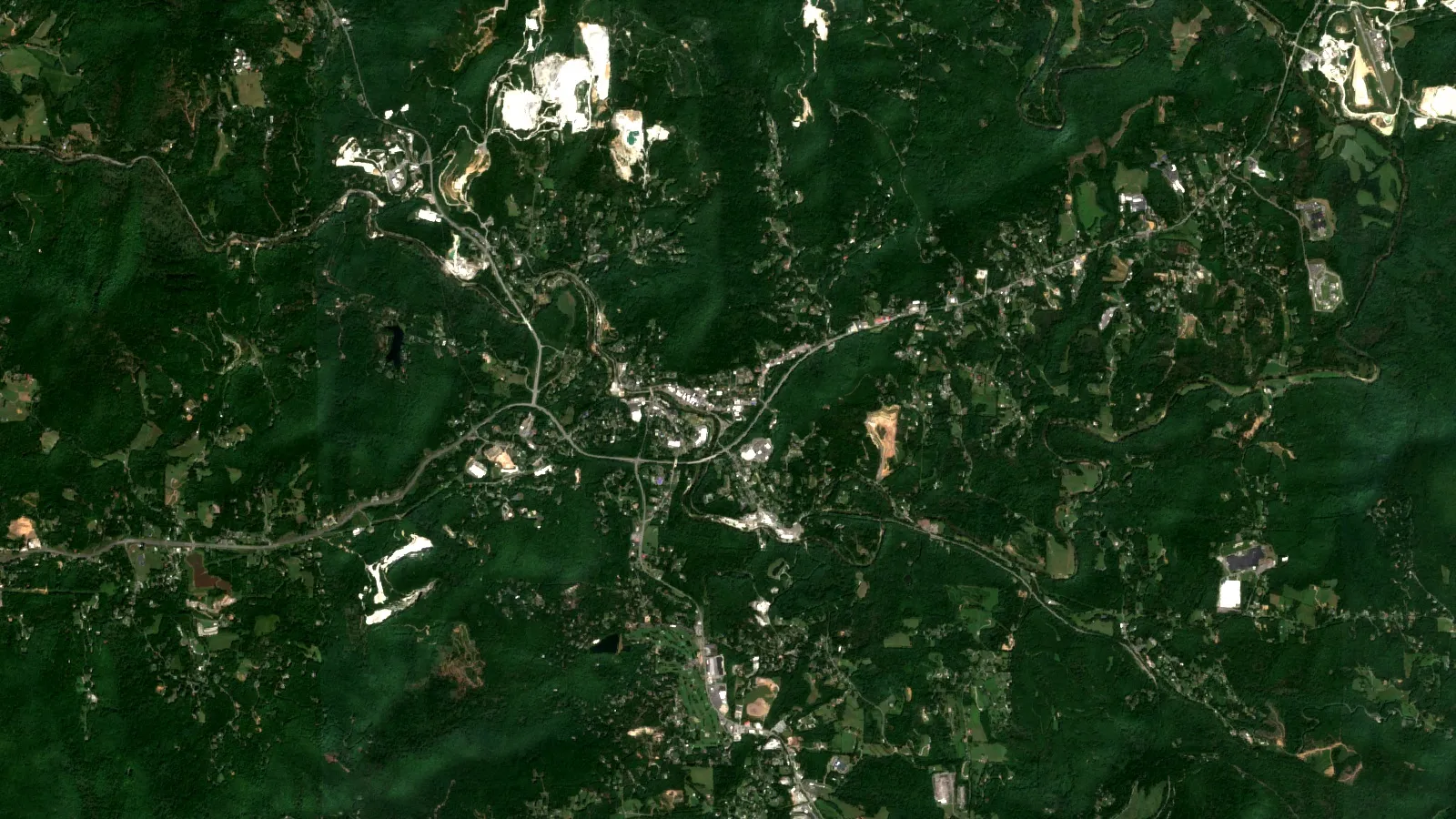
HPQ goes into fused quartz crucibles for silicon ingots, semiconductor equipment, fibre-optic cable, high-temperature lamp tubing and specialty glass. In 2025, two companies produced HPQ in the United States, both around Spruce Pine, North Carolina, from pegmatite also mined for feldspar and mica (USGS, 2026). Our guide to pegmatite deposits explains how these coarse-grained rocks form.
- US HPQ sold or used: about 100,000 tonnes in 2025, down from about 200,000 tonnes in 2024 (USGS estimates, rounded).
- HPQ value range: US$500 to US$12,000 per tonne in 2025, against US$500 to US$20,000 in 2023 (USGS).
- Processing: crushing, washing and scrubbing, sorting, then physical, chemical and thermal treatment (USGS, 2026).
The very wide price range reflects purity. Low-end material is clean glass or filler grade; the top of the range is crucible and semiconductor grade. A deposit’s value therefore depends far more on test-work purity than on tonnage alone.
Cultured quartz crystal
Electronic-grade quartz crystal is now grown, not mined. Industry grows large, flawless crystals in autoclaves using the hydrothermal method, feeding them with crushed natural quartz called lascas, mixed with rejected cultured crystal; most lascas USGS says is mined in Brazil and Madagascar. USGS gives 2025 prices of about US$200 per kilogram for as-grown cultured quartz and US$500 per kilogram for lumbered (cut) bars. US imports of piezoelectric quartz were about 70 tonnes in 2025. These crystals end up in oscillators, filters and sensors; our post on rare minerals used in electronics covers the wider supply chain.
Industrial uses of quartz and silica sand
By tonnage, most quartz is sold as industrial silica sand. USGS estimates that the United States sold or used about 120 million tonnes of industrial sand and gravel in 2025, valued at about US$4.5 billion, from 207 operations in 38 states. Texas, Wisconsin, Oklahoma and Louisiana led output.
Chart
Where US industrial sand went
Share of 2025 tonnage, %
Chart
US industrial sand and gravel sold or used
Million tonnes; 2025 is an estimate
About 81% of that tonnage went to hydraulic fracturing and well work, and 7% to glassmaking. Fillers, foundry sand, filtration and recreational sand together took another 7% (USGS, 2026). The average value fell to about US$36 per tonne in 2025, far below HPQ, which shows how much purity and processing add.
- Glass: container, flat, specialty glass and fibreglass all need sand that is almost pure quartz.
- Foundry: quartz sand holds its shape around molten metal.
- Abrasives and fillers: hardness 7 makes it a durable blasting and filler material.
- Silicon and ferrosilicon: quartz lump is smelted to make silicon metal.
- Electronics and optics: cultured crystals and fused quartz.
- Engineered stone: countertops made largely of crushed quartz bound in resin.
How quartz is mined and processed
Quartz comes from three kinds of source: loose sand and weakly cemented sandstone, dug in open pits; vein quartz and quartzite, quarried and crushed; and pegmatites, mined for several minerals at once. Most ore deposits contain some quartz, as our guide to types of ore deposits shows, but only clean, well-sorted bodies make a saleable silica product.
Infographic
High-purity quartz processing in 5 steps
- 1MineQuarry pegmatite, vein quartz or sand.
- 2Crush and screenReduce to a set grain size.
- 3Wash and scrubStrip clay and iron coatings.
- 4SeparateRemove feldspar, mica and heavy minerals.
- 5PurifyAcid leach and heat-treat for HPQ grades.
Processing aims to remove what is not quartz. Typical steps are crushing and screening, washing and attrition scrubbing to strip clay and iron coatings, magnetic and flotation separation of feldspar, mica and heavy minerals, and for HPQ, acid leaching and high-temperature treatment. Each step costs money and loses some material, so recovery is a key number in any quartz project.
Satellite imagery can help at the screening stage by mapping exposed sand bodies, quarries, access roads and land use around a licence before field work. Farmonaut offers this kind of satellite-based mineral detection as a first look ahead of sampling; it does not replace purity test work.
▶ Remote sensing for mining explained without jargon · 2:01
Safety: respirable crystalline silica
Fine quartz dust is a health hazard. Breathing respirable crystalline silica can cause silicosis and other lung disease. In 2024 the US Mine Safety and Health Administration issued a final silica rule that lowers the permissible exposure limit for all miners to 50 micrograms per cubic metre of air over an 8-hour shift, with an action level of 25 micrograms per cubic metre. Any quartz crushing, drilling or sand plant needs dust control, monitoring and respiratory protection. Our post on mining safety systems covers practical controls.
▶ The seven environmental impacts of mining explained in clay animation · 2:31
What to check before developing a quartz deposit
- Purity: full trace-element analysis (ppm level) on washed and processed samples, not just raw rock.
- Product and market: decide whether the target is HPQ, glass sand, frac sand, silicon lump or gem rough; each has its own specification and buyers.
- Grain size and shape: frac and foundry sands need specific size ranges and roundness.
- Recovery: how much of the mined tonnage survives processing at the target grade.
- Bulk density and tonnage: measured on site, with drilling or pitting.
- Logistics: low-value sand is very sensitive to haul distance to rail, port or customer.
- Permits and dust: mining licence, water use and a silica dust plan.
The calculator on this page lets licence owners and consultants test how purity split and price change the value of a deposit. For a quote on a satellite screen of a specific area, use the mining query form or contact the team.
Calculator
What could a quartz deposit be worth per year?
Enter your own tonnage, recovery, purity split and prices.
- Saleable tonnes per year: 35,000
- High-purity sales (US$): $14,000,000
- Lower-grade sales (US$): $1,120,000
- Purity of best product (% SiO2): 99.99
Example values only, not a benchmark. Prices are inputs: use today’s price from your buyers. For scale, USGS (2026) gives a 2025 US high-purity quartz range of US$500 to US$12,000 per tonne and an average industrial sand value of about US$36 per tonne. Impurity ppm converts to purity as 100 minus ppm/10,000.
Frequently asked questions
What are the main material properties of quartz?
Quartz is SiO2 with a trigonal crystal structure, Mohs hardness 7, density 2.65 g/cm³, conchoidal fracture, vitreous lustre, refractive indices of 1.544 and 1.553, and piezoelectric behaviour (Handbook of Mineralogy).
What is the crystal form of quartz?
Quartz usually grows as six-sided prisms with pointed, pyramid-like ends. Its crystal system is trigonal at room temperature; above 573 °C it changes to hexagonal beta quartz.
What is the crystal system of quartz?
Room-temperature alpha quartz is trigonal, point group 32, with space group P3121 or P3221 for the two mirror-image forms. Some older references place it in the hexagonal family, which includes the trigonal system.
Is quartz harder than steel?
Yes. At 7 on the Mohs scale, quartz scratches a steel knife blade and a steel file, which rate about 5 to 6.5. It also scratches ordinary glass.
What is the density of quartz?
Pure crystal quartz measures 2.65 g/cm³. Massive or impure quartz ranges from 2.59 to 2.63 g/cm³.
At what temperature does quartz melt?
Quartz does not melt directly. It changes to beta quartz at 573 °C, then to tridymite and cristobalite, which melt at about 1670 °C and 1713 °C respectively.
Why is quartz piezoelectric?
Its crystal structure has no centre of symmetry. Pressing on the crystal shifts charges and creates a voltage, and an applied voltage makes it vibrate at a stable frequency, which is how quartz oscillators keep time.
What gives white quartz its colour?
Milky white quartz is cloudy because of tiny inclusions of fluid and gas trapped as the crystal grew. Those inclusions also add impurities, so milky quartz is usually lower grade for high-purity uses.
What counts as high-purity quartz?
USGS defines high-purity quartz as natural quartz with less than 100 ppm total impurities (99.99% SiO2). Ultra-high-purity grades hold less than 10 ppm (99.999%).
How much is high-purity quartz worth?
USGS gives a US value range of US$500 to US$12,000 per tonne for ground high-purity quartz in 2025. The top of the range is for crucible and semiconductor grades.
Is quartz dust dangerous?
Yes. Fine respirable crystalline silica can cause silicosis. US mines must keep exposure below 50 micrograms per cubic metre over an 8-hour shift under the 2024 MSHA rule.
This page is for information only. It is not investment or legal advice. Confirm licence and dust rules with the regulator. Prospect only with the landowner’s permission and a valid licence, and never use mercury.
Farmonaut mining
Screen your quartz or silica licence from space
Licence owners can send an area as coordinates, KML/KMZ or a polygon and get a quote for a satellite screen delivered in 5 to 20 business days, ahead of sampling and purity test work.
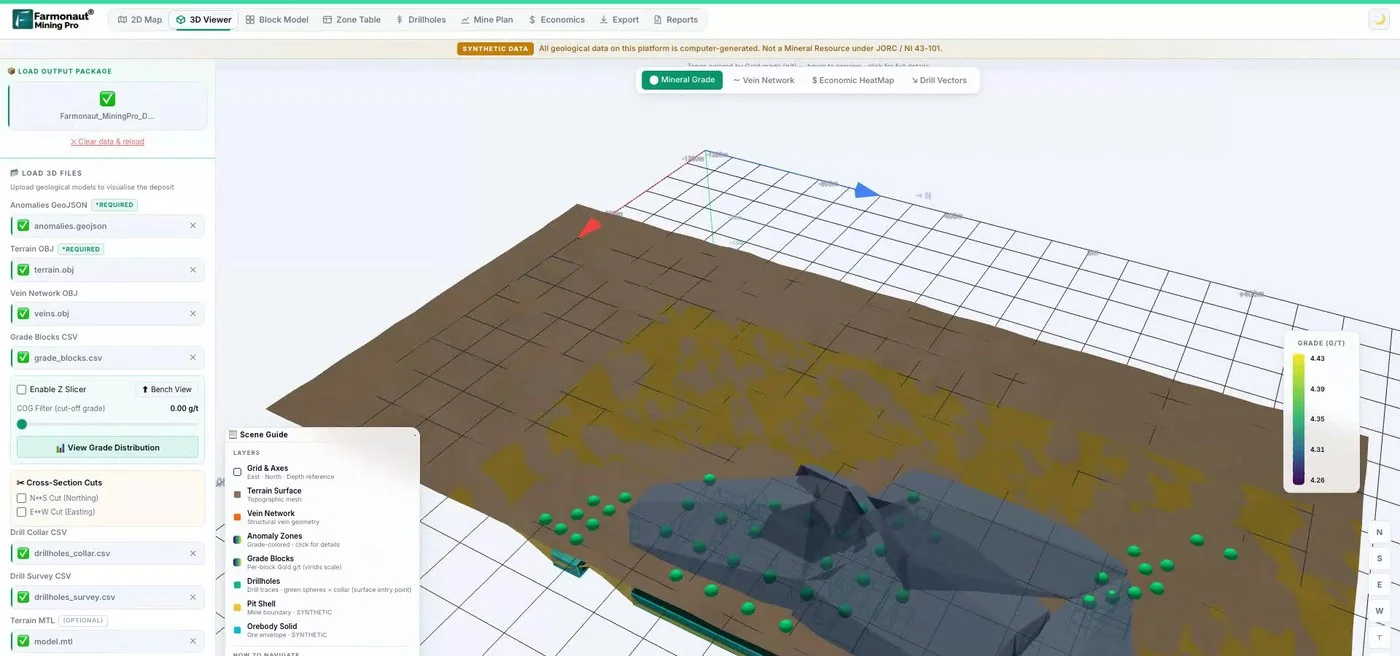
Mining Pro sample view, synthetic data
Keep reading
Sources
- Anthony et al., Handbook of Mineralogy: Quartz (Mineral Data Publishing, 2001): handbookofmineralogy.org
- Webmineral, Quartz mineral data: webmineral.com
- USGS, Mineral Commodity Summaries 2026: Quartz (high-purity and industrial cultured crystal): pubs.usgs.gov
- USGS, Mineral Commodity Summaries 2026: Sand and Gravel (Industrial): pubs.usgs.gov
- MSHA, Respirable crystalline silica final rule summary (2024): msha.gov
- GIA, Citrine description: gia.edu
- GIA, Amethyst description: gia.edu
- International Gem Society, Quartz value, price and jewelry information (2025): gemsociety.org
- Geology.com, Mohs Hardness Scale: geology.com
- Geology.com, Quartz: uses and properties: geology.com
- Quartz reference page (varieties, melting data after Deer et al.): en.wikipedia.org
- Federal Register, Lowering Miners’ Exposure to Respirable Crystalline Silica (2024): federalregister.gov
Discussion
Questions, corrections or field experience? Share them below. First-time comments are reviewed before they appear, and your email is never published.
No comments yet. Be the first to add a question or your experience.

 Mulopwe Metals Mining Ltd
 Tintina Mining Group
 Dalgety Minerals Pty Ltd
 Faith At Work (Pty) Ltd
 Geotech Mining Solutions plc
 Vulcan International Limited
 Kidepo Associates
 GKY Mining
 Alkimy SARL
 Double A Trading
 GemSprout Metals Limited
 Qader Group
 Ileys General Trading
 SG Gold Mining LLC
 VRV Global Pte Ltd
 Omsri International FZE
 G.I.T.T.
 Jaunita Erss Ltd
 Almosi SARL
 SRK Consulting
 Berks Gold Limited
 Mwerezi Minerals Company Limited

 Exploration consultancy · South Africa · Gold










