

Agricultural Export Process: 5 Steps from Farm to Market in 2025
“Over 80% of exported crops in 2025 will follow a 5-step farm-to-market process focused on sustainability.”
Table of Contents
- Summary: The Agricultural Export Process from Farm to Global Market
- Step 1: Production and Harvesting
- Step 2: Post-Harvest Handling and Processing
- Step 3: Storage and Logistics
- Step 4: Export Documentation and Compliance
- Step 5: Market Access and Distribution
- Step-by-Step Comparison Table
- Addressing Agriculture and Global Warming
- Farmonaut Satellite Solutions for Agricultural Exports
- Quick Callouts & Pro Tips
- Frequently Asked Questions (FAQ)
- Conclusion: Navigating Challenges & Opportunities
The Agricultural Export Process from Farm to Global Market: Navigating Challenges and Opportunities in 2025
In a rapidly evolving world, the agricultural export process from farm to global market remains the cornerstone sustaining local and international economies, feeding growing populations, and fueling trade across continents. Amid the rising demands and climate concerns of 2025, efficient, sustainable, and resilient agricultural export systems are not just desirable—they are essential. This comprehensive guide explores the 5 steps in the farm to table process, shedding light on the integration of environmental stewardship and advanced technological dynamics that shape agricultural exports today.
Step 1: Production and Harvesting – The Foundation of Agricultural Export Process from Farm to Global Market
Production and harvesting is where everything begins, at the farm level. In 2025 and beyond, agricultural production is defined by not just yield and quantity, but also by the ability to address environmental and climate change challenges.
- ✔ Precision agriculture utilizing satellite imagery, IoT sensors, and AI for optimal land management and crop yield enhancement.
- ✔ Climate-resilient seed varieties chosen for adaptability to variable climatic conditions and resistance to disease and pests.
- ✔ Real-time monitoring of soil health, moisture content, and crop growth via platforms like Farmonaut (read more).
- ✔ Water conservation methods—drip irrigation, mulching, and rainwater harvesting.
- ✔ Regenerative farming practices such as crop rotation, intercropping, and organic amendments—all boosting sustainability.
Farmers are increasingly pressured to adopt agronomic practices that both minimize greenhouse gas emissions and boost production. Timing the harvest is a scientific and technological feat, as advanced analytics help ensure crops are picked for optimal quality and freshness, meeting stringent international market standards.

Precision monitoring, such as NDVI and AI-powered crop advisory services, enables optimal harvest timings and resource conservation, resulting in higher-quality exports and lower waste.
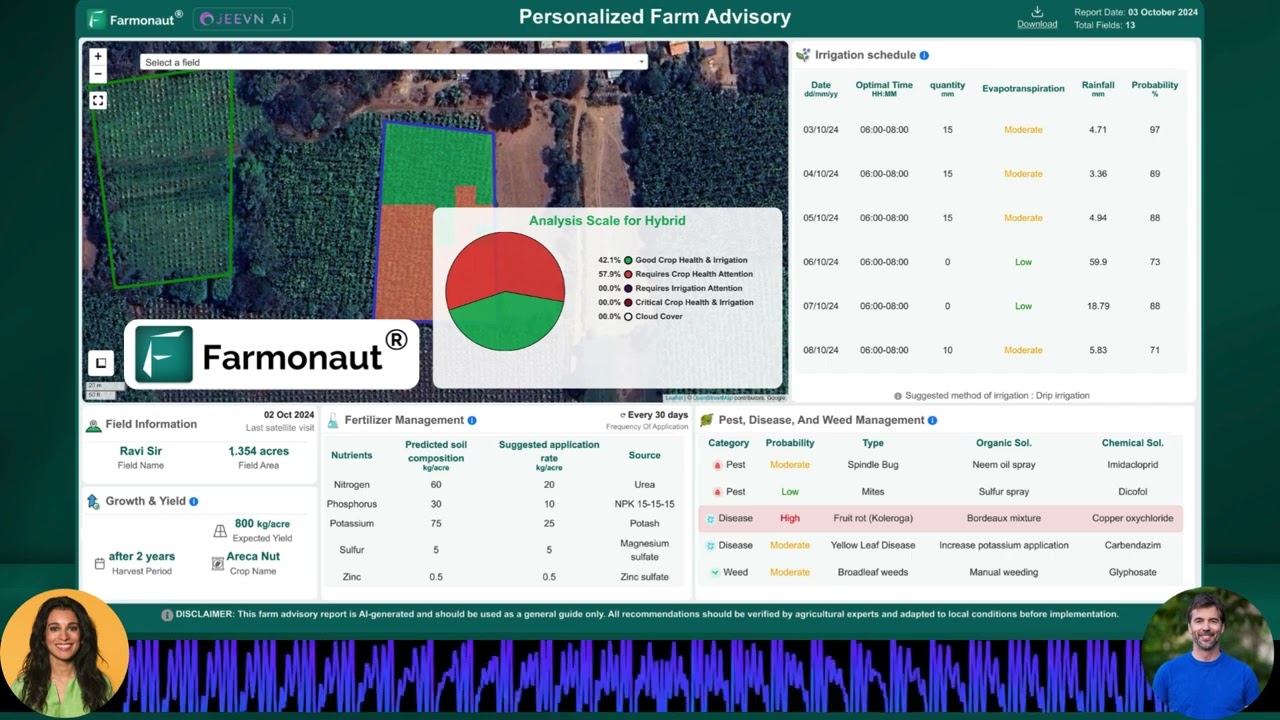
Farmonaut’s Jeevn AI Advisory System provides actionable recommendations to optimize each production step and ensure compliance with sustainability standards. Our satellite data-driven ecosystem is accessible via web and mobile apps or seamless API integration for agricultural stakeholders and businesses looking to optimize harvests and minimize climate impact.

Step 2: Post-Harvest Handling and Processing – Safeguarding Quality for Global Exports
Once harvested, crops enter the post-harvest handling and processing stage. This crucial link in the agricultural export process from farm to global market determines future quality, shelf life, and access to international markets.
- Cleaning, Sorting, and Grading: Removing field debris and ensuring products meet market standards.
- Primary processing: Milling grains, drying fruits, or shelling nuts for easier storage and transport.
- Utilization of cold-chain technologies and innovative packaging materials to maintain freshness and nutritional value.
- Batch coding and blockchain-based traceability solutions (see Farmonaut’s product traceability tools) for authenticity and certification compliance.
- Phytosanitary treatments and compliance with international export regulations.
By 2025, investments in efficient post-harvest infrastructure across countries are reducing post-harvest losses while enhancing the economic value of agricultural exports by maintaining product quality and safety.


Ensure your export-ready crops are traceable and meet phytosanitary certification. Automated post-harvest condition monitoring with Farmonaut’s platform helps businesses comply faster and reduce loss.

Step 3: Storage and Logistics – Maintaining Product Quality and Reducing Carbon Emissions
The journey from field to global markets hinges on effective storage and seamless logistics networks. An estimated 10–25% of crops are lost post-harvest without modern storage and transportation, impacting economic and environmental outcomes.
- ✔ Advanced silos and warehousing with humidity control, pest management, and real-time inventory tracking.
- ✔ Digitized logistics networks, utilizing AI route optimization for reducing carbon footprints and delivery delay risks (learn about Farmonaut fleet management).
- ✔ Rail, road, sea, and air transport integrated for cost and environmental efficiency.
- ✔ Shift to electric and low-emission vehicle fleets, supporting sustainability targets.
- ✔ Use of biodegradable and innovative packaging to minimize waste and protect goods during transit.
Good storage solutions not only maintain product integrity but also facilitate compliance with international food safety standards and consumer preferences.
“Climate-focused strategies in agricultural exports aim to cut carbon emissions by 30% through efficient logistics by 2025.”

Ignoring real-time logistics tracking and storage condition monitoring can result in unexpected spoilage—leading to rejected shipments at export markets.


Step 4: Export Documentation and Compliance – Navigating Regulatory Landscapes
Success in the international agricultural trade depends on accurate, timely, and transparent documentation to meet regulatory requirements in importing countries. In 2025, digitalization and blockchain-inspired traceability platforms are game changers, vastly improving compliance and building trust in global agricultural exports.
-
Essential export documents include:
- ✔ Phytosanitary certificates
- ✔ Customs declarations
- ✔ Licenses (where applicable)
- ✔ Quality certifications, including carbon or organic credentials (learn about Farmonaut’s carbon footprinting for agriculture)
- ✔ Electronic submission and real-time tracking of document status, reducing compliance delays and bureaucracy.
- ✔ Blockchain-backed traceability for assured proof of origin, practices, and ethical compliance.
- ✔ Automated alerts for changing regulations in destination markets, ensuring ongoing compliance.
By leveraging digital platforms that centralize and validate compliance documentation, exporters reduce risk and enhance confidence for consumers and trading partners worldwide.
Countries and businesses capitalizing on digital export compliance are expected to see faster trade cycles and higher growth in export volumes post-2025.

Step 5: Market Access and Distribution – From Export Port to Global Consumer
After overcoming regulatory hurdles, agricultural products finally enter global markets. This final step in the agricultural export process from farm to global market is highly dynamic, influenced by market intelligence, consumer trends, and the growing importance of sustainability.
- ✔ Collaboration between exporters, importers, distributors, and retailers to expand product reach and maximize value.
- ✔ Branding and innovative packaging adapted to consumer demands, especially regarding sustainability, health, and origin.
- ✔ Market shifts influenced by global warming, such as new demands for climate-resilient crops or preferences for carbon-neutral products.
- ✔ Distribution channel digitization for faster and more transparent supply chains.
- ✔ Dynamic monitoring of global pricing, competitor actions, and consumer sentiment.

More than 70% of global consumers in 2025 are predicted to favor products that highlight sustainability, climate adaptation, and origin traceability in their packaging and brand messaging.
Step-by-Step Comparison Table: Agricultural Export Process, Efficiency, and Climate Impact
| Step Name | Activities Involved | Estimated Timeframe | Sustainability Practices Adopted | Climate Impact (kg CO2/ton) | Efficiency Rating |
|---|---|---|---|---|---|
| Crop Production | Sowing, irrigation, crop care (approx. 90-120 days) | 3-4 months | Precision irrigation, regenerative farming, AI-based advisory | ~200-400 (potential for 30% reduction with sustainable practices) | High |
| Harvesting & Processing | Manual/mechanized harvest, cleaning, sorting | 1-2 weeks | Energy-efficient machinery, waste minimization | ~35-60 | Medium |
| Packaging | Grading, packaging, labeling | 3-5 days | Use of biodegradable/recyclable materials | ~15-30 | High |
| Transportation | Loading, cold-chain logistics, multimodal transport | 1-2 weeks | AI-based route optimization, EV fleet adoption | ~45-120 (reduced by up to 30% with green logistics) | Medium |
| Export Documentation & Market Entry | Digital docs, compliance validation, market distribution | 1-2 weeks | Blockchain traceability, e-documentation | Minimal; enables reduction elsewhere | High |
✔ Key Benefits of a Sustainable Agricultural Export Process
- 🌱 Reduces environmental footprint through smart resource use and emissions tracking.
- 🔒 Elevates export reliability with advanced traceability and compliance verification.
- 📈 Boosts productivity & market value due to reduced wastage and enhanced quality.
- 🌏 Expands access to global markets with climate-adaptive crops and flexible supply chains.
- 💡 Enables data-driven innovation for informed decisions and long-term competitiveness.
Addressing Agriculture and Global Warming in the Export Supply Chain
Agriculture and global warming are unavoidably intertwined. Exporters must navigate risks such as rising temperatures, erratic rainfall, and extreme weather events that can disrupt every stage of the farm-to-market process.
- ✔ Drought-tolerant and fast-maturing crop varieties to adapt to variable climate patterns.
- ✔ Low-carbon supply chains that integrate carbon footprint monitoring (read about Farmonaut carbon footprint tracking).
- ✔ Regenerative farming and soil carbon sequestration methods to enhance carbon sinks.
- ✔ Emission offsetting and compliance with market-specific carbon standards (e.g., Carbon Neutral Certification for European and Asian export markets).
- ✔ Blockchain and transparent reporting to showcase sustainable operations and earn premium pricing.
Farmonaut Satellite Solutions for the Modern Agricultural Export Process
At Farmonaut, we empower agricultural exporters to optimize the export process at every step—from crop production to market entry—with satellite-driven insights, AI analytics, and blockchain traceability.
- Satellite Crop Monitoring: Real-time field health monitoring for timely harvesting and stress detection.
- Jeevn AI Advisory System: Custom agronomic advisories, weather alerts, and resource optimization.
- Blockchain-Based Traceability: Transparent, tamper-proof records from farm to port—ideal for traceability in export certification.
- Fleet & Resource Management: Digital tracking of transport, cold storage, and input logistics (see Fleet Management solution).
- Environmental Impact Monitoring: Quantify and reduce greenhouse gas emission with carbon footprinting dashboard and actionable reports.
- API Integration & Custom Reports: Seamlessly integrate our satellite data, advisory, and traceability via API (API Docs).
Subscription Options: Whether you are an individual farmer, agribusiness, or government stakeholder, explore our scalable subscription plans below.
Quick Callouts & Pro Tips for 2025 Exporters
Traceability isn’t just a buzzword—major international buyers reject shipments if origin can’t be verified!
Leverage year-round NDVI, weather, and logistics data to reduce costs and maximize yields.
Start documentation early! E-doc submissions or API-based docs cut port waiting times by days.
EV adoption and green packaging can qualify you for bonus points in many new trade agreements.
For automation—integrate satellite data, compliance status, and logistics updates with your ERP.
Visual List: Critical Practices for Export Success
- 🚀 Adopt satellite monitoring for every farm plot (NDVI, soil health, stress).
- 📦 Innovate in packaging to guarantee safety, shelf life, and eco-responsibility.
- 📝 Digitize documentation for speed, visibility, and audit-readiness.
- 🔗 Implement blockchain traceability to earn premium and avoid disputes.
- 💧 Focus on water efficiency via precision irrigation and drought adaptation.
- 🌪️ Continuously monitor weather and climate risk to mitigate disruptions.
- 📤 Synchronize distribution with real-time consumer demand intel.
- 🌿 Adopt carbon footprinting for transparent climate reporting.
Visual List: Risks or Limitations in Export Process
- ⏳ Delays in compliance processing can result in missed shipping windows and spoiled produce.
- 📉 Insufficient blockchain or traceability adoption may cause market rejection.
- 🌡️ Underestimating climate threats exposes to sudden losses or reduced yields.
- ✈️ Poor logistics optimization increases both costs and emissions, hindering market entry.
- 🏭 Lack of carbon reporting restricts access to sustainability-premium markets.
- 🔍 Insufficient data analytics limits ability to adapt to emerging demand shifts post-2025.
Frequently Asked Questions: Agricultural Export Process from Farm to Global Market (2025 & Beyond)
Q1: What are the main steps in the agricultural export process from farm to global market?
A: The process follows 5 primary steps: Production & Harvesting, Post-Harvest Handling & Processing, Storage & Logistics, Export Documentation & Compliance, and Market Access & Distribution.
Q2: How are climate concerns addressed in global agricultural exports in 2025?
A: The sector is adopting climate-smart agriculture, favoring carbon footprint tracking, regenerative farming, emissions reduction in logistics, and transparency tools like blockchain.
Q3: What technologies are improving compliance and traceability for agricultural exporters?
A: Robust traceability platforms based on blockchain, centralized e-documentation systems, and satellite-based verification tools are key. Farmonaut’s product traceability and carbon footprinting services exemplify these trends.
Q4: How do exporters ensure their agricultural products meet international standards?
A: By following standardized cleaning, sorting, packaging, and compliance documentation, and leveraging satellite monitoring and real-time data to demonstrate crop origin and production methods.
Q5: What is the role of digital exports documentation in reducing export delays?
A: Digital documentation and blockchain-based platforms significantly speed up regulatory processing, reduce errors, provide instant traceability, and increase process transparency, ensuring products reach the global market faster.
Conclusion: Building a Resilient & Sustainable Global Export Chain for 2026 and Beyond
The agricultural export process from farm to global market is a complex, evolving system—deeply impacted by emerging climate challenges, shifting consumer expectations, and technological progress. In 2025 and onward, sustainability and adaptability are not options; they are imperatives for exporters seeking to optimize efficiency, reduce risk, and capture new market opportunities.
By adopting smart agricultural practices, innovating in post-harvest handling, digitizing logistics, prioritizing climate compliance, and leveraging robust digital and satellite solutions like those offered by Farmonaut, stakeholders around the world can meet food demand, drive economic growth, and steward the environment.
As we look to 2026 and beyond, success in global agricultural exports will go to those organizations and countries that embrace data-driven strategies, invest in resilient infrastructure, and remain at the forefront of climate mitigation, all while maintaining unwavering focus on efficient, ethical, and sustainable production.

 Sampurn AgriConnect
 FCF India
 Unifrutti Gulf
 Deluxe Conseil
 TVS Electronics
 BW Pipelines
 WICO
WICO Gen Chayat
 Chimera Innovation
 SkyHarvest
 Polaris Digitech
 Teledarbas
 Wild Oak Farm
 SFX
SFX Doodlakine
